TimManBlog

Whatever I'm Thinking

Archive for the category “County Seats”

Taos

January 31, 2020

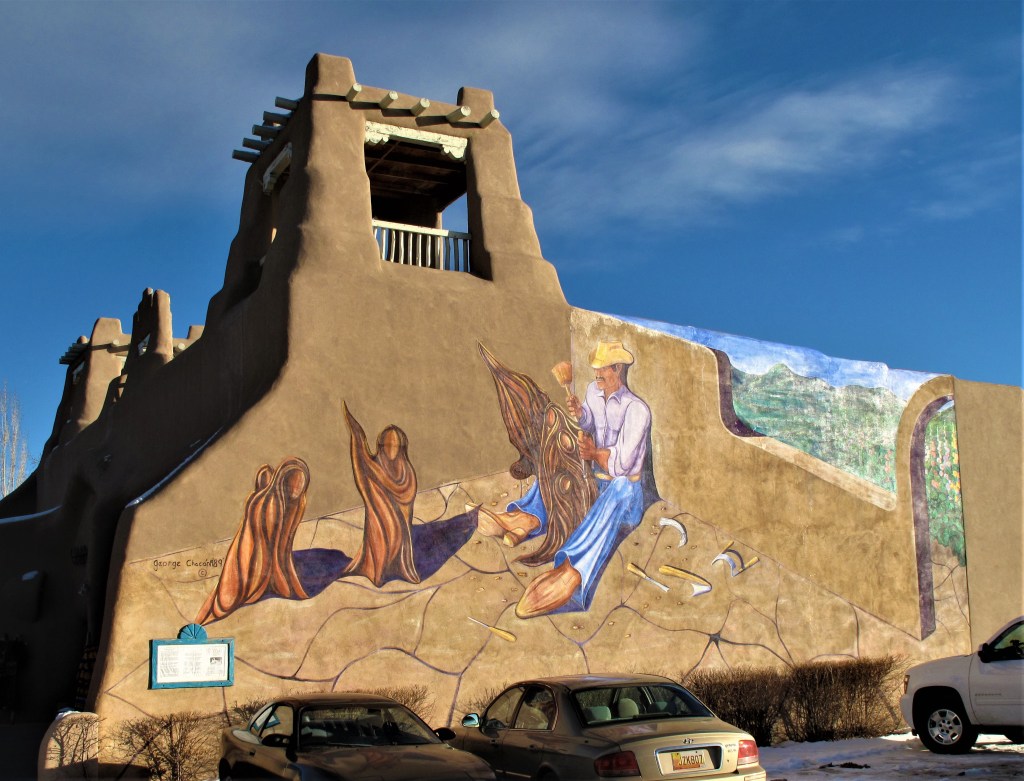
Taos — such a unique name that no further qualifiers are needed. Just remember to put the “a” before the “o” and everyone knows the place.

Street mural. Taos, New Mexico

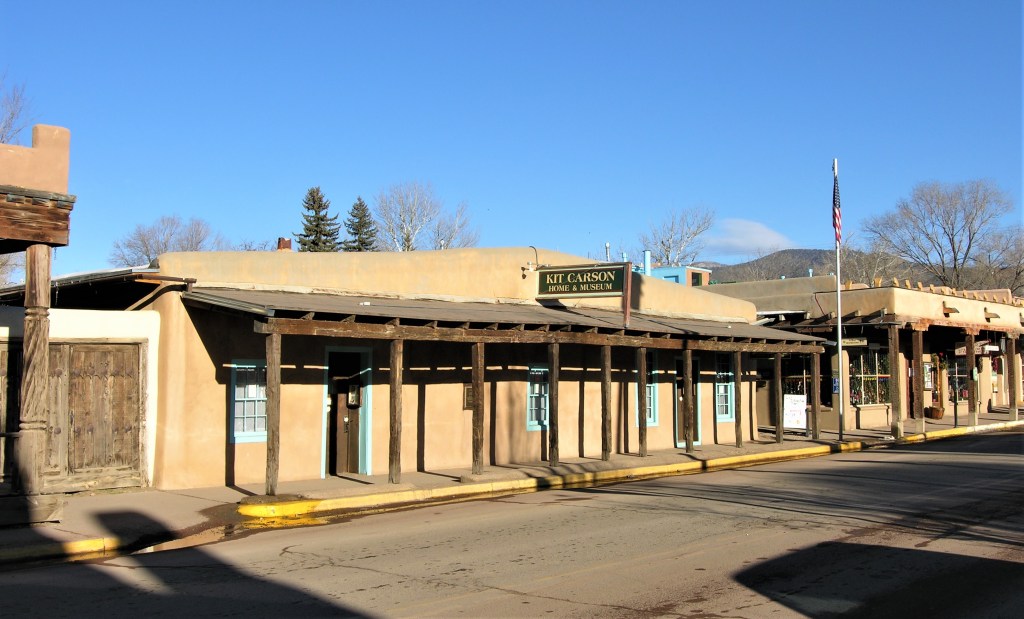
Let’s start the Taos tour at the home of its most famous resident — noted Western pathfinder Kit Carson.

Kit Carson home and museum. Taos, New Mexico
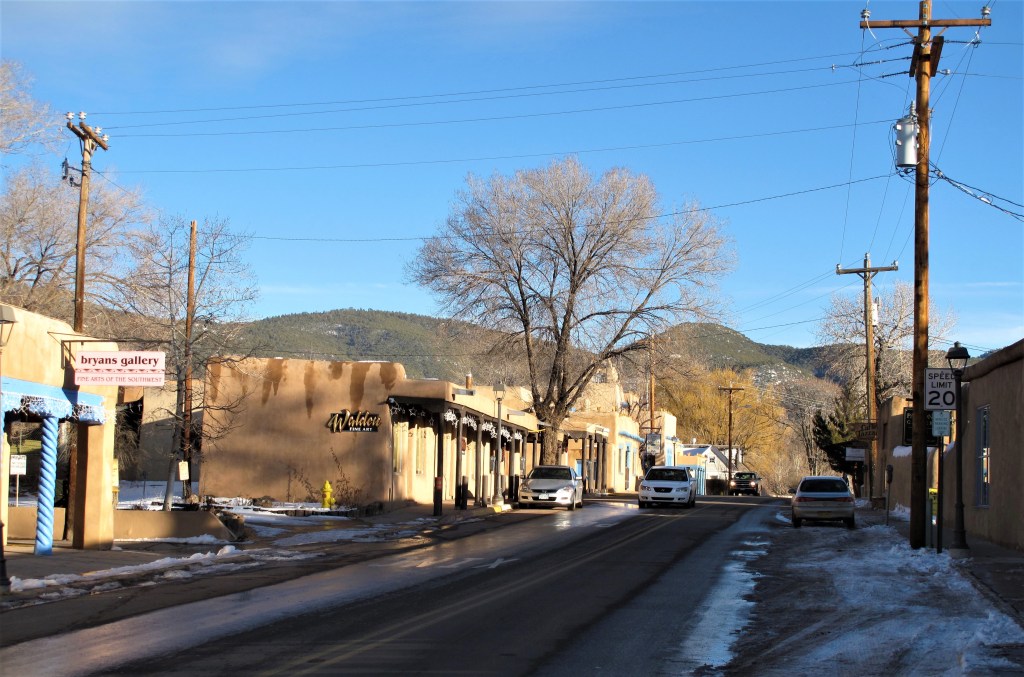
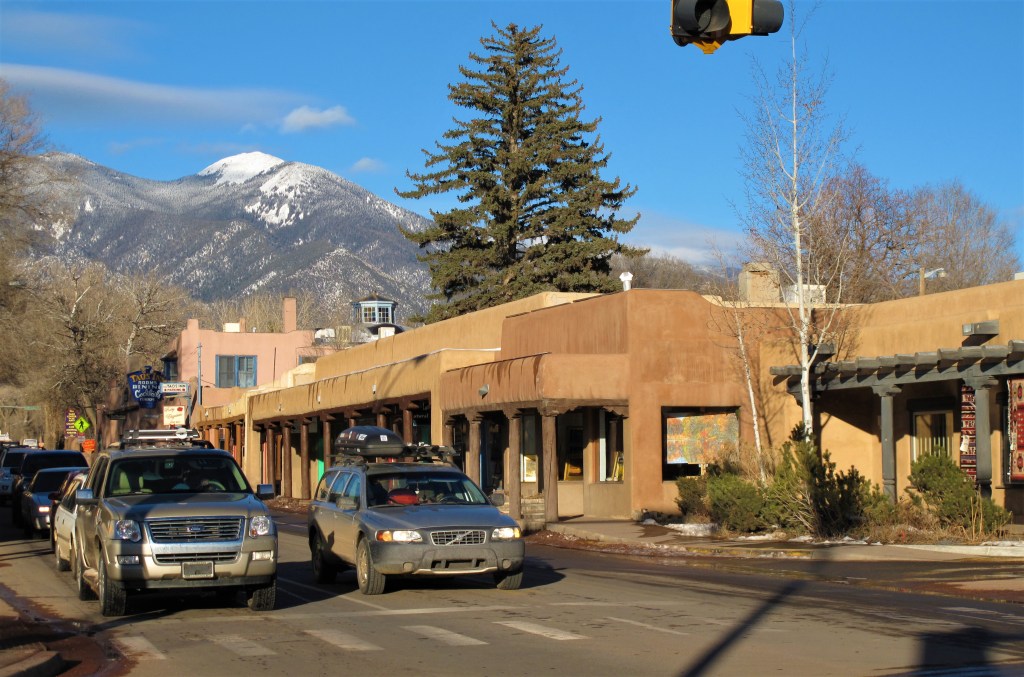
Looking east from the center of Taos along US 64, towards the mountain divide

Born in Kentucky in 1809, Kit Carson grew up in Missouri on land once owned by the sons of Daniel Boone. As a teenager, he left the farm and shop life and set off westward on the Santa Fe Trail. Using Taos as his base, Carson built his reputation as a scout and a mountain man over the next decade. Later, in the 1840s, Carson served as the chief scout on John C. Fremont’s western expeditions and served with General Stephen Watts Kearny during the Mexican War. Carson died in 1868 as a brevet brigadier general at nearby Fort Garland, Colorado. (more on Kit Carson’s life here.)

Kit Carson Historic District. Taos, New Mexico

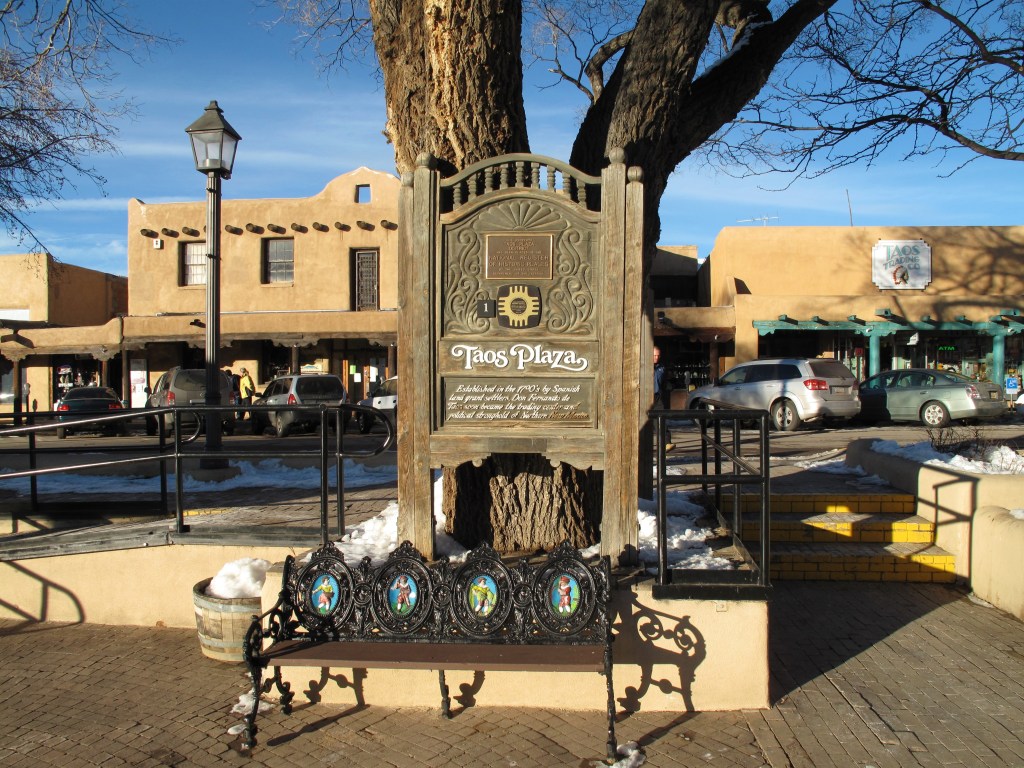
Nearly catercorner from the Kit Carson house, Taos Plaza is the marketplace of old Taos.

Taos Plaza
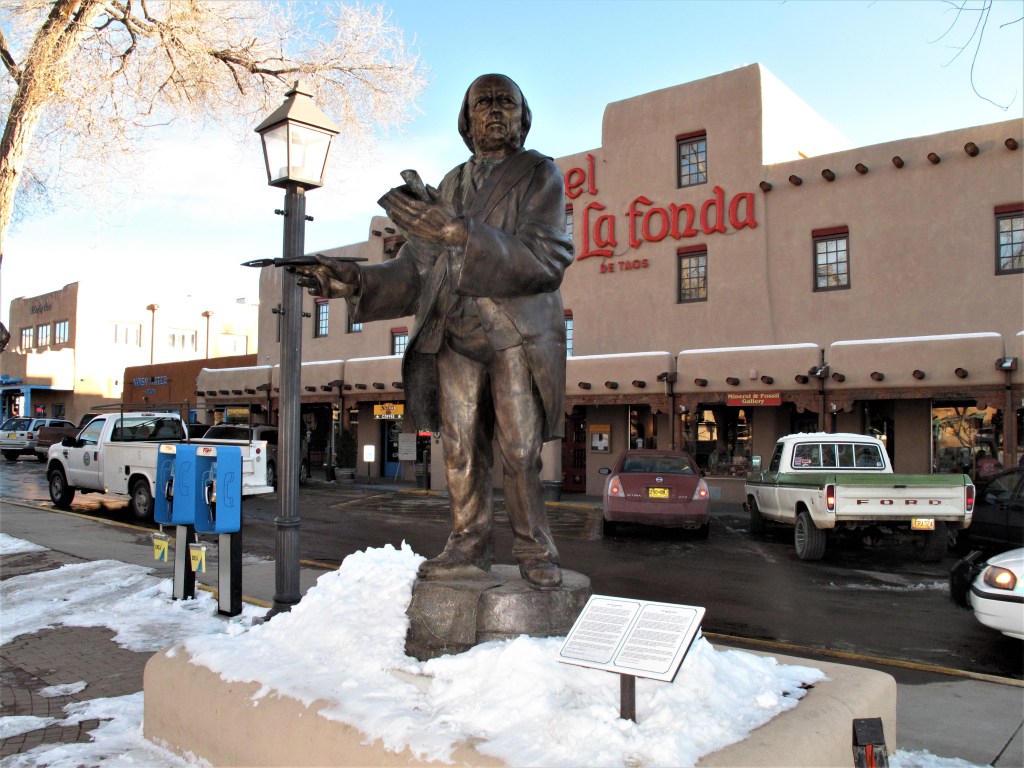
Padre Antonio Jose Martinez, and the Hotel La Fonda de Taos. Taos Plaza
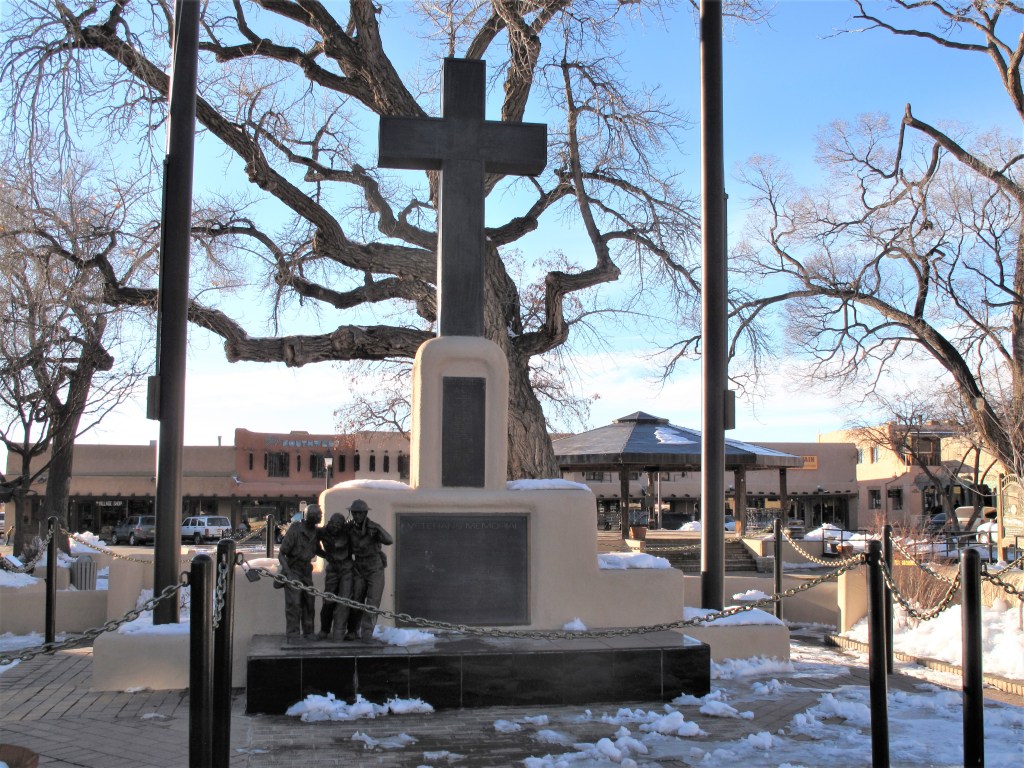
War memorial in Taos Plaza
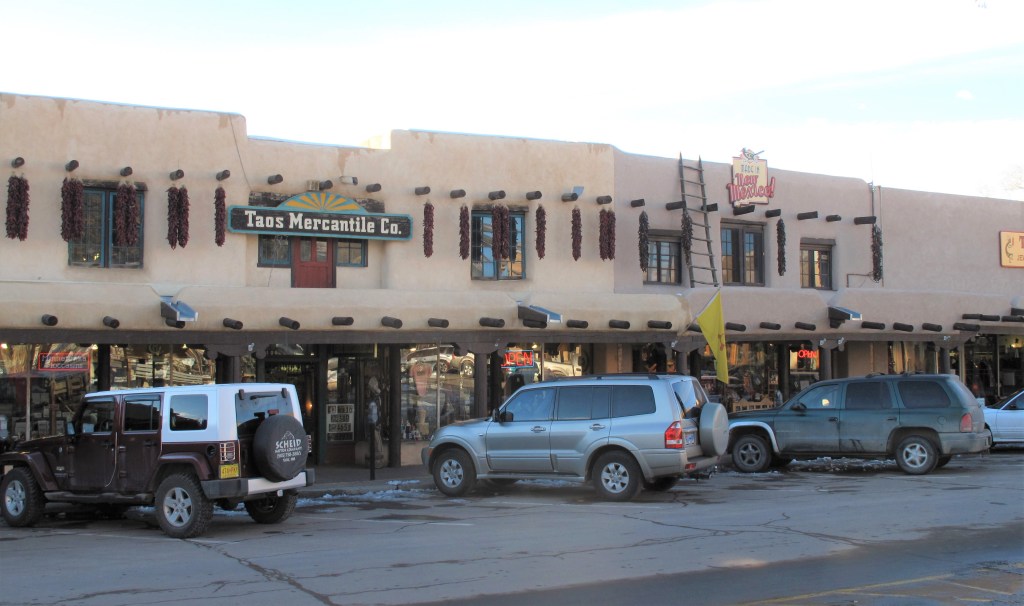
Shops in Taos Plaza. Notice the wooden ladder giving access to the roof.

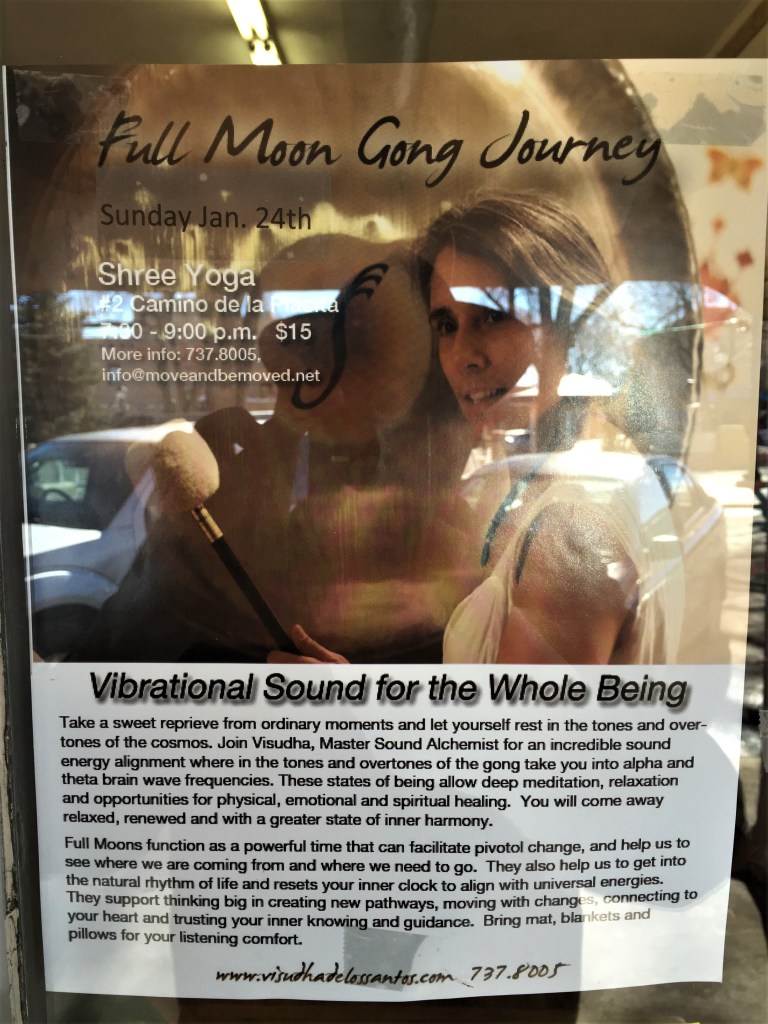
Taos Plaza is like most town squares around America, except with a Hispano flair. Here one can find shops, cafes, park benches, statues and memorials, and even a hotel. You can also find posters and advertisements for local events. One such event was advertised by the photo below: “Full Moon Gong Journey” as presented by Shree Yoga. Vibrational Sound for the Whole Being. Only $15. Yes, Taos was “New Age” long before there was anything like “wokeness.” (Sorry about the quality of the photograph. My I-phone did the best it could to remove my reflection.)

While in town, I had drinks and dinner at the Taos Inn (photo below). A flamenco guitarist entertained and sang to the bar crowd in Spanish. I didn’t understand a word. His audience consisted of artists and tourists along with the odd skier.

Looking north from Taos Plaza. The famous Taos Inn is in the background.

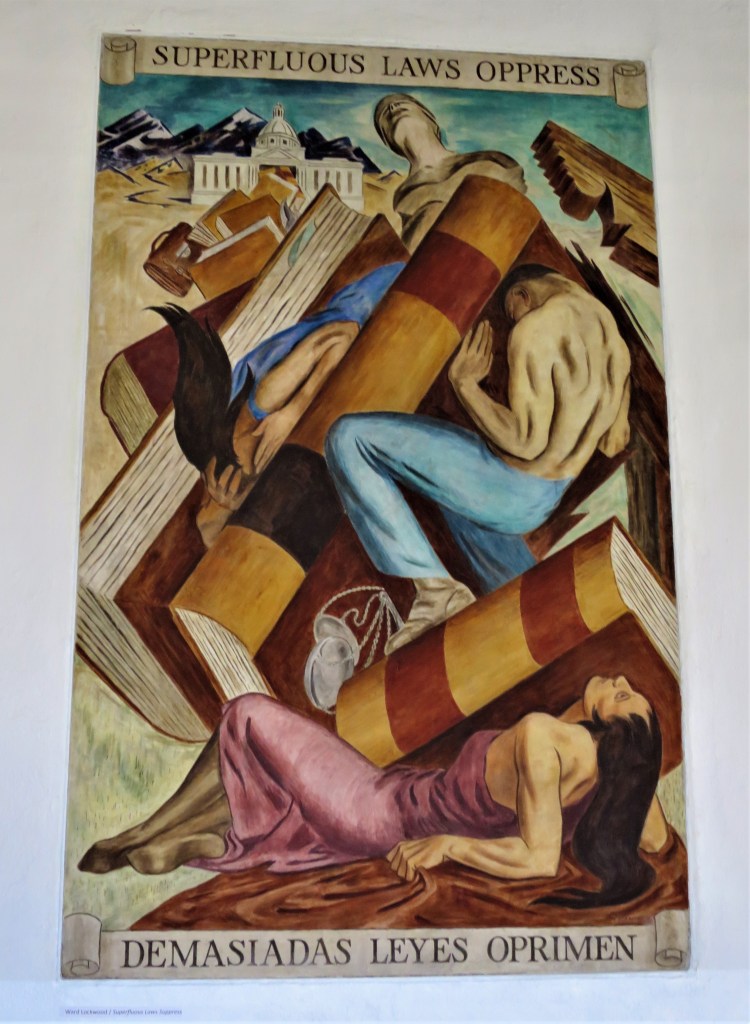
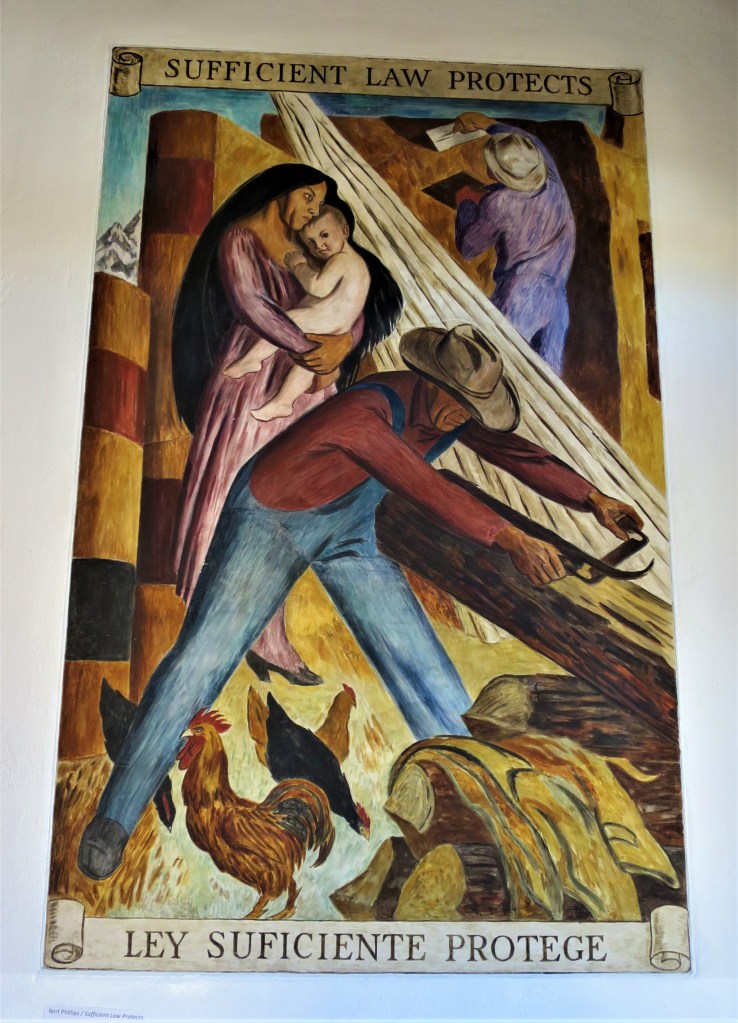
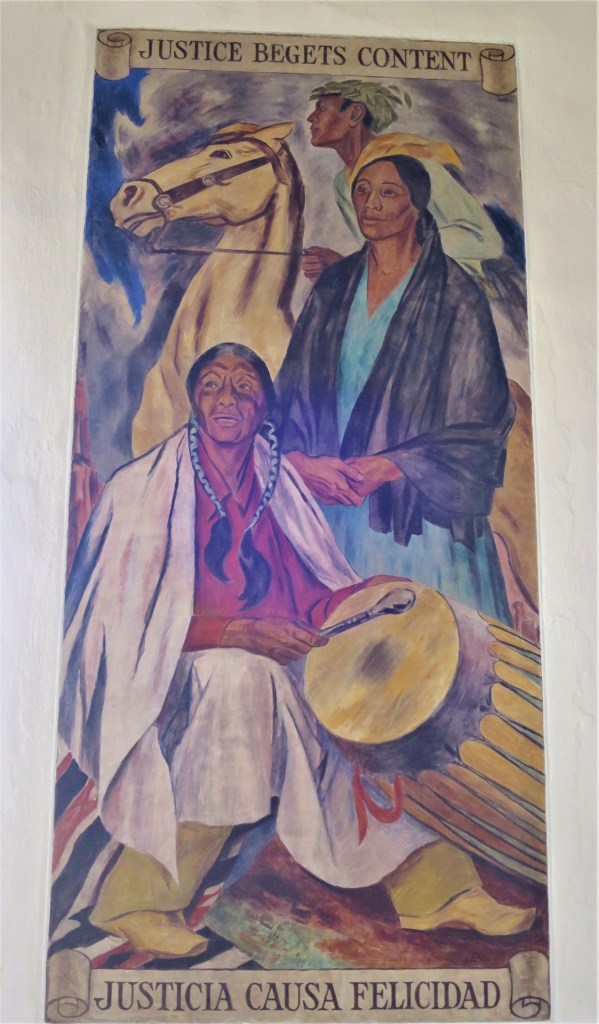
In bygone days the Taos County Courthouse was adjacent to the plaza, but a new facility was built a half-mile away in 1979. The old structure still stands and holds some fascinating wall murals. Murals include both English and Spanish titles, reflecting the many centuries of Spanish influence in Taos:

Moses the Lawgiver. Old Taos courthouse.

Some of the murals are remarkably prescient. Note how it was understood that laws must be moderate to be effective and just:

Superfluous Laws Oppress
Sufficient Laws Protect

Here are two more murals before we move on:

Justice Begets Content (contentment)
Avarice Breeds Crime

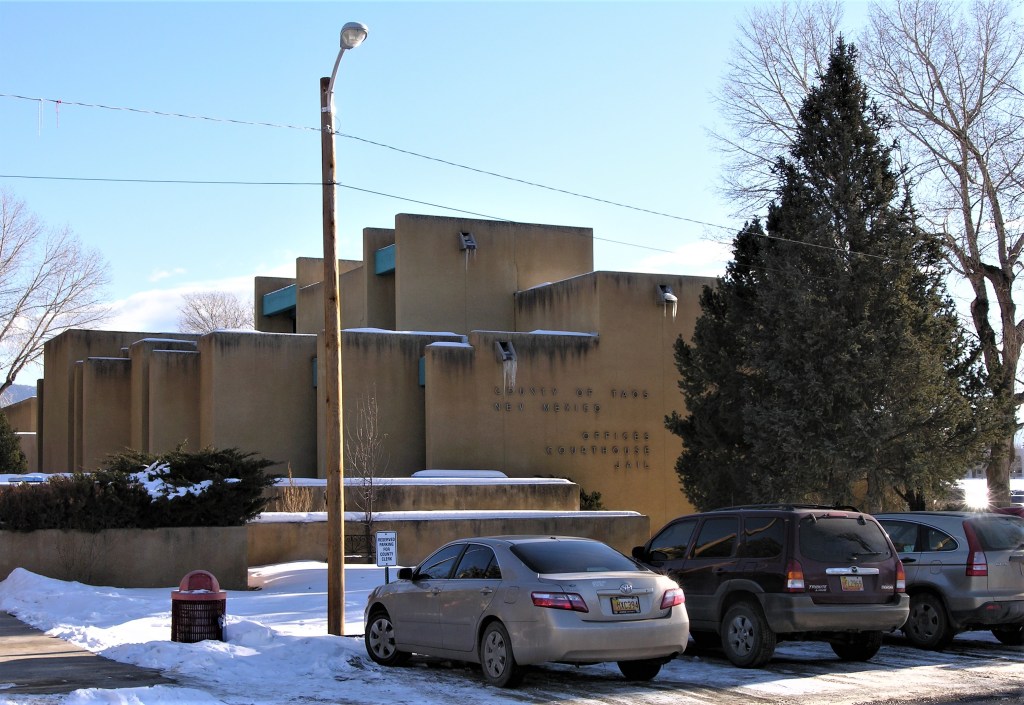
Nearly all the buildings in Taos (if not ALL the buildings) are constructed in the adobe style — even the new courthouse.

Modern Taos County Courthouse. Taos, New Mexico
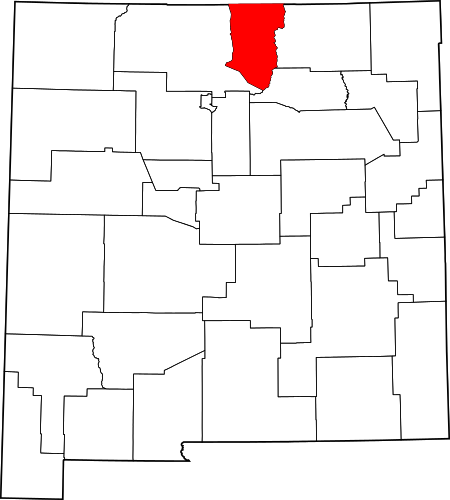
Taos County in the state of New Mexico

Of course, Taos was occupied long before Spanish conquistador Capitan Hernan Alvarado arrived here in 1540. It’s estimated that the Tiwa Indians settled here sometime around 1350 A.D. The name “Taos” is believed to be an adaptation of the Indian word Towih, meaning “red willows.”

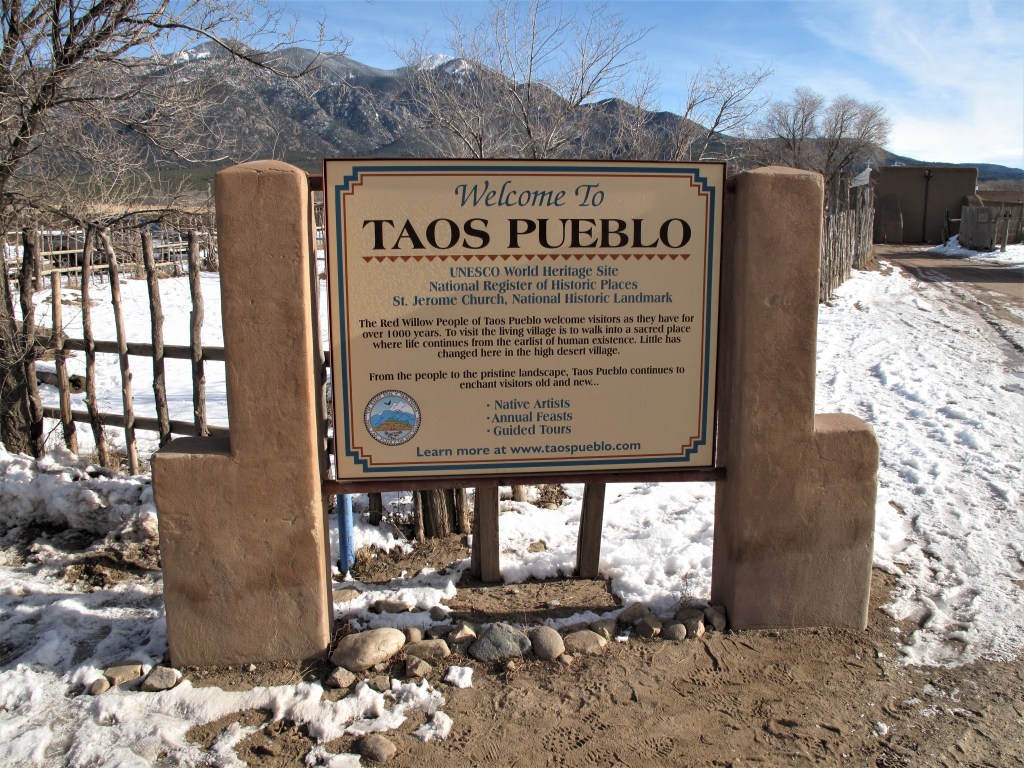
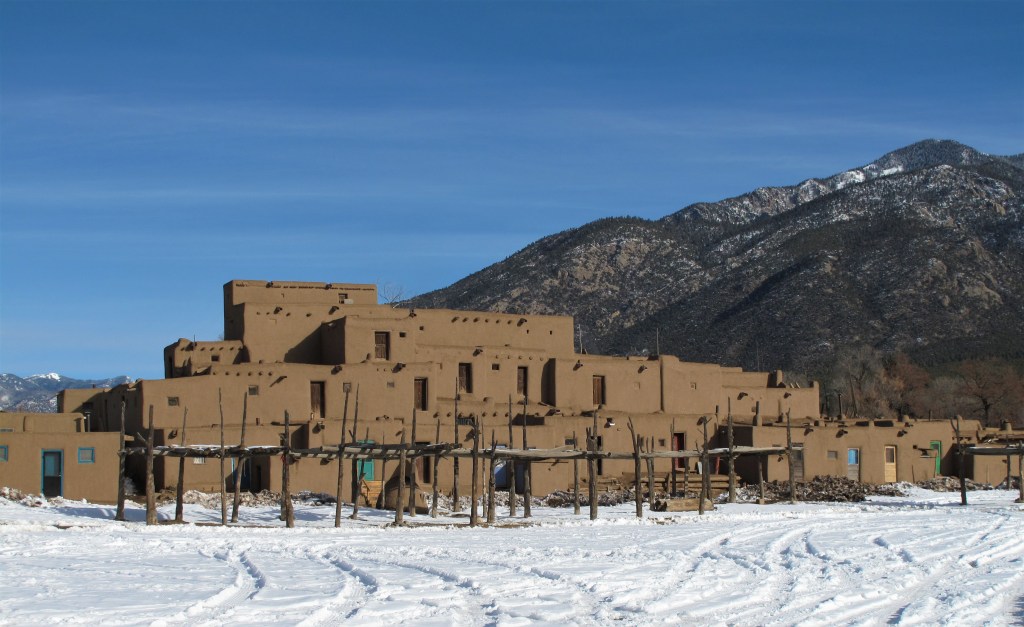
Just north of Taos at Taos Pueblo, descendants of the ancient ones live much as they used to.

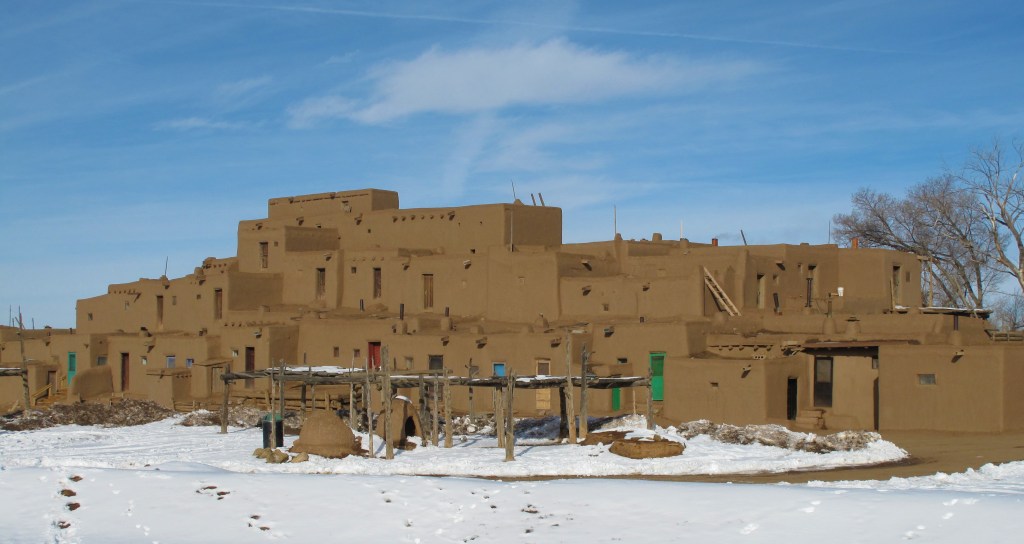
The most prominent structure is this multi-story, multi-family adobe complex, said to have been built between 1000 and 1450 A.D.

Taos Pueblo

Notice the external wooden ladders used to navigate between floors. Exterior doors are painted bright red, green, or blue for contrast against the adobe brown.

Taos Pueblo

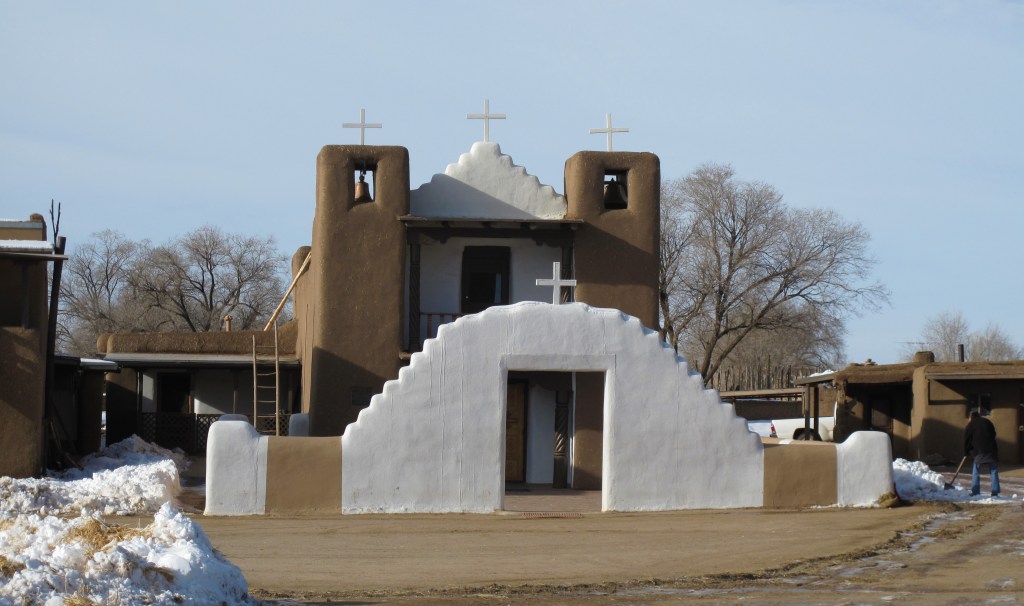
Spanish missionaries left their mark among the native peoples, and their influence has become permanent.

St. Jerome Church. Taos Pueblo
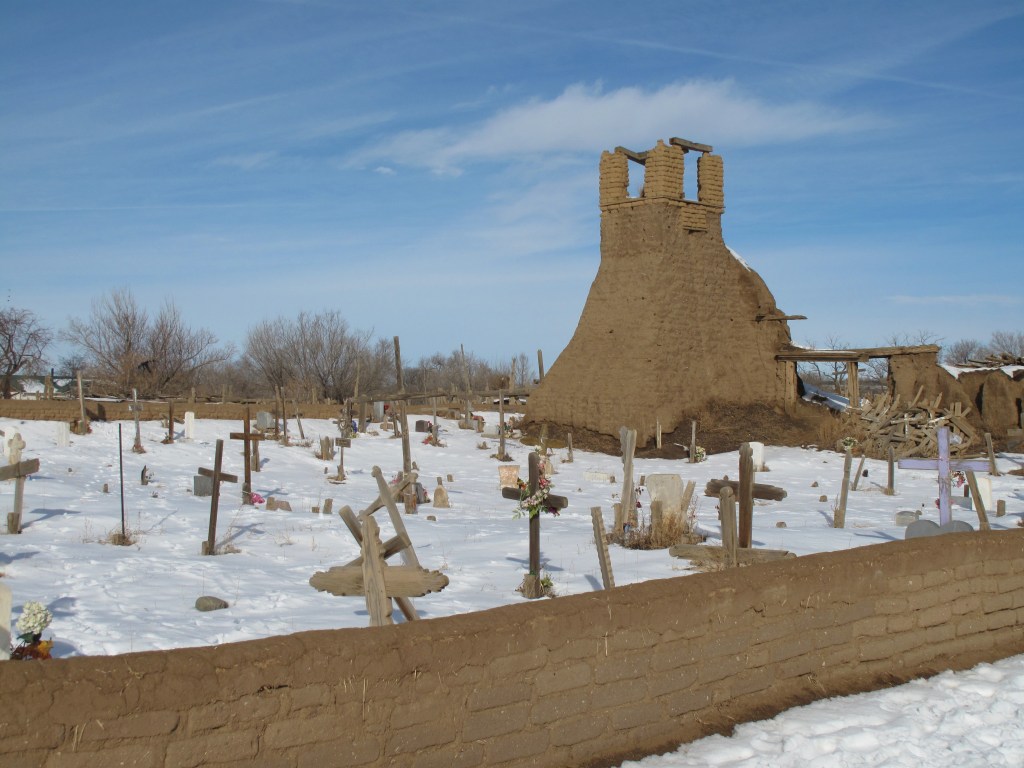
Old graveyard. Taos Pueblo

All photos were taken by the author in January 2007 or January 2010.

A list of all photo posts from the American County Seats series in TimManBlog can be found here.

Donations are happily accepted if you’d like to help defer my costs.
Thanks,
Tim

One-Time
Monthly
Yearly

Make a one-time donation

Make a monthly donation

Make a yearly donation

Choose an amount

¤5.00
¤15.00
¤100.00
¤5.00
¤15.00
¤100.00
¤5.00
¤15.00
¤100.00

Or enter a custom amount

¤

Your contribution is appreciated.

Your contribution is appreciated.

Your contribution is appreciated.

DonateDonate monthlyDonate yearly
Christmastime in Johnson City, Texas

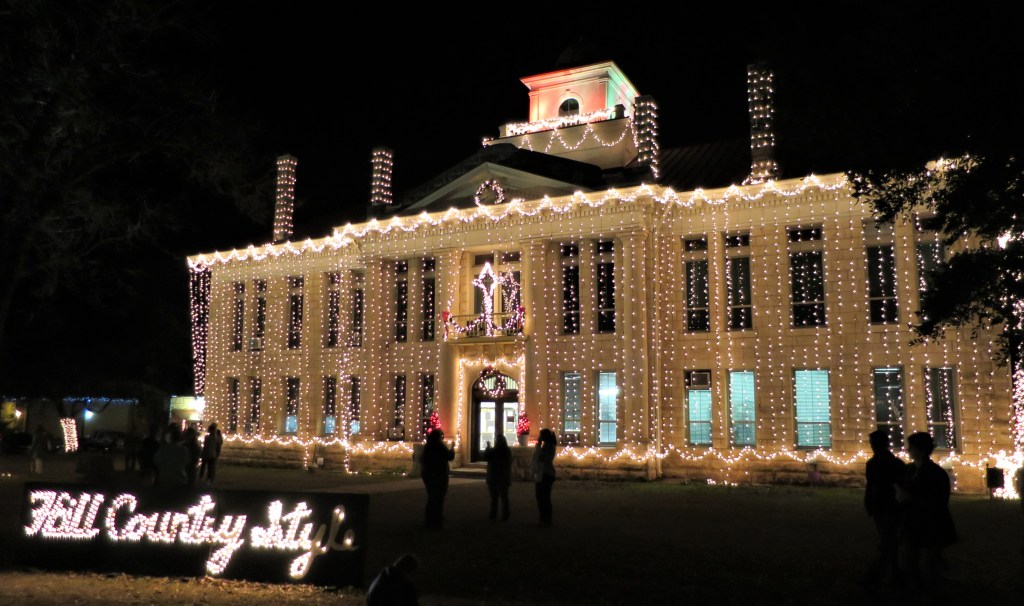
Blanco County Courthouse showing its ‘Hill Country Style.’ Johnson City, Texas

December 28, 2019

Texans are known for many things, but a knack for understatement isn’t one of them. During my recent visits there (December 2015 and 2016) I collected several photos which demonstrate that point.

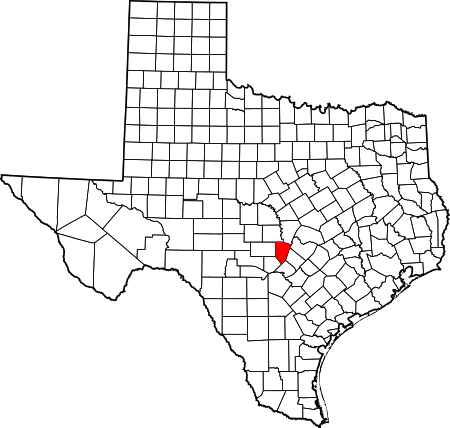
Blanco County in the state of Texas

The basic idea is (of course) that everything is bigger in Texas, including Christmas lights. Here, the county covered its courthouse with a vertical string of lights every 10-12 inches all around the building. As a tourist sign directed, “to find the courthouse, just follow the glow.”

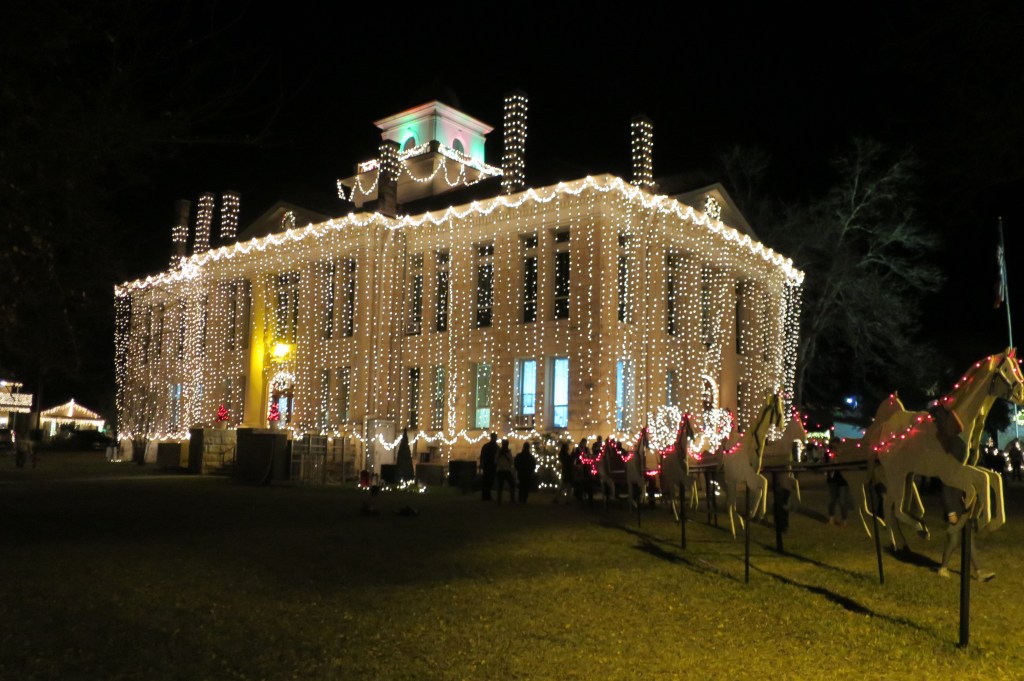
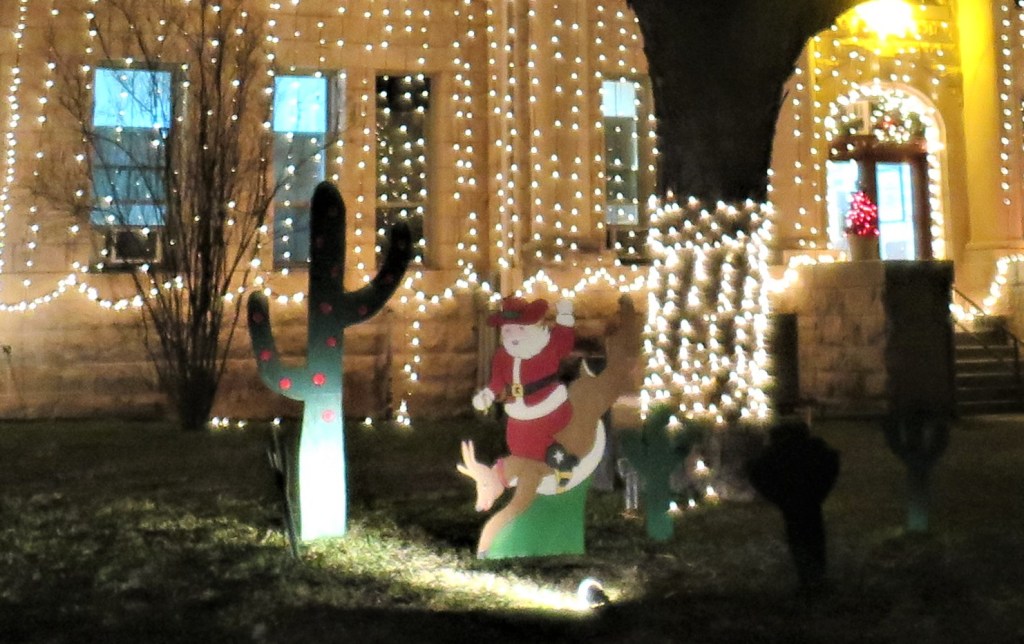
Displays and ornaments fill the courthouse grounds until little bare ground remains. These folks set up a reindeer corral, lighted snowmen, Santa riding a bucking bronco, and more.

Courthouse with lawn ornaments
Santa riding a bucking bronco of a reindeer
Blanco County Courthouse in daylight

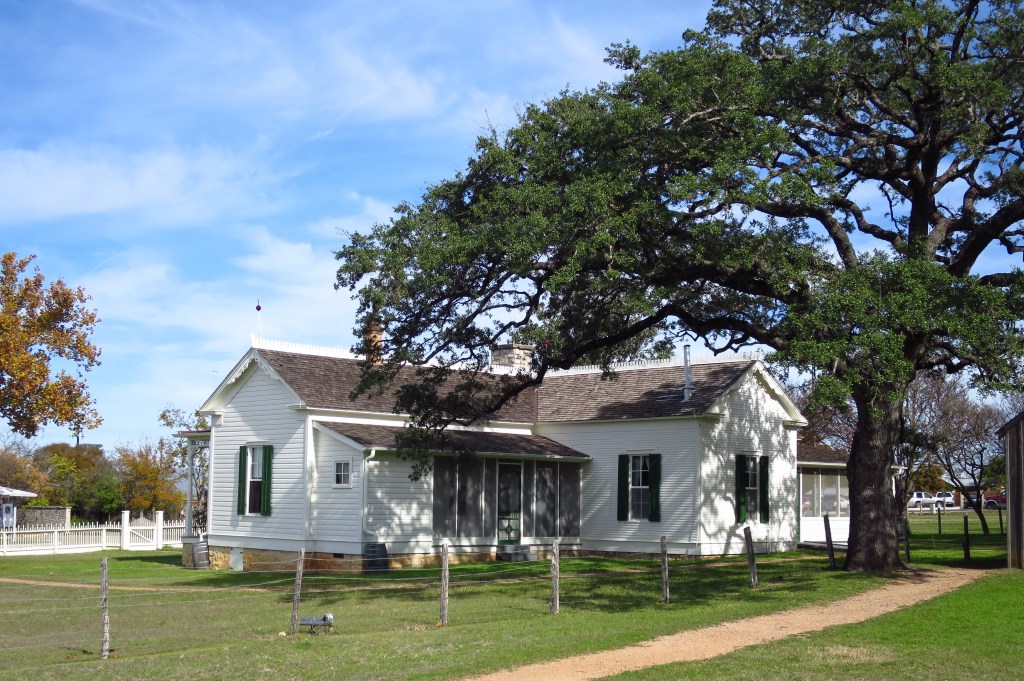
Students of the American Presidency will recognize Johnson City as the hometown of its namesake Lyndon Baines Johnson, 37th president of the United States. The town was founded in 1879 by Jonas Polk Johnson, nephew of LBJ’s grandfather. Its population today is approximately 1,600 persons.

Lyndon Johnson’s boyhood home. Johnson City, Texas

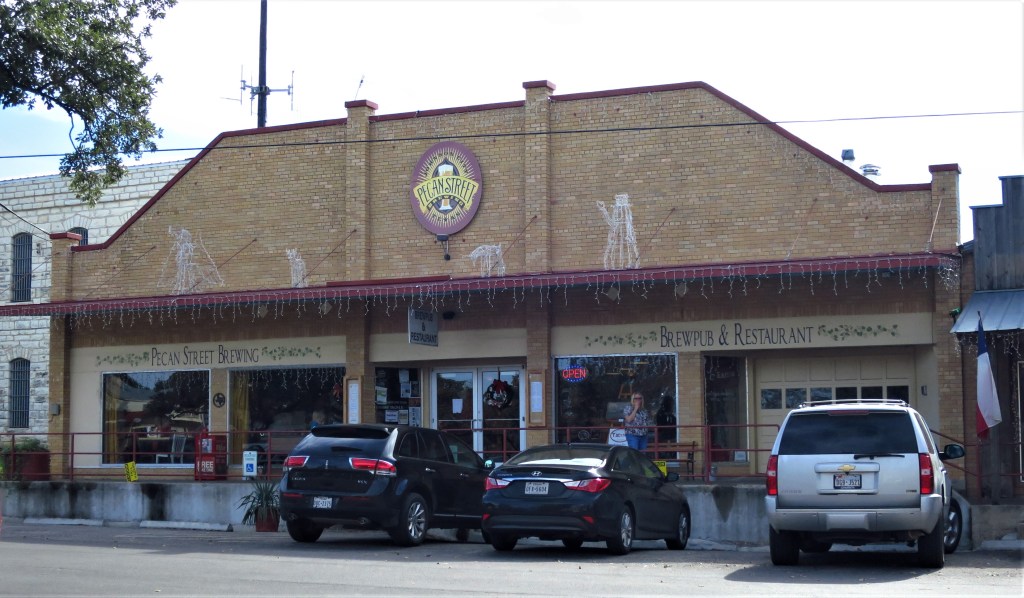
Because of President Johnson, Johnson City draws tourists year-round, keeping small town merchants busy. There’s a brewpub across from the courthouse and a few art galleries nearby.

Pecan Street Brewing. Johnson City, Texas
Along Nugent Avenue in Johnson City

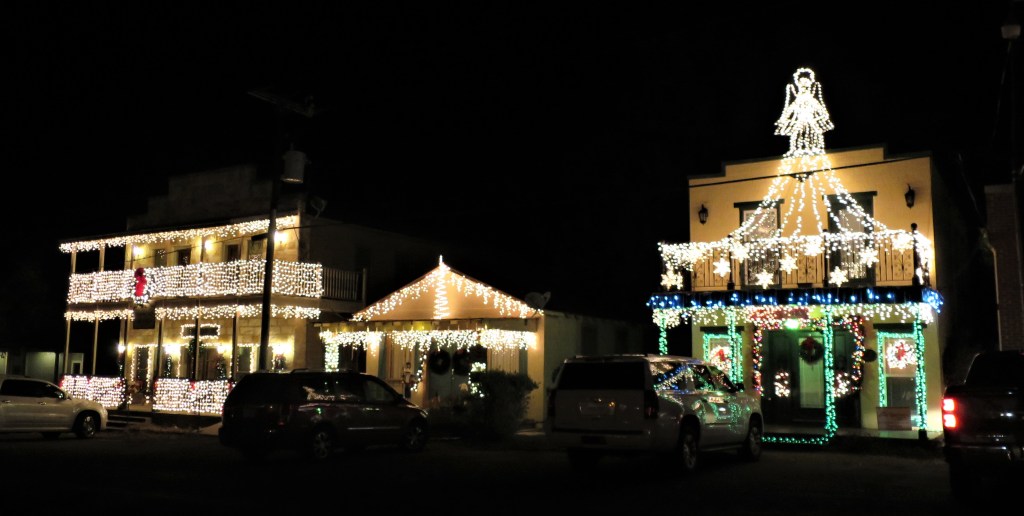
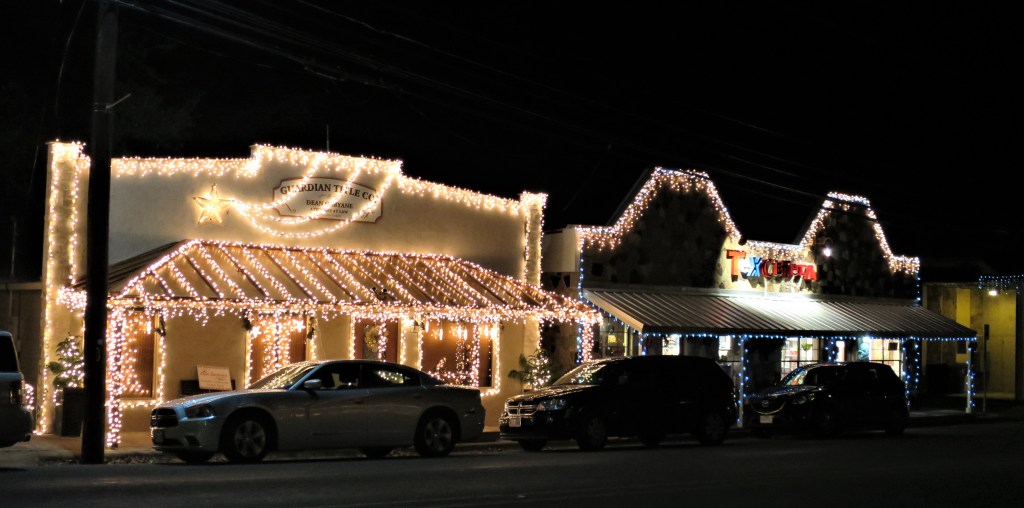
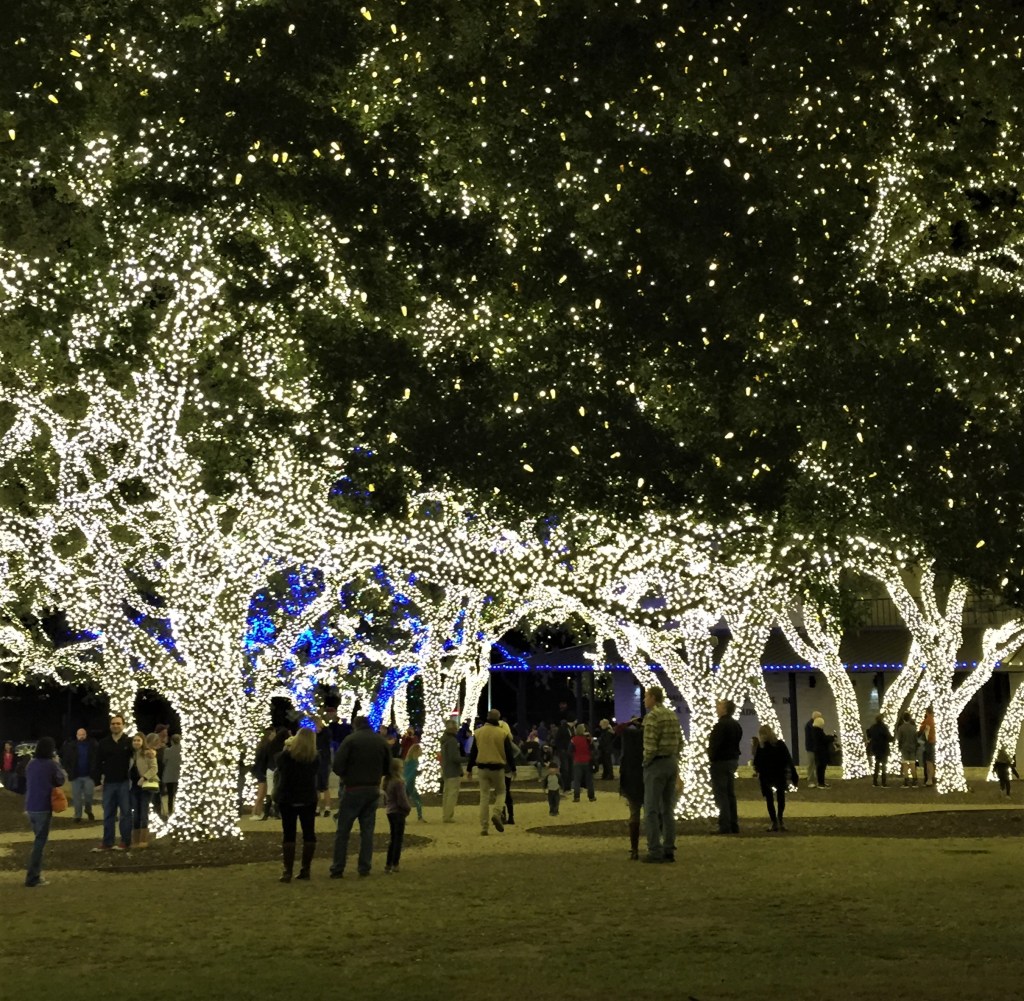
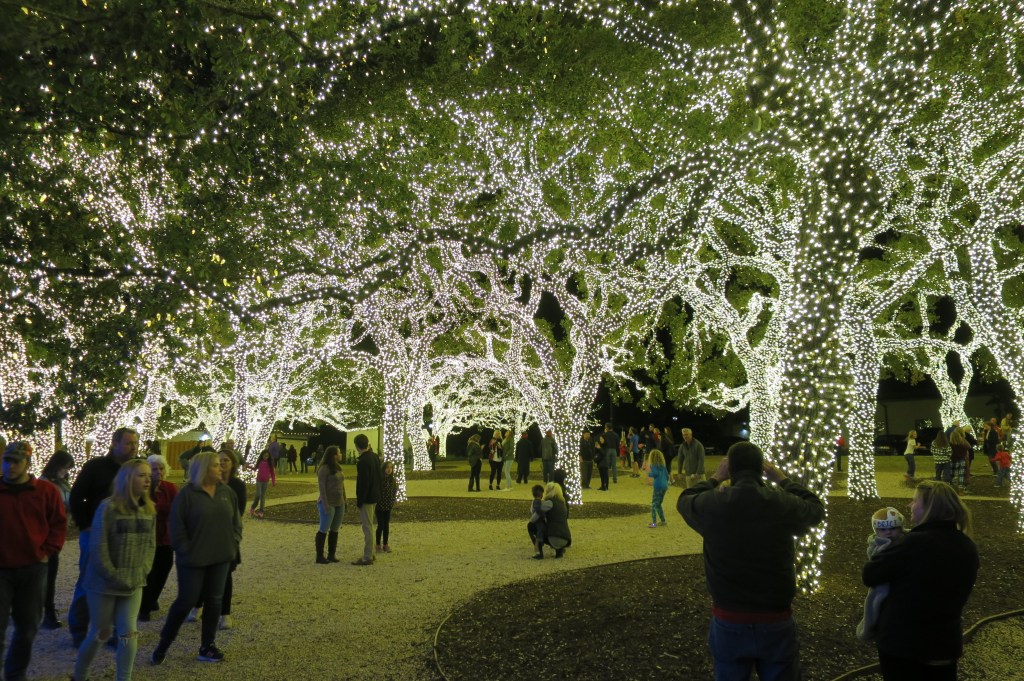
At Christmastime the lights go up, with nary an understatement to be seen.

Christmastime in Johnson City, Texas
Christmas lights in Johnson City, Texas

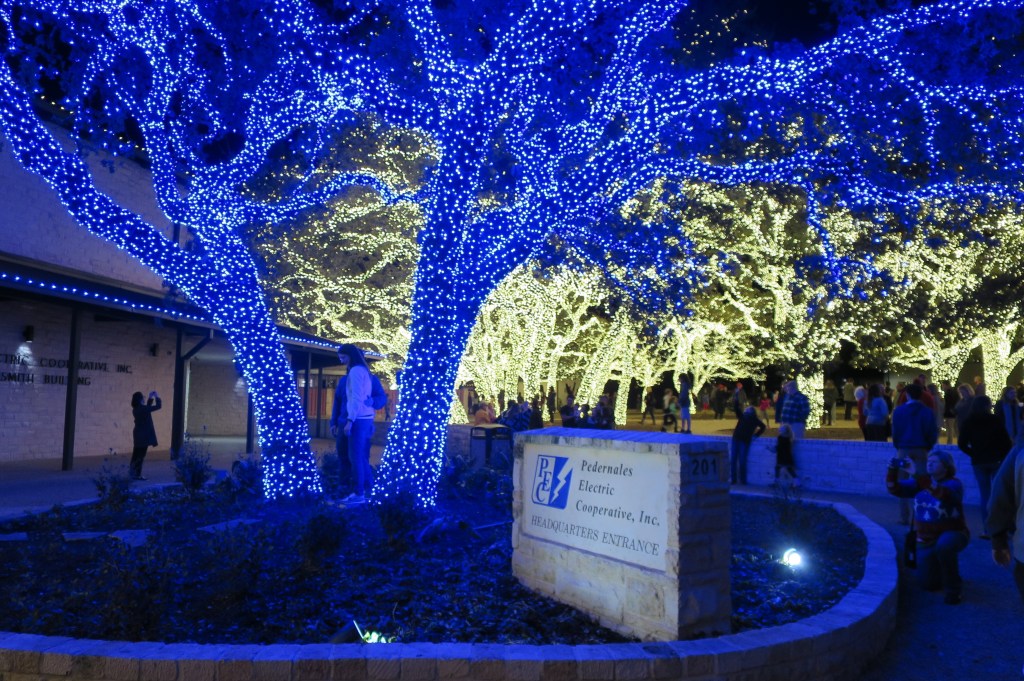
President Lyndon Johnson once said that “Of all the things I have ever done, nothing has given me as much satisfaction as bringing power to the Hill Country of Texas.” LBJ can rightly take credit for establishing the Pedernales Electric Cooperative (PEC) in 1938, which brought electricity to the rural Hill Country. The PEC’s headquarters are a few blocks from the courthouse. Its legacy can be seen — BRIGHTLY — below:

Christmas light show at the Pedernales Electric Cooperative

Each Christmas flocks of tourists come to Johnson City to see this spectacular light show. The little town can suddenly get quite busy, more than the little Pecan Street Brewing company can handle.

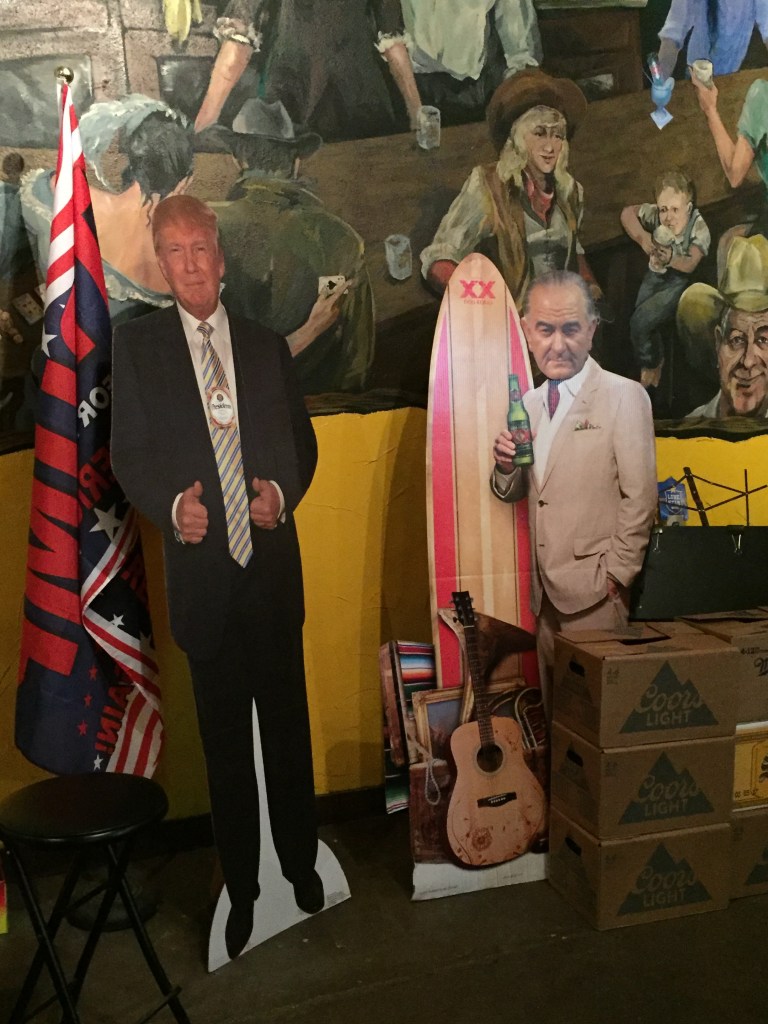
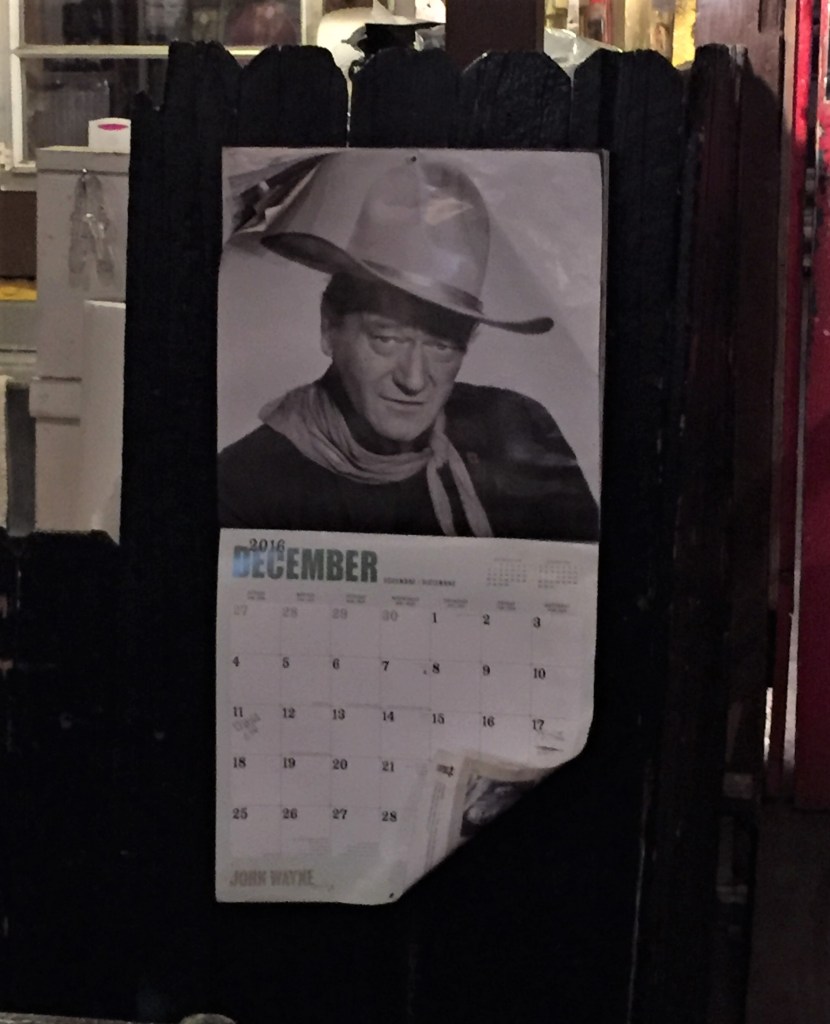
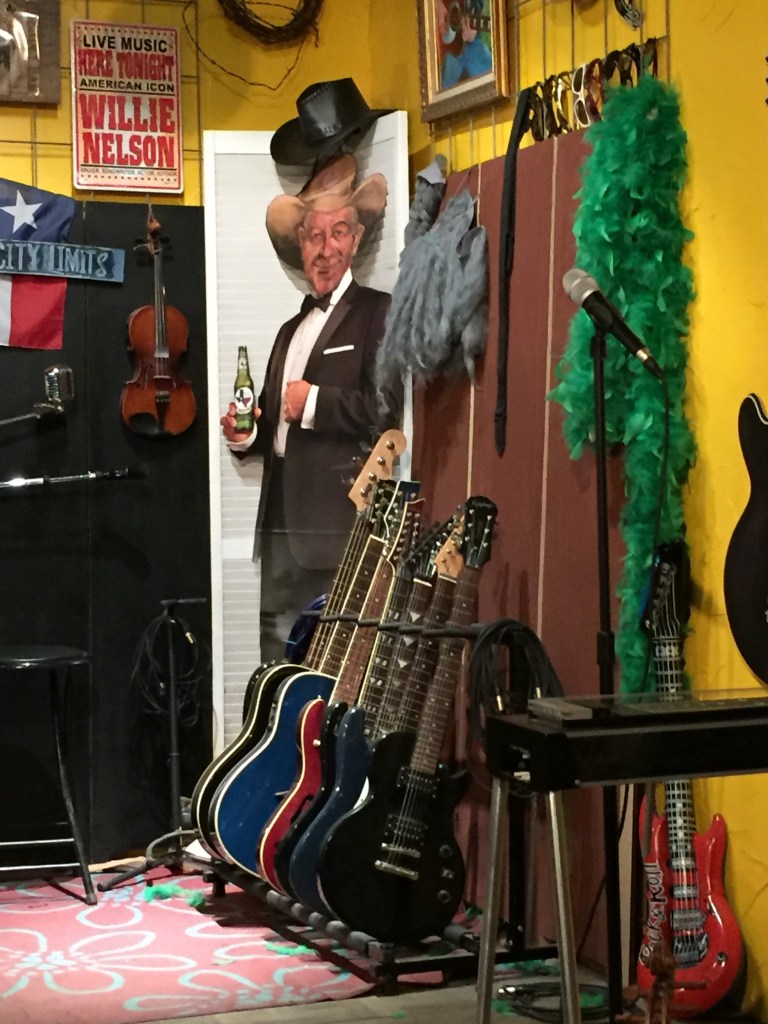
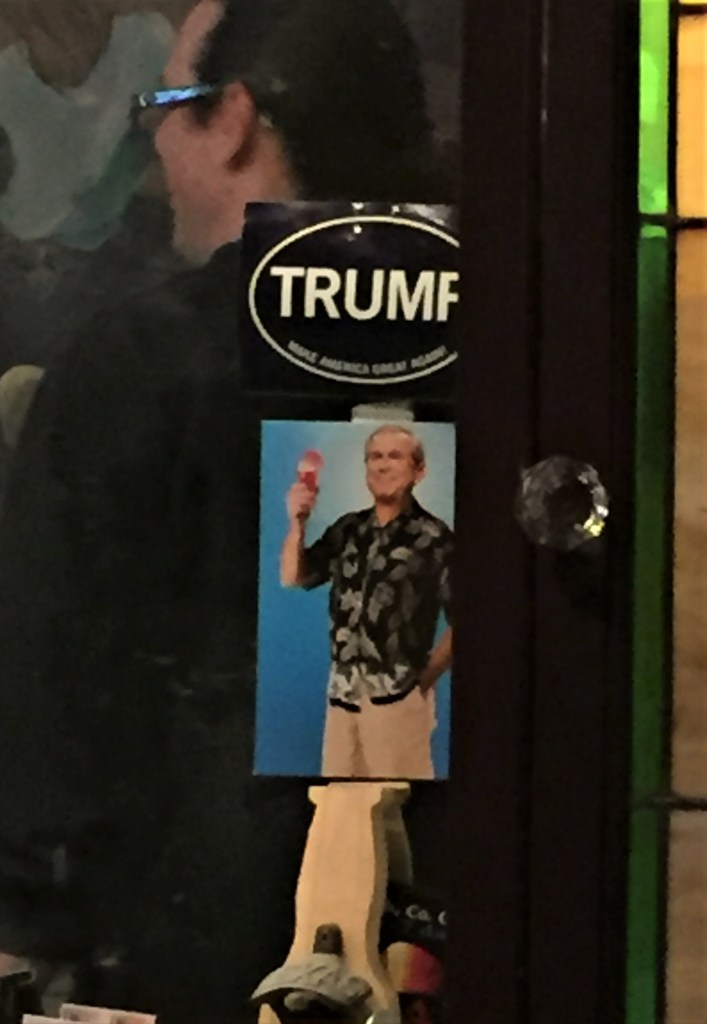
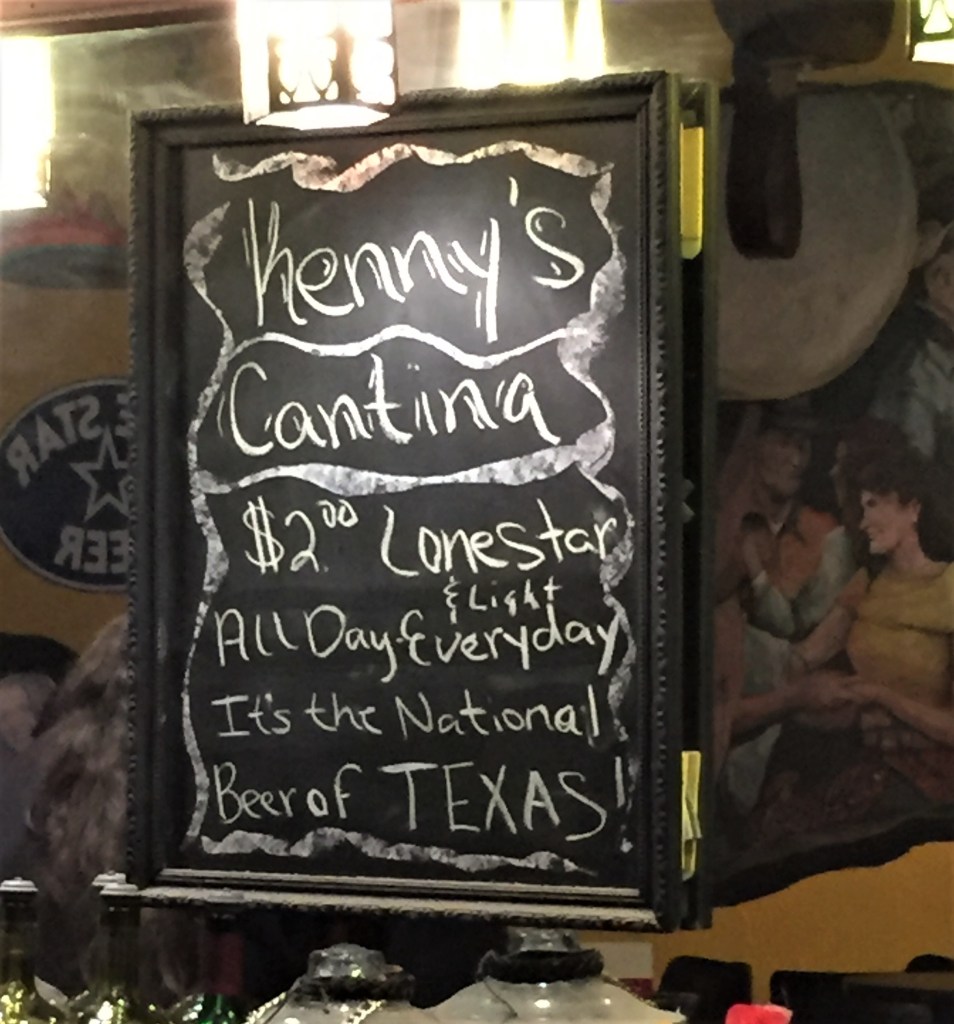
Feeling very thirsty and not wanting to stand in line at a crowded brewpub full of tourists, I discovered a little hole-in-the-wall tavern around the corner called Kenny’s Cantina, where I could enjoy a few Lone Stars in peace — a place where the locals drink. As you can see, these Texan folk don’t see much need for understatement, preferring to let you know — beyond any doubt — exactly who their heroes are.

Kenny’s Cantina, December 2016

Here’s to finding that spot where the locals go. Have a very Merry Christmas and a Happy 2020!

All photos by the author. Photos were taken on December 9, 2015, and December 21, 2016.


A list of all photo posts from the American County Seats series in TimManBlog can be found here.

All photos were taken by the author on January 15, 2013.

I’m trying to travel to all of America’s county courthouses, and each month a post about my visit to the most interesting county seats. It’s only a hobby — but donations are greatly appreciated to help defer my costs.
Thanks,
Tim

One-Time
Monthly
Yearly

Make a one-time donation

Make a monthly donation

Make a yearly donation

Choose an amount

¤5.00
¤15.00
¤100.00
¤5.00
¤15.00
¤100.00
¤5.00
¤15.00
¤100.00

Or enter a custom amount

¤

Your contribution is appreciated.

Your contribution is appreciated.

Your contribution is appreciated.

DonateDonate monthlyDonate yearly

Adventure and Victory: Frederick, Oklahoma

November 30, 2019

It’s been six years now since I had the pleasure of finding Frederick, Oklahoma on a warm Monday afternoon. I had no travel agenda that day save to find the Tillman County Courthouse and the town of Frederick which is its seat. I didn’t realize that I was visiting the home of two extraordinary explorers known as “The Abernathy Boys.”

The Abernathy Boys of Tillman County, Oklahoma

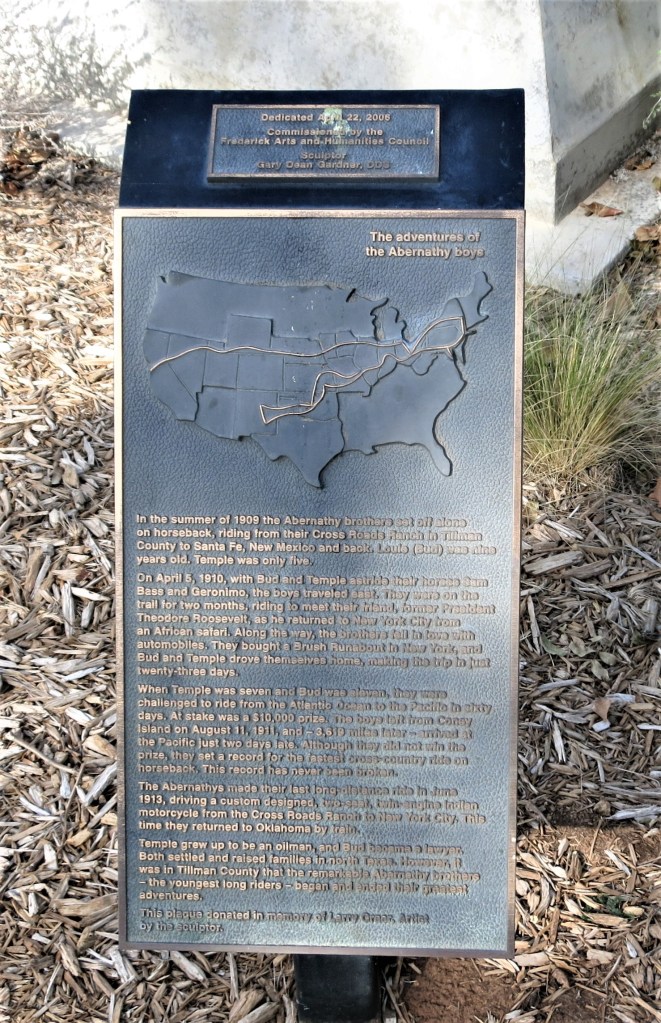
The photo above shows the Abernathy Boys at the height of their fame — ages 9 and 5. The statues sit on the Tillman County Courthouse lawn. A nearby plaque provides their story much better than I can paraphrase:

The Adventures of the Abernathy Boys

In the summer of 1909, the Abernathy boys set off on horseback, riding from their Cross Roads Ranch in Tillman County to Santa Fe, New Mexico, and back. Louis (Bud) was nine years old. Temple was only five.

On April 5, 1910, with Bud and Temple astride their horses Sam Bass and Geronimo, the boys traveled east. They were on the trail for two months, riding to meet their friend, former President Theodore Roosevelt, as he returned to New York City from an African safari. Along the way, the brothers fell in love with automobiles. They bought a Brush Runabout in New York, and Bud and Temple drove themselves home, making the trip in just twenty-three days.

When Temple was seven and Bud was eleven, they were challenged to ride from the Atlantic Ocean to the Pacific in sixty days. At stake was a $10,000 prize. The boys left from Coney Island on August 11, 1911, and – 3,619 miles later – arrived at the Pacific just two days late. Although they did not win the prize, they set a record for the fastest cross-country ride on horseback. This record has never been broken.

The Abernathys made their last long-distance ride in June 1913, driving a custom-designed, two-seat, twin-engine motorcycle from the Cross Roads Ranch to New York City. This time they returned to Oklahoma by train.

Temple grew up to be an oilman, and Bud became a lawyer. Both settled and raised families in north Texas. However, it was in Tillman County that the remarkable Abernathy Brothers – the youngest long riders – began and ended their greatest adventures.

Pretty good for a couple of kids, don’t you think? More details here from Wikipedia.

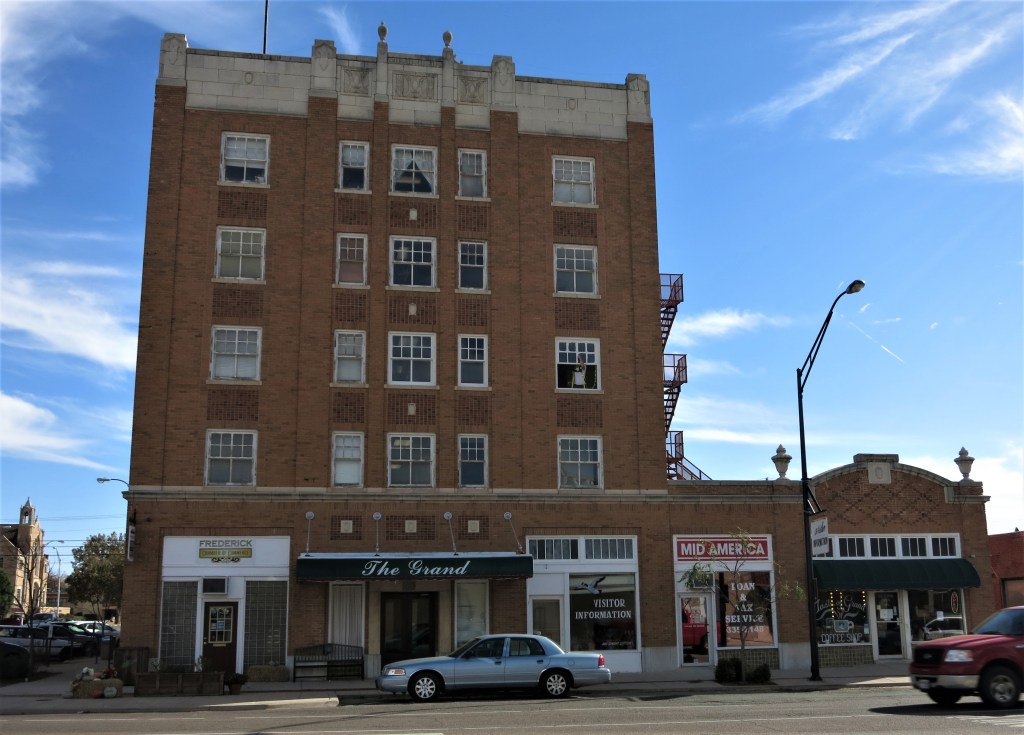
After reading about those two young adventurers I wandered over to the Taste of Grand coffee shop for some lunch so I could digest what I had just seen and read. The shop is located inside the old Grand Hotel, a remnant of a bygone era.

The Grand Hotel. Frederick, Oklahoma

A Taste of Grand is actually a few doors off Grand Avenue but in the shadow of the old 5-story hotel. The old art deco building seems a bit out of place these days and in fact, no longer operates as a hotel; nevertheless, it remains the largest building in Frederick — the courthouse and the First Baptist Church following behind.

Grand Hotel

Taste of Grand was run by a sweet little old lady. She wore a pair of powder blue stretch pants and horned-rim glasses. I was her only customer at lunchtime. She served me some of her homemade chunky potato soup and a pepper-jack grilled cheese sandwich. Good potato soup is always flavored with onion and mushroom and my hostess was smart enough to know that. After serving my food she turned on a recording of Gospel music for my dining enjoyment. “Amazing Grace” and “O Happy Day!” complement a simple meal quite well on a sunny Monday. Just add in a homemade chocolate chip oatmeal cookie, topped with a pecan half, and you have one certifiably quaint small-town experience.

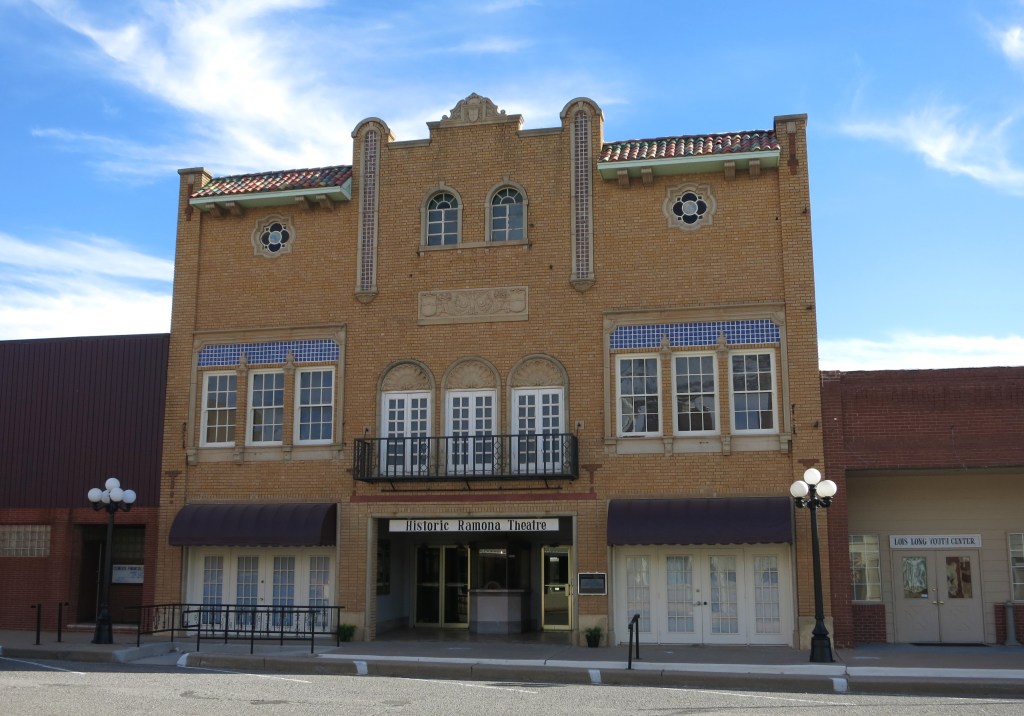
Historic Ramona Theatre. Frederick, Oklahoma
Using 4 Stop signs as a traffic island is the local style for 4-way stops.

While enjoying my leisure and wondering how the Abernathy Boys had pulled off their explorations, my thoughts turned to the explorations made by Lewis and Clark. I remember a story of how, upon their return to Washington in 1807, they were toasted at the White House by poet Joel Barlow. The poet raised his glass and toasted: “To Victory over Wilderness which is more interesting than that over Man!”

Great words. Even though Lewis & Clark never traversed the land of Oklahoma, their victory over Wilderness is repeated here in various forms.

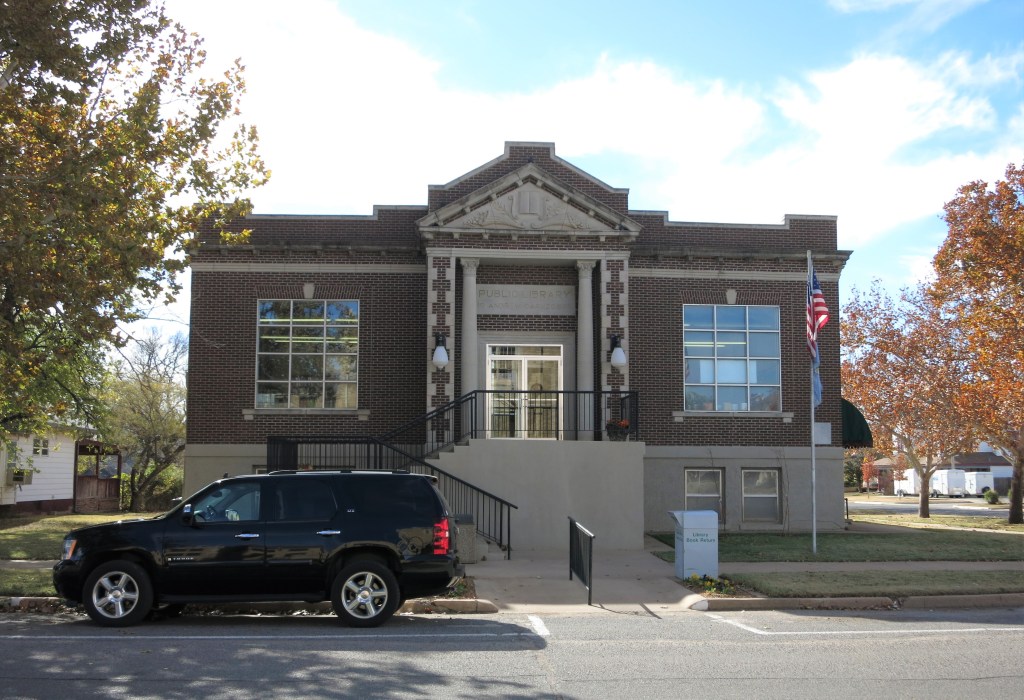
Here’s a good example. Victory over Wilderness requires knowledge. Call it Victory over Ignorance:

Carnegie Library. Frederick, Oklahoma

Justice must be served. Here is the Tillman County Courthouse — a Victory over Lawlessness:

Tillman County Courthouse
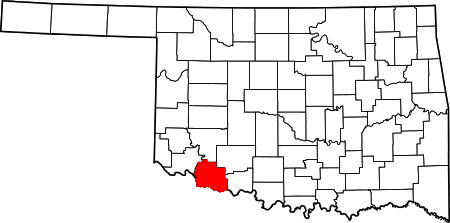
Tillman County in the state of Oklahoma

This (one may argue) represents a Victory over Licentiousness (although it may be more of a victory over Man than over the Wilderness):

First Baptist Church of Frederick, Oklahoma

Although Man cannot live on bread alone, he must have bread in the first place. Here is Victory over Hunger:

Grain Elevators

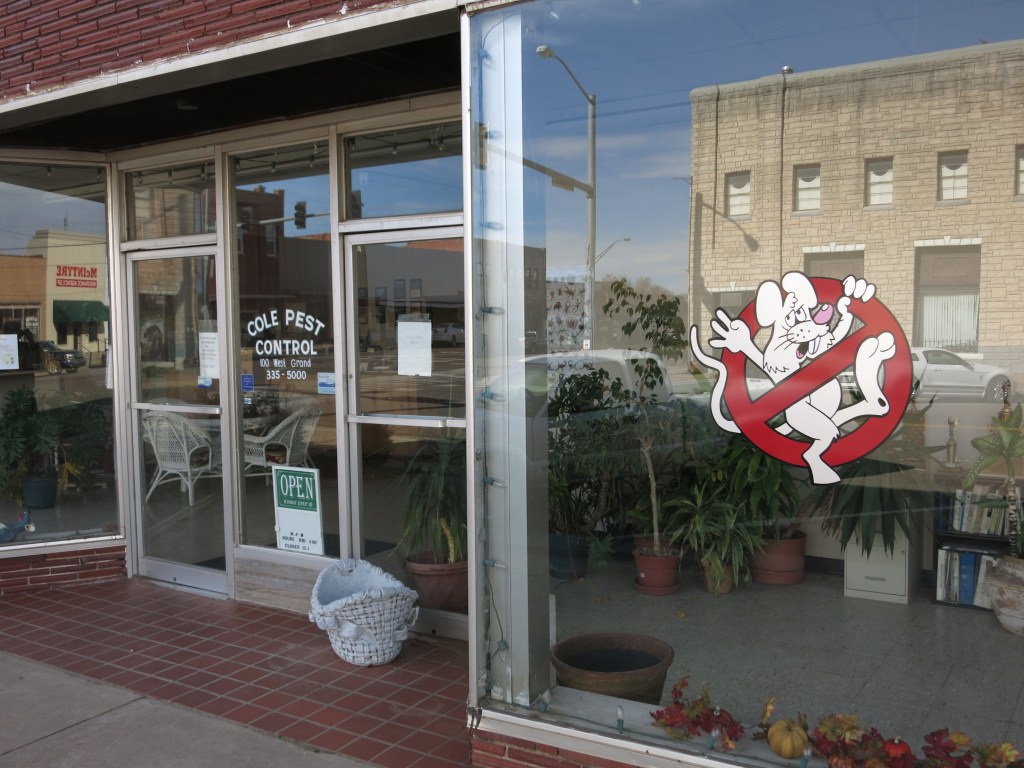
Finally, nothing establishes Victory over Wilderness more than this — VICTORY OVER PESTS!

That’s all from Frederick. Hoping you have a chance to celebrate your own victories over the Wilderness.


All photos by the author. Photos taken November 18, 2013.

A list of all photo posts from the American County Seats series in TimManBlog can be found here.

I’m trying to travel to all of America’s county courthouses, and each month a post about my visit to the most interesting county seats. It’s only a hobby — but donations are greatly appreciated to help defer my costs.
Thanks,
Tim

One-Time
Monthly
Yearly

Make a one-time donation

Make a monthly donation

Make a yearly donation

Choose an amount

¤5.00
¤15.00
¤100.00
¤5.00
¤15.00
¤100.00
¤5.00
¤15.00
¤100.00

Or enter a custom amount

¤

Your contribution is appreciated.

Your contribution is appreciated.

Your contribution is appreciated.

DonateDonate monthlyDonate yearly
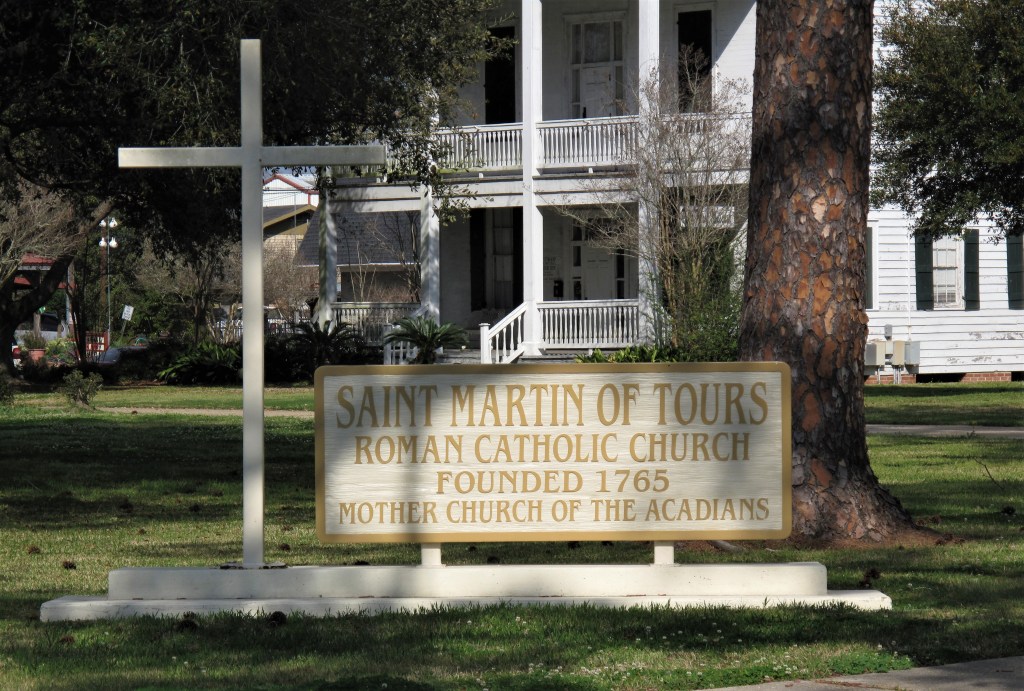
Along the Pathways of Exploration: Fort Pierre, South Dakota

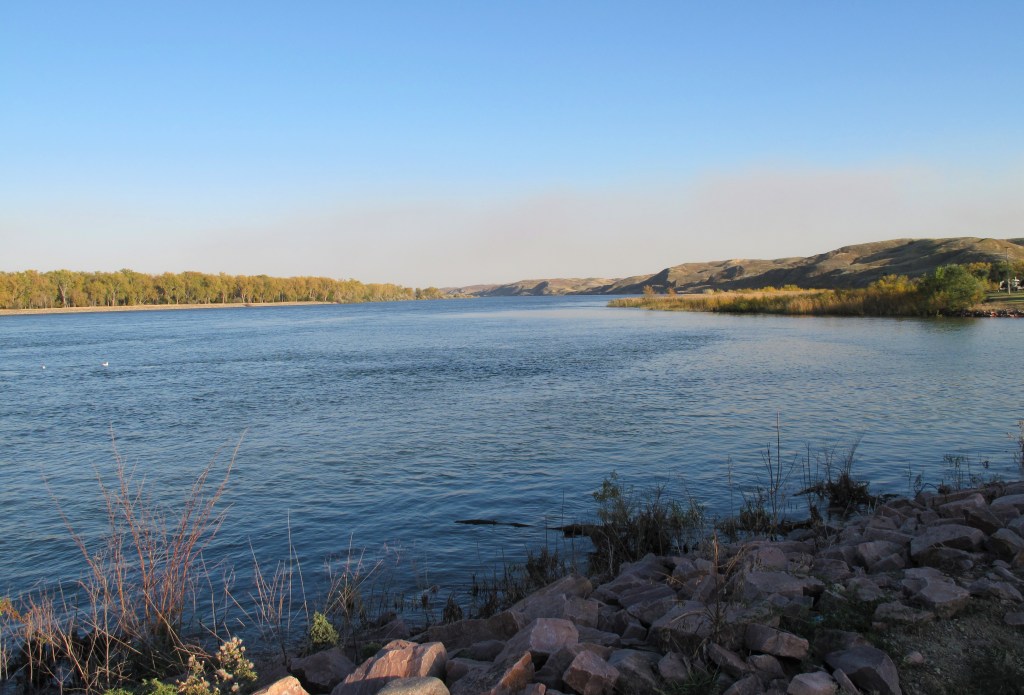
Missouri River vista at Fort Pierre, South Dakota

October 31, 2019

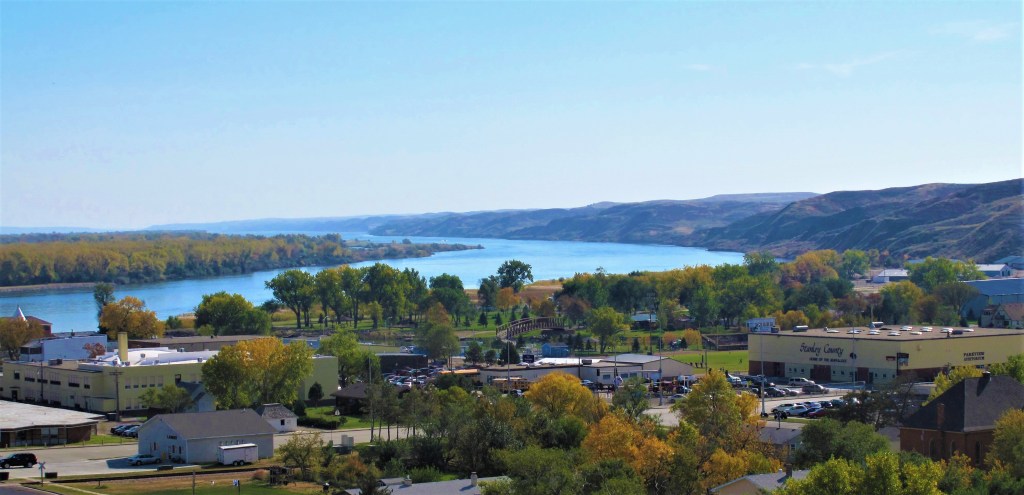
South Dakota may be sparsely populated but the landscape is grand. I passed miles and miles of fertile fields getting here, saw many herds of cattle and free antelope. The photos above and below this paragraph show the wide Missouri River in the central part of the state as taken from a hill above the old trading post of Fort Pierre.

Missouri River vista at Fort Pierre, South Dakota
Stanley County in the state of South Dakota

Clinging to the west bank of the Missouri River, Fort Pierre was founded in 1832 as Fort Pierre Chouteau, a fur-trading post. Pierre Chouteau, Jr. was a prominent fur trader from St. Louis, and his name can be found on towns and streets as far west as Montana. But Chouteau wasn’t the first white man to arrive in this area.

Not even Captains Lewis and Clark can make that claim.

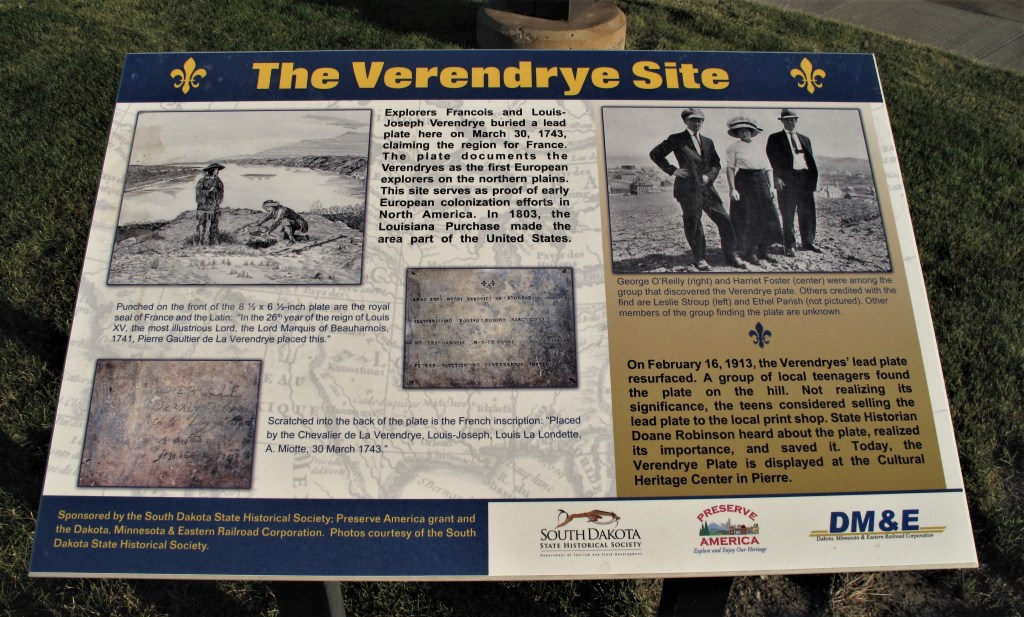
Two French explorers, Francois and Louis-Joseph Verendrye arrived here on March 30, 1743, during an expedition from French-held Quebec. Claiming the region for the King of France, the Verendrye brothers left a lead plate buried in a hill above the river to mark their claim. The Verendryes are thought to be the first Europeans to have crossed the Great Plains to see the Rocky Mountains. In 1803 the United States would purchase this claim from France as part of the Louisiana Purchase.

170 years later on February 16, 1913, two boys discovered the Verendrye’s lead plate, which had since been forgotten. The historical marker below provides further details. The grand landscape photos shown above were taken from this natural vantage point.

Historical marker at the Verendyre Site

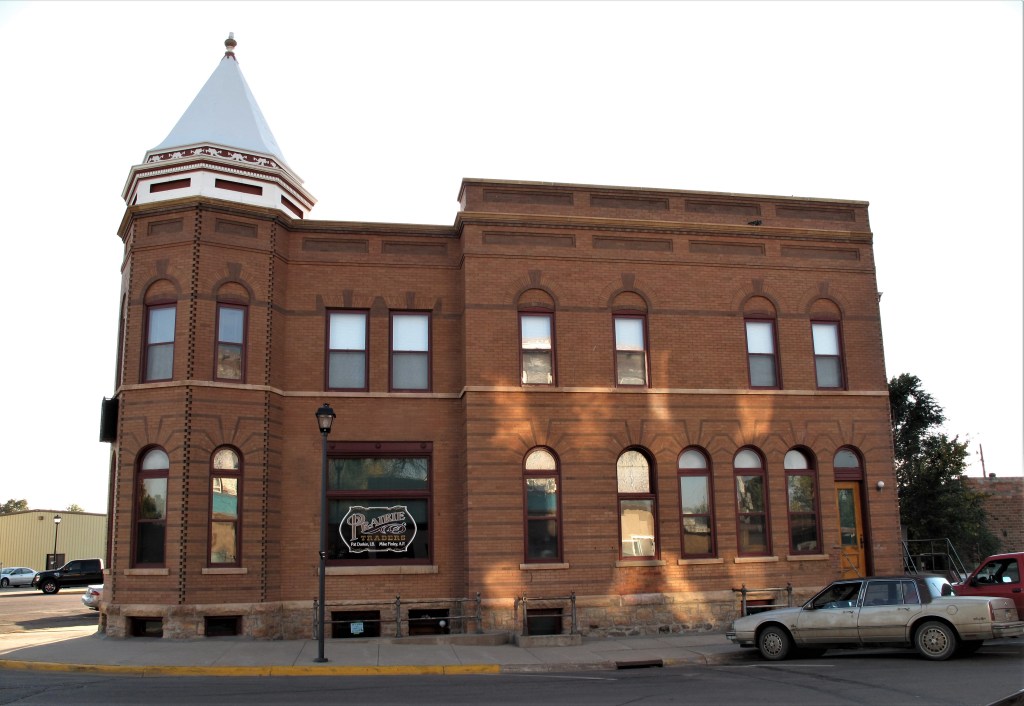
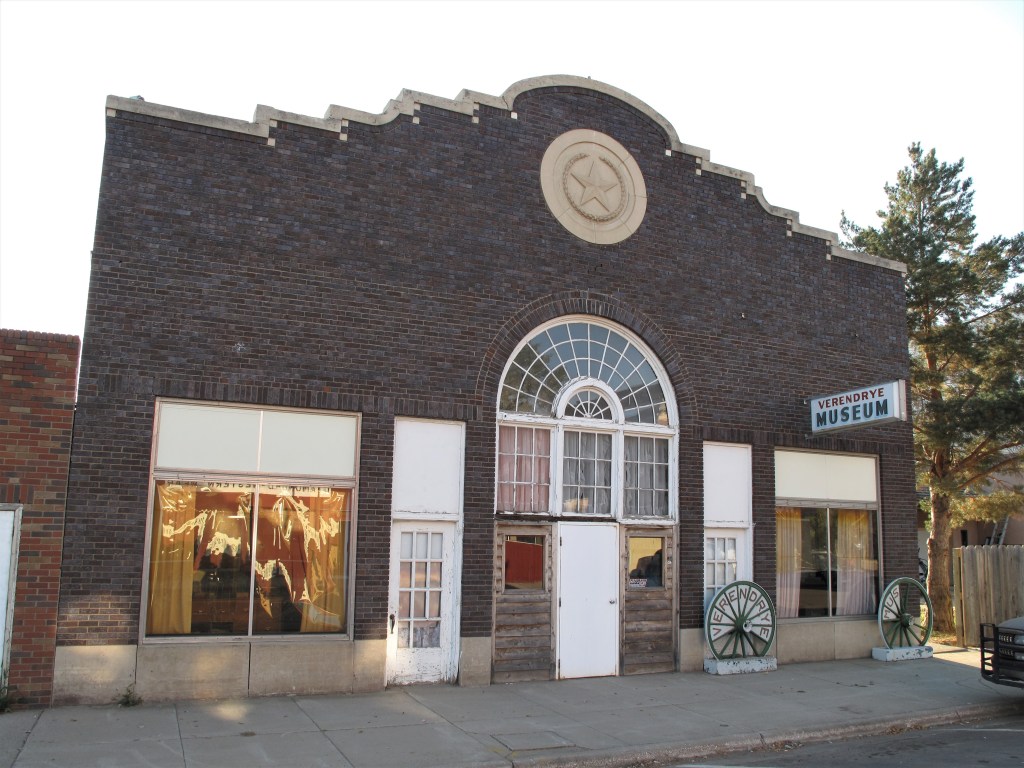
Down the hill from the Verendrye site lies the old town of Fort Pierre. It’s small — only 2,000 inhabitants today — but can still brag that it’s grown exponentially from its days as a fur trading post. Here are some photos around town. Most of these buildings can be found along Deadwood Street:

“Prairie Traders” in Fort Pierre, South Dakota
The Verendrye Museum
A vital drinking establishment serving the Fort Pierre community.
View down Deadwood Street, Fort Pierre, South Dakota

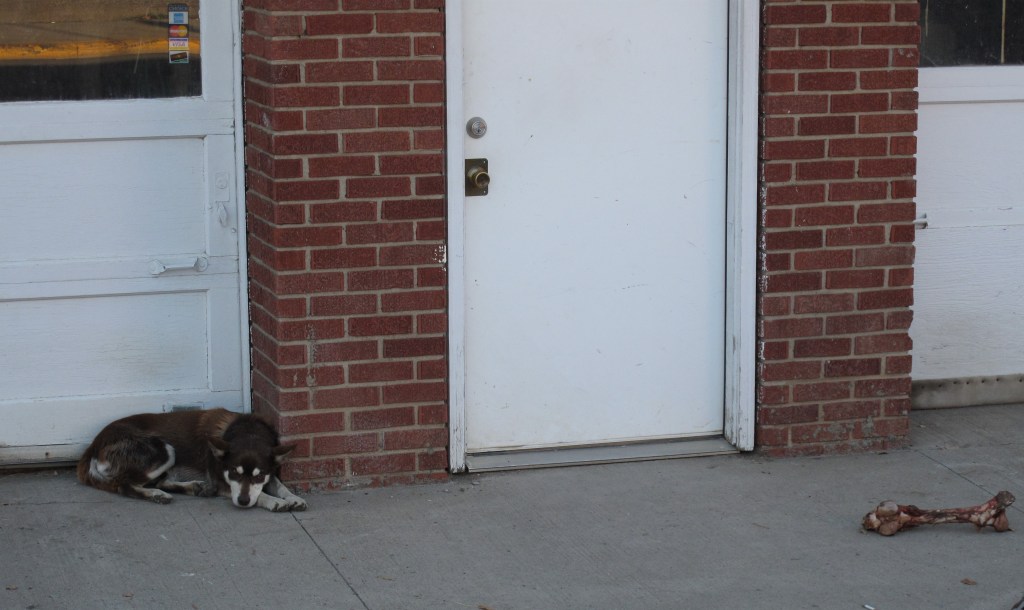
I remained very quiet while taking this next photo of a sleeping dog and a juicy bone. I was careful not to wake the dog nor approach the bone.

Sleeping dog and bone

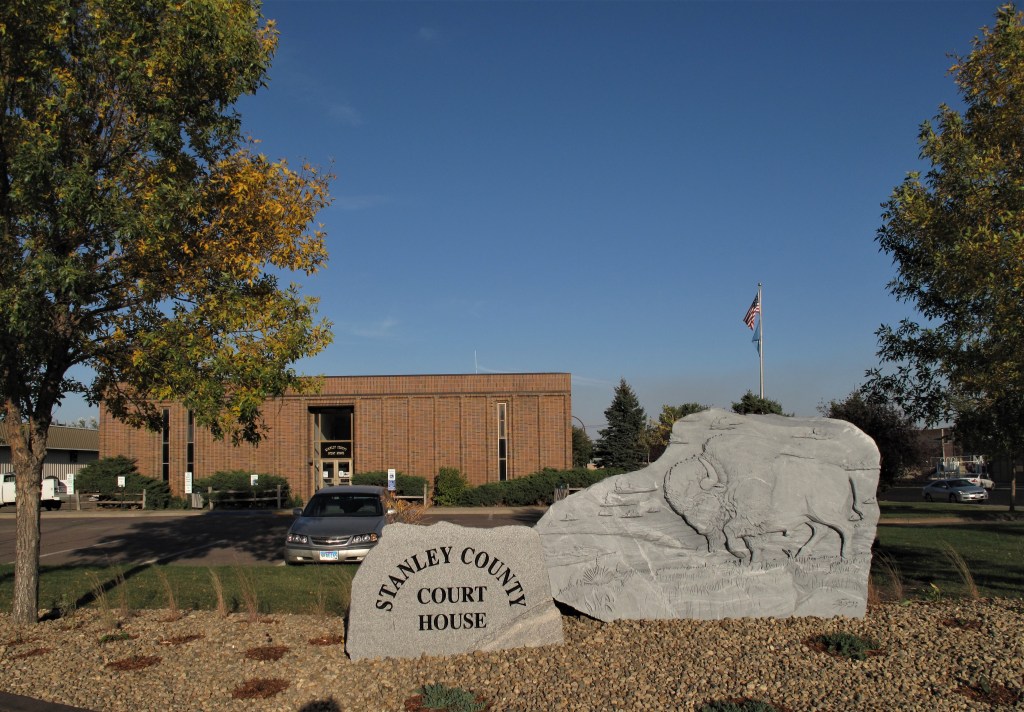
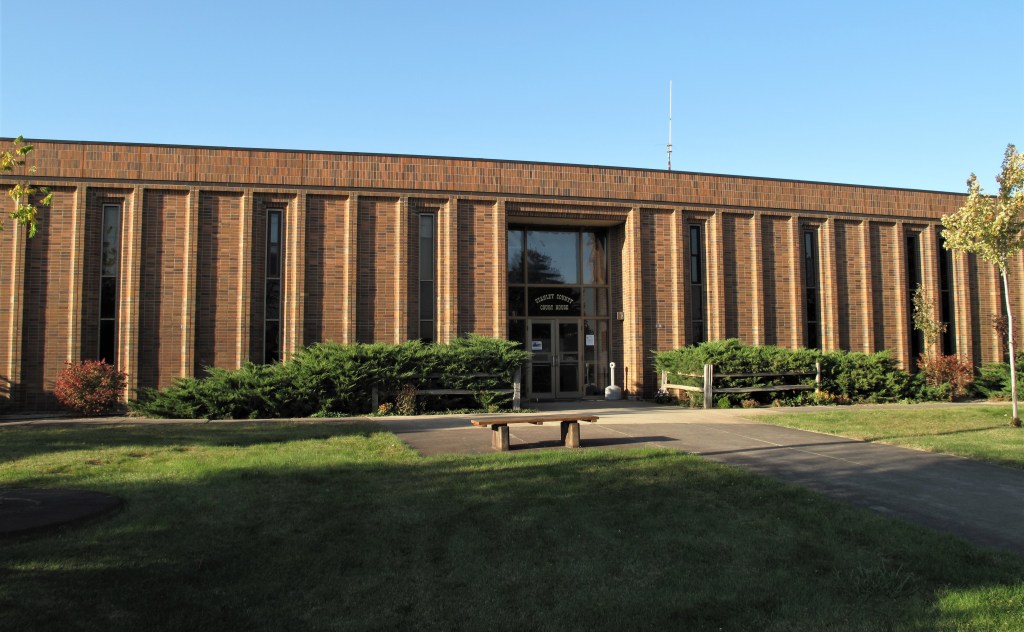
Fort Pierre is also the county seat of Stanley County, South Dakota. Their courthouse was built in 1976 and looks new and well-kept. The buffalo statue is appropriate for the region.

Stanley County Courthouse South Dakota
Stanley County Courthouse, Fort Pierre, South Dakota

There’s more history to this place than just the Verendryes though. Just two blocks south of the Verendrye Museum is a small city park at the junction of the Bad River and the Missouri. It was at this spot in late September 1804, 61 years after the Verendryes, that American explorers Captains Lewis and Clark had their famous confrontation with the Teton Sioux.

For details of the confrontation I can recommend Stephen Ambrose’s fine “Undaunted Courage,” page 170, but in short, here’s what happened. The Sioux sought a test of wills with the white explorers and demanded additional presents from Lewis and Clark — a tribute of sorts — to allow them to continue up the Missouri. The Americans refused. Guns were drawn, bows were strung and aimed, and even the American’s cannon mounted on their keelboat was aimed at the Indians onshore. But no shots were fired. The Sioux backed down, and Lewis and Clark continued on their way.

Junction of the Bad and Missouri Rivers at Fort Pierre, South Dakota

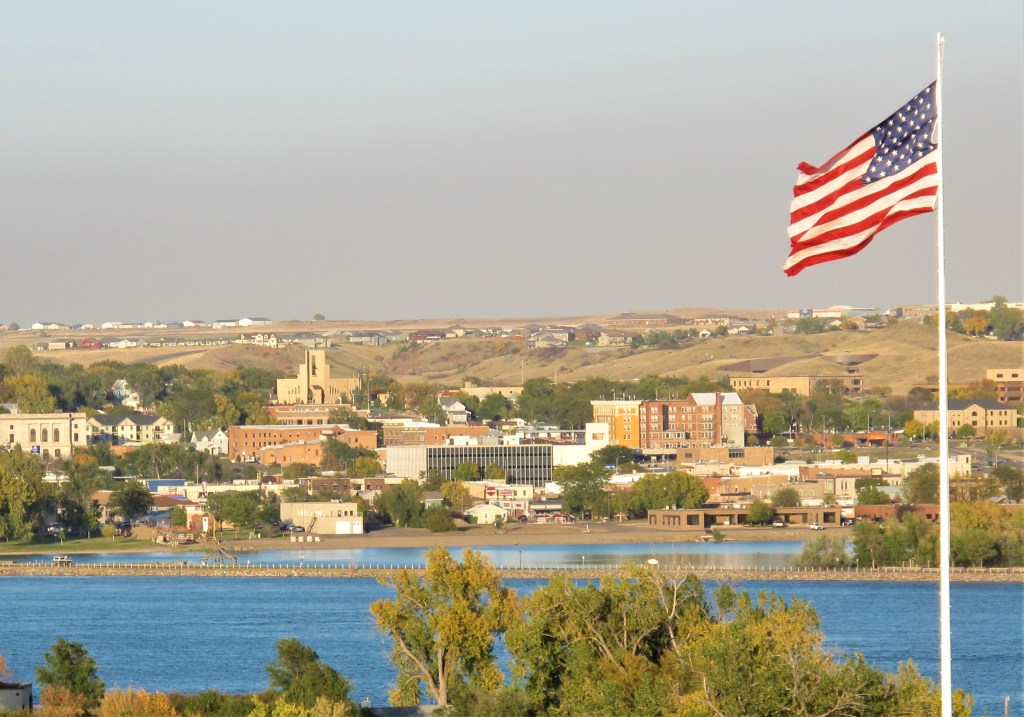
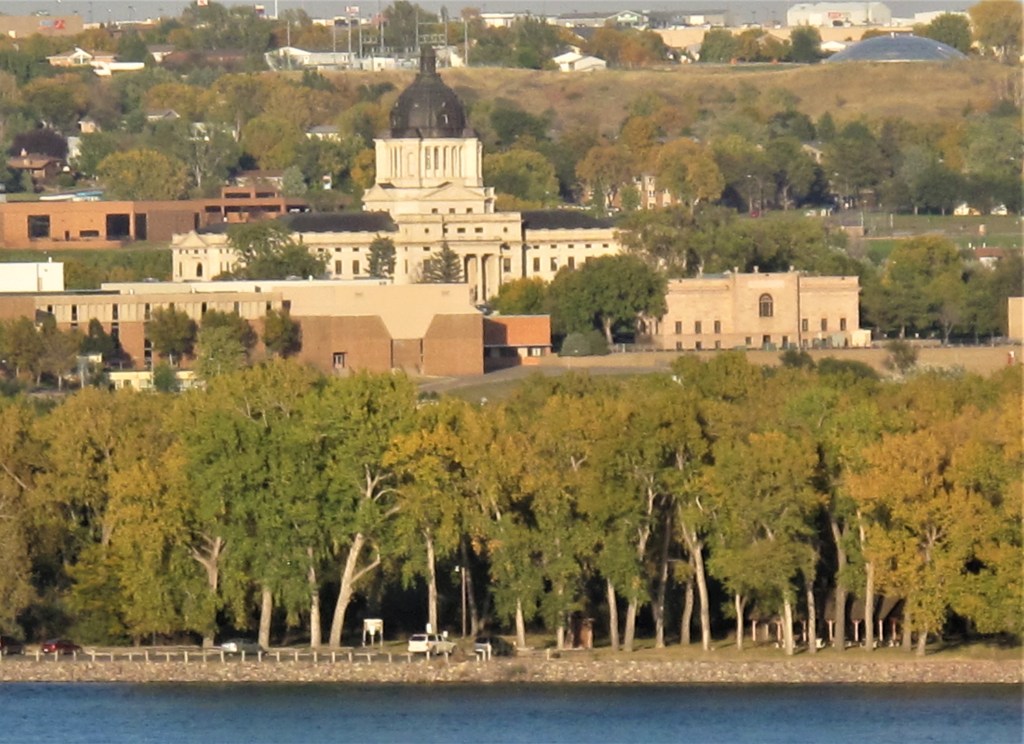
The settlement around old Fort Pierre grew slowly after its founding. By the 1840s the fur trade had declined precipitously. In 1880 the town of Pierre, South Dakota was founded on the east bank of the Missouri across from Fort Pierre. Because the railroad reached the east side of the river before the west, Pierre grew quickly and was eventually designated state capital of South Dakota.

Pierre, South Dakota as seen from the Verendrye marker across the river in Fort Pierre
South Dakota State Capitol Building in Pierre

Although Pierre has the state’s capital, Fort Pierre has a better history.


All photos taken by the author on October 7th and 8th, 2010.

A list of all photo posts from the American County Seats series in TimManBlog can be found here.

I’m trying to travel to all of America’s county courthouses, and each month a post about my visit to the most interesting county seats. It’s only a hobby — but donations are greatly appreciated to help defer my costs.
Thanks,
Tim

One-Time
Monthly
Yearly

Make a one-time donation

Make a monthly donation

Make a yearly donation

Choose an amount

¤5.00
¤15.00
¤100.00
¤5.00
¤15.00
¤100.00
¤5.00
¤15.00
¤100.00

Or enter a custom amount

¤

Your contribution is appreciated.

Your contribution is appreciated.

Your contribution is appreciated.

DonateDonate monthlyDonate yearly
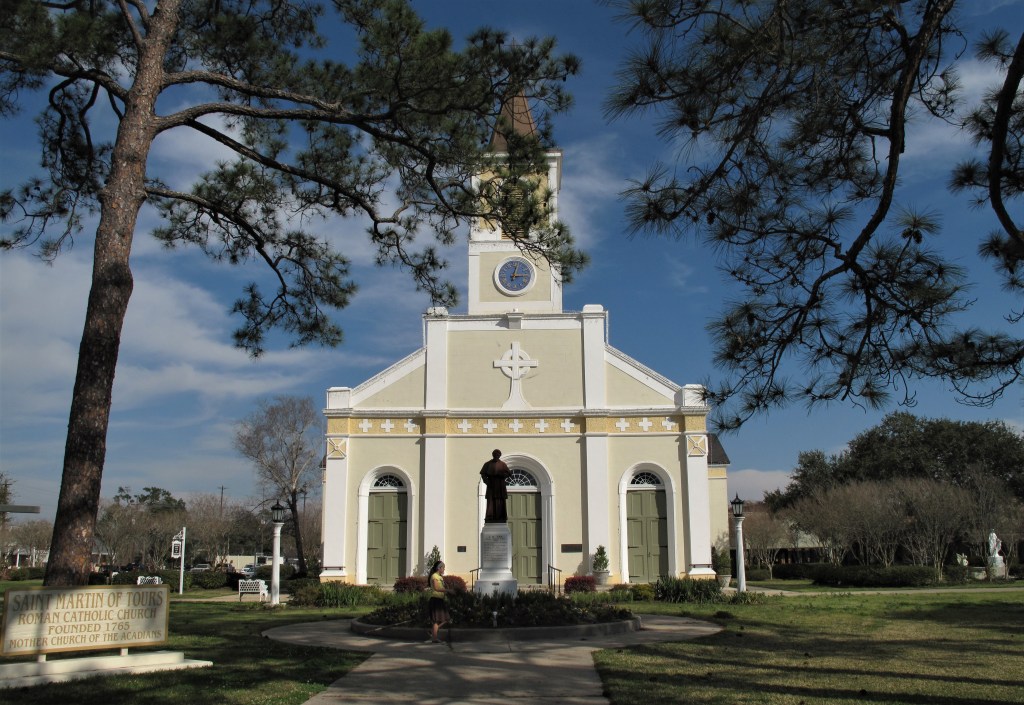
It’s a Wonderful Life in Denison, Iowa

September 29, 2019

Insignia found on all police cars in Denison, Iowa

Little Denison, Iowa is known for two things:  it is the county seat of Crawford County, Iowa; and it is the hometown of Donna Reed, a famous American actress of the mid-twentieth century. Reed (born Donna Belle Mullenger) was best known for her portrayal of Mary Hatch Bailey, wife to George Bailey in Frank Capra’s classic Christmas film “It’s a Wonderful Life.”  The town beams pride at its famous daughter and her famous role. “It’s a Wonderful Life” emblems are printed on city vehicles, including police cars. At 6:00 in the evening, local church bells ring “Auld Lang Syne” in an homage to the movie’s triumphant final scene.

They say it’s a wonderful life here; let’s see.

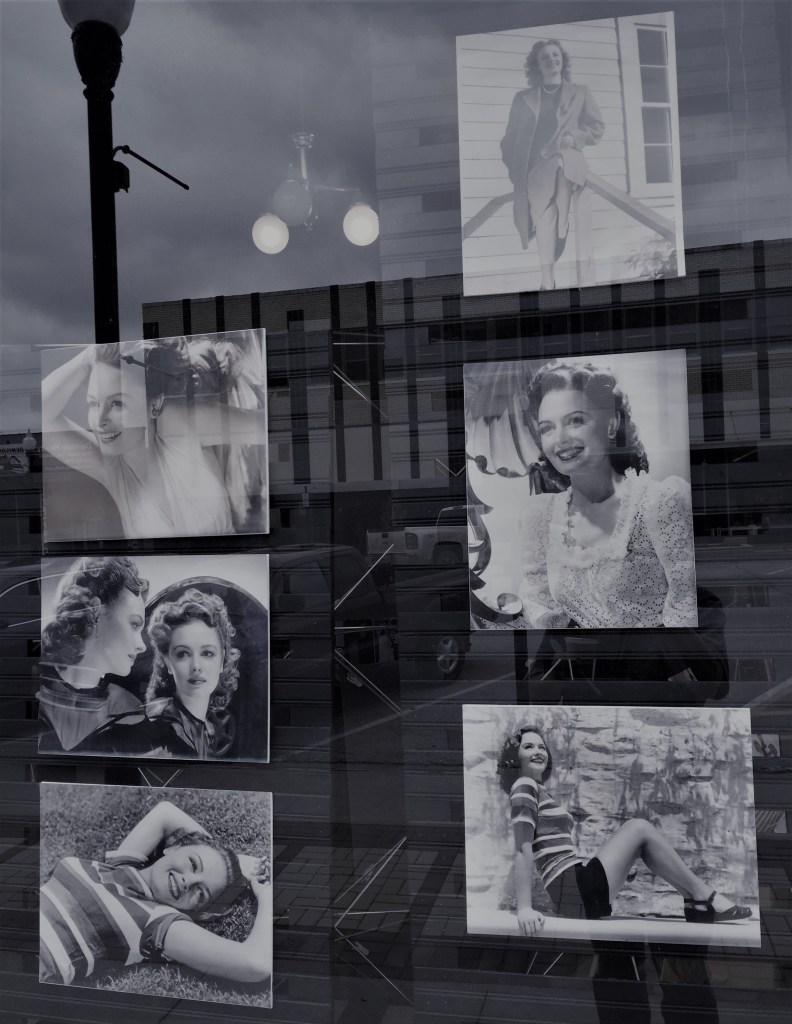
The Donna Reed Performing Arts Center is the town’s center. When I dropped by the curator asked me to come inside and review the memorabilia, which is exactly what you’d expect for a museum in small-town America.

Donna Reed Performing Arts Center, Denison, Iowa
Gallery of Donna Reed photos

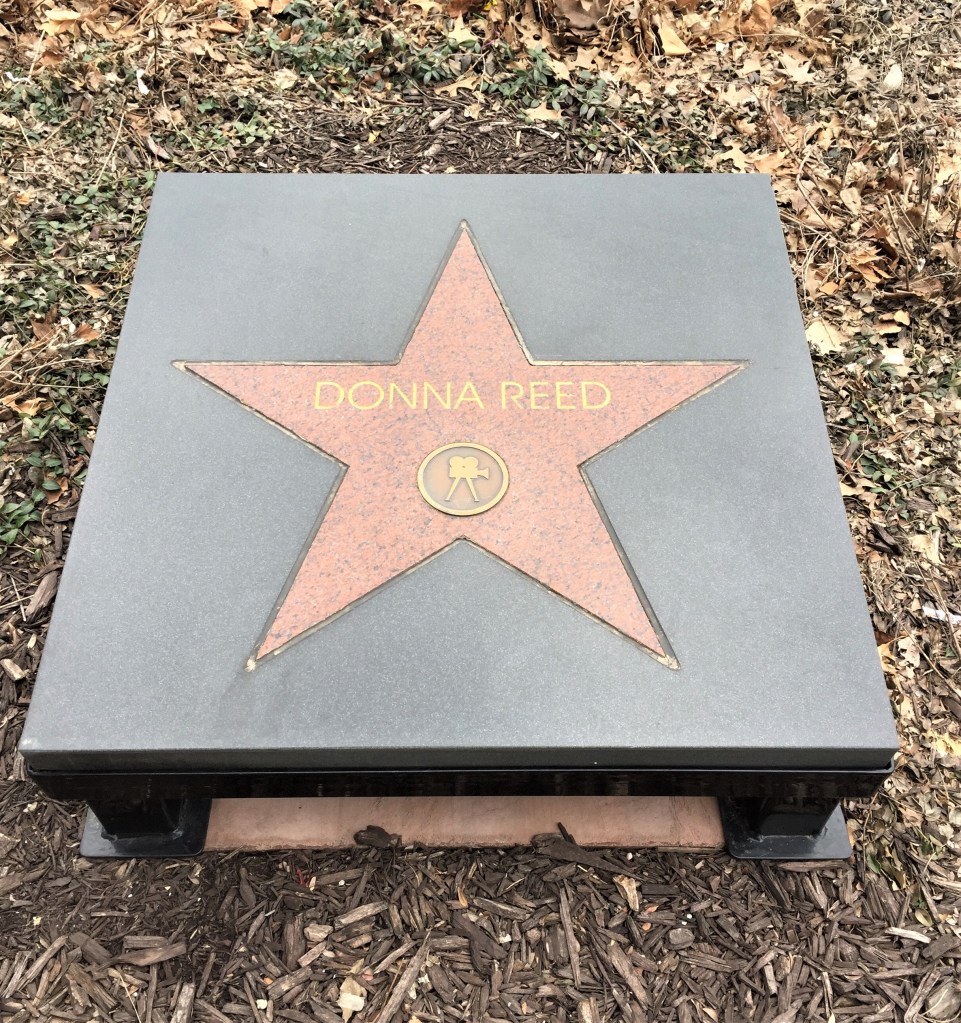
The Center also produces plays from time to time and the street in front of the museum is lined with handprints of various actors. I recognized Bonnie Franklin and Mike Farrell. A replica of Donna Reed’s Hollywood Boulevard star is its most prominent fixture.

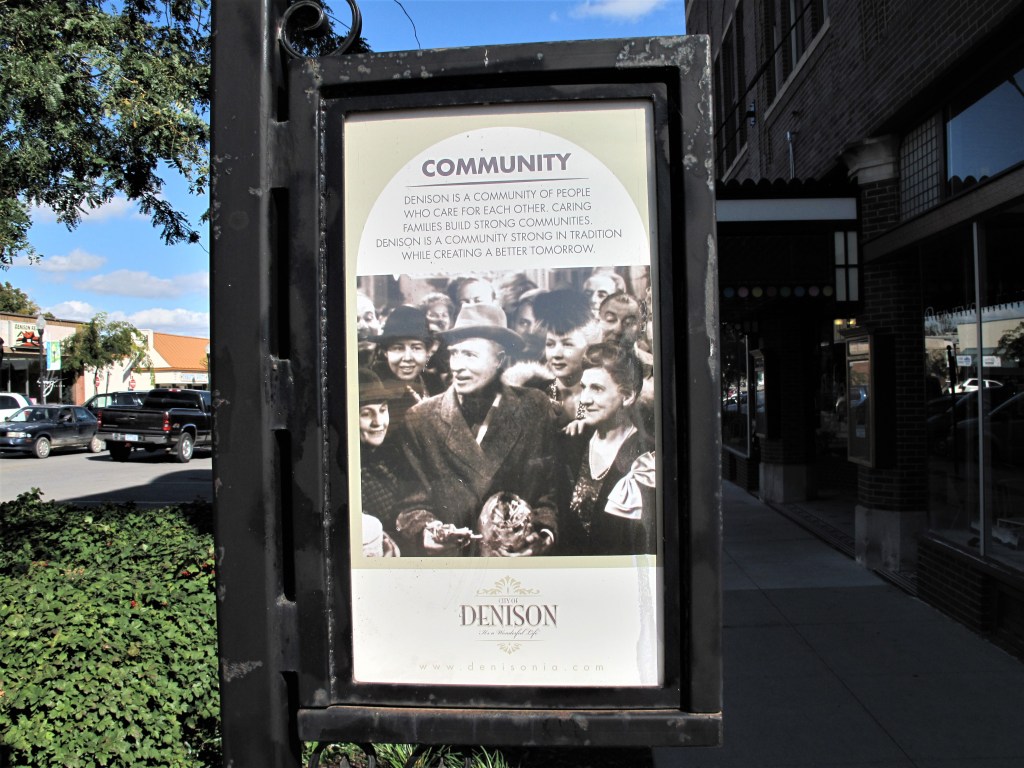
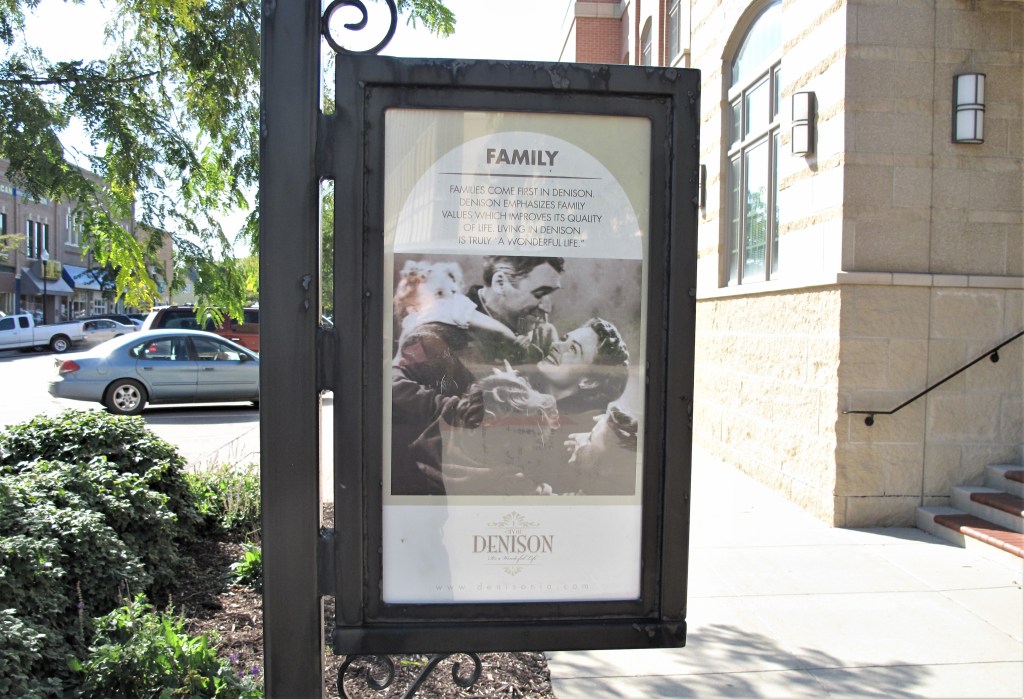
Classic scenes from “It’s a Wonderful Life” are posted on streetlights near the museum. They say that Seneca Falls, New York, was the inspiration for the fictional town of Bedford Falls, but Denison, Iowa wants to make its own claim.

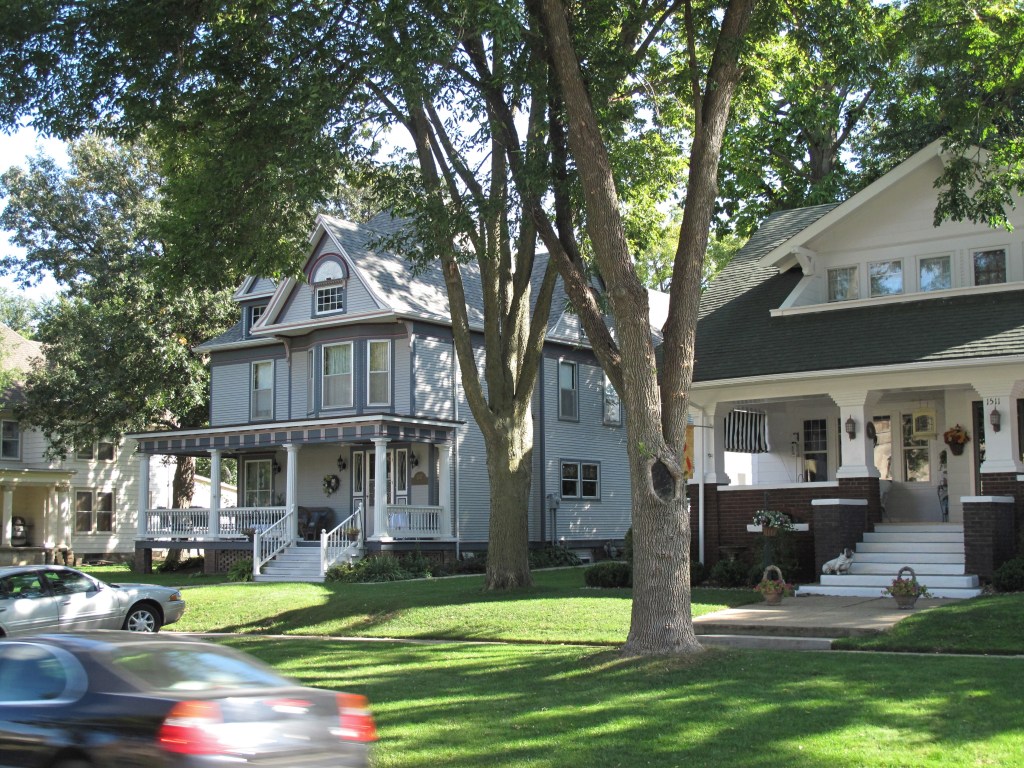
Denison has a population of 8,298 as of the 2010 Census. It’s a pretty typical American small town.

Downtown, Denison, Iowa
Residential area, Denison, Iowa
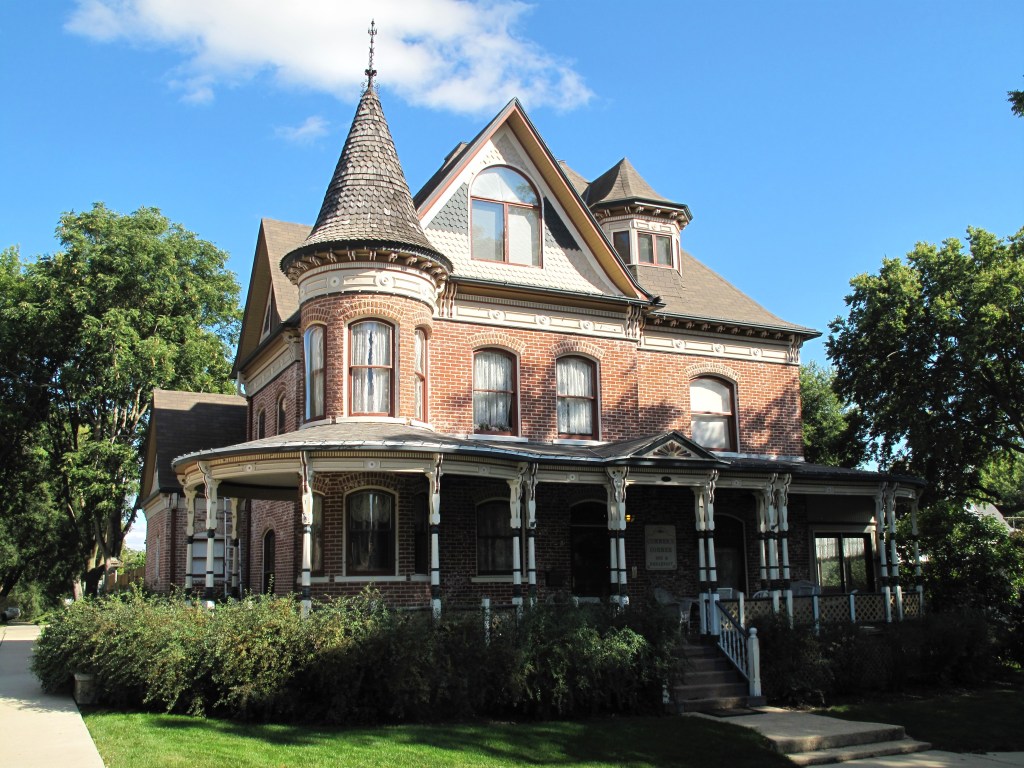
Conner’s Corner Bed & Breakfast (now closed)

Although Conner’s Corner no longer operates as a B&B, you could try another B&B right next door, called The Providence Inn.

Nearby the Crawford County Courthouse was completed in 1905 in the Beaux-Arts style. Young Miss Mullenger would have known this building as the center of her little town. She would have known well the Civil War statue in front (Iowa was a proud Union state).

Crawford County Courthouse
Crawford County Courthouse, Denison, Iowa

Inside the courthouse the walls are marble, railings are carved wood and wrought iron. Paintings on the wall depict scenes from the county’s pioneer history. One such painting was done in the “painting of light” style highlighting storefronts along Broadway in Denison.

View of the Iowa countryside from the steps of the courthouse

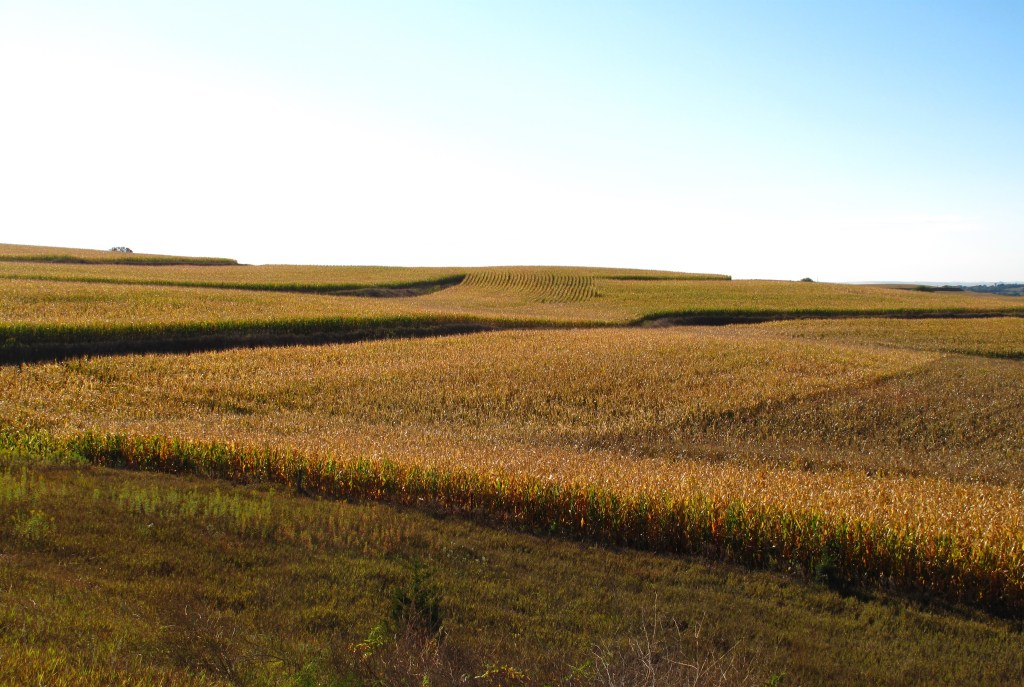
Finally, Donna Reed actually grew up on a farm near Denison, not in the town itself. Here are some photos of fall cornfields ready for harvest in the undulating terrain of western Iowa.

Fall cornfields and wild sunflowers
Endless fields of grain in western Iowa
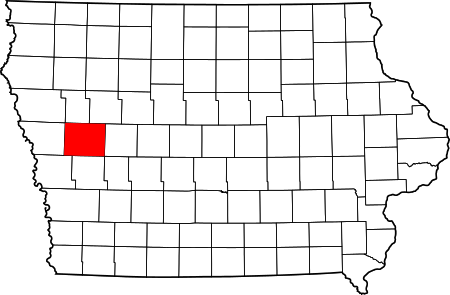
Crawford County in the state of Iowa

All photos were taken by the author in June 2005, September 2011, or March 2017.

A list of all photo posts from the American County Seats series in TimManBlog can be found here.

Donations are happily accepted if you’d like to help defer my costs.
Thanks,
Tim

One-Time
Monthly
Yearly

Make a one-time donation

Make a monthly donation

Make a yearly donation

Choose an amount

¤5.00
¤15.00
¤100.00
¤5.00
¤15.00
¤100.00
¤5.00
¤15.00
¤100.00

Or enter a custom amount

¤

Your contribution is appreciated.

Your contribution is appreciated.

Your contribution is appreciated.

DonateDonate monthlyDonate yearly

The Little Norse Town of Decorah, Iowa


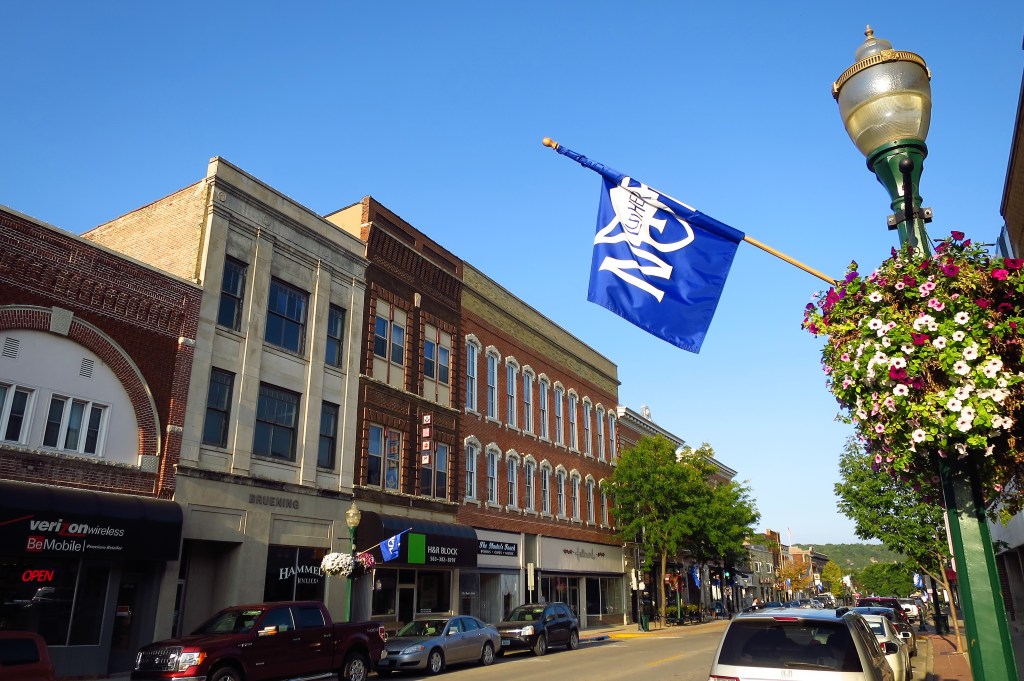
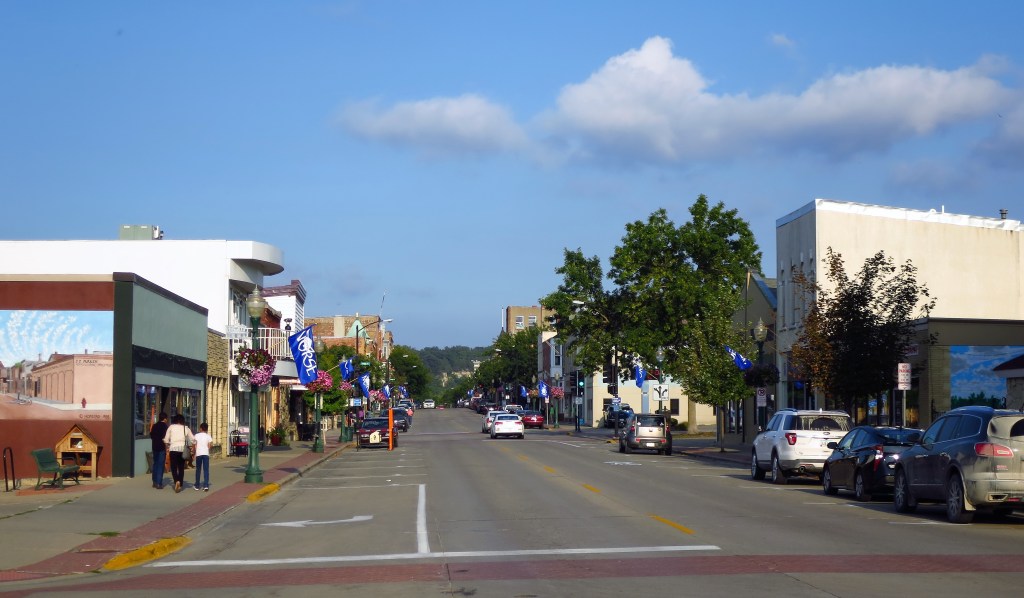
Water Street business district, Decorah, Iowa

August 31, 2019

I didn’t realize what treasures were in store for me when I arrived in Decorah, an otherwise un-notable black dot on the map of northeastern Iowa. Arriving at 4:15, I was just in time to find the Winneshiek County Courthouse and get inside before it closed at 4:30.

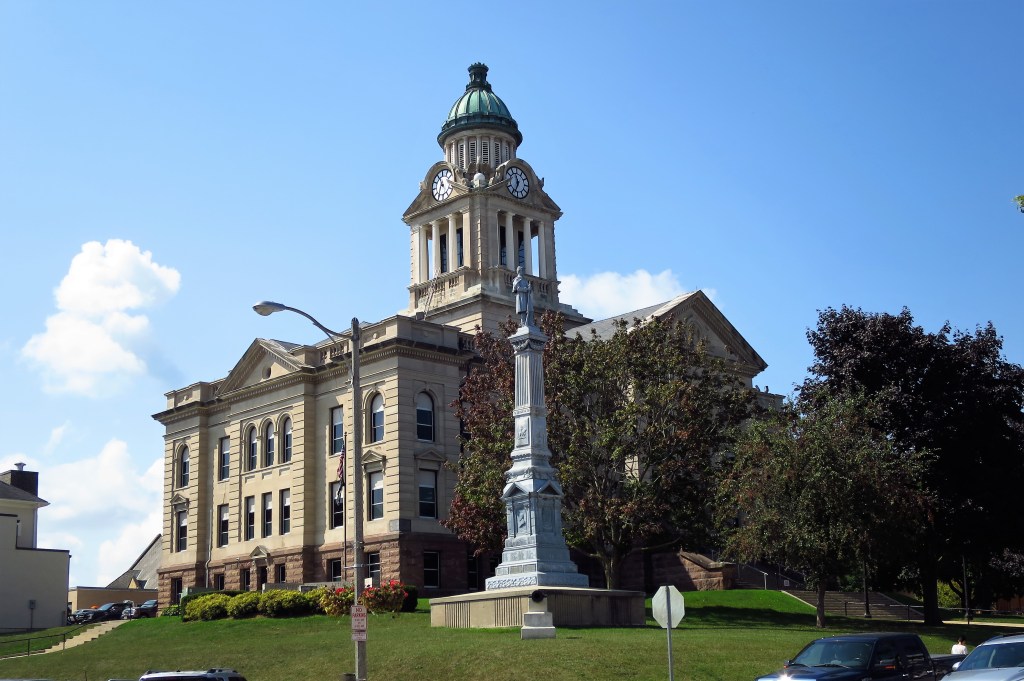
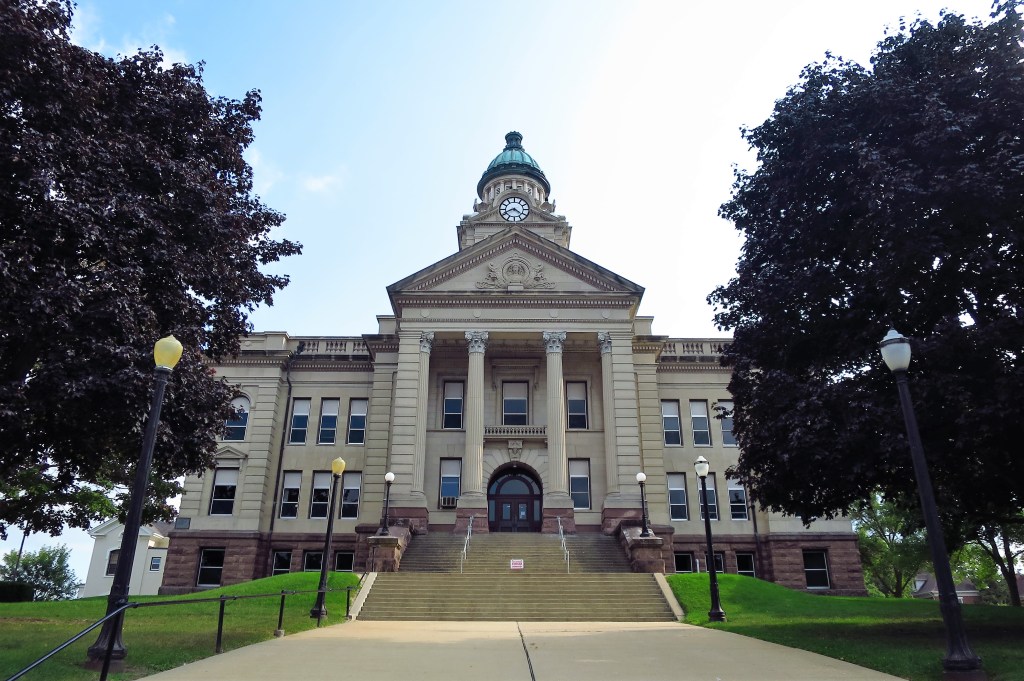
The courthouse was built in 1905, features three stories, a tall central cupola/clocktower, and a Union Civil War memorial dominating the front lawn. Brownstone blocks were used for the first floor while the second and third stories were built with Indiana Bedford limestone.

Winneshiek County Courthouse, Decorah, Iowa
Winneshiek County Courthouse, front entrance
Winneshiek County in the state of Iowa

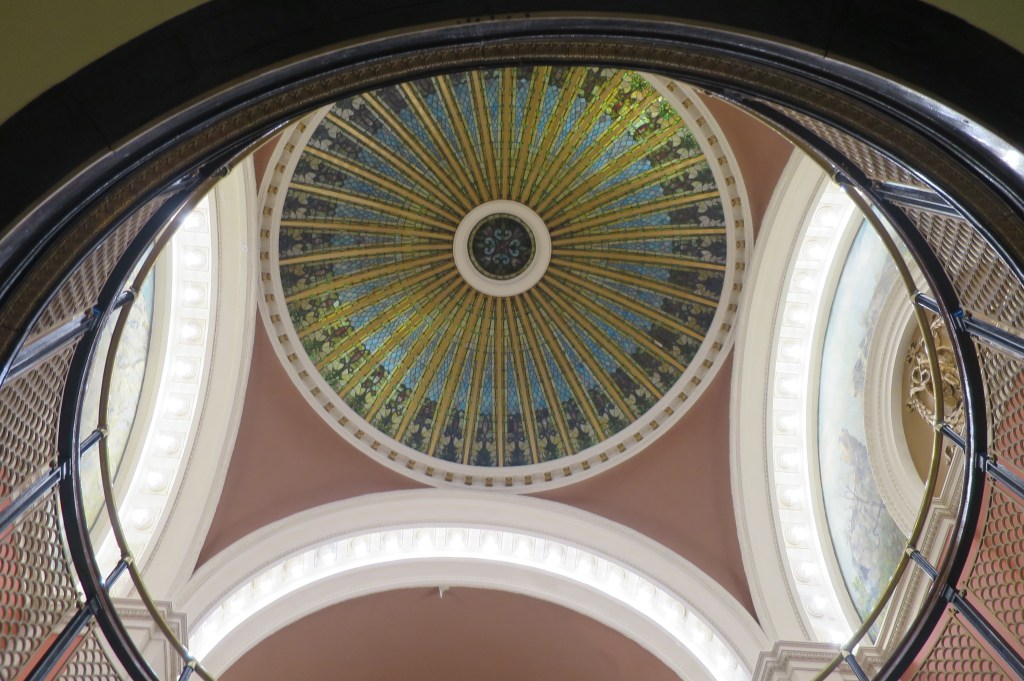
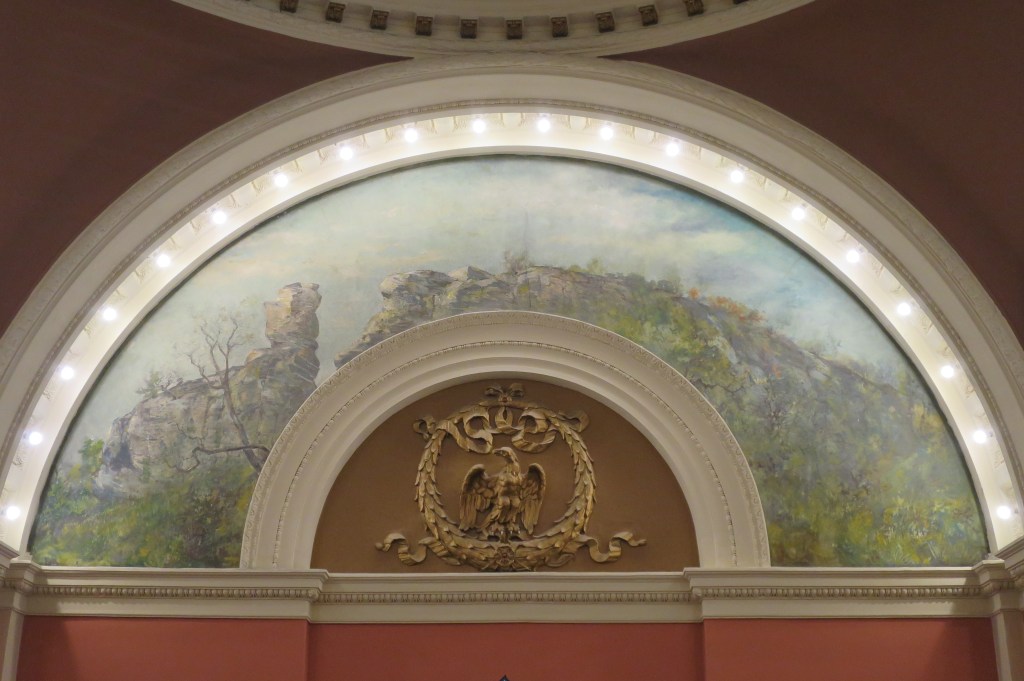
Once inside I quietly wandered around the ornate hallways of the old courthouse, hoping that I could avoid any security guards chasing away occupants before closing up. The interior walls of the courthouse are lined with brown granite. Glass designs adorned the underside of the courthouse cupola; gold leaf designs accented wall decorations.

Winneshiek County Courthouse, interior hallway
Winneshiek County Courthouse, underside of the cupola
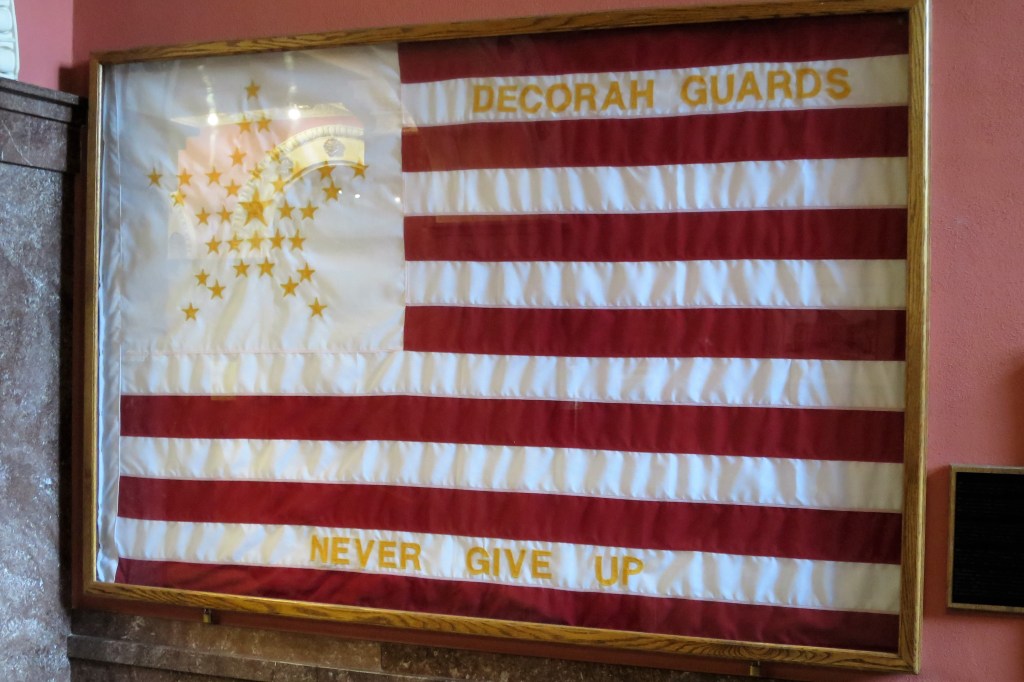
Perhaps referring to the local Civil War regiment?

Despite all the glitz and glamor I found on the upper floors, this photo of 1949 courthouse personnel quickly became my favorite. The difference in fashion between then and now is striking. The photo was taken 4 years after the end of World War II. One can only imagine the thoughts behind the smiling faces: relief, sadness at loss, and a return to normalcy and the good life.

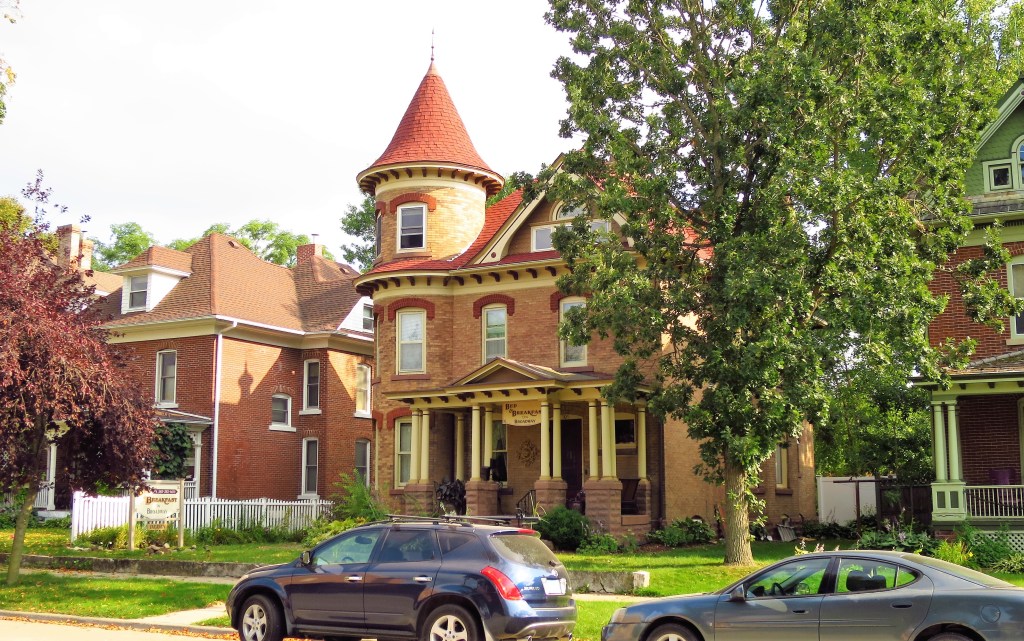
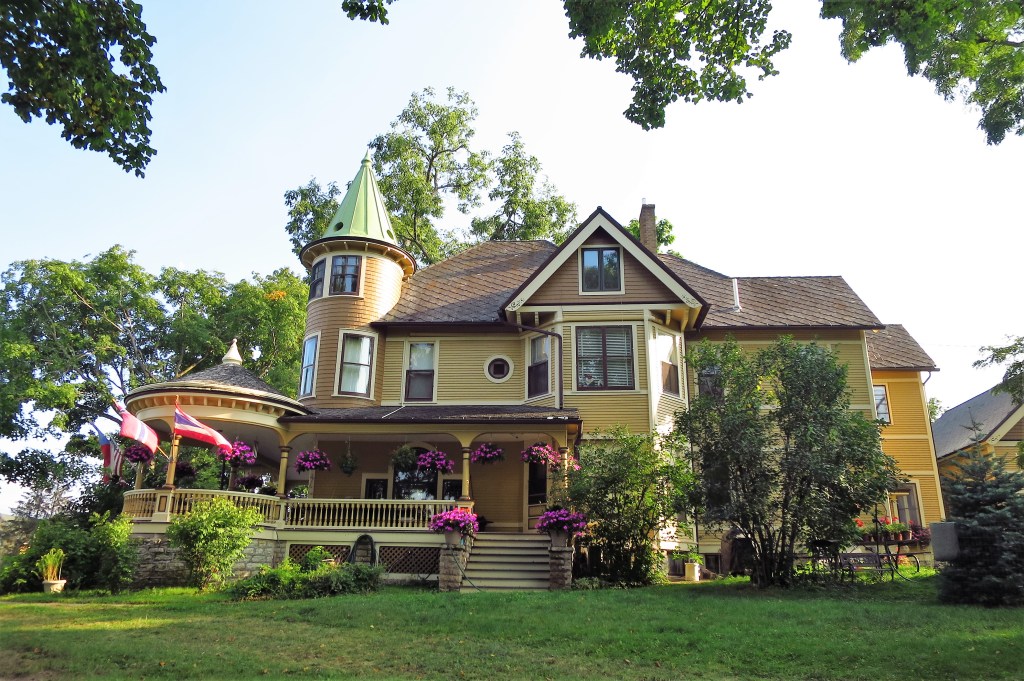
I was out of the building by 4:45, but it being the month of August I still had plenty of daylight to walk around town. West Broadway runs just behind the courthouse and is lined with magnificent houses considered part of the Decorah Historic District. I spent 30 to 40 minutes walking up and down the street photographing classic old mansions and posting the photos on Facebook. Several dozen of my Facebook friends enjoyed the tour along with me, giving the gallery likes and good comments. Some of these houses have been converted to bed and breakfasts (look them up if you like! link is here), while others are private homes.

“Bed and Breakfast on Broadway”
Home on West Broadway, Decorah, Iowa

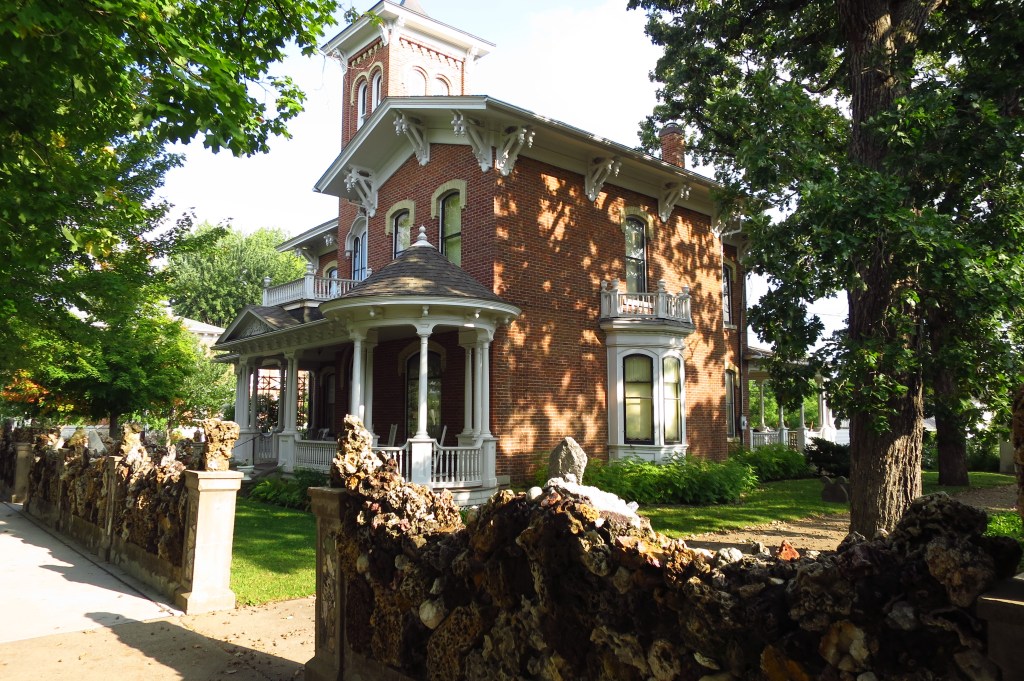
The most famous mansion was an Italianate villa called the Porter House Museum. The owner was not a railroad magnate (rather a dry goods merchant) but such was the prosperity among northern states after the Civil War that riches came to many.

Porter House Museum

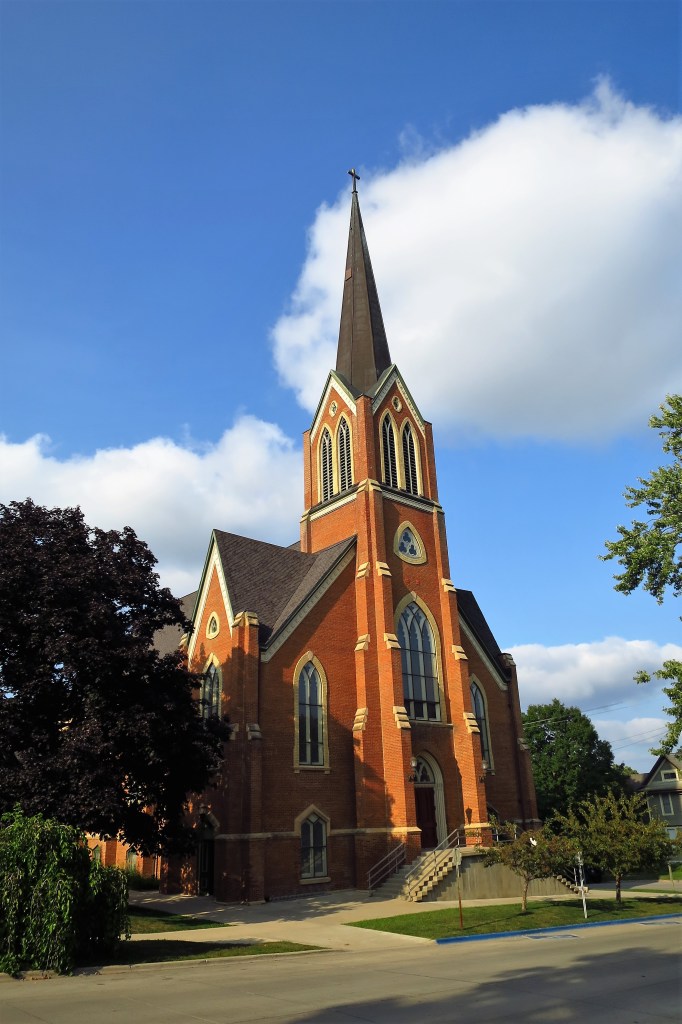
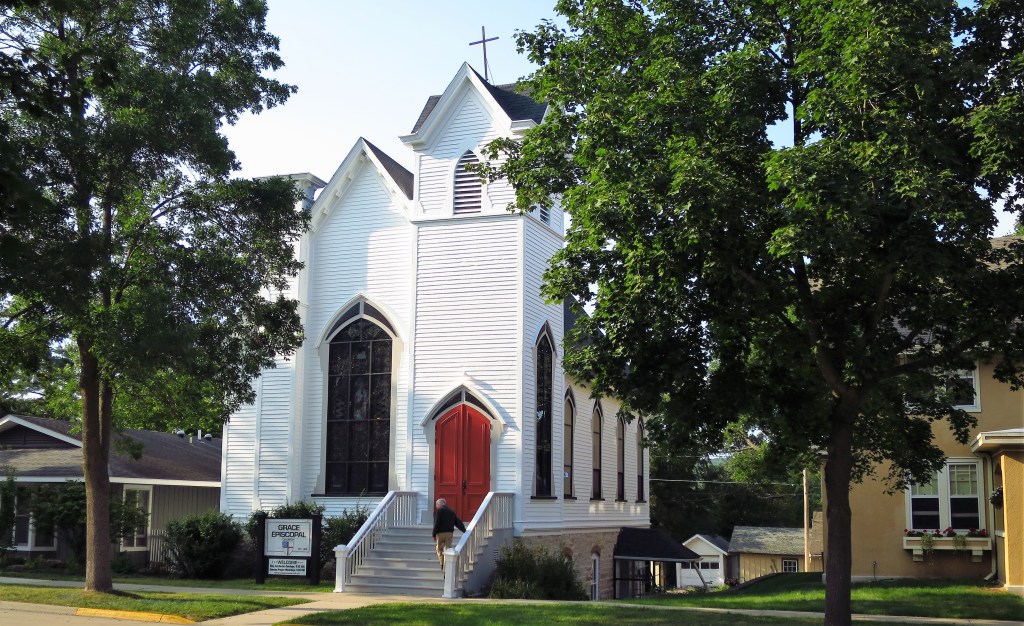
No fine American block would be complete without stately churches. The first church below is Lutheran, the next is Episcopalian.

First Lutheran Church
Grace Episcopal Church, Decorah, Iowa

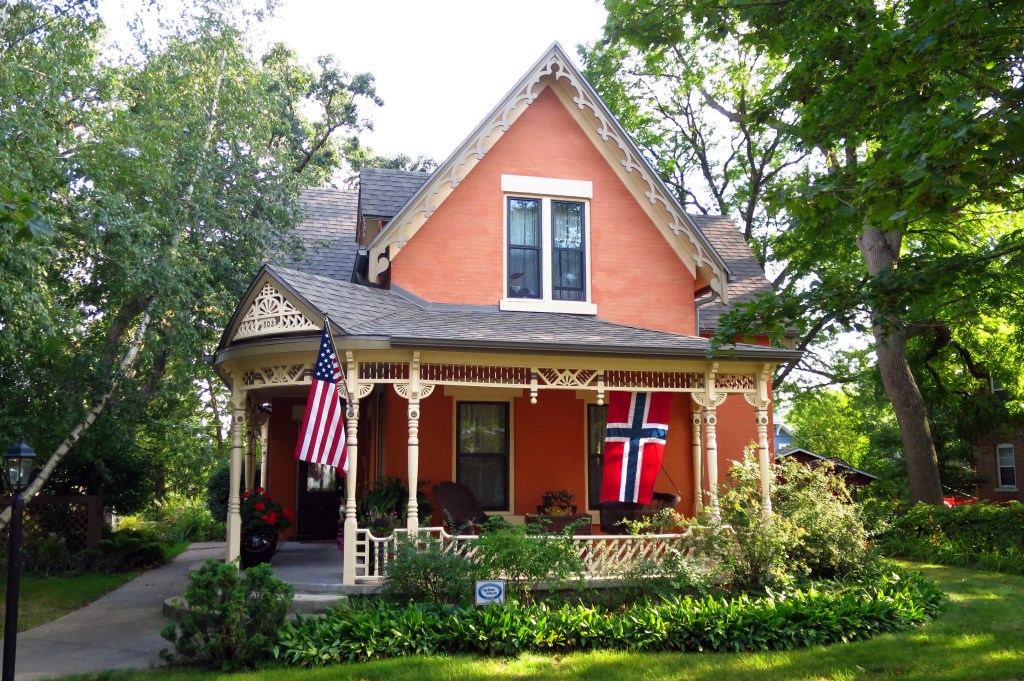
Many of these houses displayed Norwegian flags. Norwegian immigrants came to Decorah starting in the 1850s, prospering smartly.

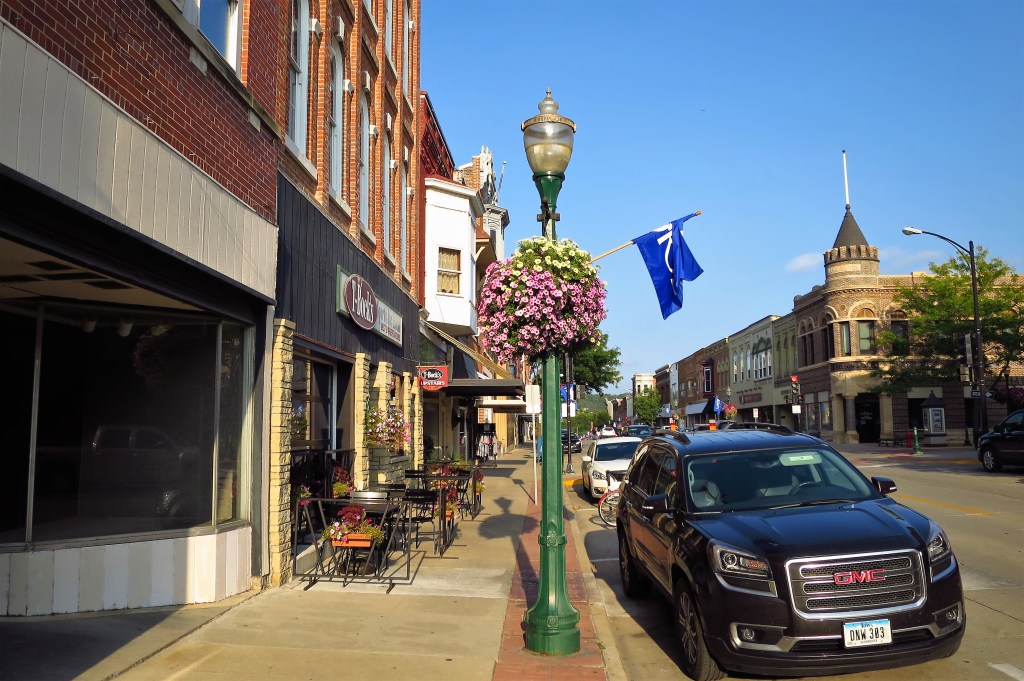
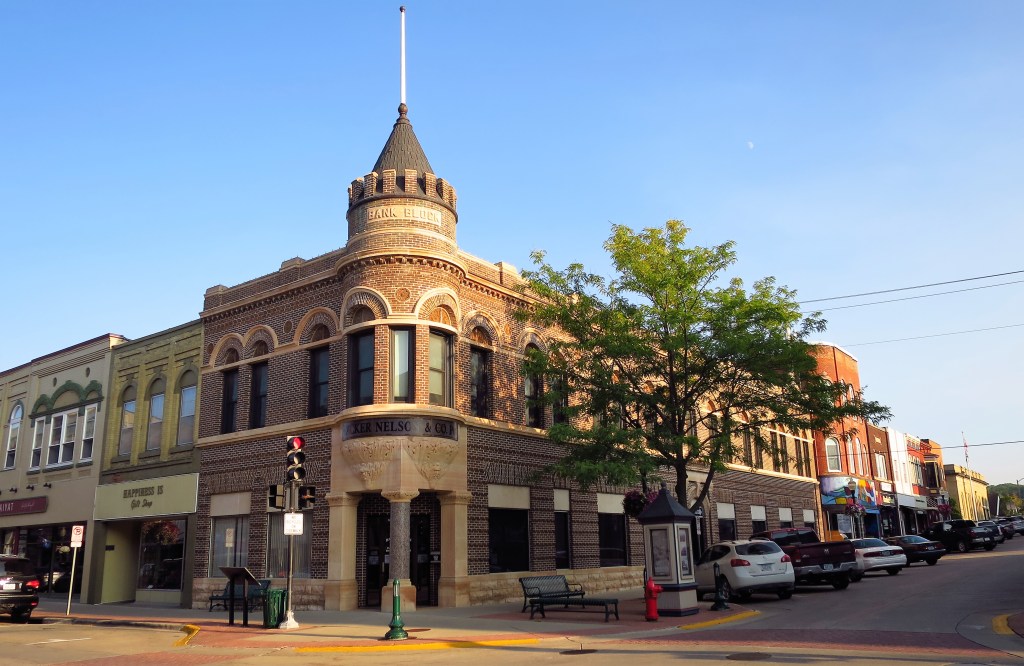
A few blocks below Broadway, Water Street is the business district in Decorah. The street is full of 19th-century architecture and reminders of the town’s Norwegian heritage. The royal blue flags lining the street say “Norse” and are probably a reference to Decorah’s Nordic Fest, held annually the last weekend of July, often drawing crowds of 50,000 or more.

Water Street business district

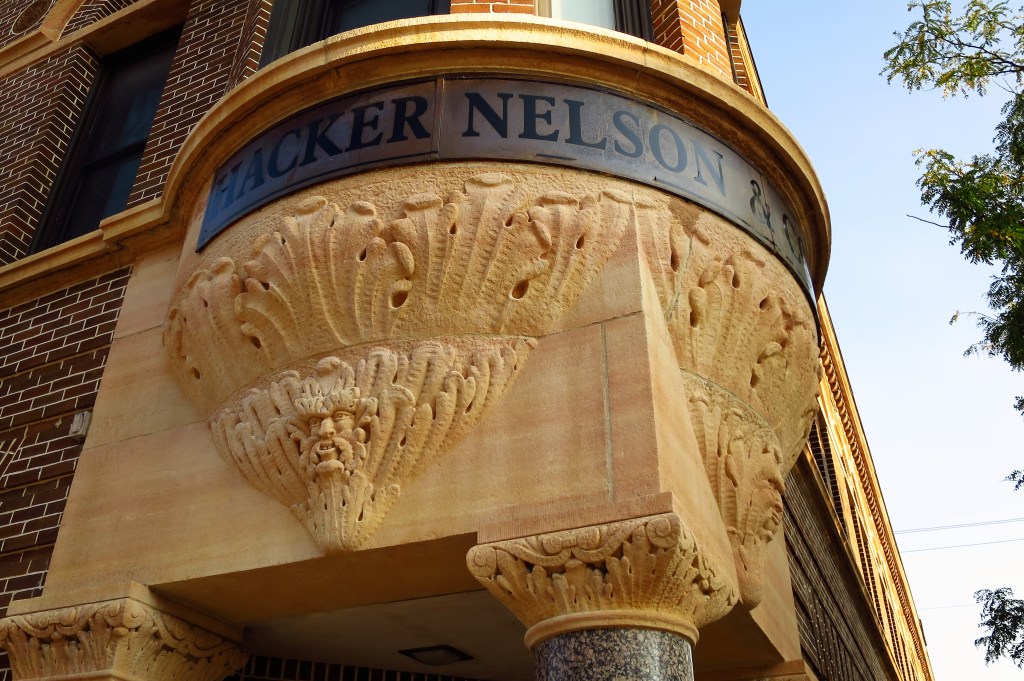
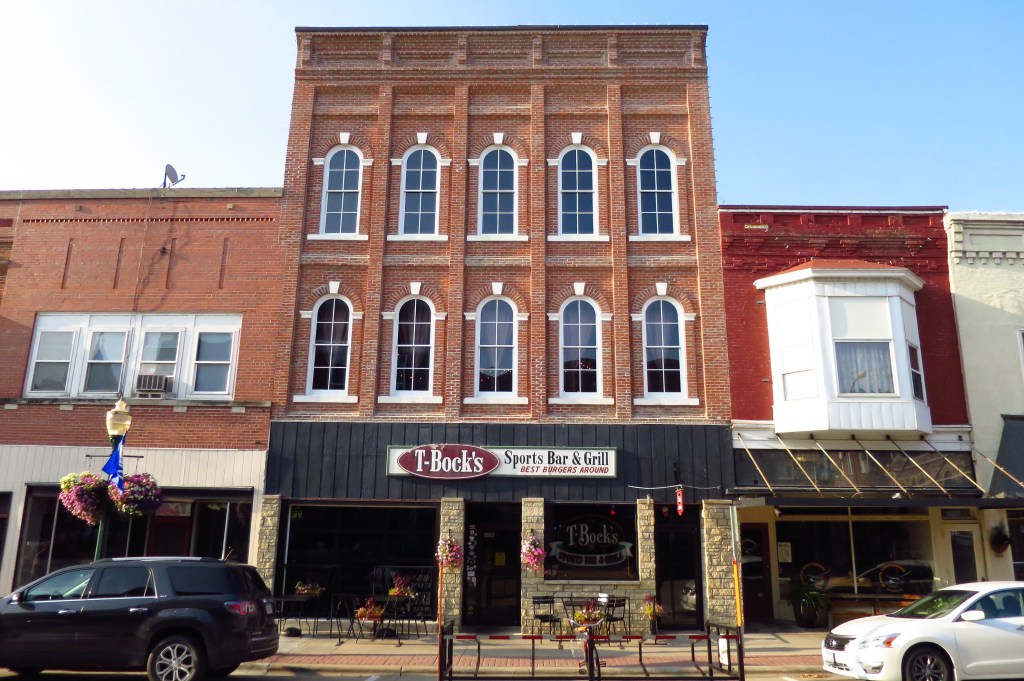
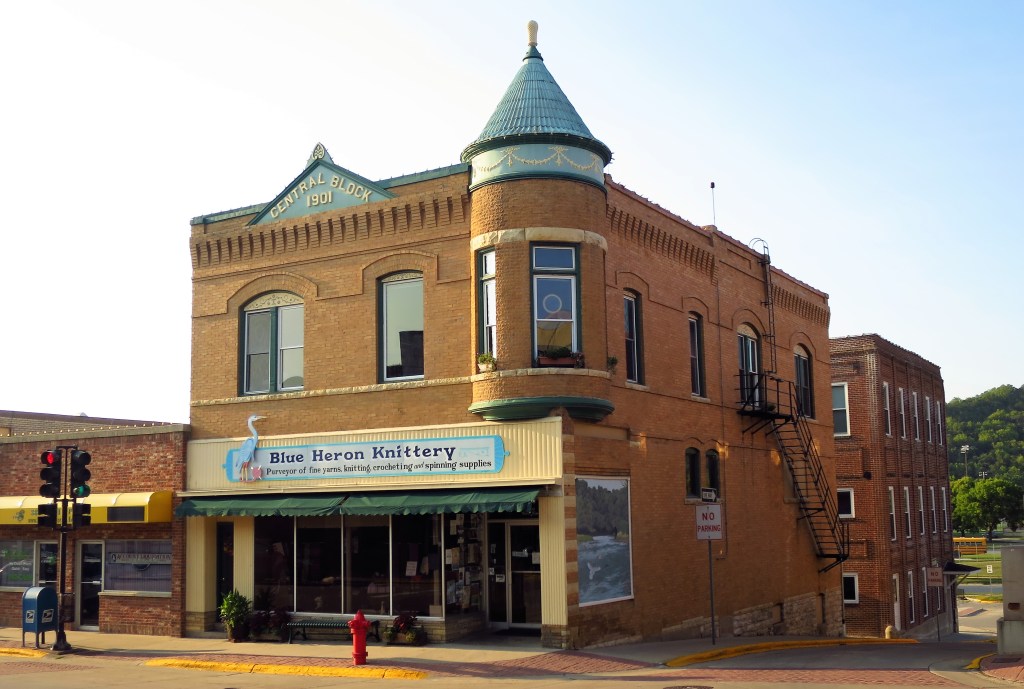
Here are some more photos up and down Water Street. Some of the buildings and detail are just magnificent:

Detail on corner of building shown above
Water Street view with cliffs in the distance.
Water Street with Hotel Winneshiek (on the left)

The classic Hotel Winneshiek offers a fine dining restaurant on the ground floor and rooms for about $100 (when I last checked). I didn’t stay there because I already had reservations elsewhere, but it looks like a great place so I’m including a link to the Hotel Winneshiek & Opera House.

Several reminders of Decorah’s Norwegian roots appear around town:

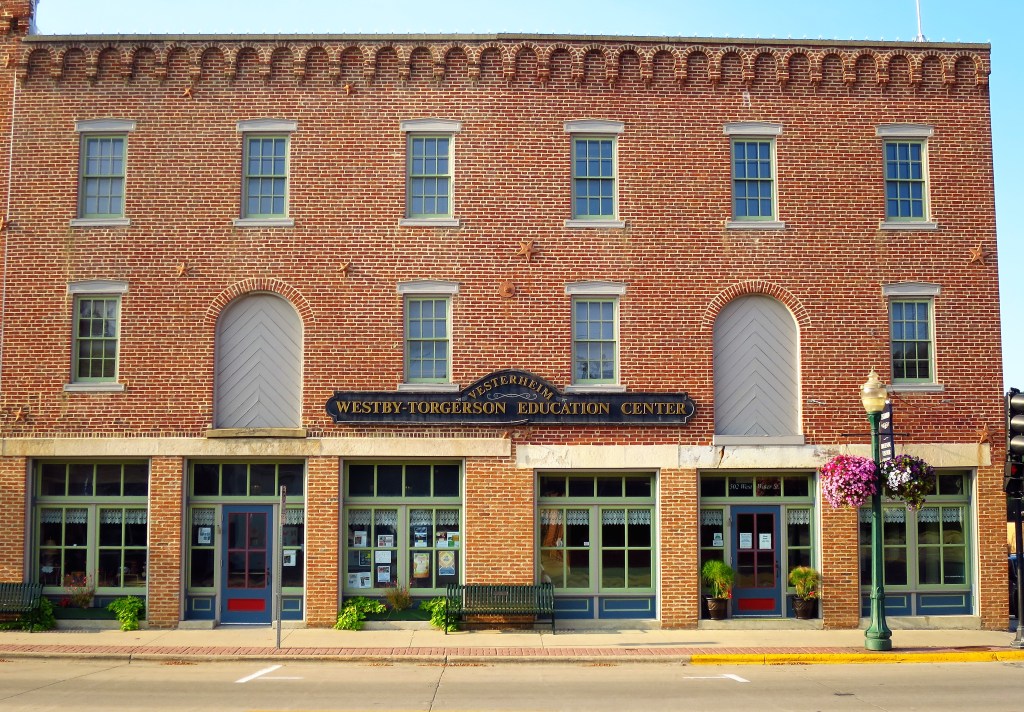
Westerheim Norwegian-American Museum
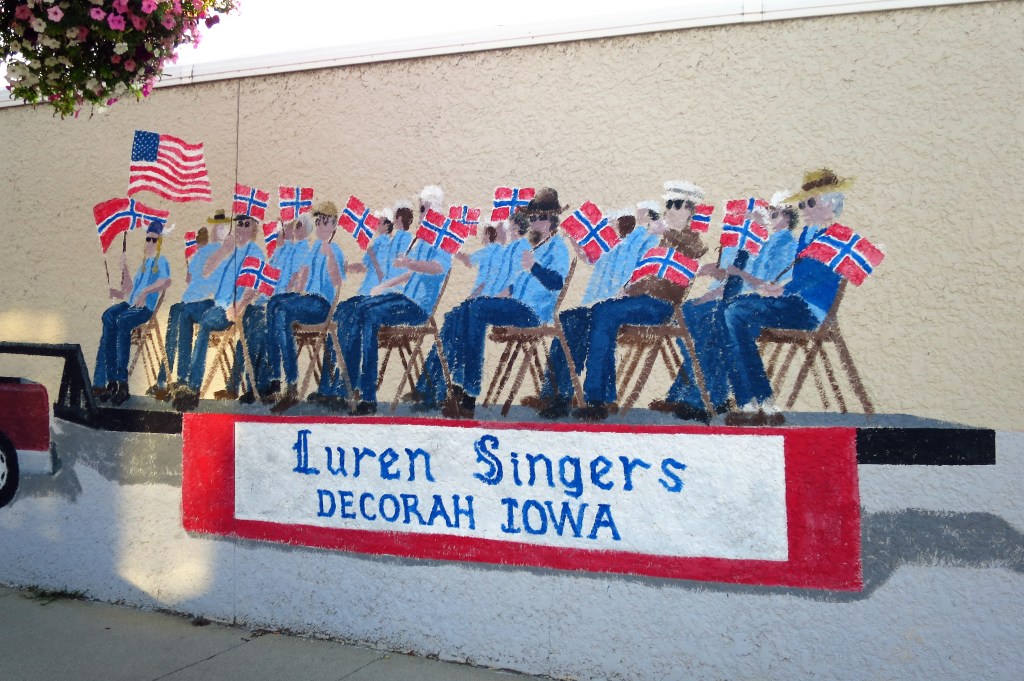
Decorah wall mural featuring Norwegian singers
Home on West Broadway with both Norwegian and American flags
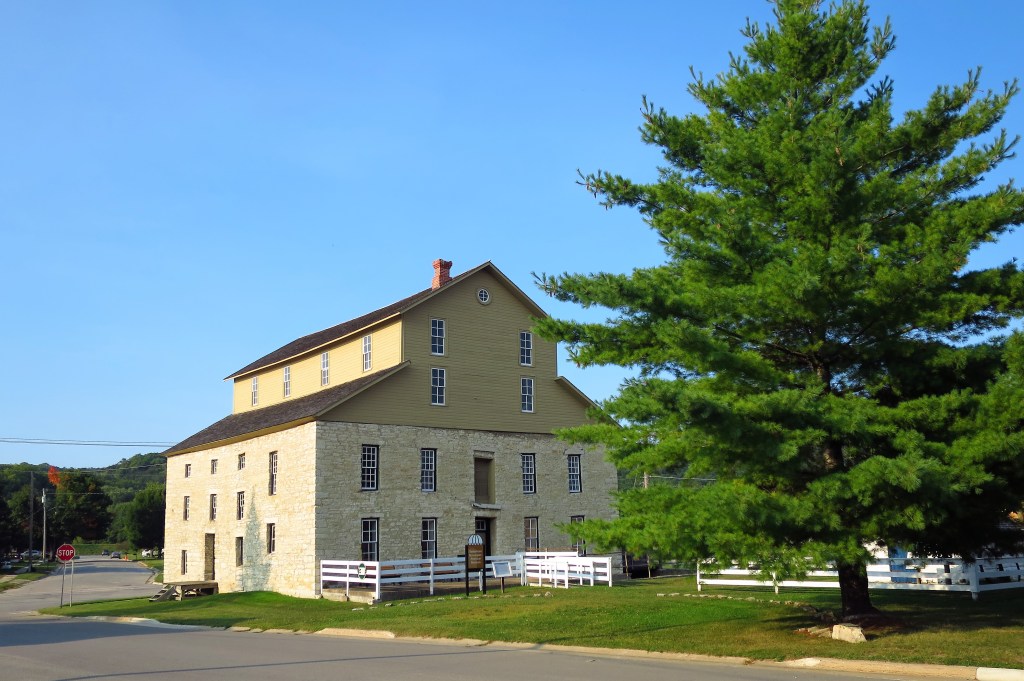
Old Painter-Bernatz Mill, listed on the National Register of Historic Places

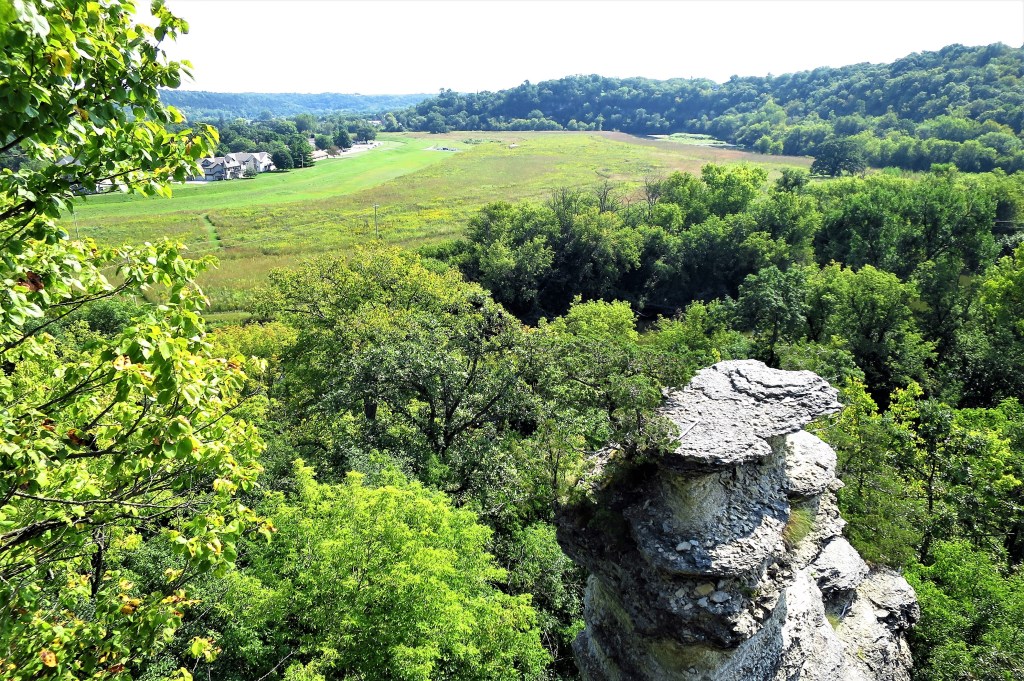
Decorah lies in the valley of the Upper Iowa River in the “driftless” region of northeastern Iowa, meaning that the landscape was never leveled by glaciers during the Ice Ages. As a result, the area landscape features old limestone cliffs and ravines forming natural caves and viewpoints. One of these is known as Pulpit Rock, which I visited the next morning and climbed for the view:

Pulpit Rock, Decorah, Iowa
View from Pulpit Rock

I really couldn’t get enough of this town. I overheard others walking by me saying it was the “cutest town they’d ever seen.” It’s my new favorite Iowa town and deserves a place on your bucket list.

A link to the town’s Wikipedia page is here. Visitor’s info is here.

All photos taken by the author between August 29-30, 2017.


A list of all photo posts from the American County Seats series in TimManBlog can be found here.

I’m trying to travel to all of America’s county courthouses, and each month a post about my visit to the most interesting county seats. It’s only a hobby — but donations are greatly appreciated to help defer my costs.
Thanks,
Tim

One-Time
Monthly
Yearly

Make a one-time donation

Make a monthly donation

Make a yearly donation

Choose an amount

¤5.00
¤15.00
¤100.00
¤5.00
¤15.00
¤100.00
¤5.00
¤15.00
¤100.00

Or enter a custom amount

¤

Your contribution is appreciated.

Your contribution is appreciated.

Your contribution is appreciated.

DonateDonate monthlyDonate yearly
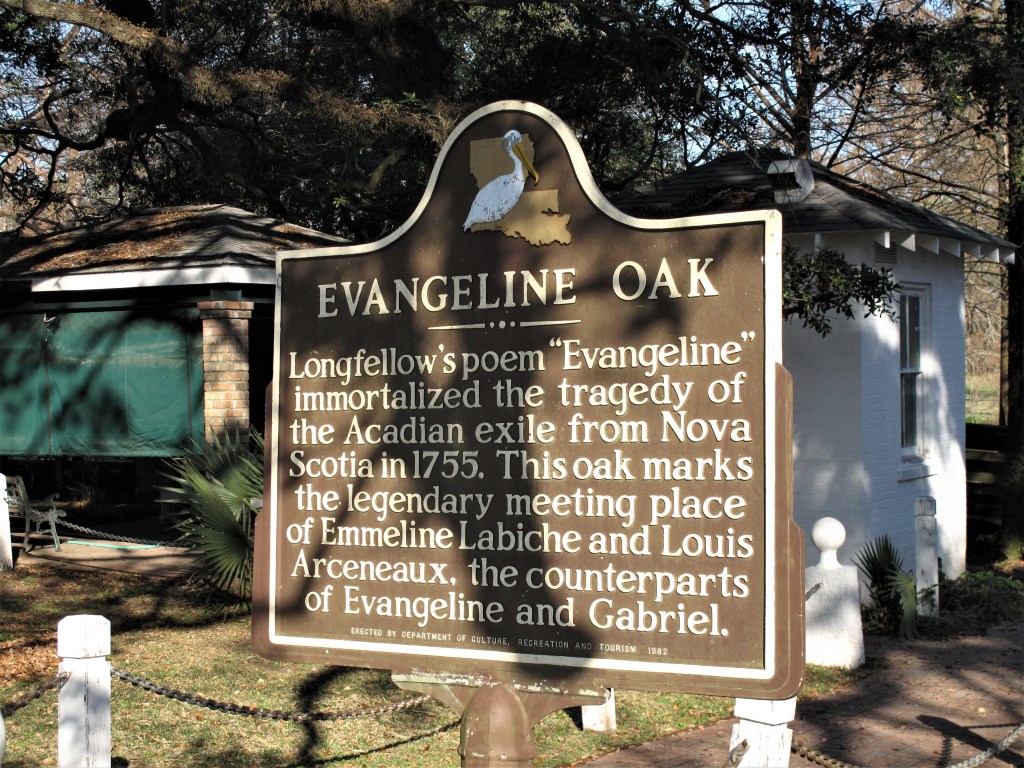
Dixon, Illinois: Three Presidents

July 26, 2019

America has thousands of small towns, the vast majority of which are seemingly unknown to the general public. A few, however, are made famous by their association with some famous person such as a President.  Plains, Georgia and Kennebunkport, Maine are two examples that come to mind.

Dixon, Illinois can claim three such Presidential associations.  So Dixon should be three times famous, right?

The first Presidential association is with Abraham Lincoln.  In 1832, the 23-year-old future president arrived at a key ferrying point on the Rock River in northern Illinois as a volunteer for the Blackhawk War.  The ferrying point was Dixon. As sculpted below, he wears combat boots and carries a sword. Lincoln is elected Captain of volunteers by his peers.

Statue of Abraham Lincoln in Presidents Park. Dixon, Illinois

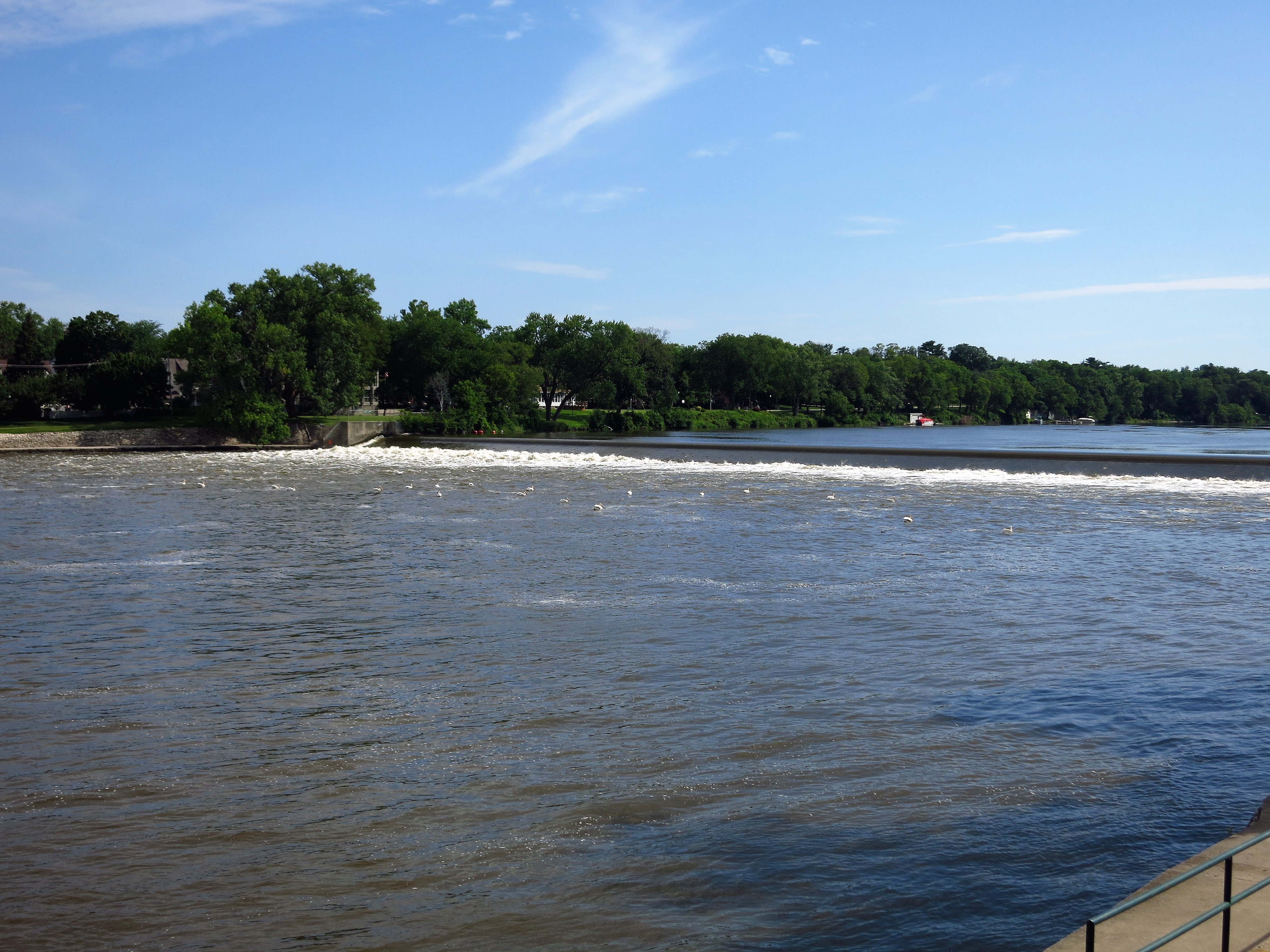
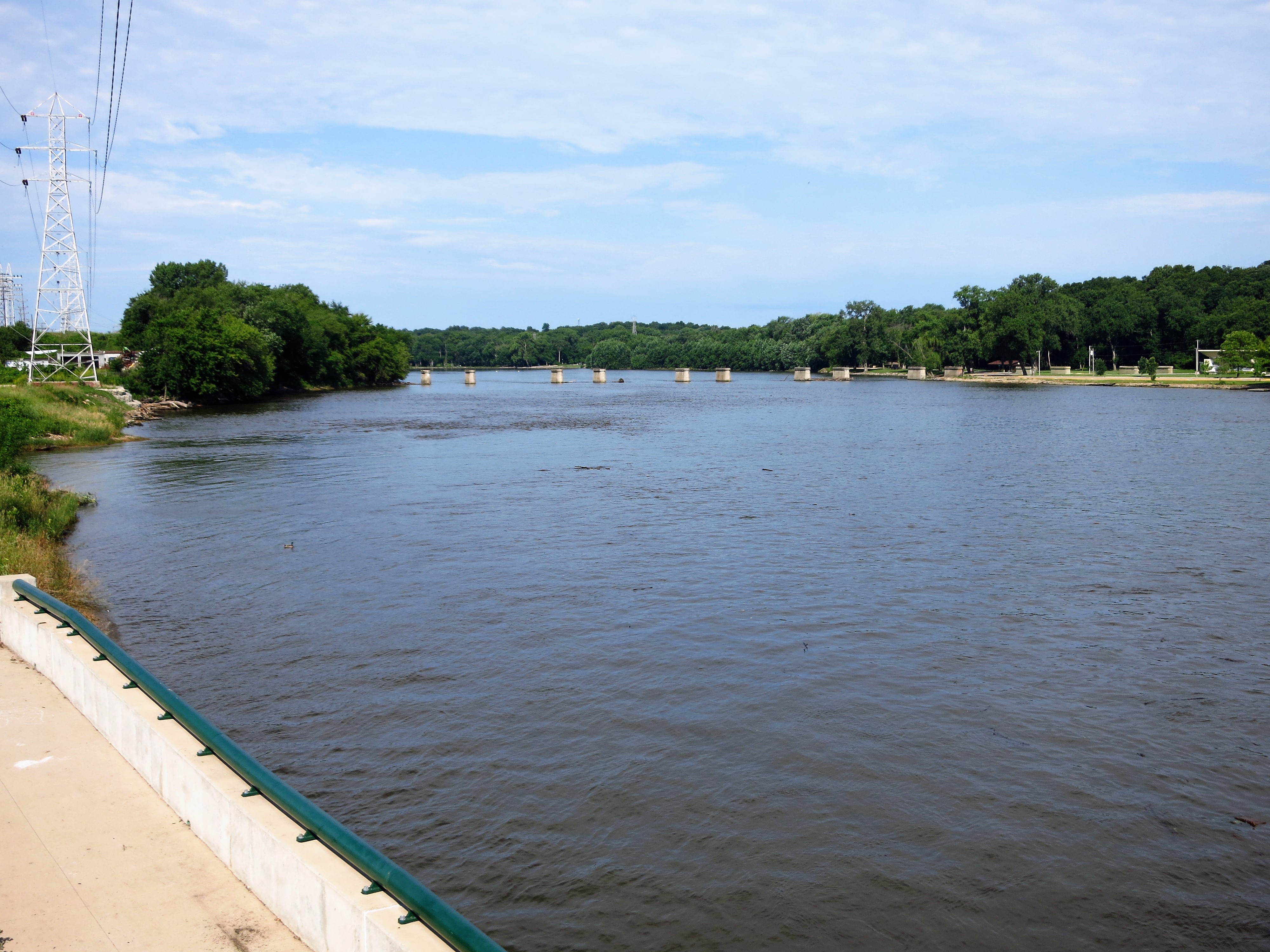
Today the river is dammed at the old ferrying point. Lincoln and his fellow volunteers camped on the far bank.

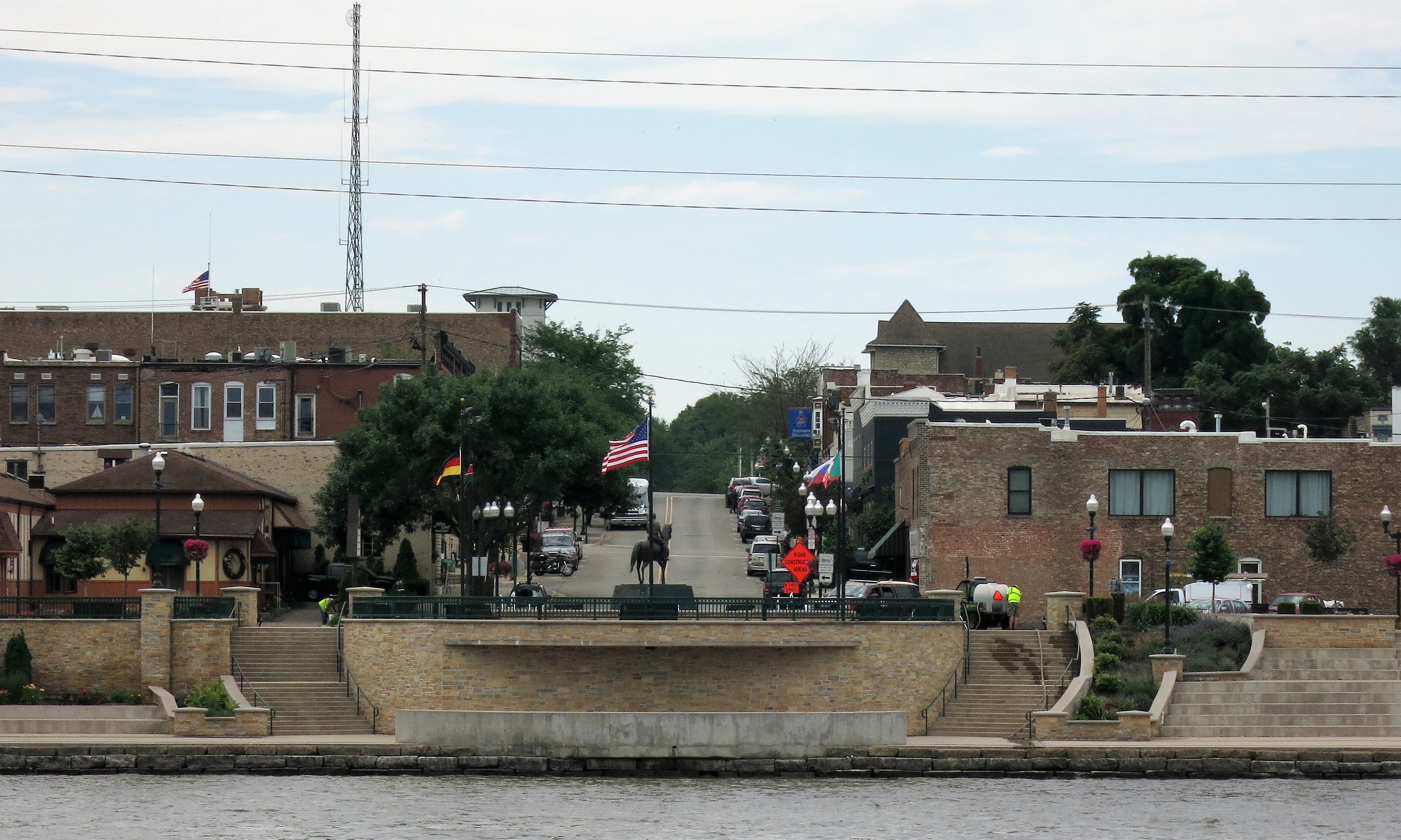
The Rock River at Dixon, Illinois

Knowledge of history gives us a gift, allowing us to put ourselves in someone else’s shoes at a pivotal place and time. At Dixon, the 23-year old Lincoln was a penniless laborer with no fame or family to recommend him. Yet his peers elected him Captain. This small event surely built the young man’s confidence. Is Dixon the place where a ragged frontier boy became a man?

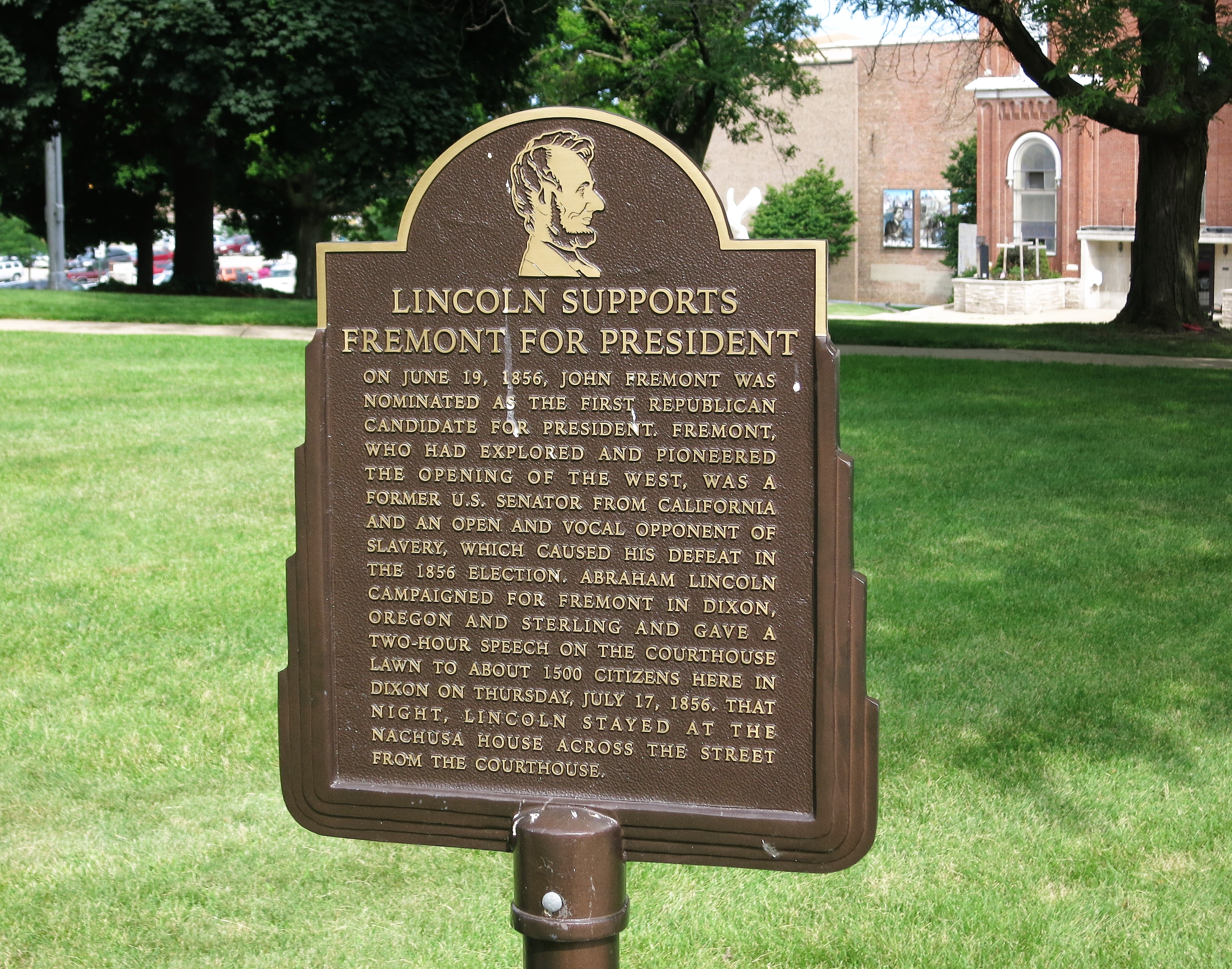
Abraham Lincoln appears again in Dixon in 1856, 24 years after his stint in the Blackhawk War. Now a prominent lawyer and former Congressman, Lincoln makes a proxy speech in favor of the first Republican Presidential candidate, the explorer John C. Fremont.

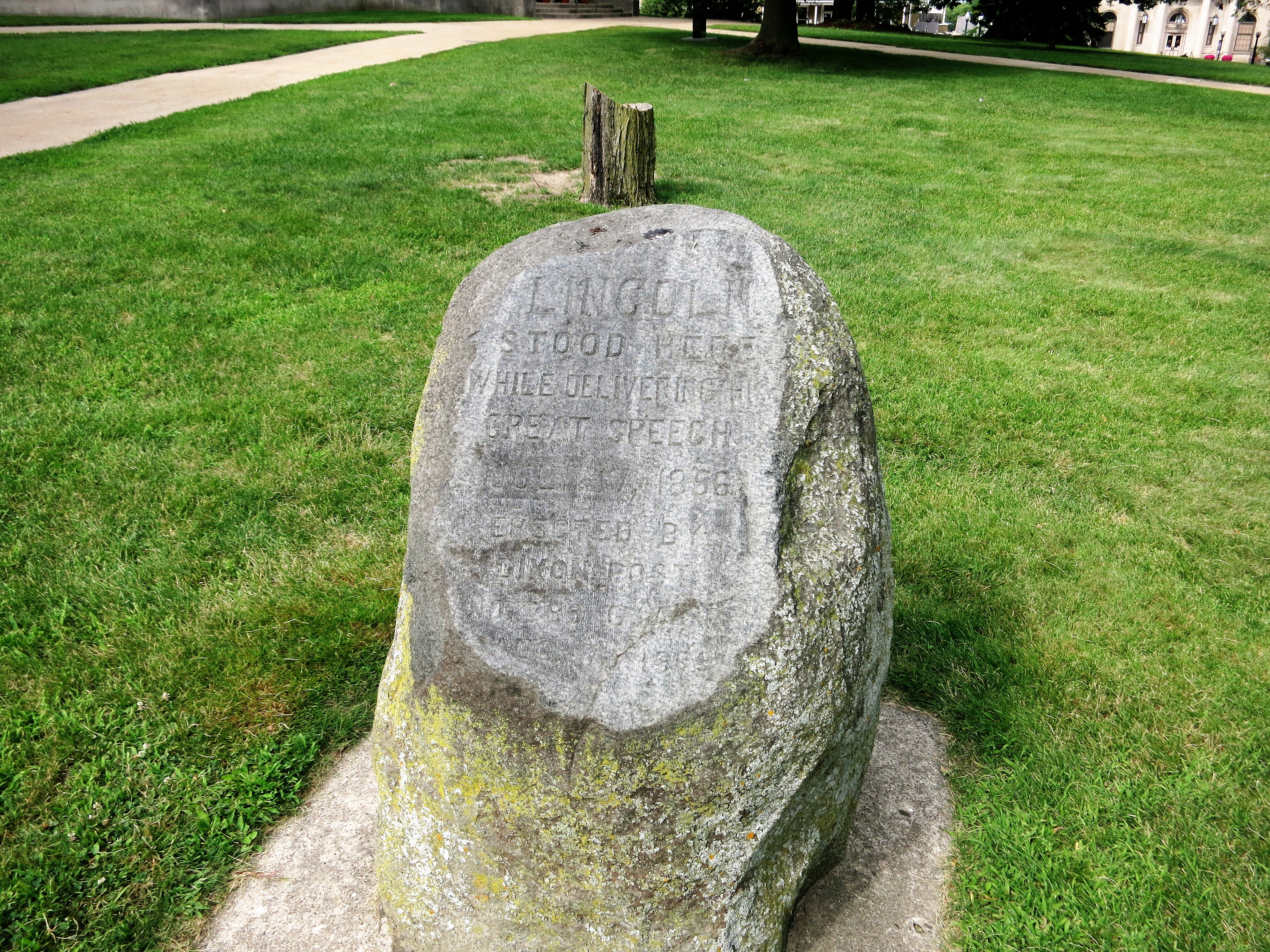
Historical sign commemorating Lincoln’s campaign speech of 1856 in Dixon, Illinois

The speech was made on the old county courthouse lawn and is well-marked today.

Memorial to Abraham Lincoln in Dixon, Illinois

Of course, Fremont didn’t become President in 1856. Four years later in 1860 Lincoln ran for the Presidency but didn’t give a campaign speech in Dixon — in that era Presidential candidates did not actively campaign as they do today, preferring to leave speech-making to their supporters and proxies.

Dixon’s next presidential association (the second of three) comes in 1919. Automobiles are gaining popularity and auto roads are rapidly being built across the country.

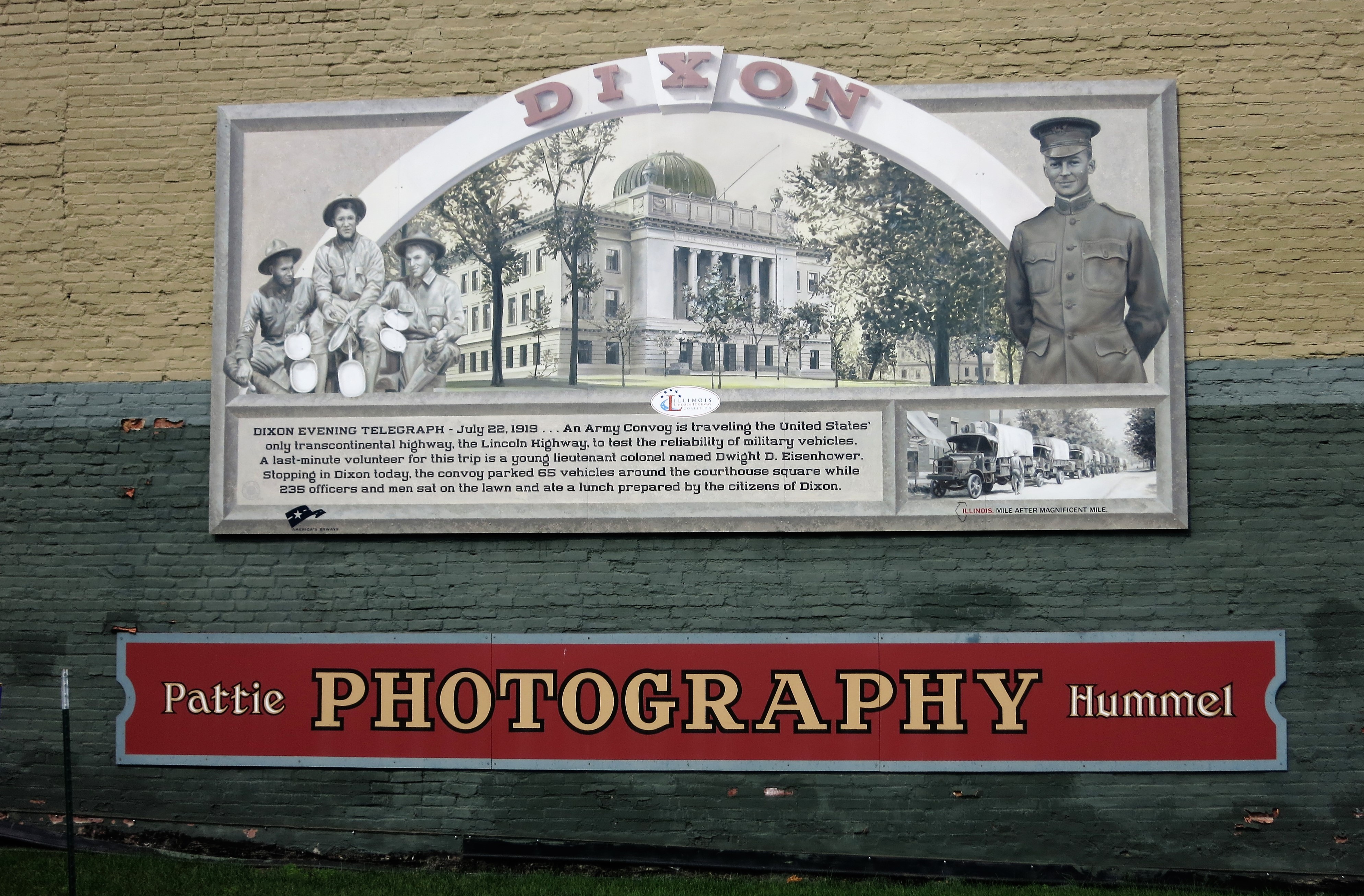
From the text of the mural below:

“July 22, 1919…an Army convoy is traveling the United States’ only transcontinental highway, the Lincoln Highway, to test the reliability of military vehicles. A last-minute volunteer for the trip is a young lieutenant colonel Dwight D. Eisenhower. Stopping in Dixon today, the convoy parked 65 vehicles around the courthouse square while 235 officers and men sat on the lawn and ate a lunch prepared by the citizens of Dixon.”

Street mural explaining the 1919 transcontinental army convoy along the Lincoln Highway
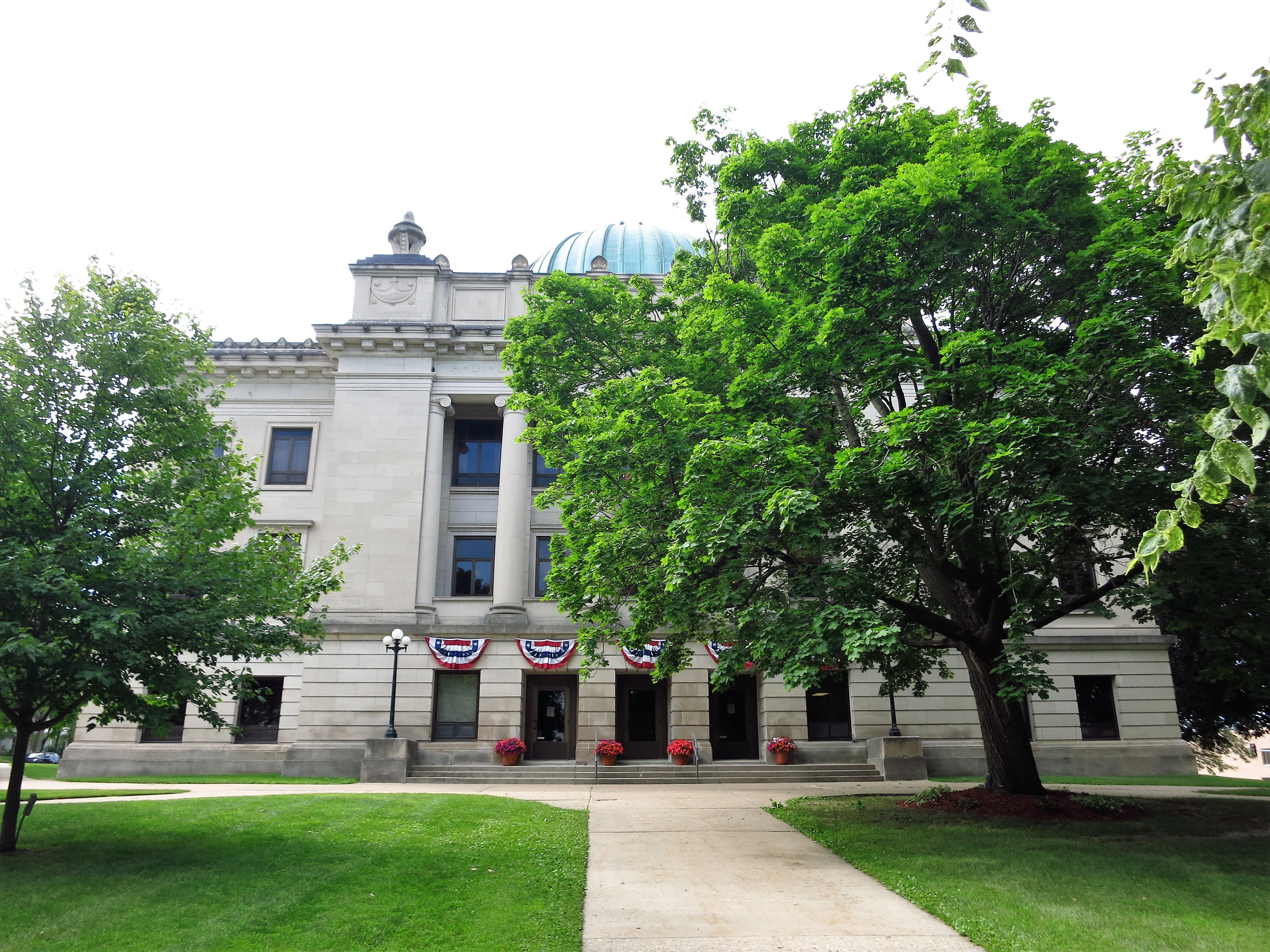
(Former) Lee County Courthouse and lawn. Site of famous speeches and lunches

The army convoy soldiered through muddy or missing roadways and flimsy new bridges. The effort became something of a nightmare for the young Eisenhower. His experience in 1919 stayed with him, however, such that “Ike” proposed the Interstate Highway System after becoming President in 1953. A historical sign provides further details:

Lincoln Highway Army convoy of 1919

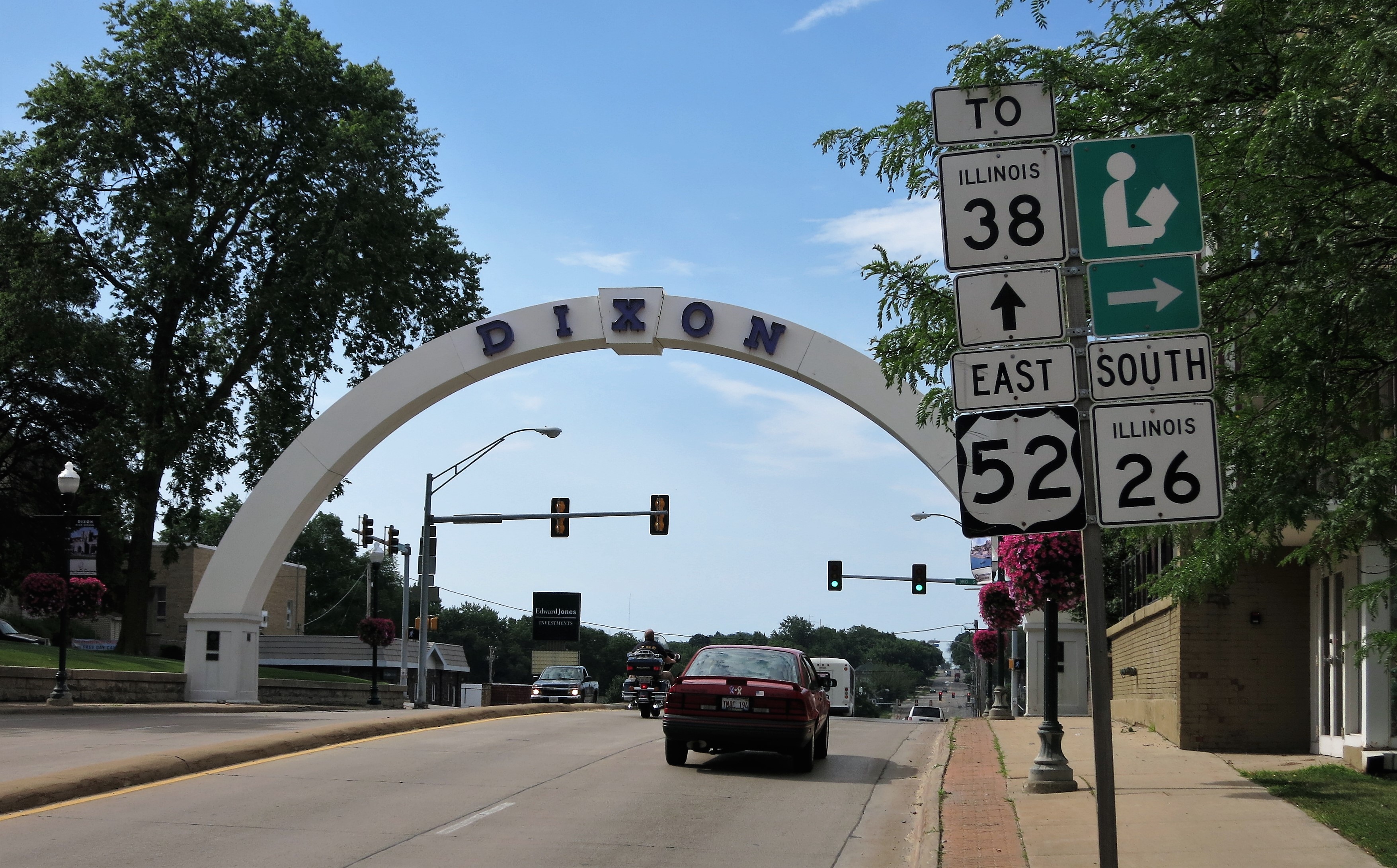
Eisenhower’s convoy passed under an archway built to celebrate triumphant troops returning home from World War I. The arch was meant to be temporary, but it was so well-received by the townspeople that it remains on Dixon’s main street (Galena Street — the old Lincoln Highway) to this day.

Dixon Arch

The third of Dixon’s presidential associations is its most famous. In 1911 future president Ronald Reagan was born in Tampico, Illinois. In 1919 (the same year as Eisenhower’s army convoy) the Reagan family moved to Dixon. His boyhood home is a state historic site:

Ronald Reagan boyhood home. Dixon, Illinois
A typical street in downtown Dixon, a few blocks from the Reagan boyhood home

Reagan worked as a lifeguard on the town beach in his boyhood. Reagan was credited with saving several lives.

Rock River

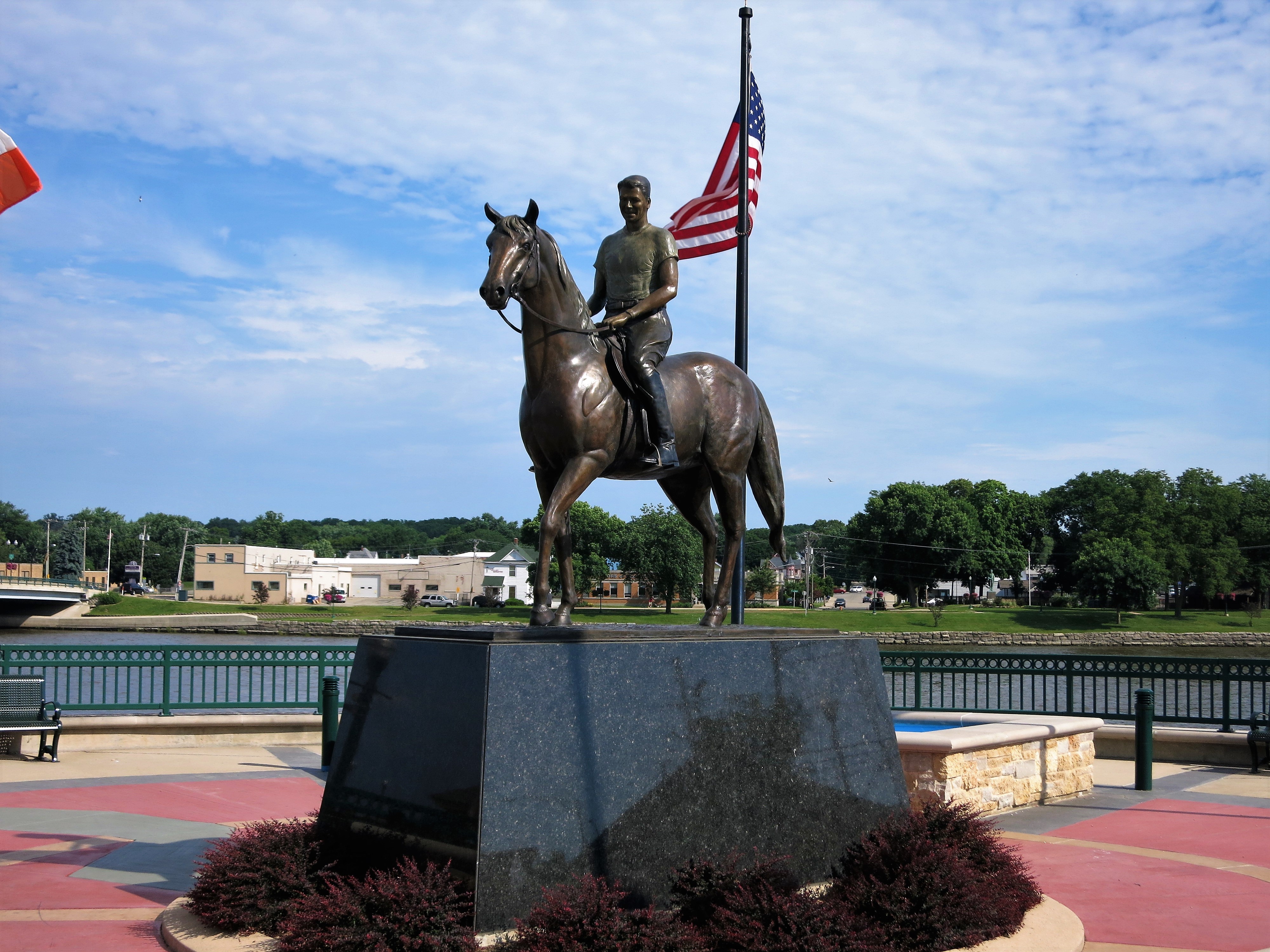
A statue of the 40th President stands at Heritage Crossing in Riverfront Park in downtown Dixon. While I was taking this photo a local man came up to me and provided a few interesting facts:  On the statue, the boots, saddle, and reins Reagan is wearing are real.  They were his during his life. The statue was made from a photo of Reagan riding a horse during a parade in Dixon in 1950 when he was still known as a movie star and not a political figure.

Statue of President Ronald Reagan. Riverfront Park in Dixon, Illinois

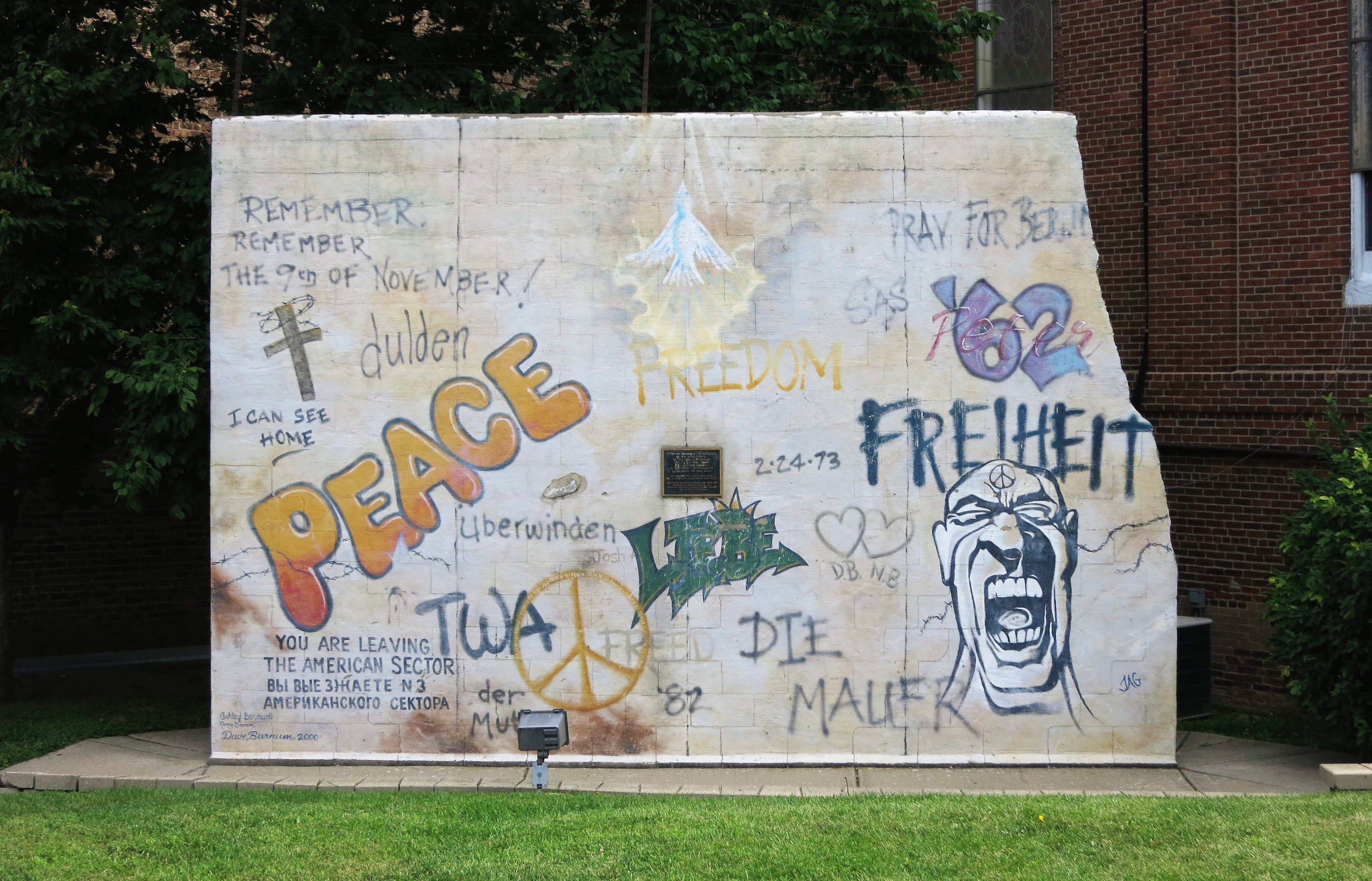
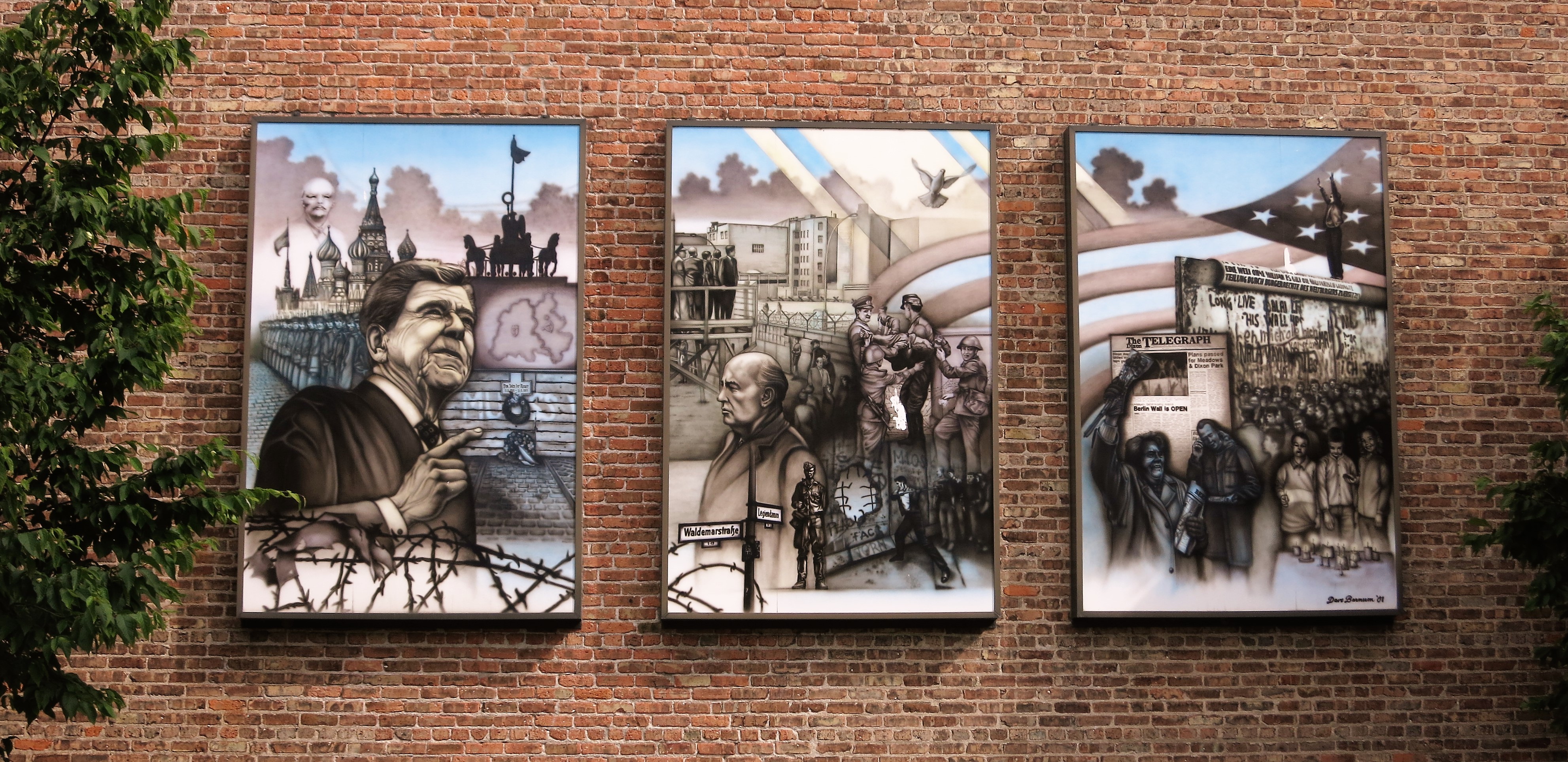
There are a few other memories of Reagan scattered throughout Dixon, including remembrances of his days as President:

The Wings of Peace and Freedom
Piece of the Berlin Wall
President Reagan’s face on a Dixon lamp post

Here are few other photos from downtown Dixon, Illinois:

Galena Street, Dixon, Illinois
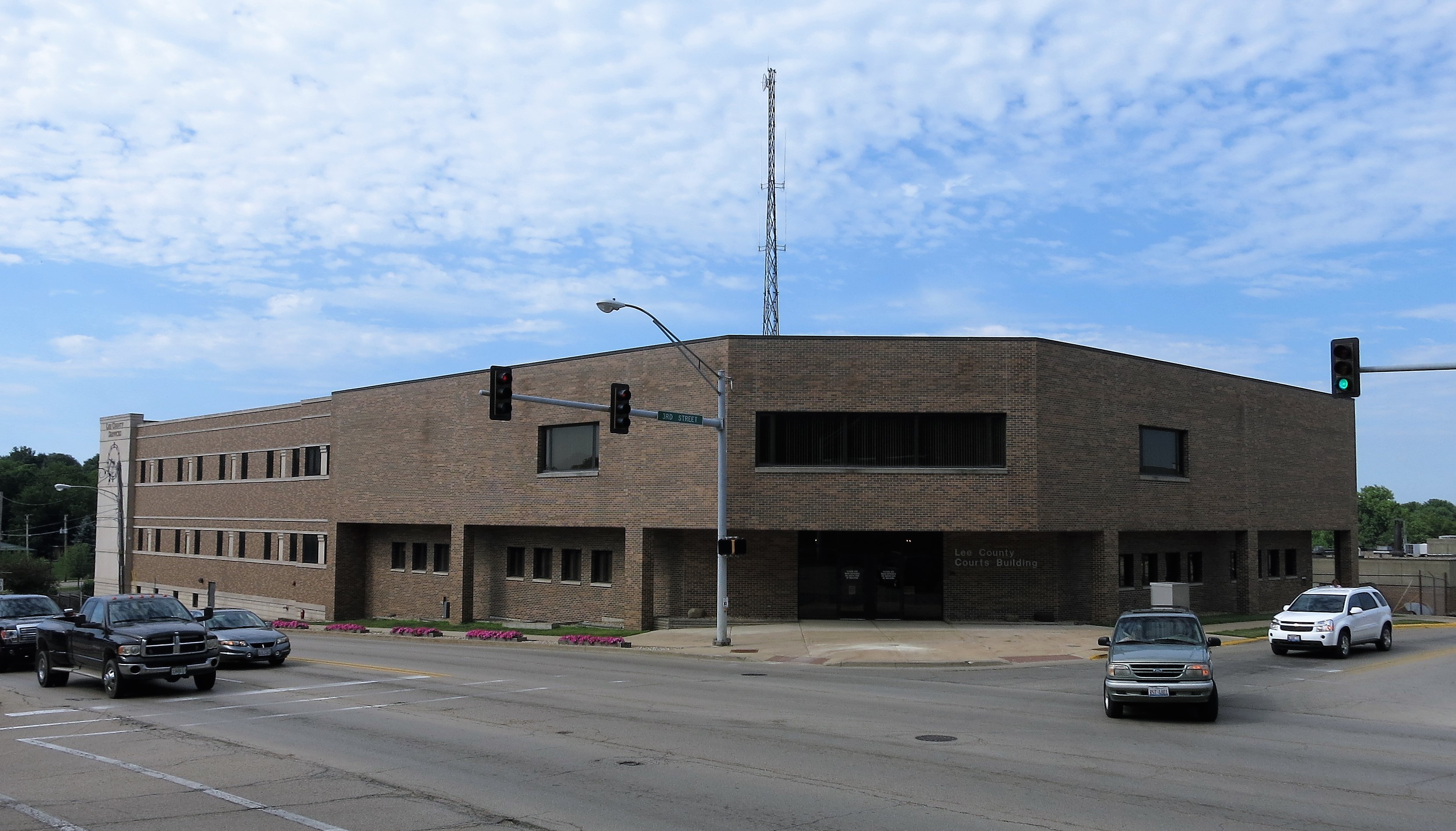
(Current) Lee County Courthouse
Heritage Crossing and Reagan’s statue, taken from across the Rock River at Presidents’ Park

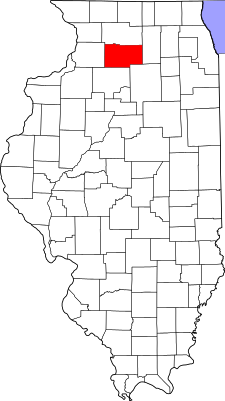
Lee County in the state of Illinois

All photos were taken by the author except for the Ronald Reagan boyhood home. The author’s photos were taken on July 11, 2014.

A list of all photo posts from the American County Seats series in TimManBlog can be found here.

I’m trying to travel to all of America’s county courthouses, and each month a post about my visit to the most interesting county seats. It’s only a hobby — but donations are greatly appreciated to help defer my costs.
Thanks,
Tim

One-Time
Monthly
Yearly

Make a one-time donation

Make a monthly donation

Make a yearly donation

Choose an amount

¤5.00
¤15.00
¤100.00
¤5.00
¤15.00
¤100.00
¤5.00
¤15.00
¤100.00

Or enter a custom amount

¤

Your contribution is appreciated.

Your contribution is appreciated.

Your contribution is appreciated.

DonateDonate monthlyDonate yearly

Enterprise, the Jewel of Eastern Oregon

The Wallowa Mountains above Enterprise, Oregon

June 30, 2019

Wallowa County occupies the far northeastern corner of the state of Oregon. It’s far from Portland and the State Capitol in Salem, far from the Pacific Ocean beaches, and far from California. Unlike most of eastern Oregon’s desert stretches, Wallowa County boasts snowed-capped peaks and lush green valleys. 

Enterprise, the county seat of Wallowa County, lies in a beautiful alpine valley.  When you go there, expect to see many pickup trucks with two black labs in the back.  Standard. Expect also to see a few horses get loose just outside town and run down the road with their owners running after them in vain, causing the closest thing to a traffic jam in this rural place. Again, standard.

Welcome to Enterprise, named after the idea of “enterprise.” After a look around town, we’ll end up at the lake. That’s how life usually works around here.

Wallowa County Courthouse — front entrance

The courthouse and many other buildings in town are constructed of a locally-quarried gray stone block known as Bowlby Stone, named for a local landowner.  The porous stone could be cut by masons while it was still damp from the quarry, but after a time it dried as hard as concrete.  (This last bit I read on a historical sign, and this is the first time I’ve heard of quarried rock being called “damp”.)

Wallowa County Courthouse — Enterprise, Oregon

Here’s Enterprise’s slogan: “The Past is our Future.” I doubt that will be so, as will be seen later.

Main Street. Enterprise, Oregon. A Bowlby stone building on the right. A nice local watering hole on the left.
The OK Theatre. Enterprise, Oregon

Enterprise has a population of 1,940; the county has a total population of 7,008. But that may change.  Its fantastic location in a deep Alpine valley beckons travelers, tourists, and second-home seekers.  In short, folks with disposable cash. That’s what I saw when I last visited a few years ago.

Neighborhood home with white picket fence. Enterprise, Oregon
The Ponderosa Motel. Fine lodging just across the street from the courthouse. The Wallowa Mountains are the backdrop. Enterprise, Oregon.

Only western Oregon makes the national news — in Portland, Antifa just beat a bystanding journalist into a brain bleed (https://humanevents.com/2019/06/29/antifa-brutally-assault-journalist-during-portland-protest/?utm_referrer=https%3A%2F%2Fduckduckgo.com%2F) — but eastern Oregon is the Republican half of the state.

You can see the signs of it everywhere:

Wallowa County Courthouse’s Fountain of Honor — Enterprise, Oregon

This part of Oregon is becoming a refuge from the fascists taking control in western Oregon. Meanwhile, the spirit of Chief Joseph and the Nez Perce will be here always.

Statue of Chief Joseph of the Nez Perce.

Here’s some more history, for this interested:

South of town, Wallowa Lake catches the snowmelt from the mountains high above it and feeds the Wallowa River which runs through Enterprise:

Wallowa Lake
Wallowa Lake

Cool summer memories. Toes compliments of yours truly.

Wallowa Lake

Some scientific information on the lake and surrounding area:

Finally, one last look at the valley, taken just before sunset on a warm June day:

View of the Wallowa Mountains, as seen from my room at the Eagle’s View Inn & Suites, Enterprise, Oregon

All photos were taken by the author. Photos were taken on June 25, 2007, and June 22, 2015.

A list of all photo posts from the American County Seats series in TimManBlog can be found here.

I’m trying to travel to all of America’s county courthouses, and each month a post about my visit to the most interesting county seats. It’s only a hobby — but donations are greatly appreciated to help defer my costs.
Thanks,
Tim

One-Time
Monthly
Yearly

Make a one-time donation

Make a monthly donation

Make a yearly donation

Choose an amount

¤5.00
¤15.00
¤100.00
¤5.00
¤15.00
¤100.00
¤5.00
¤15.00
¤100.00

Or enter a custom amount

¤

Your contribution is appreciated.

Your contribution is appreciated.

Your contribution is appreciated.

DonateDonate monthlyDonate yearly
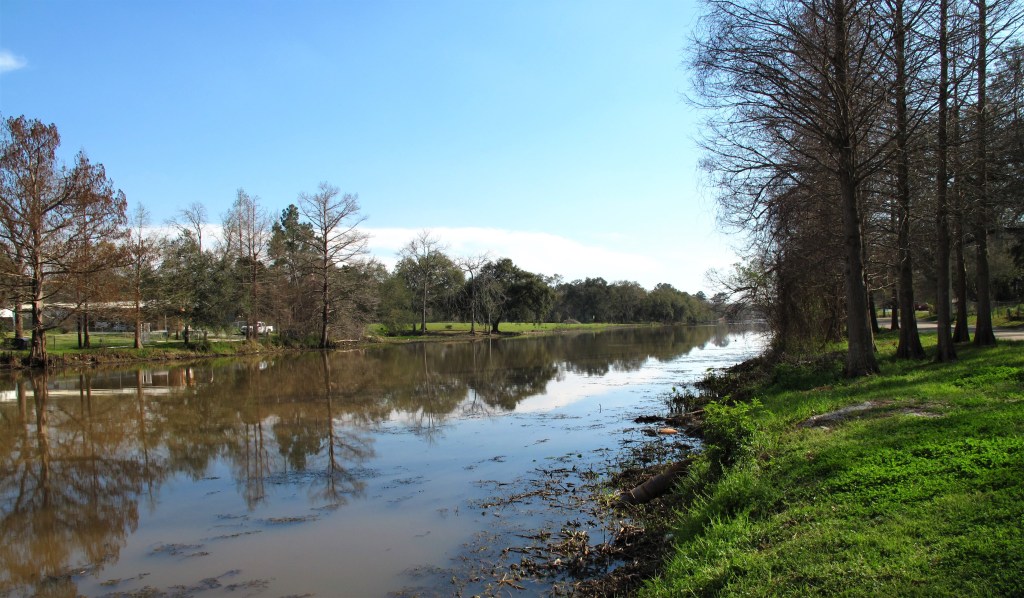
The town of Sylva in the hills of Western Carolina

May 19, 2019

By far, the best birthday present I’ve ever had was a week-long trip to western North Carolina in May. The skies were blue, the mountains were green, and the sun was warm (and golden yellow).

We’ll start in the town of Sylva (population 2,000 or so), the county seat of Jackson County, North Carolina, named for President Andrew Jackson.

Nestled in a deep Appalachian valley, Sylva has two parallel main streets, an upper one and a lower one. The upper main street, actually called Main Street, holds several shops, cafes, and galleries. The lower main street, called Mill Street, seems like its storefronts are actually the back doors of the stores on the upper main street.

West Main Street, Sylva, North Carolina as it looked in May, 2008. Shops and galleries, coffee houses and microbreweries.
West Main Street looking east. The hill on the right is quite steep.

The old Jackson County Courthouse rises above the west end of Main Street, high up on a hill, towering over the town below.

Former Jackson County Courthouse, now the county public library
Jackson County Veterans Memorial lies at the base of the steps below the former courthouse

A statue of a Confederate soldier stands watch at the summit of some thirty or forty concrete steps rising above Main Street. In all my travels this is one of the best locations for a courthouse I’ve ever seen.

Former Jackson County Courthouse. Confederate statue at the front, golden statue of Lady Justice stands atop the cupola.

As you might imagine, the view from the top of the steps is spectacular.

The town of Sylva, North Carolina

Just makes you want to sit for a spell, doesn’t it?

Sylva Main Street from the old county courthouse. Confederate soldiers’ memorial is the foreground; the county veterans’ memorial is at the base of the steps.

Old Confederate statues generally honor the soldiers who served in that war while being silent of the war’s causes. As a born and bred Pennsylvanian I have no problem with such monuments, they are an important part of our history. If you want to tear them down, I suggest you instead erect your own memorial as you deem appropriate — and leave others’ memories alone.

The inscription on the back of the Confederate soldier’s memorial, Sylva.

The new county Justice Center and Administration Building is a mile out of town. It must have been cramped in that old courthouse since the new one the county built is a sprawling two-story structure with plenty of parking spaces around it.

Jackson County Justice and Administration Center, Sylva, North Carolina

Western Carolina University is located here in Sylva. I suppose it could be called “Western North Carolina University” but since North Carolina is larger and more populous than South Carolina, the North Carolinians apparently feel free to usurp the singular “Carolina” to use in their names. I copied that style for the title of this post.

Because that trip was just so memorable, I decided to add a few photos from the western Carolina mountains and countryside.

Horses in pasture near Trust, North Carolina

As if Great Smoky Mountains National Park didn’t have enough natural beauty, western Carolina is home to numerous waterfalls outside the park. Looking Glass Falls is one of the most photogenic of these cascades:

Looking Glass Falls, Pisgah National Forest, North Carolina

Here are two closeup shots from the base of the falls:

Looking Glass Falls, Pisgah National Forest, North Carolina

A convention of Monarch butterflies congregate near the base of the falls:

Monarch butterflies

All photos were taken by the author. Photos were taken between May 19-23, 2008.

A list of all photo posts from the American County Seats series in TimManBlog can be found here.

I’m trying to travel to all of America’s county courthouses, and each month a post about my visit to the most interesting county seats. It’s only a hobby — but donations are greatly appreciated to help defer my costs.
Thanks,
Tim

One-Time
Monthly
Yearly

Make a one-time donation

Make a monthly donation

Make a yearly donation

Choose an amount

¤5.00
¤15.00
¤100.00
¤5.00
¤15.00
¤100.00
¤5.00
¤15.00
¤100.00

Or enter a custom amount

¤

Your contribution is appreciated.

Your contribution is appreciated.

Your contribution is appreciated.

DonateDonate monthlyDonate yearly
April 19th in Middlesex County, Massachusetts

The Lexington Minuteman

On April 19, 1775, the battles of Lexington and Concord were fought in Middlesex County, Massachusetts, commencing the American Revolution. Each year on Patriot’s Day, the battles are re-enacted in remembrance of the day when the rights of men were asserted against despotic power.

I had long wished to be in Lexington, Massachusetts on April 19th and had my chance to go a few years ago. I stayed the night before in nearby Woburn, awoke at 3:00 am, and arrived in Lexington in the 4:00 am darkness. I wasn’t the first to arrive.

The crowds gathered before dawn on Lexington Green. About half were tourists while the other half were classes of schoolchildren, ready to watch history. Local guides dressed in period costumes explained to the crowds what is about to happen. I watched with keen interest.


Learning of the impending British advance, Massachusetts Minutemen gather on Lexington Green at dawn. They know they will be outnumbered.

The Redcoats arrive in formation.

The two sides confront each other on Lexington Green. There’s a stand-off.

Then shots are fired. The noise and smoke are tremendous.

The result was eight militiamen killed, ten wounded. One British regular was wounded.

The words attributed to Captain John Parker of Lexington are memorialized in stone:

After the re-enactment was over, I had a chance to wander about taking photos. The April weather was cool, but the skies were sunny.

The famous Minuteman statue, Lexington Common. Lexington, Massachusetts
An armed Rebel youth confronts and captures three Redcoat soldiers! What pluck!
Lexington Common

As you know from the history books, the fight then moved on to Concord bridge where 100 British regulars met 400 American militiamen.

Old North Bridge, site of the Battle of Concord. Memorial obelisk is on the left; Minuteman’s statue on the right
Inscription on the obelisk at the Old North Bridge: “Here on the 19th of April 1775 was made the first forcible resistance to British aggression…”
Minute Man statue at Concord, which was erected in 1875 on the centennial of “the shot heard round the world”
A view down Walden Street. Concord, Massachusetts

Later on, I drove down to Cambridge, the county seat. The Middlesex County Courthouse looks more like a military stronghold than a court of Justice, towering above residential East Cambridge like Saruman’s Tower from Lord of the Rings.  I believe the jail occupies several of the floors.

The courthouse is in a part of town called East Cambridge, away from the Harvard Square area which was the original Cambridge settlement. The buildings here are townhouses of brick or wood.  The brick ones are remnants of homes for the wealthy; the wood ones are cheaper, yet many have been painted bright colors and remind me of row houses on the Irish seashore.

Middlesex County Courthouse. Cambridge, Massachusetts

  The old red brick courthouse is across the street.

Registry of Deeds and Probate Court. Cambridge, Massachusetts
Historical sign: the History of Cambridge
The streets of Cambridge, Massachusetts

From East Cambridge, I drove down Main Street, up Massachusetts Avenue, around Harvard Square, and back down Broadway.  Cambridge is a college town but usually isn’t thought of in the same way as Lawrence, Kansas, or Athens, Georgia.  Yet I was amazed at how much Massachusetts Avenue looks like a college town’s main street.  Shops are in single-story buildings with a few large brick two-story buildings nearby.  Little restaurants and fast-food places predominate.  I saw several Middle Eastern eateries.  However, the pedestrians seemed to be not so much the college crowd as ethnic workers of all types.  So downtown Cambridge seems more of an ethnic neighborhood than a college hang-out.

Residences along the side streets are mostly two-story walkups surrounded by blooming trees.  It’s the middle of spring and all the trees are in bloom right now.  That’s especially nice on a warm, shirt sleeve day, perhaps the best day of spring so far.

Harvard’s Most Prestigious Law Firm: Dewey, Cheetham & Howe
Hahvard Yahd

Meanwhile across the Charles River in Suffolk County (Boston) I found this and couldn’t resist adding it here.

Statue of George Washington amid planters of tulips. Boston Common
Flower gardens blooming in April. Boston Common
Middlesex County in the state of Massachusetts

All photos were taken by the author. Photos were taken between April 19-21, 2010.


A list of all photo posts from the American County Seats series in TimManBlog can be found here.

I’m trying to travel to all of America’s county courthouses, and each month a post about my visit to the most interesting county seats. It’s only a hobby — but donations are greatly appreciated to help defer my costs.
Thanks,
Tim

One-Time
Monthly
Yearly

Make a one-time donation

Make a monthly donation

Make a yearly donation

Choose an amount

¤5.00
¤15.00
¤100.00
¤5.00
¤15.00
¤100.00
¤5.00
¤15.00
¤100.00

Or enter a custom amount

¤

Your contribution is appreciated.

Your contribution is appreciated.

Your contribution is appreciated.

DonateDonate monthlyDonate yearly
Post Navigation