TimManBlog

Whatever I'm Thinking

Archive for the category “Travel Posts”

Exploring Cordell, Oklahoma: A Historic County Seat

Please consider donating to support my travels using the form at the bottom of the post. PayPal, Visa, American Express, Mastercard, Discover, and Maestro are accepted. Thank you.

November 30, 2025

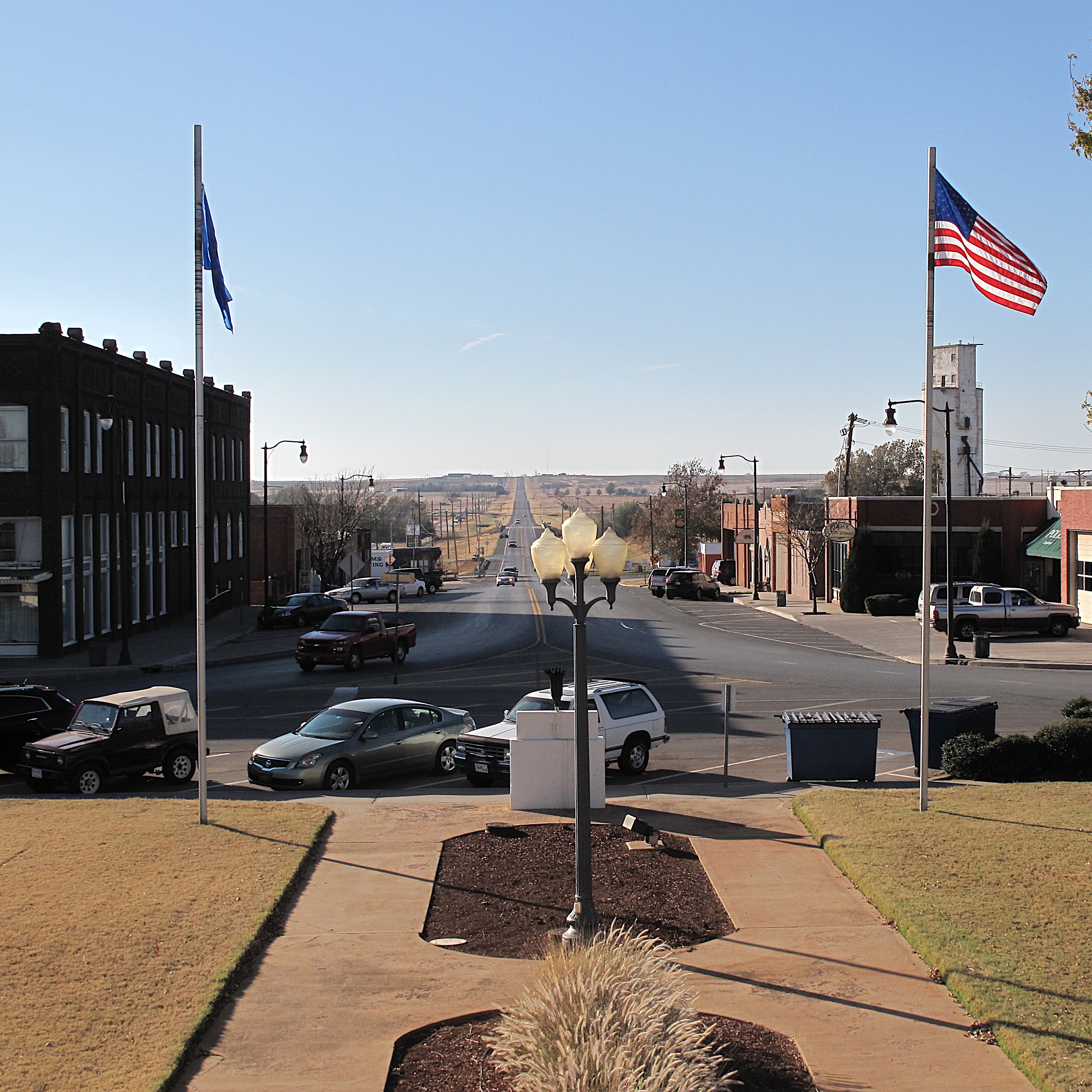
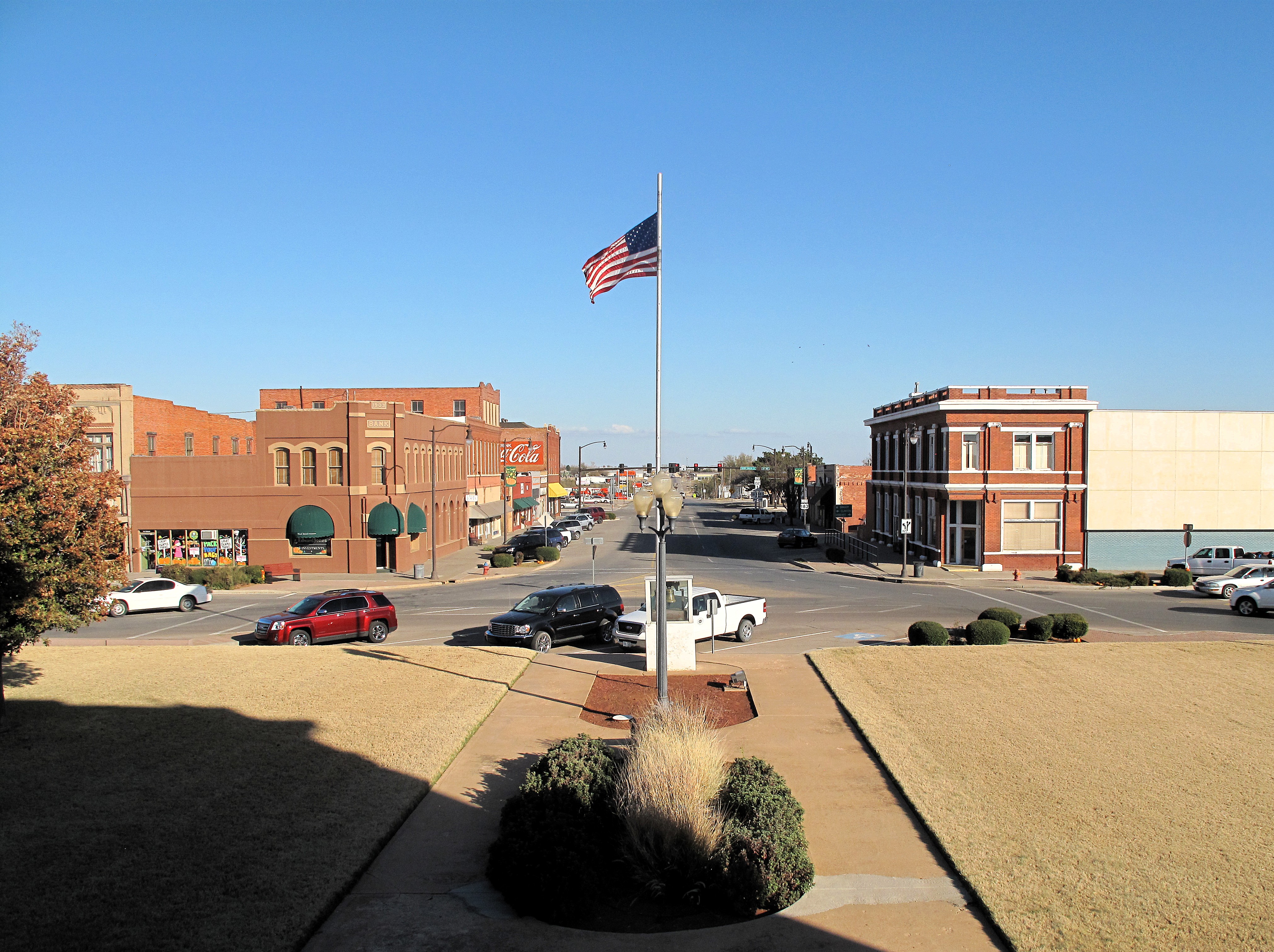
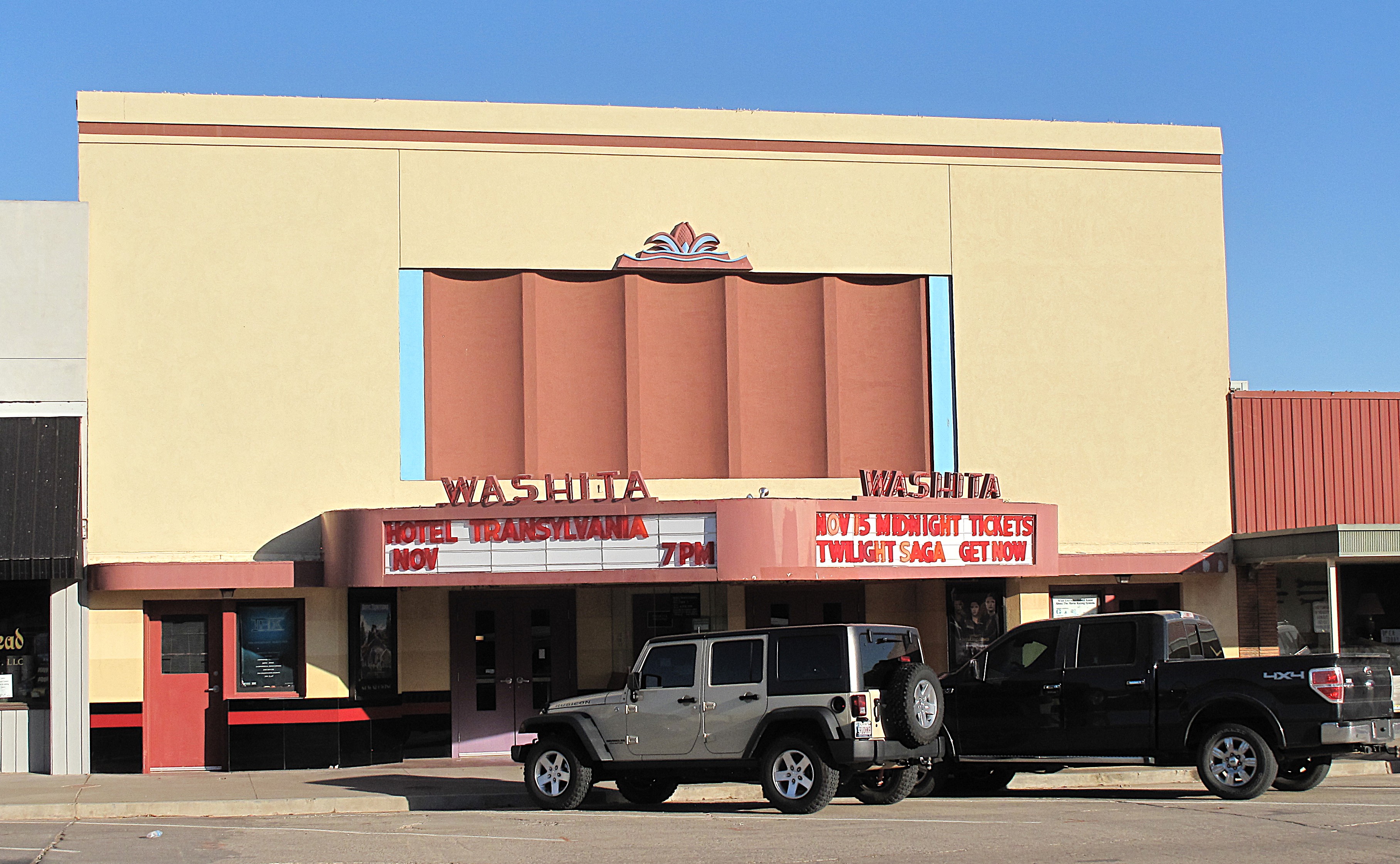
This is Cordell, Oklahoma, the seat of Washita County in western Oklahoma. Cordell (sometimes known as “New Cordell”) has a population of 1,775; the county has a population of over 10,000. Let’s look around. The first two pictures are from the steps of the three-story county courthouse. The views from the front and rear entrances are fantastic — many miles each way.

The far-reaching plains of western Oklahoma, as seen from the steps of the courthouse in Cordell.
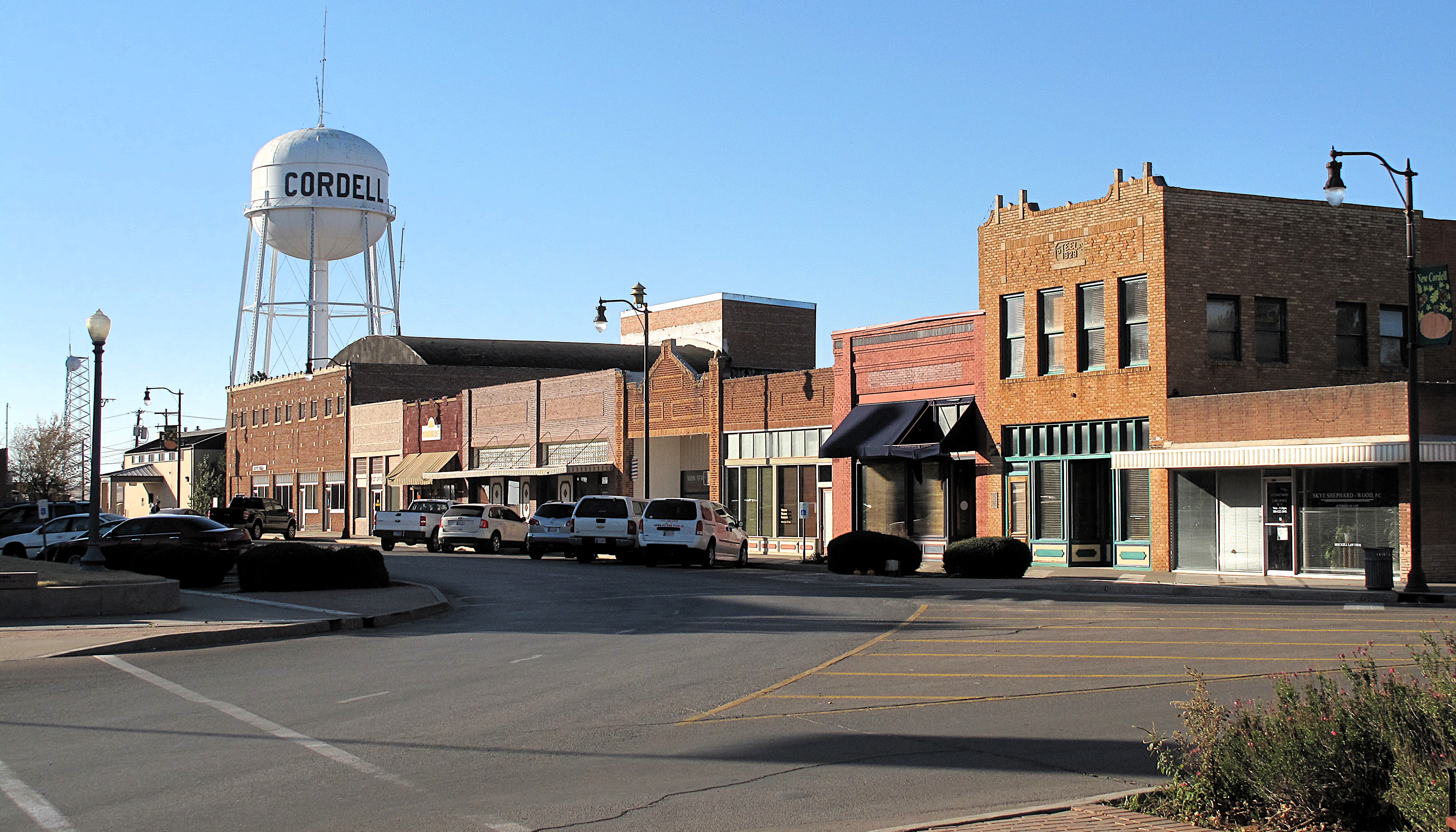
Downtown Cordell, Oklahoma from the steps of the courthouse.

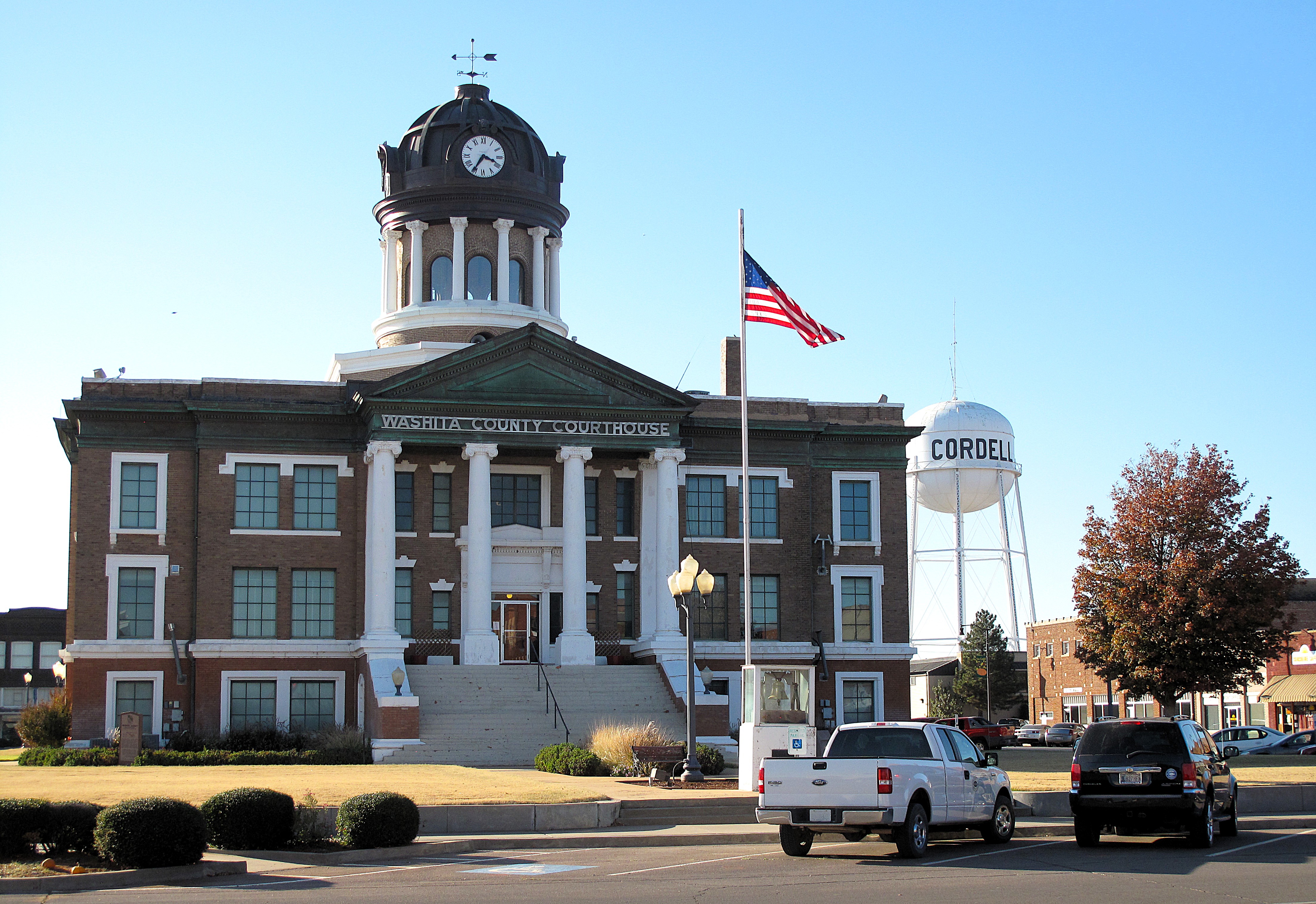
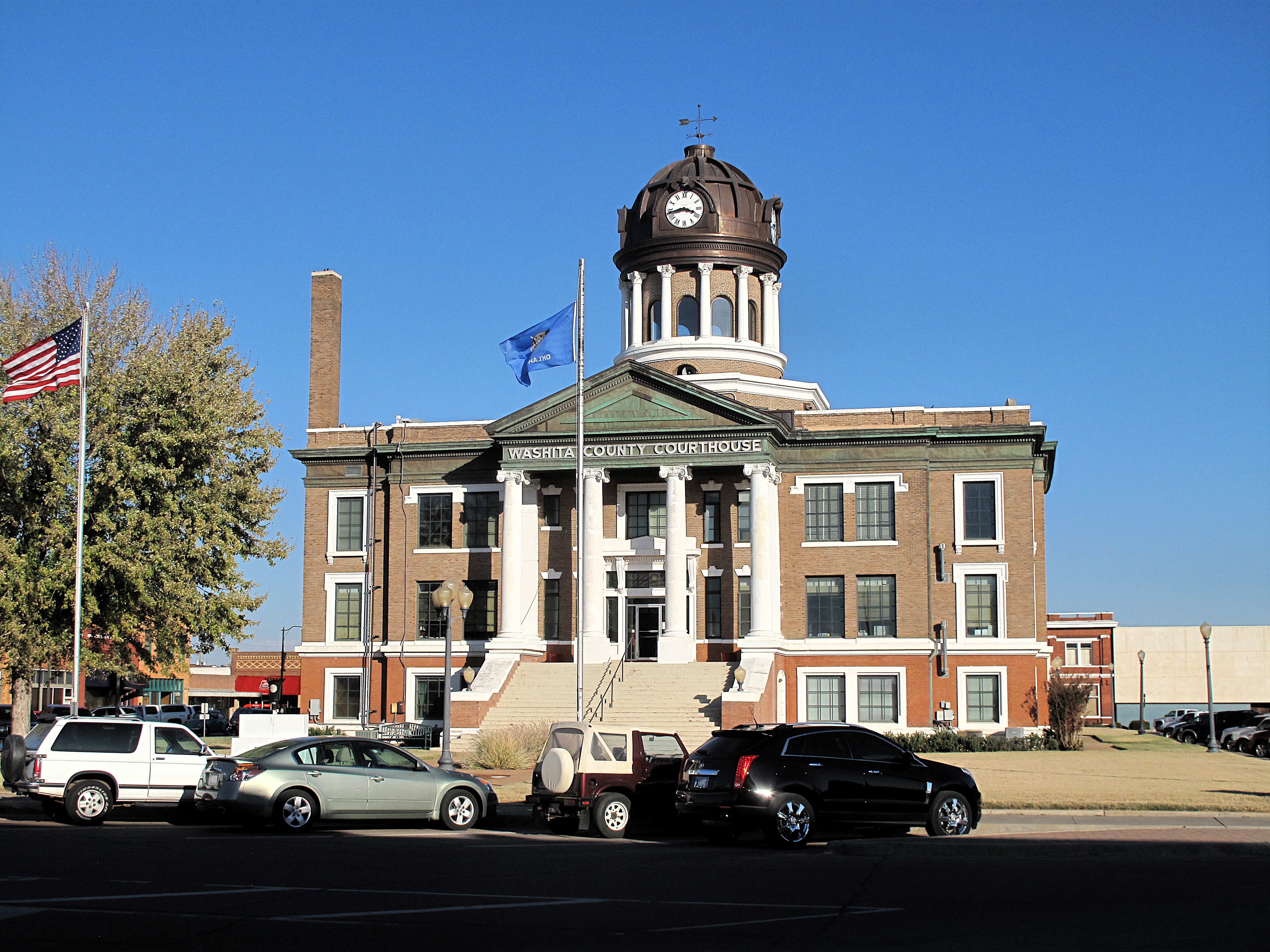
The classical revival Washita County Courthouse in Cordell was built in 1911. The old 1910 courthouse sits on an island, with Cordell’s businesses circling it. I saw the same layout in Boise City, Oklahoma, a few years ago. Boise City is in the Oklahoma Panhandle—maybe they copied the design from Cordell.

The three-story structure with its brilliant copper roof was called the “godfather of all courthouses in the state of Oklahoma” by Governor George Nigh. The building is listed on the National Register of Historic Places.

The Washita County Courthouse in Cordell, Oklahoma.

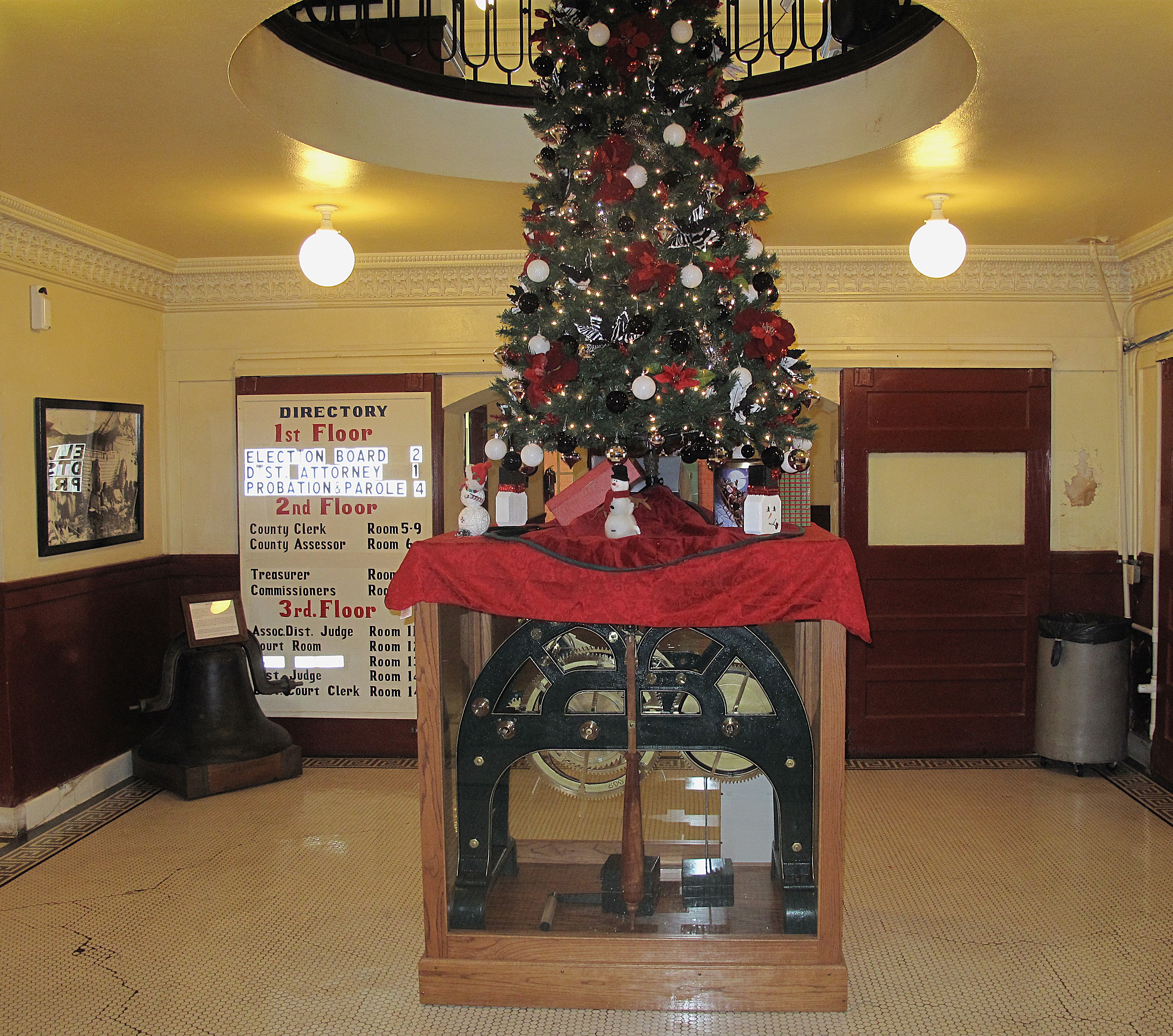
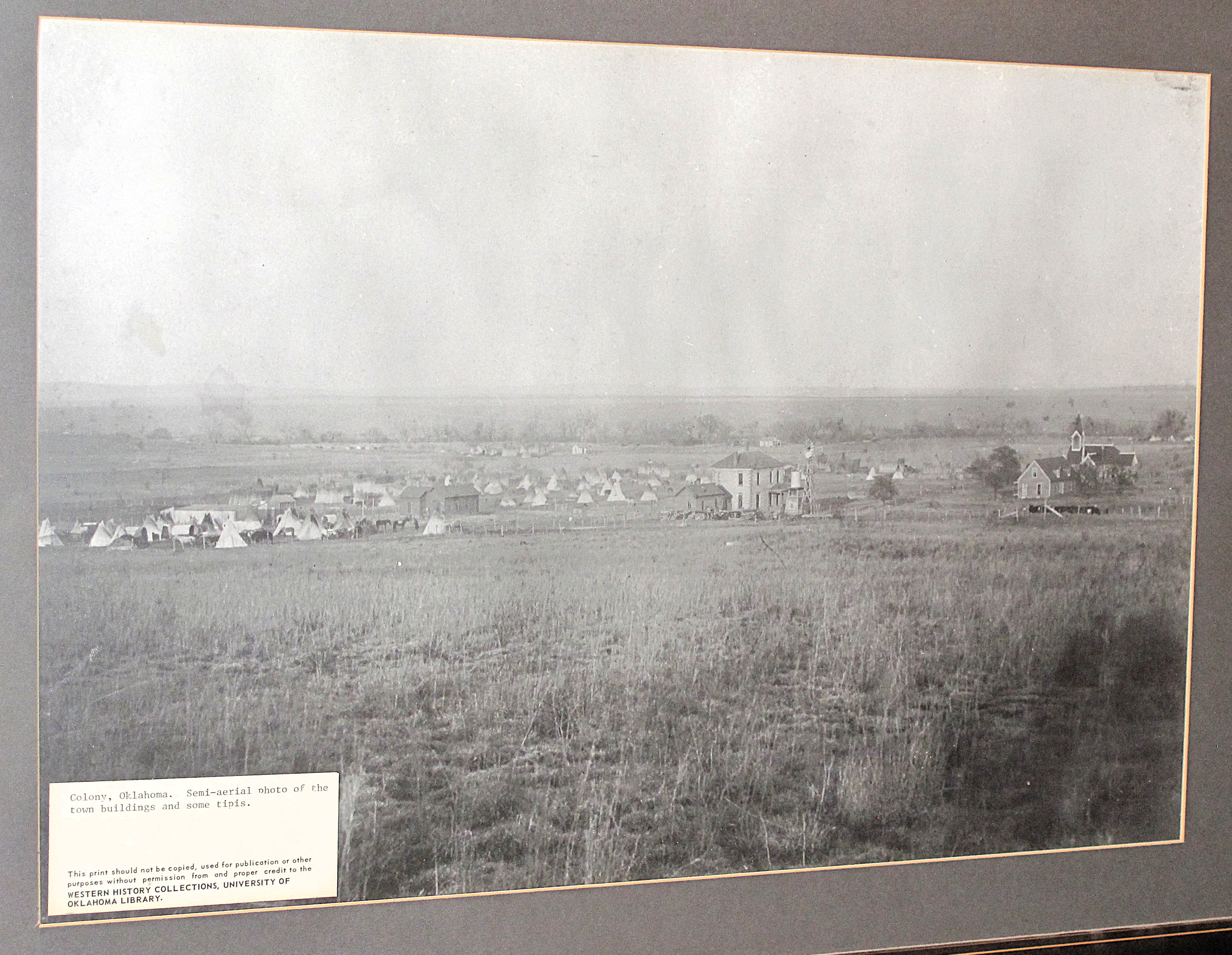
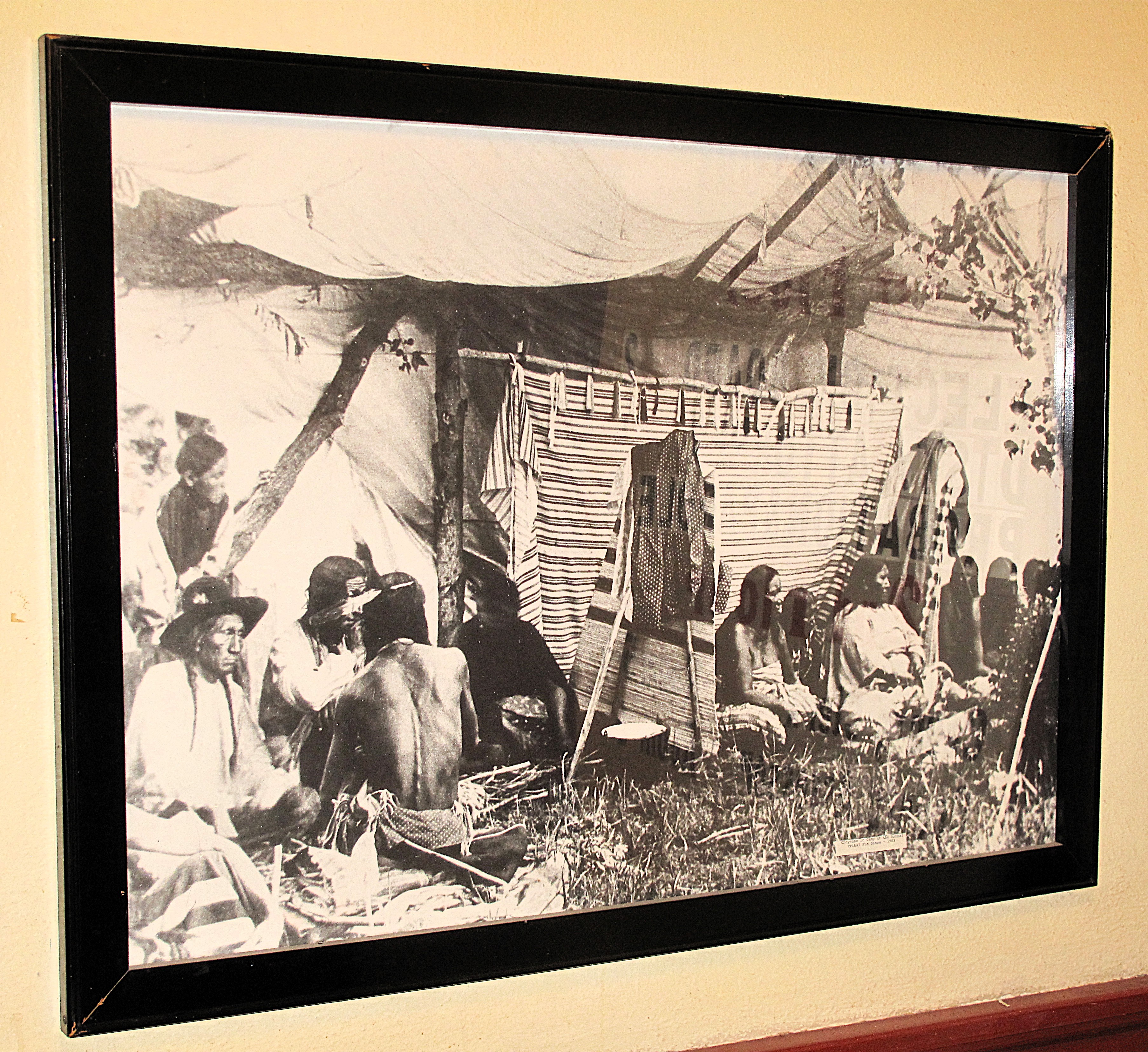
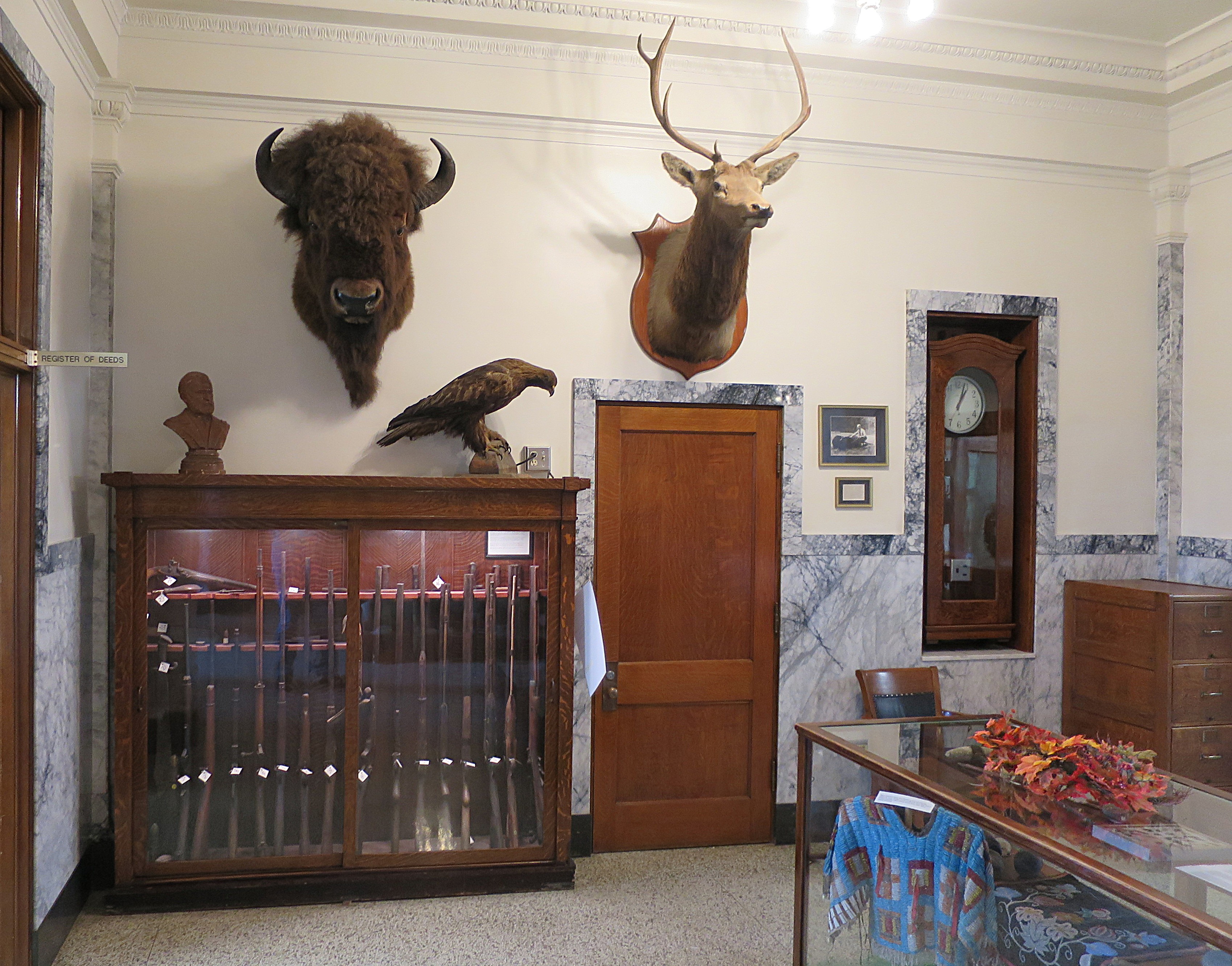
Below: Christmastime inside the Washita County Courthouse. The two black-and-white pictures on the right were taken around 1910 and depict Native Americans from the Cheyenne or Arapaho tribes; the top-left picture shows teepees dotting the plains. Back then, the Cheyenne tribe held their annual sun dances dressed in white linen shirts and cowboy hats.

It was a different world back then.

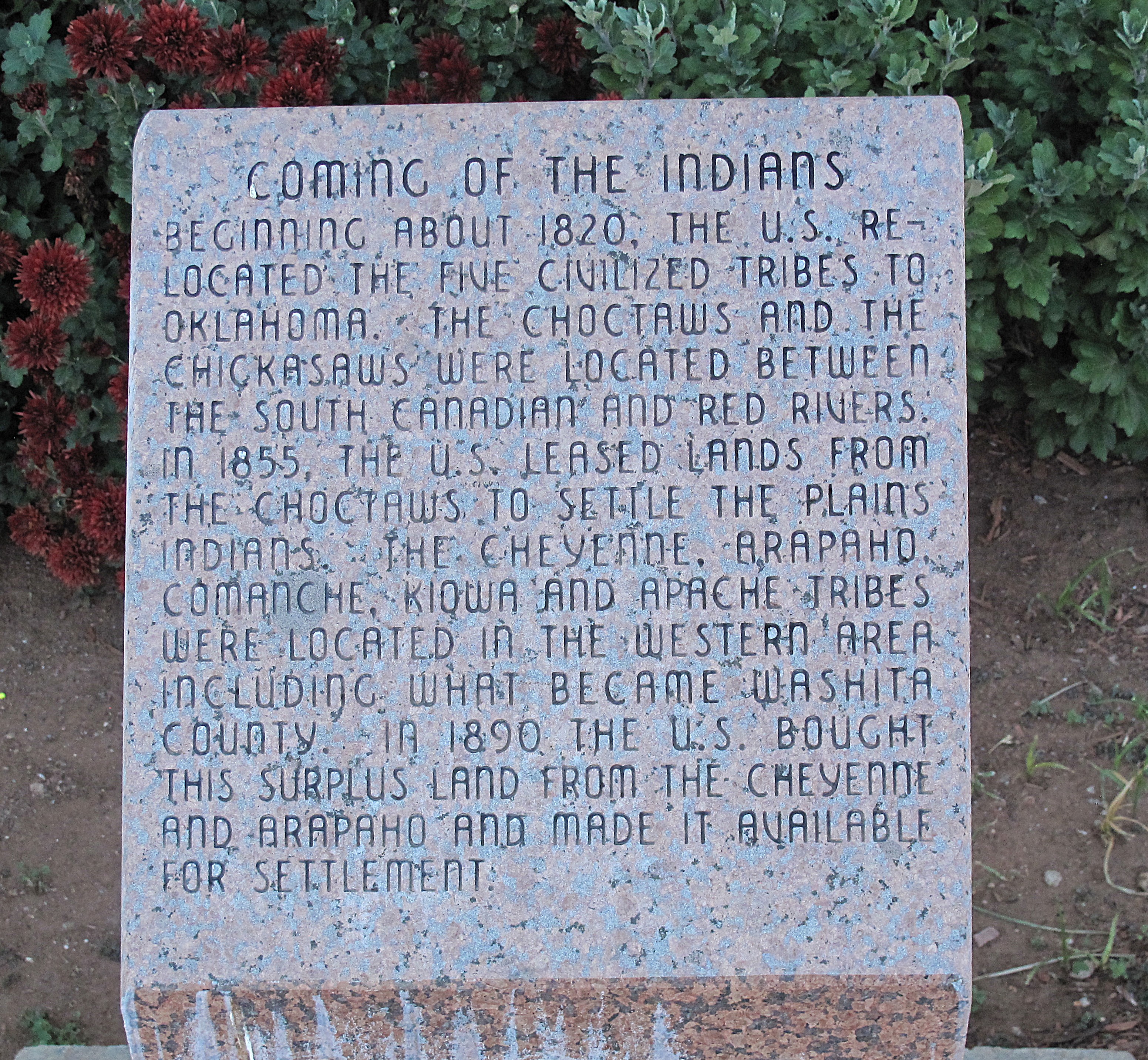
The lands of Washita County are included in the vast Cheyenne and Arapaho Indian Reservation of western Oklahoma.

Below: historical markers explain the origins of the county, “the coming of the Indians,” and “the coming of the White Man.”

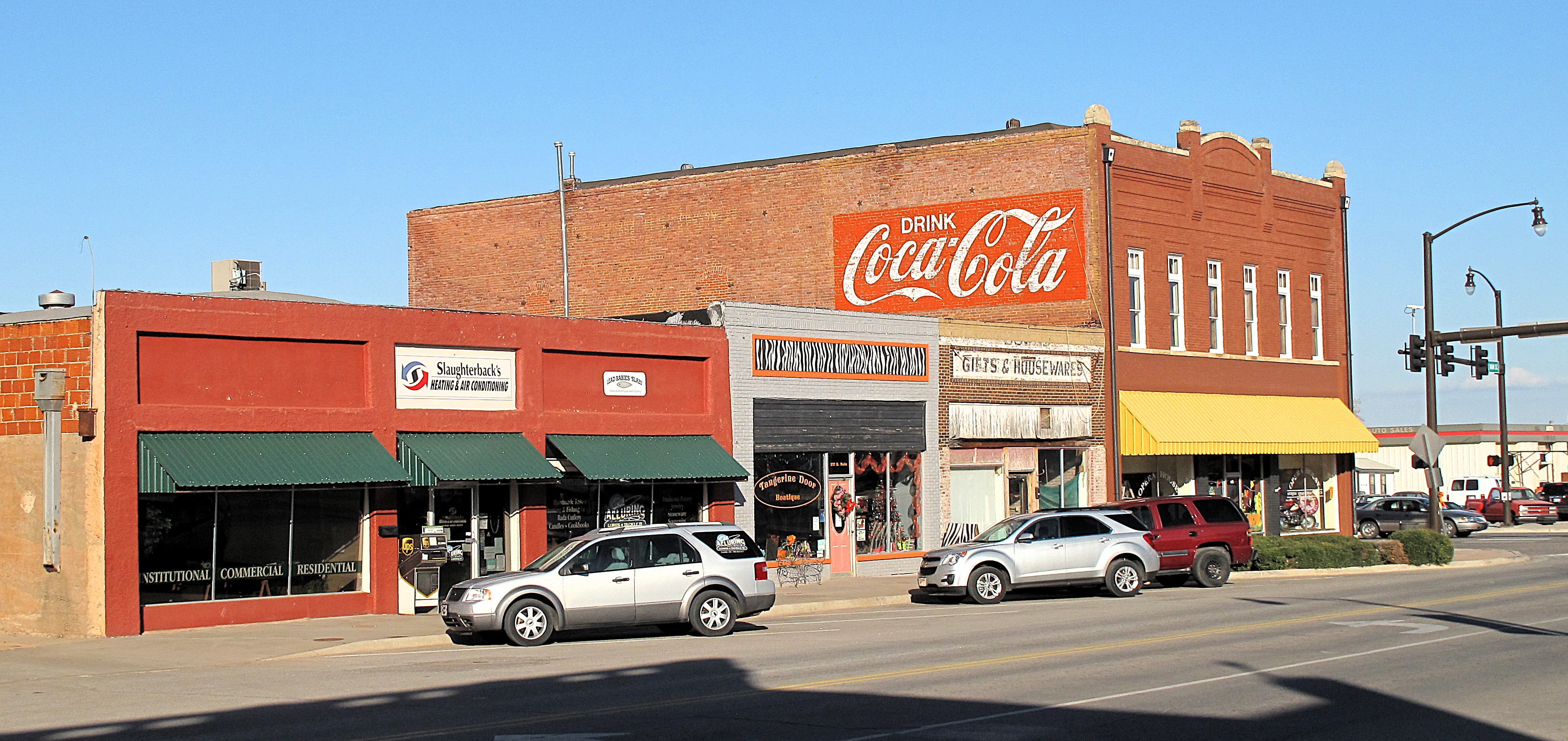
Below: the two-story business district in downtown Cordell, Oklahoma.

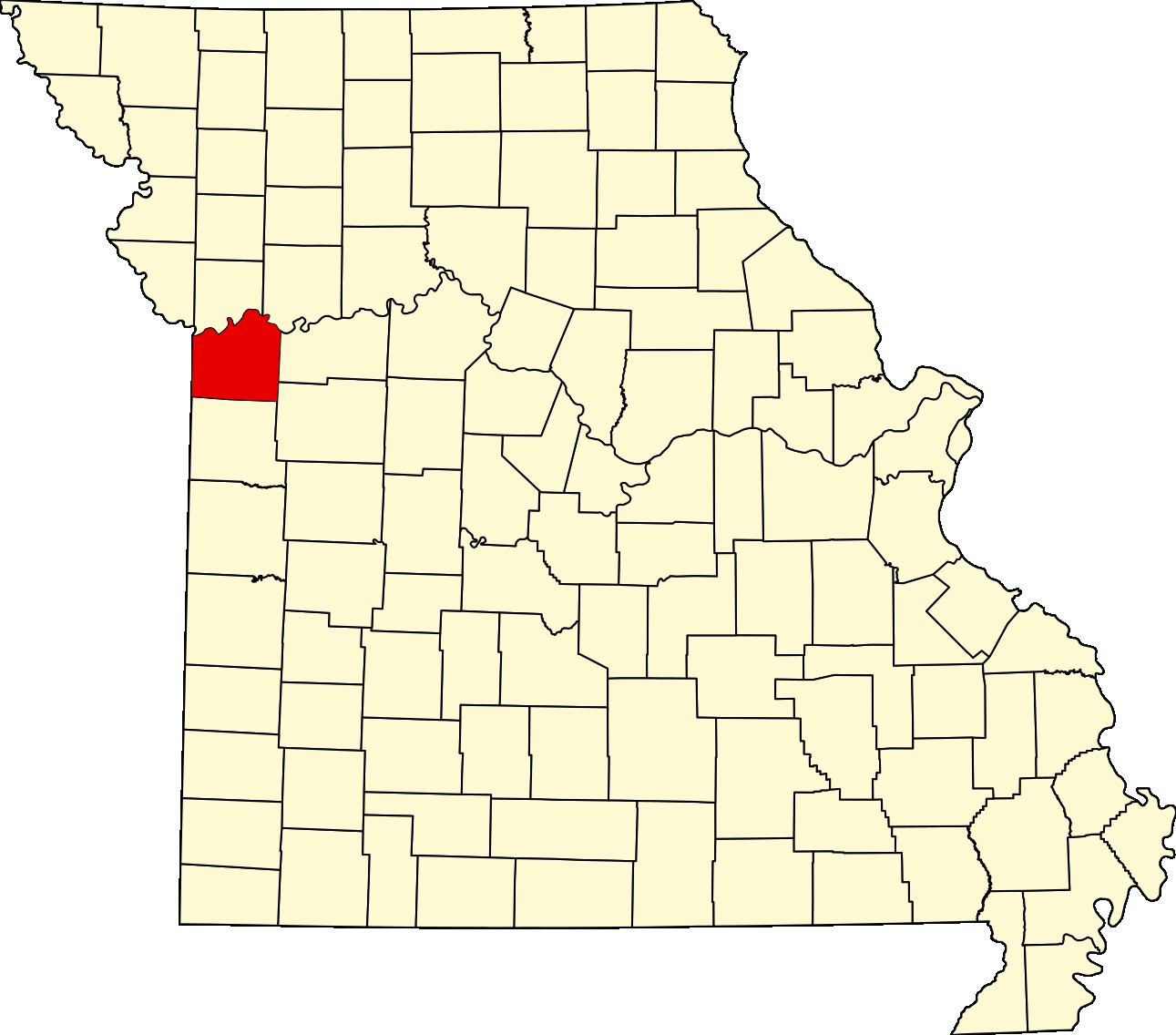
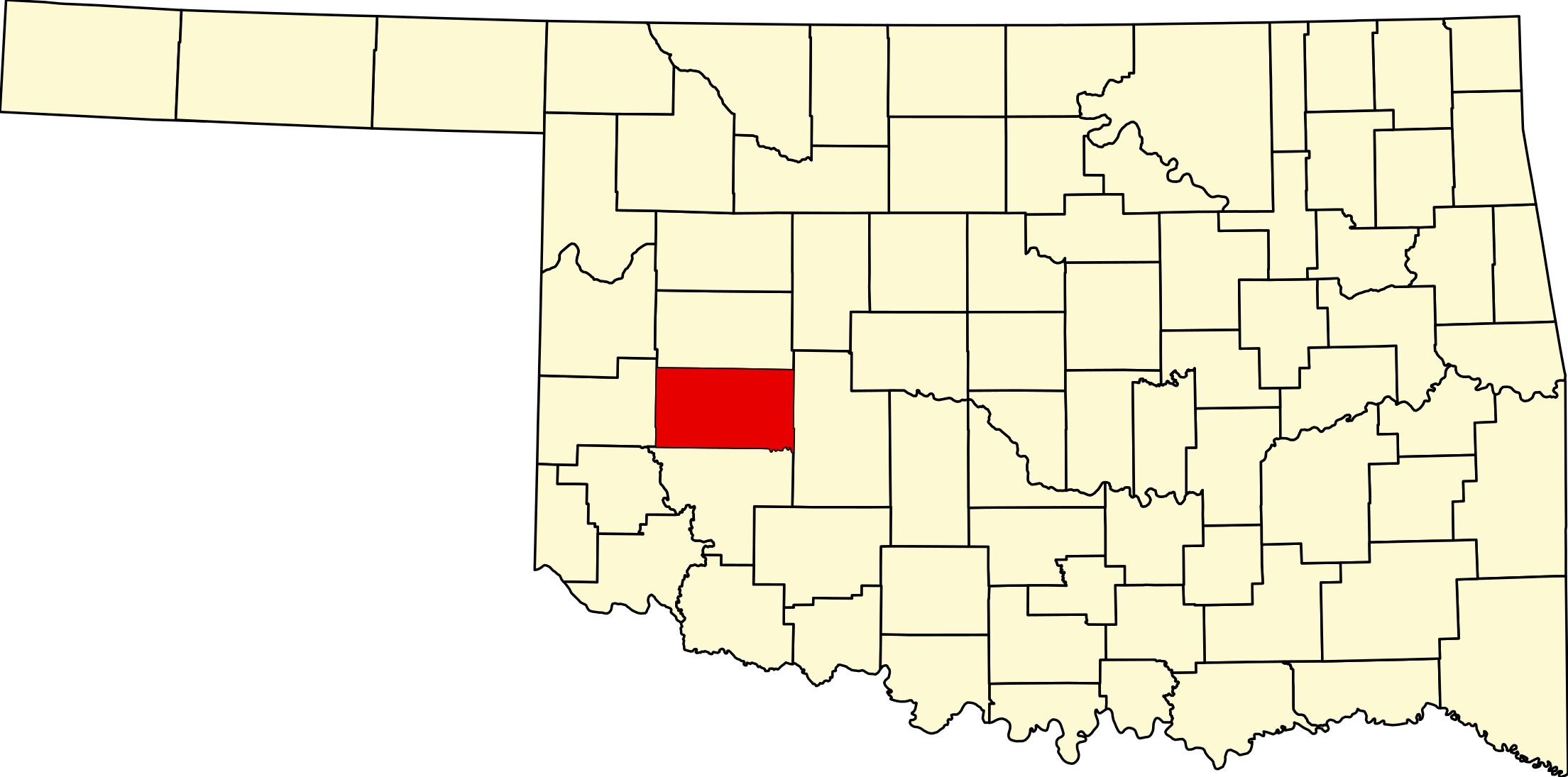
Washita County within the state of Oklahoma

Click here for a list of all TimManBlog American County Seats Series posts.
The photos in this post were taken on November 15, 2012 and are copyrighted by Tim Seibel.

Donations to TimManBlog

I post about a visit to one of America’s 3,150 county seats each month. Donations are greatly appreciated to help defray my travel costs.

$5.00

Check out the FREEDOM VOYAGES book series! These books document my road trips across the United States and include hundreds of stunning photographs. Each of the four books in the series is available on Amazon and Barnes & Noble. This includes my most recent release, FREEDOM VOYAGES Volume 4: Christmastime in Texas!
FREEDOM VOYAGES Volume 4: Christmastime in Texas. Available at Amazon.com and Barnes & Noble.

Earlier volumes in the FREEDOM VOYAGES series are also available:
Vol. 1: North-Central North Dakota
Vol. 2: Go West! From the Loneliest Road in America to California’s Gold Country
Vol. 3: A Proud, Dignified People in Lincoln’s Illinois
All FREEDOM VOYAGES booksare on sale at Amazon.com and Barnes & Noble.

The Mansions of Cumberland, Maryland

Please consider donating to support my travels using the form at the bottom of the post. PayPal, Visa, American Express, Mastercard, Discover, and Maestro are accepted. Thank you.

October 31, 2025

What a cool town!

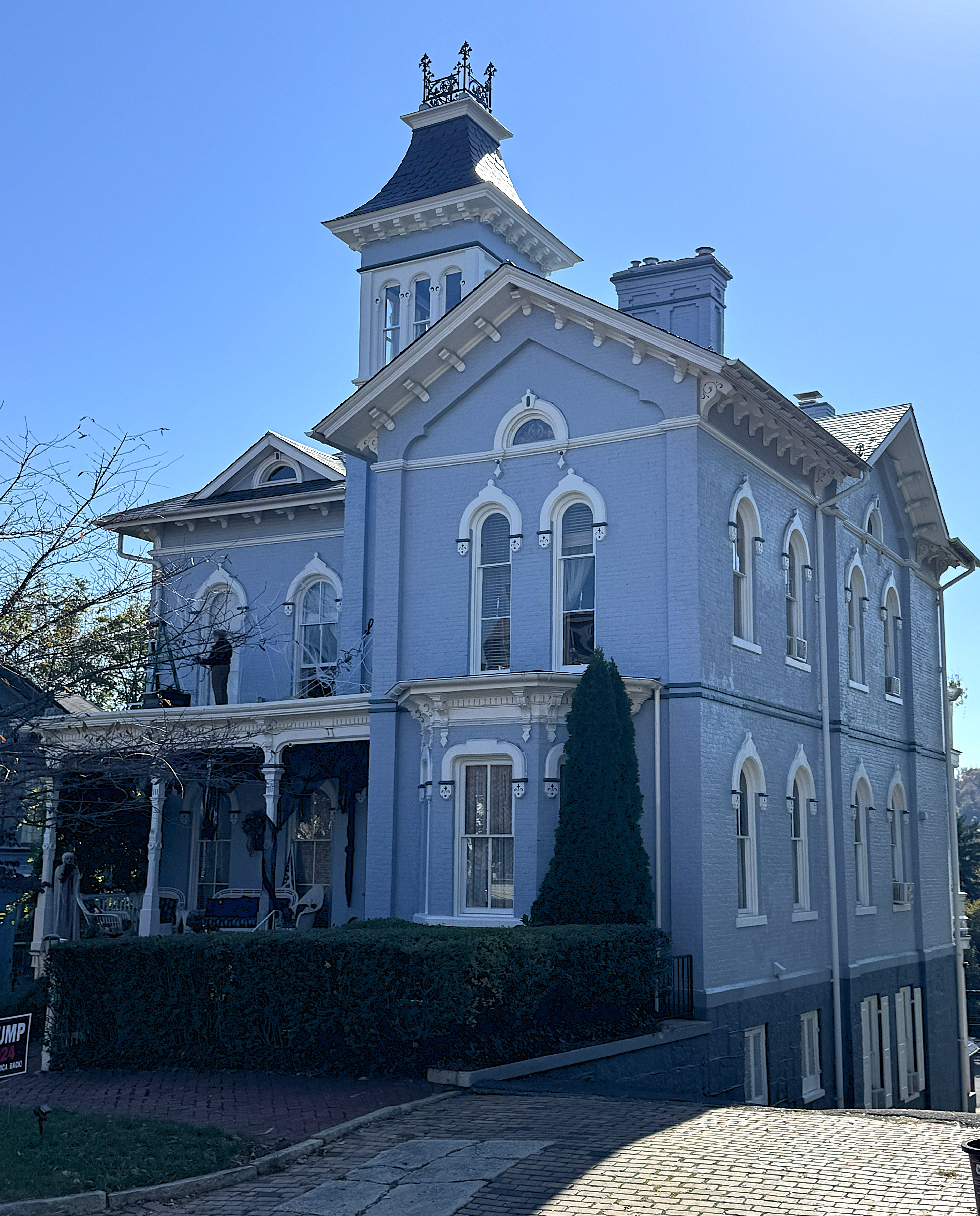
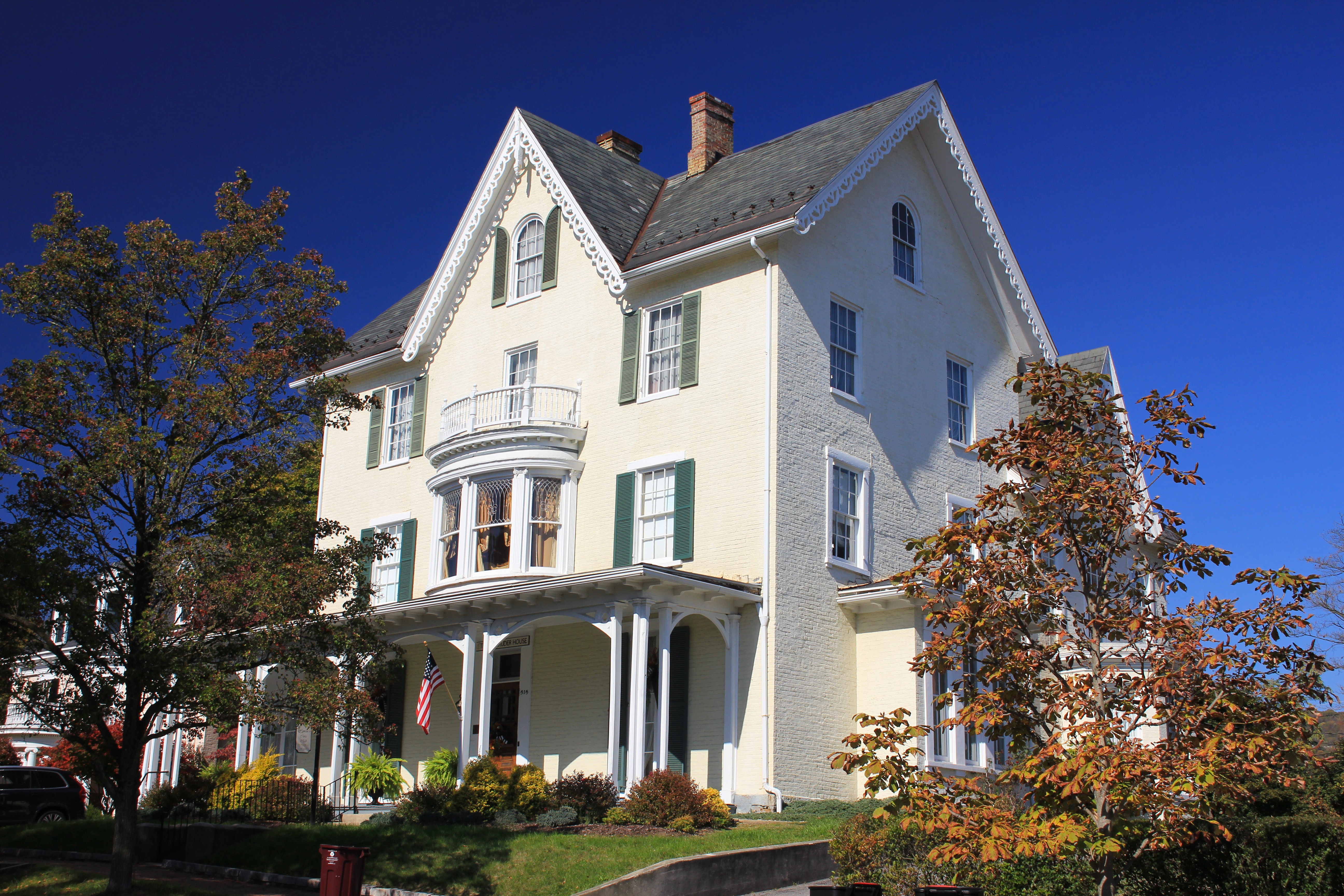
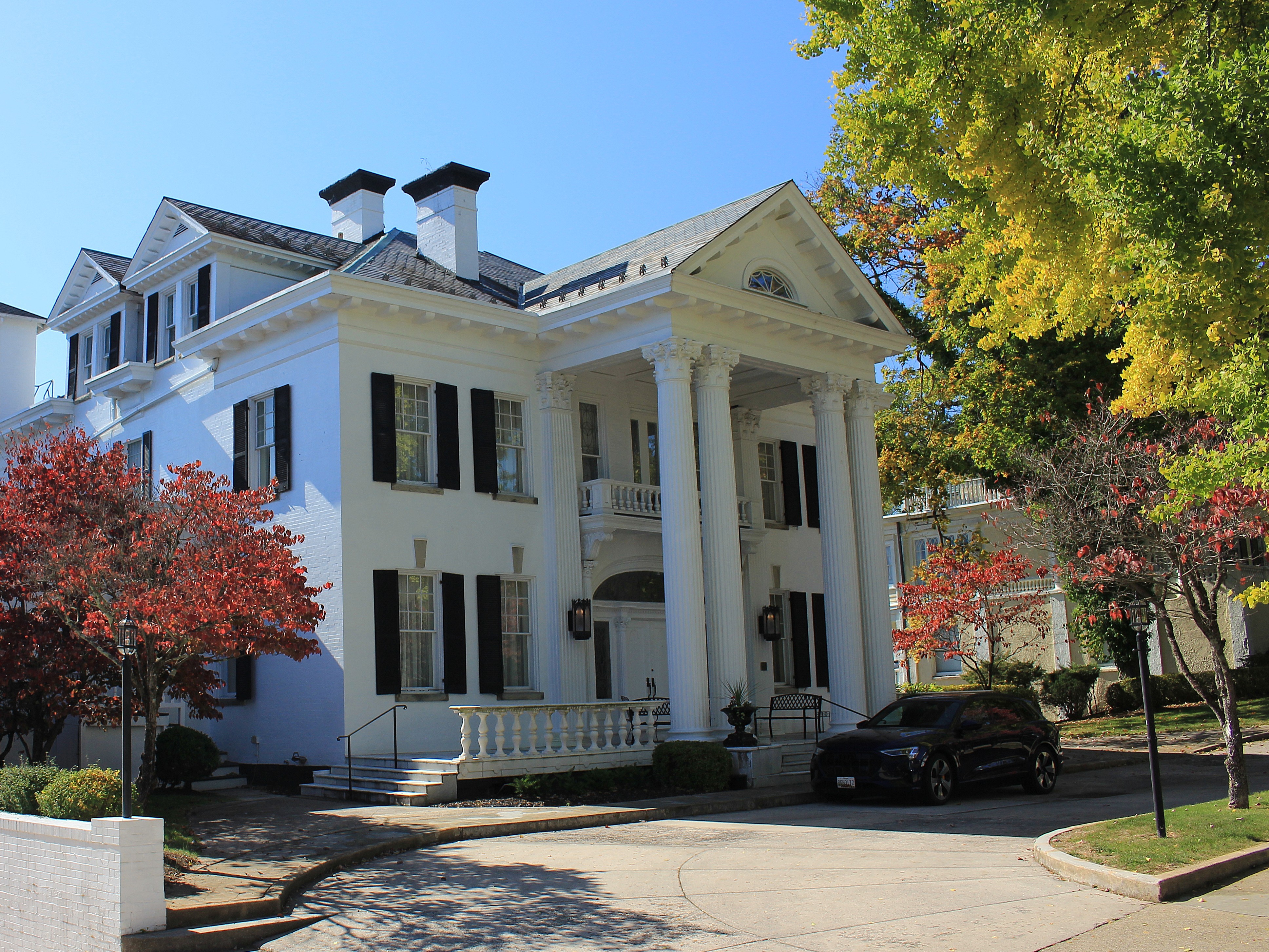
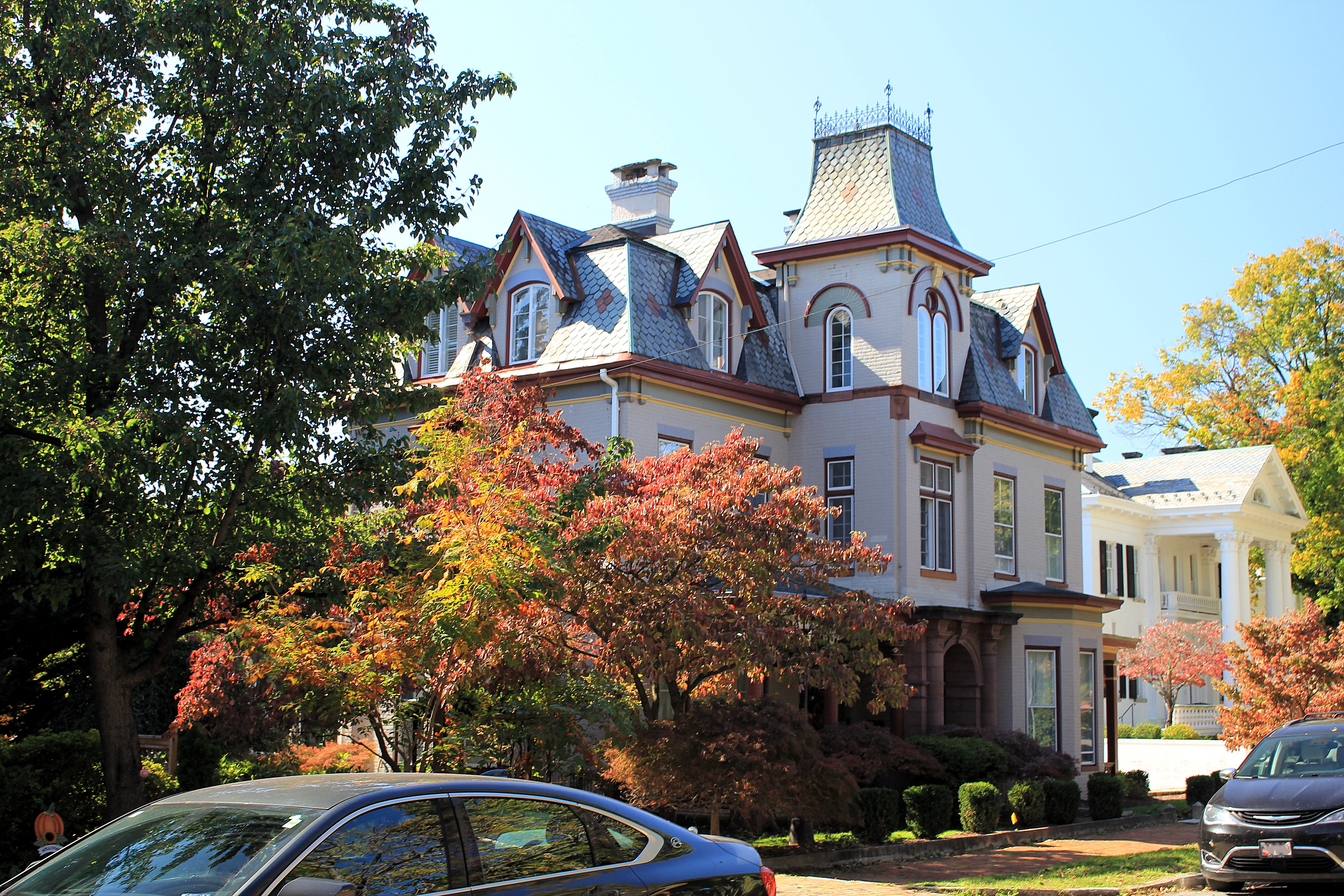
A Victorian mansion on Washington Street in Cumberland, Maryland.

I came to Cumberland, Maryland, to see the Allegany County Courthouse. I found a parking space on a shaded part of Washington Street, a block from the courthouse.

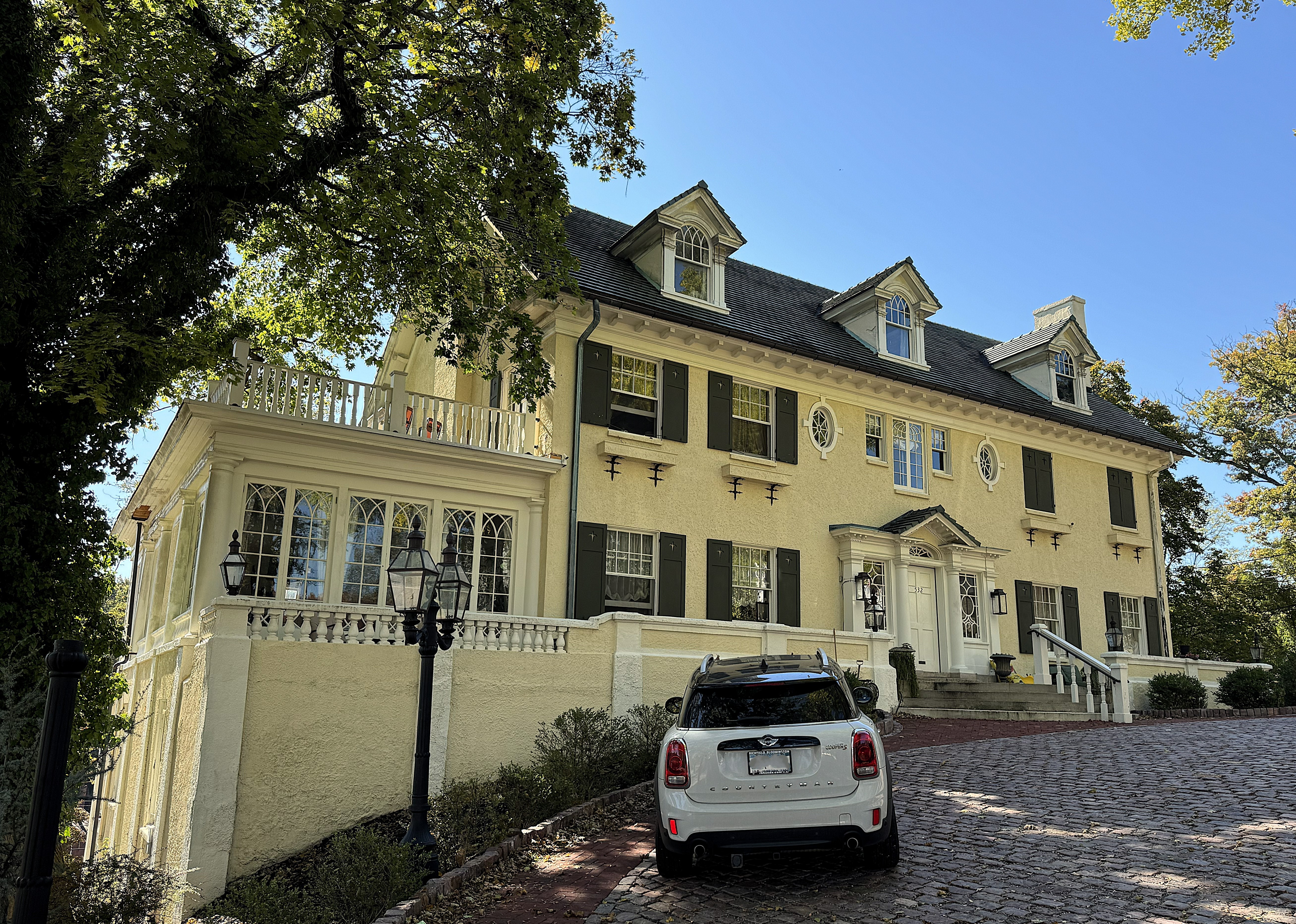
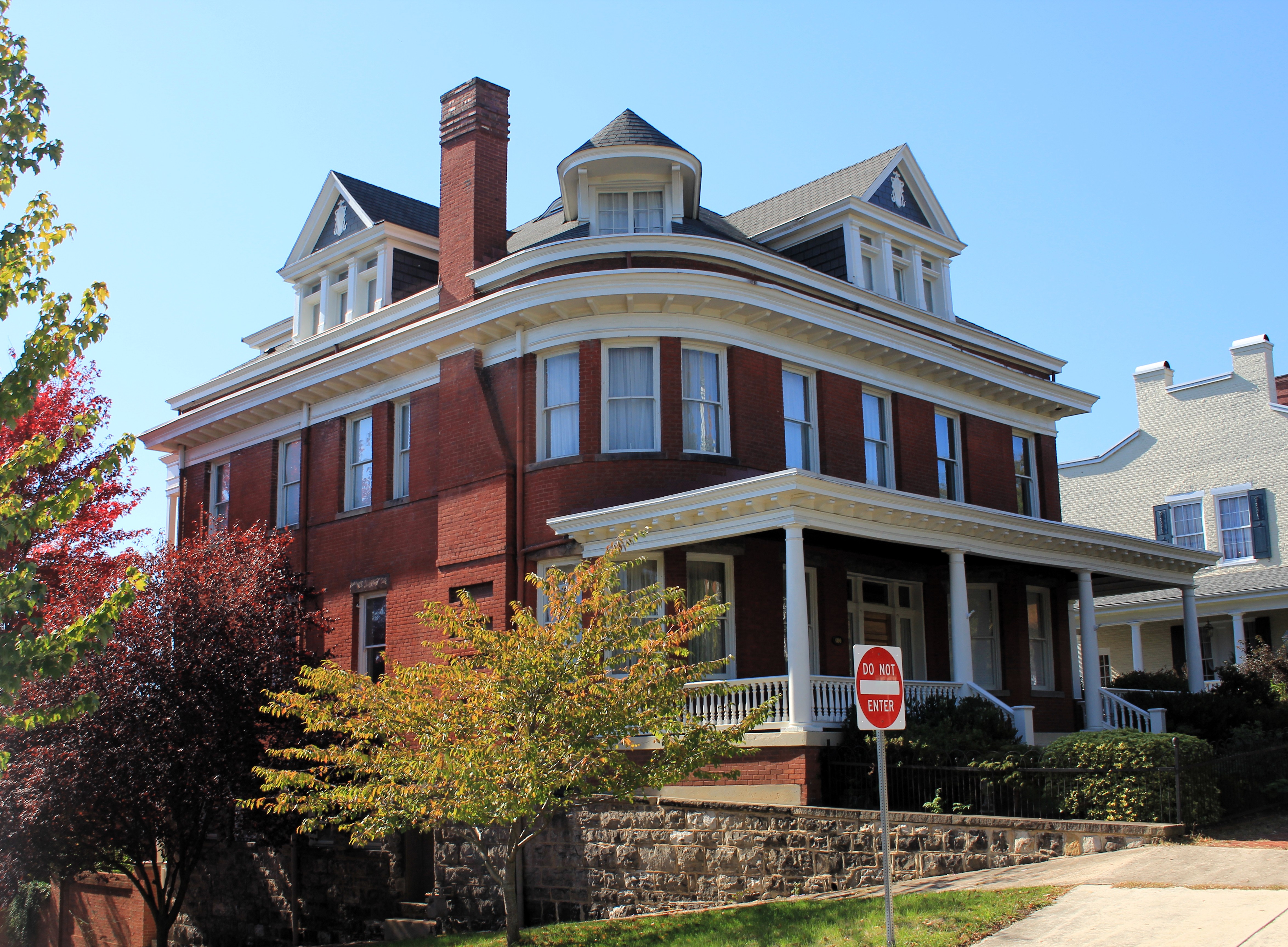
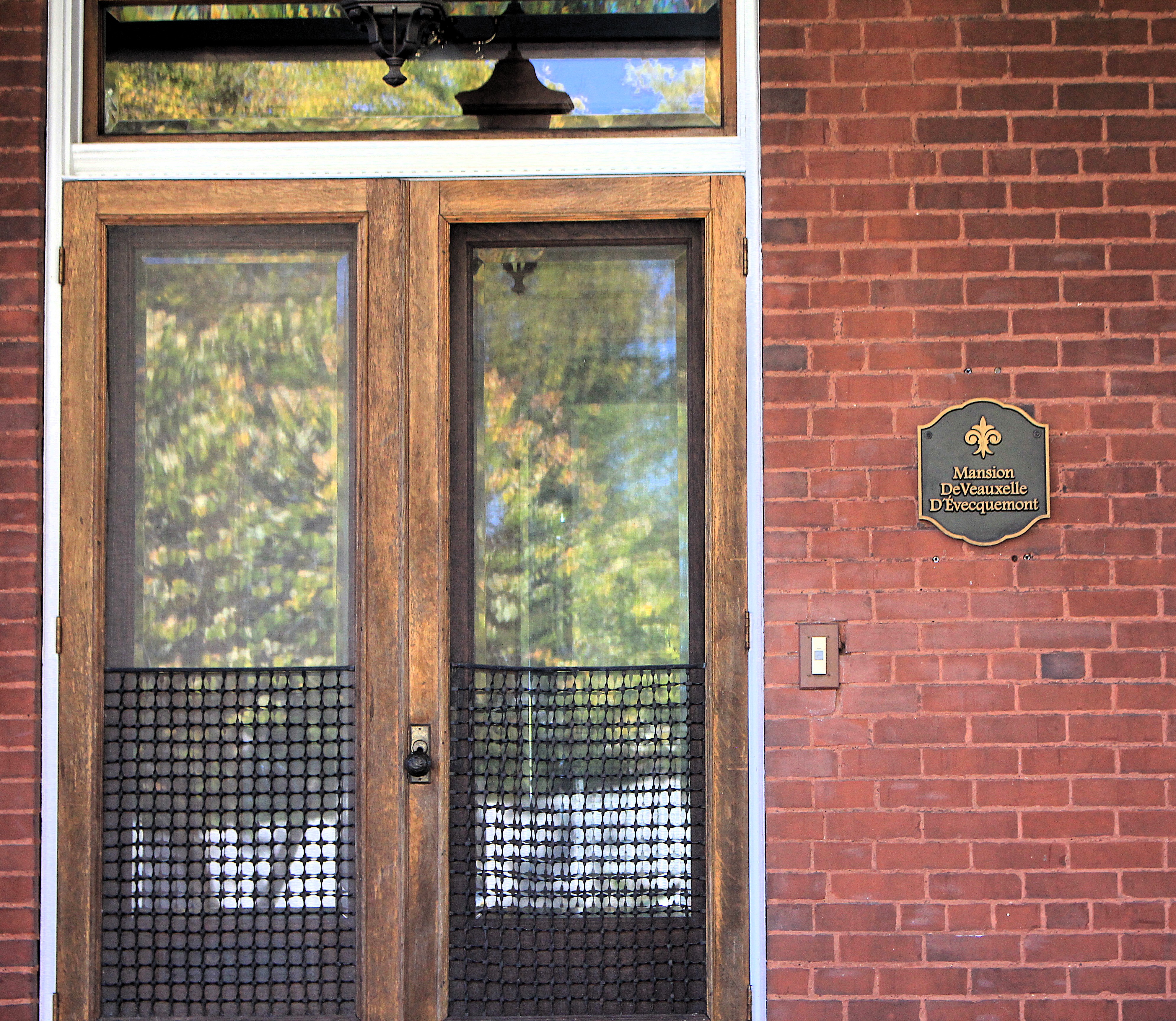
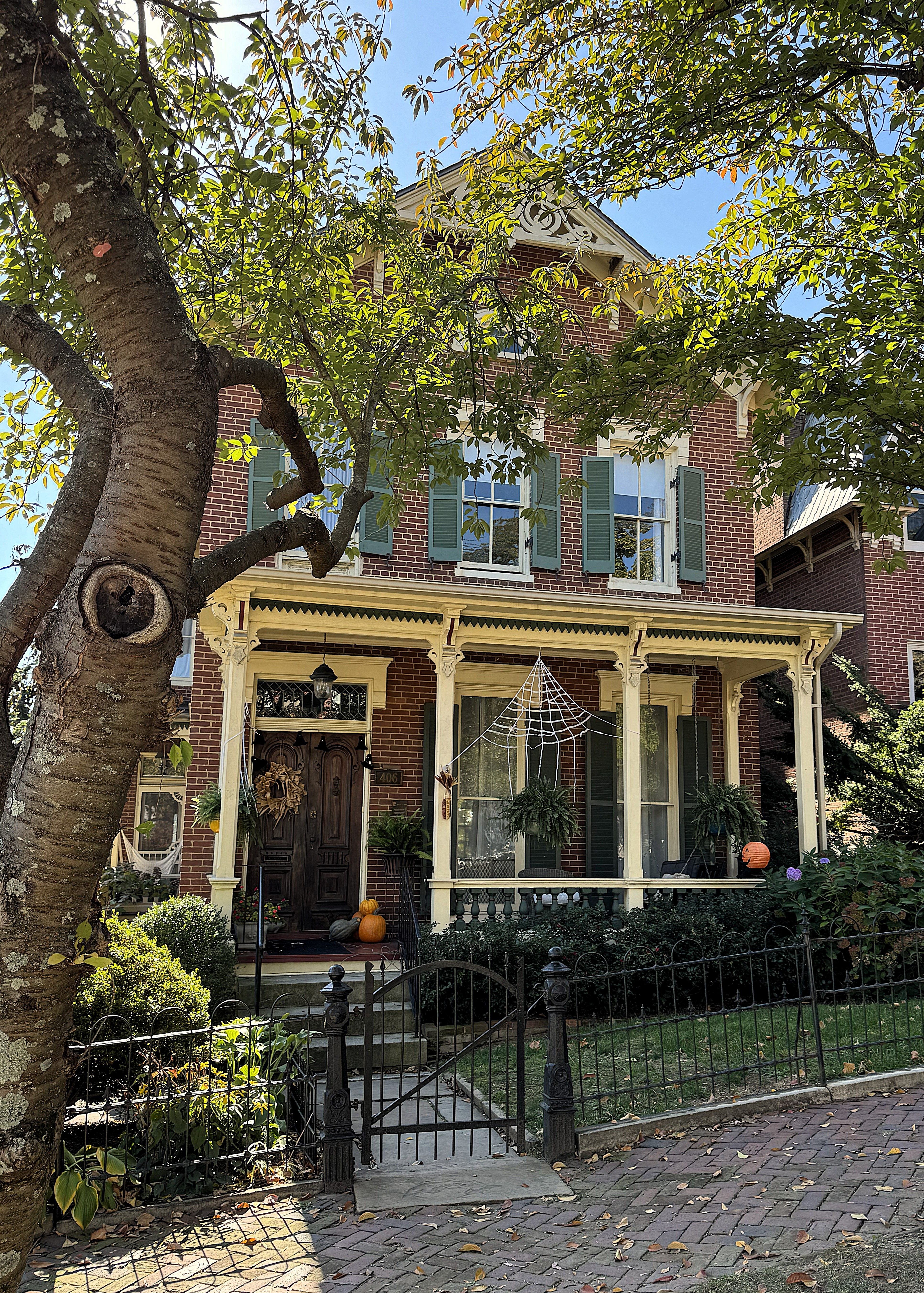
Before I could enter the courthouse, I was captivated by the sight of Victorian mansions along Washington Street that overlooked the county government building. As I began walking up the hillside with my camera, I took photos of the most magnificent ones — which turned out to be almost every house. Many of these homes had plaques indicating their construction dates, with some dating back to the 1870s. One of the mansions even had a French name on its plaque. I was amazed to discover that Cumberland had once been so wealthy.

All I need do now is show you a gallery of some of the best:

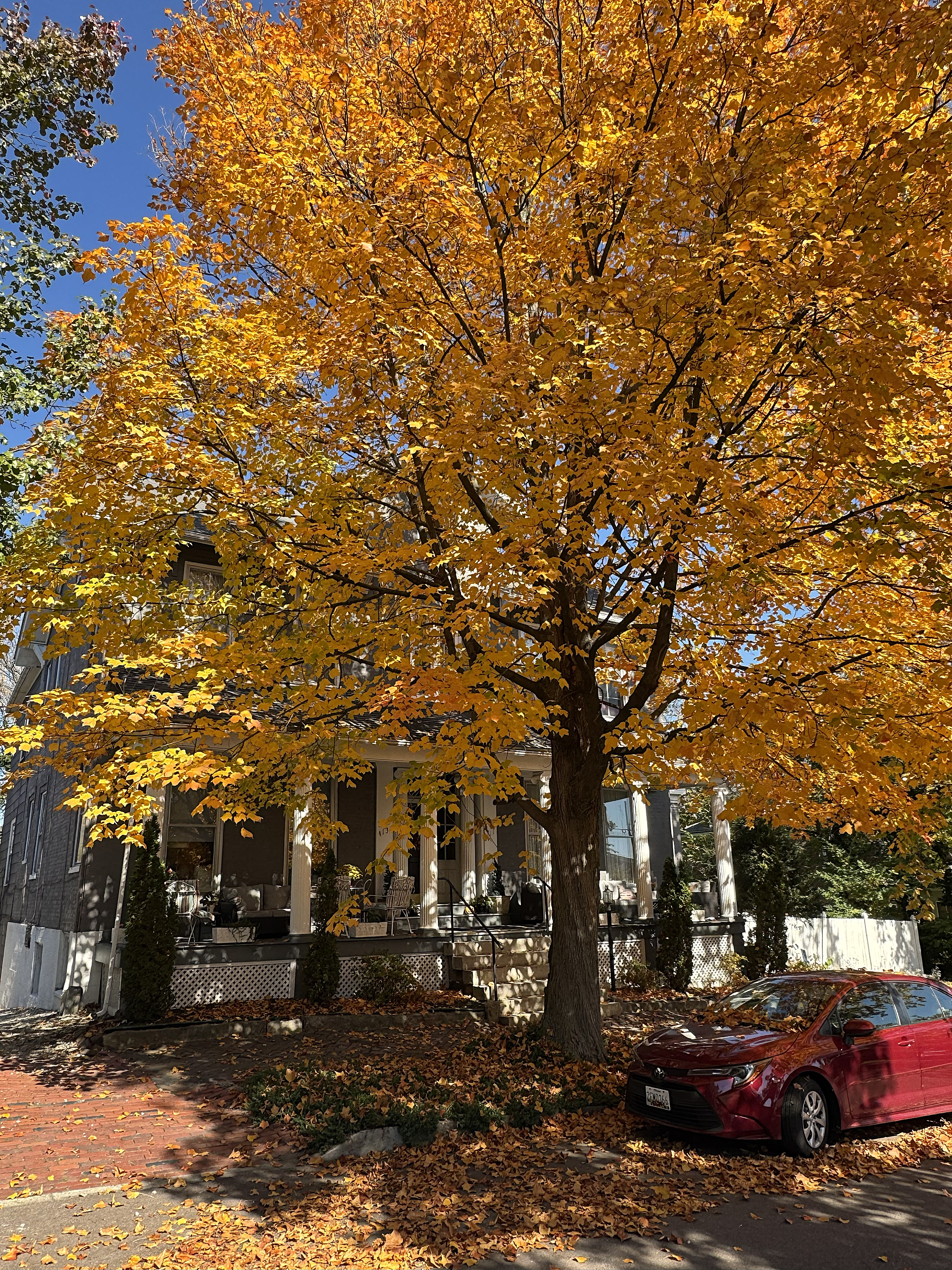
This photo is more about a grand tree than a house, but still, it’s grand.

Below: I included the middle photo on the left to show its plaque. The plaque says:
“Mansion DeVeauxelle D’Evecquemont.” The home carries the name of French immigrant Pierre DeVeauxelle D’Evecquemont, who came to America to escape a death sentence for shooting a man in a duel. He served with the Marquis de LaFayette during the American Revolution. D’Evecquemont died in 1803 and is buried in Clarksburg, West Virginia.

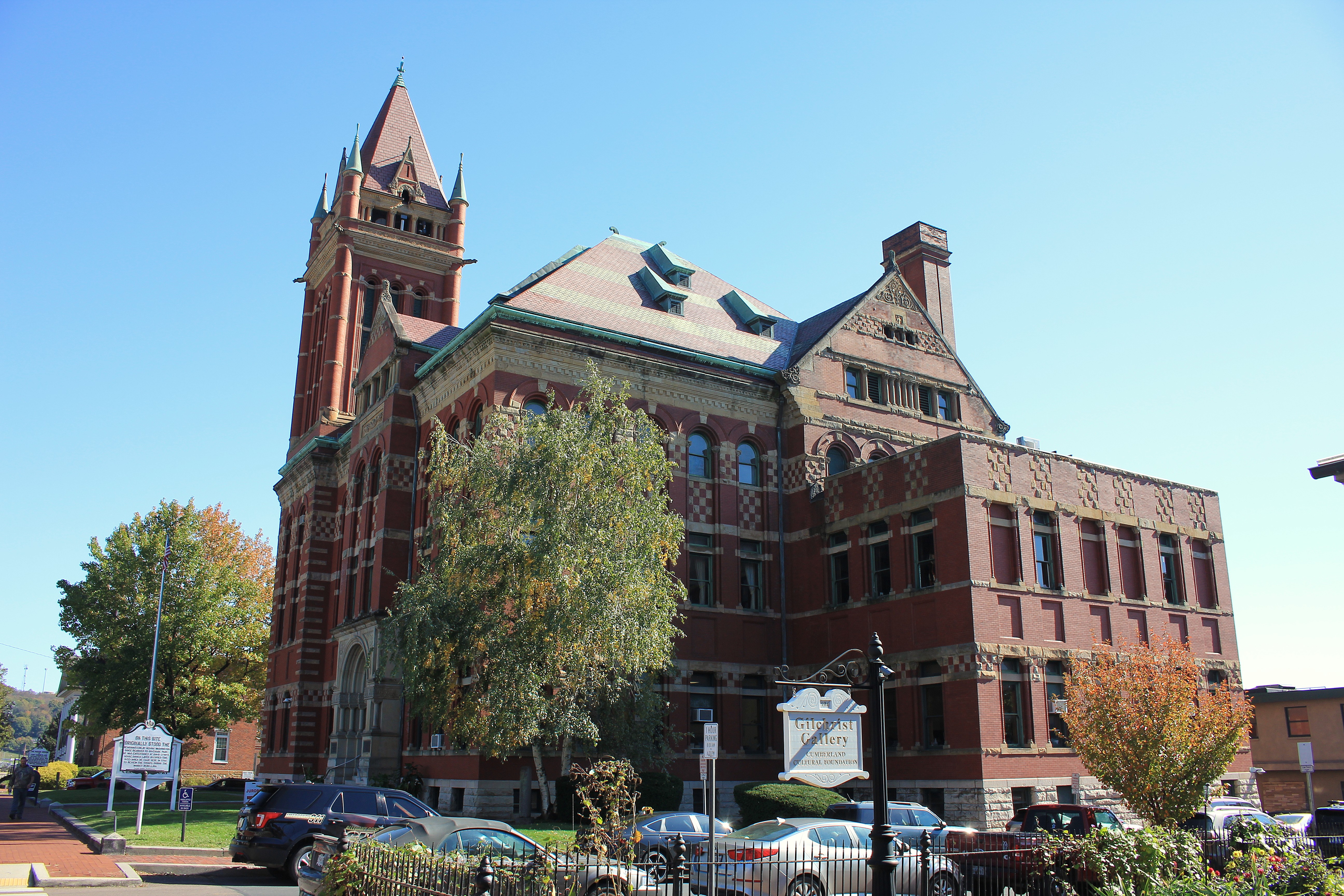
After that detour, I made my way back down the hill to photograph the Allegany County Courthouse. This building is located near the remnants of Fort Cumberland, perched on a hill overlooking the present-day downtown business district. Constructed in 1894, this three-story structure features Richardsonian Romanesque architecture. The courthouse is made of red-and-white checkerboard granite and features a striking central tower that gives it a castle-like appearance.

The 1894 Allegany County Courthouse in Cumberland, Maryland.
Allegany County Courthouse

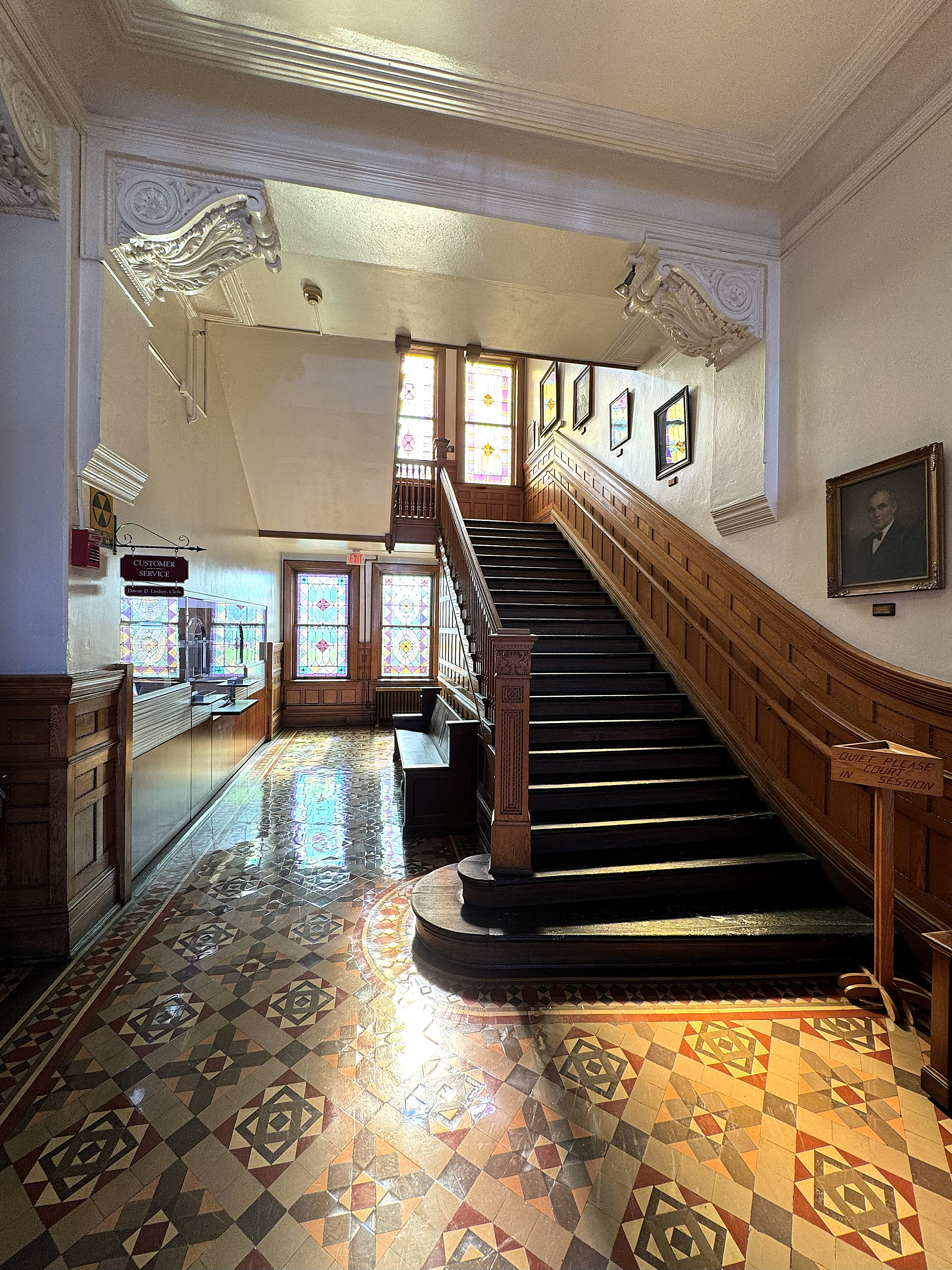
I went inside to explore the first floor, where I admired the beautiful stained-glass windows and the carved wood banisters on the staircase leading to the second and third floors.

A striking statue of a young George Washington stands just a few feet from the corner of the courthouse. Surrounding the monument are plaques on six sides that explain Washington’s connection to the area.

Washington visited this region three times during his lifetime:
— In 1754, as a colonel in the Virginia militia before the outbreak of the French and Indian War.
— From 1755 to 1758, during the War, he used a nearby cabin as his headquarters.
— In 1794, as President of the United States, he visited the American troops assembled here to suppress the Whiskey Rebellion.

Next to the courthouse stands Emmanuel Episcopal Church. The church was built in 1851 on the actual foundations of old Fort Cumberland. The church was a key stop on the “Underground Railroad” before the Civil War. Tunnels beneath the church were used to hide escaping slaves — especially from Virginia, which lies directly across the Potomac River from Cumberland.

Emmanuel Episcopal Church. Cumberland, Maryland.

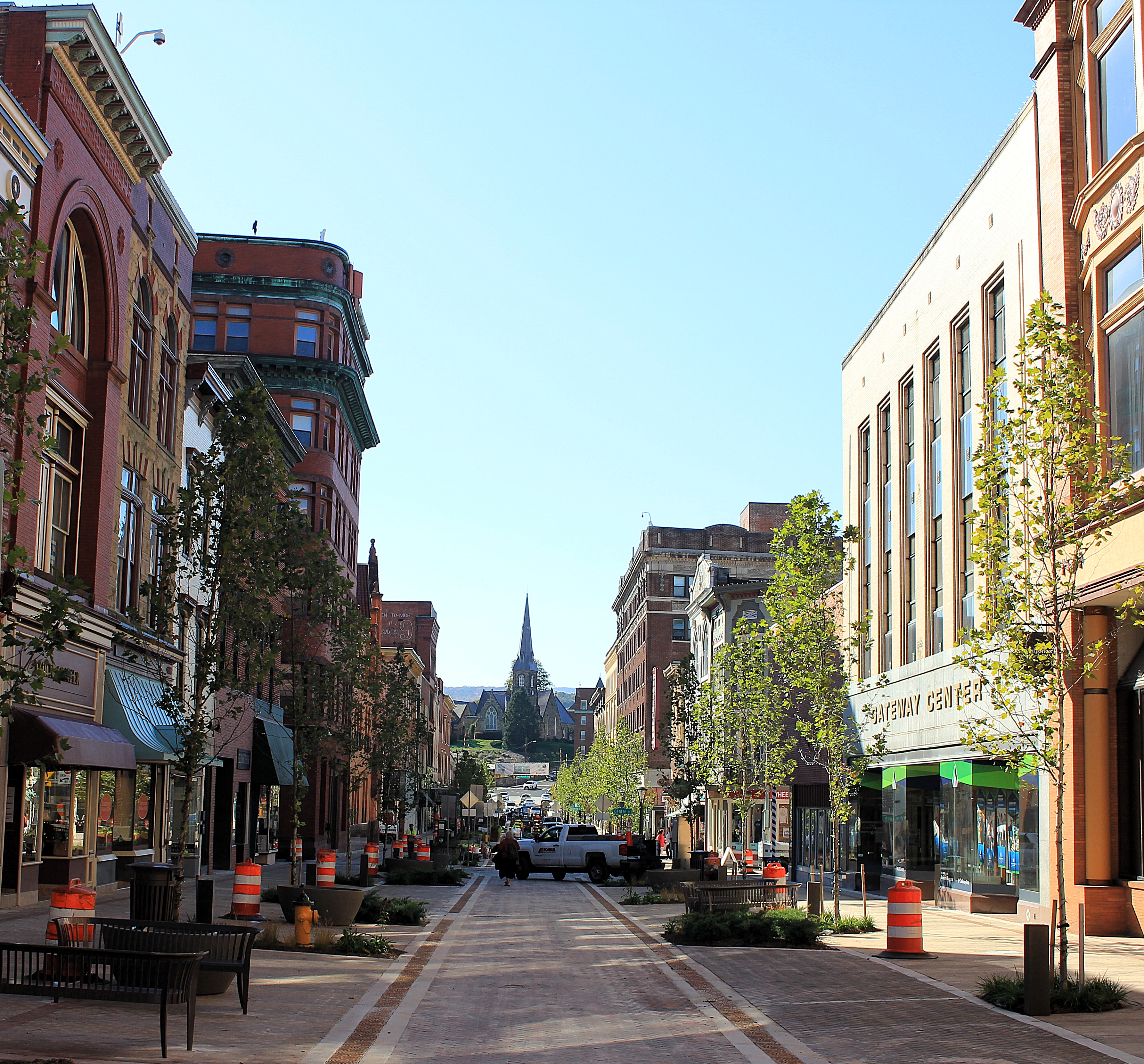
When I finally visited downtown, I found Baltimore Street lined with impressive three- and four-story, ornate brick buildings built in the late 19th century. The tall buildings create a striking little canyon with a view toward the old Episcopal Church above.

Baltimore Street in Cumberland, Maryland.

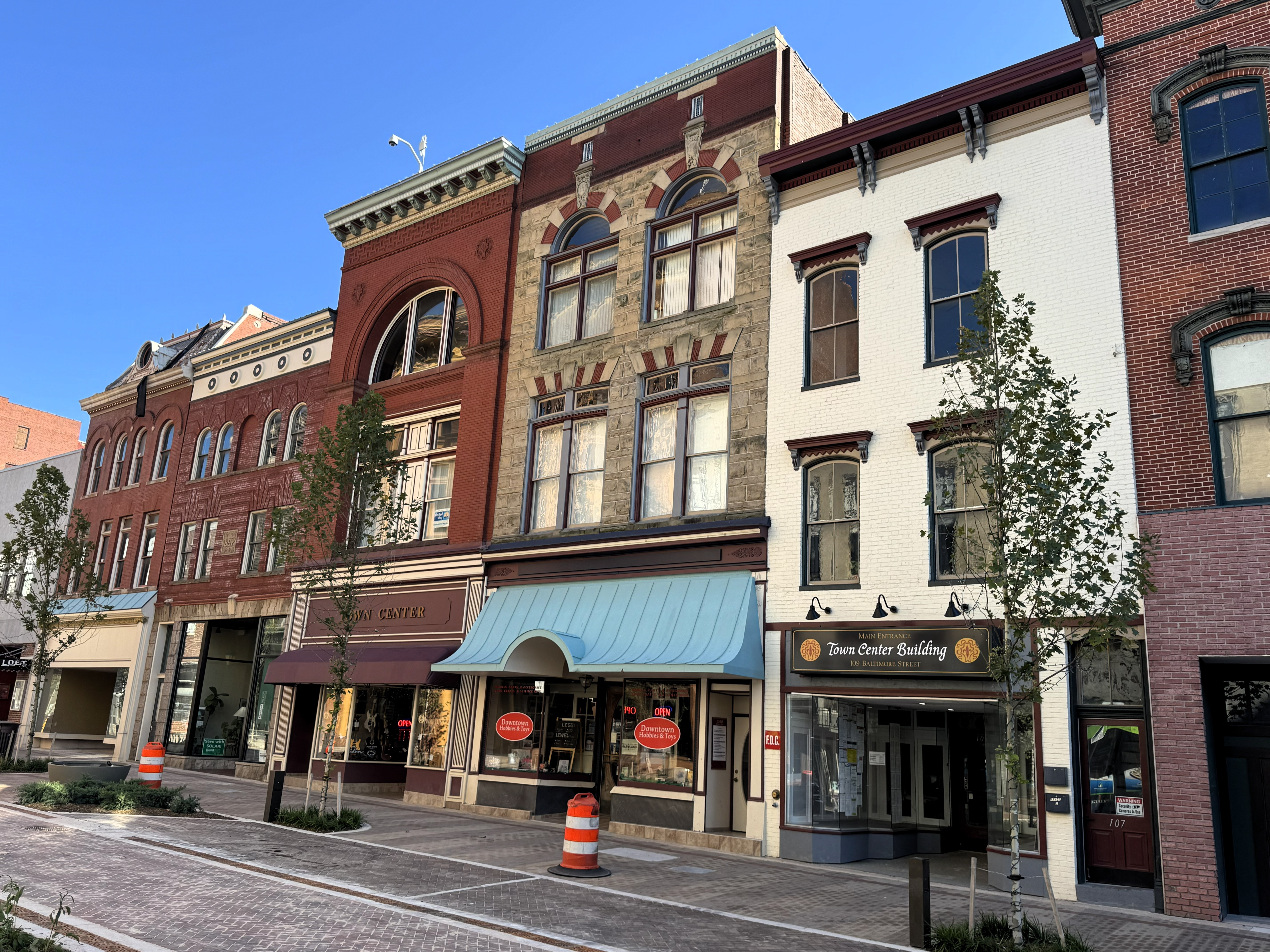
Here are some of the more notable buildings along Baltimore Street:

Although Cumberland’s current population is only 19,000, the town obviously once had a much larger population — in fact, in 1940 its population (39,000) was nearly double what it is today.

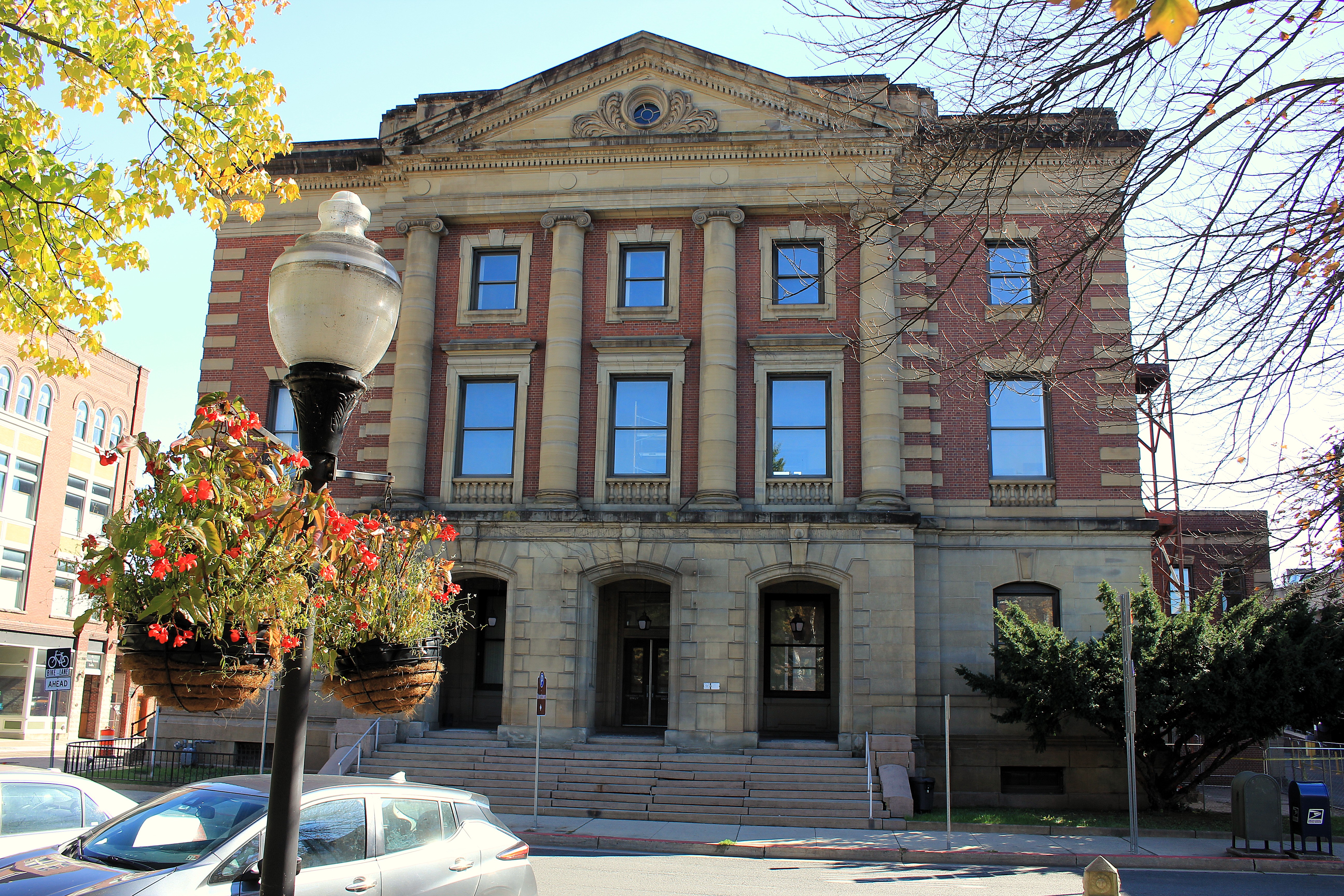
The old U.S. Post Office Building at Frederick & Liberty Streets.

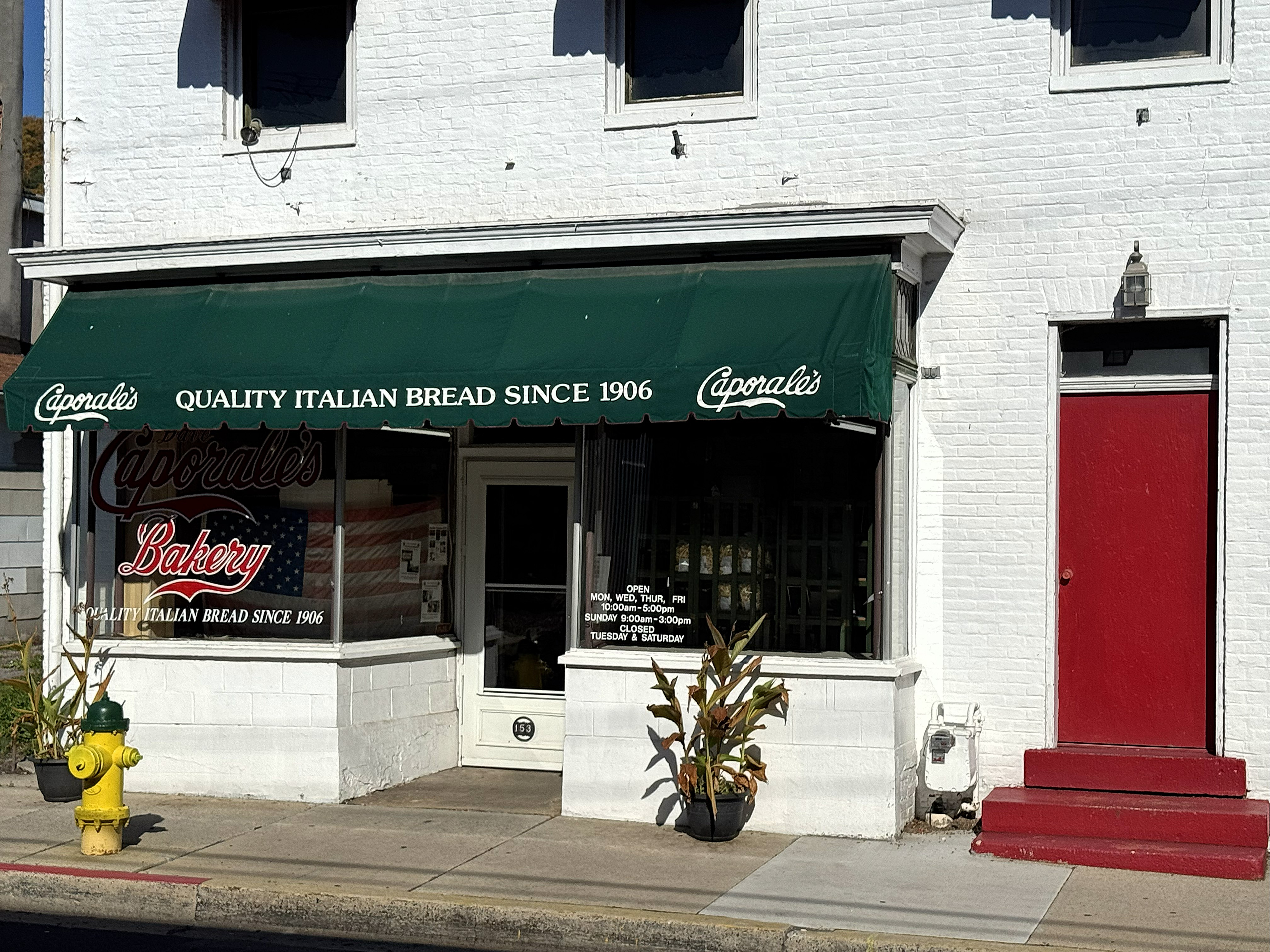
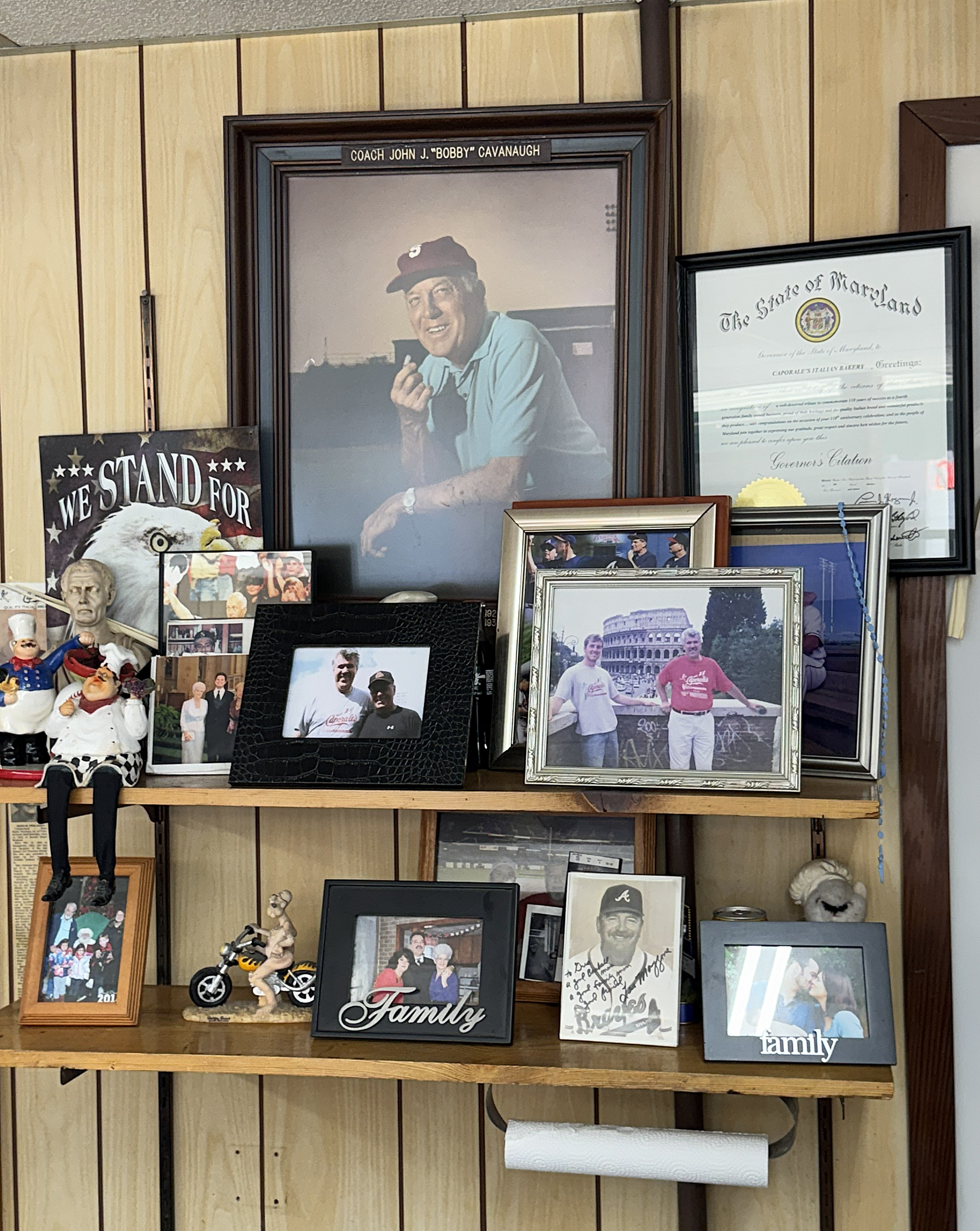
I love finding old Italian bakeries in Eastern cities. Here is Caporale’s in downtown Cumberland. Photographs on the wall of this family bakery include a signed photo of legendary Atlanta Braves pitching coach Leo Mazzone, a native of the Cumberland area.

That’s all. Hope you can visit Cumberland — it’s well worth the trip!

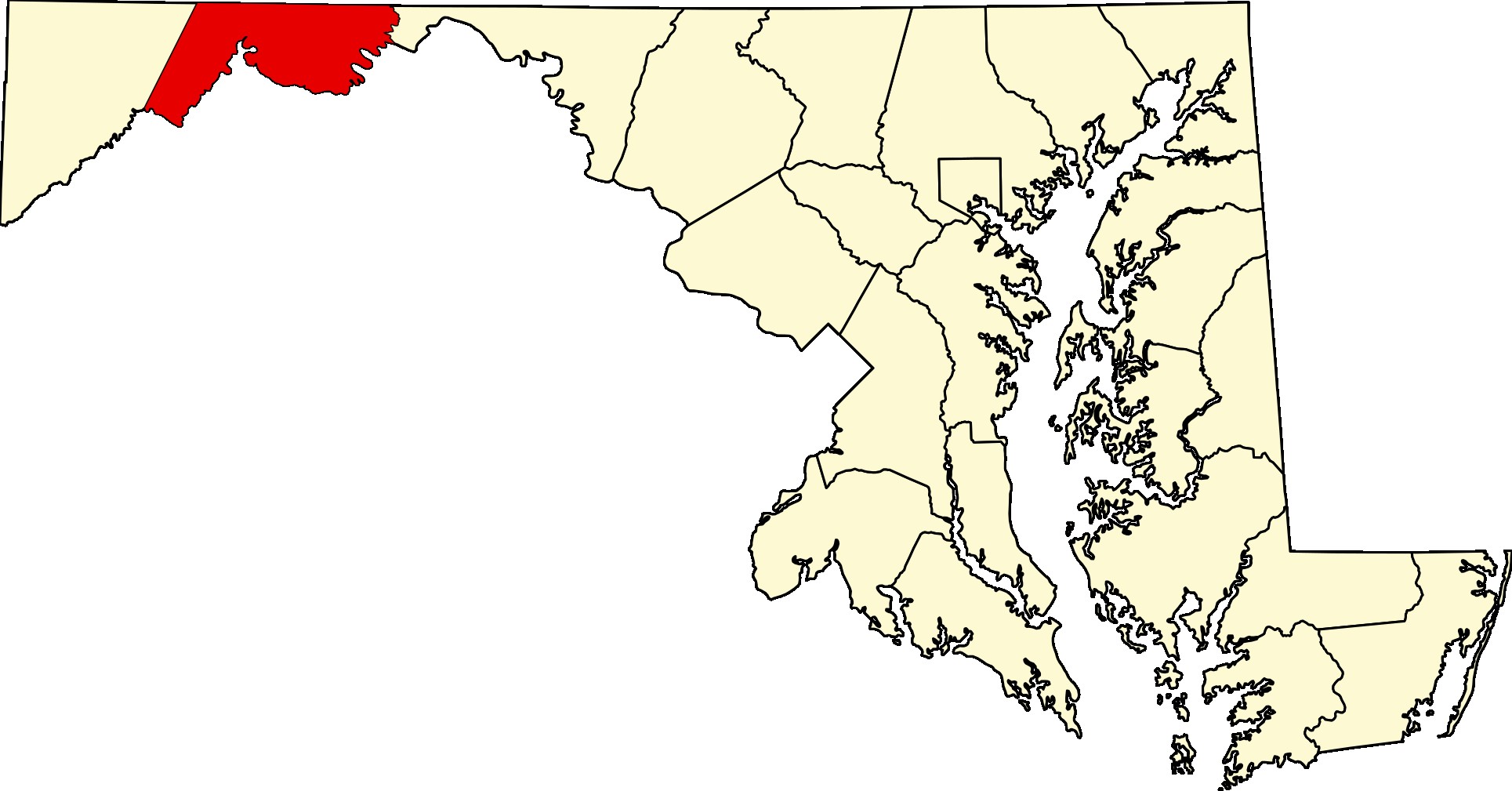
Allegany County within the state of Maryland

Click here for a list of all TimManBlog American County Seats Series posts.
The photos in this post were taken on October 21, 2024, and are copyrighted by Tim Seibel.

Donations to TimManBlog

I post about a visit to one of America’s 3,150 county seats each month. Donations are greatly appreciated to help defray my travel costs.

$5.00

Check out the FREEDOM VOYAGES book series! These books document my road trips across the United States and include hundreds of stunning photographs. Each of the four books in the series is available on Amazon and Barnes & Noble. This includes my most recent release, FREEDOM VOYAGES Volume 4: Christmastime in Texas!

FREEDOM VOYAGES Volume 4: Christmastime in Texas. Available at Amazon.com and Barnes & Noble.

Earlier volumes in the FREEDOM VOYAGES series are also available:
Vol. 1: North-Central North Dakota
Vol. 2: Go West! From the Loneliest Road in America to California’s Gold Country
Vol. 3: A Proud, Dignified People in Lincoln’s Illinois
All FREEDOM VOYAGES books are on sale at Amazon.com and Barnes & Noble.
A Walk Through Salem, South Dakota: Courthouse and Culture

Please consider donating to support my travels using the form at the bottom of the post. PayPal, Visa, American Express, Mastercard, Discover, and Maestro are accepted. Thank you.

September 29, 2025

In 2014, I traveled through eastern South Dakota to visit the county courthouses in the area. The weather in late September was perfect for exploring. I discovered many charming towns, including Canistota (known for its Ortman Chiropractic Clinic) and Salem, which is the seat of McCook County.

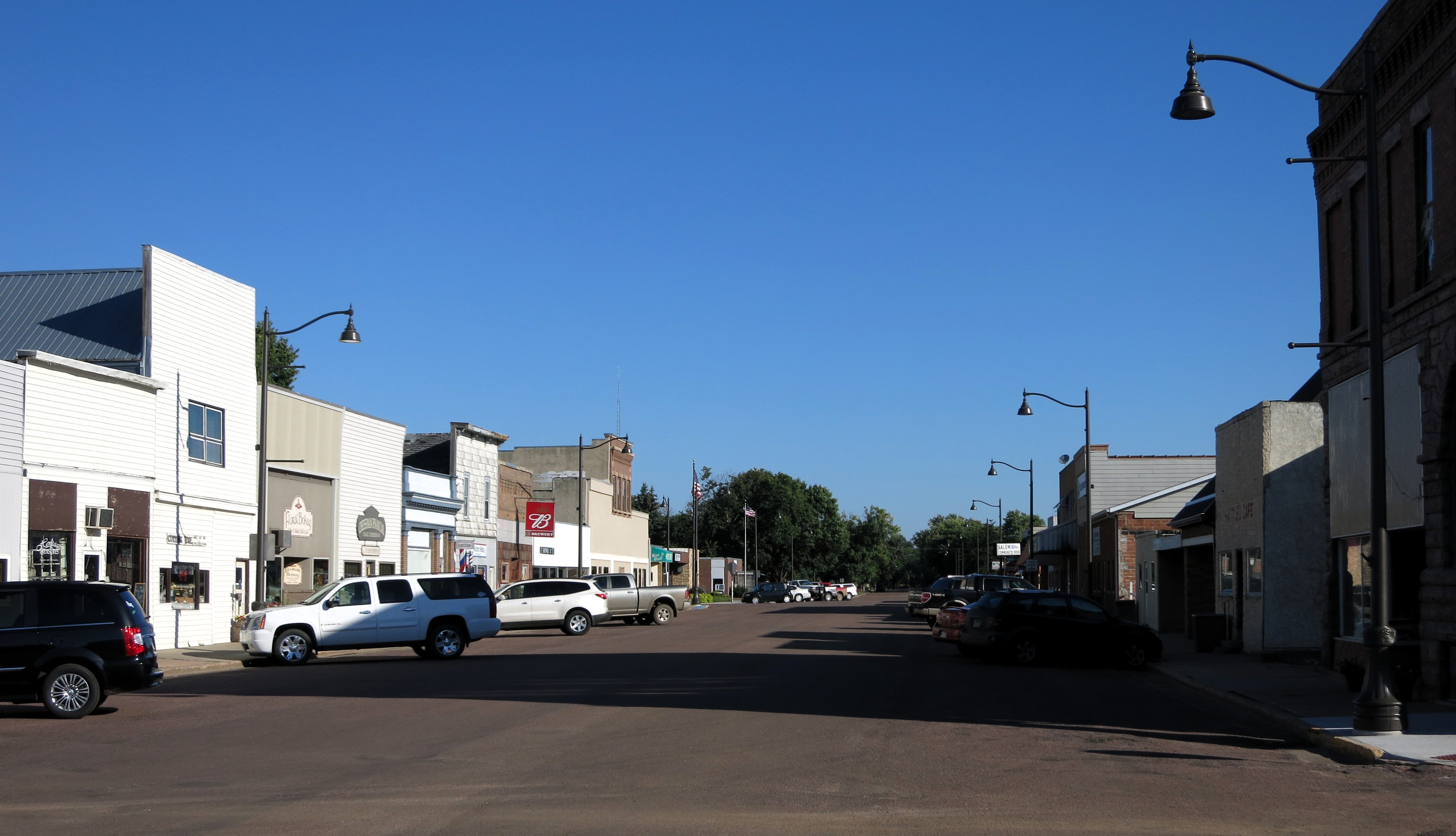
Salem has a small population, with only 1,300 residents. I easily found the McCook County Courthouse along U.S. Highway 81, which runs north and south through town; Main Street runs parallel to it, also heading north and south.

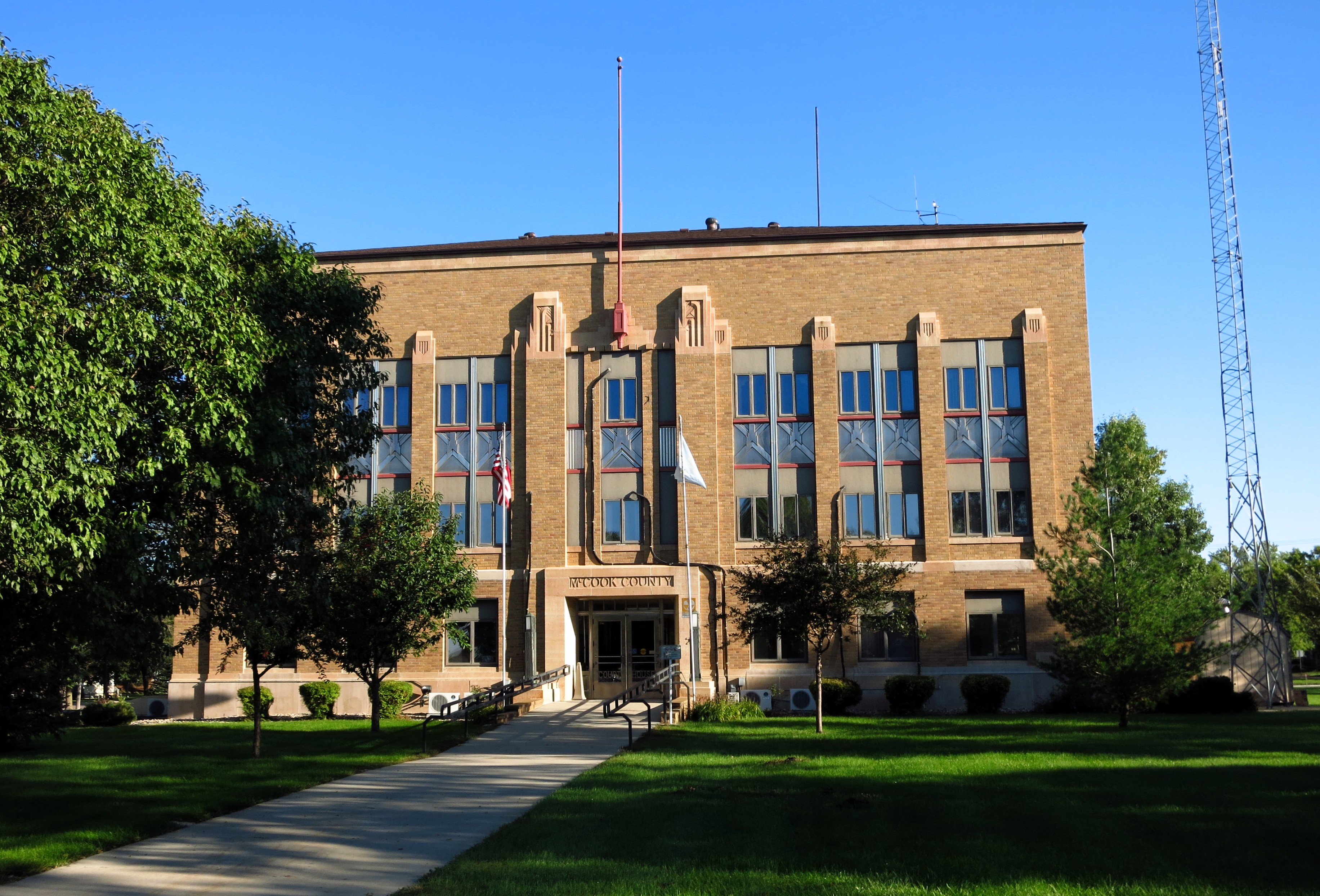
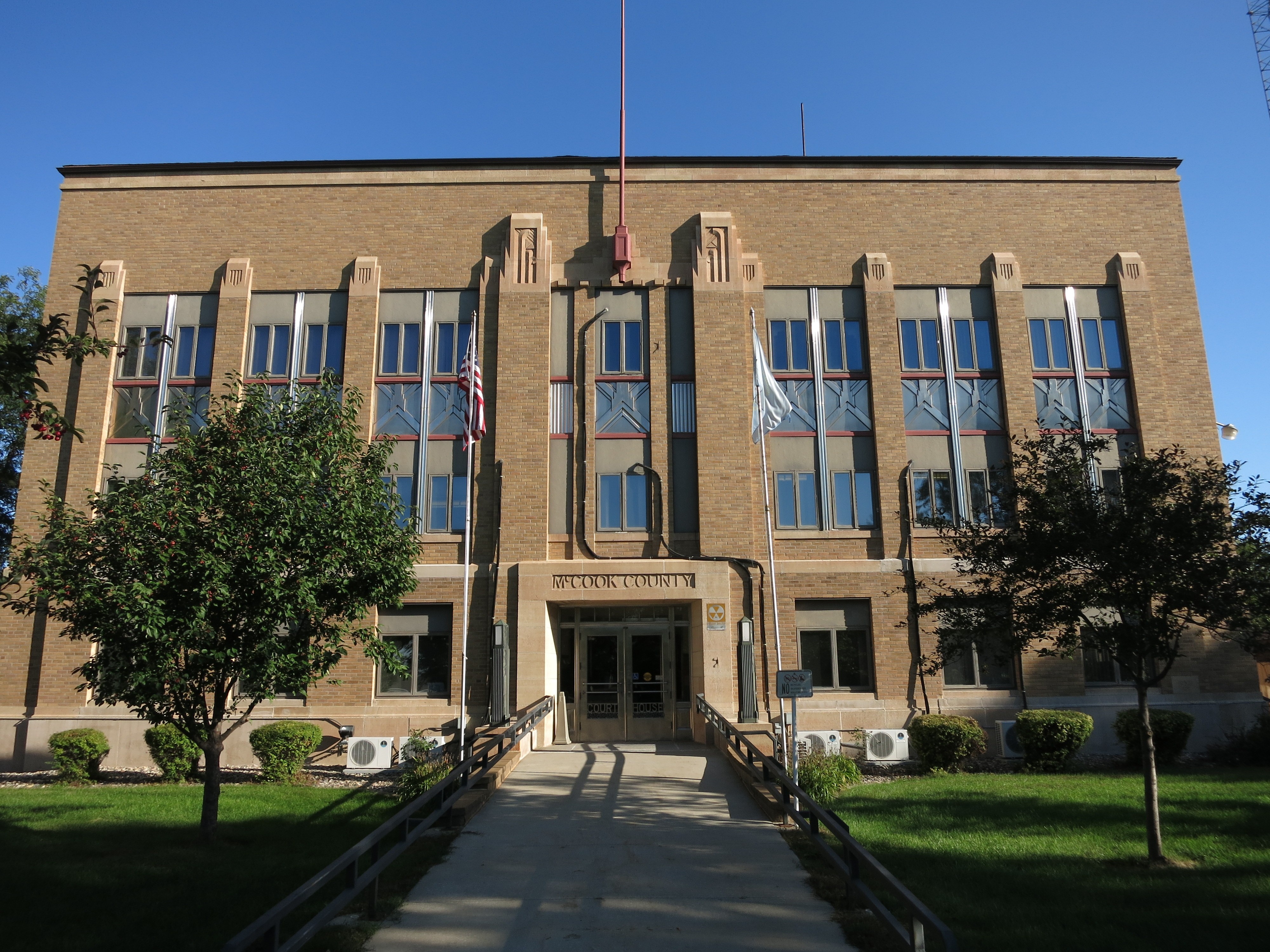
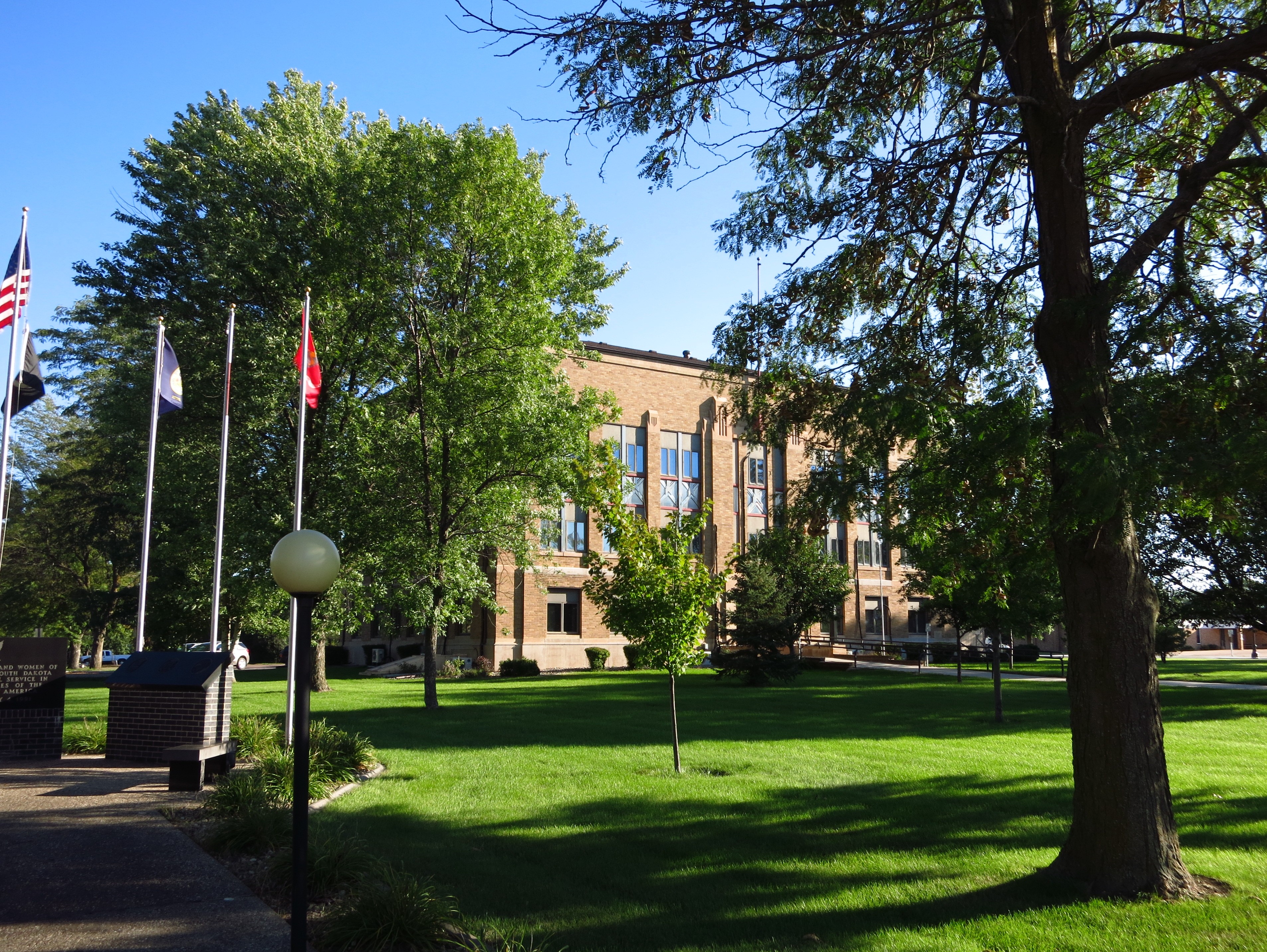
The McCook County Courthouse in Salem, South Dakota

The courthouse was built in 1934 during the Great Depression, likely as part of a Works Progress Administration (W.P.A.) project. During that period, the federal agency funded numerous new courthouses in an effort to provide employment opportunities for unemployed workers.

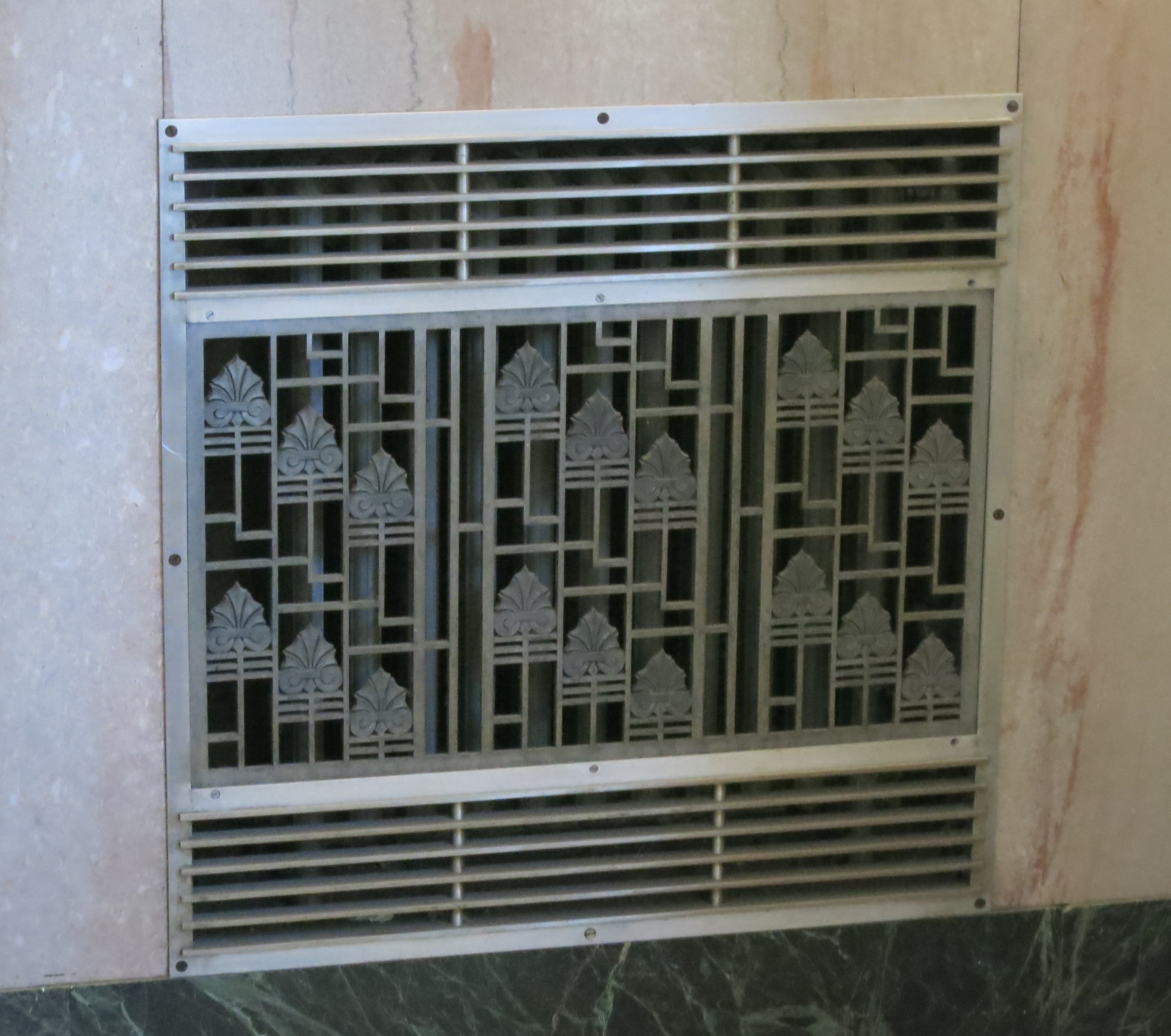
The design of the courthouse is primarily Art Deco, a characteristic style of the 1930s. The county courthouse features distinctive lettering and metallic work on the window frames at the front and sides. As is typical for such buildings, metal was used extensively throughout the structure. It is either aluminum or stainless steel, molded and shaped to be aesthetically pleasing and stylish, yet economical in times of hardship. The photos below include one that highlights the exceptional metallic work above the heating grates in the stairwells.

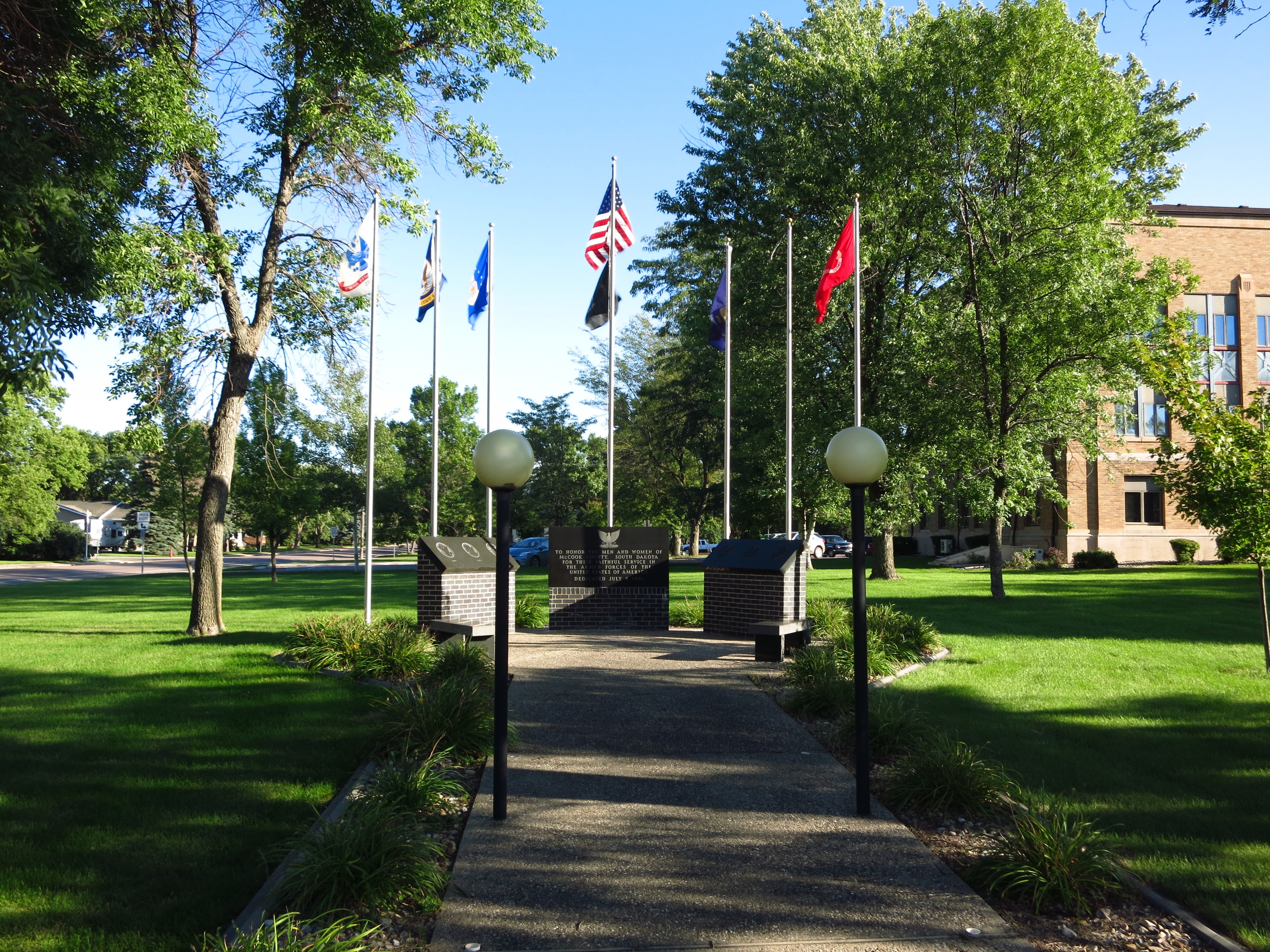
The Veterans memorial at the McCook County Courthouse

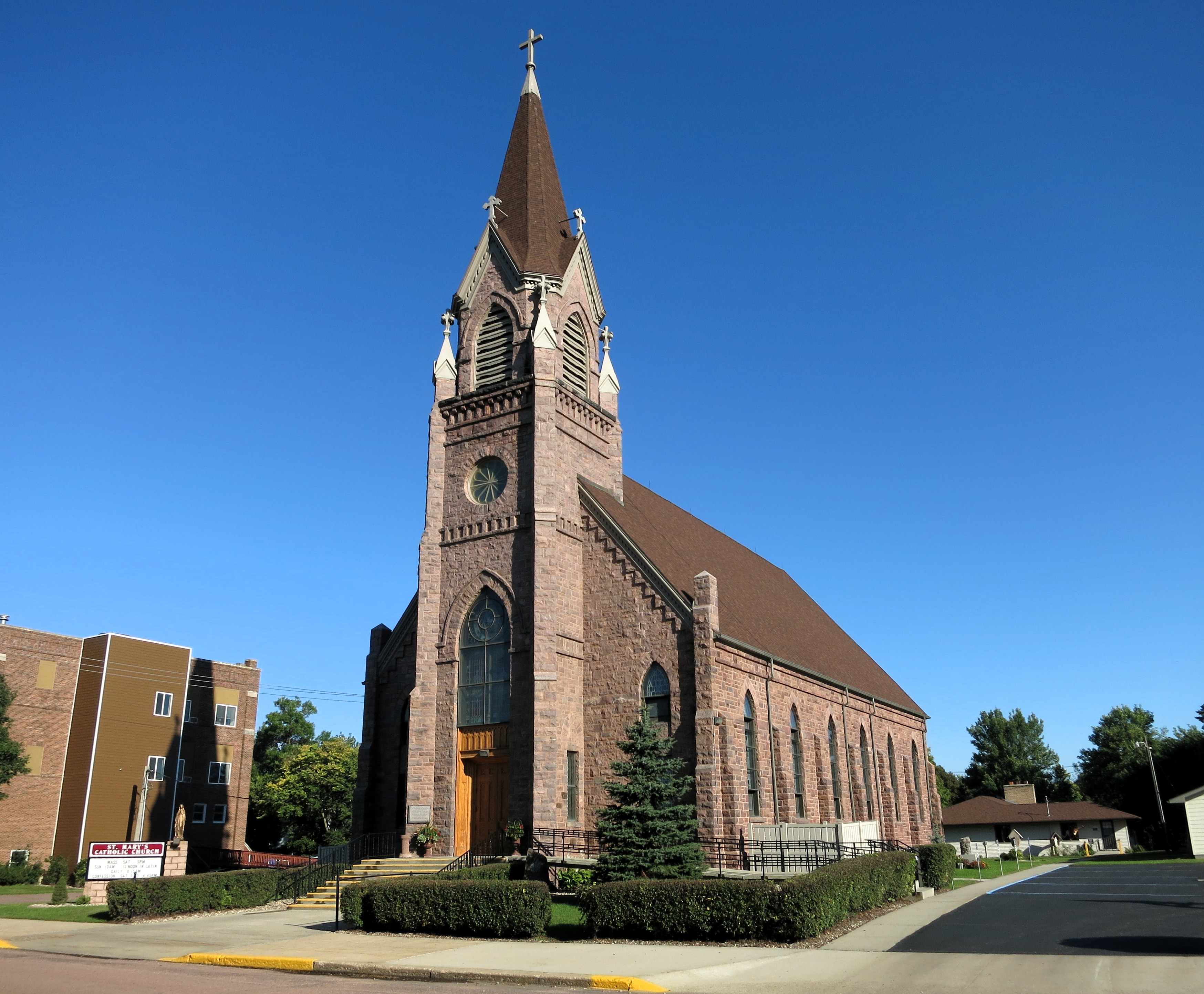
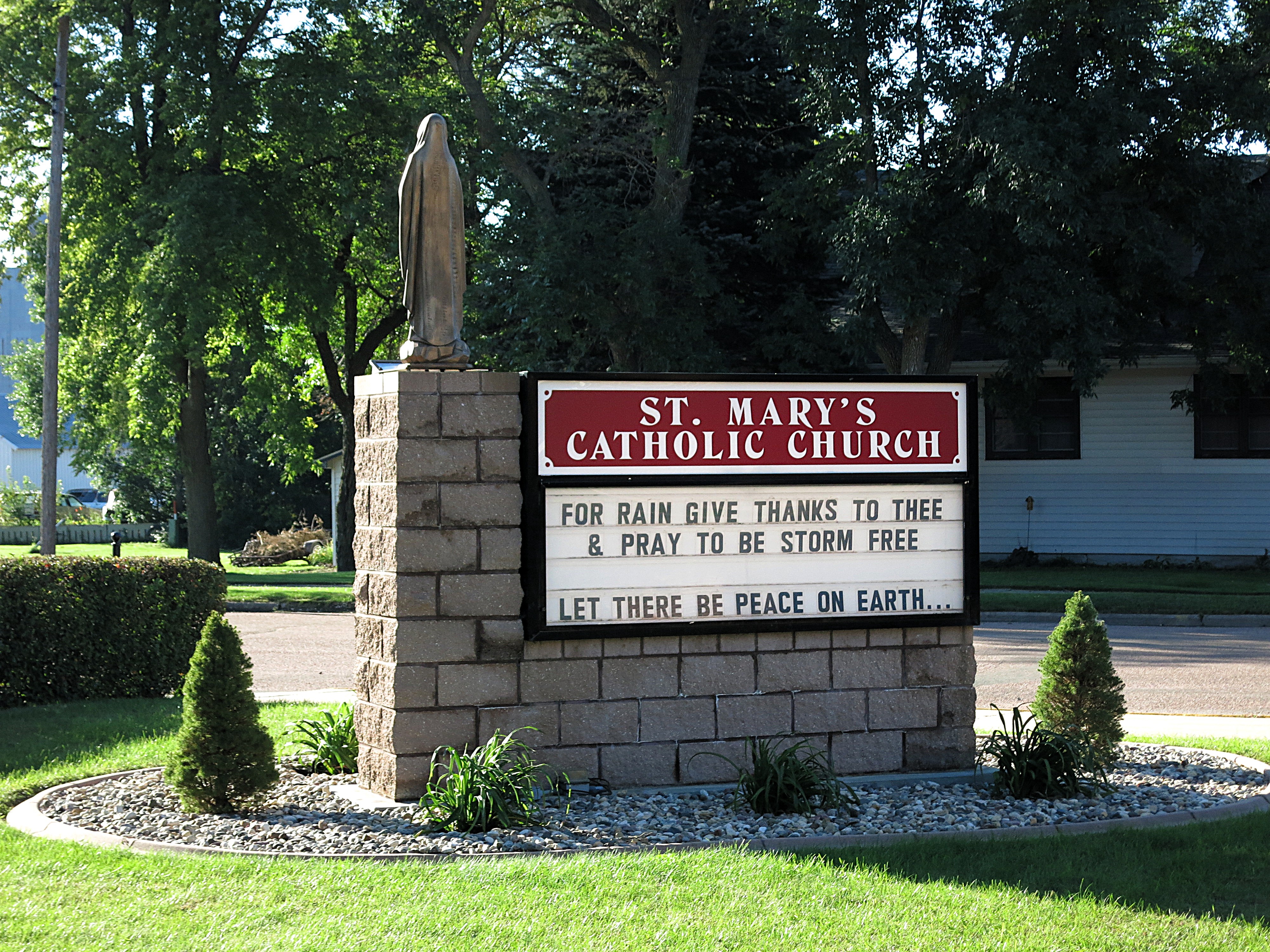
In American civics, we frequently discuss the separation of church and state. Here in Salem, the courthouse represents the “state,” while the town’s Catholic Church is the “church.” St. Mary Catholic Church, located on the other side of Highway 81, was built in 1885 and is listed on the National Register of Historic Places. This beautiful red stone building features a high steeple adorned with crosses.

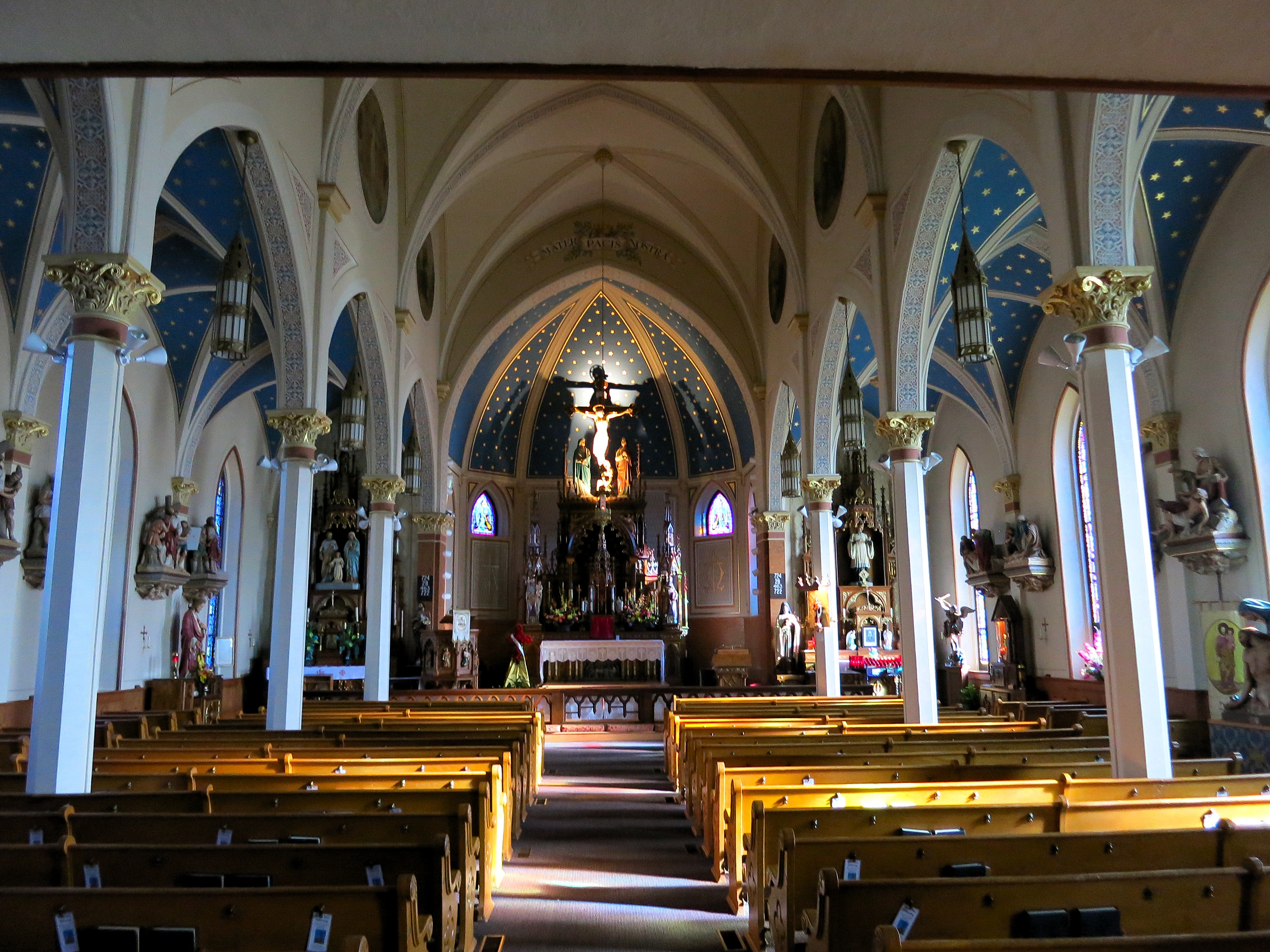
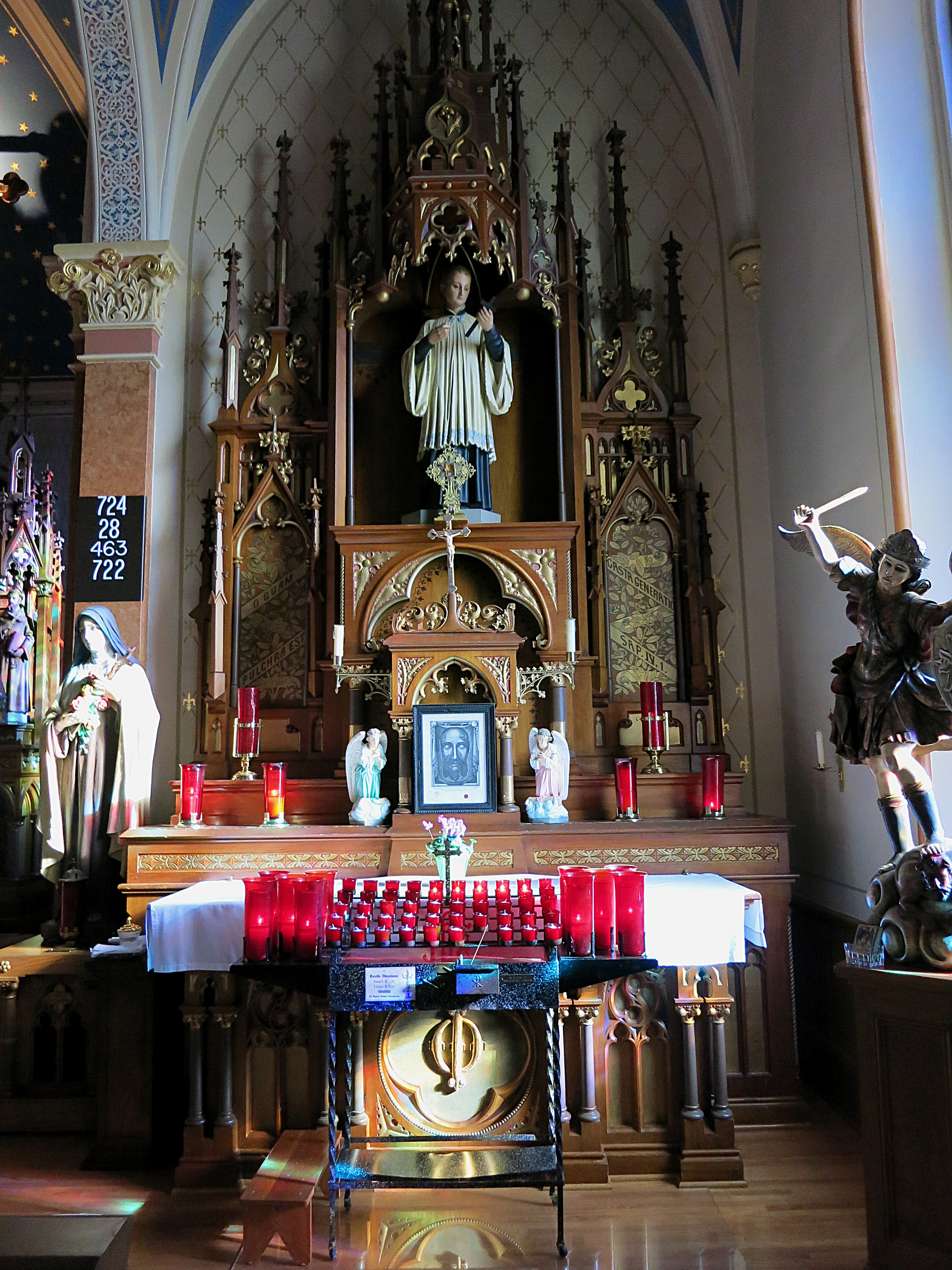
I walked inside and found that no one else was there about an hour after the morning Mass had ended. I was captivated by the statues, the Stations of the Cross, and the stained-glass windows. The crucifix at the front was elevated ten feet above the altar and lit by a spotlight, creating a display of glory in the dimly lit church, symbolizing God’s presence in a darkened world. This church was built by new settlers, basically farmers who prioritized their faith while building homes in a new country.

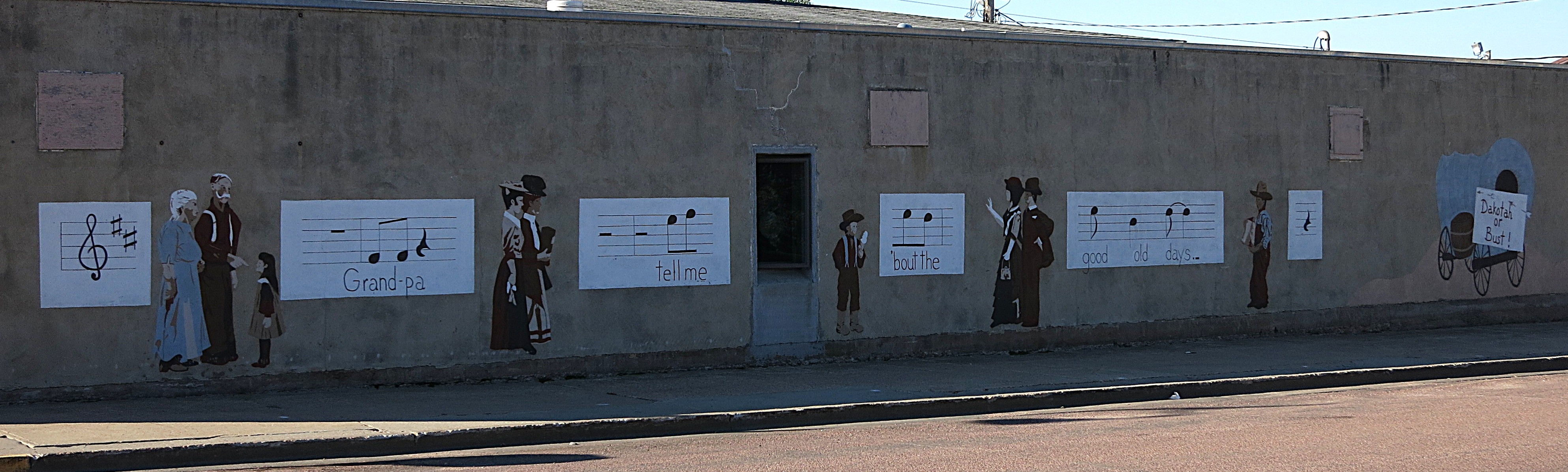
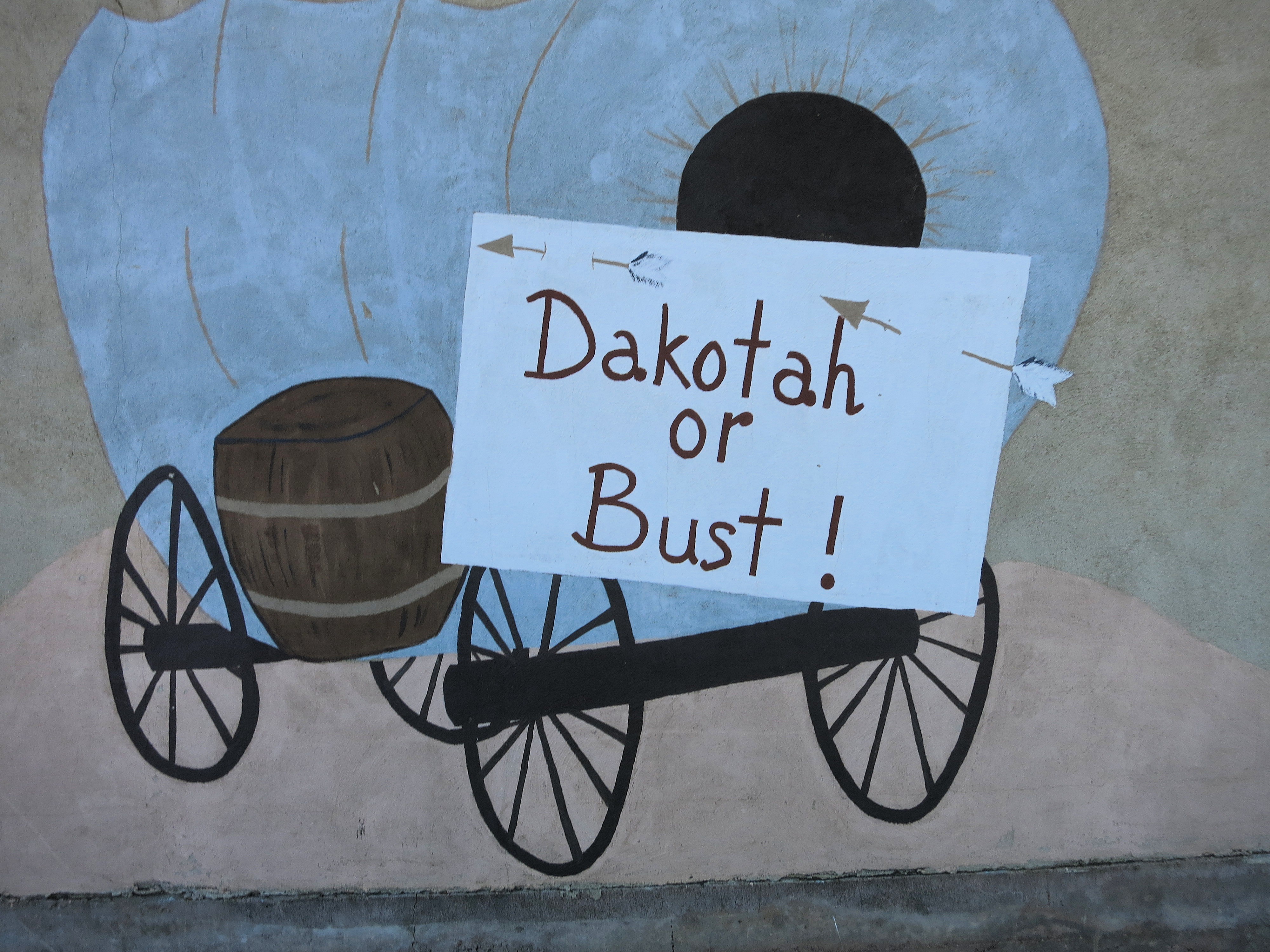
I walked into the center of town after leaving the church and came across an impressive mural near Main Street. Salem was settled in the late 1800s, and the mural features various nostalgic figures, including a Conestoga wagon, along with the phrase “Dakotah or bust.” In the mural, a little girl asks, “Grand-pa, tell me ’bout the old days…”

A prominent Salem street mural explains the town’s pioneer origins.

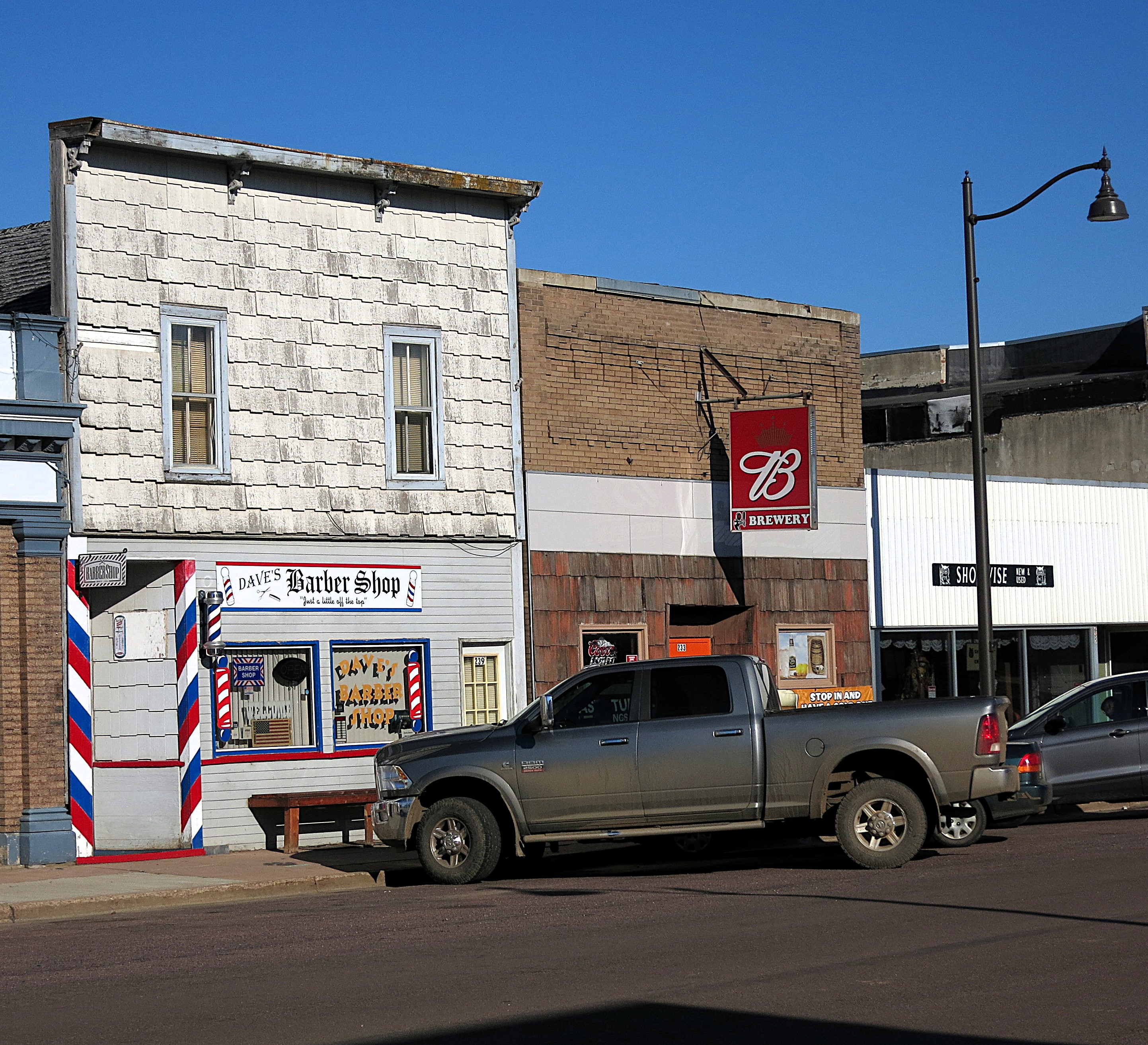
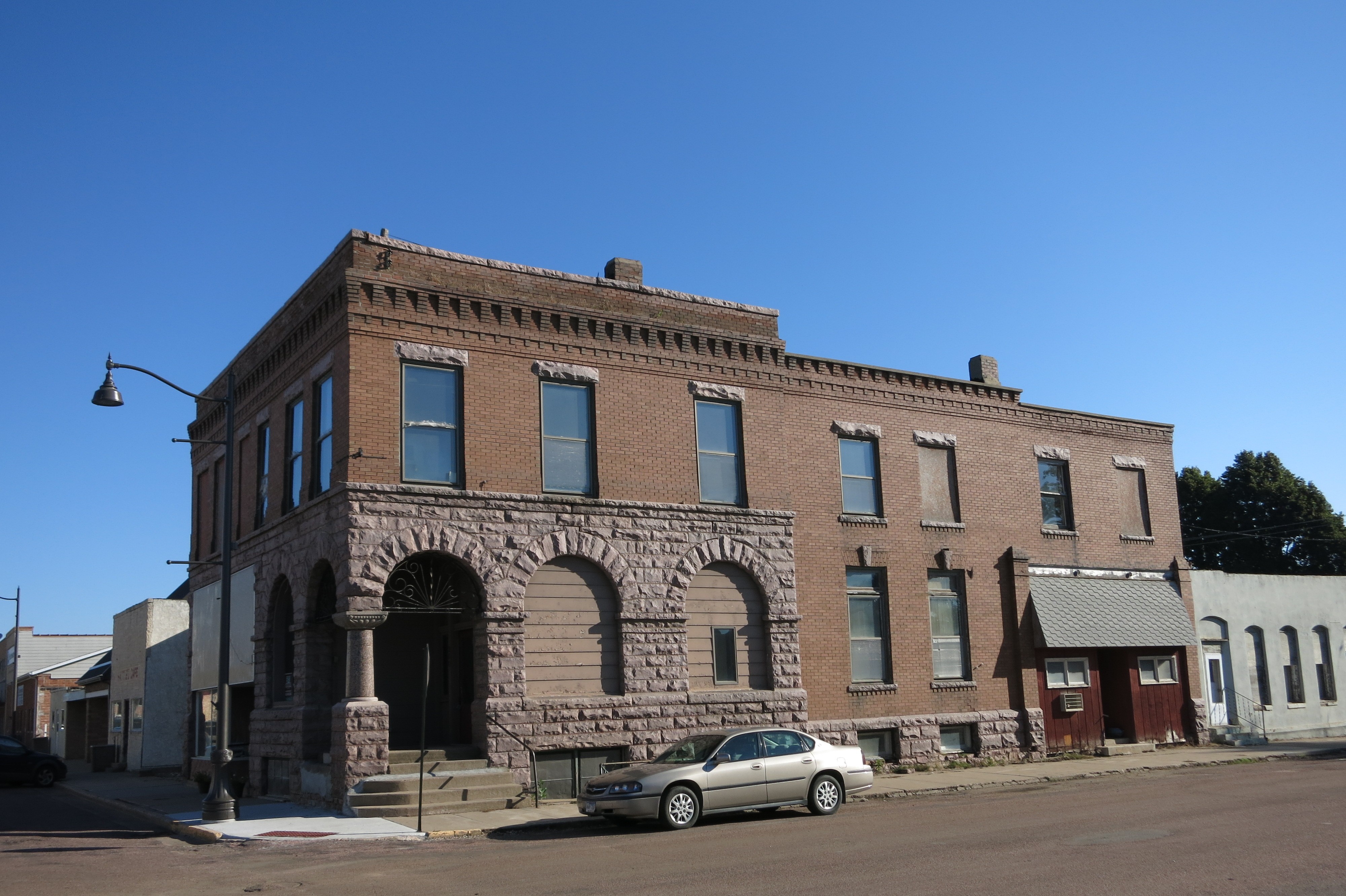
Down the street from the mural, you can find some old buildings that date back to a bygone era. Salem was settled in 1879. St. Mary’s Church was built in 1885, and the elegant bank buildings on Main Street were constructed in 1889. These two buildings (among those shown below) are some of the town’s few remaining structures from the old “Dakotah” period.

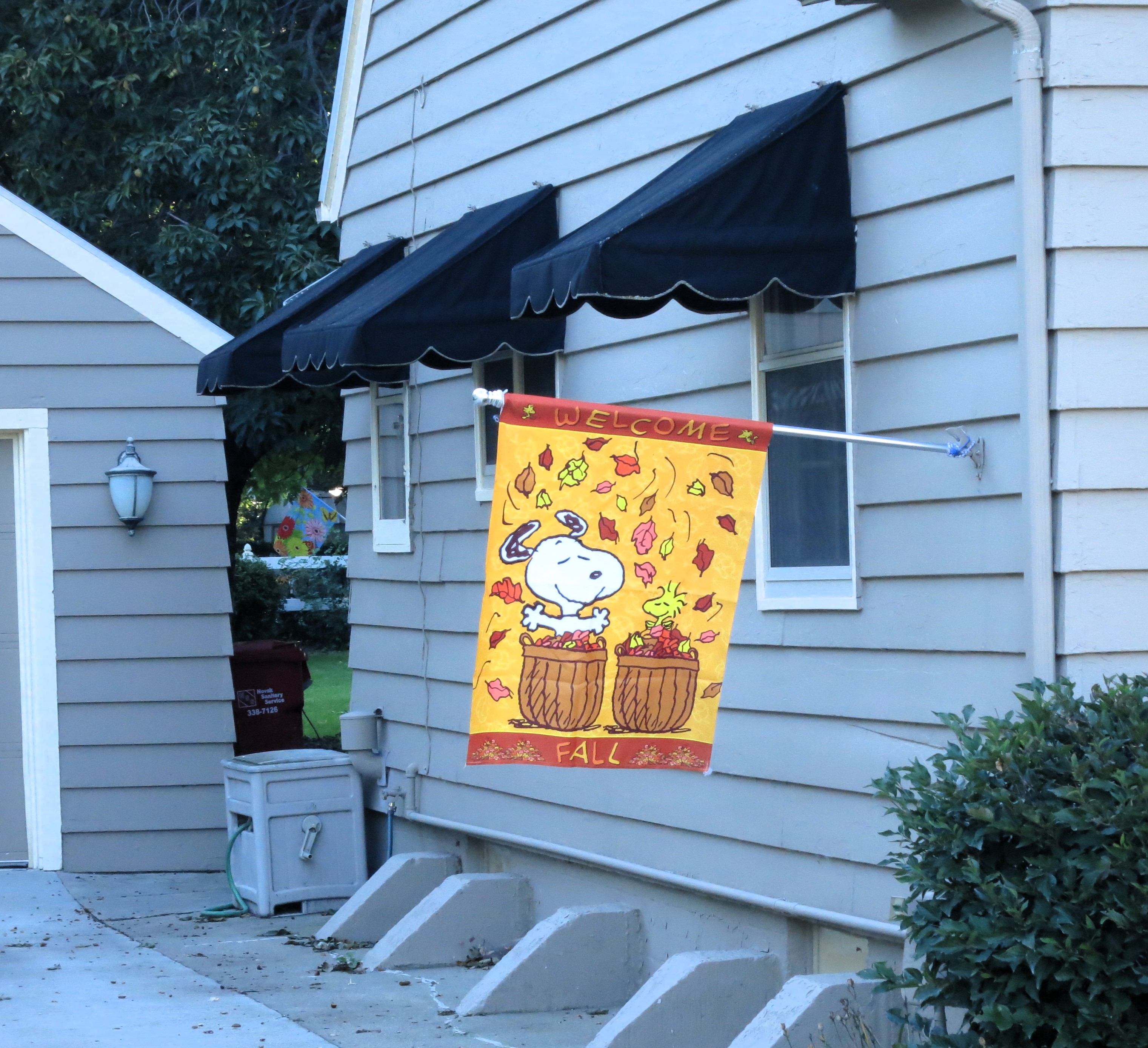
The sign below was found on a house near Main Street: ‘Welcome Fall.’ Indeed.

McCook County within the state of South Dakota

Click here for a list of all TimManBlog American County Seats Series posts.
The photos in this post were taken on September 16, 2014, and are copyrighted by Tim Seibel.

Donations to TimManBlog

I post about a visit to one of America’s 3,150 county seats each month. Donations are greatly appreciated to help defray my travel costs.

$5.00

Check out the FREEDOM VOYAGES book series! These books document my road trips across the United States and include hundreds of stunning photographs. Each of the four books in the series is available on Amazon and Barnes & Noble. This includes my most recent release, FREEDOM VOYAGES Volume 4: Christmastime in Texas!

FREEDOM VOYAGES Volume 4: Christmastime in Texas. Available at Amazon.com and Barnes & Noble.

Earlier volumes in the FREEDOM VOYAGES series are also available:
Vol. 1: North-Central North Dakota
Vol. 2: Go West! From the Loneliest Road in America to California’s Gold Country
Vol. 3: A Proud, Dignified People in Lincoln’s Illinois

All FREEDOM VOYAGES books are on sale at Amazon.com and Barnes & Noble.
Exploring Bristol: The City Split by a State Line

Please consider donating to support my travels using the form at the bottom of the post. PayPal, Visa, American Express, Mastercard, Discover, and Maestro are accepted. Thank you.

August 31, 2025

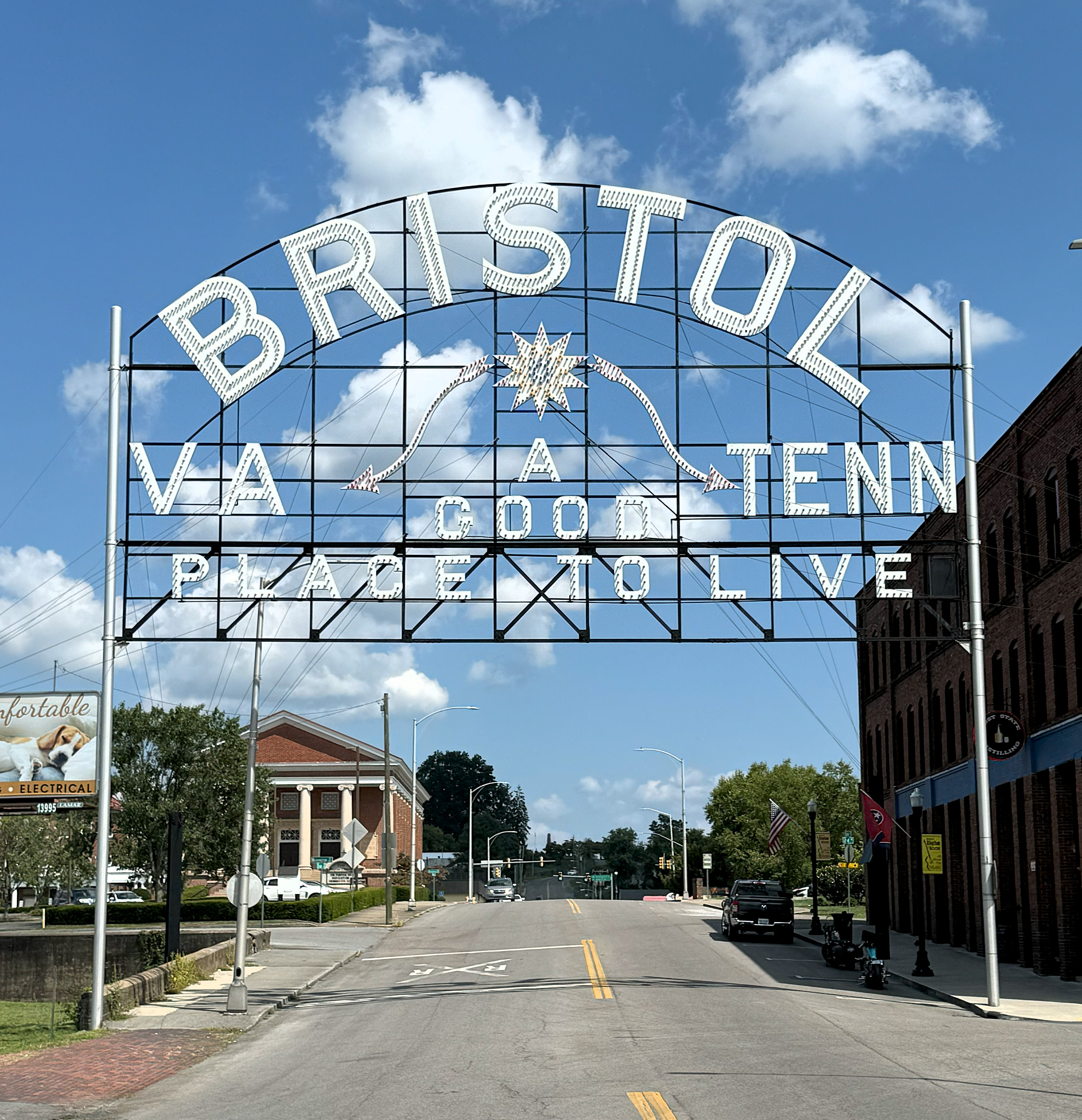
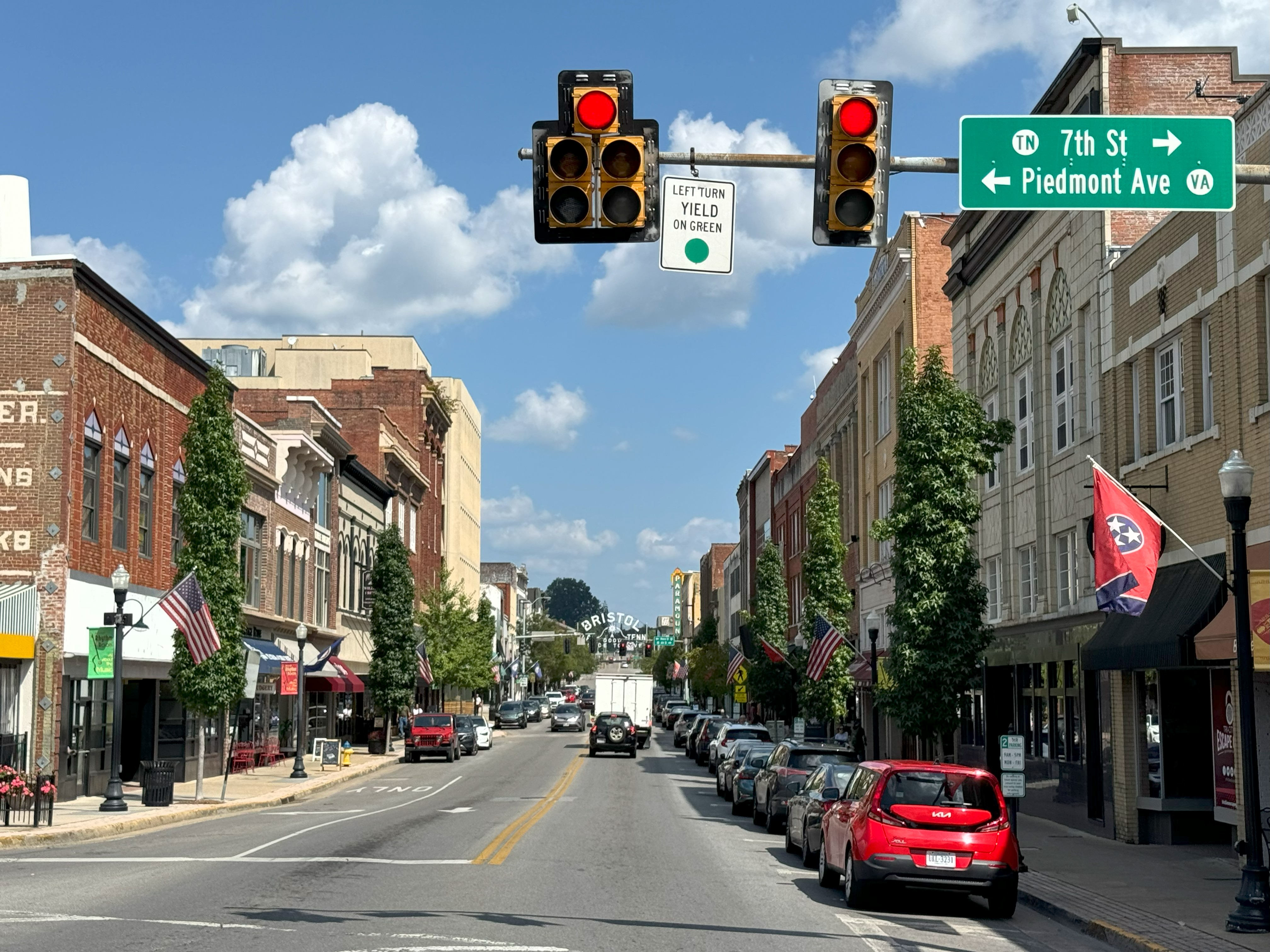
Bristol is one of the most unusual cities in the United States because it is split down the middle of its main street between two states: Virginia and Tennessee. Technically, Bristol is two cities, with a state line running along the double-yellow line in the middle of State Street. However, except for separate governments for each side, Bristol functions as a single city.

The two cities of Bristol — split down the double-yellow line between Tennessee (left) and Virginia (right).
Looking east this time — Virginia is on the left, and Tennessee is on the right.

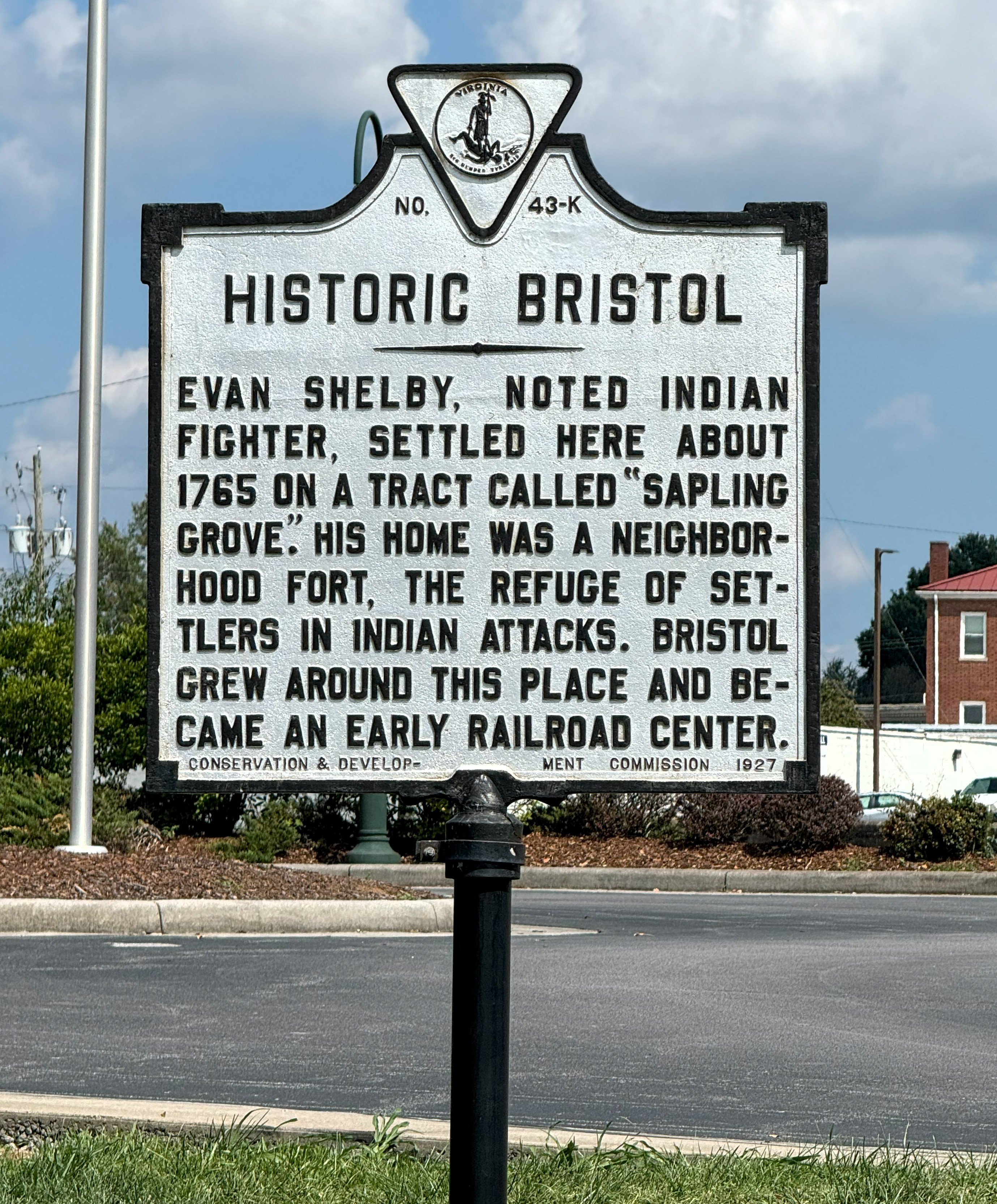
A historical sign (located on the Virginia side of town) explains the history of Bristol, but it doesn’t explain how Main Street was placed on top of a state boundary. Wikipedia provides some explanation in its article on Bristol, Virginia (link here).

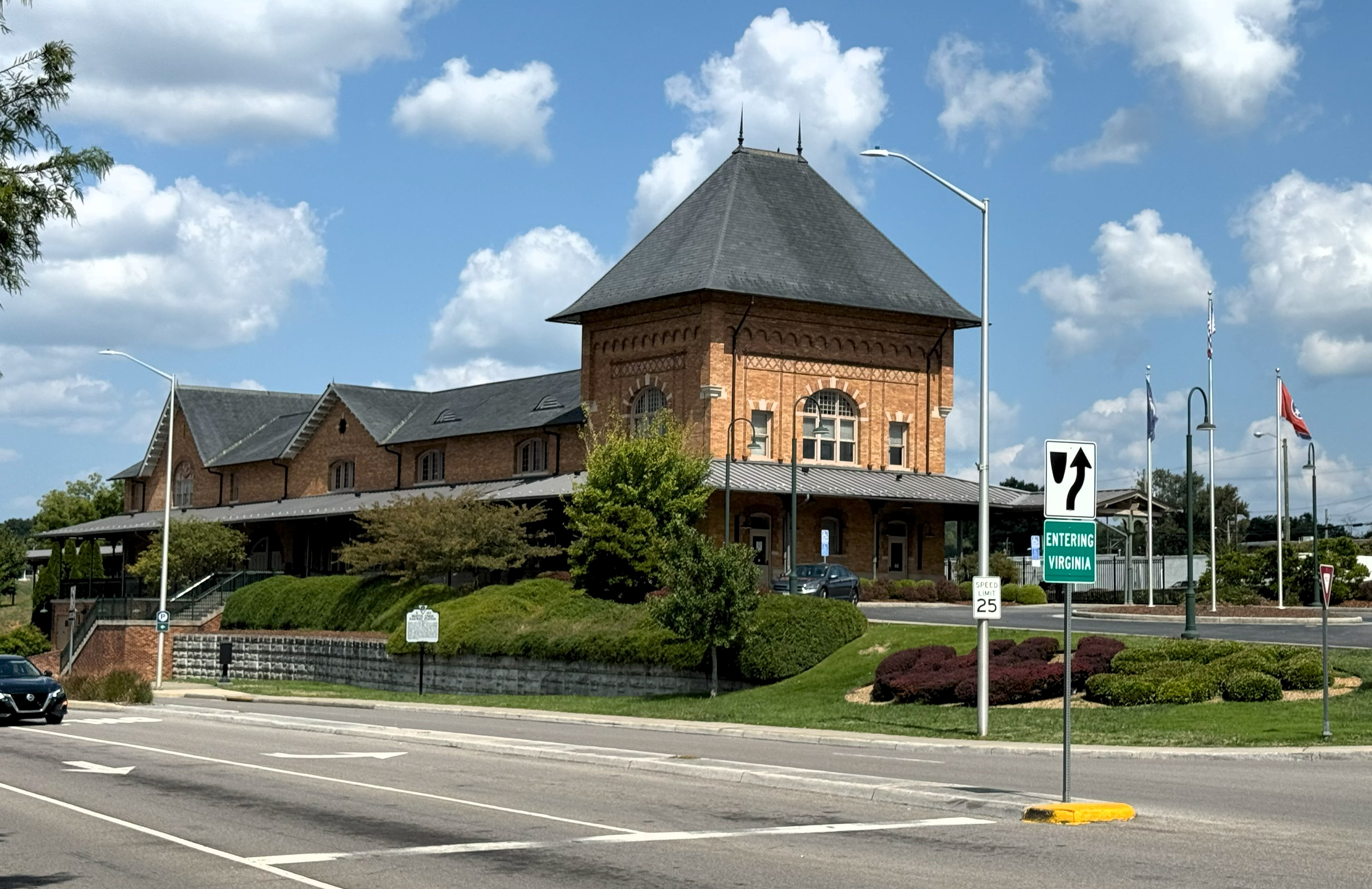
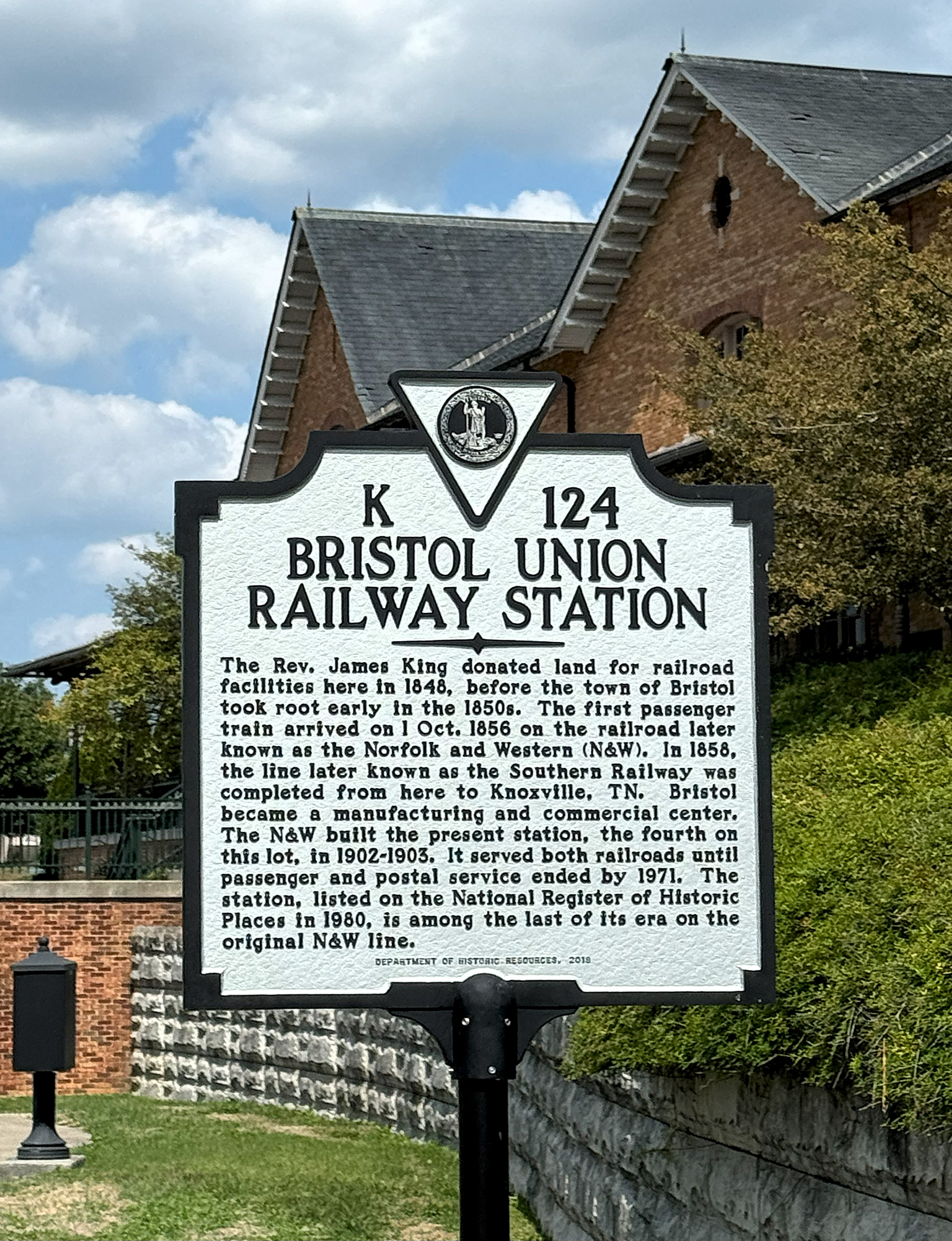
Originally, Bristol was located in both Goodson, Virginia, and Bristol, Tennessee, and had two train lines and two train depots — one for each side of the state line. When visitors began referring to the entire area as “Bristol,” Goodson, Virginia, abandoned its original name and adopted the name Bristol as well.

Bristol, Virginia, is one of Virginia’s independent cities, which means it also functions as its own county. Bristol, Tennessee, is located in Sullivan County, Tennessee, but it is not the county seat. Because this blog is about county courthouses and county seats, the rest of this post will focus on Bristol, Virginia.

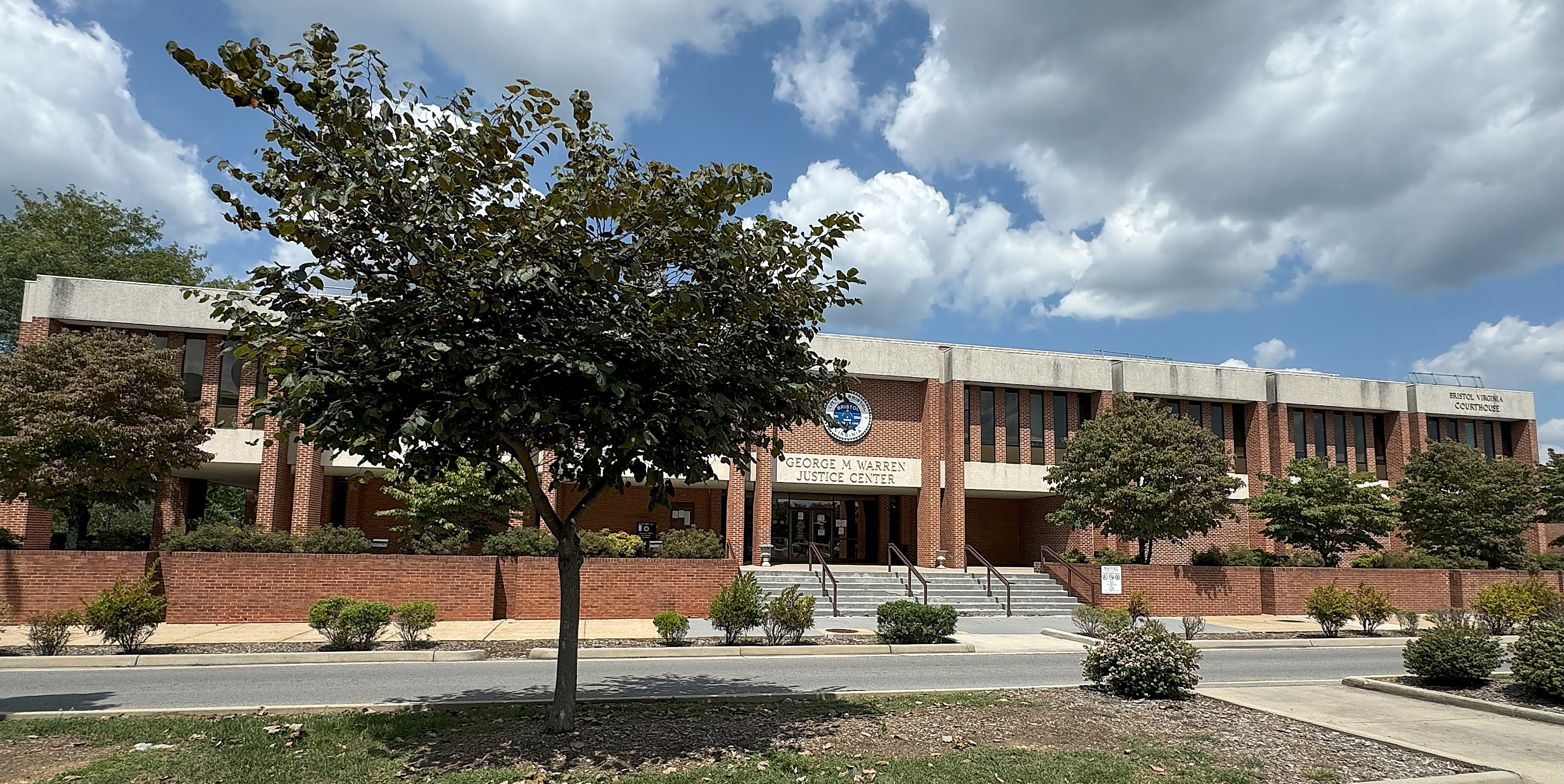
As the seat of both the city and county of Bristol, the Bristol Courthouse serves as a combination of a courthouse and City Hall. The building itself is a simple two-story red brick structure.

The George M. Warren Justice Center / Bristol, Virginia Courthouse in Bristol, Virgina

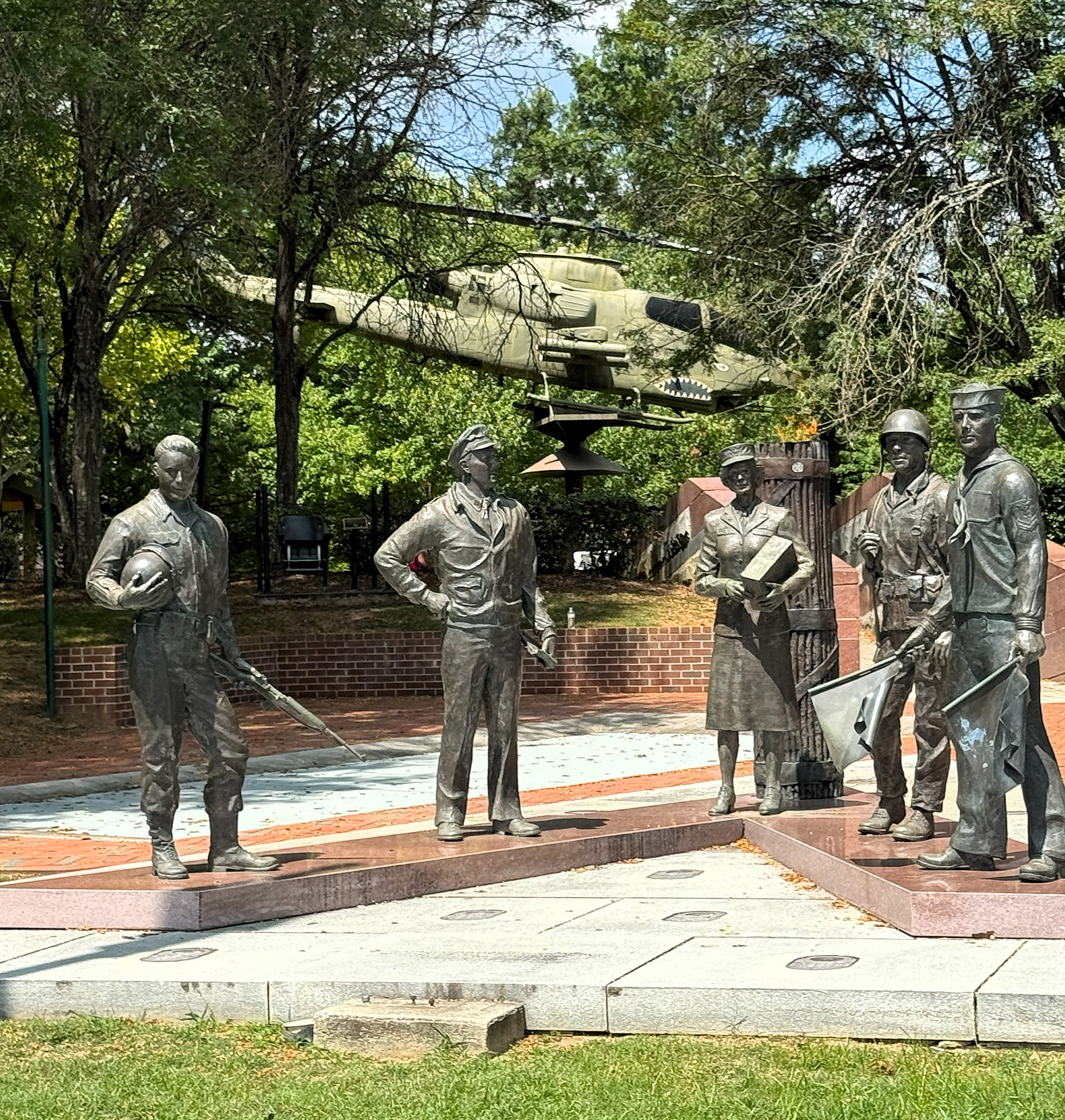
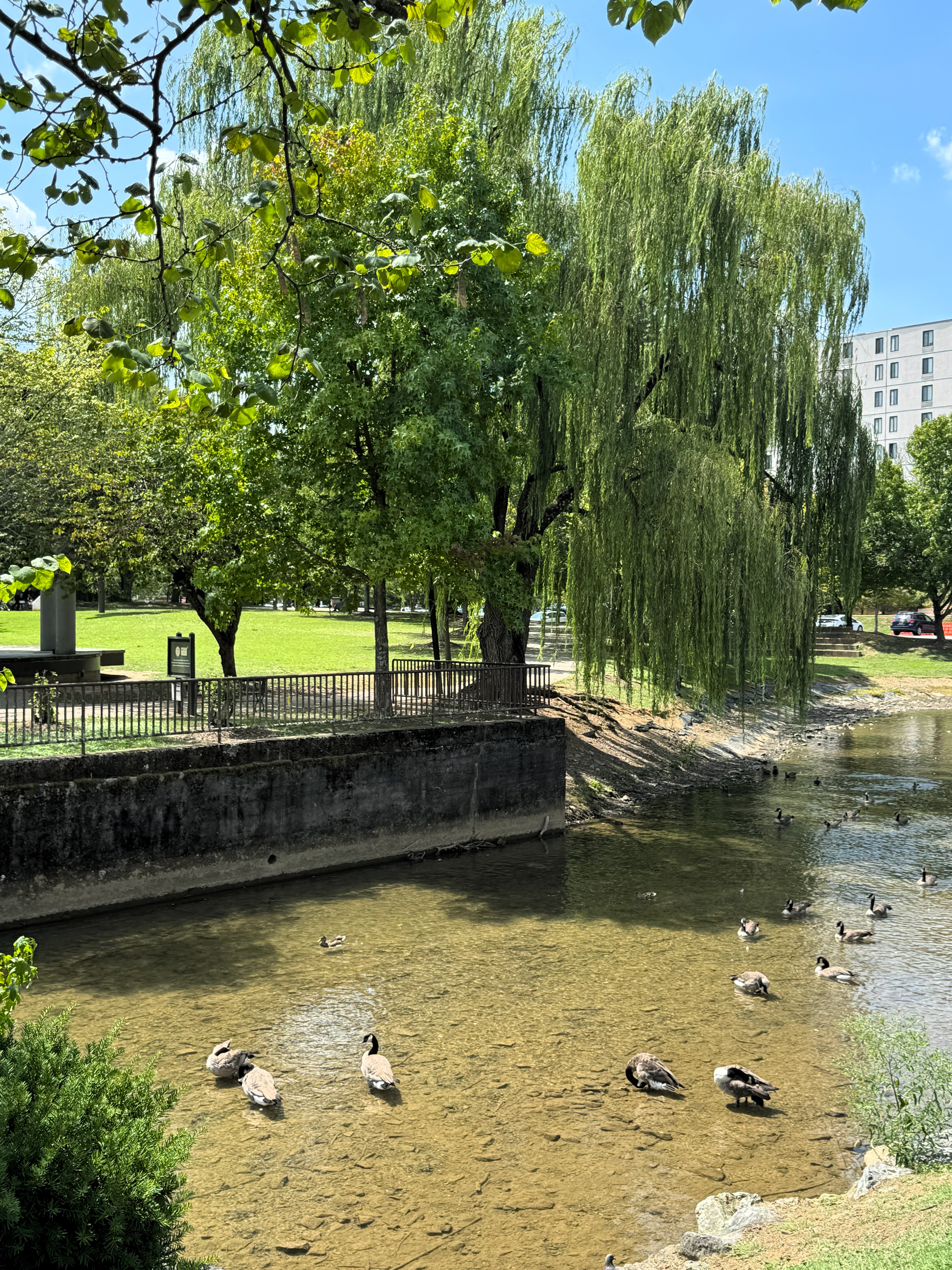
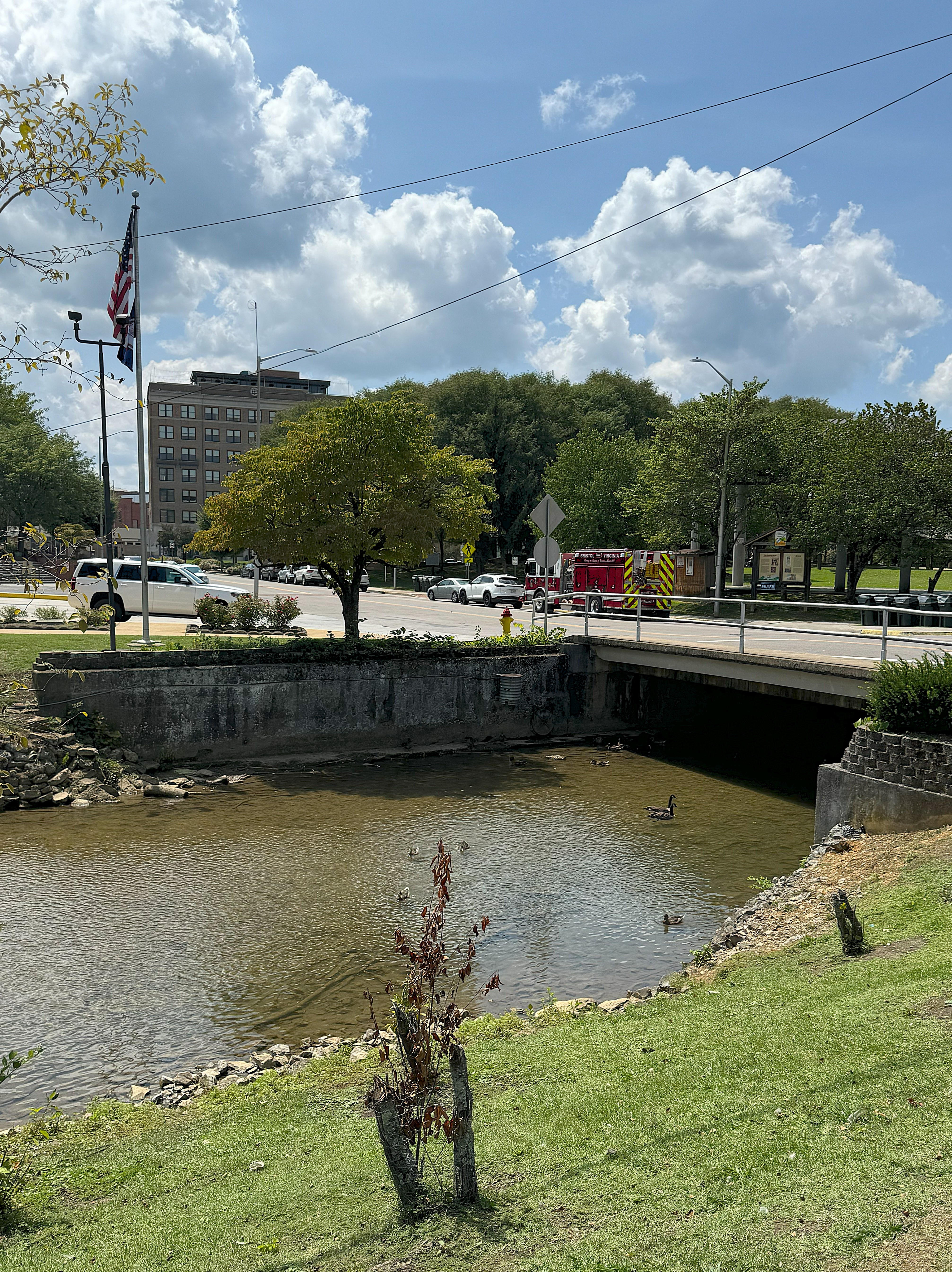
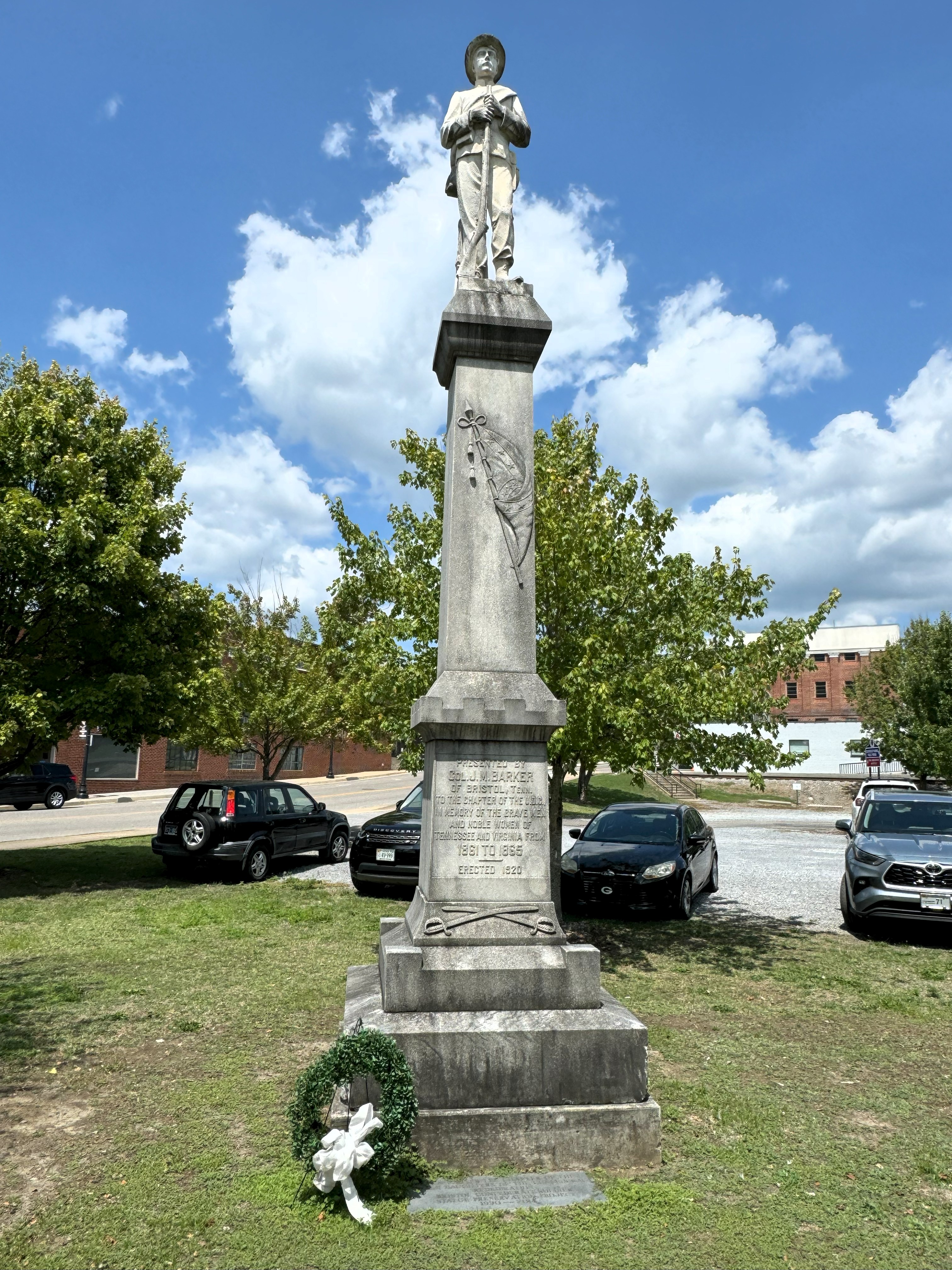
Across the street from Bristol City Hall and Courthouse, Cumberland Park features a Vietnam-era helicopter and a memorial dedicated to Vietnam veterans. Nearby, I found ducks feeding in the creek and the town’s old Confederate memorial.

The Bristol Hotel is only a few blocks away. Built in 1925, the Bristol has been restored and converted into a boutique hotel. It’s a fun place and boasts a rooftop bar.

The 1925 Bristol Hotel in Bristol, Virginia

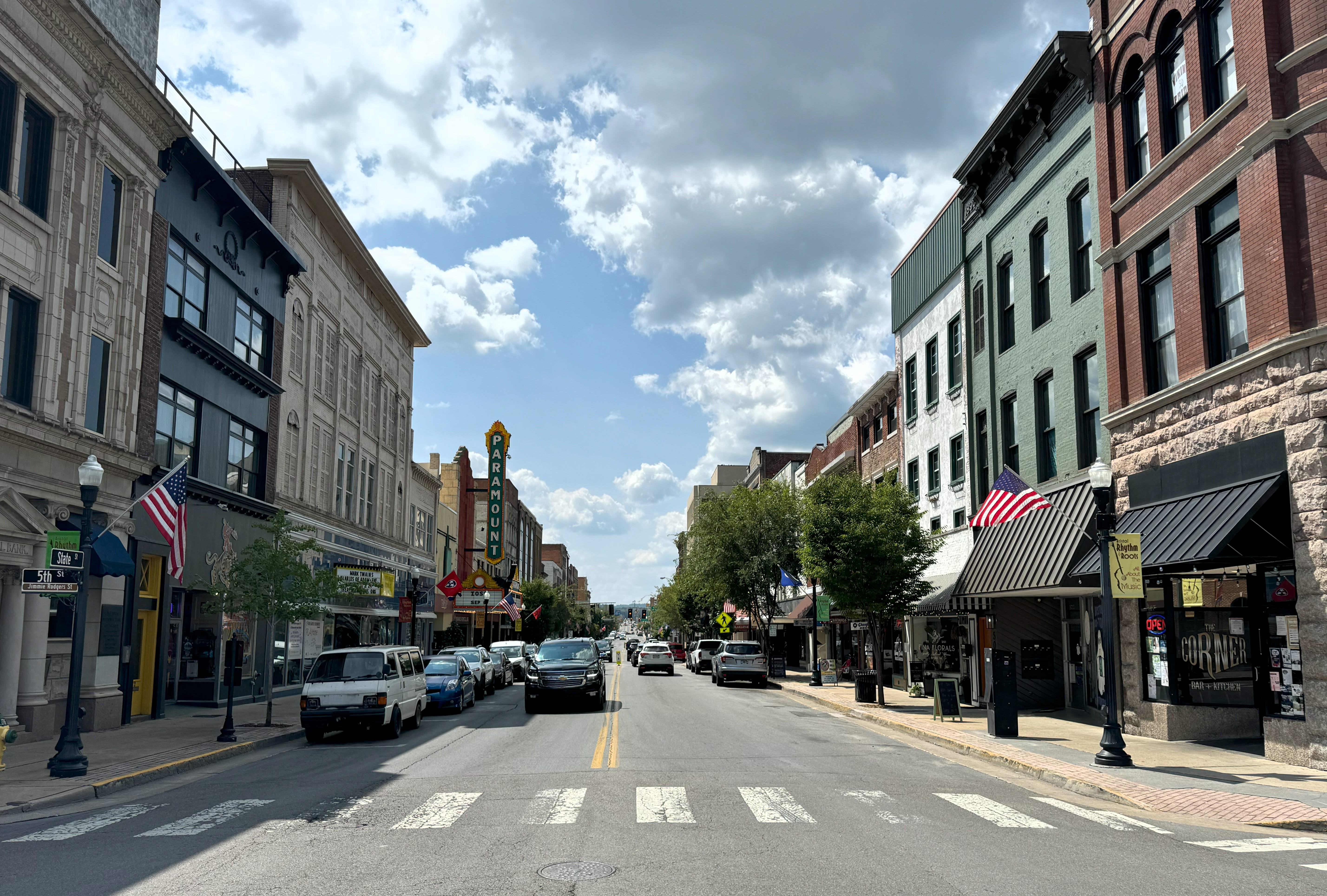
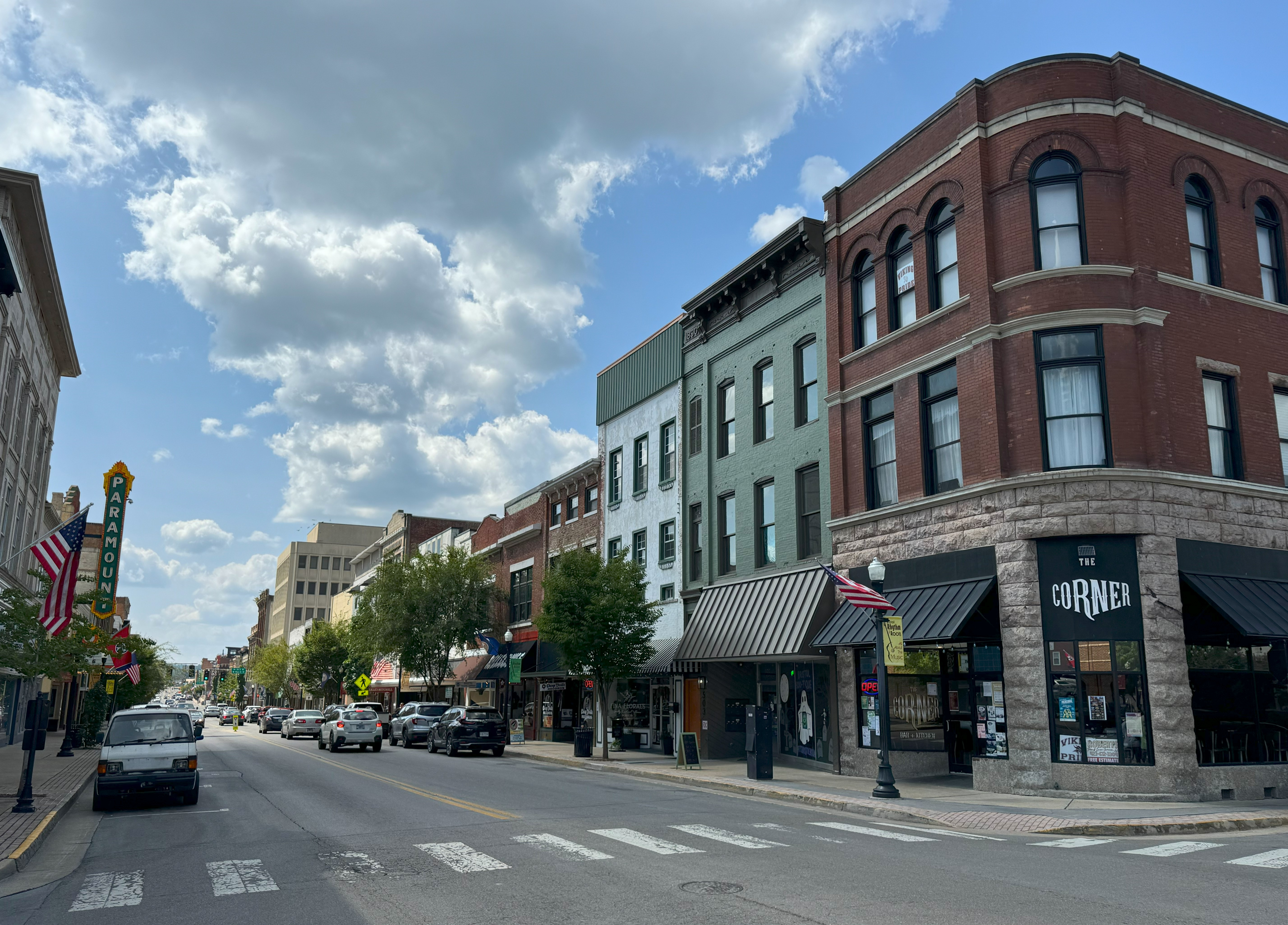
Just two blocks away, I walked down State Street, which separates Virginia from Tennessee. This is Bristol’s main street in almost all respects — the largest shops and restaurants are here.

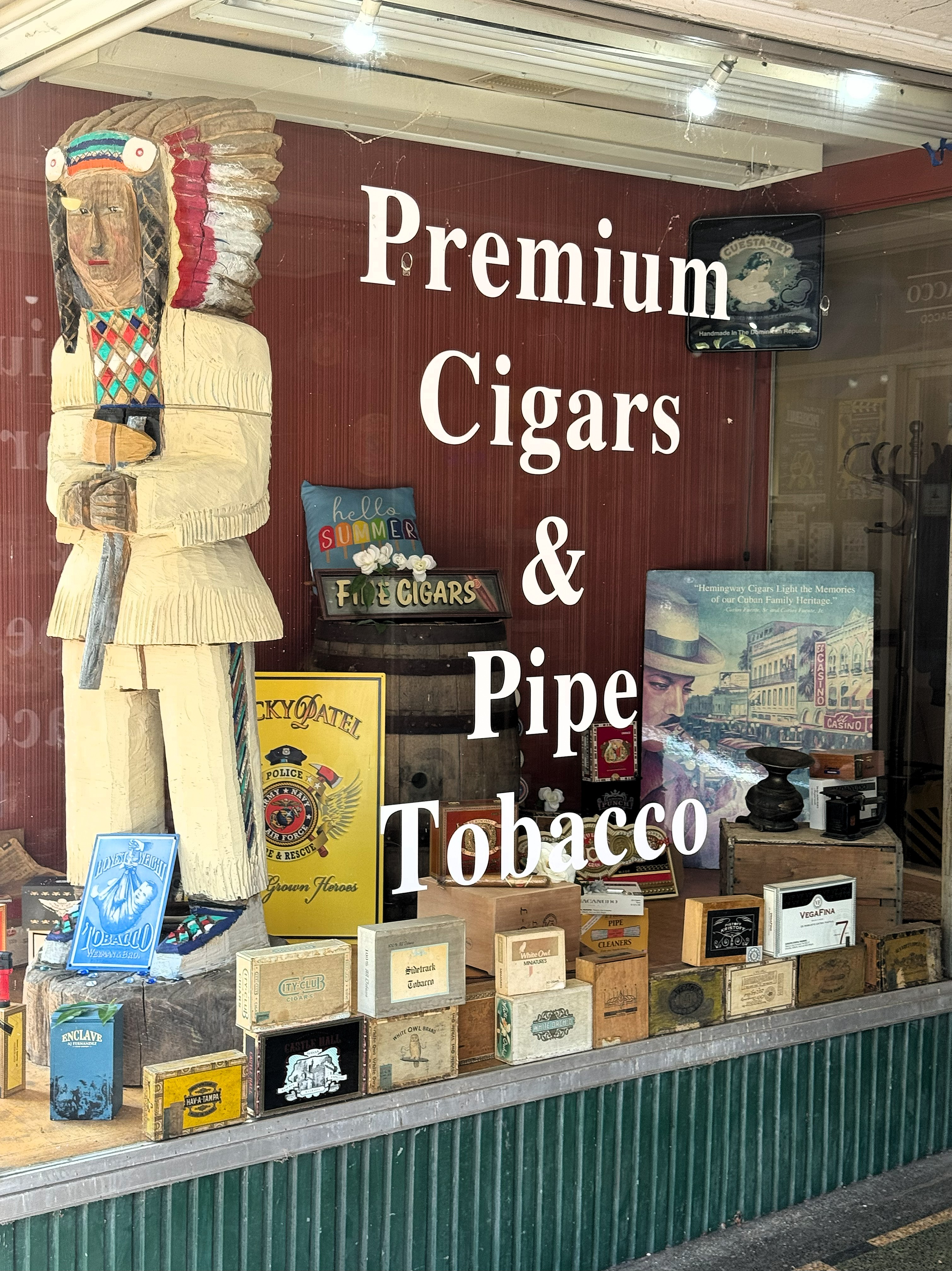
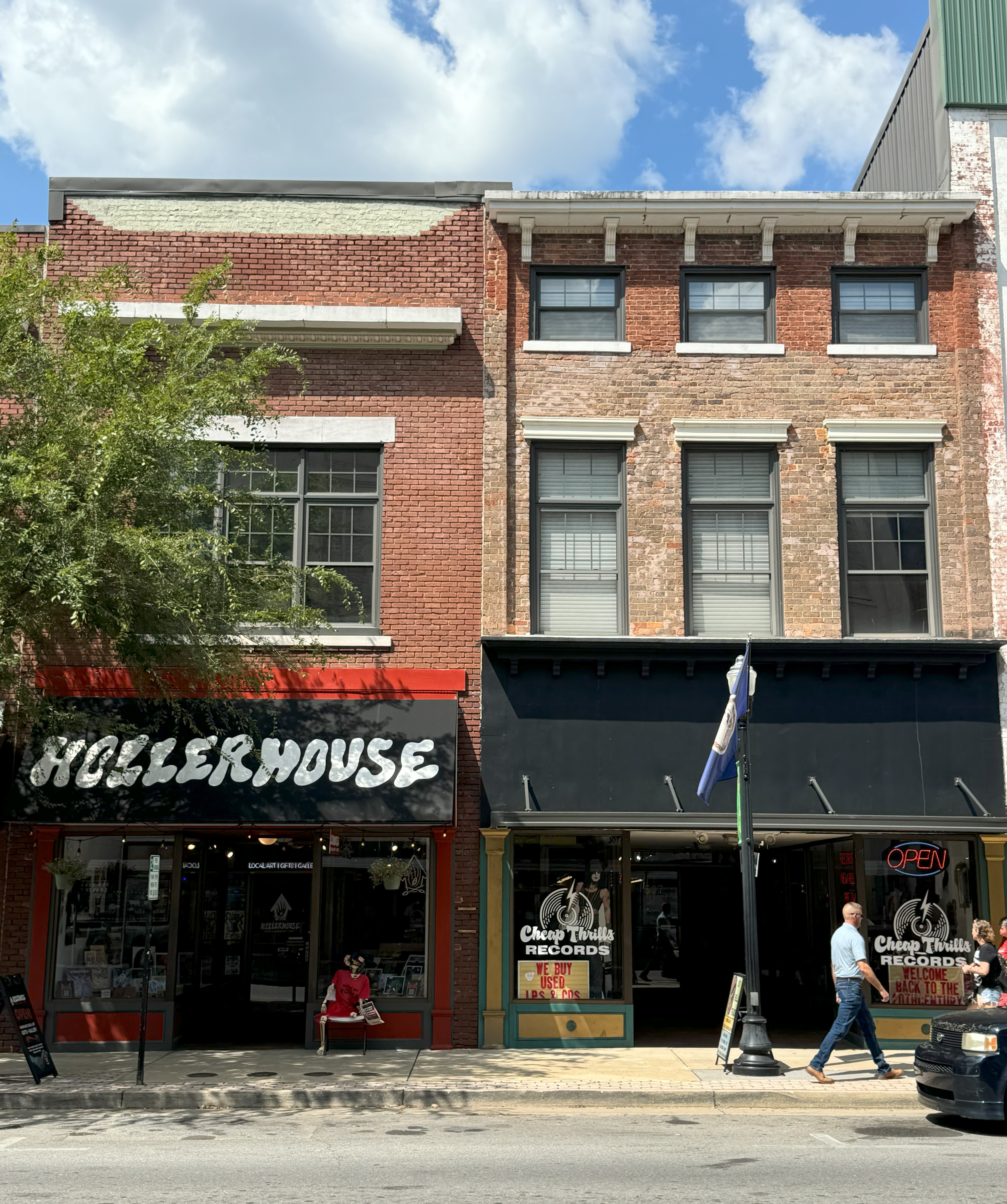
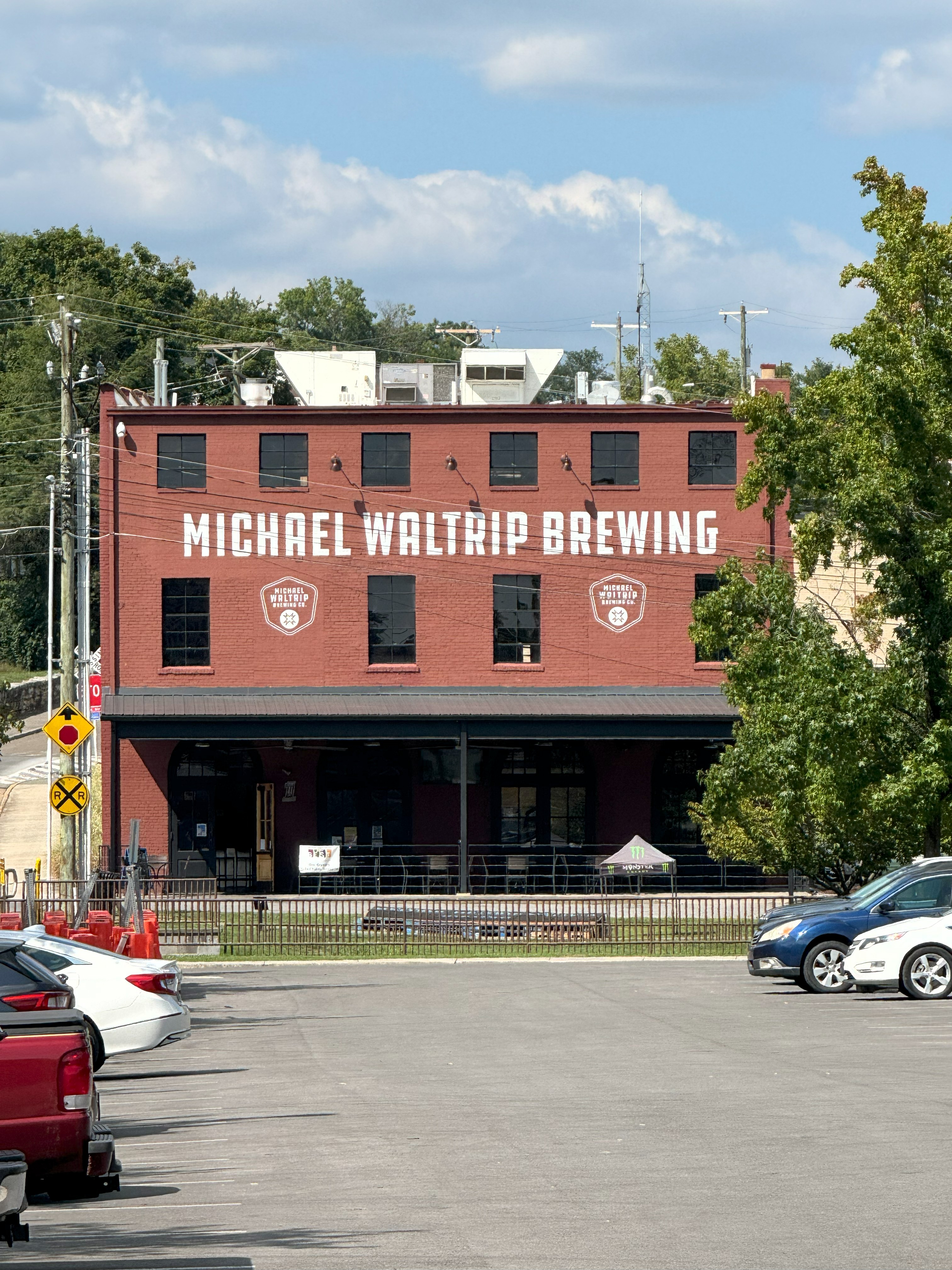
Have a look for yourself — except for the two mid-street shows below, all of these are photos of the Virginia side of the street:

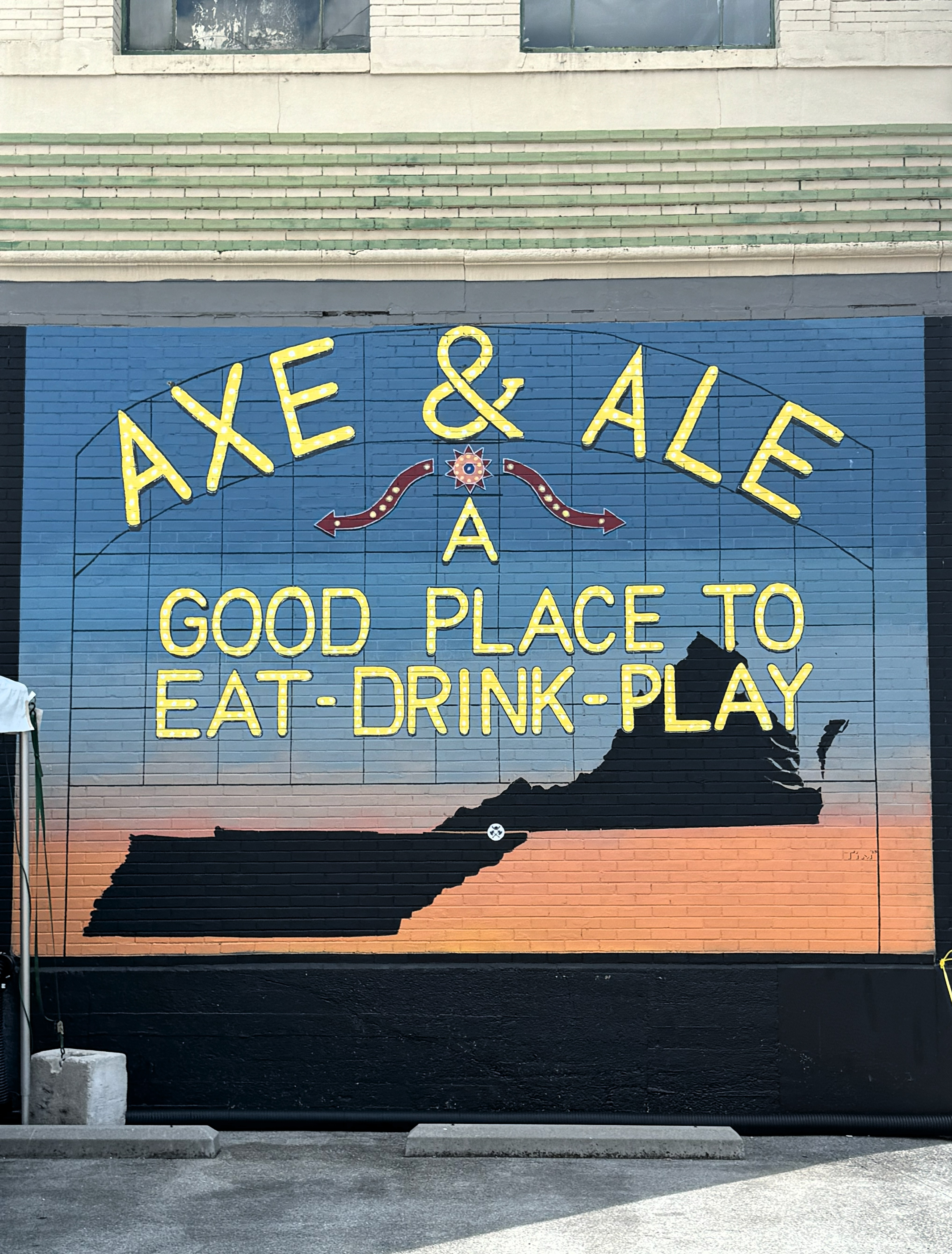
Here’s to the Axe & Ale, the Corner Bar & Grill, Michael Waltrip Brewing, and an art gallery — the HollerHouse of Bristol.

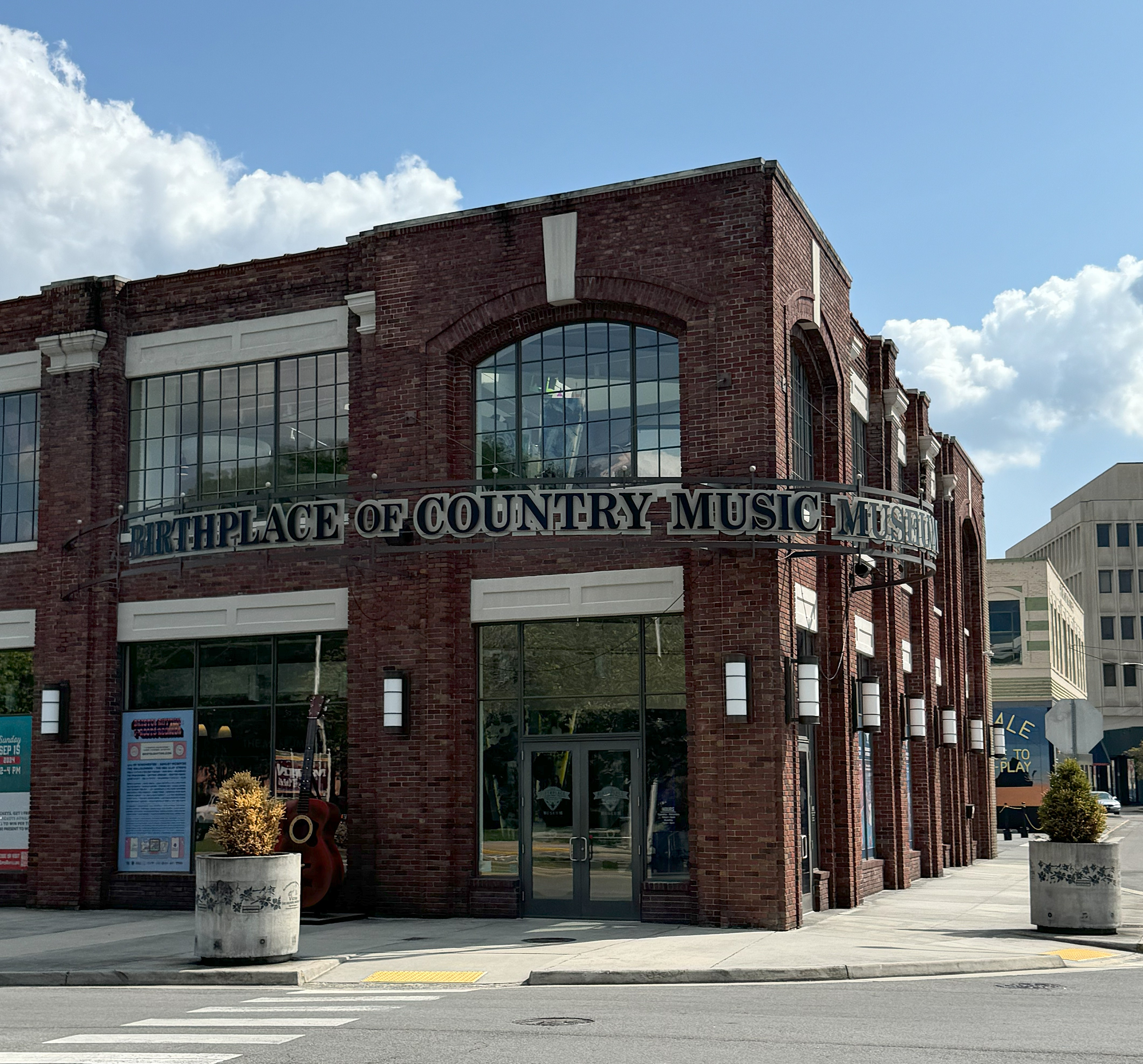
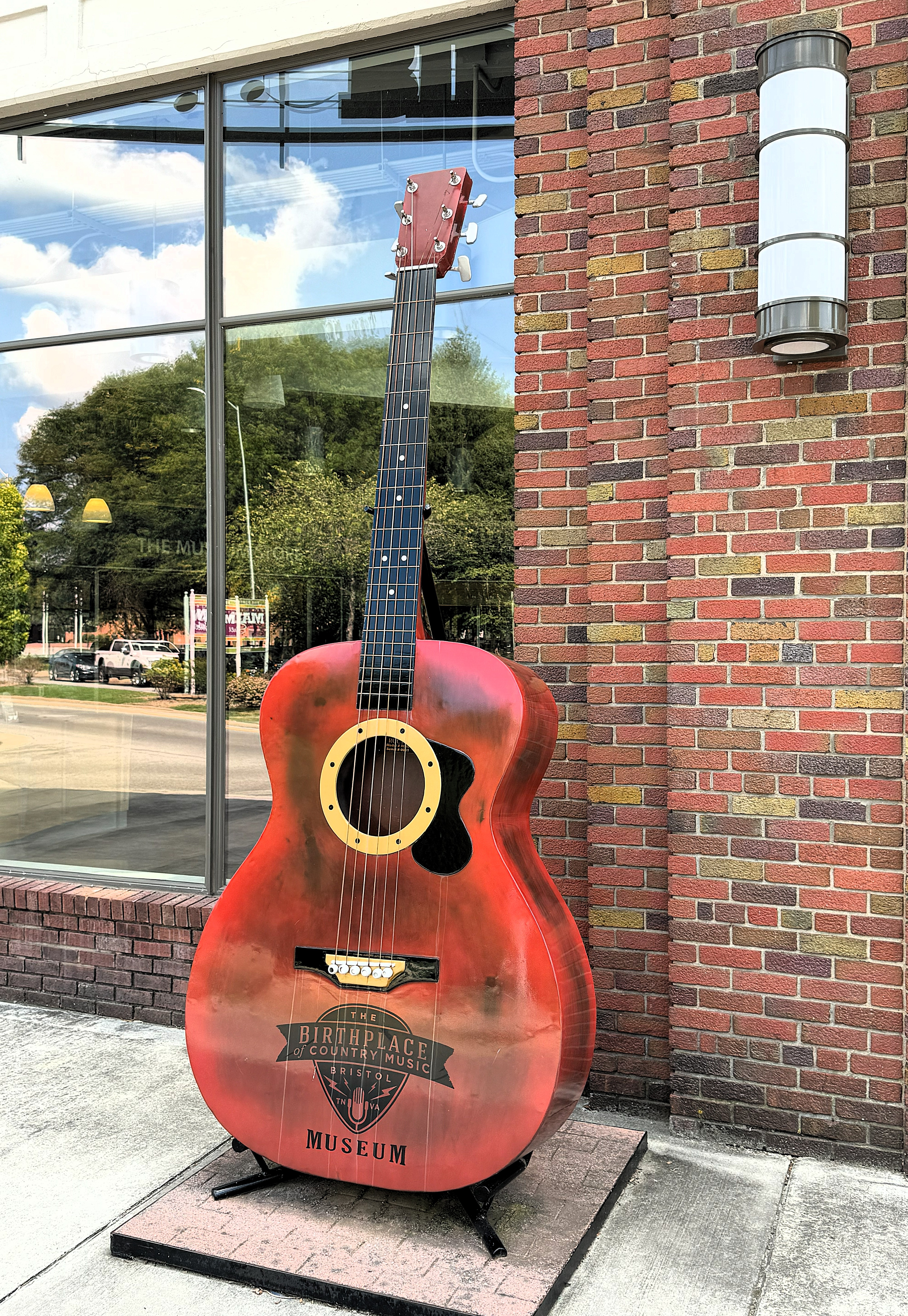
Bristol, Virginia, also boasts a great musical history and is the home to the Birthplace of Country Music Museum.

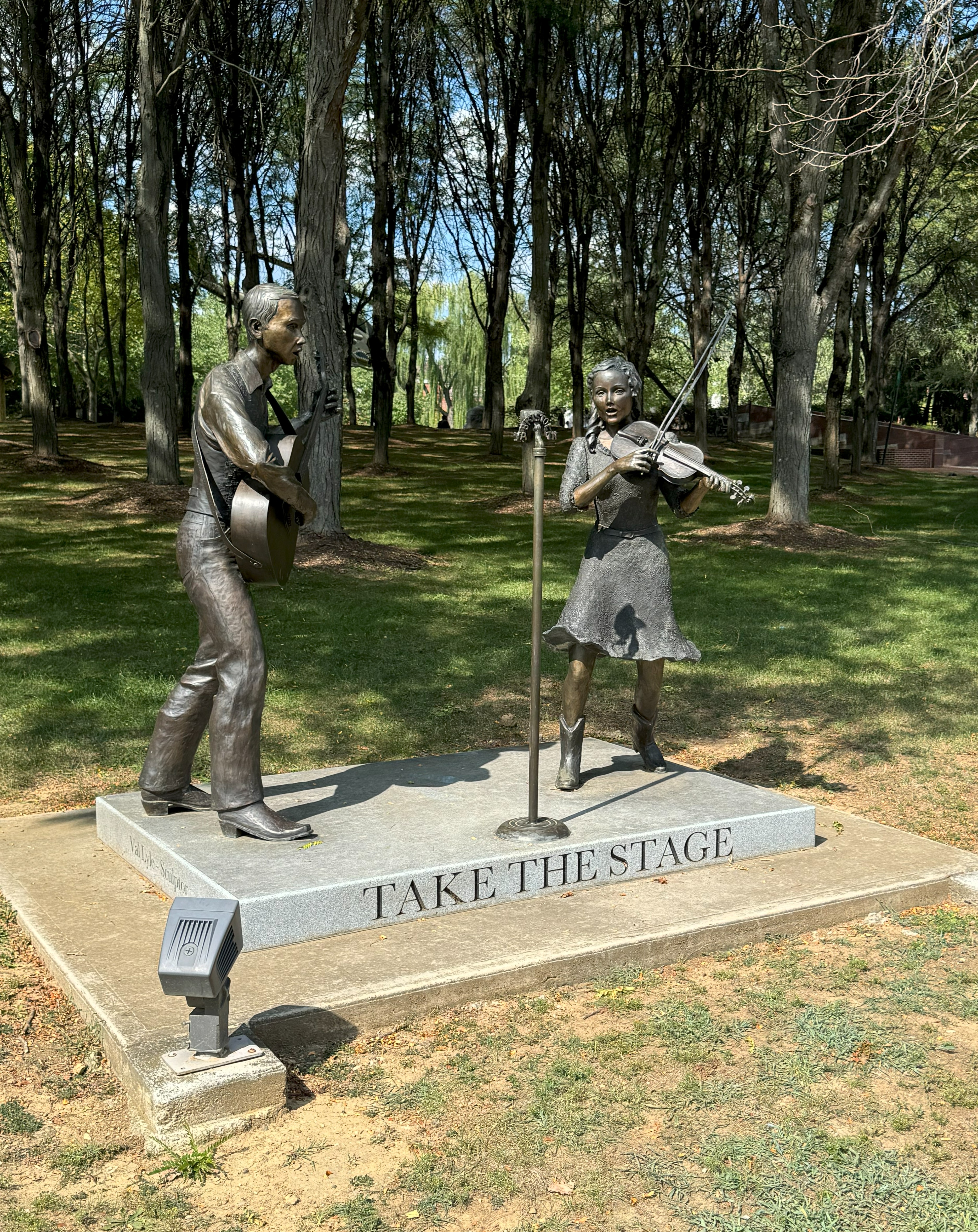
Below: a statue of a country music duo in Cumberland Park, and a Virginia road sign for the Crooked Road — Virginia’s music heritage roadway and trail.

If you’re curious, the Tennessee side of town is the larger of the two Bristols. Bristol, Tennessee, has a population of about 27,000, while Bristol, Virginia, has only 17,000 residents. Historically, the Tennessee city has always been larger than its counterpart, and this disparity has grown in recent years due to Tennessee’s more favorable tax policies compared to Virginia. Also, Bristol, Tennessee, can boast of the Bristol Motor Speedway.

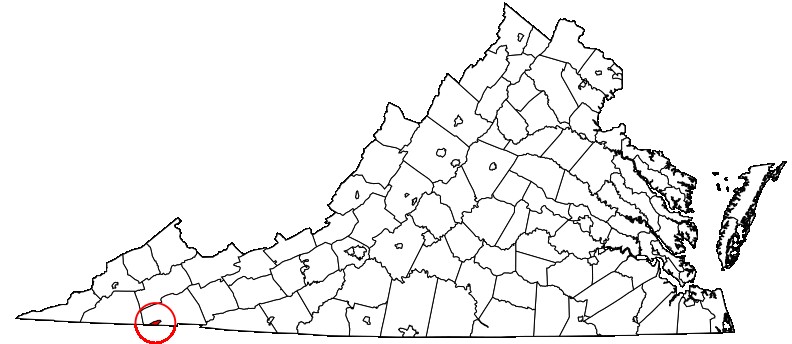
Bristol, Virginia, within the state of Virginia

Click here for a list of all TimManBlog American County Seats Series posts.
The photos in this post were taken on July 9, 2023, and are copyrighted by Tim Seibel.

Donations to TimManBlog

I post about a visit to one of America’s 3,150 county seats each month. Donations are greatly appreciated to help defray my travel costs.

$5.00

Check out the FREEDOM VOYAGES book series! These books document my road trips across the United States and include hundreds of stunning photographs. Each of the four books in the series is available on Amazon and Barnes & Noble. This includes my most recent release, FREEDOM VOYAGES Volume 4: Christmastime in Texas!

FREEDOM VOYAGES Volume 4: Christmastime in Texas. Available at Amazon.com and Barnes & Noble.

Earlier volumes in the FREEDOM VOYAGES series are also available:
Vol. 1: North-Central North Dakota
Vol. 2: Go West! From the Loneliest Road in America to California’s Gold Country
Vol. 3: A Proud, Dignified People in Lincoln’s Illinois

All FREEDOM VOYAGES books are on sale at Amazon.com and Barnes & Noble.
Miller, South Dakota: A Peek into Small Town America

Please consider donating to support my travels using the form at the bottom of the post. PayPal, Visa, American Express, Mastercard, Discover, and Maestro are accepted. Thank you.

July 31, 2025

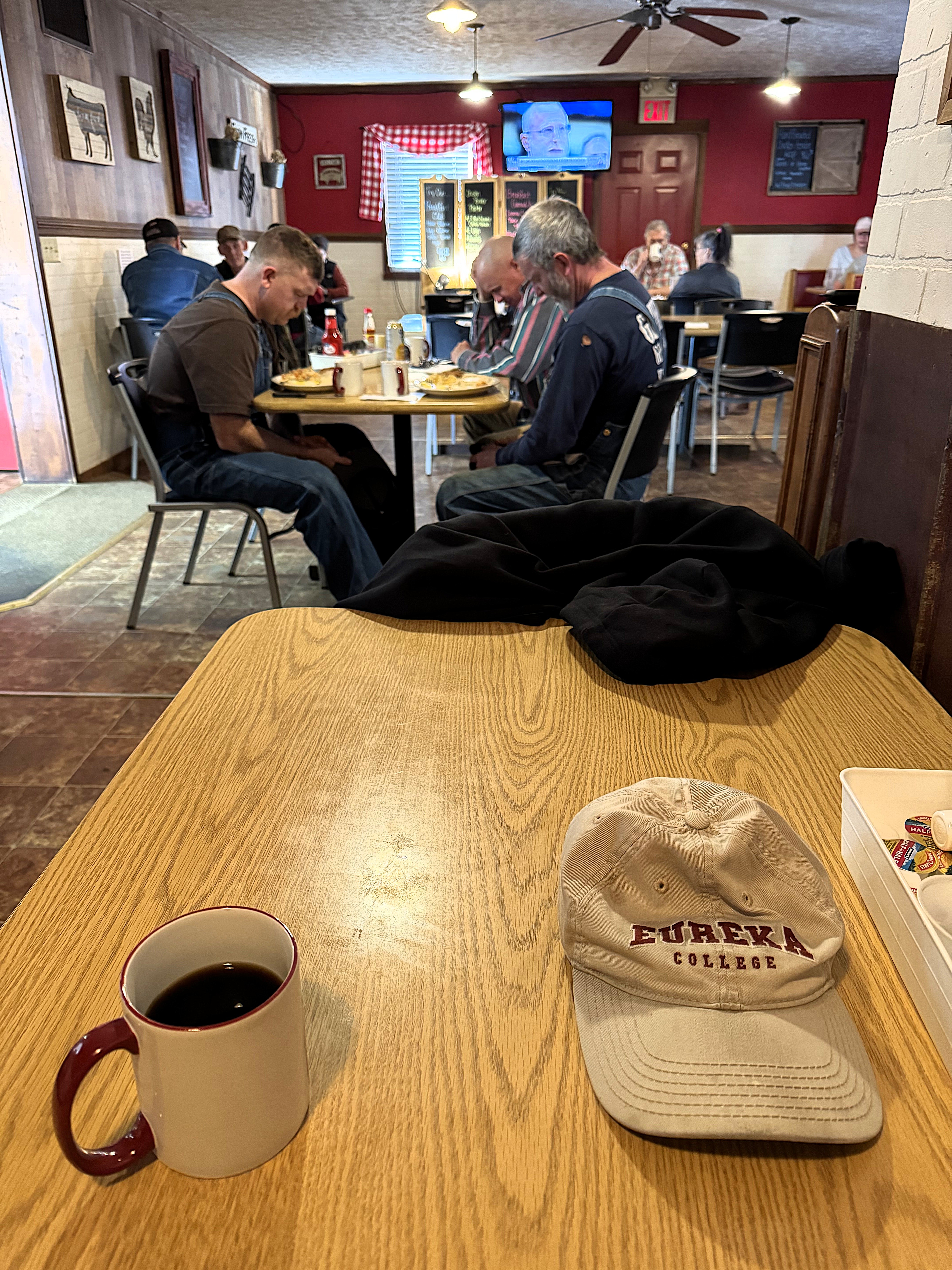
Welcome to Miller, South Dakota! It’s a bright and clear Sunday afternoon here in South Dakota. There is only a slight breeze and a hint of humidity, which belies the temperature of 84°. It feels much warmer though.

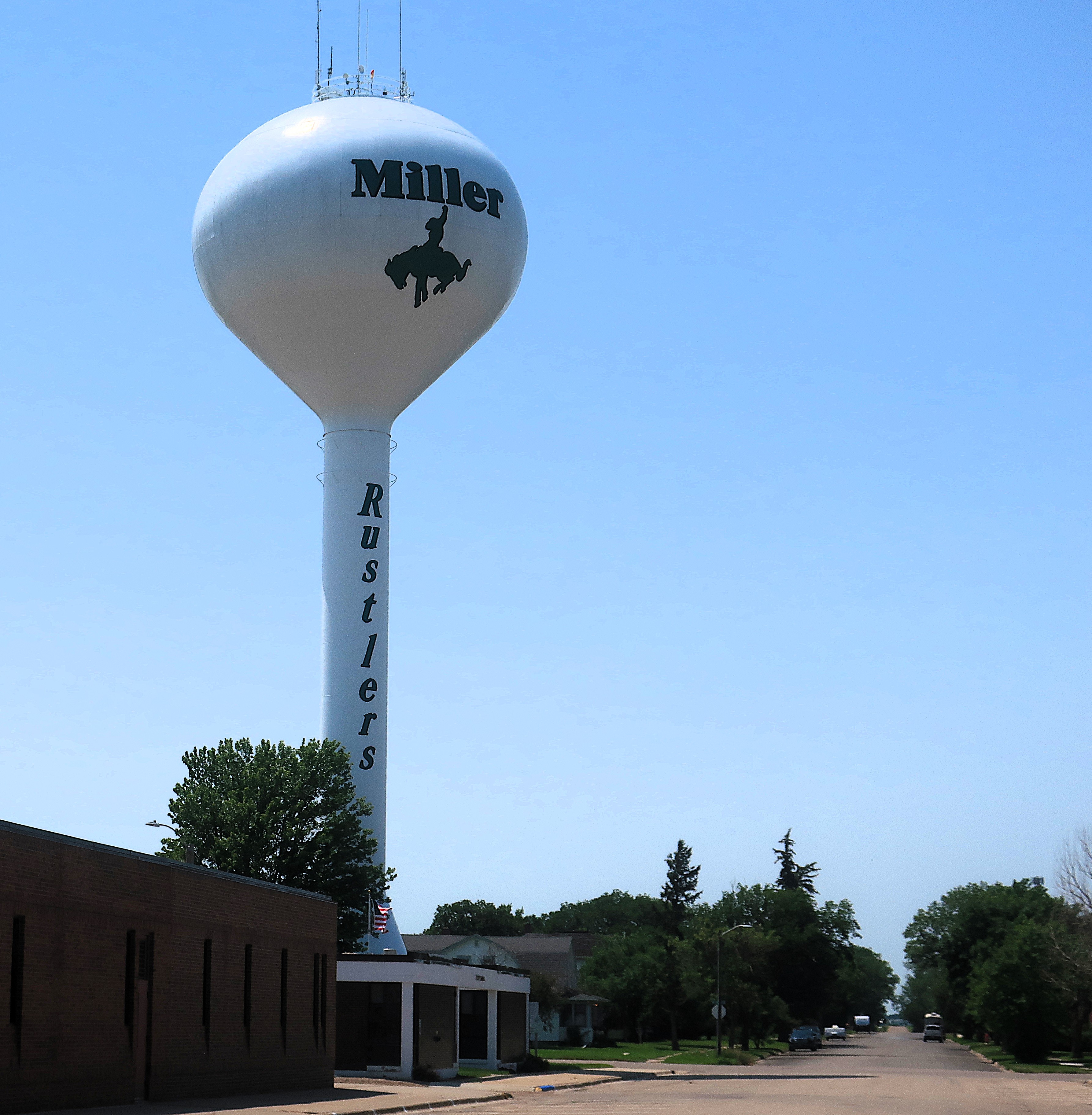
Miller’s giant water tower proclaims this burg to be the home of the “Rustlers.” The lettering and the cowboy icon are green like the surrounding grain fields. Over the years, Miller has produced a state governor and a few other notables. These days, Miller is a town of two business blocks and thirteen hundred occupants.

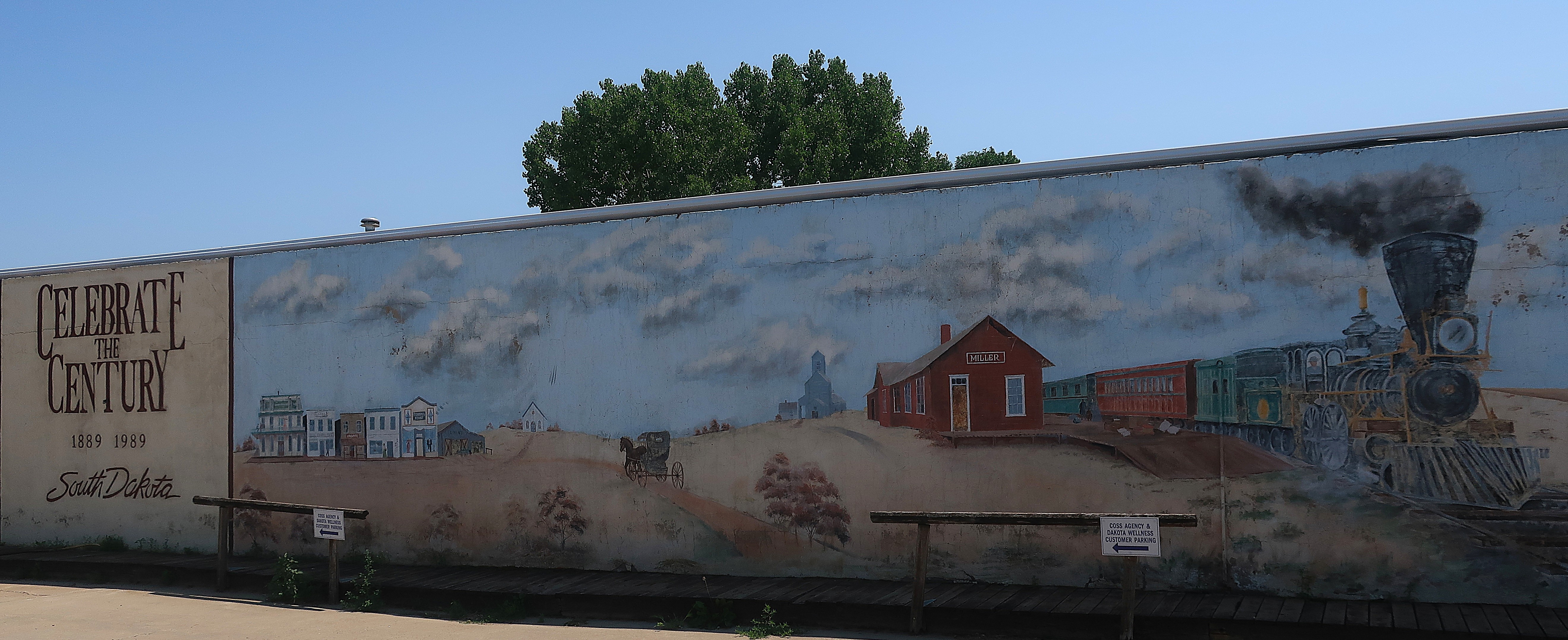
A mural around the corner provides some historical context for this little prairie town. Miller, like so many other places in the Great Plains states, began in 1889 with the coming of the railroad.

Miller’s town mural reminds everyone of the day the railroad brought the world to town.

Miller has grown substantially since the early railroad days; here’s Main Street today.

Traffic along Broadway in Miller, South Dakota

The countryside surrounding Miller supports a mix of corn and soybean fields. The plains are nearly flat here, with only slight ripples to interrupt the cultivation. The soil must be excellent since I saw very few cattle ranches interrupting the cultivated acres.

Miller is the market town for those surrounding farms. It’s a nice-looking place. Let’s take a closer look.

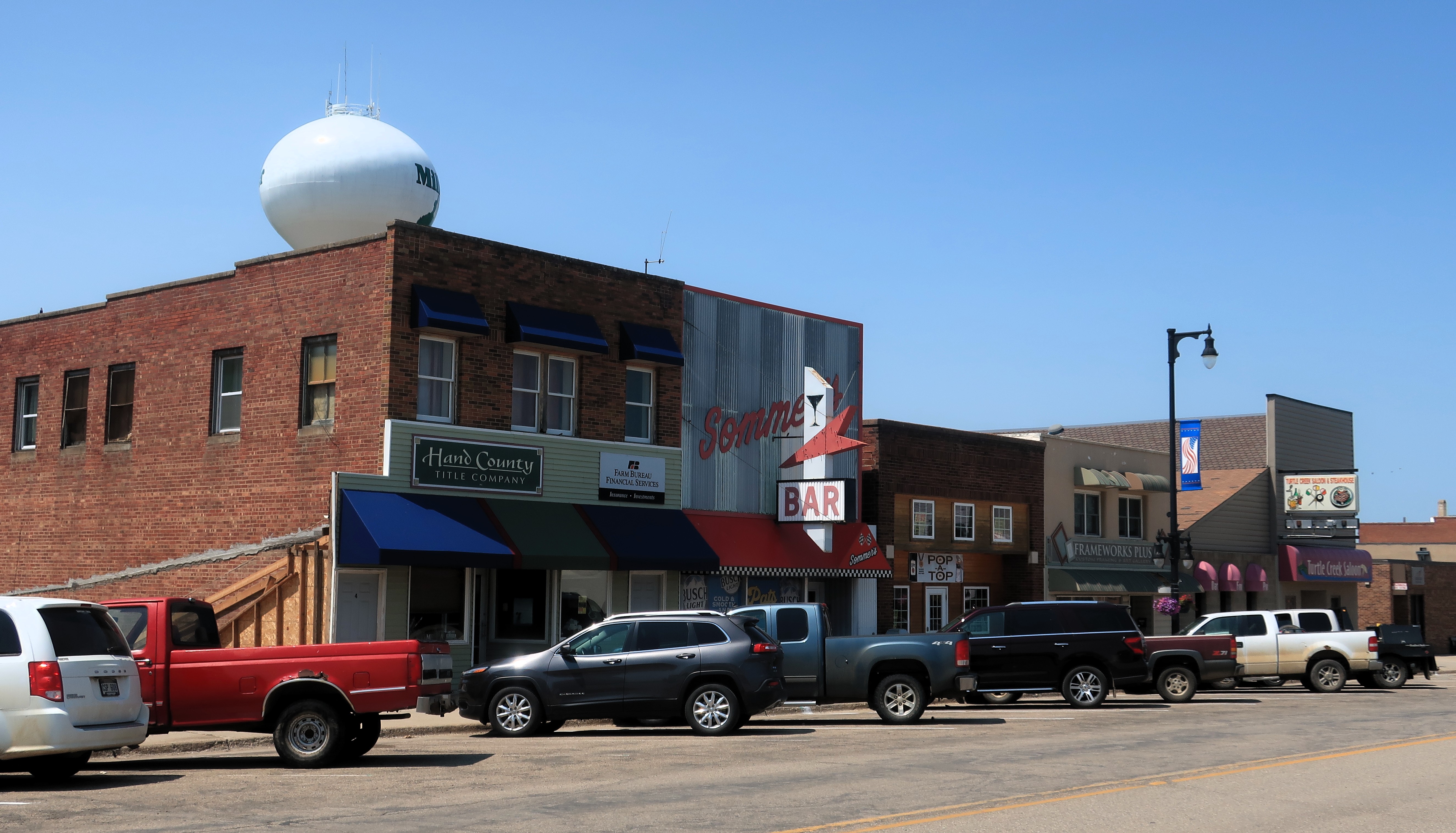
The line-up: Miller Rexall Drug, the Clothes Garden, and Helping Hands at the end of the block.
Hand County Title Company, Farm Bureau Financial Services, and Sommers Bar.

(Every South Dakota bar has a few video poker machines hidden in the corner, hidden out of sight to encourage shame, I think. I played a machine at Sommers and won $20 — I bought a beer with it.)

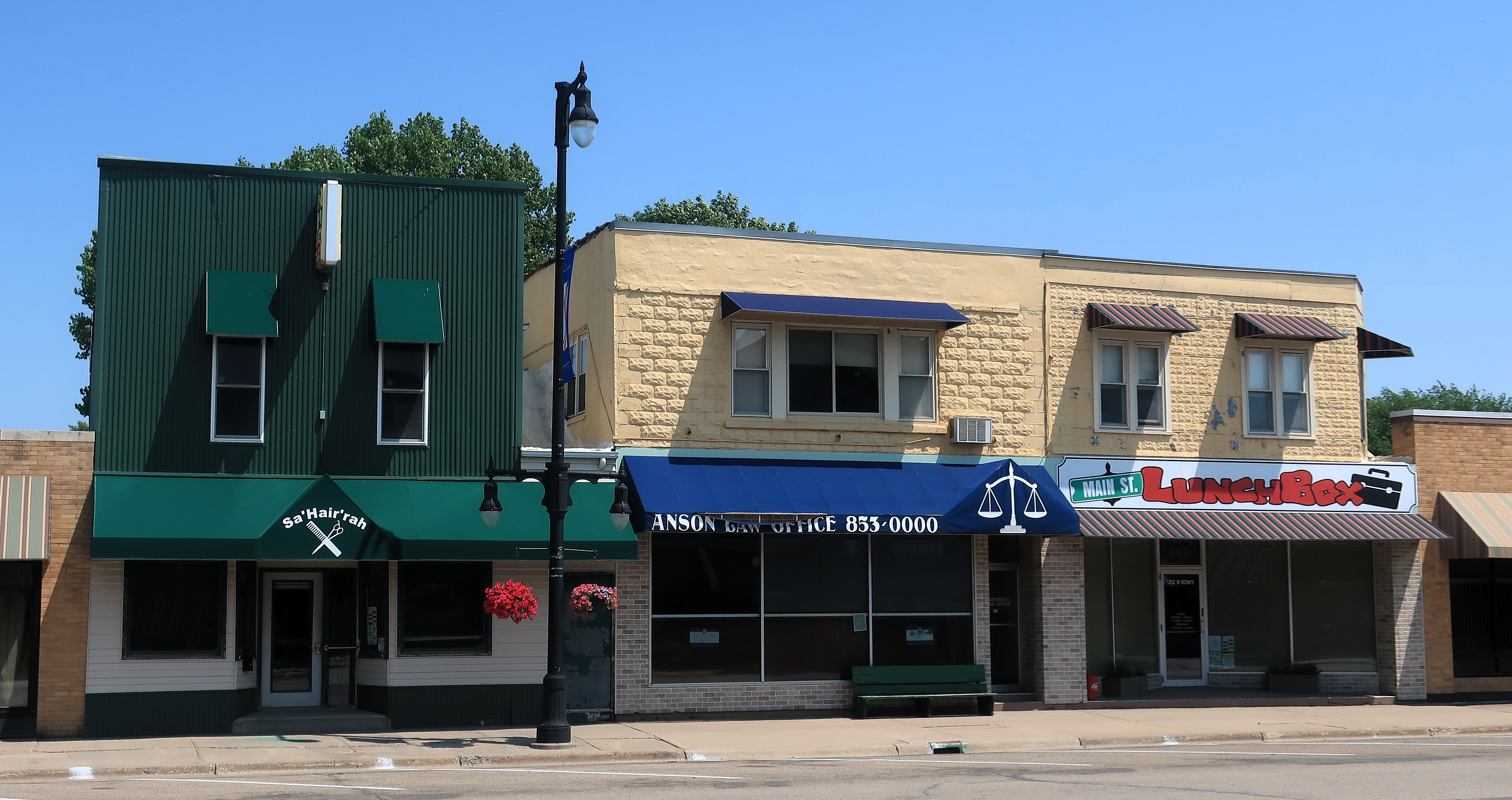
Here are some more pillars of the community. I say that with no sarcasm; people couldn’t survive without these services.

The Sa’ Hair’ rah Hair Stylist, Anson Law Office, and the Main Street Lunch Box.

Above are the town’s shops, below are the homes of the town’s shopkeepers and their customers. I’d sure love to have a house on a corner lot with a front porch and balcony like this one.

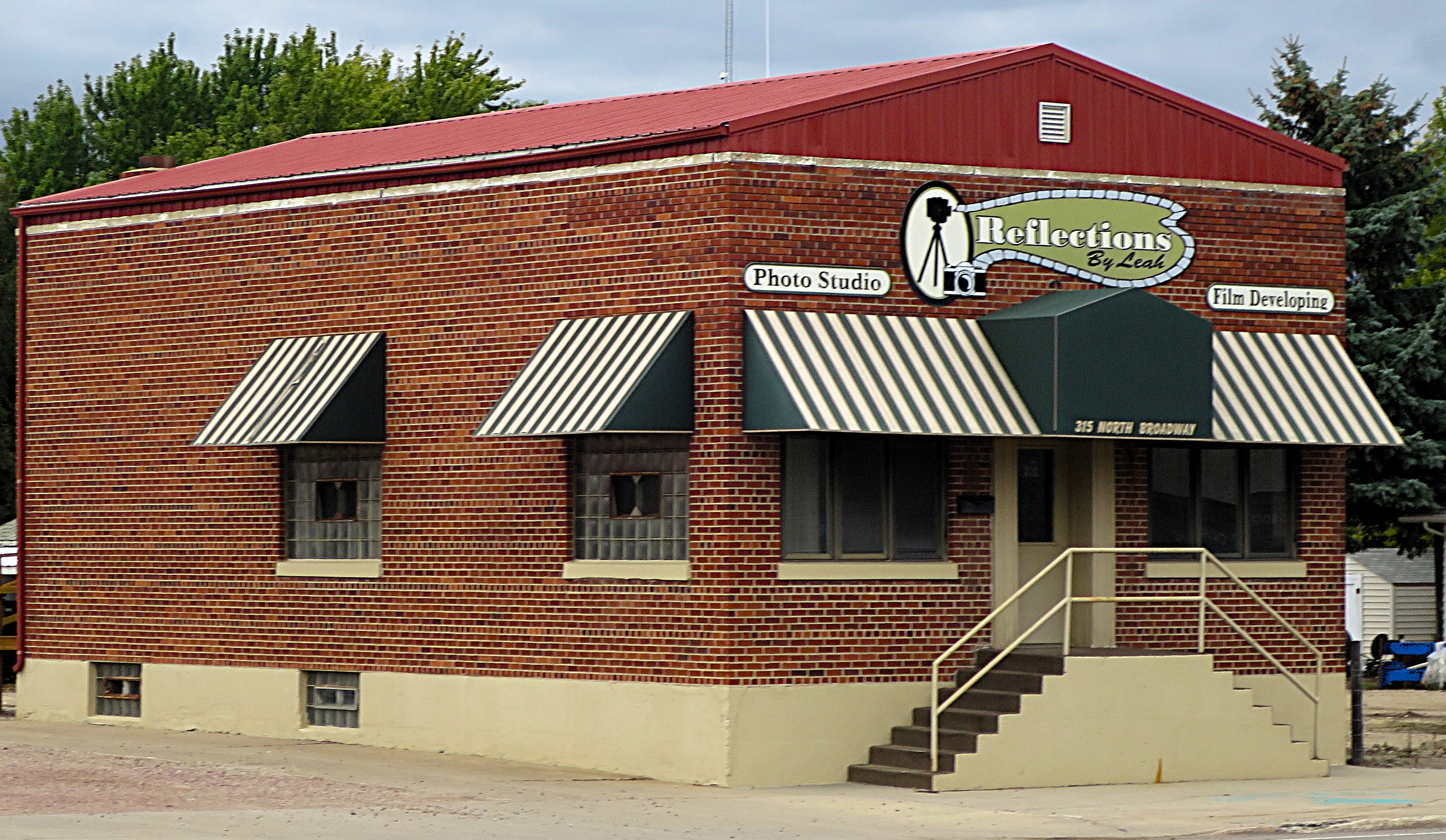
It’s nice to see a small town have a photography studio; here memories are created and saved for generations.

Reflections by Leah. Miller, South Dakota.

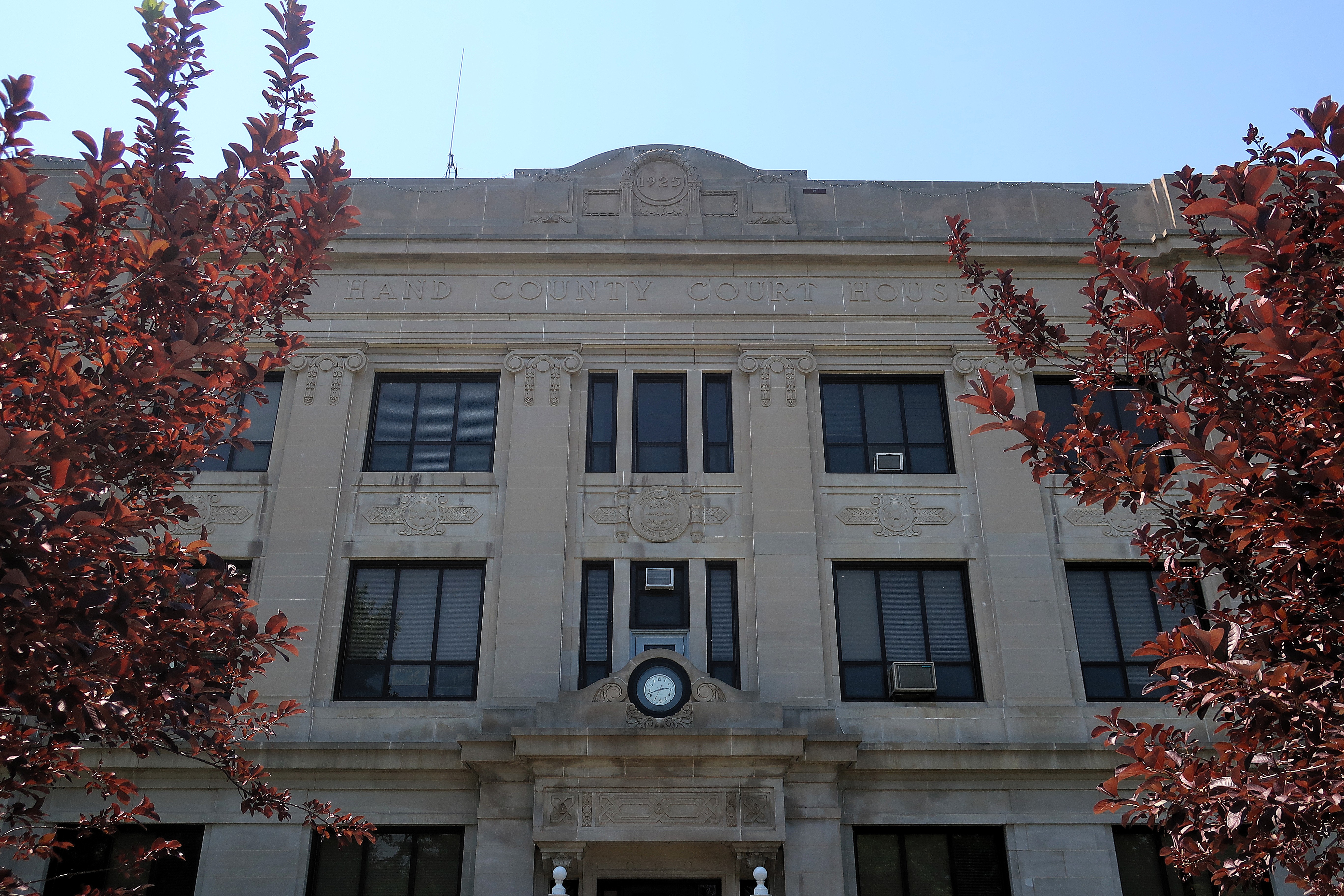
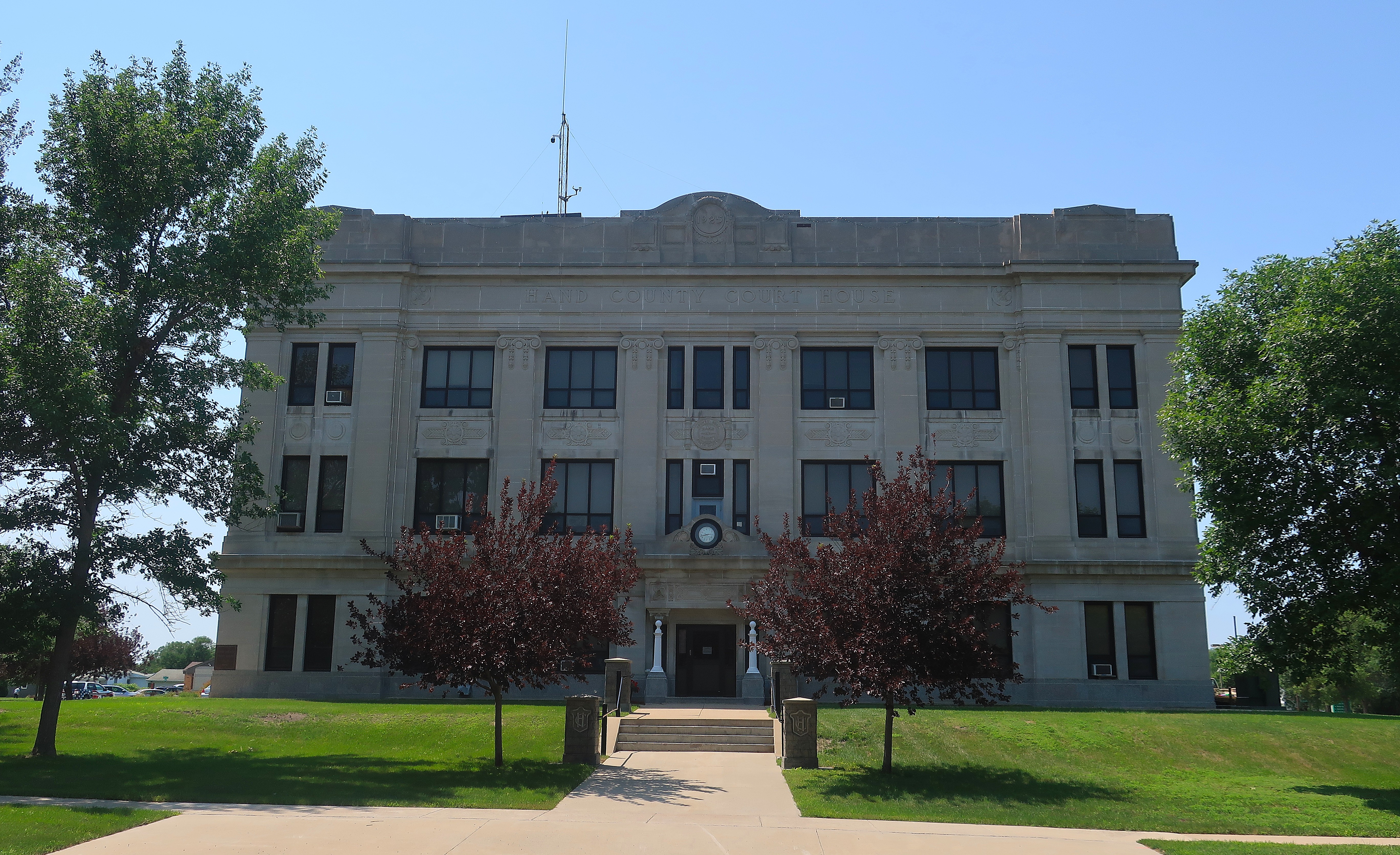
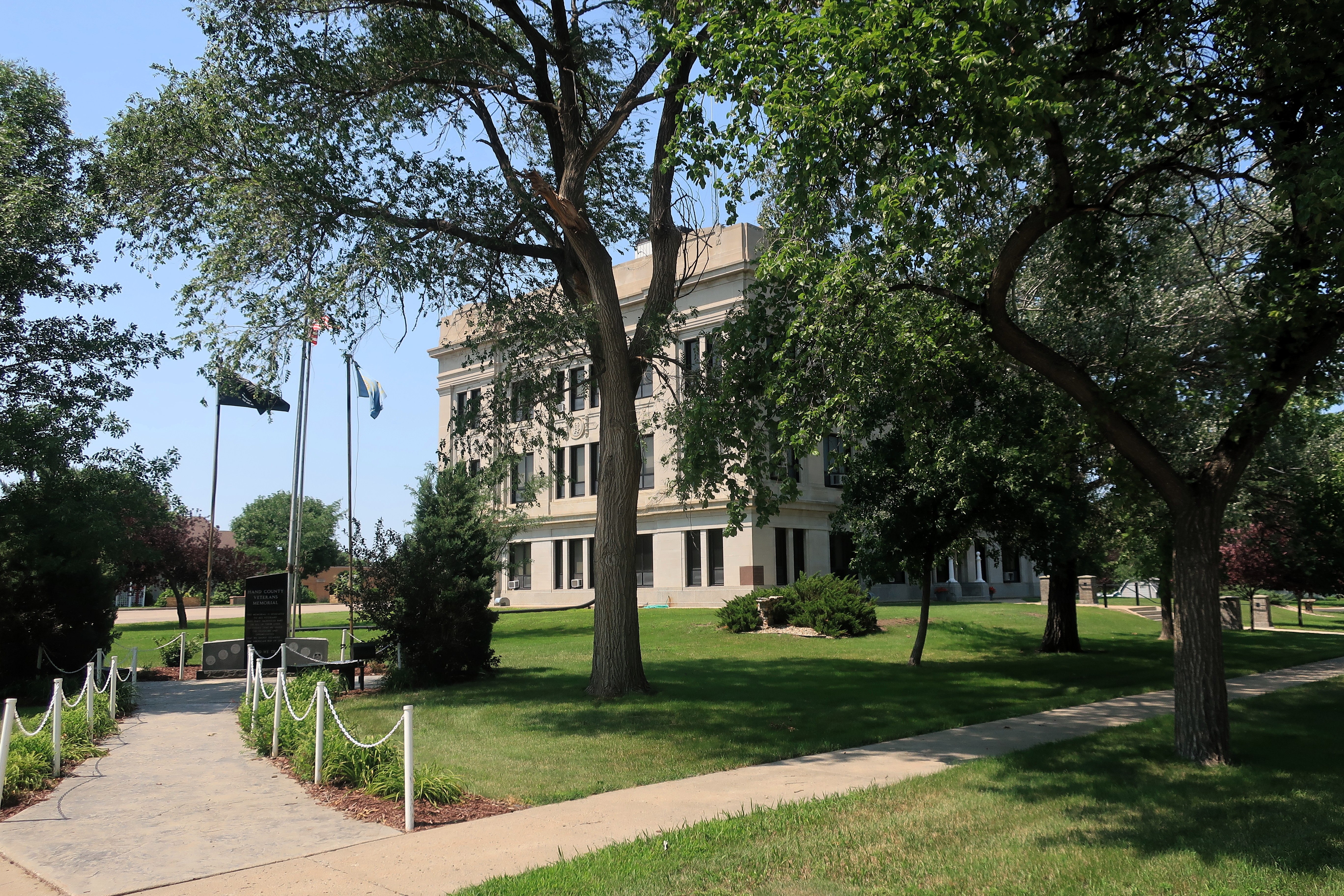
Hand County was created in 1873 by the Dakota territorial legislature (before “Dakotah” became states and were split into North and South) and named for George A. Hand, territorial secretary. The Hand County Courthouse, built in 1925, is the most prominent building in the town, and in the county too. The building is an prime example of neo-classical architectural style prevalent in the decade of the 1920s.

Hand County Courthouse, Miller, South Dakota
Hand County Veterans Memorial (every good courthouse has a veterans memorial).

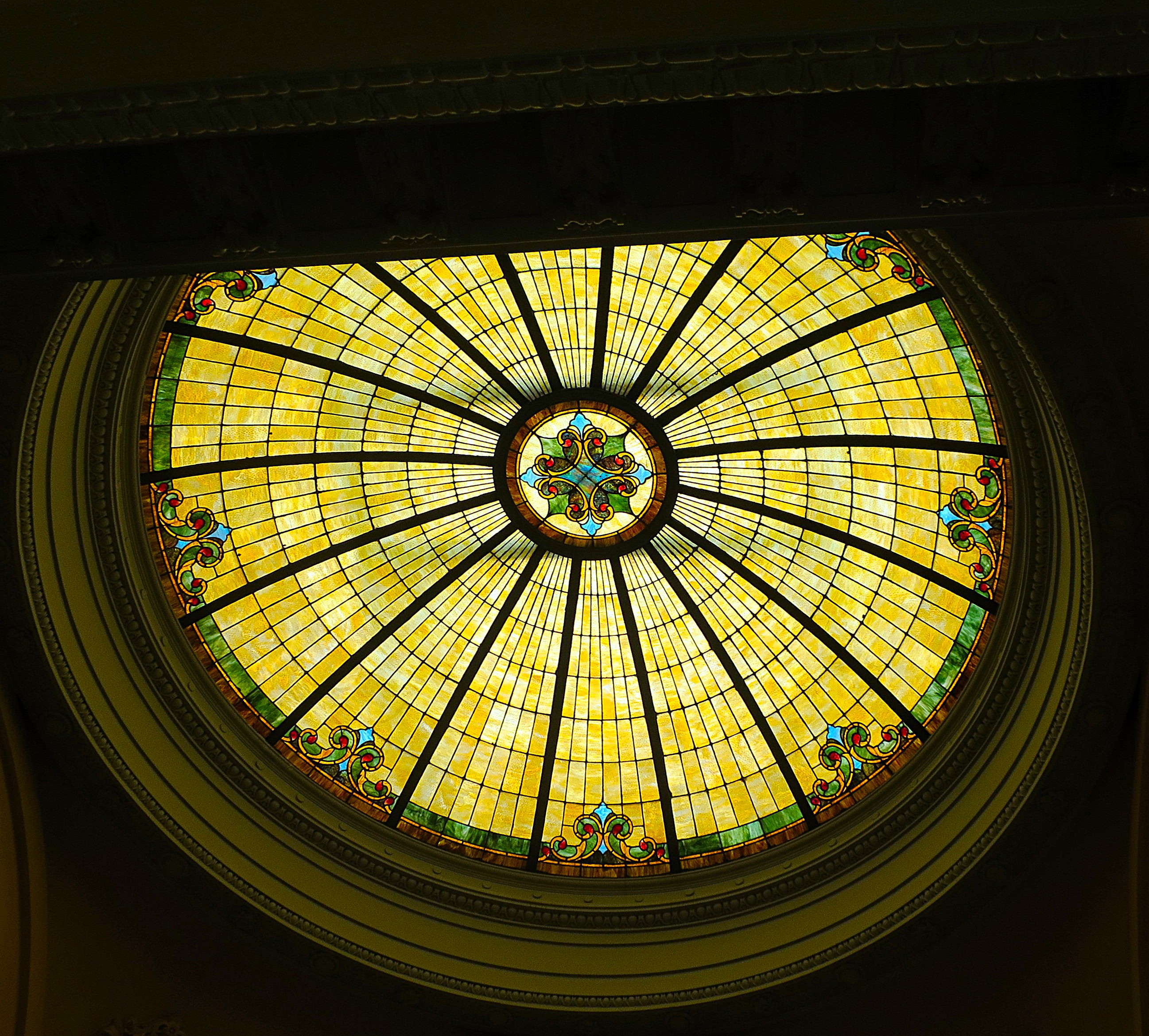
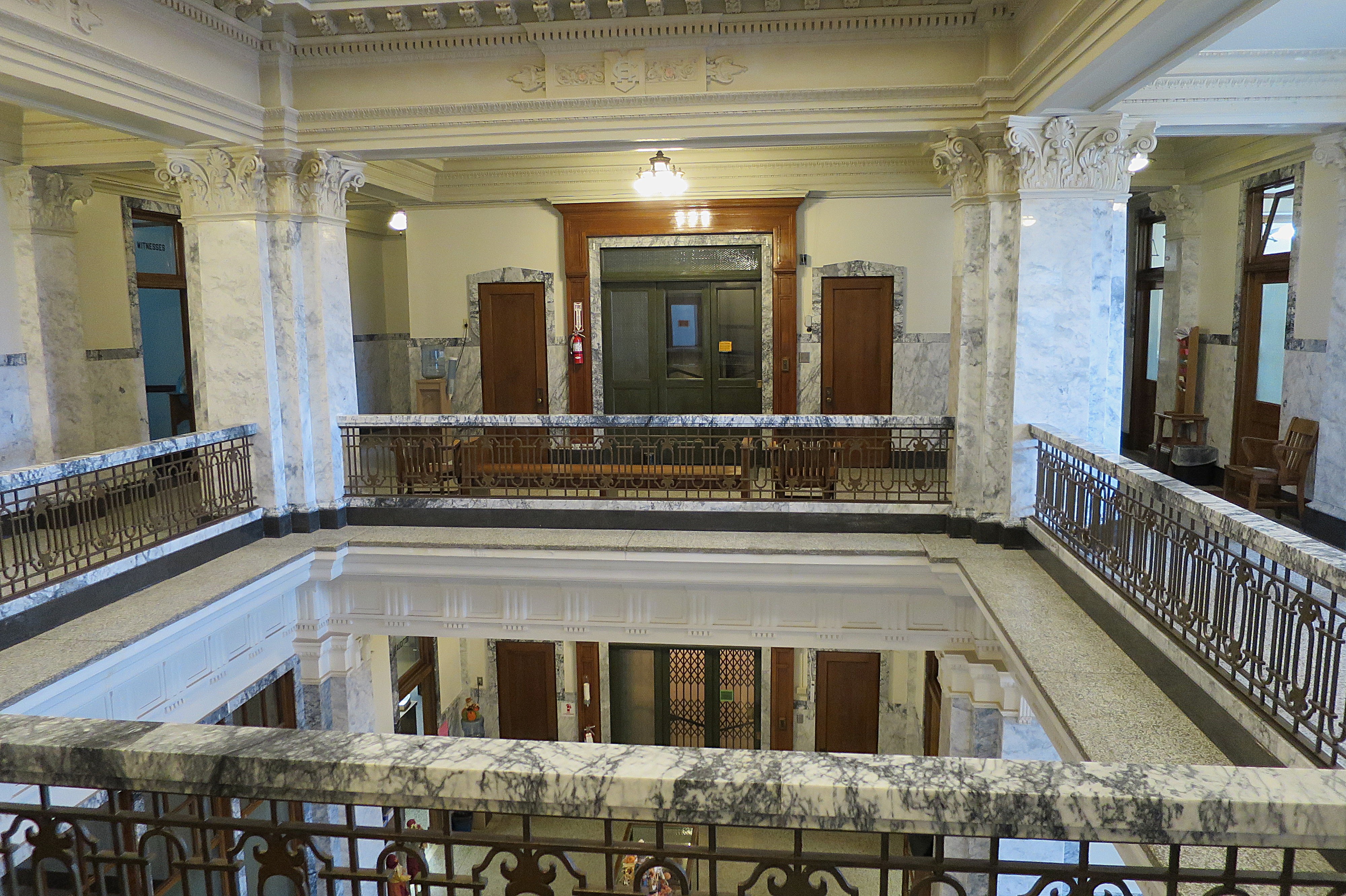
Carved marble walls and stairways fill the courthouse’s interior. The stained-glass ceiling and the old-fashioned elevator are both time pieces of neo-classical design of the 1920s. Whenever I see the prolific use of marble in courthouses (and I’ve seen it often in 1920s courthouses), I’m awestruck at how expensive and investment it must have been. It’s all beautiful and magnificent, but sadly such decor is a relic of a bygone era — it would be of the question to build in such a manner today.

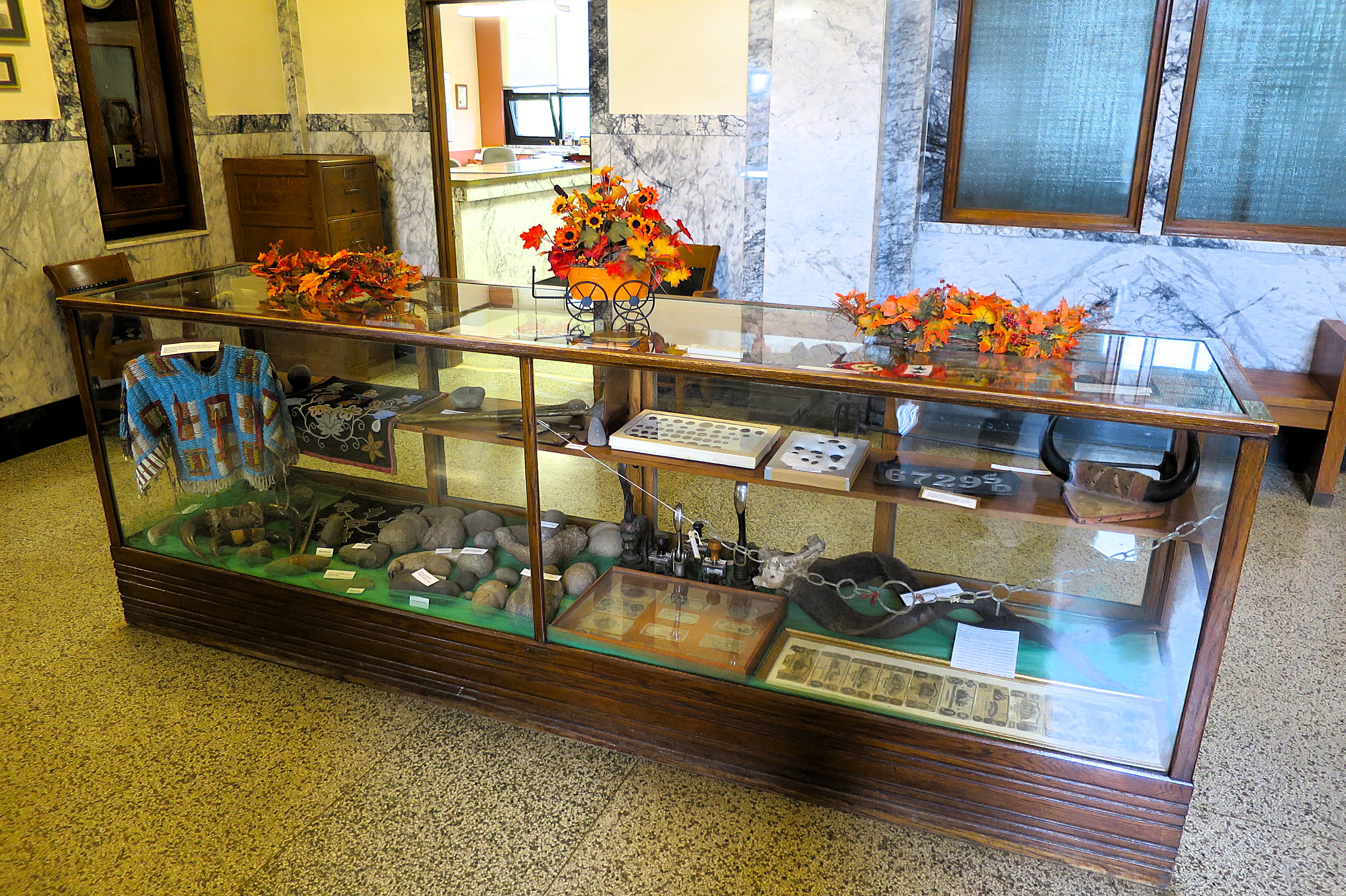
Every good courthouse is a local history lesson. Hand County’s is no slouch in that regard:

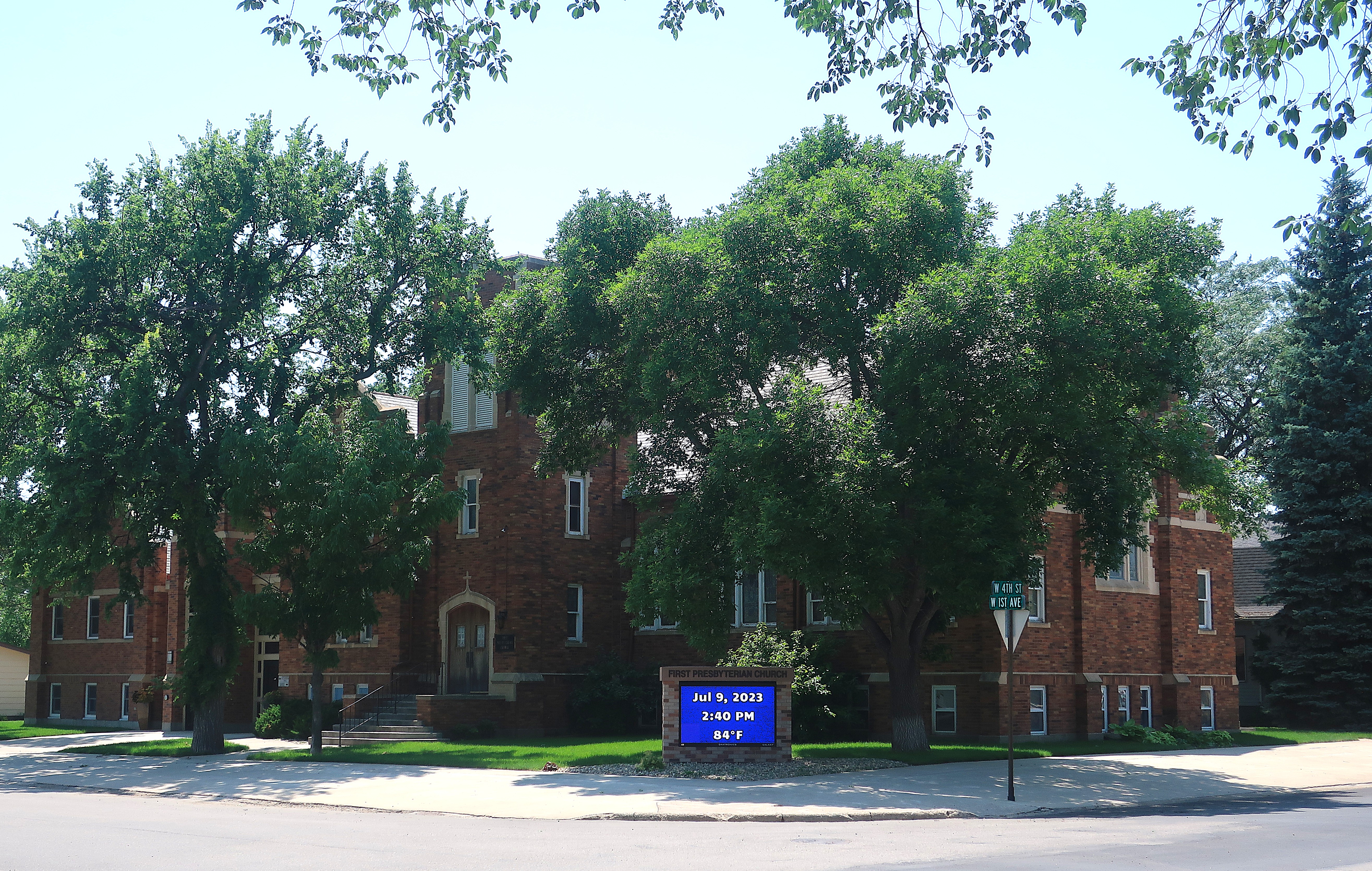
Can’t forget the small-town churches:

First Presbyterian Church. Miller, South Dakota.

Let’s say goodbye to Miller with an homage to neon signs:

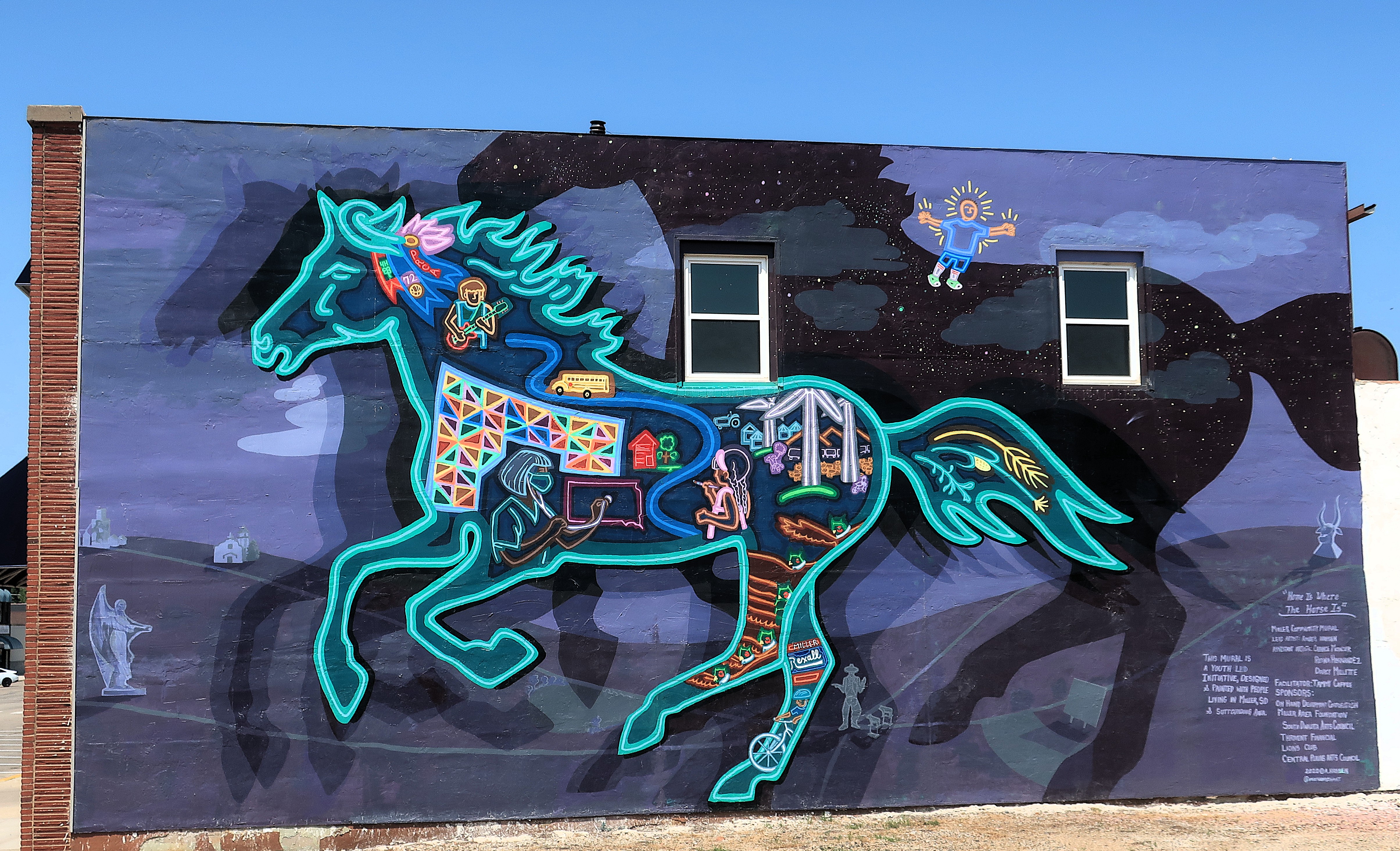
A striking mural I found in Miller, South Dakota.
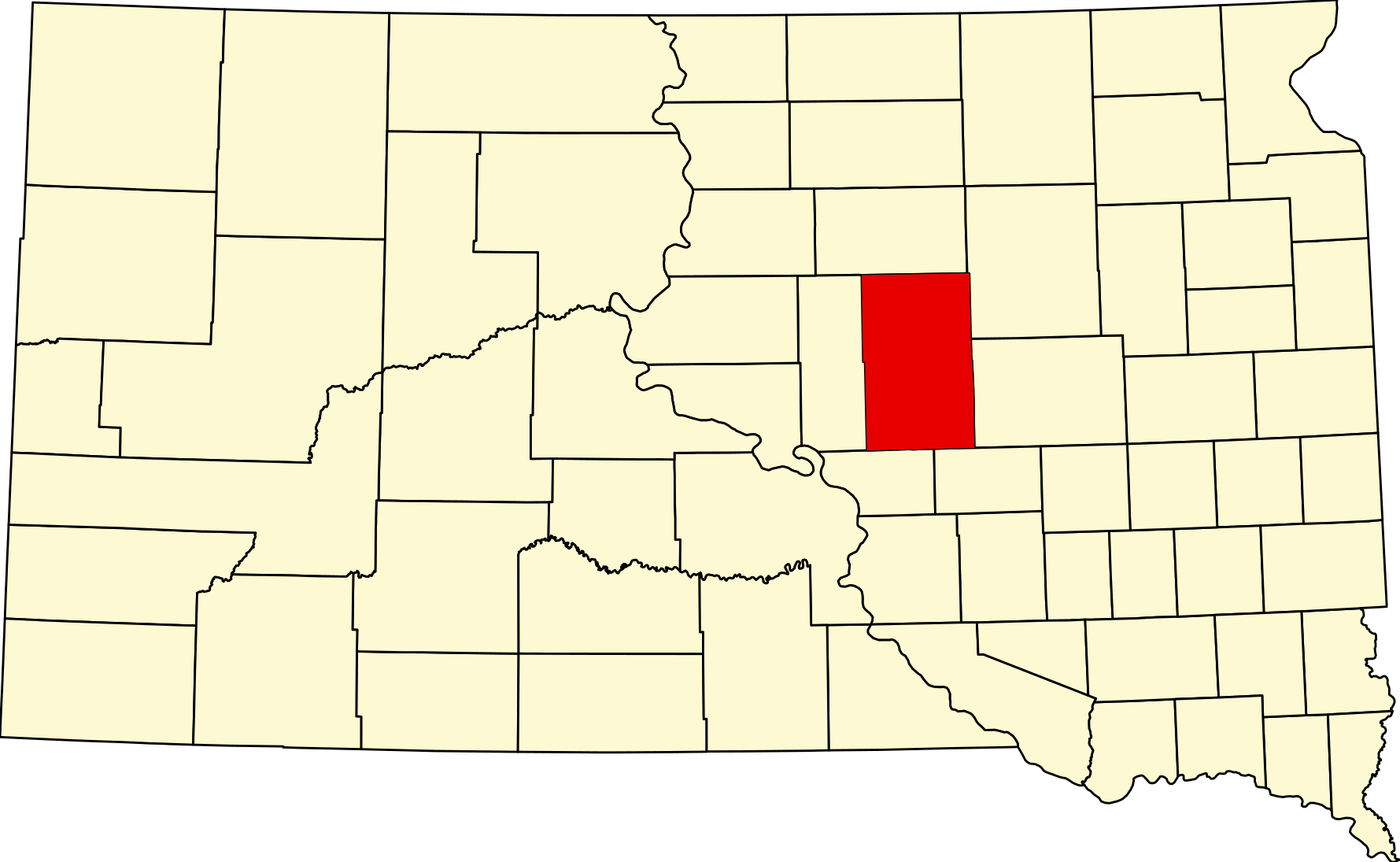
Hand County within the state of South Dakota

Click here for a list of all TimManBlog American County Seats Series posts.
The photos in this post were taken on July 9, 2023, and are copyrighted by Tim Seibel.

Donations to TimManBlog

I post about a visit to one of America’s 3,150 county seats each month. Donations are greatly appreciated to help defray my travel costs.

$1.00

Check out the FREEDOM VOYAGES book series! These books document my road trips across the United States and include hundreds of stunning photographs. Each of the four books in the series is available on Amazon and Barnes & Noble. This includes my most recent release, FREEDOM VOYAGES Volume 4: Christmastime in Texas!

FREEDOM VOYAGES Volume 4: Christmastime in Texas. Available at Amazon.com and Barnes & Noble.

Earlier volumes in the FREEDOM VOYAGES series are also available:
Vol. 1: North-Central North Dakota
Vol. 2: Go West! From the Loneliest Road in America to California’s Gold Country
Vol. 3: A Proud, Dignified People in Lincoln’s Illinois

All FREEDOM VOYAGES books are on sale at Amazon.com and Barnes & Noble.
The “Popcorn Man” of Sterling, Colorado

Please consider donating to support my travels using the form at the bottom of the post. PayPal, Visa, American Express, Mastercard, Discover, and Maestro are accepted. Thank you.

June 29, 2025

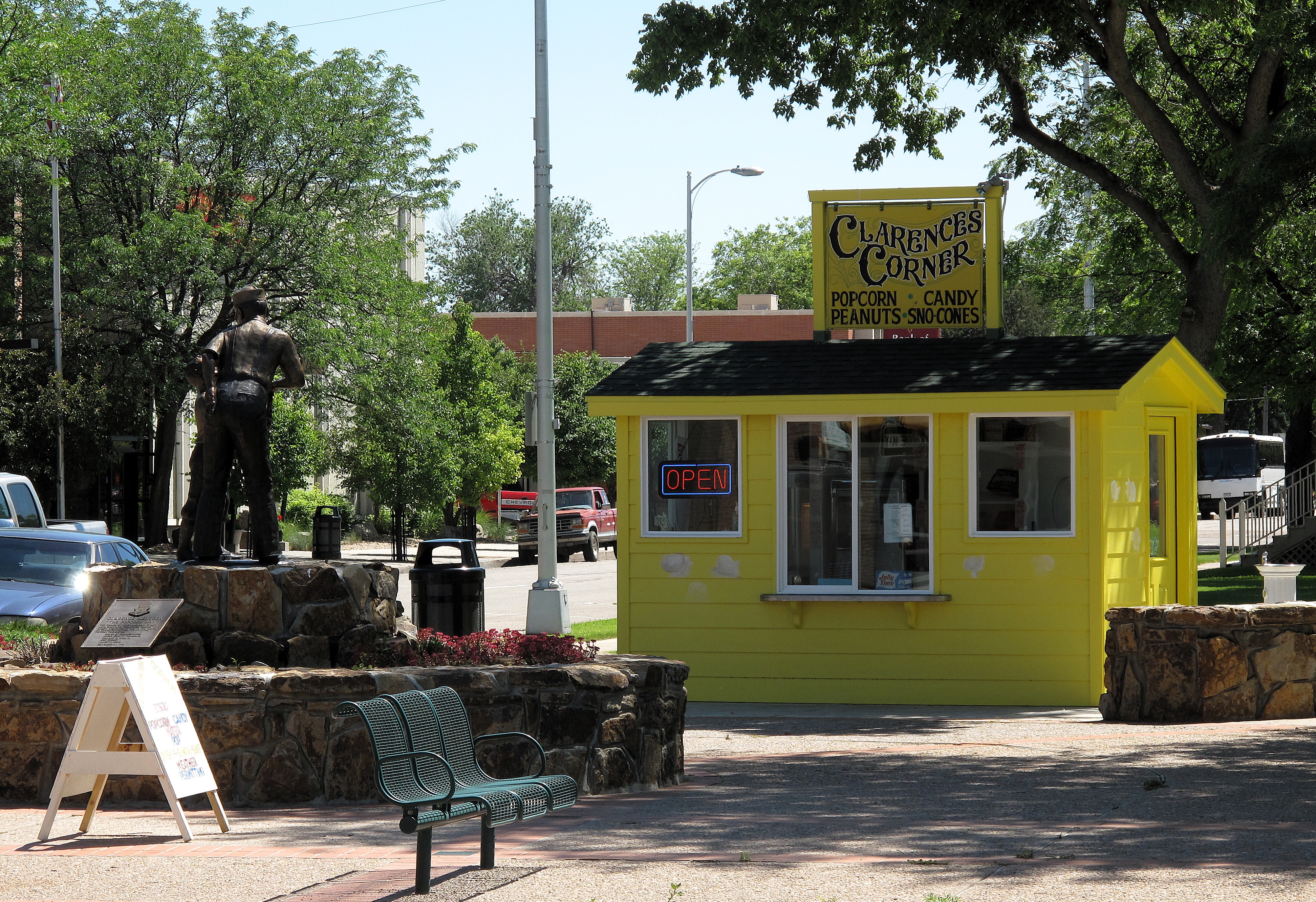
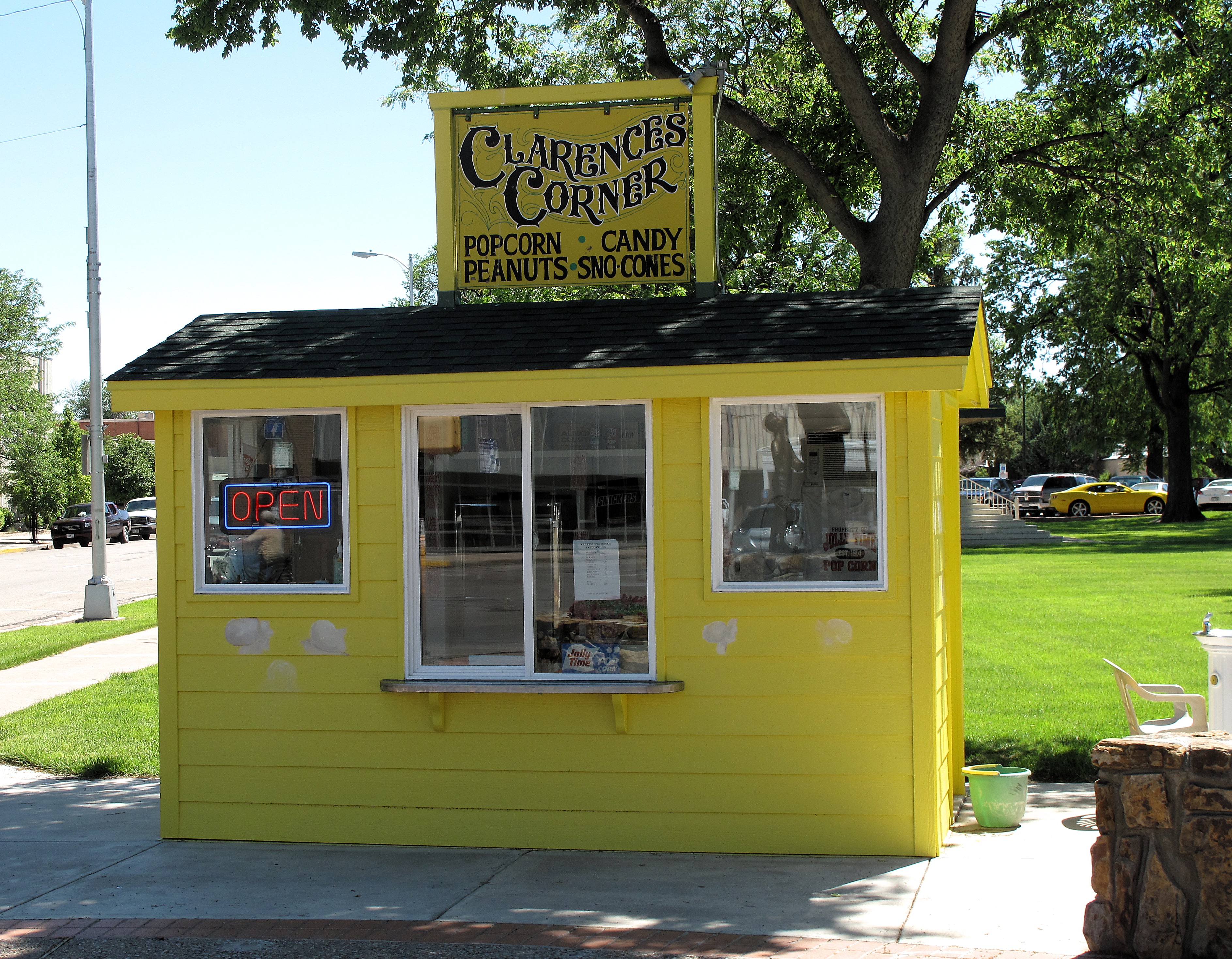
Clarence Mentgen’s popcorn stand at the northeast corner of courthouse square.

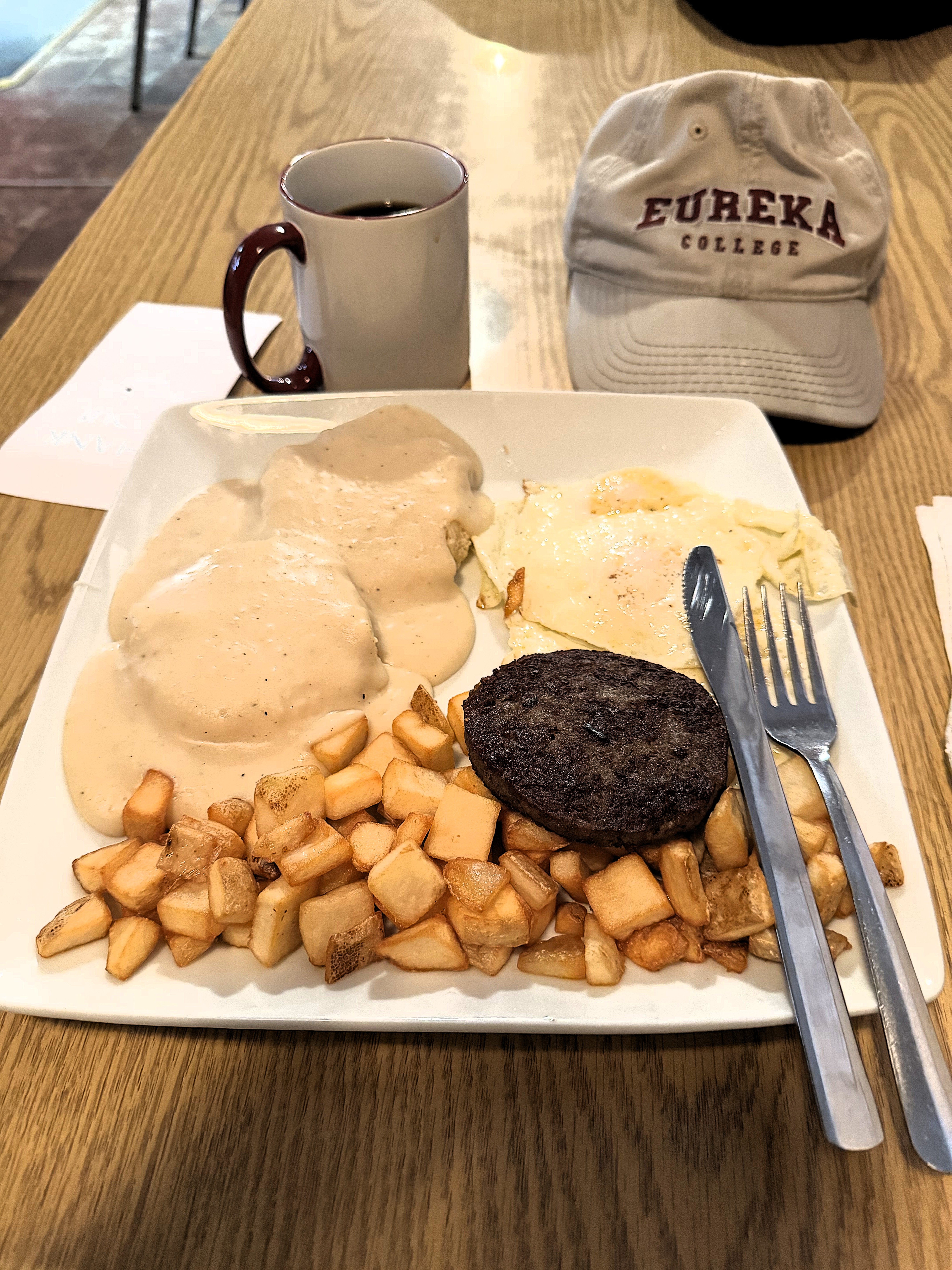
Clarence Mentgen, a man who had suffered from left-side paralysis since his youth, made his living selling popcorn and snacks on a street corner in front of the Logan County Courthouse in Sterling, Colorado. Working tirelessly six days a week for nearly four decades, Clarence’s efforts, combined with his cheery demeanor, made him a beloved local figure. He was Sterling’s “Popcorn Man,” and his place of business became “Clarence’s Corner.

Sterling, Colorado, with a population of 13,000, is a vibrant agricultural and market town located in the high plains of northeastern Colorado, approximately 125 miles northeast of Denver. Mentgen sold popcorn and snacks in this little town from the 1930s until 1977, when the Colorado State Health Department shut him down for lacking running water and a sewer tap. It must have been a sad day.

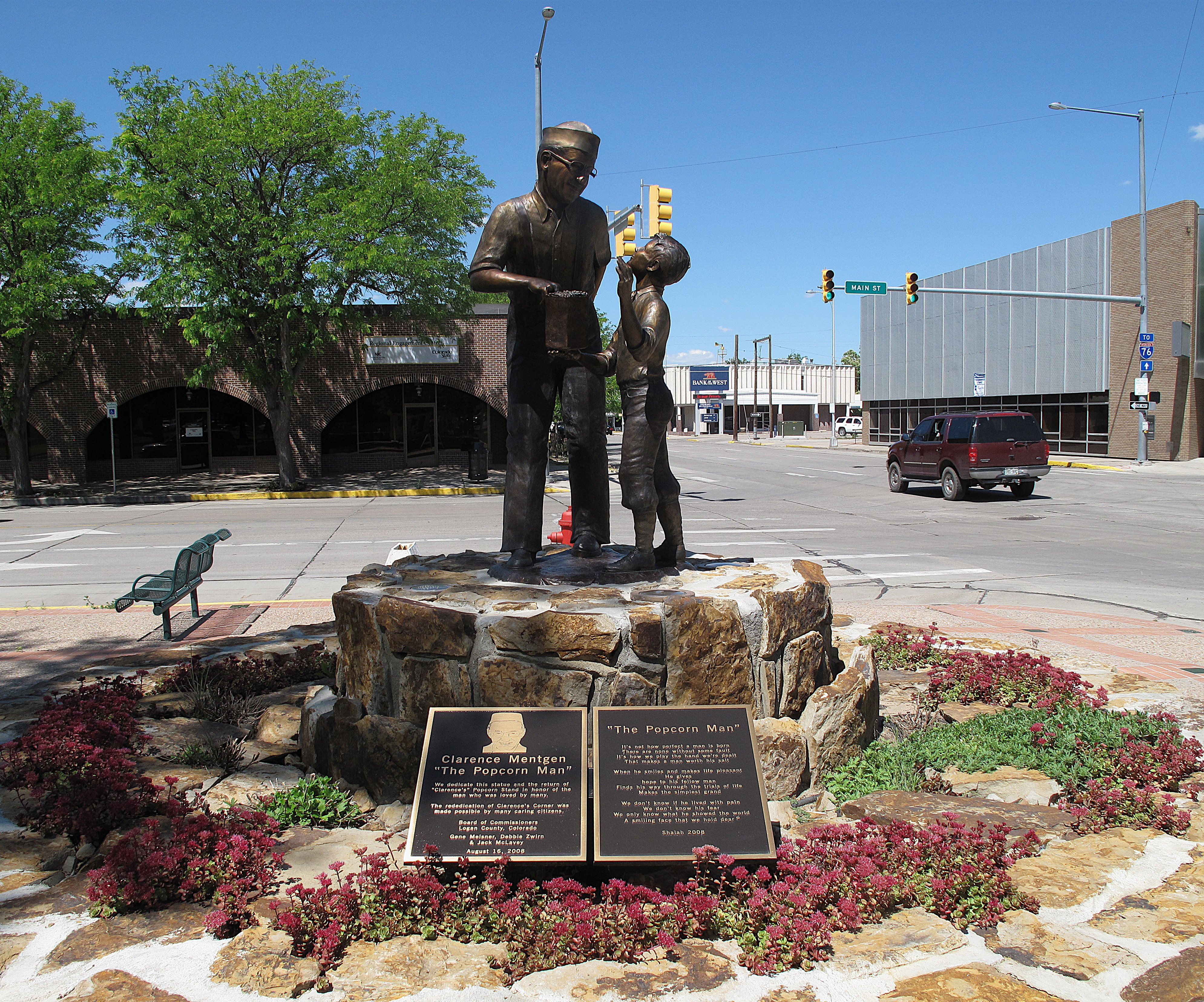
Clarence Mentgen is remembered: this statue of “The Popcorn Man” was dedicated in 2008.

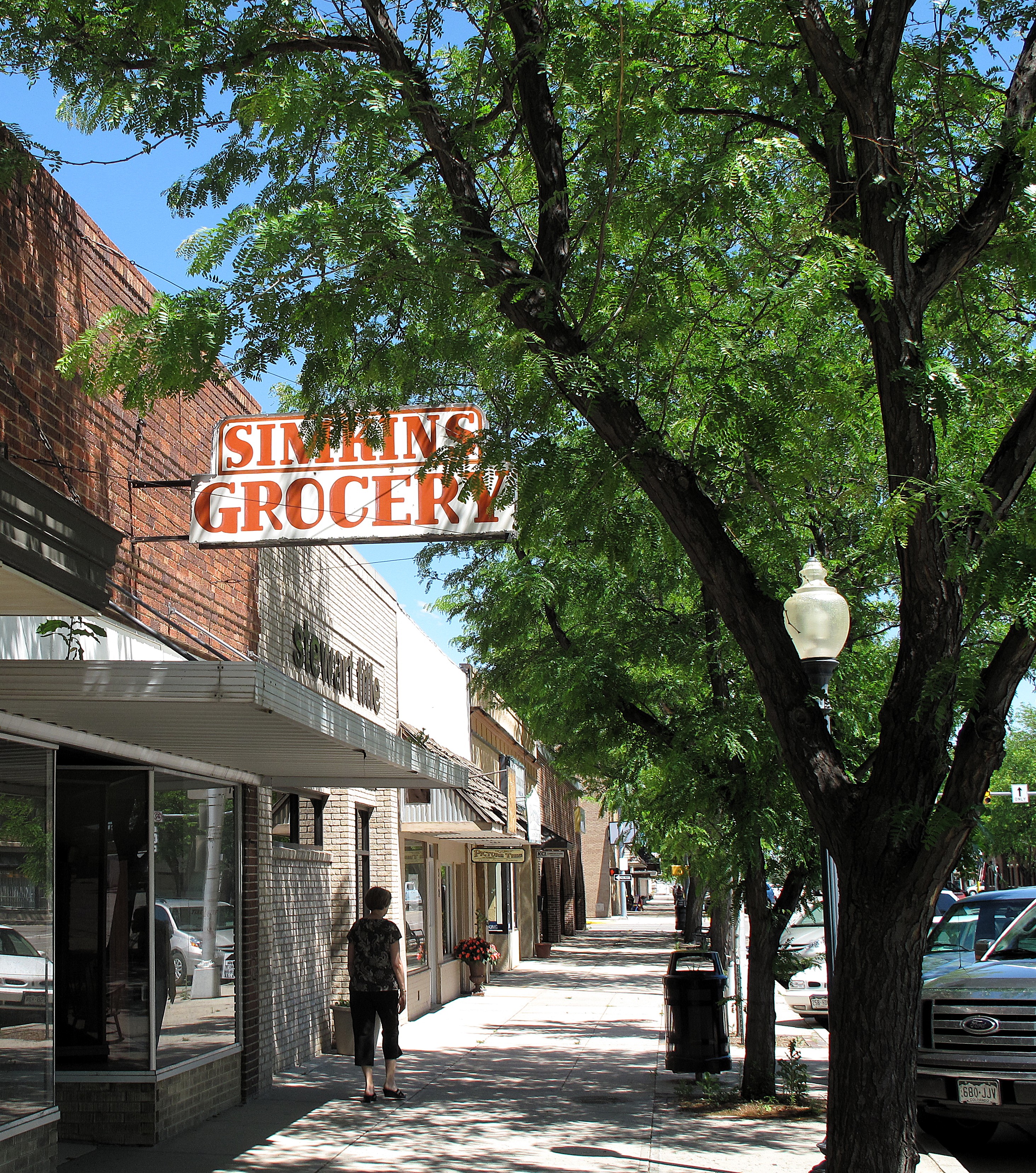
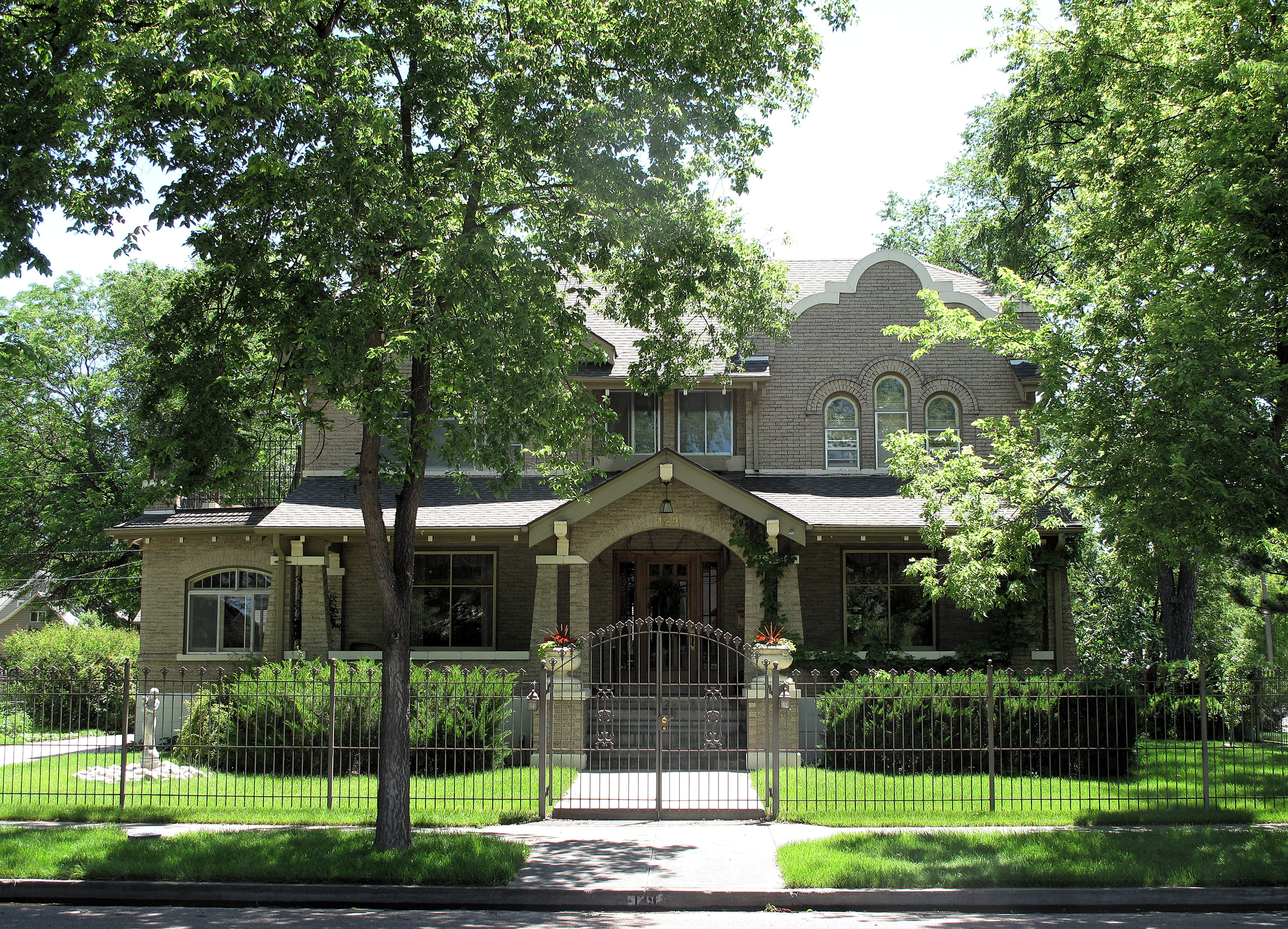
The Popcorn Man exemplifies the hardy work ethic of this small town, which is shaped by the rigors of the Colorado high plains. Life is tough in this rough land. Sterling’s many shade trees aren’t native to the area; irrigation waters from the South Platte River sustain them, and they wouldn’t survive on the open plains outside of town.

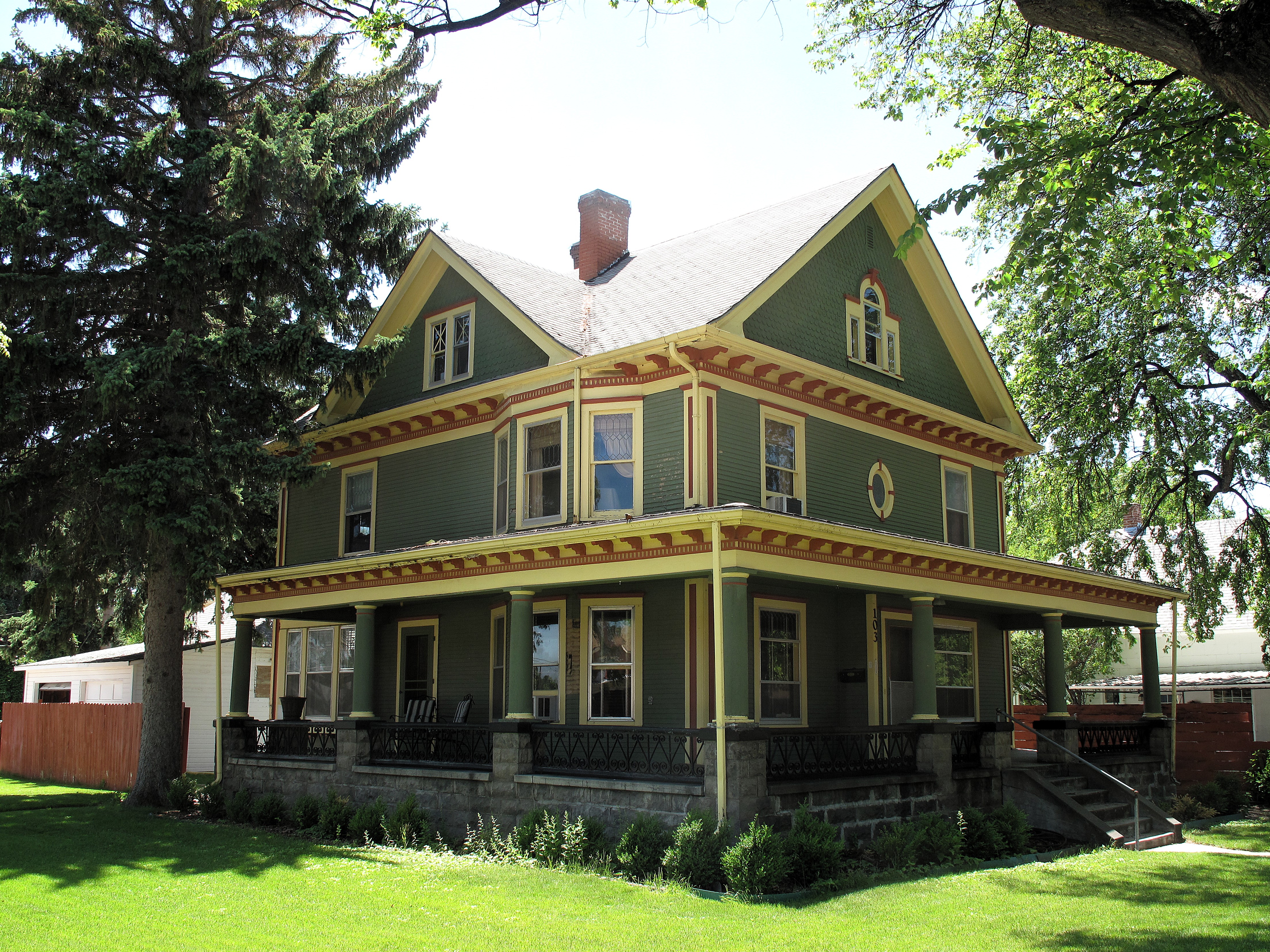
Sterling’s residents take pride in their homes, porches, and shady sidewalks, recognizing the achievement of creating an oasis of greenery in Colorado’s high plains.

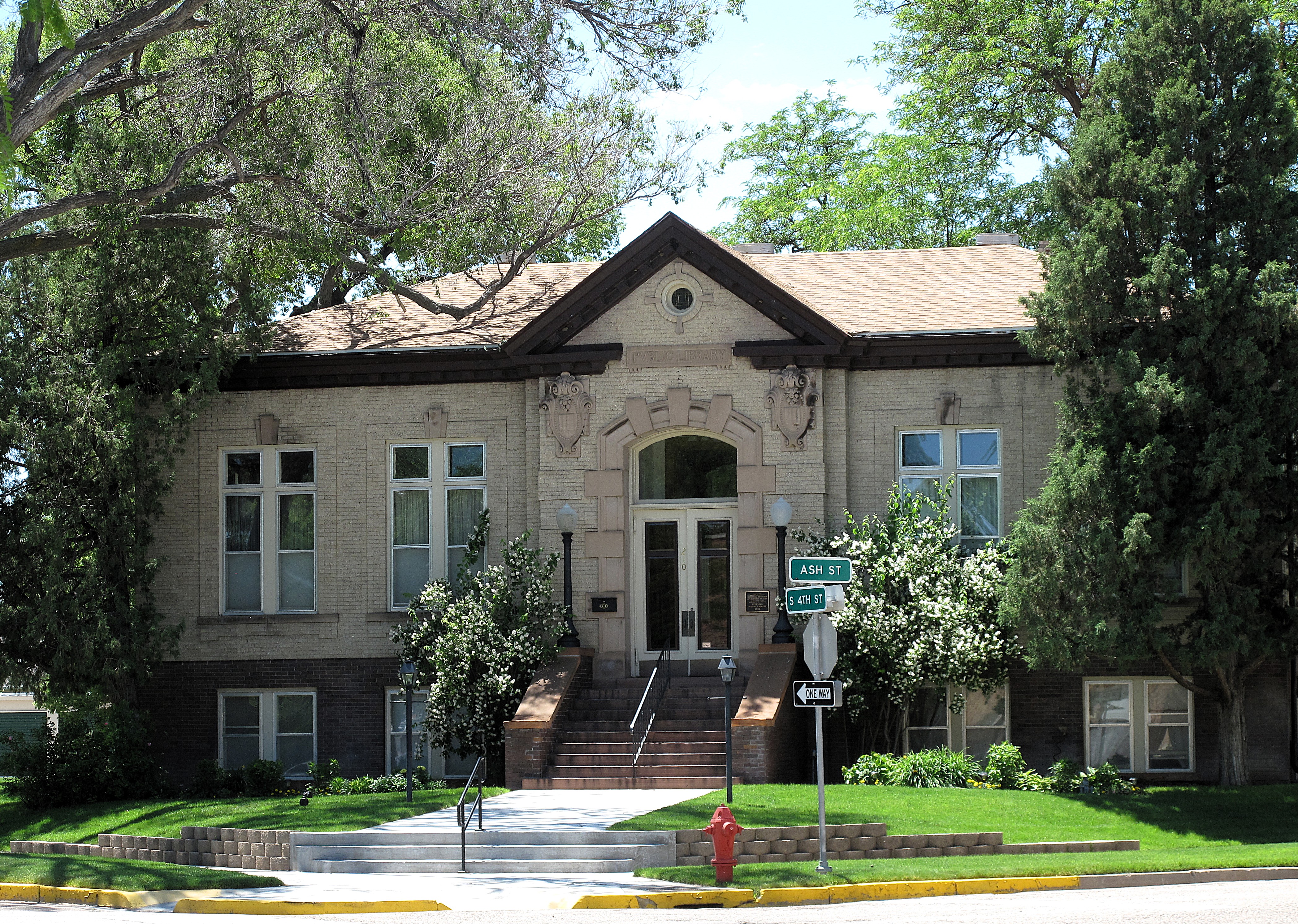
The Sterling Public Library.

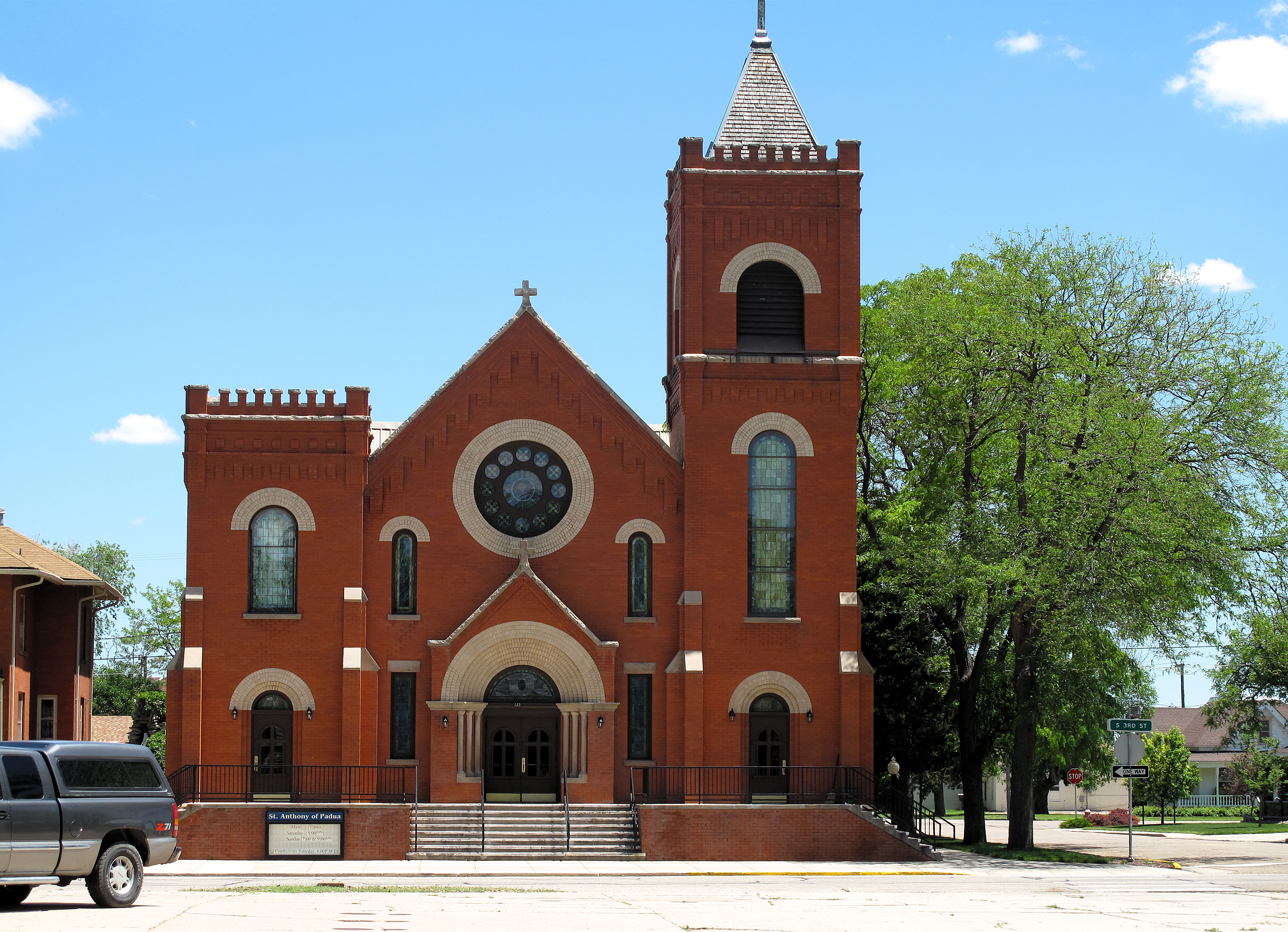
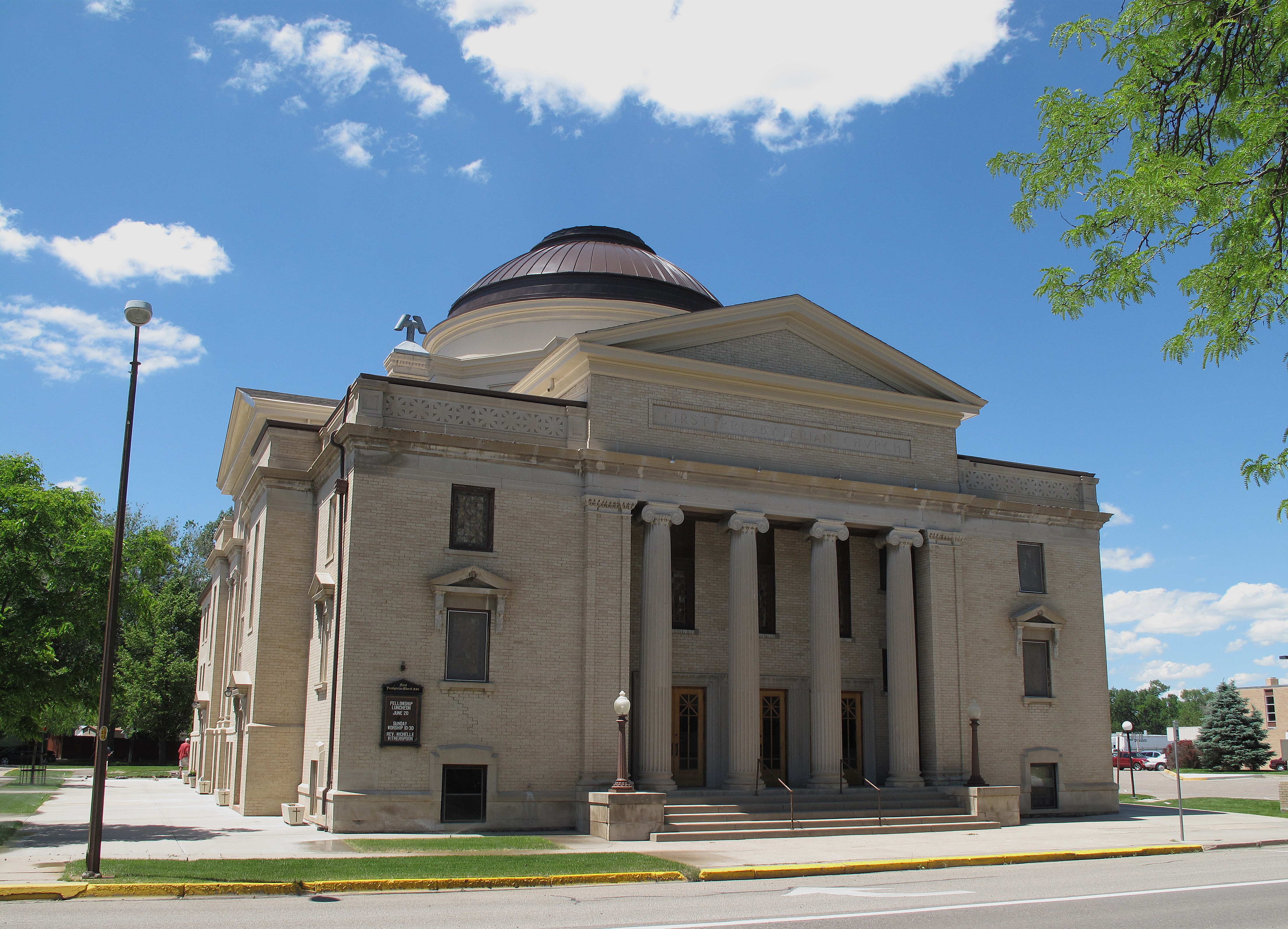
Sterling’s churches also provide that feeling of a special hometown, since they are large and clustered near the courthouse square, giving those blocks a sense of special gravity.  Although the Catholic Church’s red brick façade is imposing, it’s the Presbyterian Church that is truly grand, occupying almost an entire block and topped by a brown dome worthy of the Roman Pantheon. 

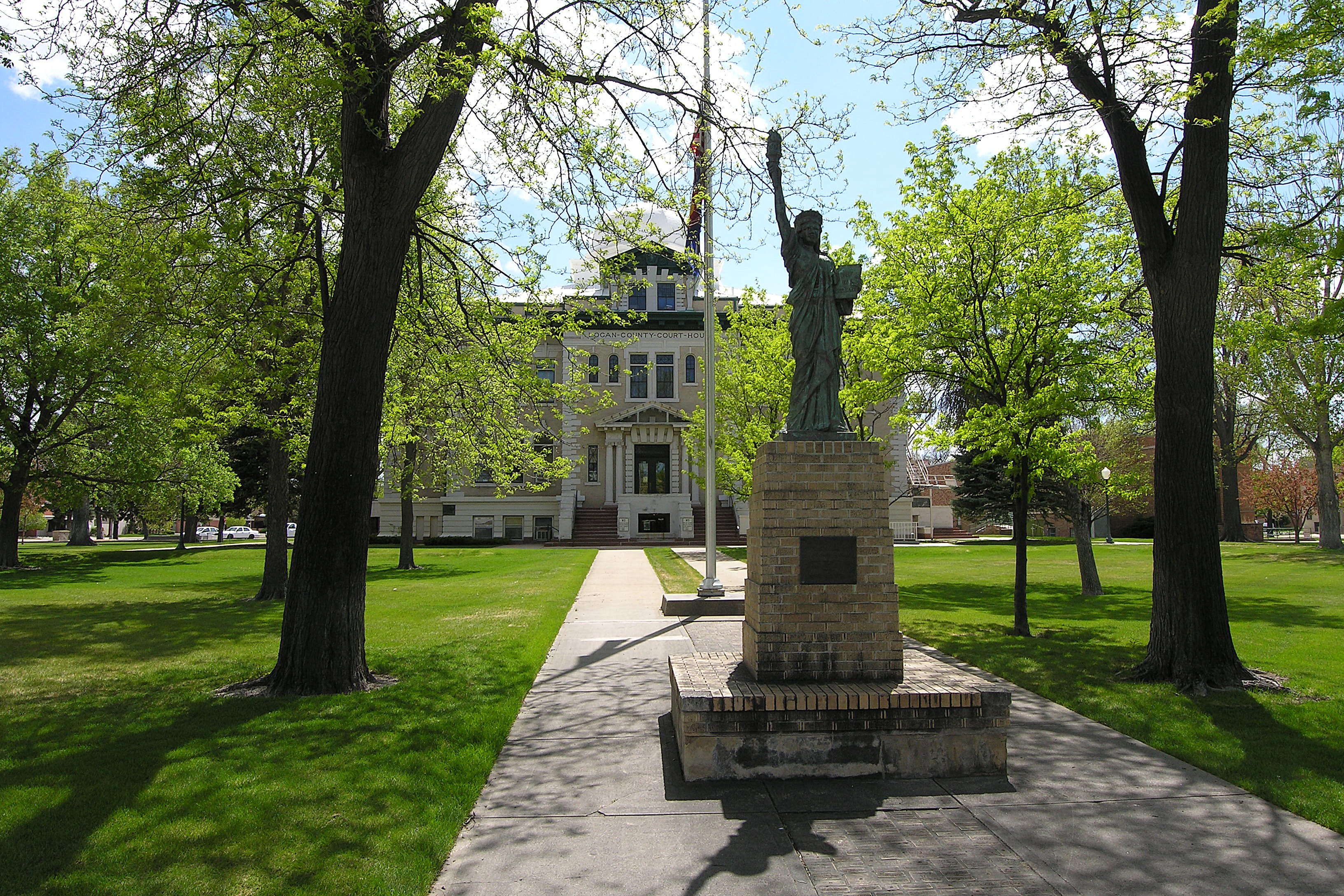
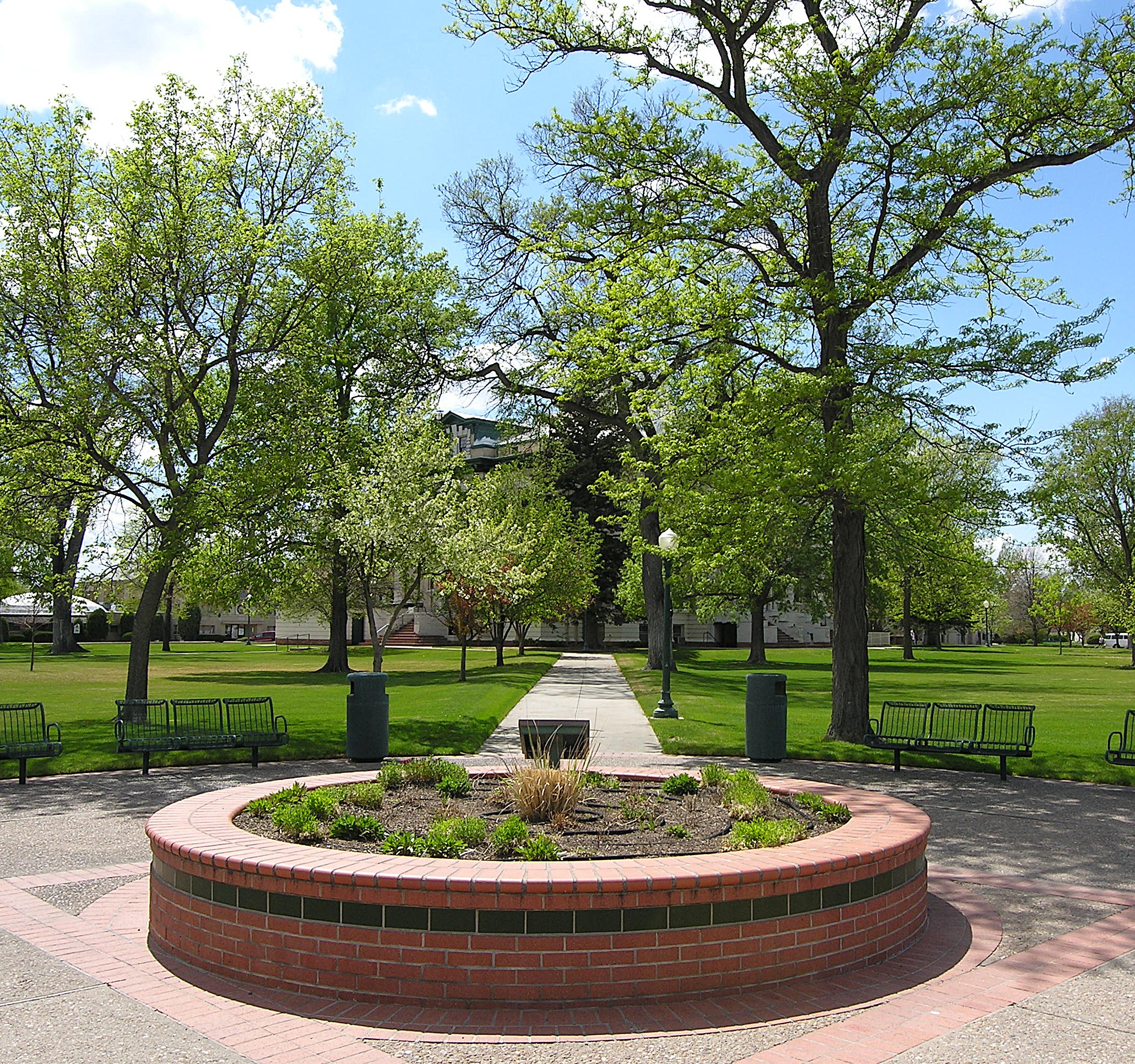
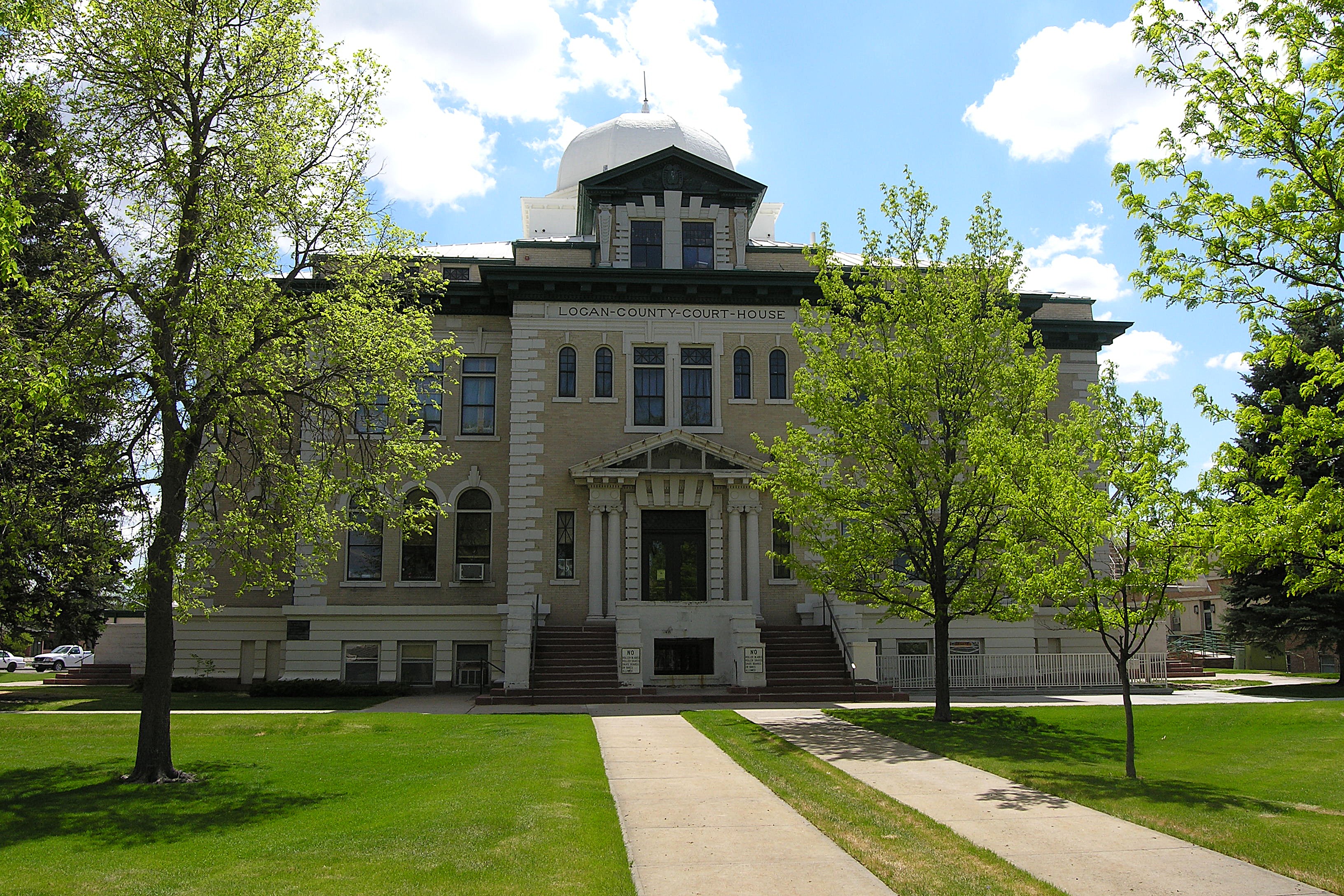
Finally, at the center of town, the Logan County Courthouse is fantastic. It features a large white cupola and pillars constructed of brown stone with white stone trim. There’s an expansive lawn on three sides that’s well-kept and has many shade trees. Inside the courthouse is a real rotunda view and ten oil paintings by a local artist named Carrera. The paintings depict early Colorado life and the state’s historic events, particularly clashes with Native Americans.
The courthouse is listed on the National Register of Historic Places.

Logan County Courthouse in Sterling, Colorado.

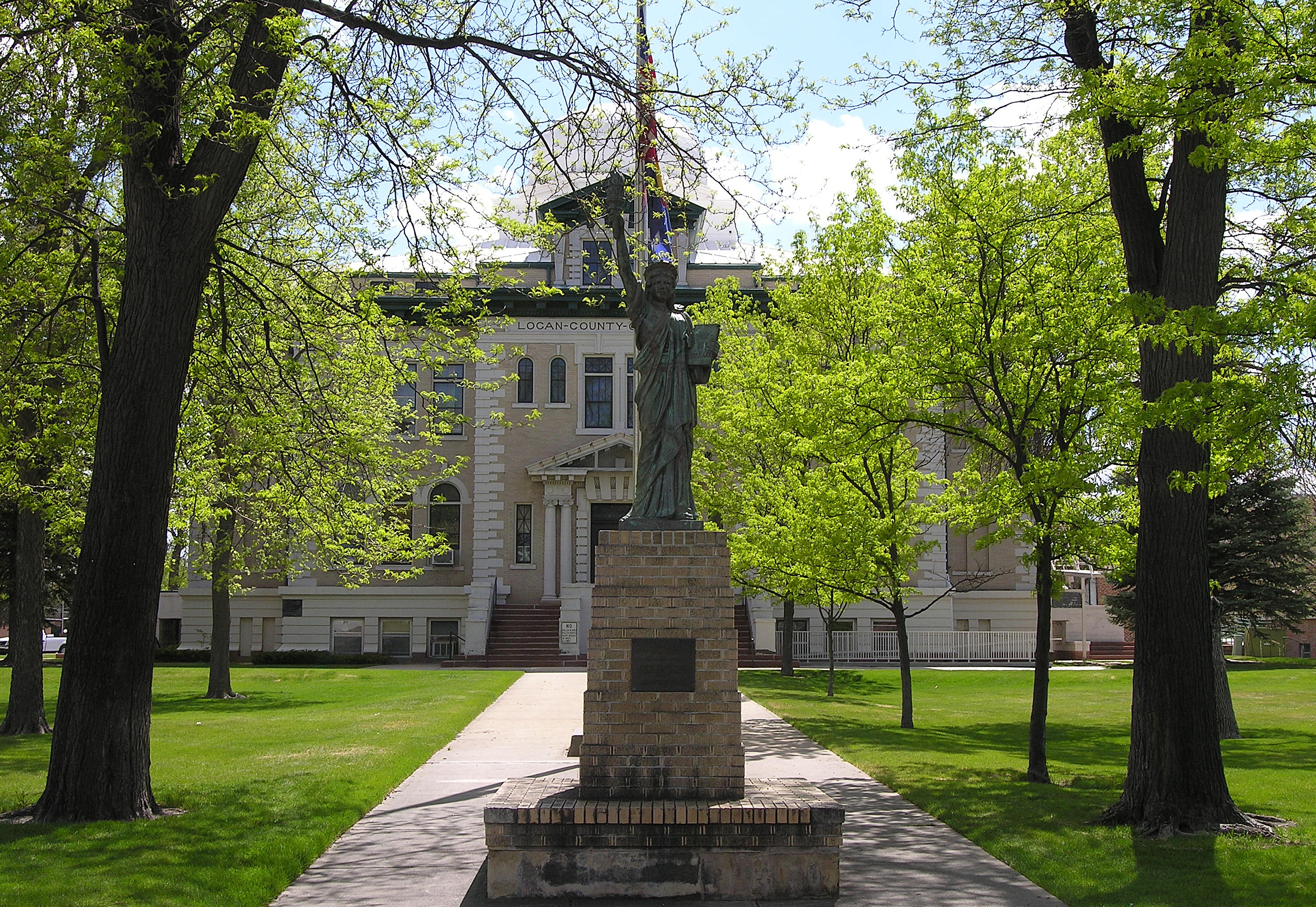
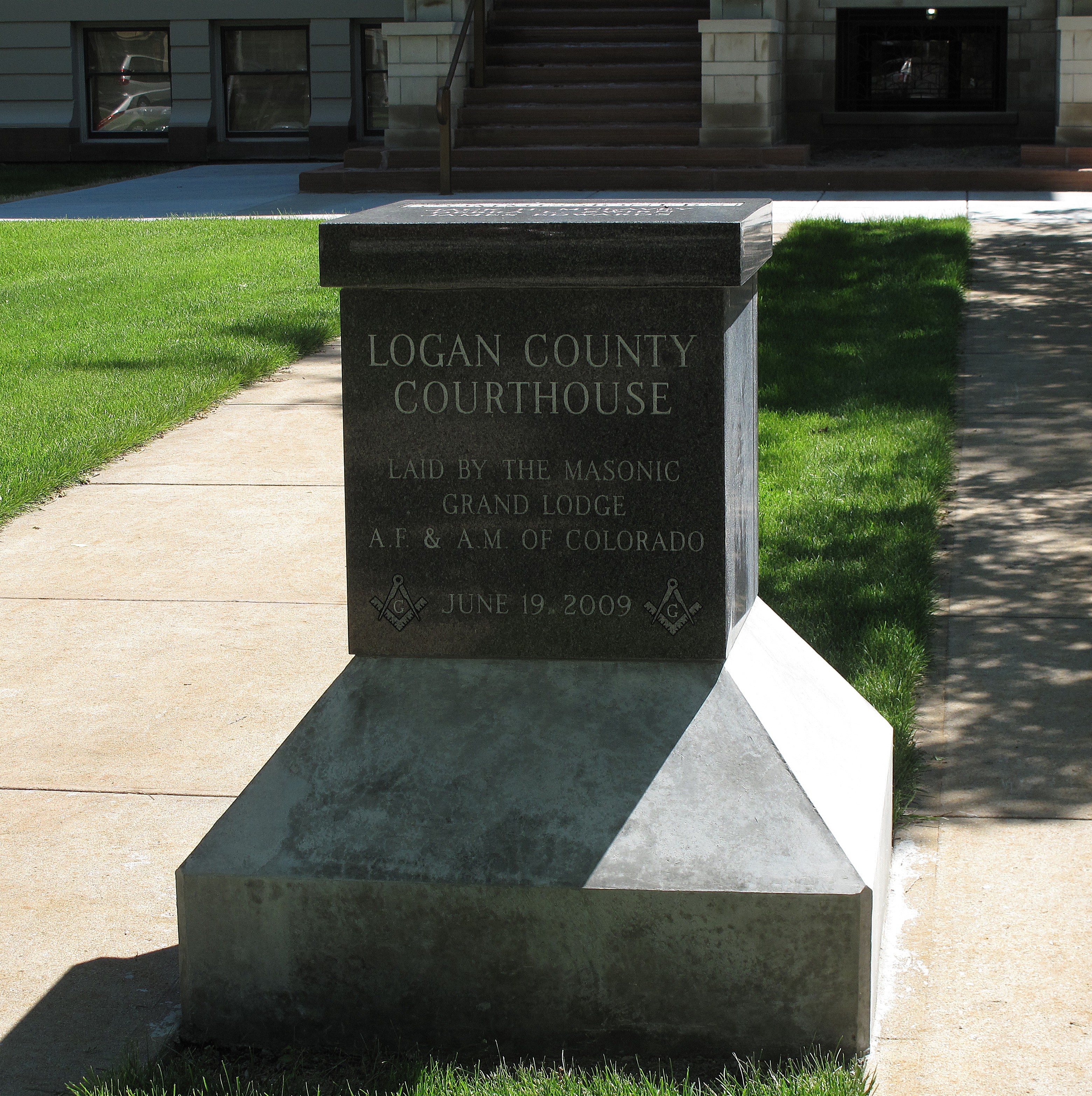
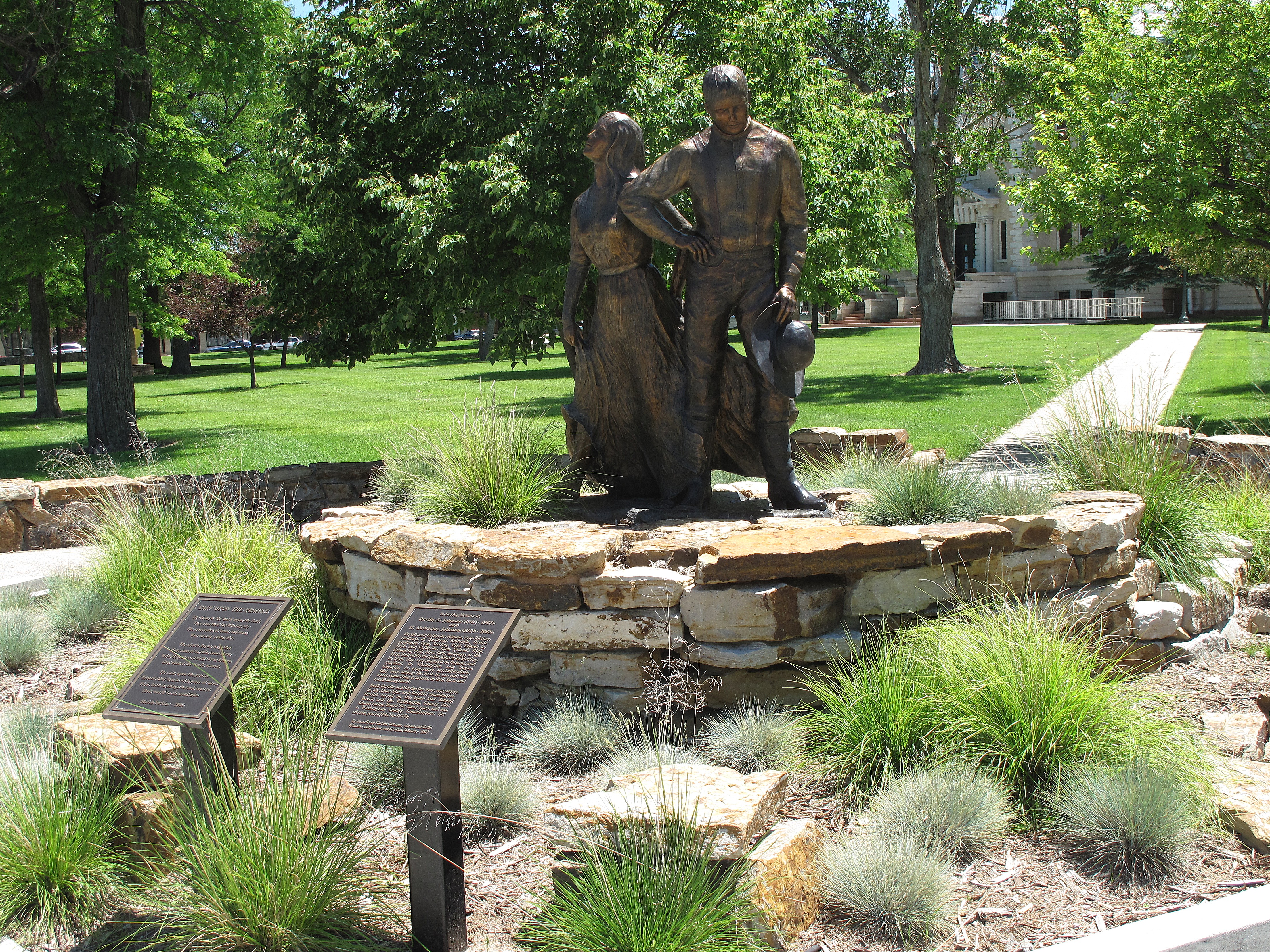
Below: statues and memorials decorate the grounds surrounding the Logan County Courthouse. The sculpture in the bottom right photo is called “Rain on the Prairie” and is dedicated to the farmers of the South Platte River Valley.

“The faults of our brothers we write upon sand…their virtues upon tablets of love and memory.”
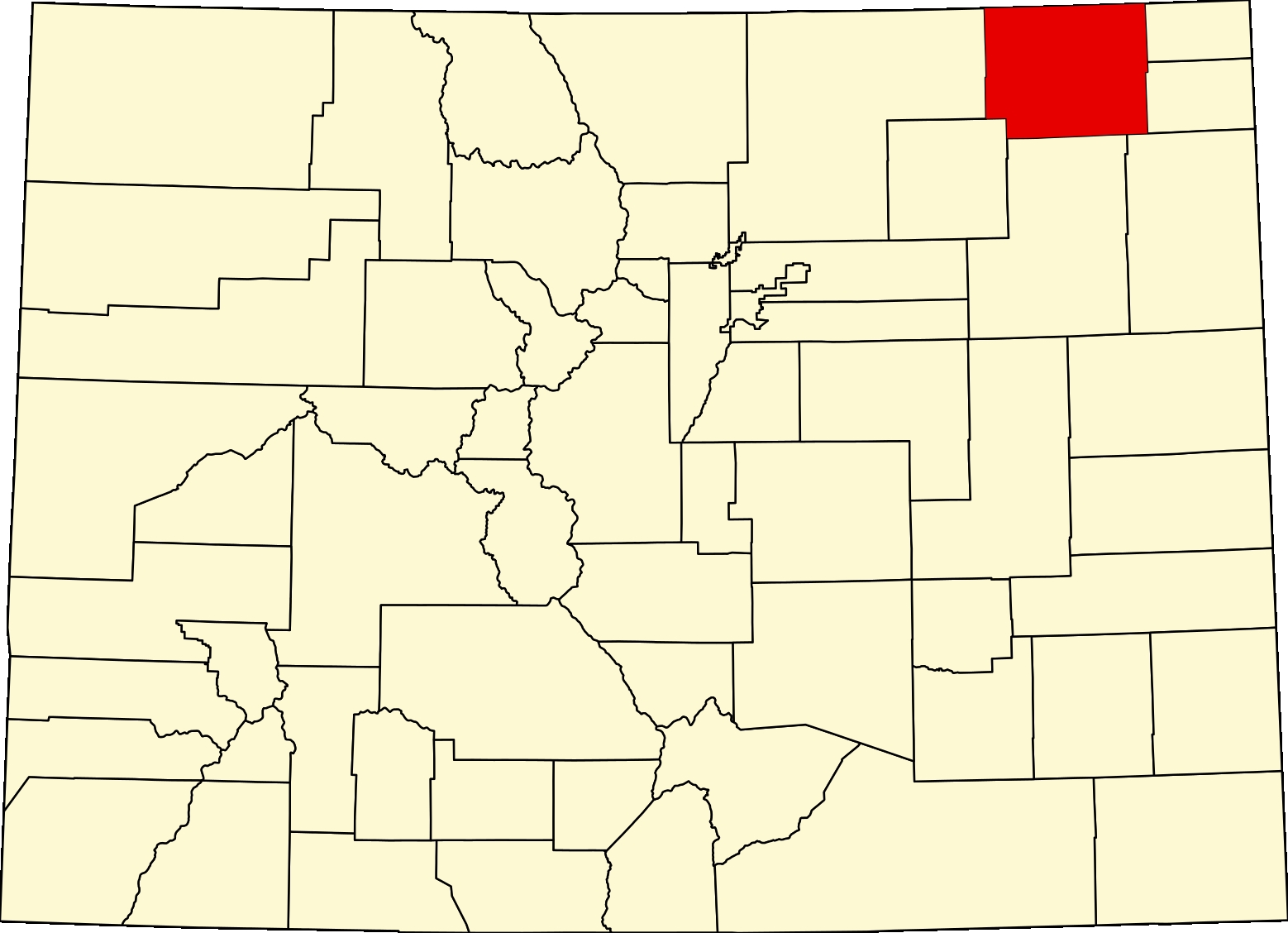
Logan County within the state of Colorado.

Click here for a list of all TimManBlog American County Seats Series posts.
The photos in this post were taken on May 6, 2006 and June 15, 2010, and are copyrighted by Tim Seibel.

Donations to TimManBlog

I post about a visit to one of America’s 3150 county seats each month. Donations are greatly appreciated to help defray my travel costs.

$1.00

Check out the FREEDOM VOYAGES book series! These books document my road trips across the United States and include hundreds of stunning photographs. Each of the four books in the series is available on Amazon and Barnes & Noble. This includes my most recent release, FREEDOM VOYAGES Volume 4: Christmastime in Texas!

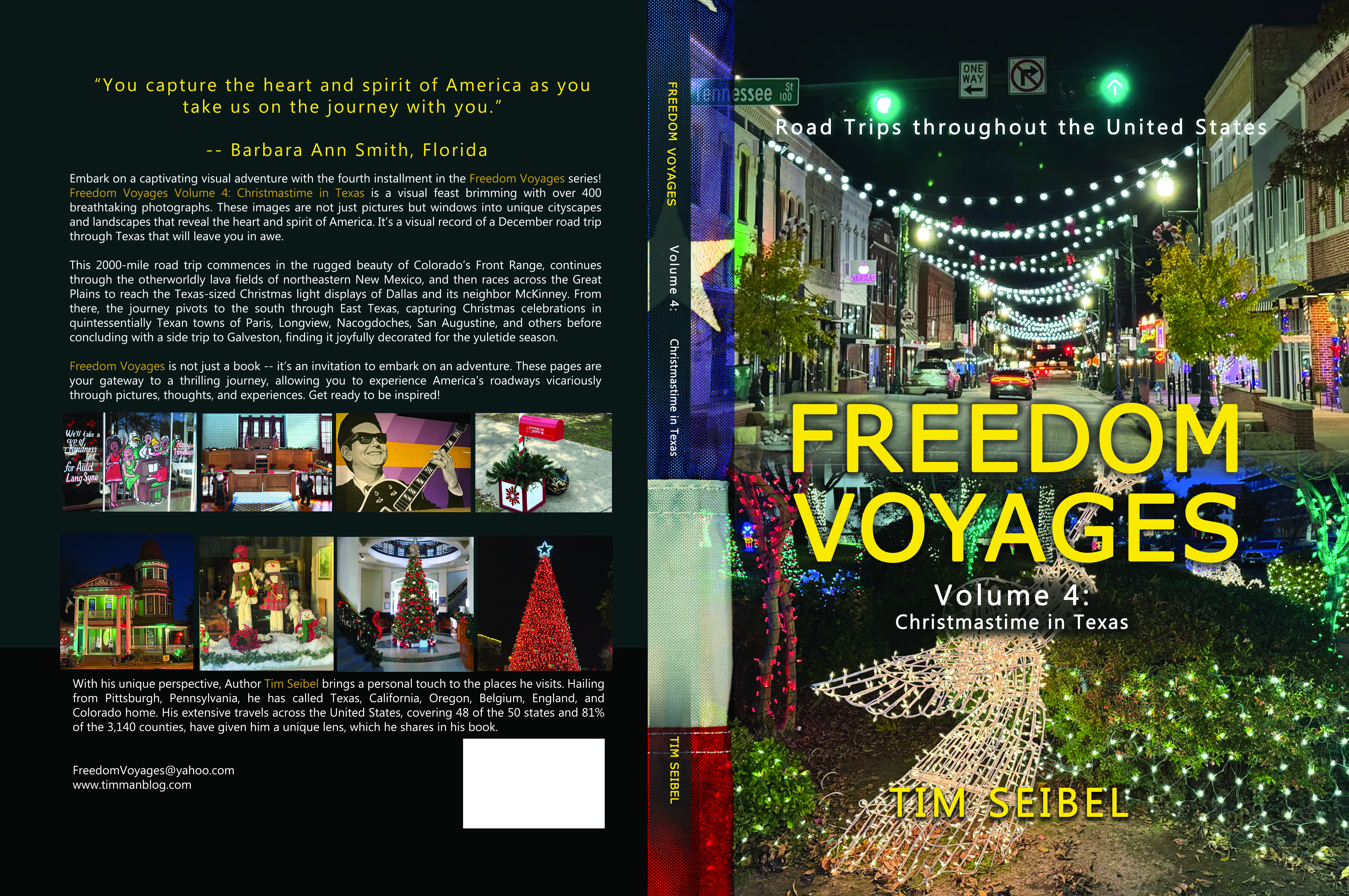
FREEDOM VOYAGES Volume 4: Christmastime in Texas. Available at Amazon.com and Barnes & Noble.

Earlier volumes in the FREEDOM VOYAGES series are also available:
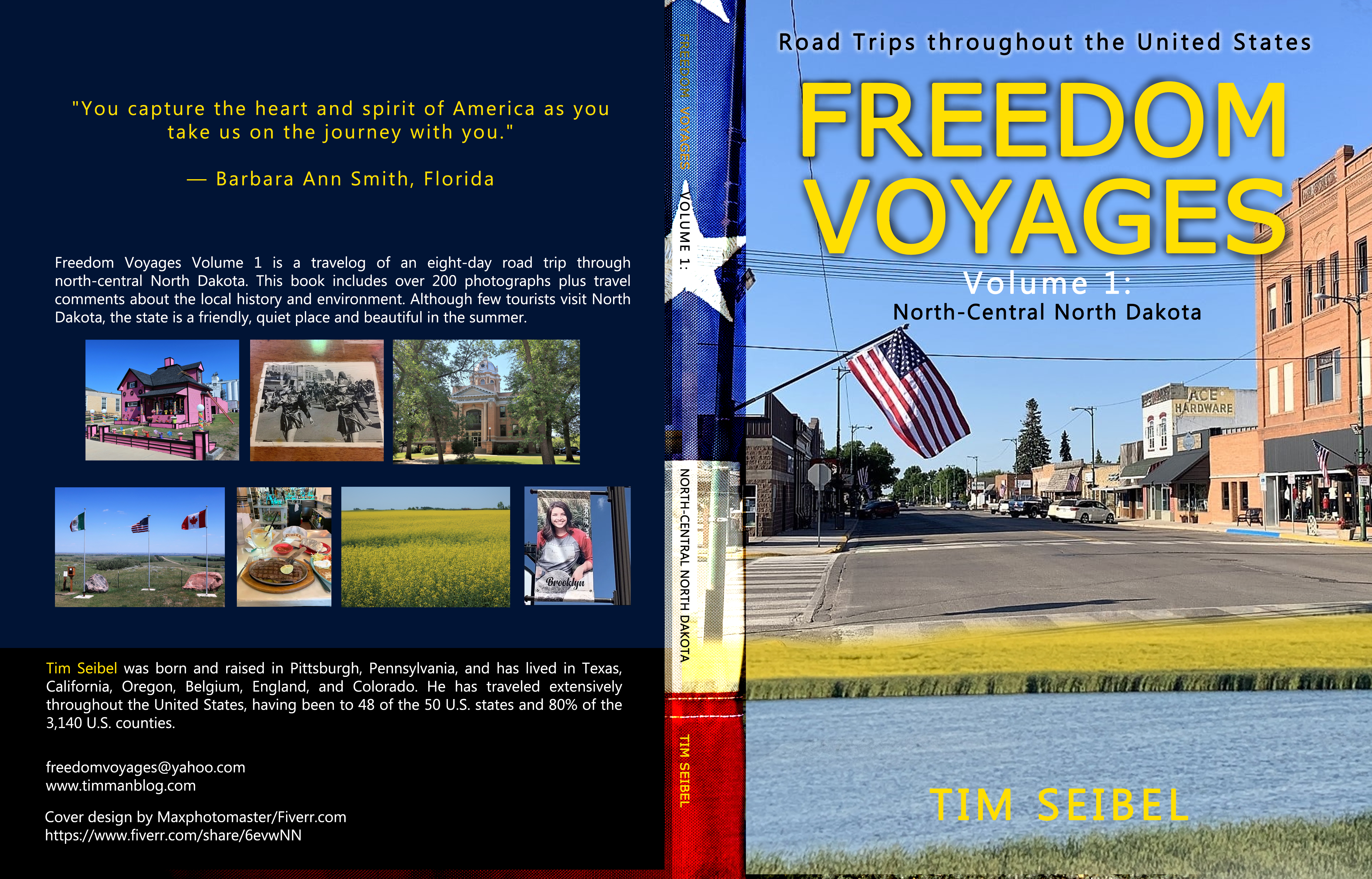
Vol. 1: North-Central North Dakota
Vol. 2: Go West! From the Loneliest Road in America to California’s Gold Country
Vol. 3: A Proud, Dignified People in Lincoln’s Illinois

All FREEDOM VOYAGES books are on sale at Amazon.com and Barnes & Noble.
Marshall, North Carolina, before Hurricane Helene

Please consider donating to support my travels using the form at the bottom of the post. PayPal, Visa, American Express, Mastercard, Discover, and Maestro are accepted. Thank you.

May 26, 2025

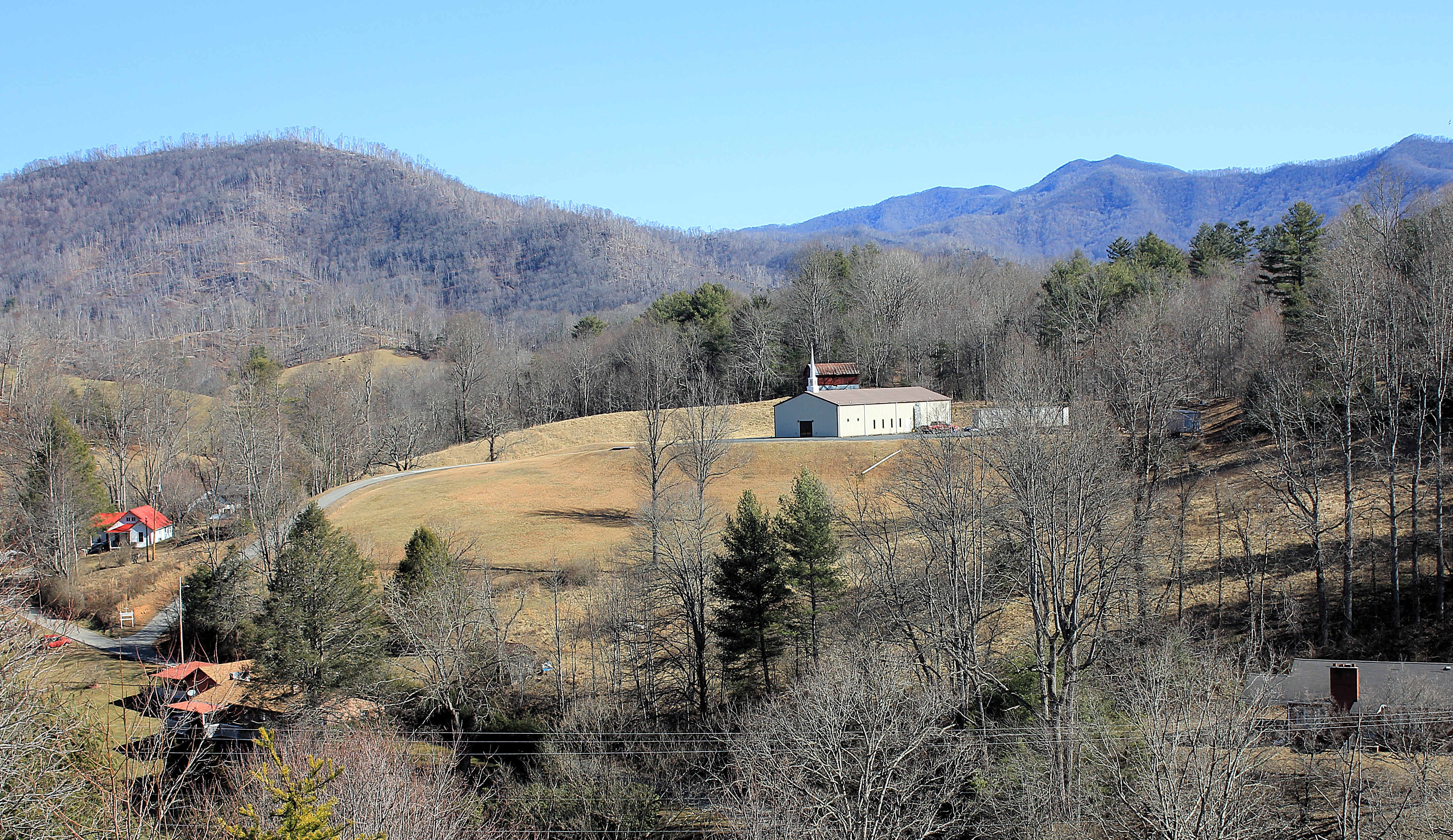
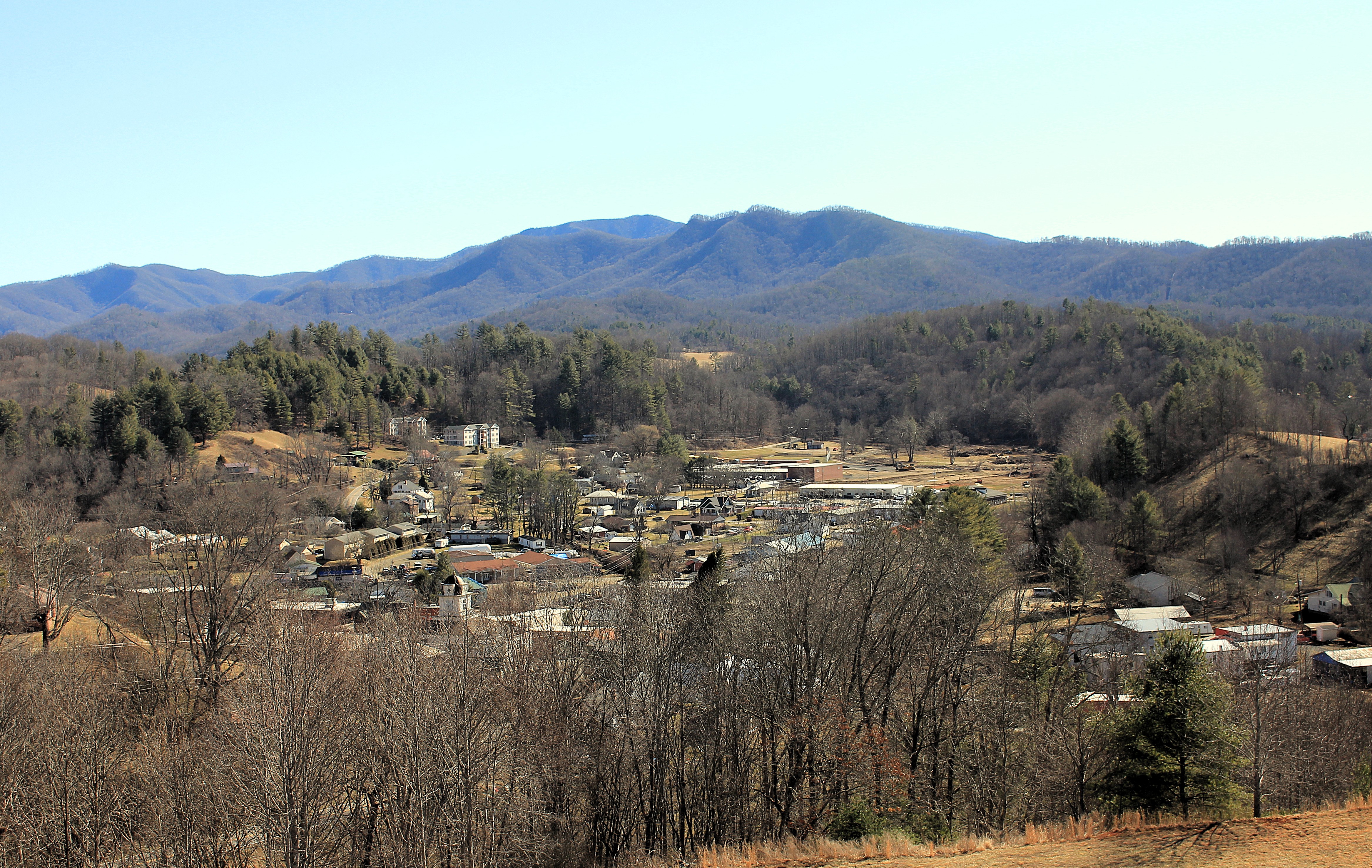
I road-tripped through the mountains of western North Carolina during May 2009, stopping at over a dozen of the region’s county seats. One of my most memorable stops was in the small town of Marshall (population 777), the seat of Madison County, North Carolina.

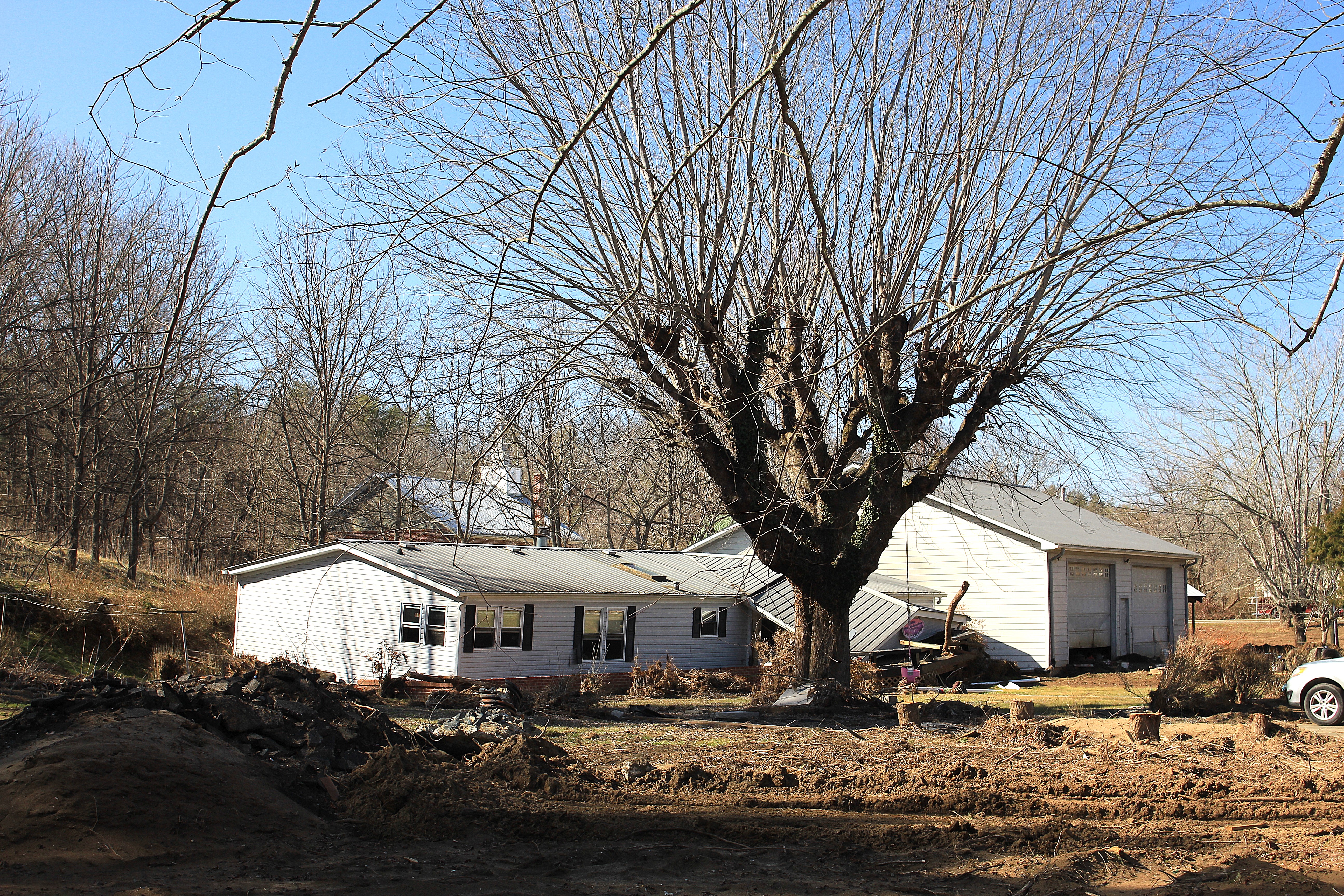
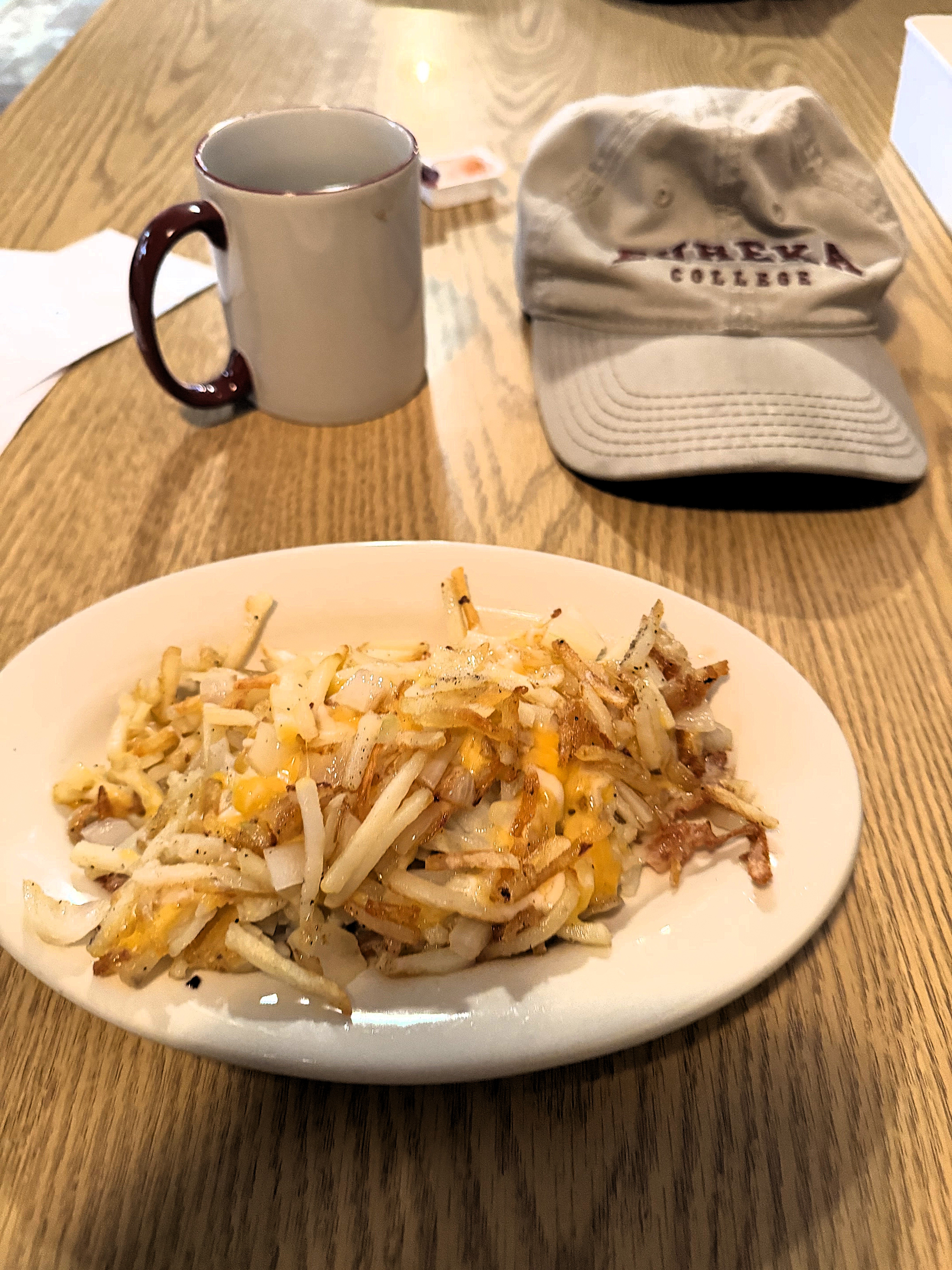
Hurricane Helene hit western North Carolina in September 2024, bringing devastating floodwaters to dozens of towns along the region’s small rivers and creeks. The town of Marshall, lying on the banks of the French Broad River, was nearly destroyed.

As Marshall rebuilds, I publish these photos as a reminder of what this picturesque mountain retreat once looked like, hoping it will one day look like this again.

Here’s what I wrote back on May 19, 2009, during my visit to Marshall:

It’s just a beautiful, fabulous, breezy day today. There are no clouds or heat; luckily, there seem to be no bugs. This might be the best day of the week. We’ll see.

The map was wrong, so I could only guess which of the several small towns in Madison County might be the county seat. My first guess was Marshall, especially since getting here was only another three miles backtrack. Here, along the banks of the French Broad River, I saw the cupola of the county courthouse standing above the town.

The Madison County Courthouse in Marshall, North Carolina

I later discovered that Marshall has been the county seat as long as Madison County, North Carolina, has existed. A historical sign says that Zebulon Vance donated the land for the courthouse.

Madison County Courthouse in Marshall, North Carolina

The courthouse faces the only bridge in town that crosses the French Broad River in this mountainous area. The French Broad is an odd river; it rises along the North Carolina ridges that mark the Eastern Continental Divide and flows west, past Asheville, North Carolina, through Marshall, and then on to Knoxville, Tennessee, where it meets the Holston to become the Tennessee River.

Below: the bridge over the French Broad River leading into Marshall, and (right) two views of town buildings alongside the river.

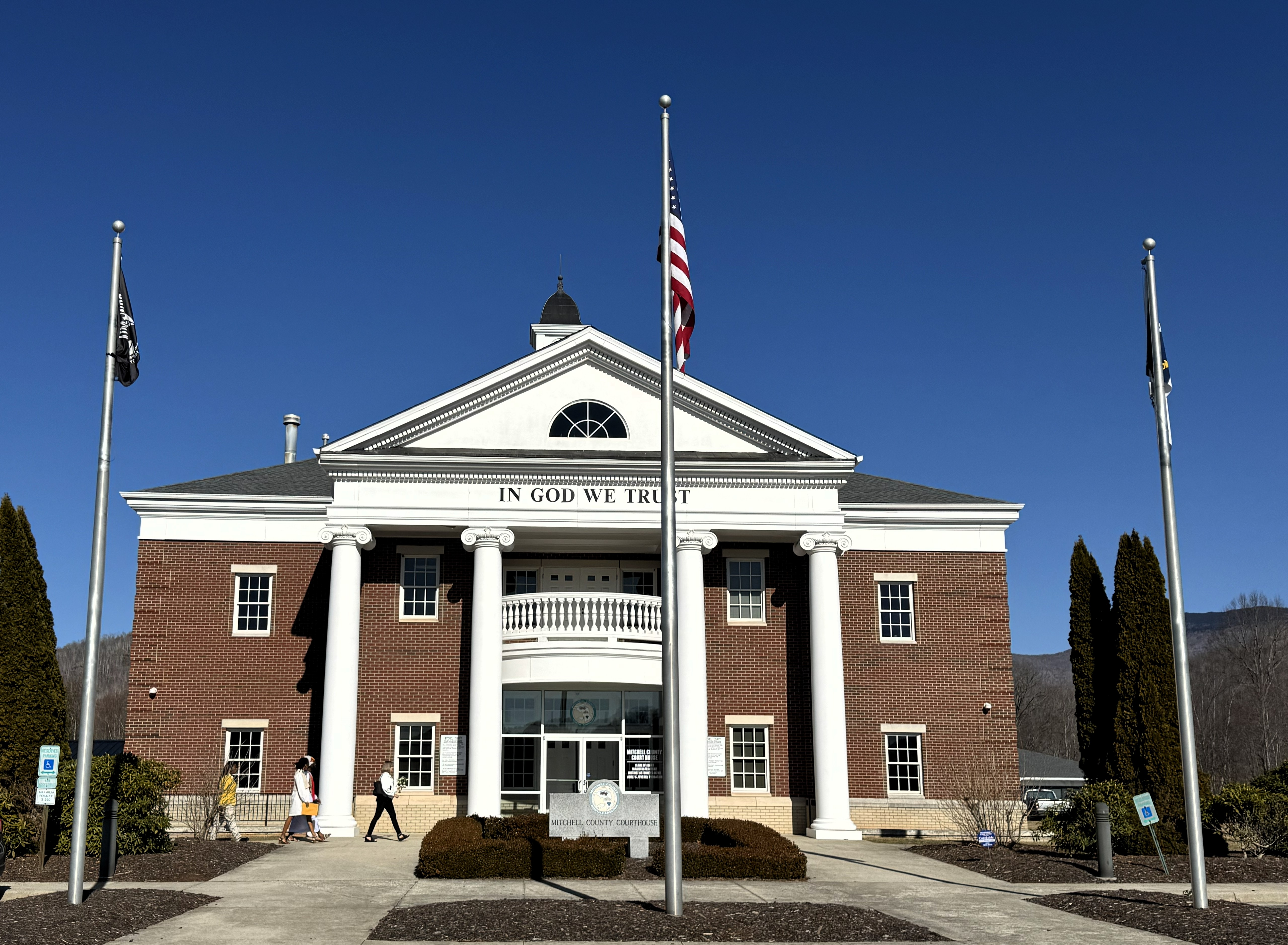
The Madison County Courthouse was constructed in 1907. It’s an old brick building of only two stories with a silver cupola. A statue of Lady Justice tops the cupola while classical pillars guard the front entrance. Like many buildings in the mountains, the courthouse is built into the side of a hill, and there is no back entrance.

Main Street. Marshall, North Carolina.

A stone marker near the courthouse steps memorializes Robert E. Lee; it also marks Main Street as part of the old Dixie Highway route.

Art and tourism have permeated the mountains of western North Carolina, as several art galleries line Main Street. Main Street is Marshall’s only “through” street, with the river on one side and steep, brilliant green hills pressing against the small buildings lining the other side. The town’s single coffee shop, “Zuma Coffee,” would fit perfectly in Portland, Oregon, except for the available sweet tea for $1. Turkey chipotle wraps are offered for five bucks. Photography for sale, mainly featuring shots of waterfalls, adorns the brick walls of Zuma.

Zuma Coffee in Marshall, North Carolina

Most of Main Street’s buildings are brick. Brick is relatively cheap locally.

Below are scenes along Main Street and the First Baptist Church of Marshall.

After walking by the courthouse again, I noticed that the clock on the cupola doesn’t keep time. I also noticed that the courthouse has a balcony off the second floor, appropriate for speeches to an assembled town crowd.

A fallen sign marks the old Buncombe Turnpike, which once connected Charleston, South Carolina, to western North Carolina, Tennessee, Kentucky, and the lower Mississippi River Valley. Also called the Old Buncombe Road, the pathway was begun in the 1820s as a wagon road. Traffic on the route was replaced by railroads in the 1880s.

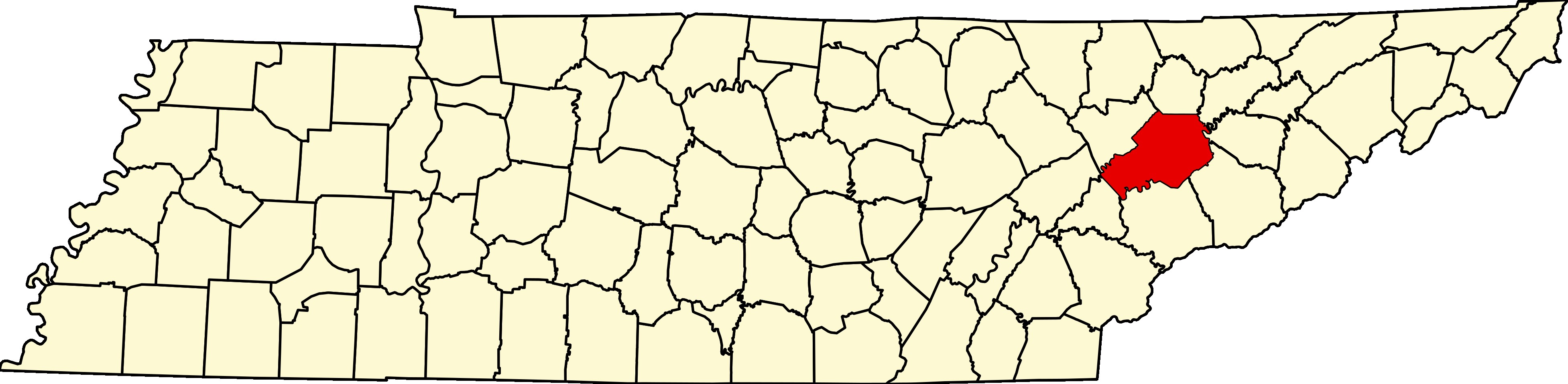
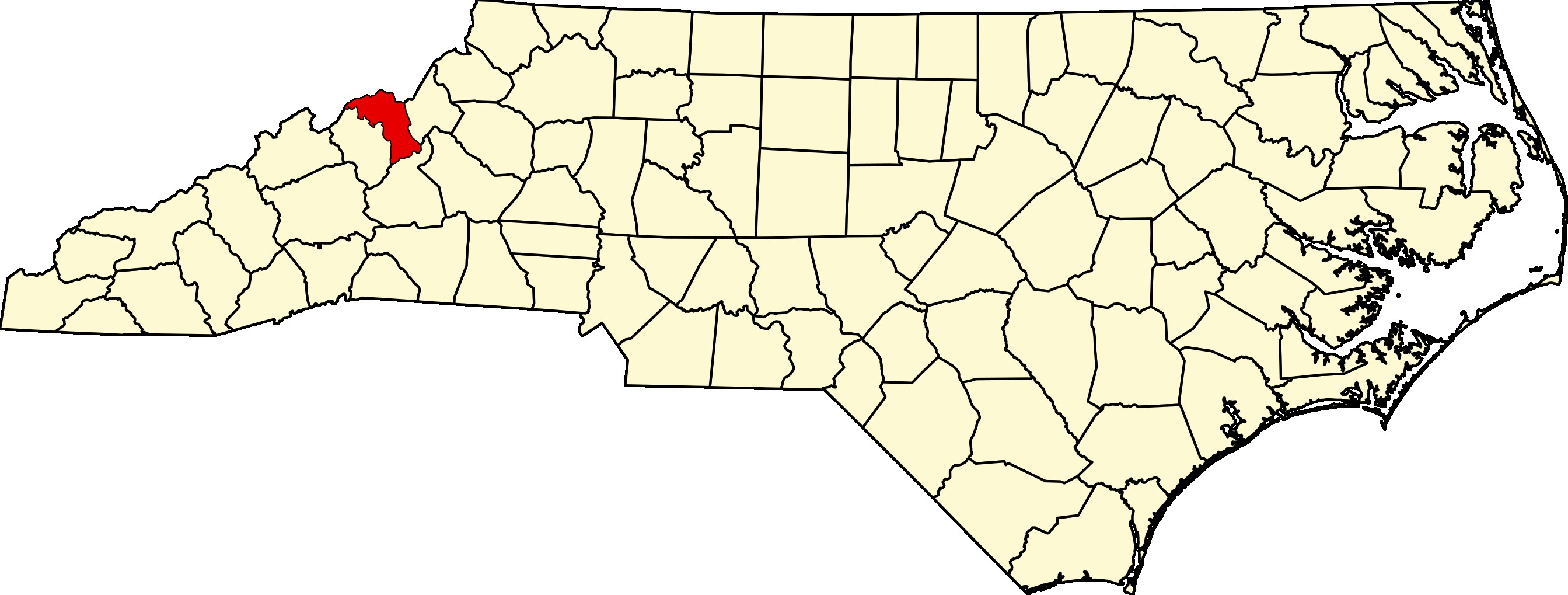
Madison County within the state of North Carolina

Click here for a list of all TimManBlog American County Seats Series posts.
The photos in this post were taken on May 19, 2008, and are copyrighted by Tim Seibel.

Donations to TimManBlog

I post about a visit to one of America’s 3150 county seats each month. Donations are greatly appreciated to help defray my travel costs.

$1.00

Check out the FREEDOM VOYAGES book series! These books document my road trips across the United States and include hundreds of stunning photographs. Each of the four books in the series is available on Amazon and Barnes & Noble. This includes my most recent release, FREEDOM VOYAGES Volume 4: Christmastime in Texas!

FREEDOM VOYAGES Volume 4: Christmastime in Texas. Available at Amazon.com and Barnes & Noble.

Earlier volumes in the FREEDOM VOYAGES series are also available:
Vol. 1: North-Central North Dakota
Vol. 2: Go West! From the Loneliest Road in America to California’s Gold Country
Vol. 3: A Proud, Dignified People in Lincoln’s Illinois

All FREEDOM VOYAGES books are on sale at Amazon.com and Barnes & Noble.
Boston: 250 Years After the Revolution

Please consider donating to support my travels using the form at the bottom of the post. PayPal, Visa, American Express, Mastercard, Discover, and Maestro are accepted. Thank you.

April 30, 2025

“The shot heard ’round the world” was fired on April 19th, 1775, in Lexington, Massachusetts, a small village 12 miles from Boston. This year, Massachusetts celebrated the 250th anniversary of the battles that began the American Revolution.

Now that 250 years have passed, I thought this month would be a great time to explore Boston, the seat of Suffolk County, Massachusetts.

The Suffolk County Courthouse reminds me of Manhattan’s New York County Courthouse. It’s huge, maybe 15 stories, and some windows have little a/c units.  The jail might be inside as well. The old John Adams Courthouse next door is a five- or six-story building with a French-style roof. I believe the state Supreme Court resides inside.

Suffolk County Courthouse in Boston, Massachusetts
The John Adams Courthouse in Boston.

The Massachusetts State House is just a 4-minute walk up the hill from the county courthouse. It has been here for over 200 years. Its gold dome atop Beacon Hill used to dominate the Boston skyline, but nowadays, it can rarely be seen except from Boston Common, the park below its front entrance.

Below: The Massachusetts State House in Boston. The public entrance is known as the “General Hooker” entrance and faces Boston Common down below. The top right photo features hanging banners cheering for the Boston Celtics and Bruins; the bottom right photo shows the Beacon Hill Memorial.

As expected, the grand old building is filled with portraits of past governors, many with powdered wigs. Much of the hallway trim is marble, and the floors are polished mosaic.  Golden chandeliers light the hallways. I took photos of a statue of George Washington. There is also a large portrait of Lincoln and a smaller bust of him. However, busts or portraits of Massachusetts’ many Revolutionary War heroes, from John Adams to John Hancock and Paul Revere, are somehow missing or hard to find in the State House.

The Beacon Hill neighborhood surrounding the State House is one of the wealthiest parts of Boston. The area’s narrow streets are filled with red stone apartments and condominiums. Flowering trees and old gas lamps along the sidewalks give Beacon Hill a special springtime charm. Nevertheless, the living quarters look cramped to me. The photo at the top right of the gallery below proves that a plumber is needed even in the wealthiest neighborhoods.

I next walked a few blocks toward the central business district of downtown Boston. Historic Faneuil Hall (only three stories but tall for its time) sits between a dozen glass skyscrapers.

I backtracked past the State House to walk through Boston Common. It was April in Boston. Pictures speak louder than words here, and George Washington‘s statue fits perfectly.

Boston’s streets and parks are filled with the statues and gravesites of heroes; it’s something the city does well. Bostonians deserve extra credit for not limiting themselves to the native sons of Massachusetts.
Below (clockwise from top left): Samuel Adams, George Washington (of Virginia), the grave of Paul Revere, the grave of Samuel Adams, Benjamin Franklin (of Pennsylvania), and Alexander Hamilton (of New York).

Most of Boston’s Revolutionary War history is concentrated in the North End neighborhood, north of downtown. I walked the Freedom Trail, part of the U.S. National Park System, to see these sights. Tourists are everywhere — but that’s the way it should be!
Below (clockwise from top left): Banner of the old Green Dragon Tavern, the Green Dragon Tavern, Paul Revere’s home, statue of Paul Revere, the Old North Church (inside), Paul Revere statue in front of the Old North Church, the Old North Church (outside).

Statue of Paul Revere outside the Old North Church in Boston’s Old North End.
Suffolk County within the State of Massachusetts

Click here to see a list of all TimManBlog American County Seats Series posts.
The photos in this post were taken on April 20, 2010. All photos are copyrighted by Tim Seibel.

Donations to TimManBlog

I’m on a quest to visit all 3,150 of America’s county courthouses in my lifetime. Each month, I post about a visit to a scenic or historic county seat. Donations are greatly appreciated to help defray my travel costs.

$1.00

Check out the FREEDOM VOYAGES book series! These books document my road trips across the United States and include hundreds of stunning photographs. Each of the four books in the series is available on Amazon and Barnes & Noble. This includes my most recent release, FREEDOM VOYAGES Volume 4: Christmastime in Texas!

FREEDOM VOYAGES Volume 4: Christmastime in Texas. Available at Amazon.com and Barnes & Noble.

Earlier volumes in the FREEDOM VOYAGES series are also available:
Vol. 1: North-Central North Dakota
Vol. 2: Go West! From the Loneliest Road in America to California’s Gold Country
Vol. 3: A Proud, Dignified People in Lincoln’s Illinois

All FREEDOM VOYAGES books are on sale at Amazon.com and Barnes & Noble.
Eagle River’s Transformation: Winter to Fall

Please consider donating to support my travels using the form at the bottom of the post. PayPal, Visa, American Express, Mastercard, Discover, and Maestro are accepted. Thank you.

March 31, 2025

Welcome to Michigan’s Keweenaw County!

Pronounced “KEE-wə-naw,” the county is named for the Keweenaw Peninsula, a spur of land jutting 65 miles into Lake Superior from Michigan’s Upper Peninsula (known as the “U.P.”). Because of its northern exposure, “The Keweenaw” bears the brunt of some of the worst winter weather in the United States. For example, the village of Calumet, Michigan, often measures over 300 inches of snowfall annually.

Keweenaw County within the state of Michigan

I’ve been to the U.P. many times, and I love it because it’s an entirely different place from one season to the next. In this post, I’ll first show you pictures taken during a March 2009 visit. Then, I’ll show you photos of the same spots in October, several years later. It’s like pictures of two different worlds.

On March 1, 2009, I started my activities by tracing U.S. Highway 41 to its northern terminus at Copper Harbor, Michigan. The “BEGIN Highway 41” sign peeks above a snowbank to tell us that Miami, Florida, is at U.S. 41’s southern end, 1990 miles away. The sign mentions the Isle Royale Ferry, which only operates during the summer. Isle Royale is an island in Lake Superior off the coast of the Keweenaw Peninsula; it makes up most of Isle Royale National Park.

U.S. Highway 41 in Keweenaw County resembles a path through the woods instead of a national highway. The road was snow-packed, with trees and five-foot high snowbanks instead of guard rails. From Copper Harbor, Highway 41 continues for 23 miles until it reaches the Keweenaw County seat of Eagle River. With a 2020 Census population of 65, the village of Eagle River is barely a town.

It was a quiet Sunday afternoon. Eagle River has a “Main Street” and a general store. But the store was closed. A red Toyota parked near the general store was covered with snow plowed from the street. A nearby footbridge over a creek leads to the Eagle River Lighthouse on the other side. The path was blocked by snowbanks.

Main Street leads down to the Lake Superior beachfront. Little dunes of sand covered the beach, and all the sand was snow-covered. Chunks of ice covered the waters below a whitish horizon, beyond which was nothingness. Looking down the street toward all this whiteness gives Eagle River an otherworldly feel, like it was the end of the earth.

Main Street Eagle River, looking down toward the Lake Superior shoreline on March 1st, 2009.

It’s a clear day today. Still, the north wind is blowing off Lake Superior, and the wind chill is below zero. Lake-effect snow showers come with the winds. In the Keweenaw, you don’t need a weather front to get snow; all you need is a northerly wind.

The Keweenaw County Courthouse is perched atop a hill overlooking a few houses scattered below toward the lakeshore. The courthouse is a small, two-story wood building painted white with white pillars at its entrance. I can’t imagine any other county courthouse in Michigan being smaller.

The Keweenaw County Courthouse in Eagle River, Michigan, on March 1, 2009.

In the cold, I had to stop and look around for a moment. It was so quiet. It was so cold. An old dog was chained across the street but couldn’t muster the strength to bark more than twice. Down the hill were a crowd of twenty deer digging in the snow for food.

Beyond the deer lay the frozen chunks of water in Lake Superior. Soon, these chunks will melt to become waves, and the Keweenaw will burst open as a summer resort. Today is March 1; February passed last night. Winter has made its final stop, and Spring is marching ahead.


I returned to Eagle River, Michigan, on October 4, 2021. My first visit had been at the end of winter, while this visit took place at the end of summer. The courthouse and the town were adorned with autumn leaves, starkly contrasting the snowbanks I had seen in March.

The first floor of the courthouse features five display cases. They contain local ore samples from old copper and iron mines on the Keweenaw Peninsula. Further down the hallway, two large pencil drawings of Presidents Washington and Lincoln hang from the walls.

(below left) A historical sign explains the history of Eagle River. (right) A well-kept home in town shows off some delicate wood trim on its front porch.

Just past the courthouse, I walked across the Eagle River Timber Arch Bridge and photographed Eagle River Falls.

Eagle River’s Main Street looks quite different after a long summer.

Main Street Eagle River, looking down toward the Lake Superior shoreline on October 4, 2021.

This is the Lake Superior shoreline in Eagle River. In the top right photo, a tanker ship (perhaps carrying iron ore?) can be seen on the distant horizon.


Click here to see a list of all posts in the TimManBlog American County Seats Series.
The photos in this post were taken on March 1, 2009 or October 4, 2021. All photos are copyrighted by Tim Seibel.

My hobby is attempting to visit all 3,150 of America’s county courthouses. Each month, I post about a visit to a scenic or historic county seat. Donations are greatly appreciated to help cover my costs.

Donations to TimManBlog

Please use this form to donate to my travel writing. (Change the number in the ‘Price’ box to increase the donation amount.) The form accepts PayPal, Visa, Mastercard, Amex, Discover, and Maestro.

$1.00

Check out the FREEDOM VOYAGES series! These books document my road trips across the United States and include hundreds of stunning photographs. Each of the four books in the series is available on Amazon and Barnes & Noble. This includes my most recent release, FREEDOM VOYAGES Volume 4: Christmastime in Texas!

FREEDOM VOYAGES Volume 4: Christmastime in Texas. Available at Amazon.com and Barnes & Noble.
Earlier volumes in the FREEDOM VOYAGES series are also available:
Vol. 1: North-Central North Dakota
Vol. 2: Go West! From the Loneliest Road in America to California’s Gold Country
Vol. 3: A Proud, Dignified People in Lincoln’s Illinois

Discover Abbeville: A Gem in Louisiana’s Cajun Country

Please consider donating to support my travels using the form at the bottom of the post. PayPal, Visa, American Express, Mastercard, Discover, and Maestro are accepted. Thank you.

February 27, 2025

The Vermilion Parish Courthouse in Abbeville, Louisiana

In February 2017, I enjoyed a long February drive along Louisiana’s coastal wetlands to the exemplary town of Abbeville. This Cajun town sits along the slow-moving waters of Bayou Vermilion, and 12,000 people call Abbeville home. Abbeville is a beautiful place; I’ll describe it starting at the town center.

A French priest named Antoine Désiré Mégret purchased the land that became Abbeville in 1843. He named the town for his birthplace, Abbeville, a beautiful town in northern France. Father Mégret’s statue stands beneath the shade of some live oak trees next to the parish church he founded. His biography is carved into the sides of the statue. One side is in English, and the other is in French.

Statue of Abbeville’s founder, Père Antoine Désiré Mégret.

Father Megret’s original chapel burned down in 1907. To replace it, local parishioners built St. Mary Magdalen Church in 1910. The church is listed on the National Register of Historic Places.

Below are photos of the interior of St. Mary Magdalen Church. The stained-glass figure on the left is France’s Saint Louis, and on the right is Joan of Arc.

Like many southwest Louisiana towns, Abbeville was settled by descendants of French Acadians. Known as “Cajuns,” these people fled Nova Scotia after the British victory in the French and Indian War. The part of Louisiana known for Cajun culture is now known as Acadiana.

Some of the colorful buildings of Abbeville are reminiscent of old French towns and castles. But, for the most part, Abbeville is unmistakably Louisianan.

Clockwise from top: the old Abbeville Train Depot, Blacks’s and a bayou street mural, an open oyster painted on a building’s side, a colorful business block, a highway sign for Louisiana Trails & Byways next to a steel bridge over Bayou Vermilion, and a castle-like town building (probably once a bank.)

As you probably have heard, Louisiana has “parishes” instead of “counties.” Abbeville is the seat of Vermilion Parish. The pillars of the Vermilion Parish Courthouse mark end of Concord Street, Abbeville’s main business street. Below (left) is a view of the courthouse at the end of the street. Below (right) is a view of Concord Street from behind the courthouse pillars.

Here’s a wider view of the courthouse at the end of Concord Street. State Street runs north and south in front of the building.

The Vermilion Parish Courthouse at the end of Concord Street. Abbeville, Louisiana.

(below) A bright chandelier inside the courthouse entrance lights a spiraling staircase leading from the entrance to the second floor.

Below left: the courthouse and the trees around it.
Below right: A 9-11 Memorial on the courthouse lawn. Vermilion Parish is one of many American localities that have constructed 9-11 memorials. This is despite being many hundreds of miles away from the events of that day.

A collection of stunning oil paintings adorns the walls of the courthouse hallways. Most of these paintings showcased Cajun rural life in the area, capturing the essence of southwestern Louisiana. The countryside I drove through features a blend of farms and bayous, with a few charming towns scattered about. I found these paintings fascinating because they vividly reflected what I saw through my car window.

I had a little time to walk around the nearby residential streets before dark. I found several lovely old homes with well-trimmed yards.

An old Cajun man sitting in the park saw me and my camera and started explaining his town. Looking for a sample of excellent Cajun cuisine, I asked for a restaurant recommendation, and he gave me three. I have to admit — I ate the gumbo so eagerly that I forgot to take a photograph. I have nothing to share in that regard, but the dessert was special too.

Dessert in Abbeville, Louisiana
Vermilion Parish within the state of Louisiana

Here is a link to a list of all posts in the American County Seats Series in TimManBlog — link.
The author took all the photos in this post on February 16 and 17, 2017.

America’s county courthouses are my hobby. Each month, I post about a visit to a scenic or exciting county seat. Donations are greatly appreciated to help cover my costs.

Donations to TimManBlog

Please use this form to donate to my travel writing. (Change the number in the ‘Price’ box to increase the donation amount.) The form accepts PayPal, Visa, Mastercard, Amex, Discover, and Maestro.

$1.00

Check out the FREEDOM VOYAGES series! These books document my road trips across the United States and include hundreds of stunning photographs. Each of the four books in the series is available on Amazon and Barnes & Noble. This includes my most recent release, FREEDOM VOYAGES Volume 4: Christmastime in Texas!

FREEDOM VOYAGES Volume 4: Christmastime in Texas. Available at Amazon.com and Barnes & Noble.
Earlier volumes in the FREEDOM VOYAGES series:
Vol. 1: North-Central North Dakota
Vol. 2: Go West! From the Loneliest Road in America to California’s Gold Country
Vol. 3: A Proud, Dignified People in Lincoln’s Illinois

Post Navigation