TimManBlog

Whatever I'm Thinking

Archive for the tag “dogs”

A Walk Through Salem, South Dakota: Courthouse and Culture

Please consider donating to support my travels using the form at the bottom of the post. PayPal, Visa, American Express, Mastercard, Discover, and Maestro are accepted. Thank you.

September 29, 2025

In 2014, I traveled through eastern South Dakota to visit the county courthouses in the area. The weather in late September was perfect for exploring. I discovered many charming towns, including Canistota (known for its Ortman Chiropractic Clinic) and Salem, which is the seat of McCook County.

Salem has a small population, with only 1,300 residents. I easily found the McCook County Courthouse along U.S. Highway 81, which runs north and south through town; Main Street runs parallel to it, also heading north and south.
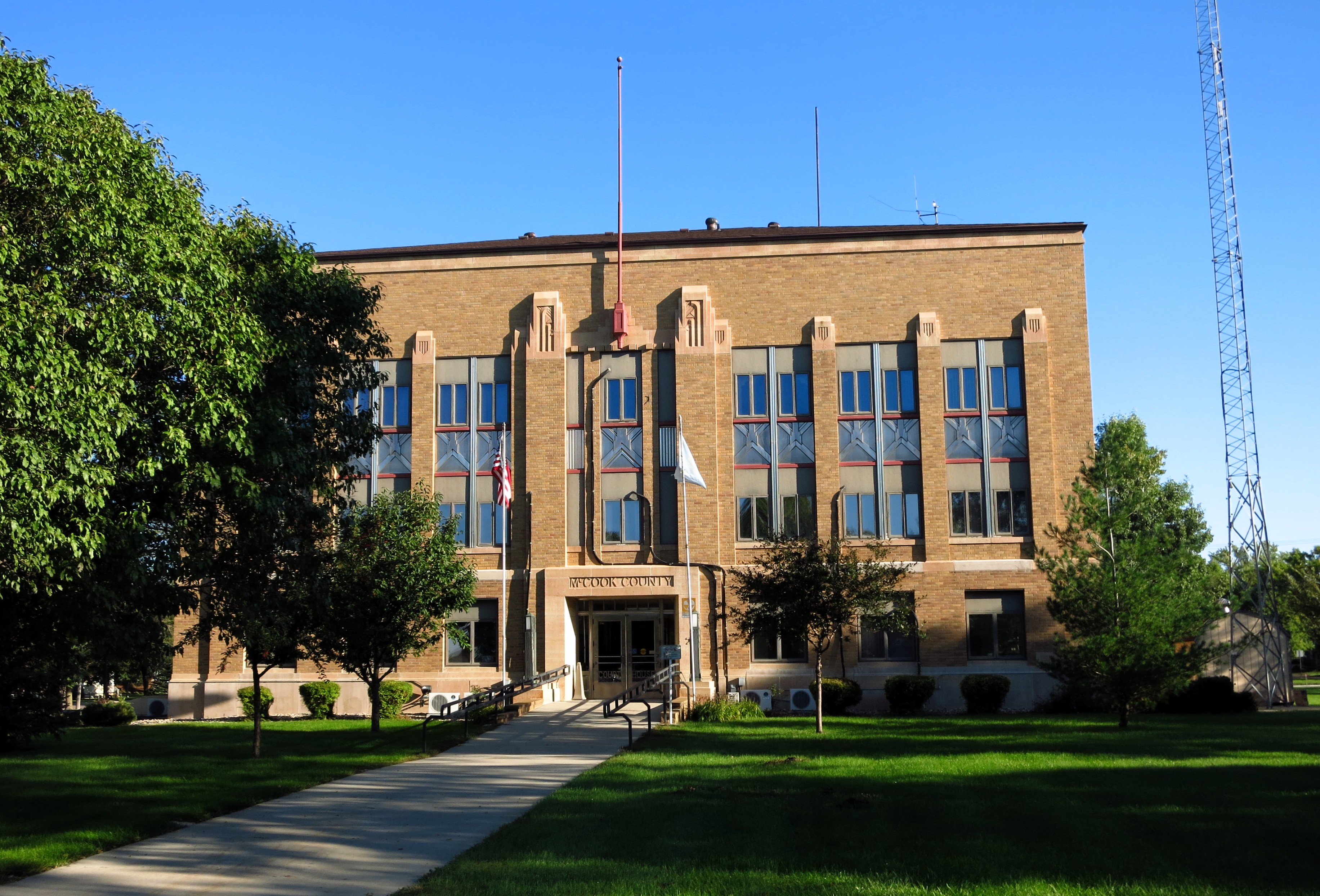
The McCook County Courthouse in Salem, South Dakota

The courthouse was built in 1934 during the Great Depression, likely as part of a Works Progress Administration (W.P.A.) project. During that period, the federal agency funded numerous new courthouses in an effort to provide employment opportunities for unemployed workers.

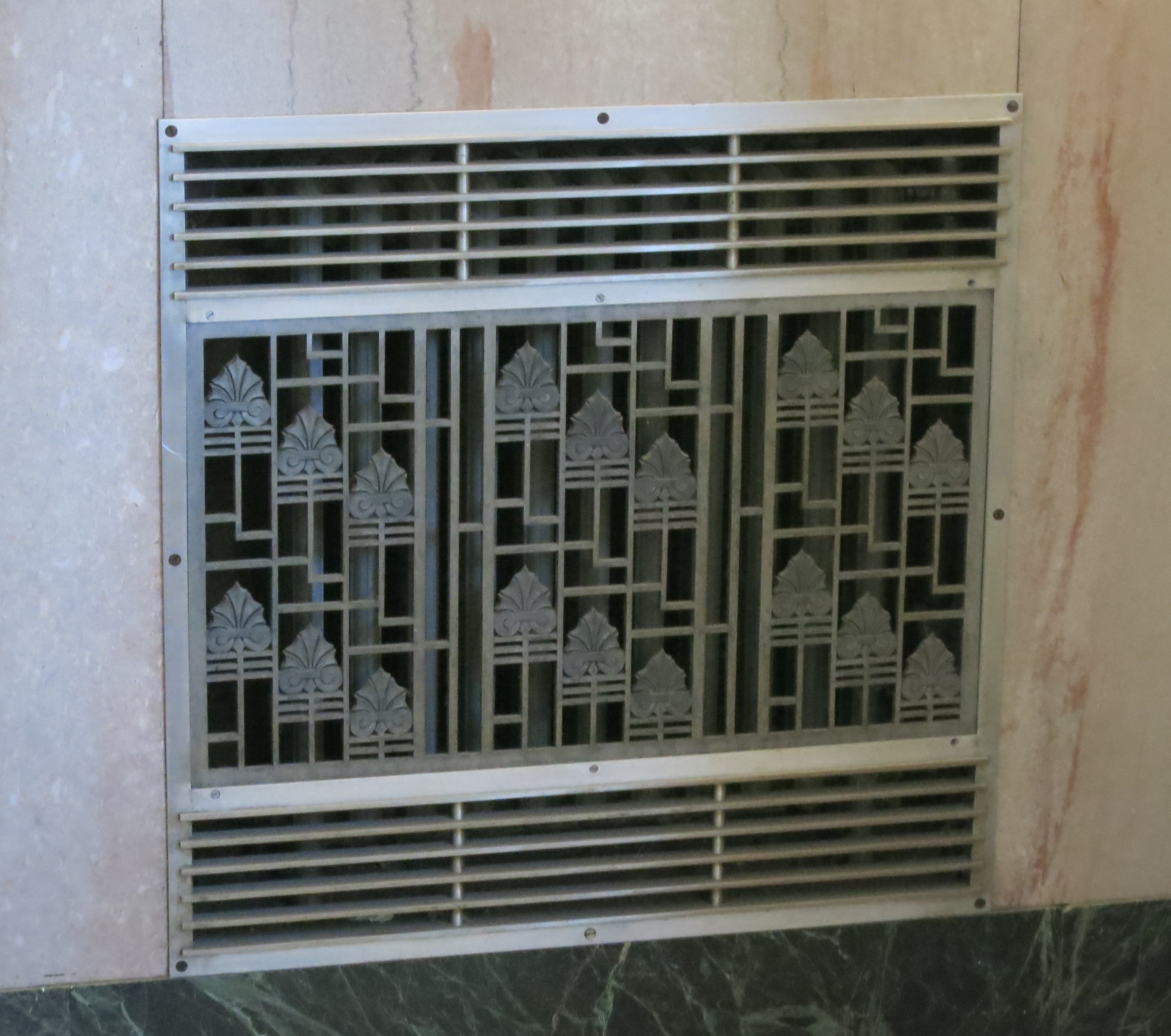
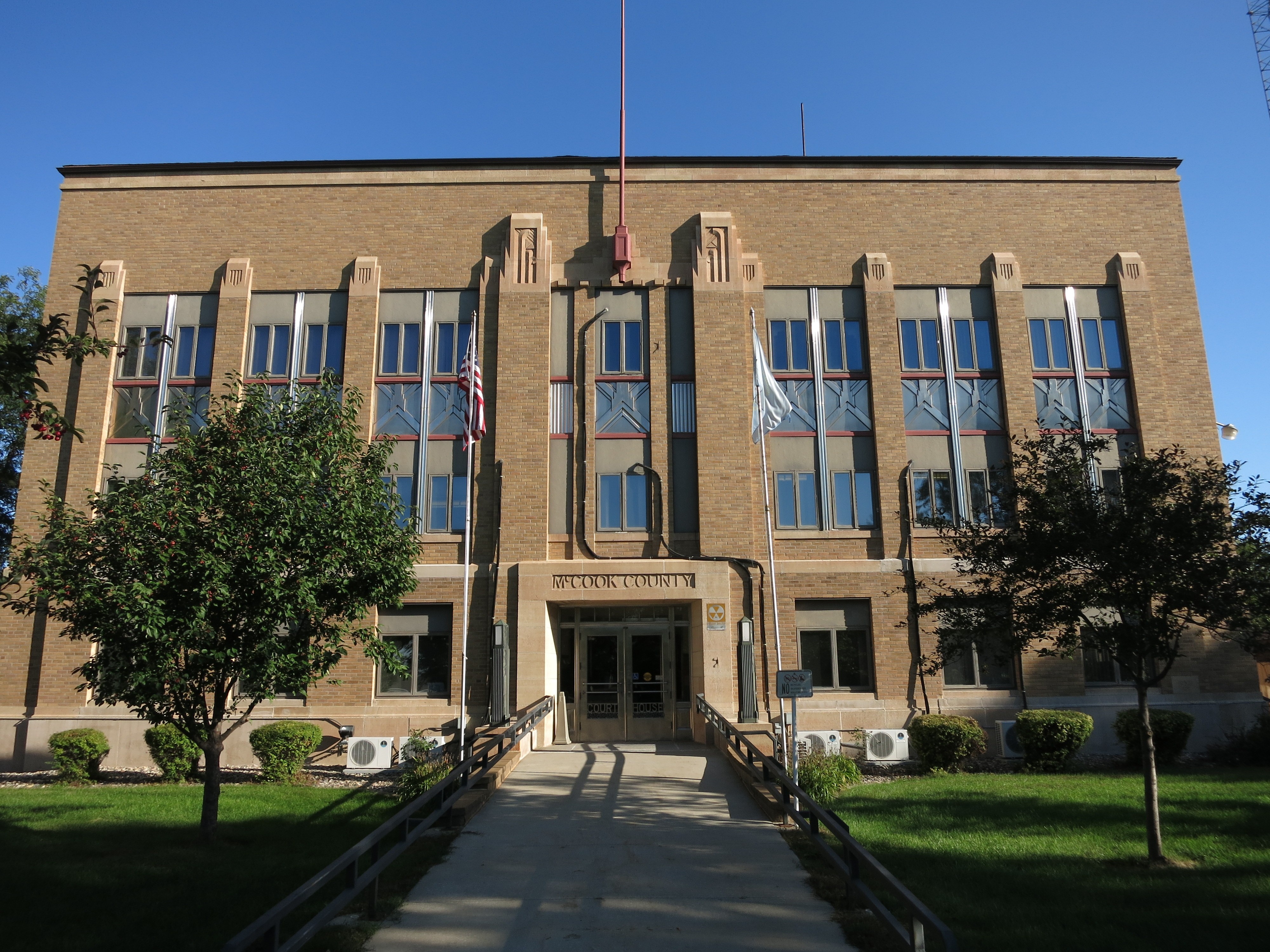
The design of the courthouse is primarily Art Deco, a characteristic style of the 1930s. The county courthouse features distinctive lettering and metallic work on the window frames at the front and sides. As is typical for such buildings, metal was used extensively throughout the structure. It is either aluminum or stainless steel, molded and shaped to be aesthetically pleasing and stylish, yet economical in times of hardship. The photos below include one that highlights the exceptional metallic work above the heating grates in the stairwells.
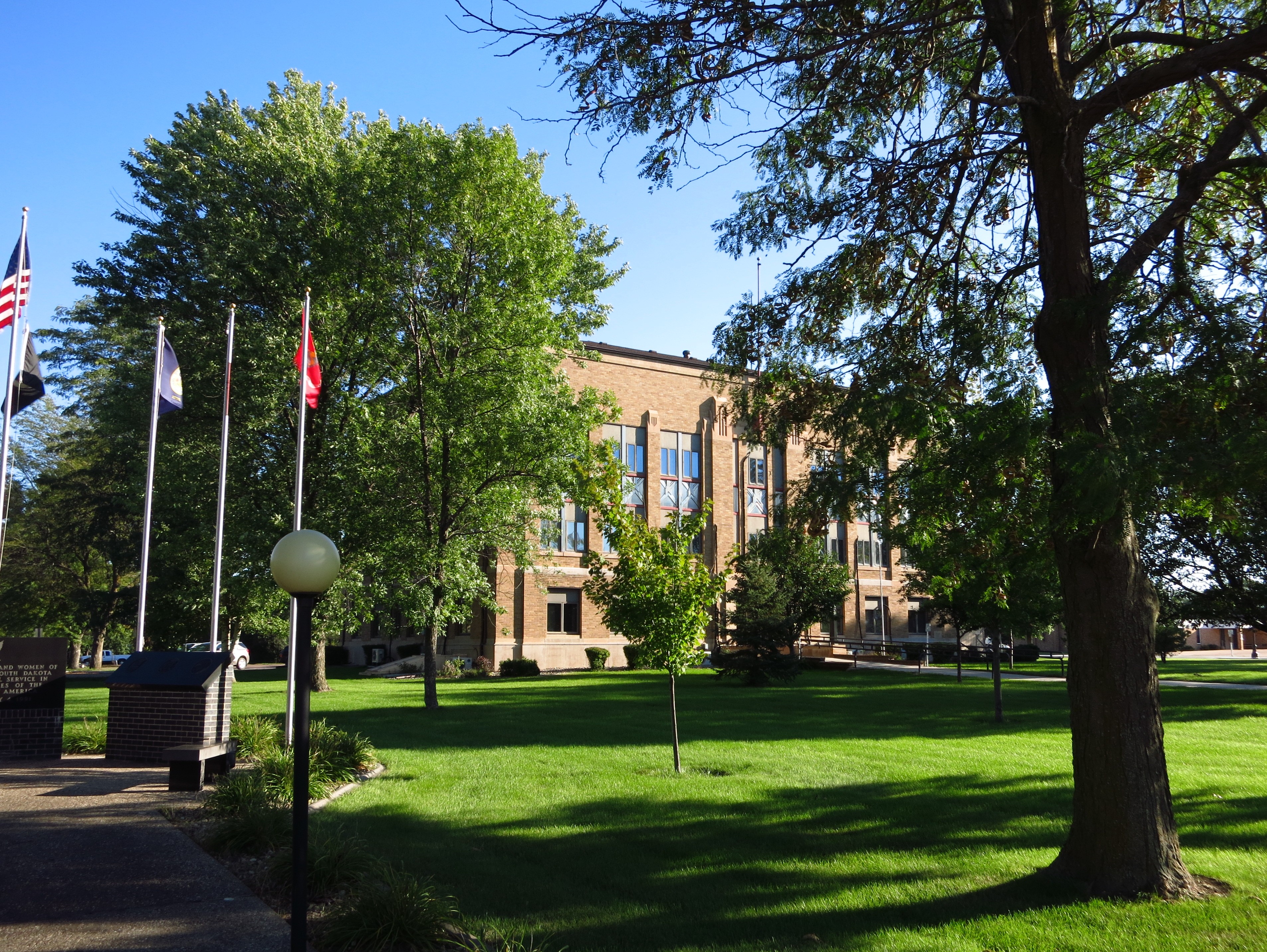
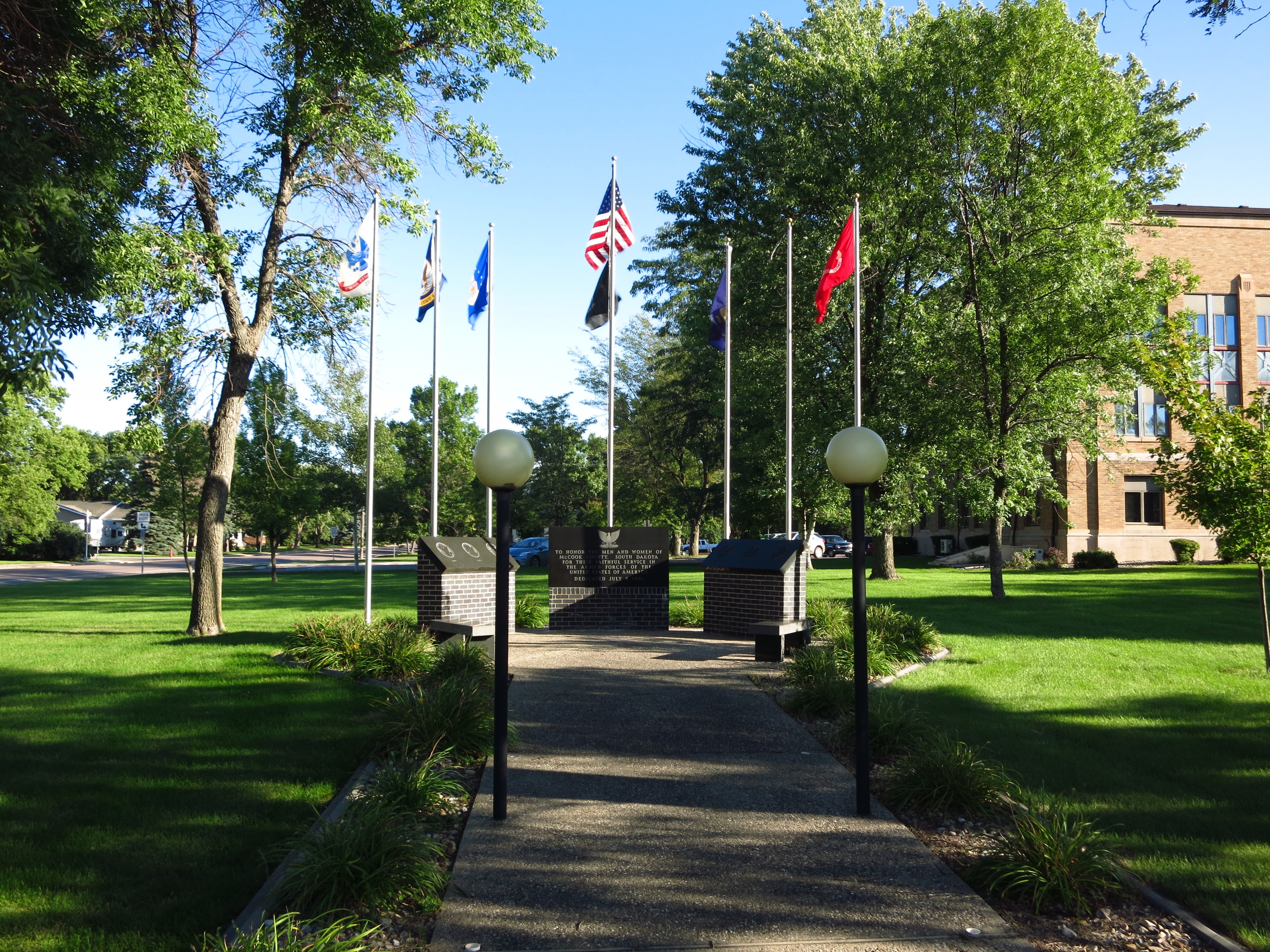
The Veterans memorial at the McCook County Courthouse

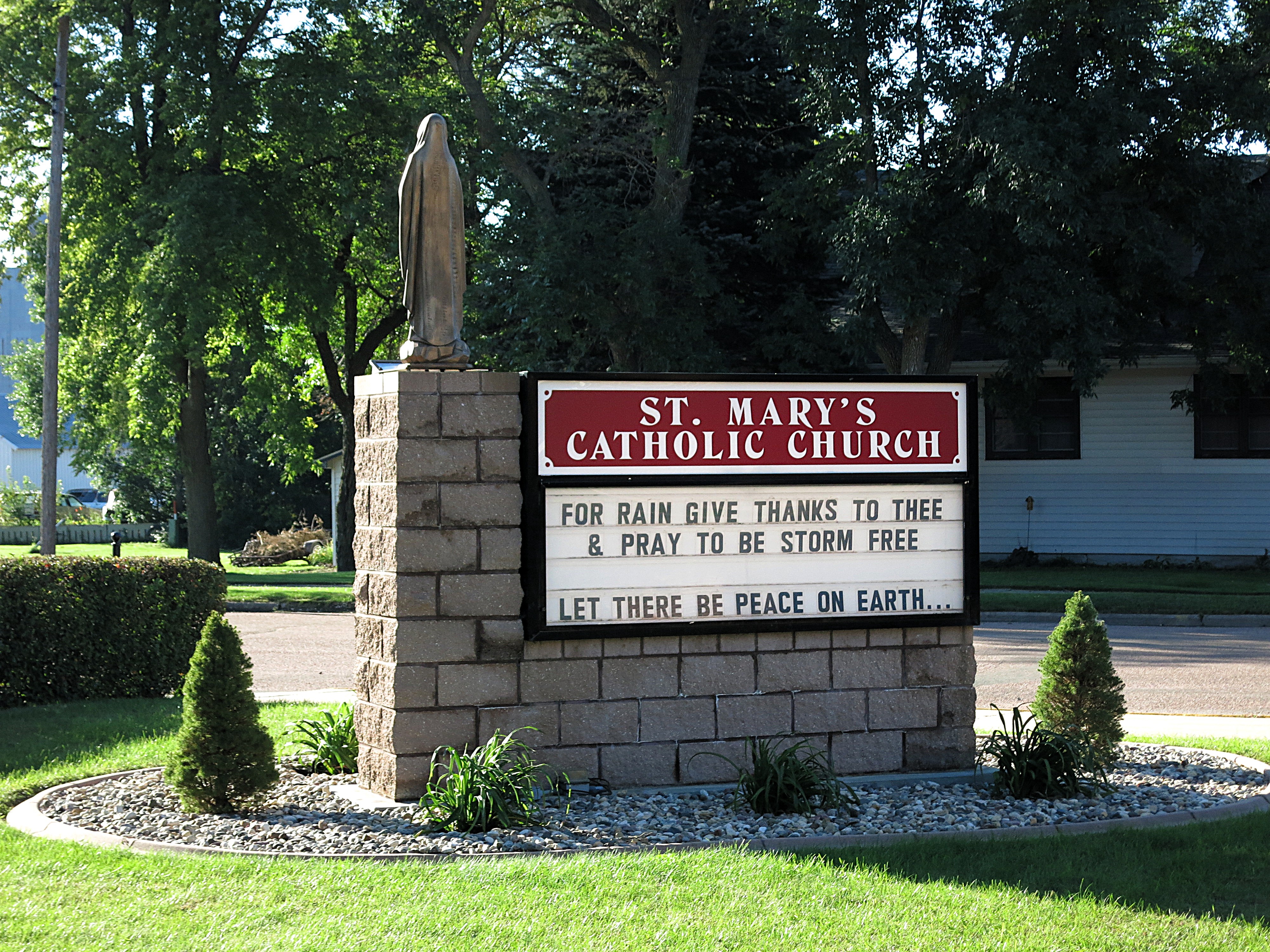
In American civics, we frequently discuss the separation of church and state. Here in Salem, the courthouse represents the “state,” while the town’s Catholic Church is the “church.” St. Mary Catholic Church, located on the other side of Highway 81, was built in 1885 and is listed on the National Register of Historic Places. This beautiful red stone building features a high steeple adorned with crosses.
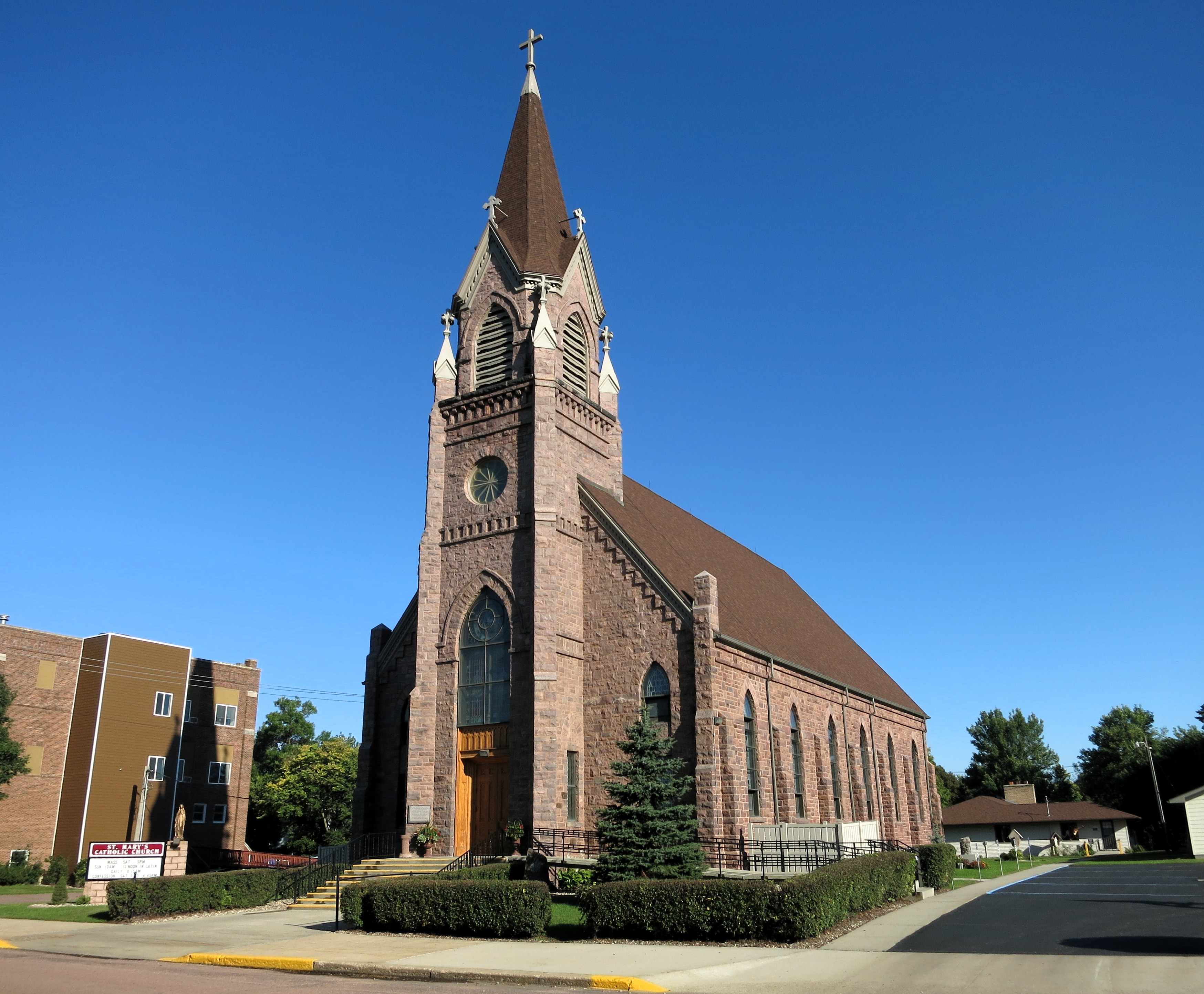
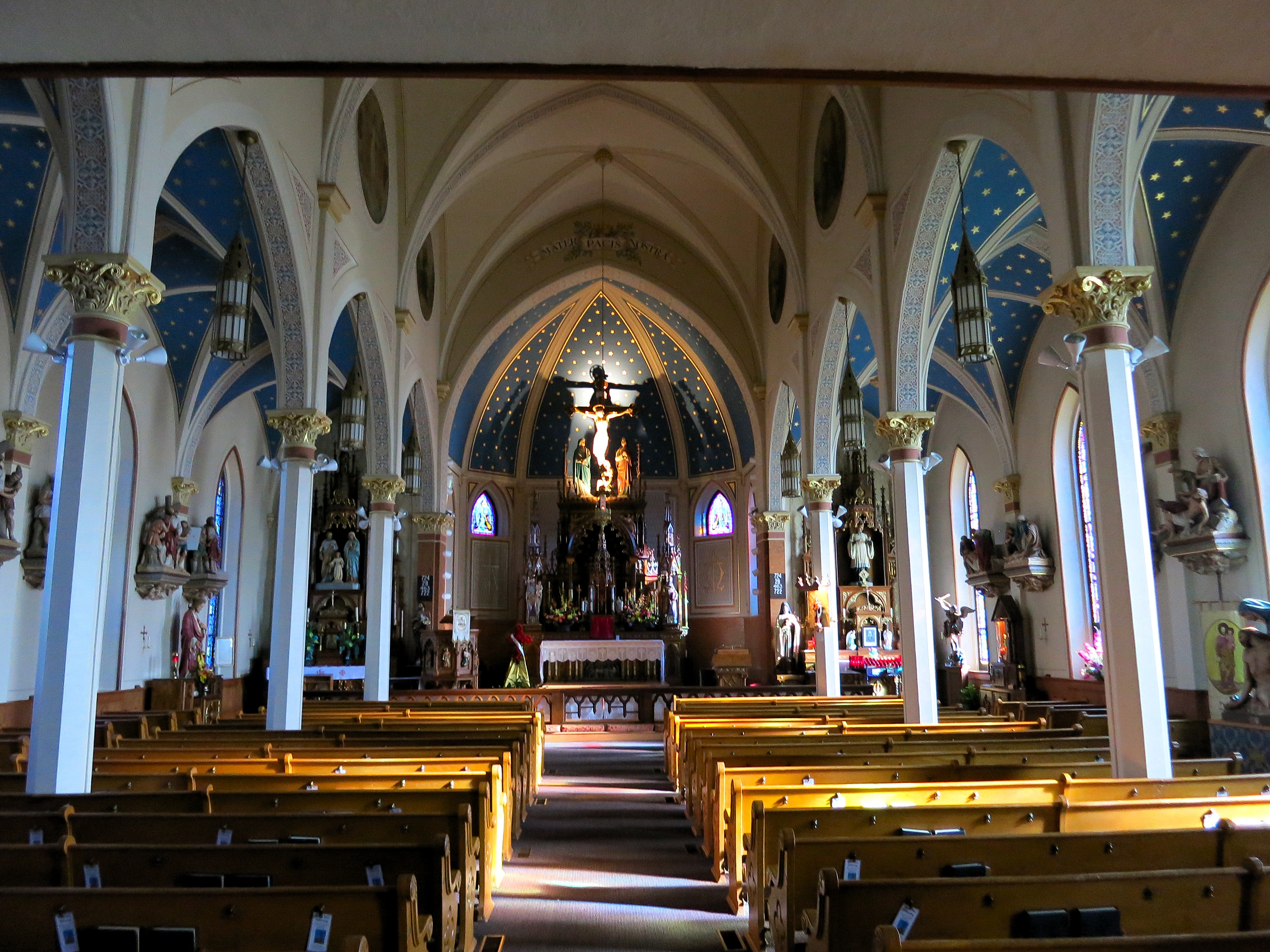
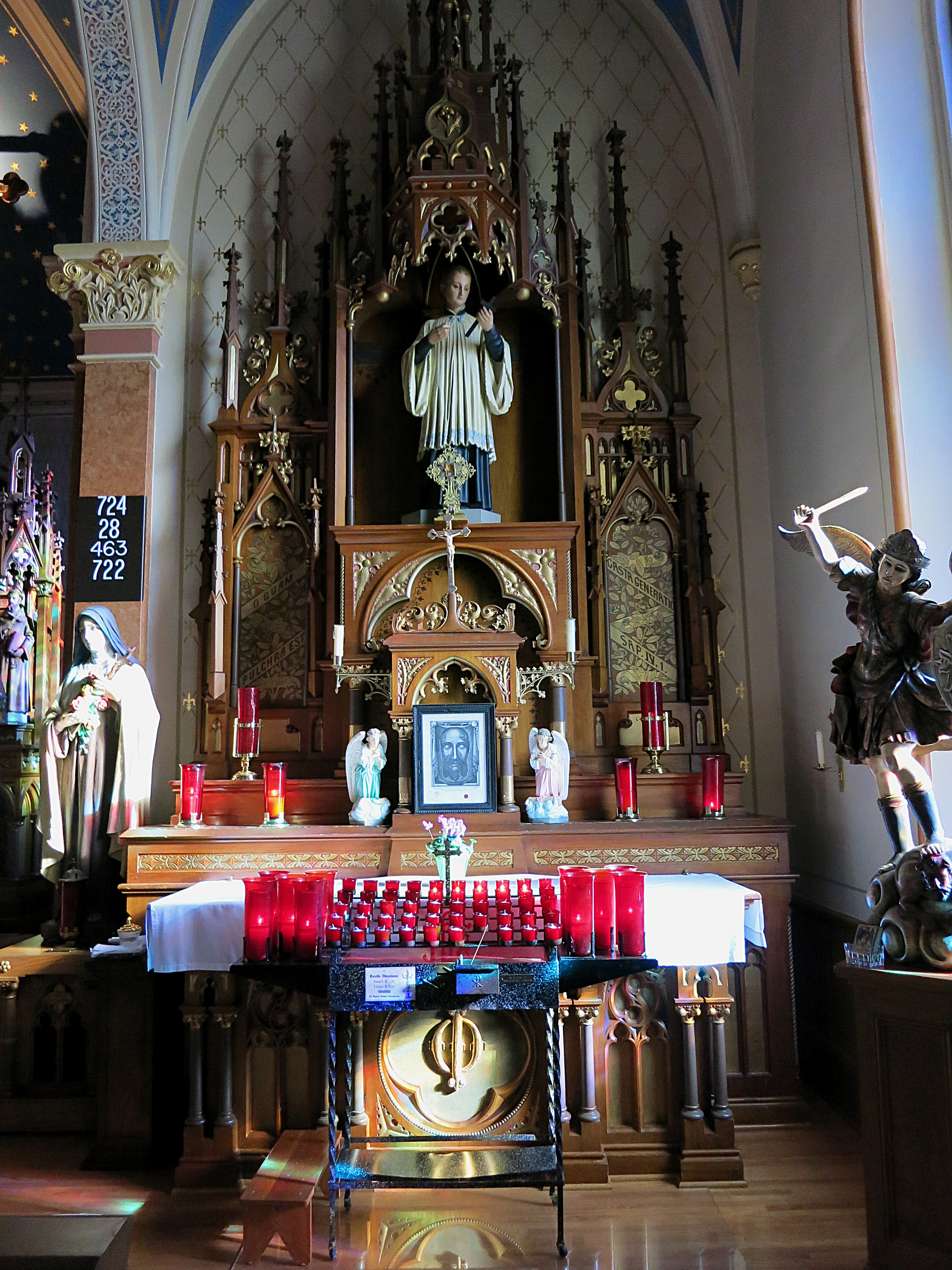
I walked inside and found that no one else was there about an hour after the morning Mass had ended. I was captivated by the statues, the Stations of the Cross, and the stained-glass windows. The crucifix at the front was elevated ten feet above the altar and lit by a spotlight, creating a display of glory in the dimly lit church, symbolizing God’s presence in a darkened world. This church was built by new settlers, basically farmers who prioritized their faith while building homes in a new country.
I walked into the center of town after leaving the church and came across an impressive mural near Main Street. Salem was settled in the late 1800s, and the mural features various nostalgic figures, including a Conestoga wagon, along with the phrase “Dakotah or bust.” In the mural, a little girl asks, “Grand-pa, tell me ’bout the old days…”
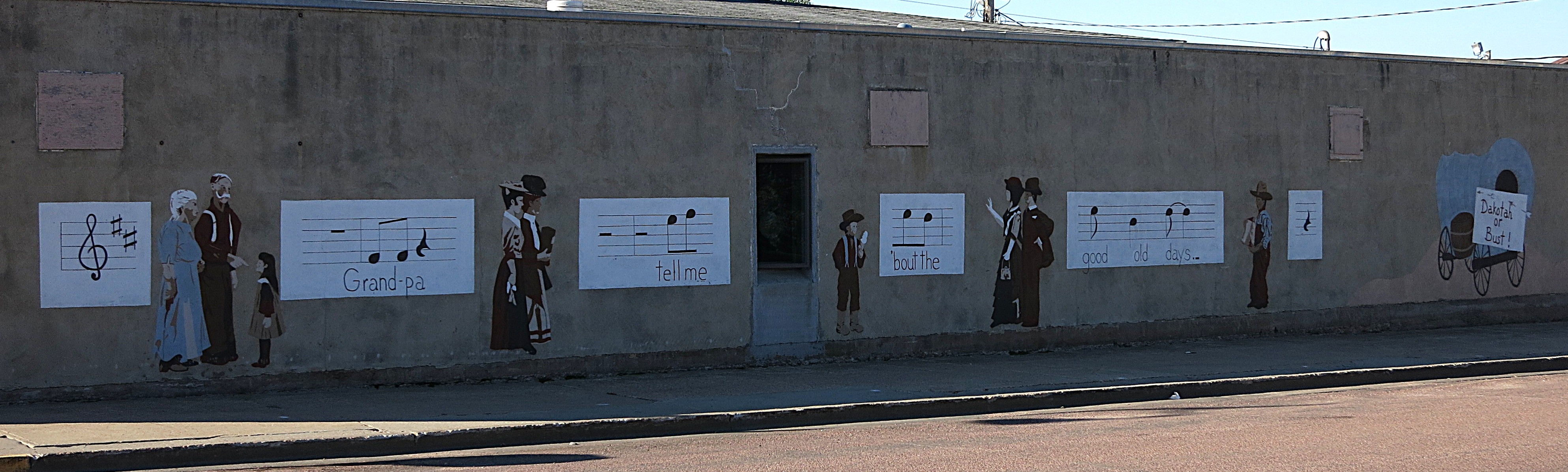
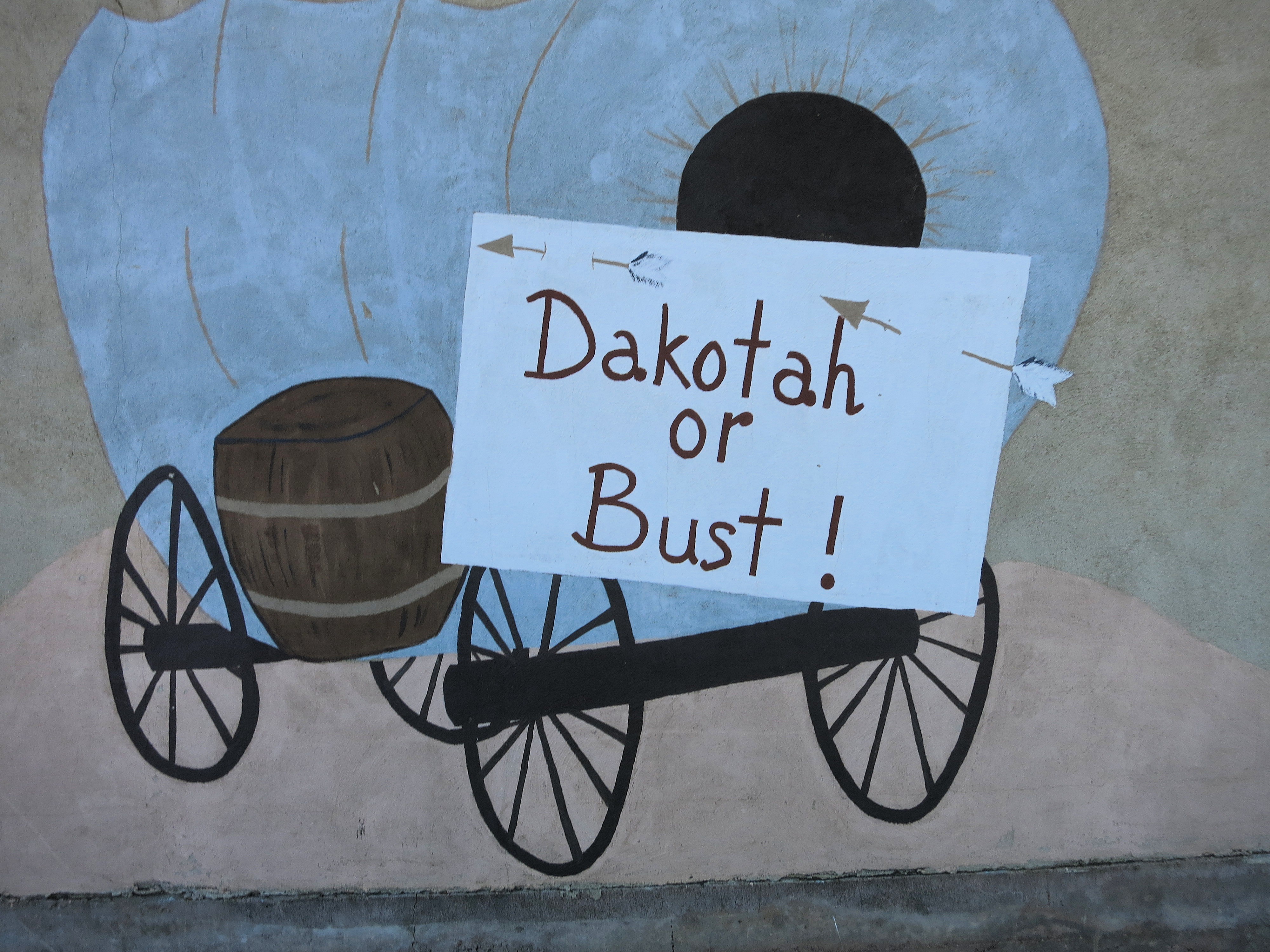
A prominent Salem street mural explains the town’s pioneer origins.

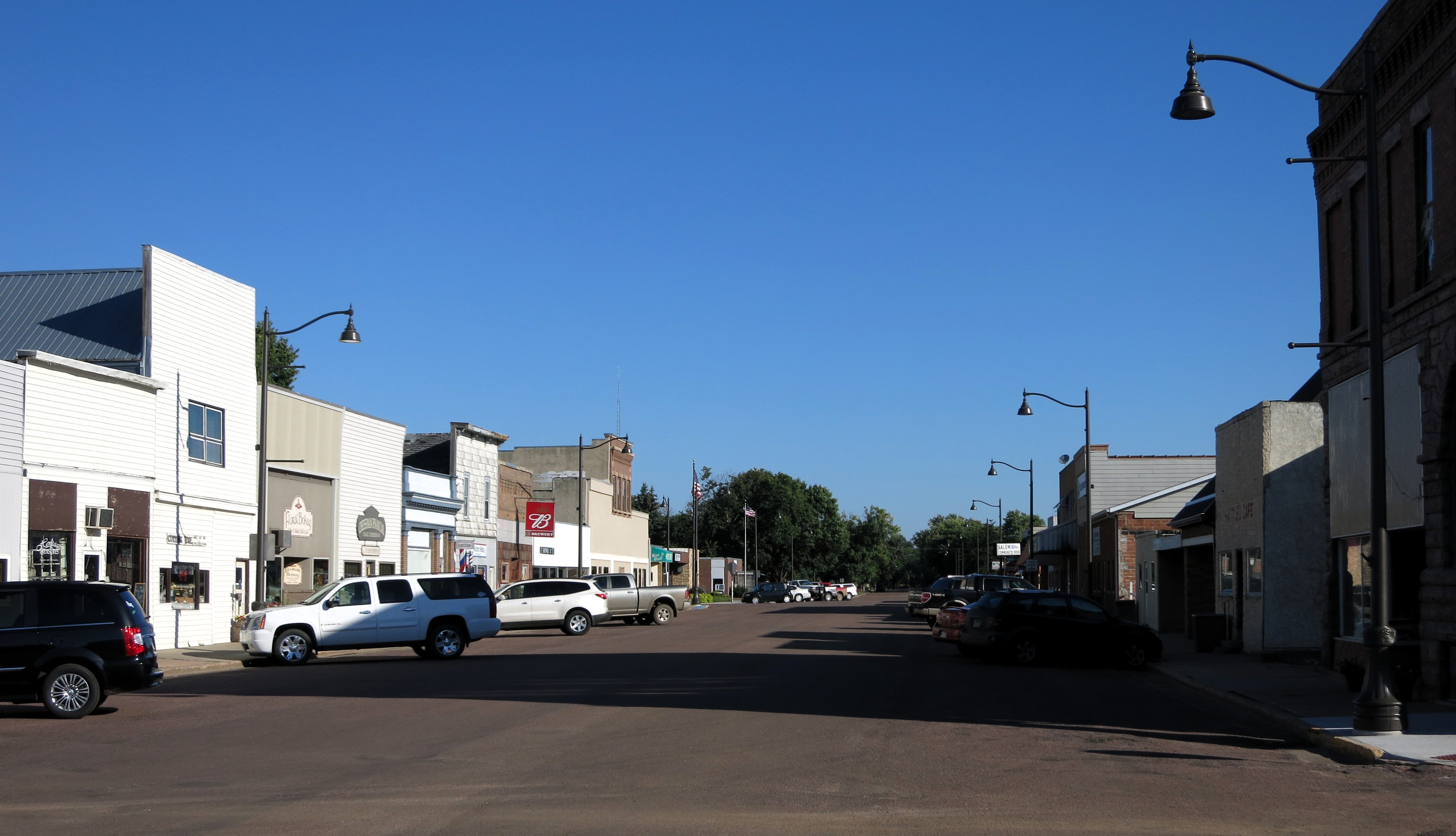
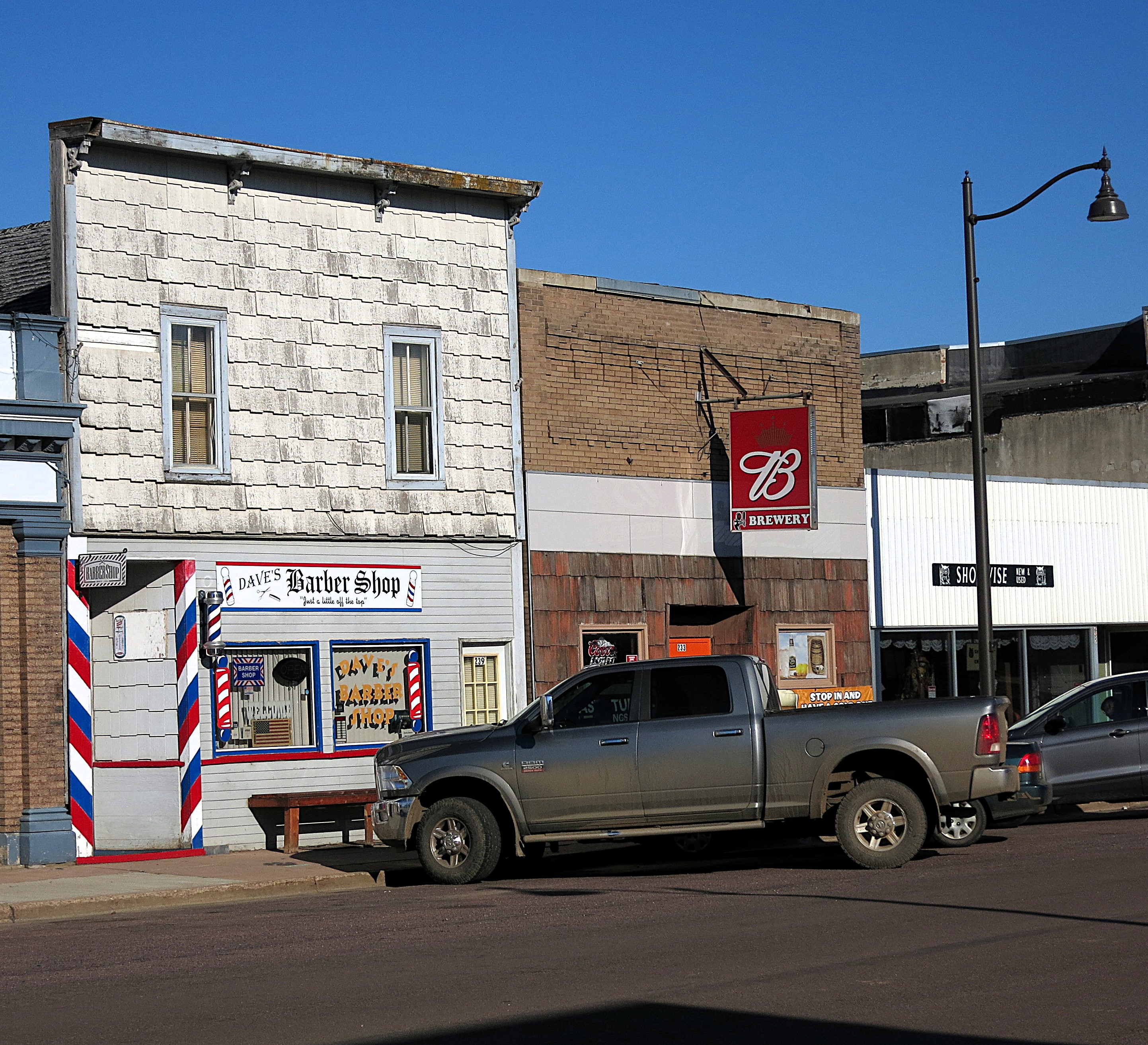
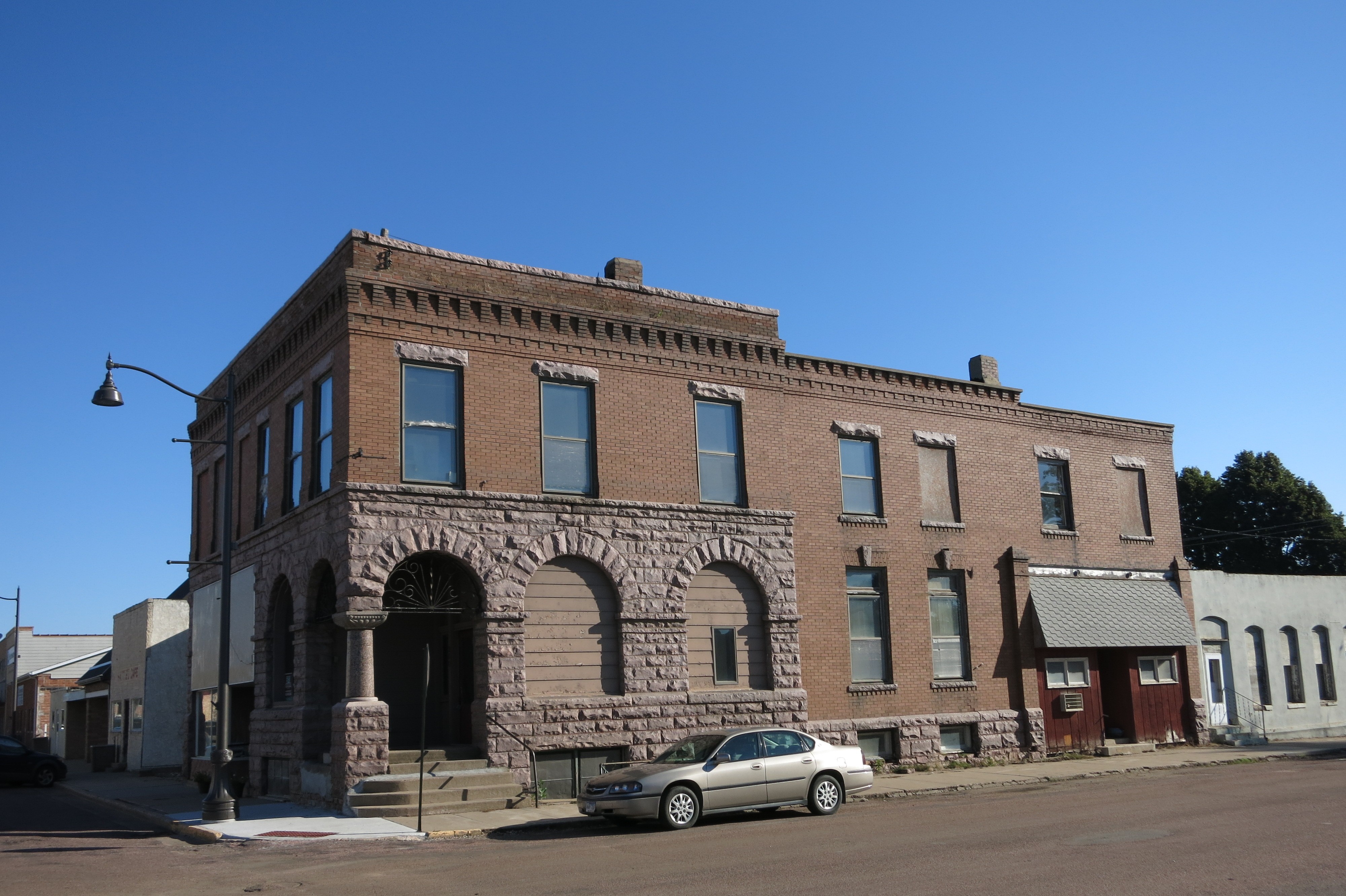
Down the street from the mural, you can find some old buildings that date back to a bygone era. Salem was settled in 1879. St. Mary’s Church was built in 1885, and the elegant bank buildings on Main Street were constructed in 1889. These two buildings (among those shown below) are some of the town’s few remaining structures from the old “Dakotah” period.
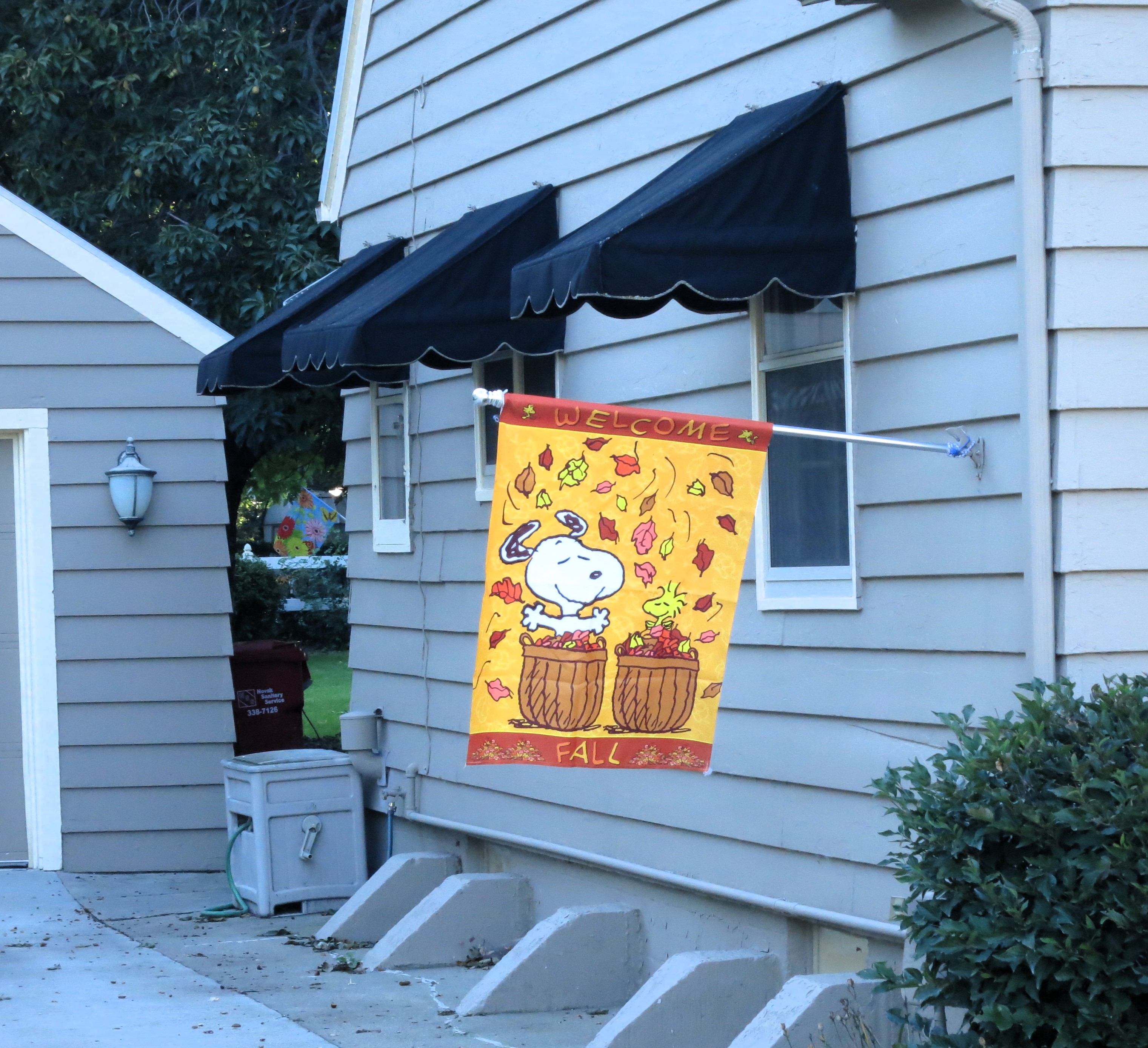
The sign below was found on a house near Main Street: ‘Welcome Fall.’ Indeed.
McCook County within the state of South Dakota

Click here for a list of all TimManBlog American County Seats Series posts.
The photos in this post were taken on September 16, 2014, and are copyrighted by Tim Seibel.

Donations to TimManBlog

I post about a visit to one of America’s 3,150 county seats each month. Donations are greatly appreciated to help defray my travel costs.

$5.00

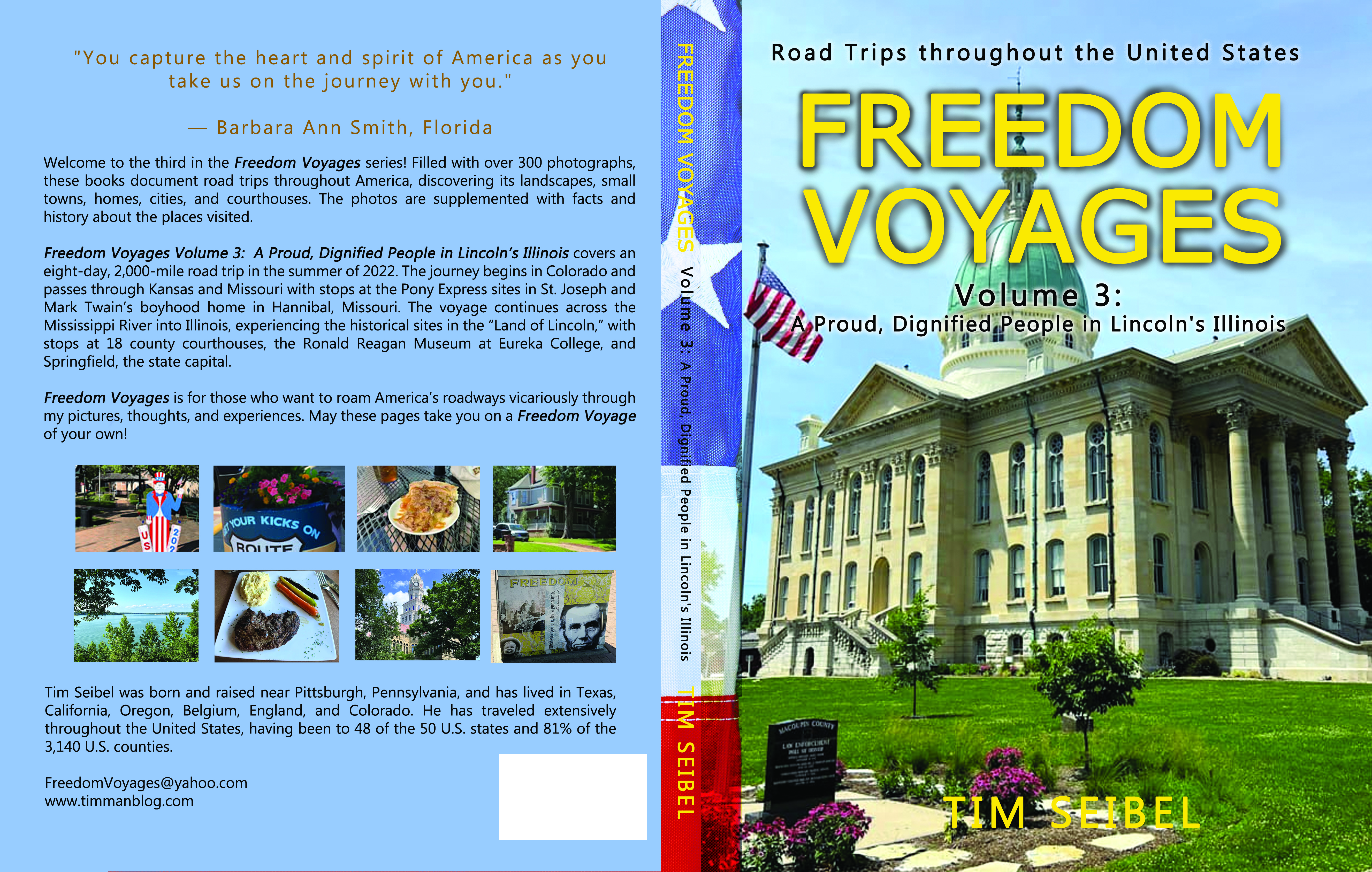
Check out the FREEDOM VOYAGES book series! These books document my road trips across the United States and include hundreds of stunning photographs. Each of the four books in the series is available on Amazon and Barnes & Noble. This includes my most recent release, FREEDOM VOYAGES Volume 4: Christmastime in Texas!
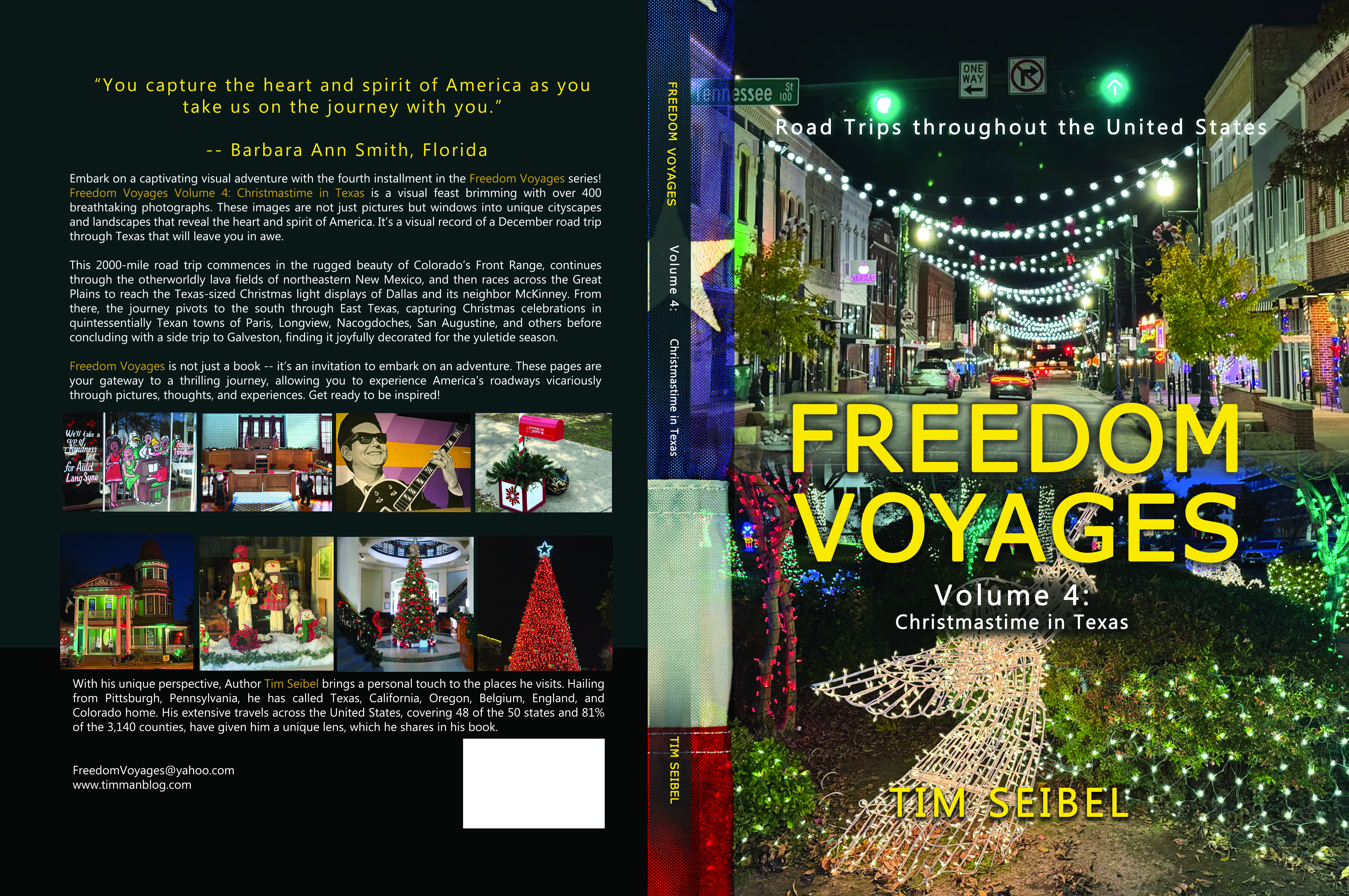
FREEDOM VOYAGES Volume 4: Christmastime in Texas. Available at Amazon.com and Barnes & Noble.

Earlier volumes in the FREEDOM VOYAGES series are also available:
Vol. 1: North-Central North Dakota
Vol. 2: Go West! From the Loneliest Road in America to California’s Gold Country
Vol. 3: A Proud, Dignified People in Lincoln’s Illinois
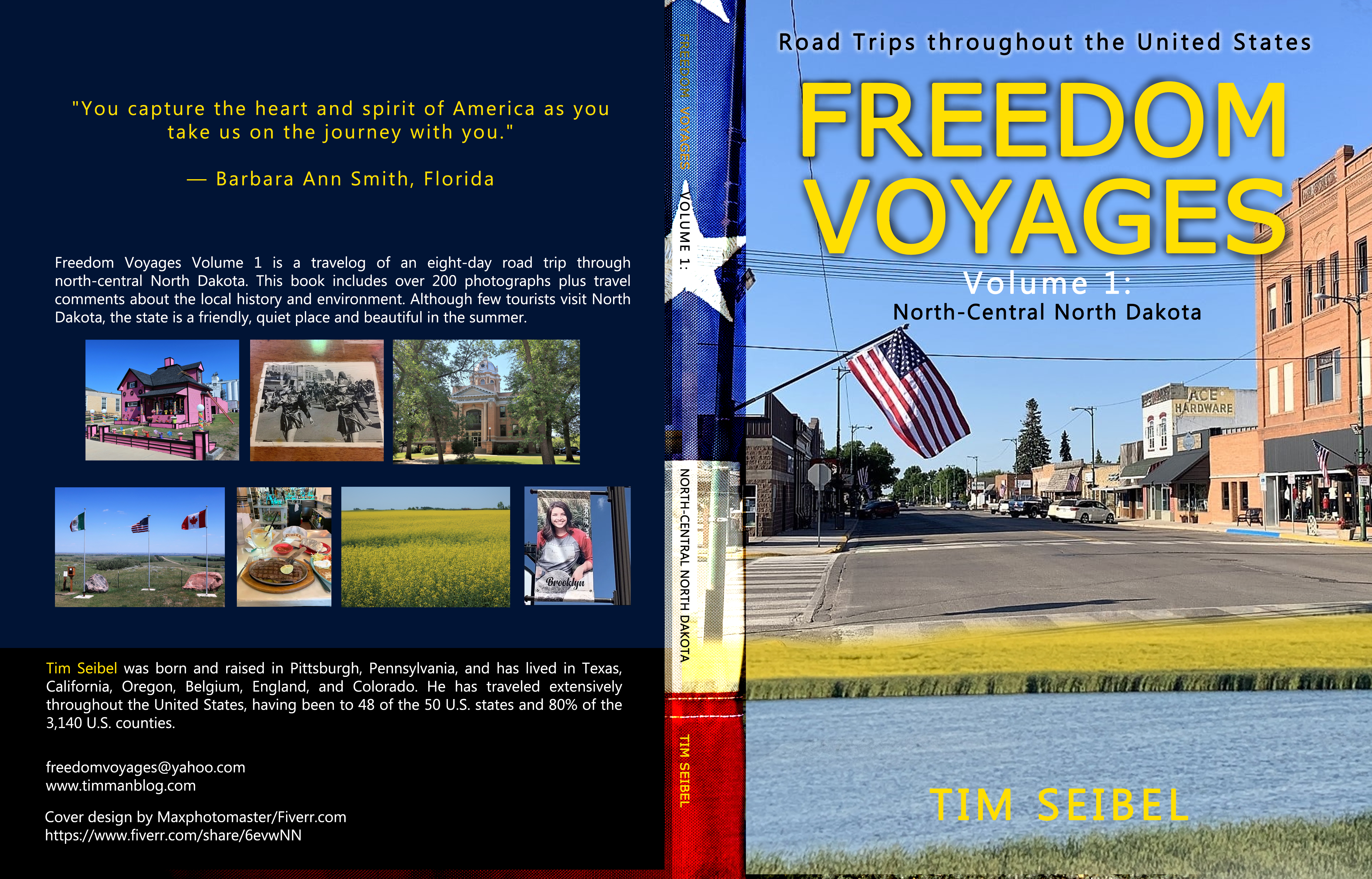
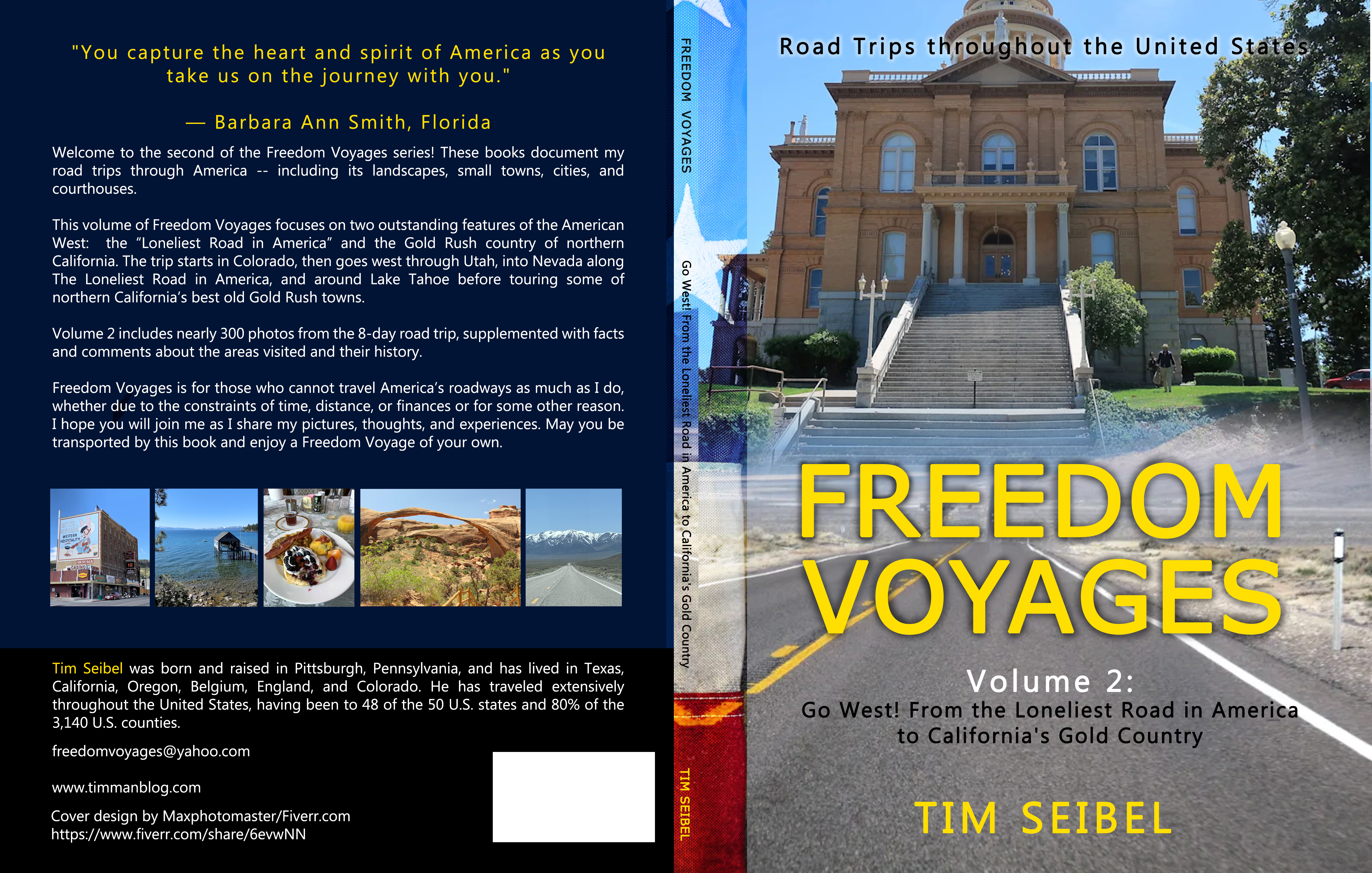
All FREEDOM VOYAGES books are on sale at Amazon.com and Barnes & Noble.
The Far Edge of the Country: Gold Beach, Oregon

May 31, 2024
(photos and memories from May 2017)
(If you like my posts, you can support this site with a donation via Paypal, Visa, Amex, Mastercard, or Discover by using the form at the bottom of this post. Thank you.)

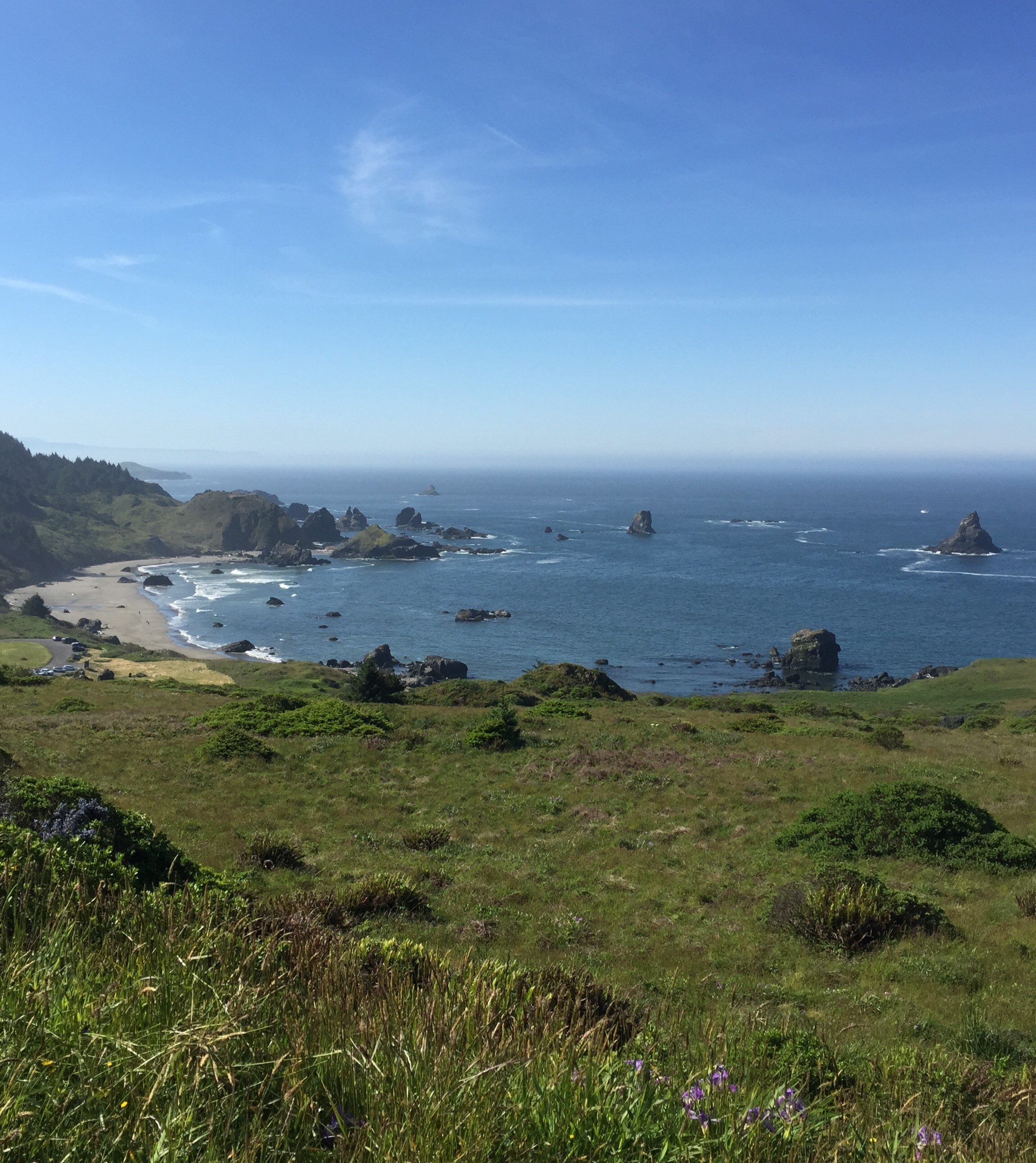
Seven years ago, on my birthday, I returned to Curry County, Oregon, hoping that some sort of birthday magic would provide me with a beautiful day. It worked.

The southern Oregon coast near Gold Beach.

For those of you unfamiliar with this part of the country and this part of Oregon, Gold Beach is a town, not a beach resort. It was never at the end of the Oregon Trail — that pathway of emigration dropped off its travelers over 300 miles to the north near Portland and the Columbia River. Gold Beach is the seat of Curry County at the southwestern corner of Oregon, at the mouth of southern Oregon’s Rogue River, just north of the California border.

Gold Beach earned its name when early settlers found specks of gold in the sands at the mouth of the Rogue. There was great anticipation of more gold to be found, but the miners were ultimately disappointed. Some residents stayed here anyway, and Gold Beach became a town in 1890. Its population today is a bit over 2,000.

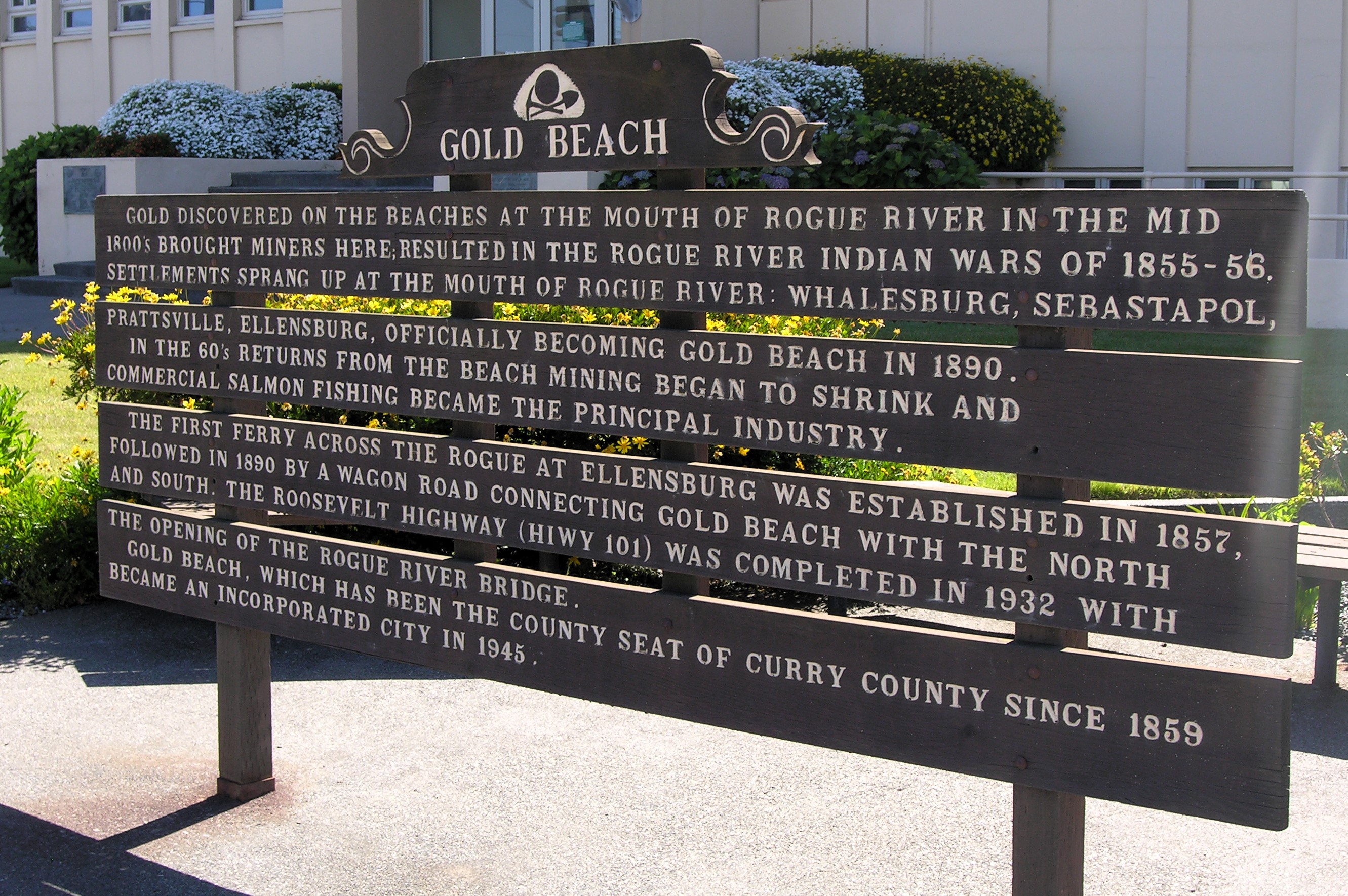
Below is a rundown of the town’s history, as told by the sign in front of the county courthouse.

The history of Gold Beach, Oregon.
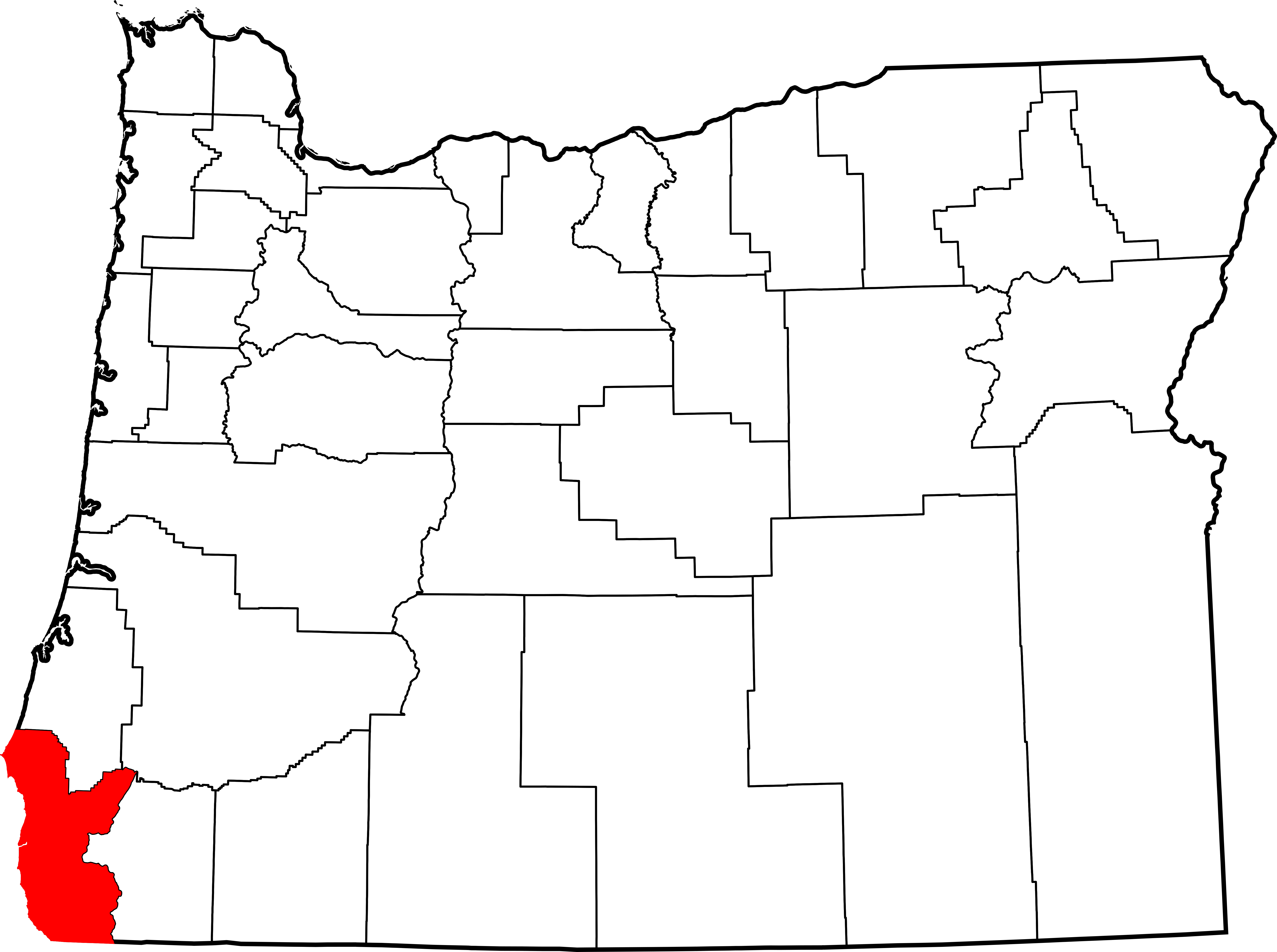
Curry County within the state of Oregon

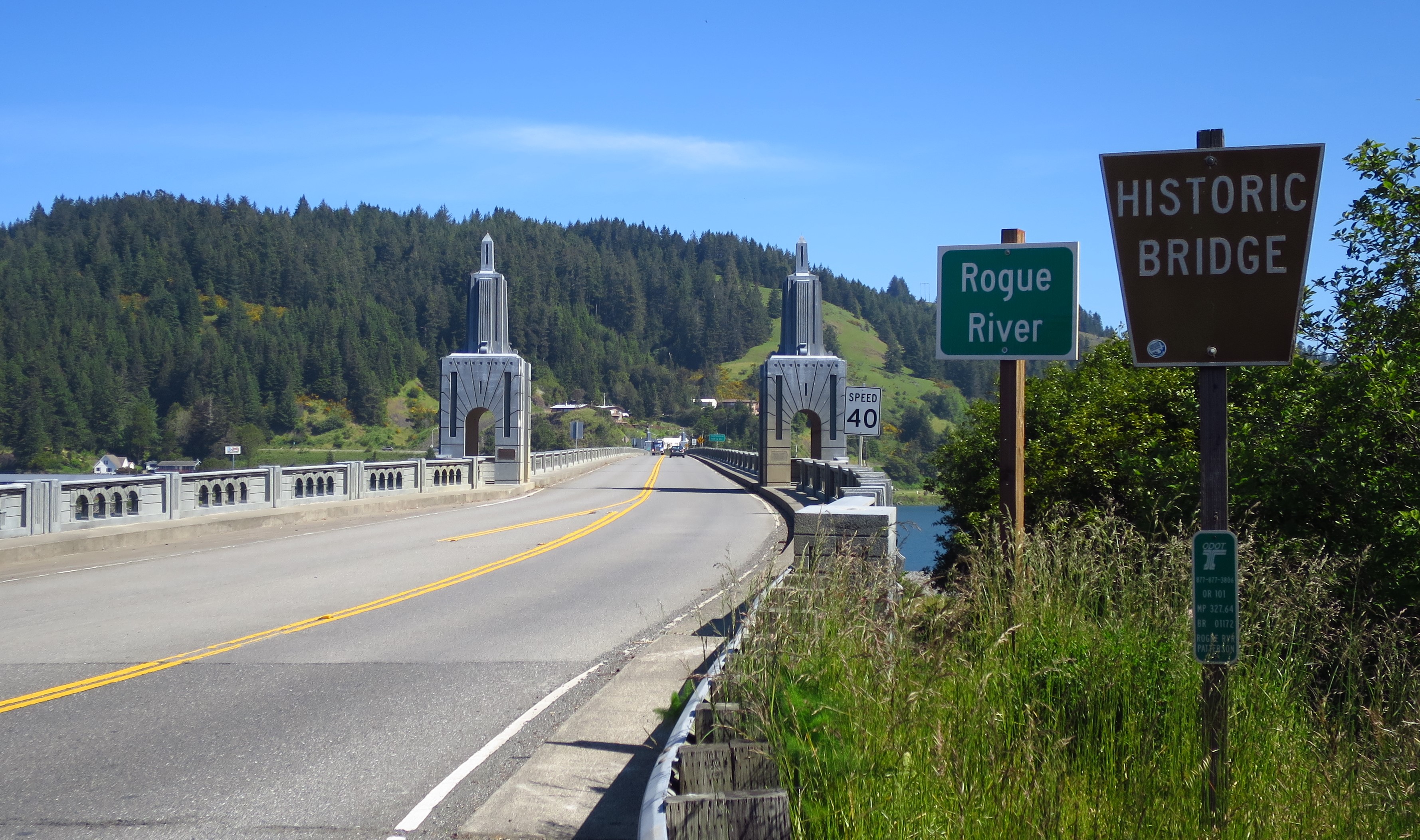
Although strategically located at the mouth of a large river, the Rogue, Gold Beach has never grown as a seaport since lands bordering the river are steep, rocky, and difficult to farm. Only a few roads head inland from Gold Beach; these roads are steep gravel tracks without asphalt. (I traveled them once years ago in my passenger car and deemed myself lucky not to have slid off the side of a cliff.) The terrain is so difficult that mail to upriver residents is delivered by U.S. Postal Service mailboats, one of only two rural mailboat routes remaining in the country. The Patterson Bridge over the Rogue River was built in 1932 during the Great Depression, allowing traffic to move north and south along U.S. Highway 101 up and down the Oregon Coast without interruption.

But that’s enough background. Here are some photos of this beautiful area.

The Patterson Bridge over the Rogue River at Gold Beach, Oregon. Built in 1932.
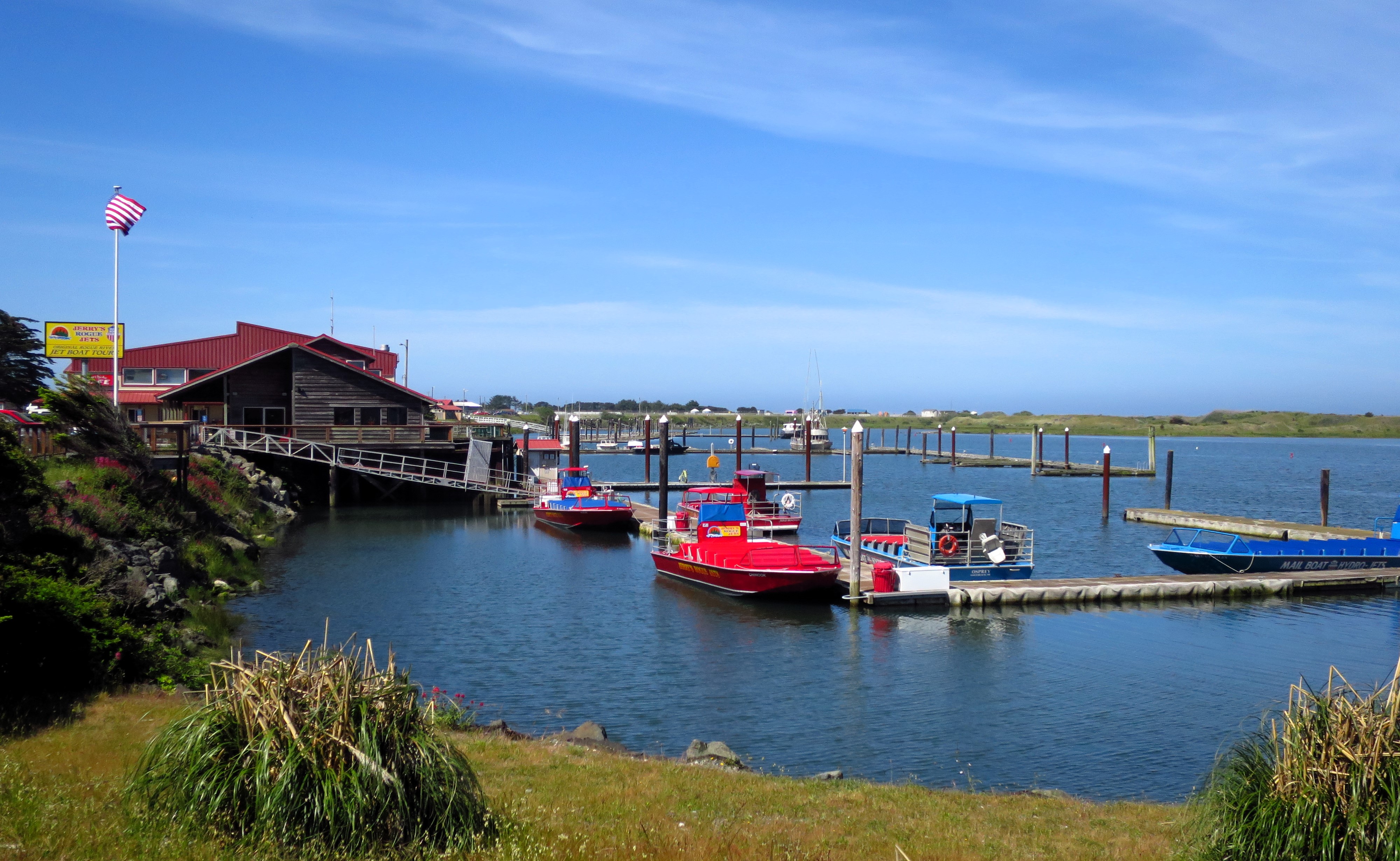
Boats moored along the Rogue at Gold Beach.

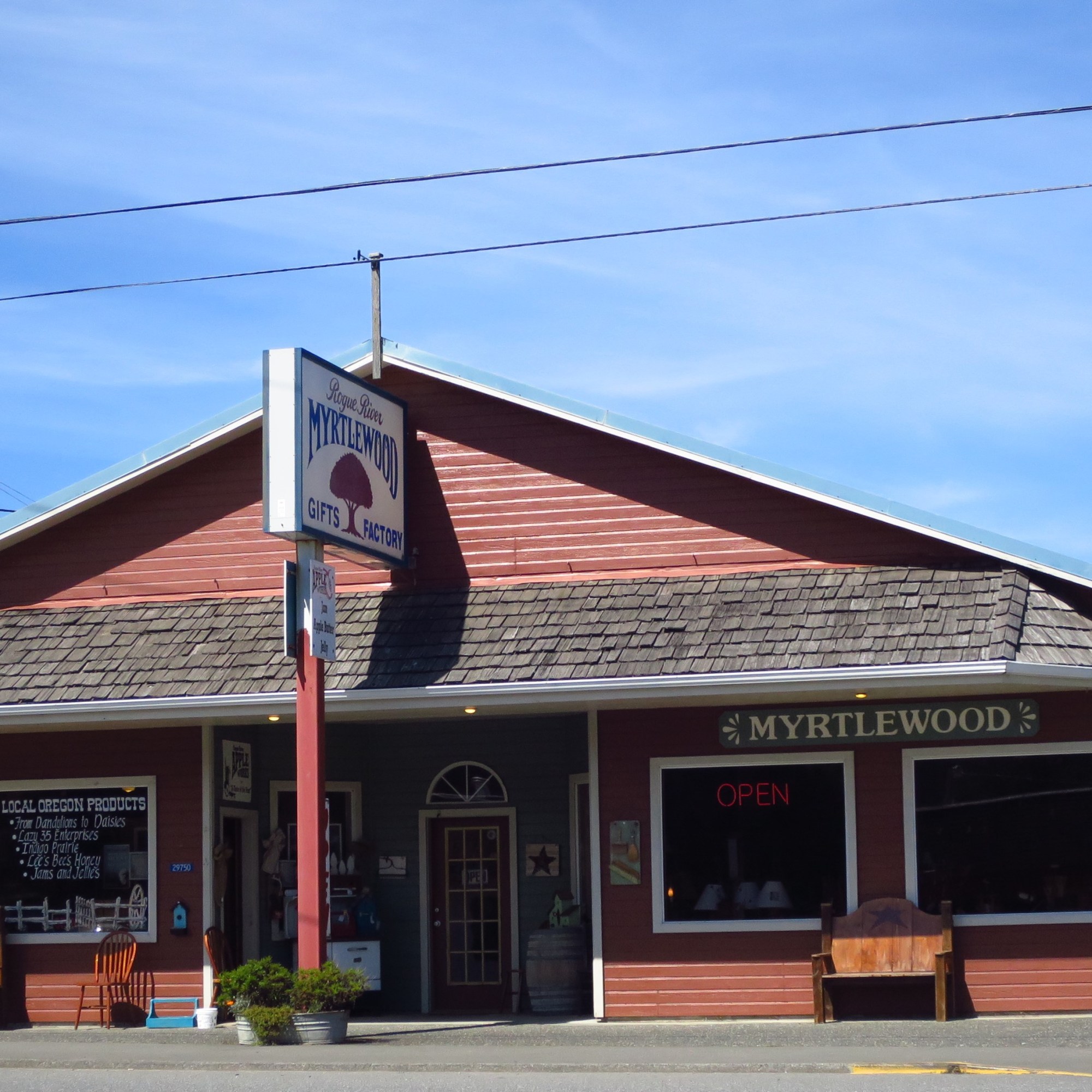
U.S. Highway 101 runs along the length of the Pacific Coast from Washington to California. This is Gold Beach’s main street, and the small town has only a few other streets besides this one. Below is Highway 101’s appearance in Gold Beach and some businesses and signs associated with the local commerce.

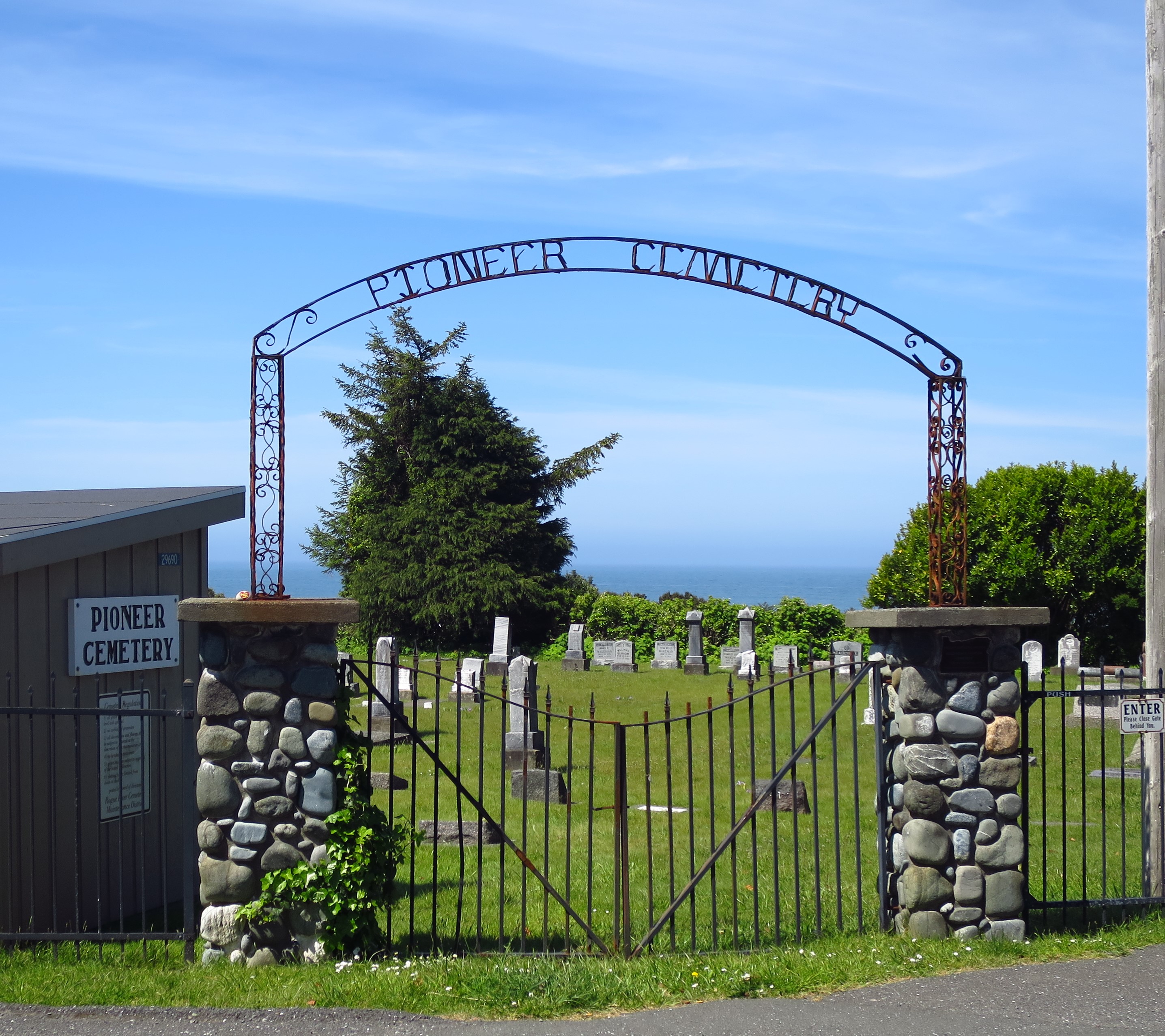
The Gold Beach Pioneer Cemetary, overlooking the Pacific Ocean.
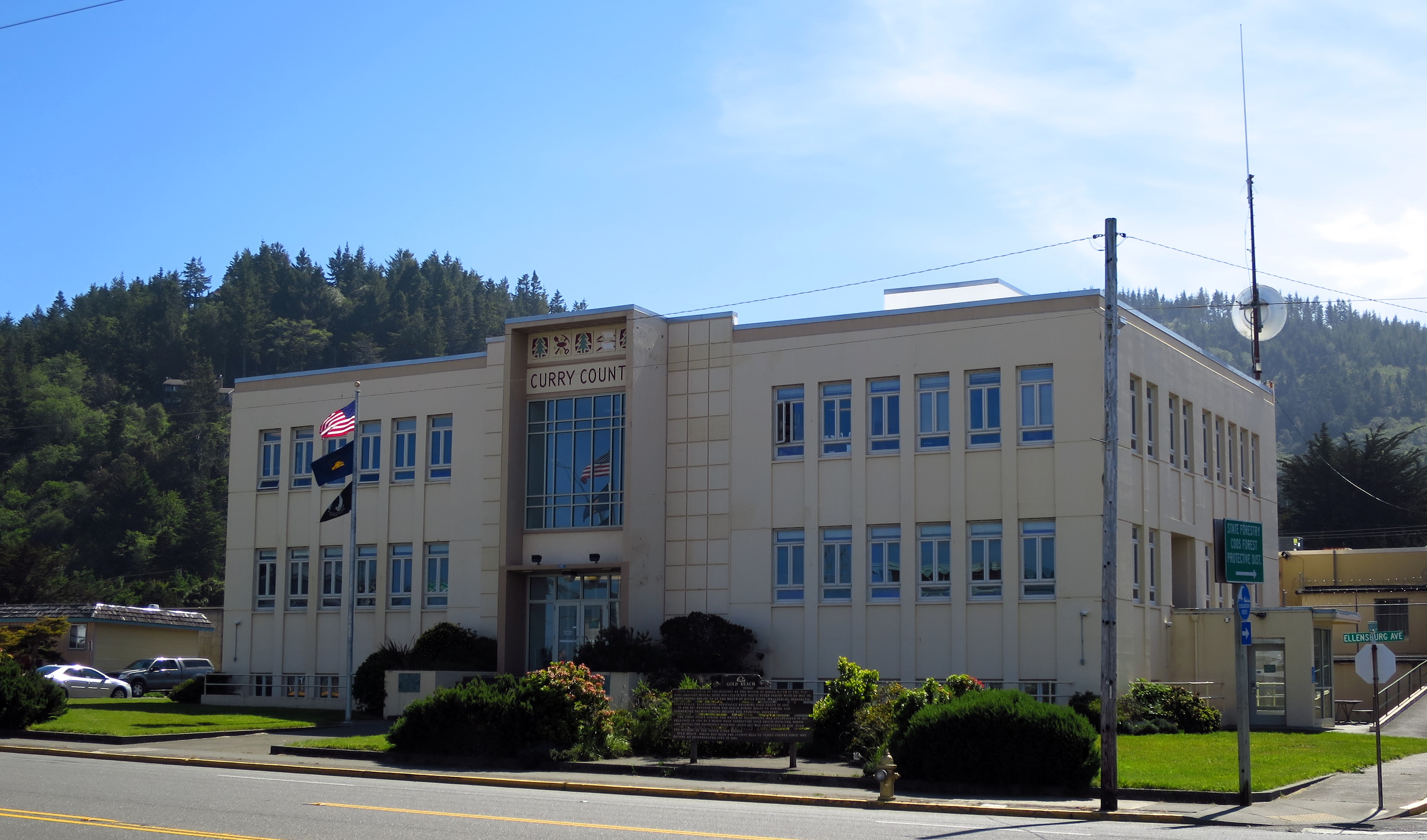
The Curry County Courthouse in Gold Beach, Oregon.

This next picture might be my favorite. See that house halfway up the hillside? It overlooks town and the Pacific Ocean. There’s been a little bit of retirement settlement in town, and this house might belong to someone who has moved here after making their fortune in California. I’d happily live there, enjoying the ocean views every single day.

Hillsides overlooking Gold Beach.
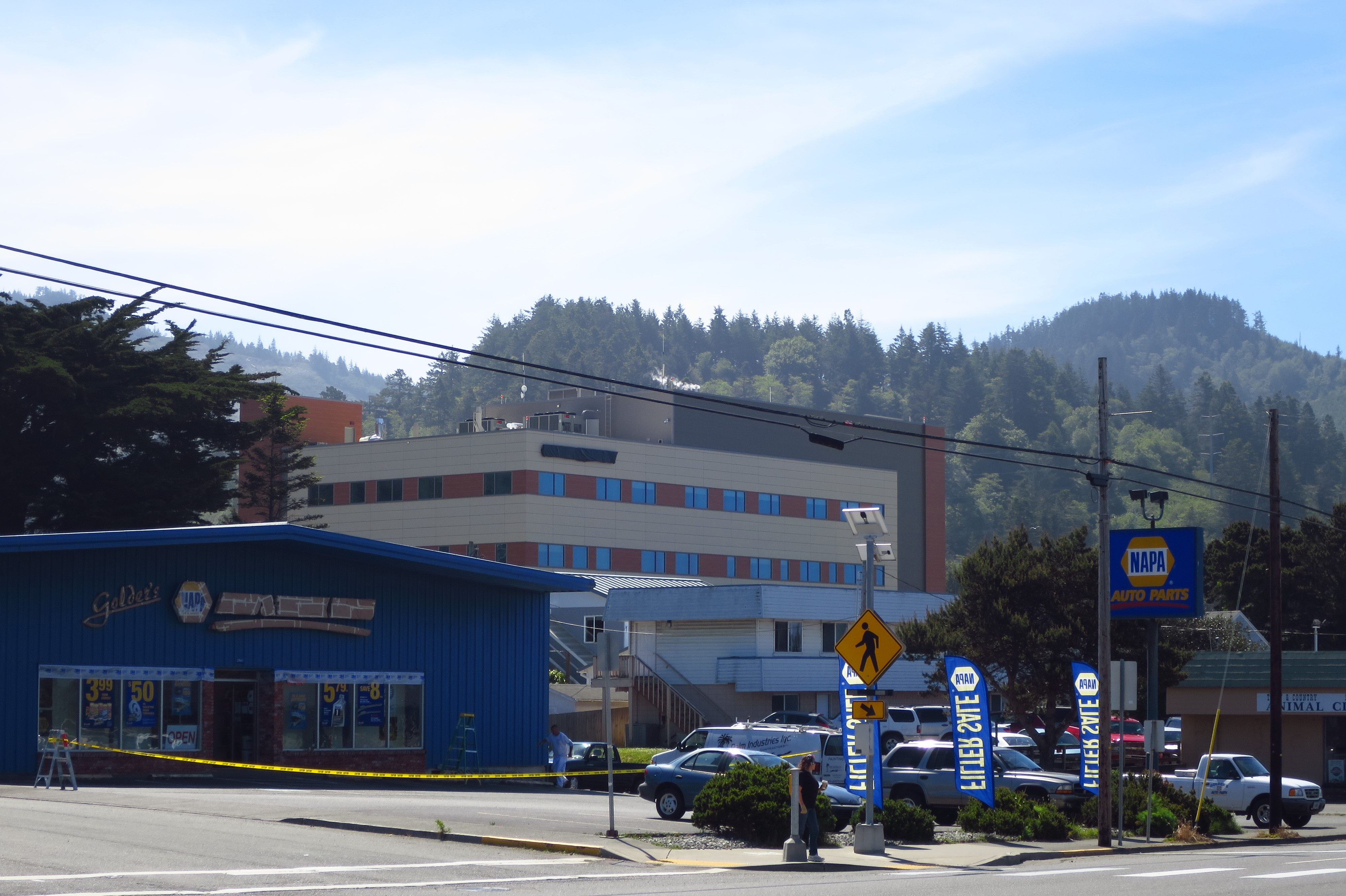
Gold Beach’s new 4-story hospital.

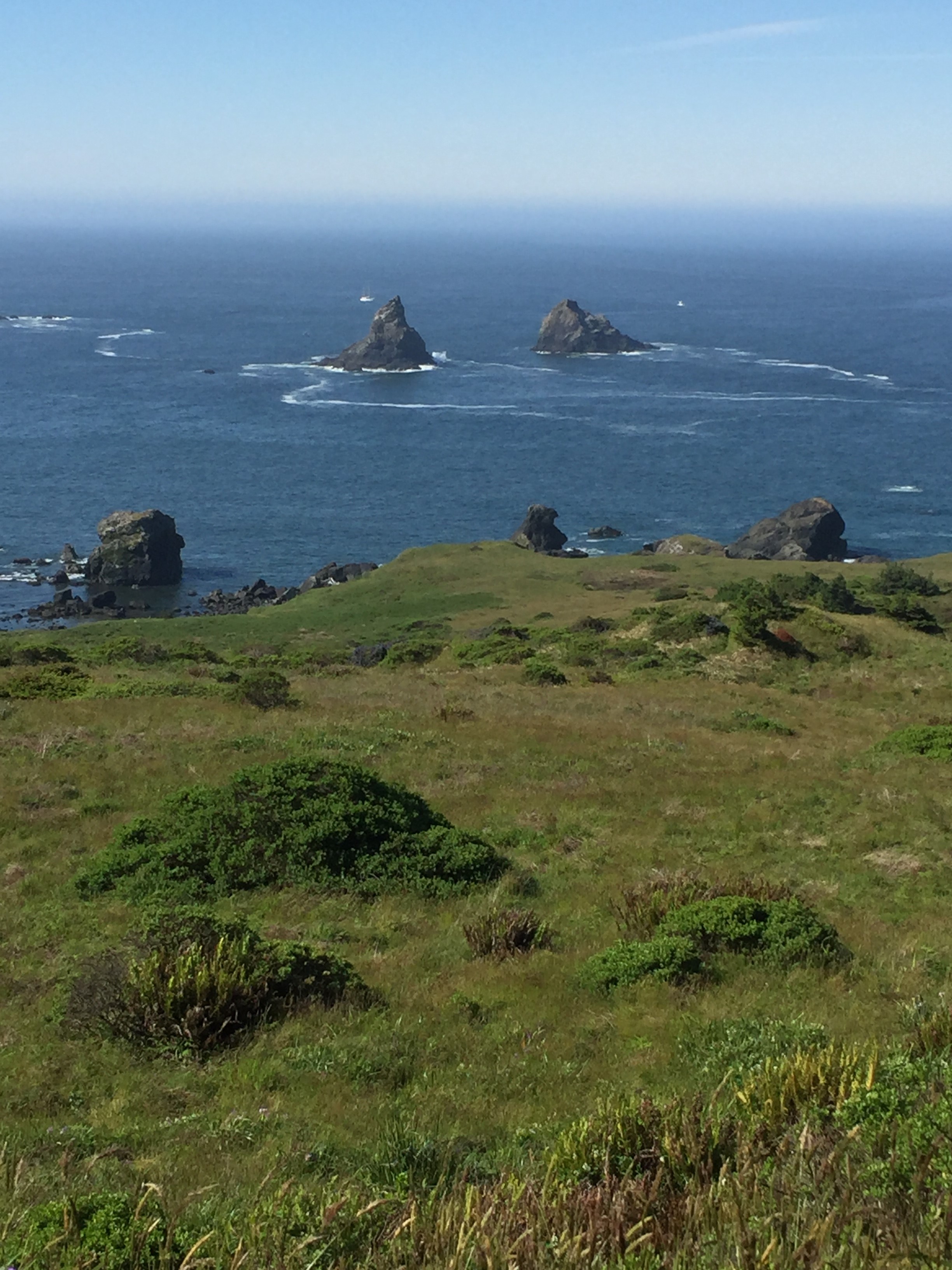
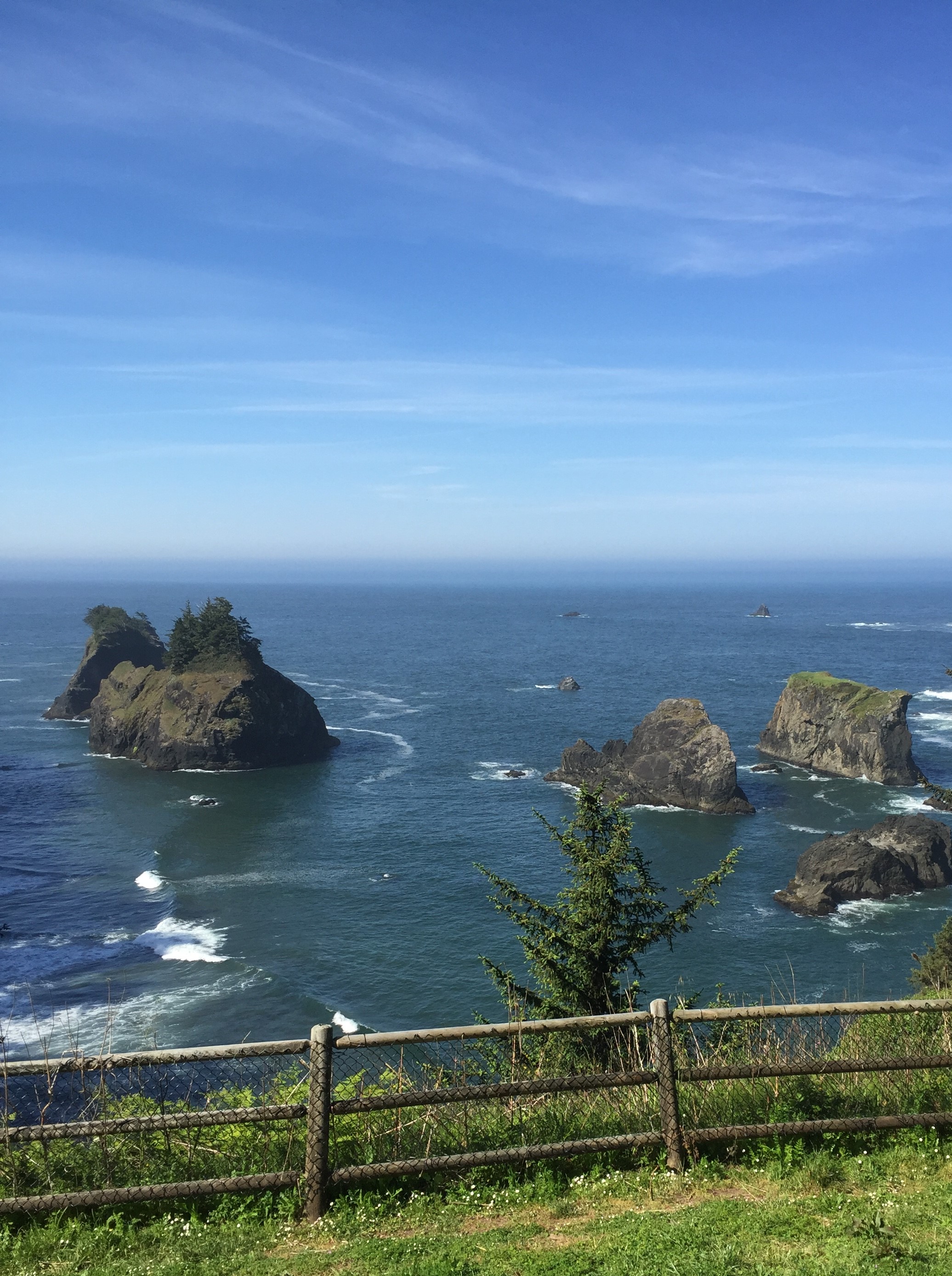
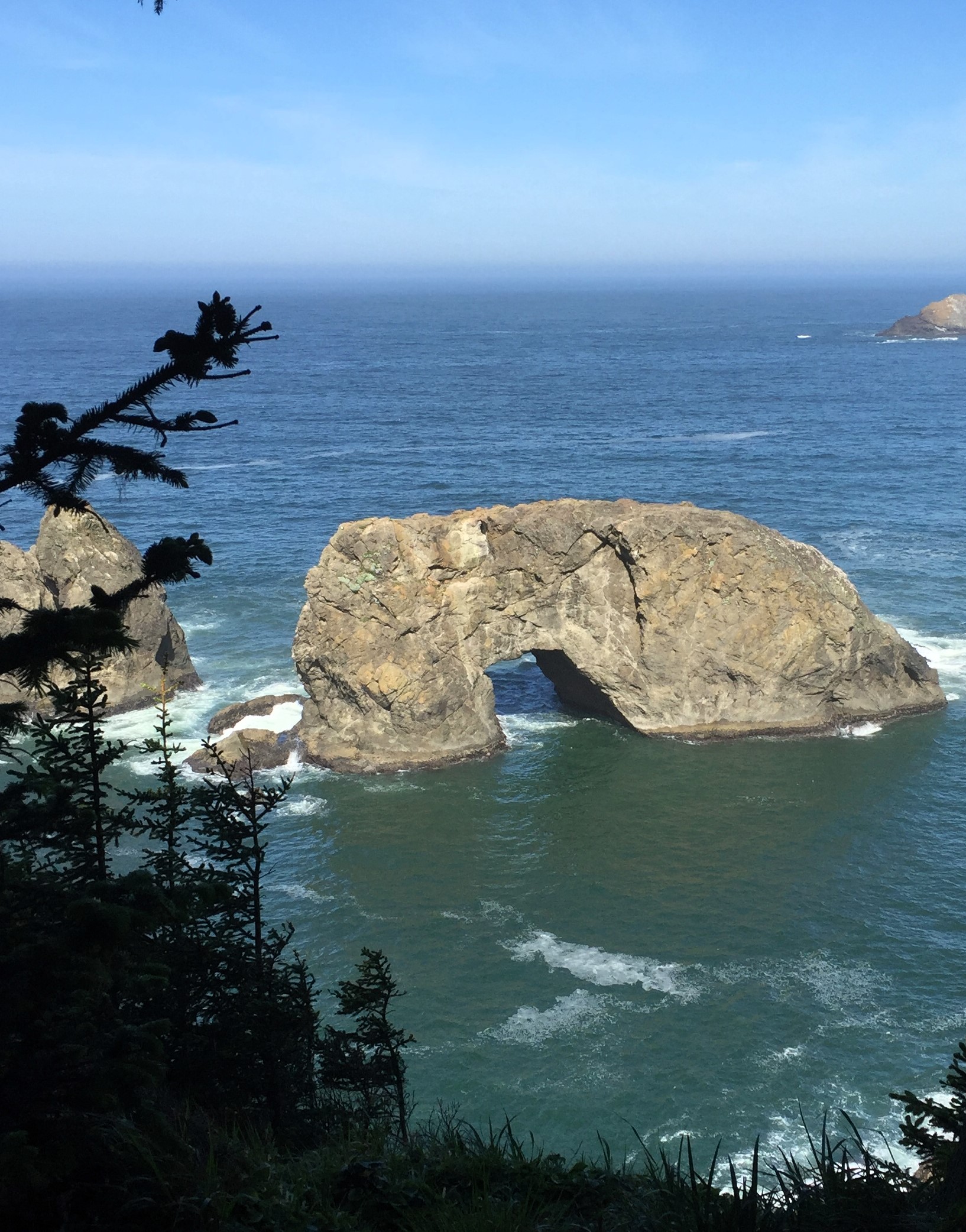
I’ll finish the post with some views of the Pacific Ocean. These were taken at various turnouts along Highway 101 south of Gold Beach toward the larger town of Brookings. Brookings is the largest town in Curry County — it has 6,000 residents.


A list of all photo posts from the American County Seats series in TimManBlog can be found here.

All photos were taken by the author on May 22, 2017, except for the photo of the sign explaining Gold Beach’s history — that photo was taken in 2007.

My lifetime hobby is traveling to all of America’s county courthouses, and each month, I post about a visit to a scenic or exciting county seat. It’s a hobby, and donations are greatly appreciated to help cover my costs.

Donations to TimManBlog

Use this form to make donations to support this site. Paypal, Visa, Mastercard, Amex, and Discover cards are accepted. Donations can be made in increments of $5.00; increase the number of units to increase the donation amount.

$5.00

Post Navigation