June 30, 2024 (photos and memories from June 2012) (If you like my posts, you can support this site with a donation via Paypal, Visa, Amex, Mastercard, or Discover by using the form at the bottom of this post. Thank you.)
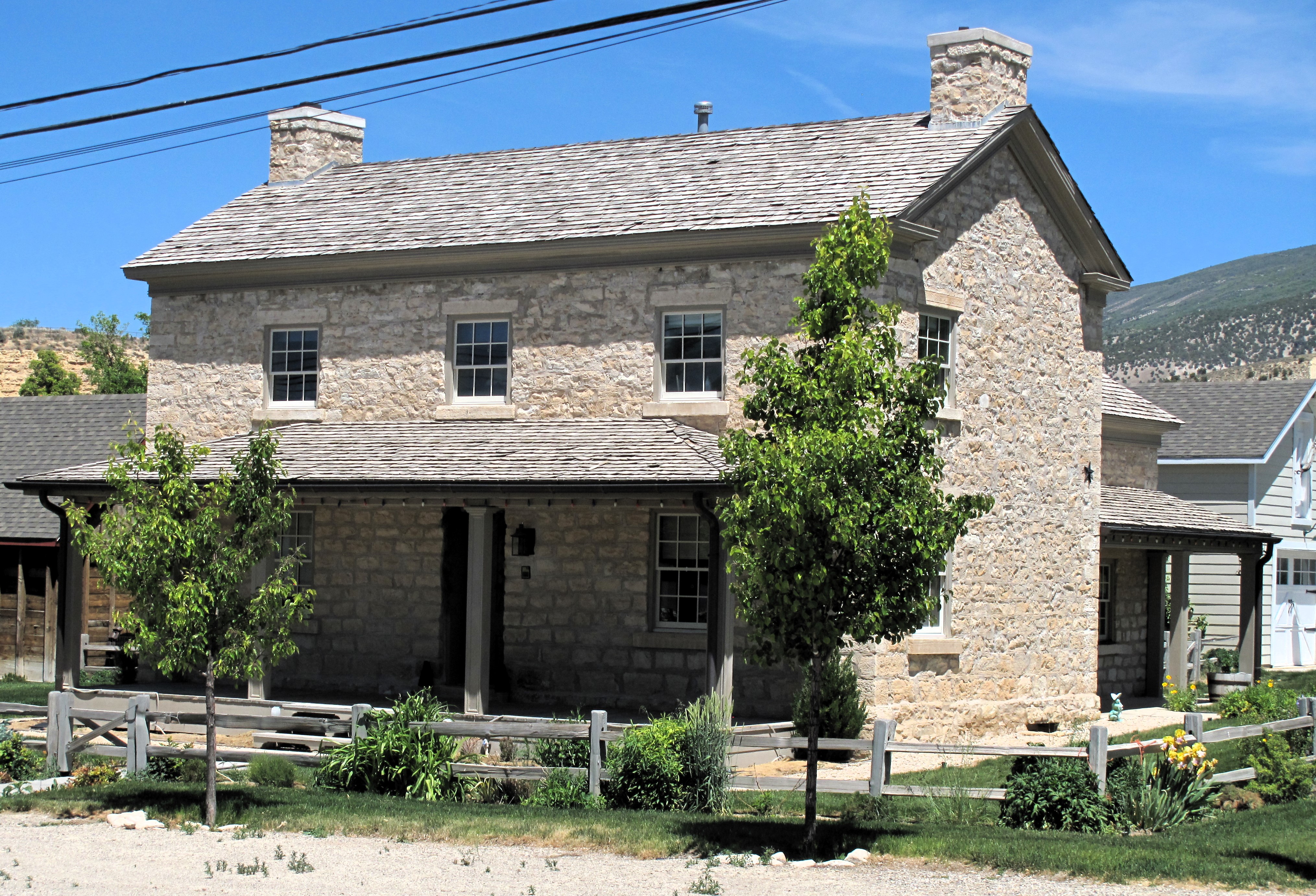
In 1846, Brigham Young led his followers, the Mormons, from Nauvoo, Illinois, into the Rocky Mountains to resettle in the valley of the Great Salt Lake, establishing present-day Salt Lake City, Utah. Once their initial settlement was stable, Young and the other Mormon church elders sent some of their followers into the Wasatch Mountains, searching for hospitable locations where additional Mormon settlements could be established. The town of Manti was one of the earliest of those new Mormon settlements. Founded by George Washington Bradley and Isaac Morley, Manti (sometimes called “Manti City”) was named for a city mentioned in the Book of Mormon. The town of 3,500 is well-situated, happily nestled beneath the palisades of the Sanpete Mountains in central Utah, 125 miles south of Salt Lake City.
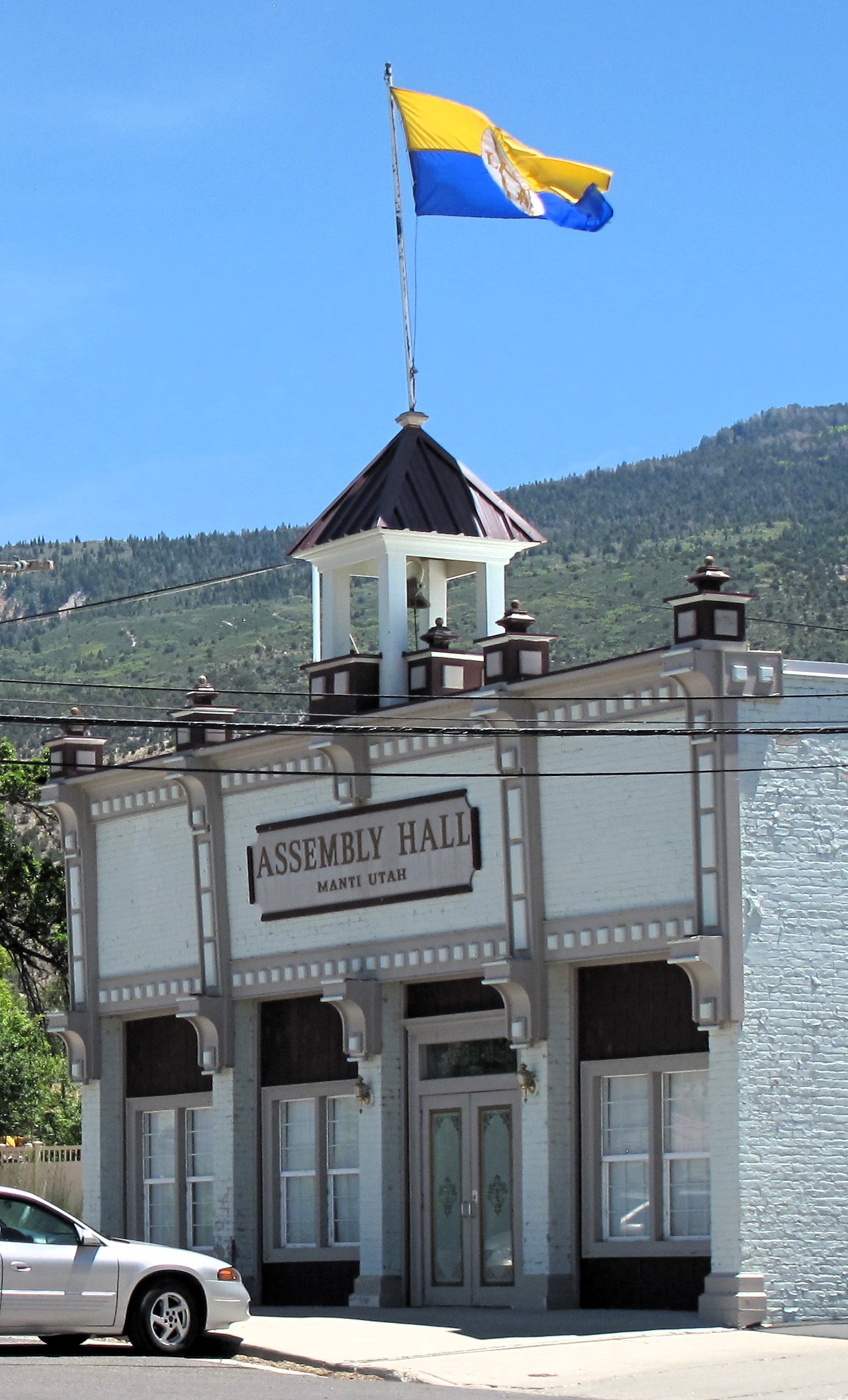
The old Manti town Assembly Hall beneath the Sanpete Mountains of central Utah.
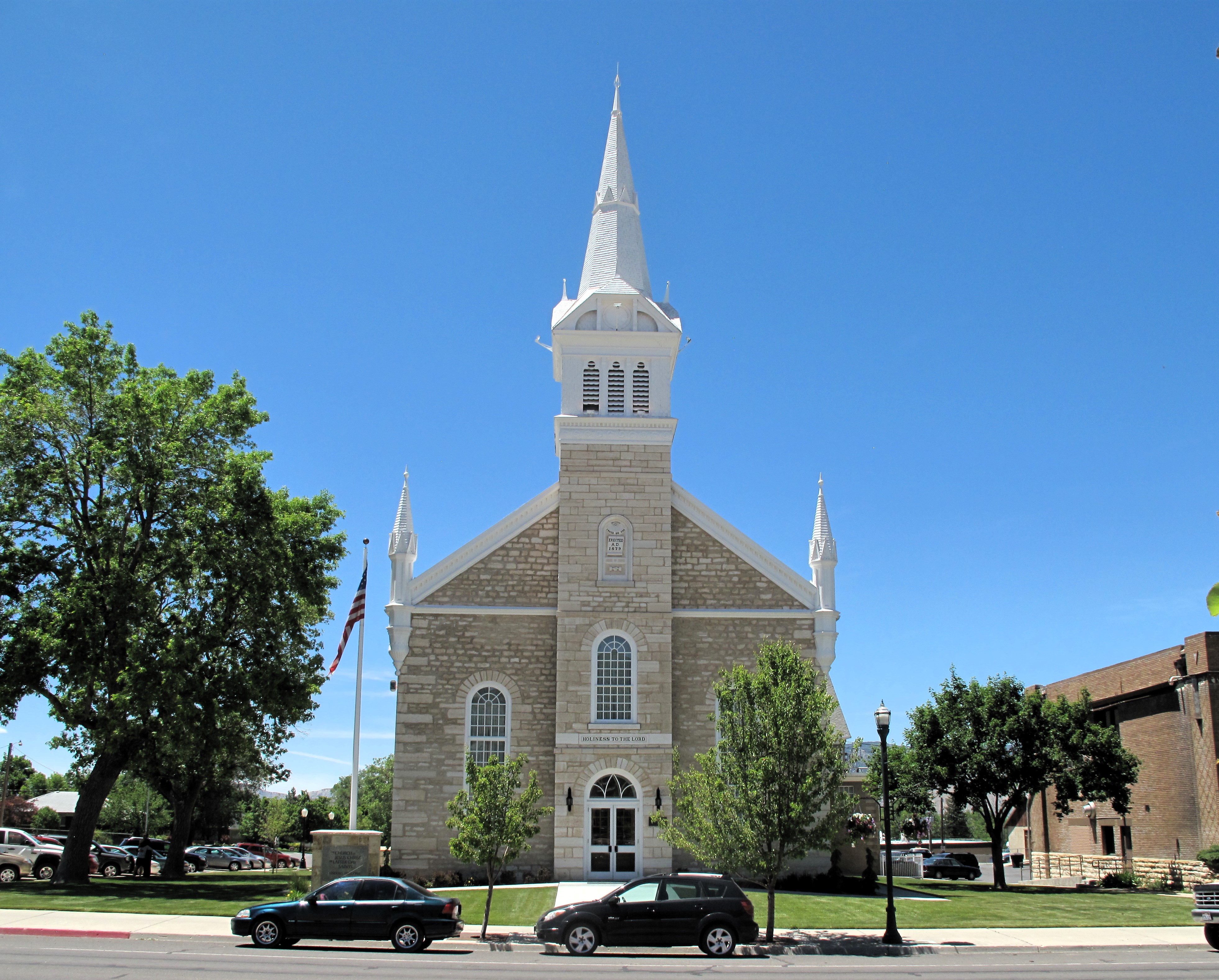
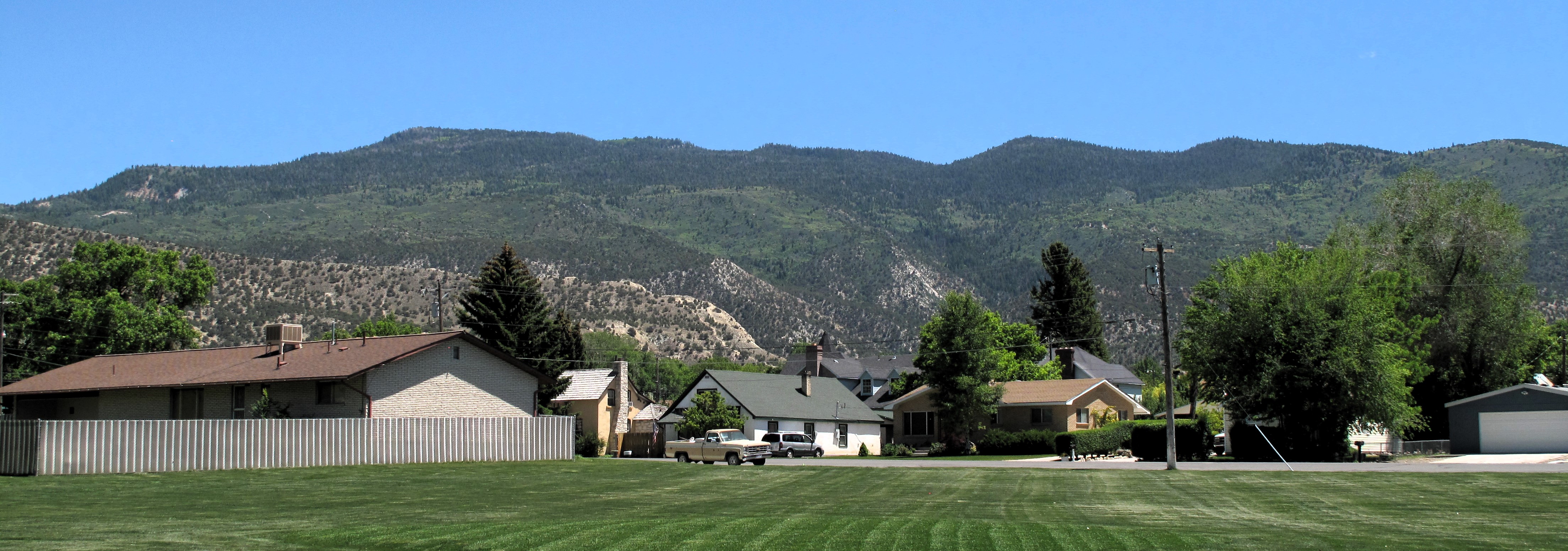
Like so many Mormon towns throughout Utah, Manti is a quiet, orderly place with wide, tree-lined streets.
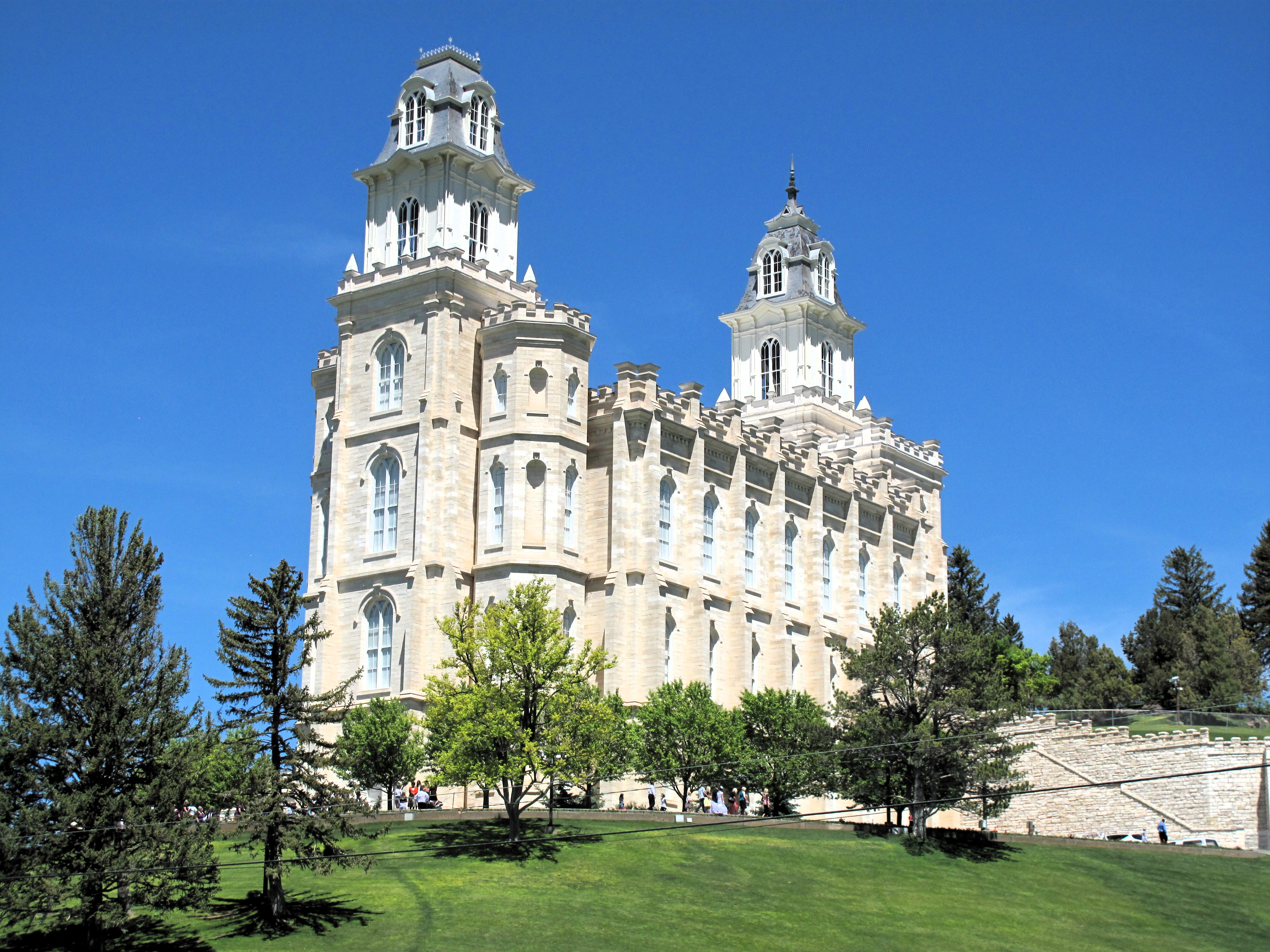
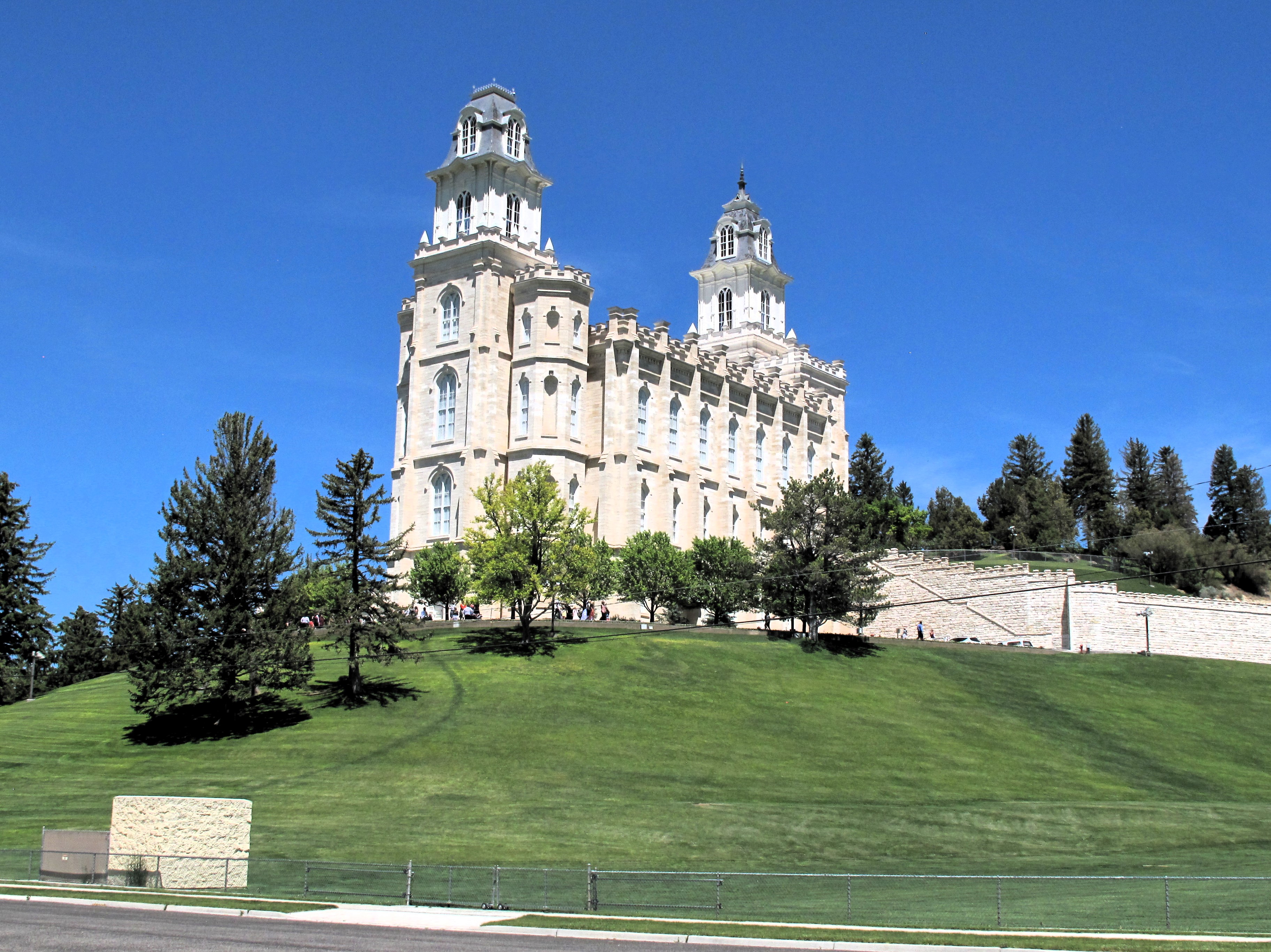
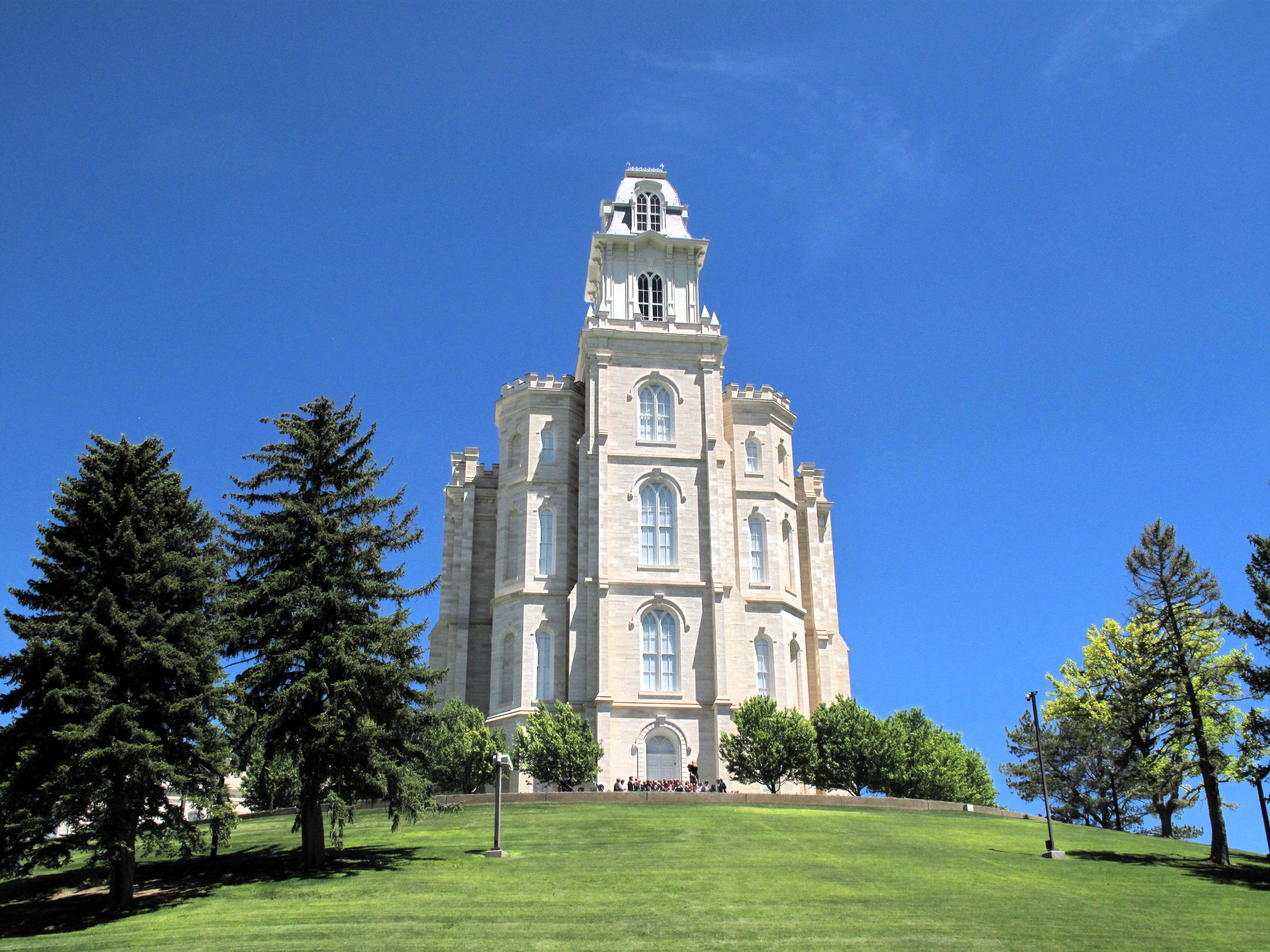
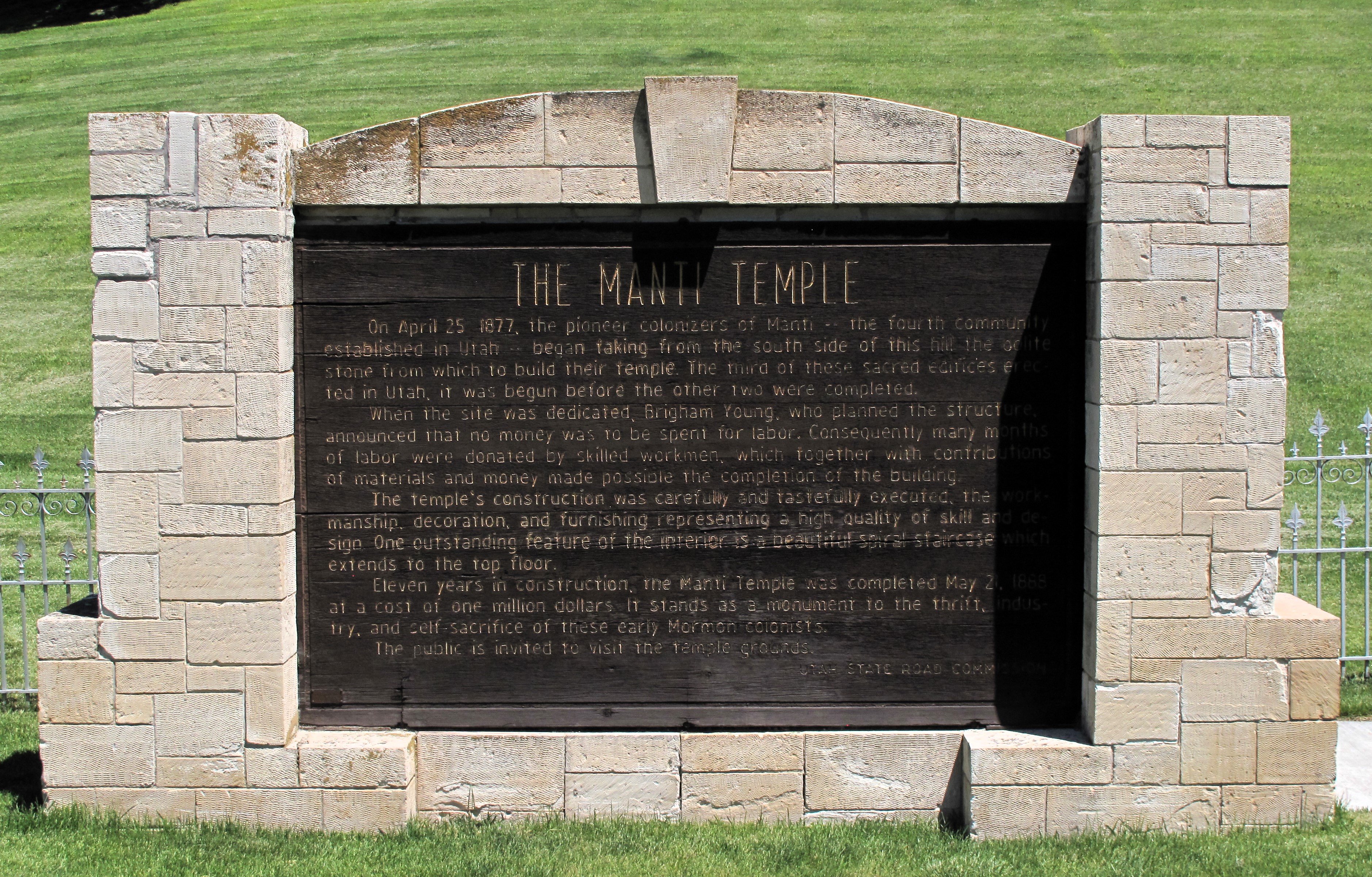
The 1879 Manti Temple of the Church of Jesus Christ of Latter Day Saints.
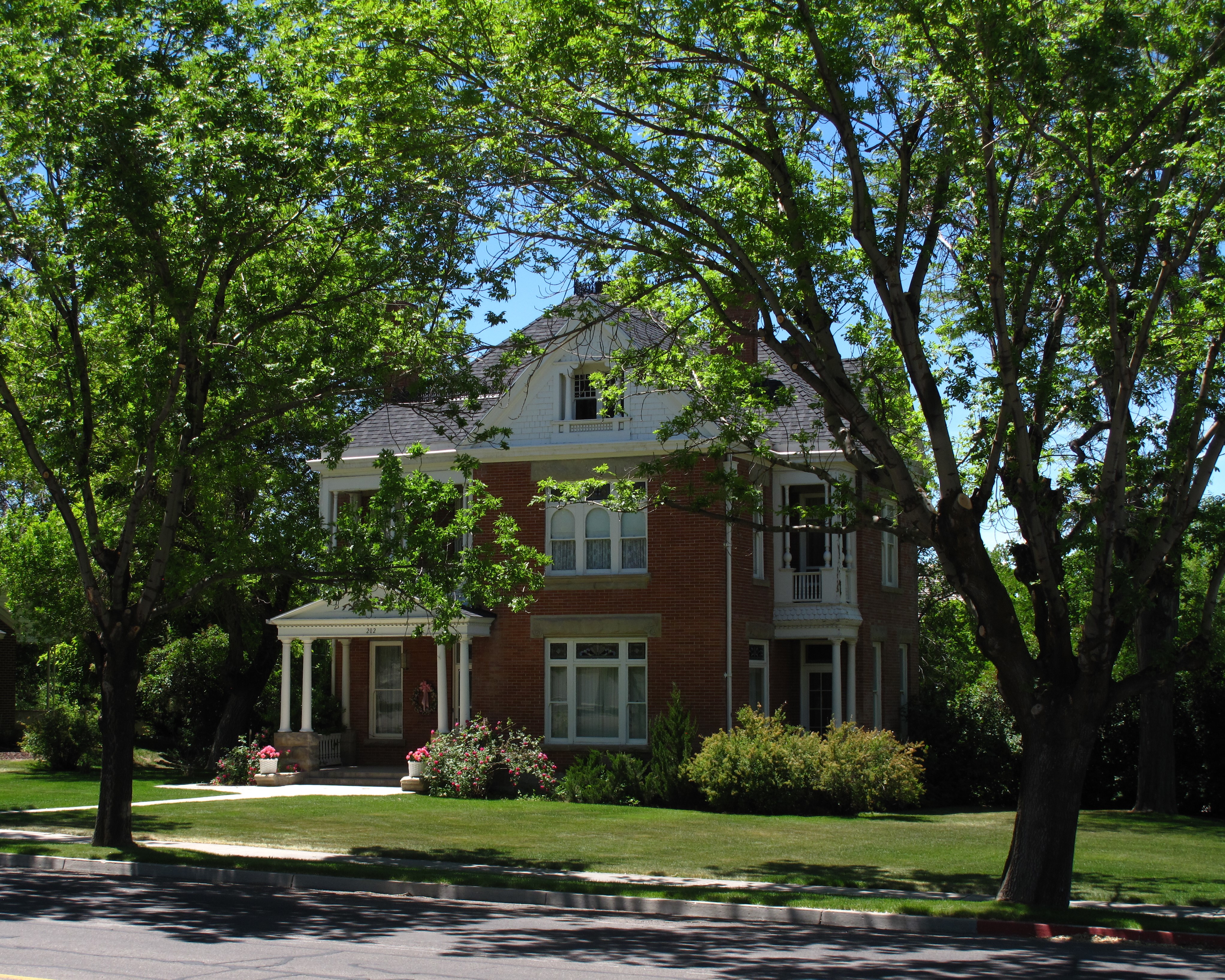
A residential street in Manti beneath the summits of the Sanpete Mountains.
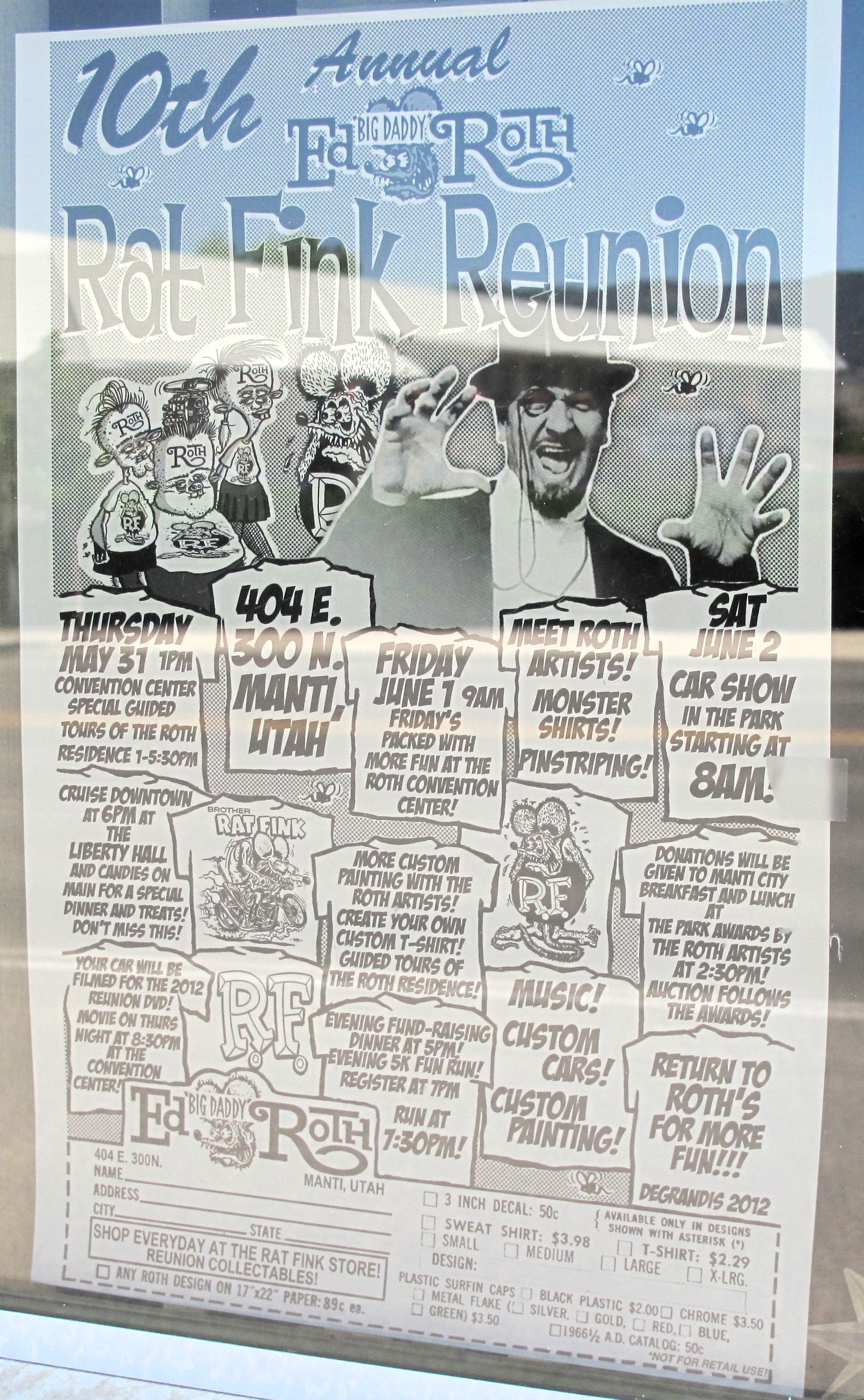
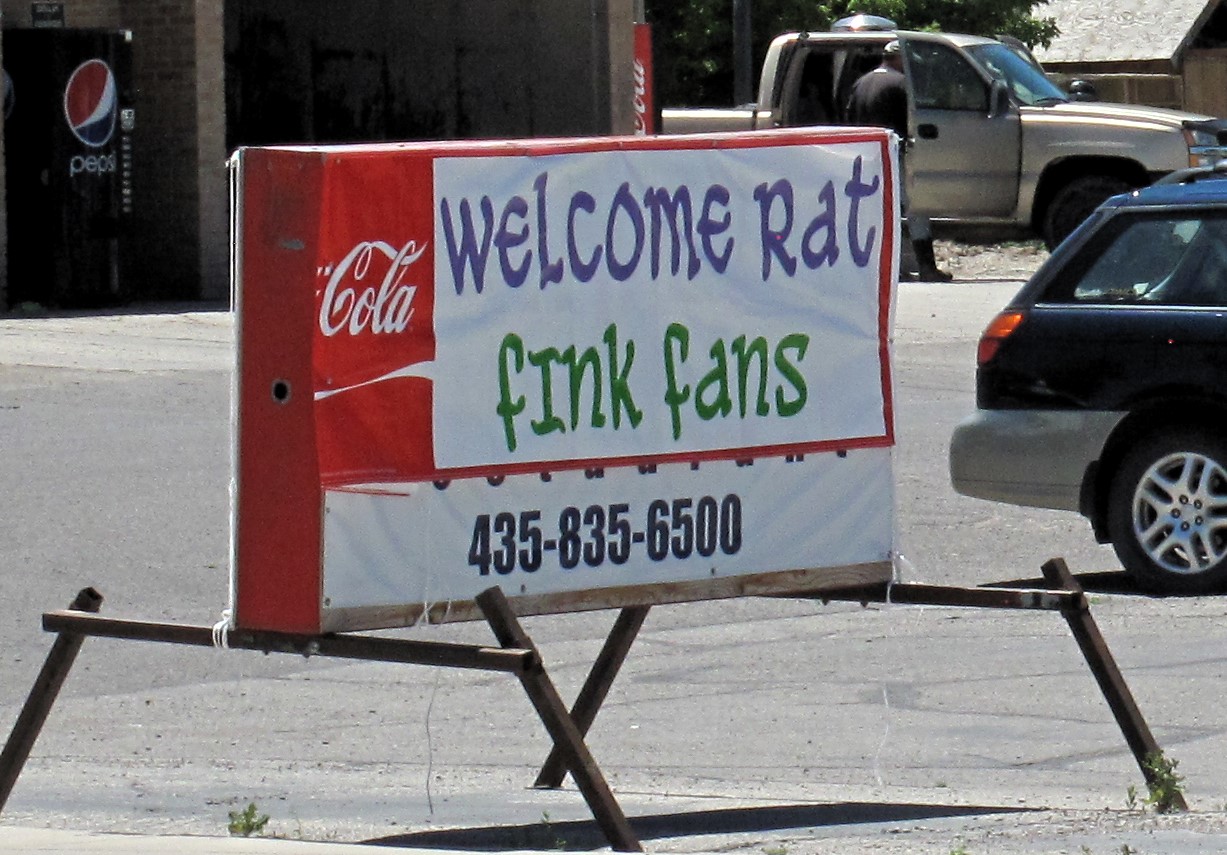
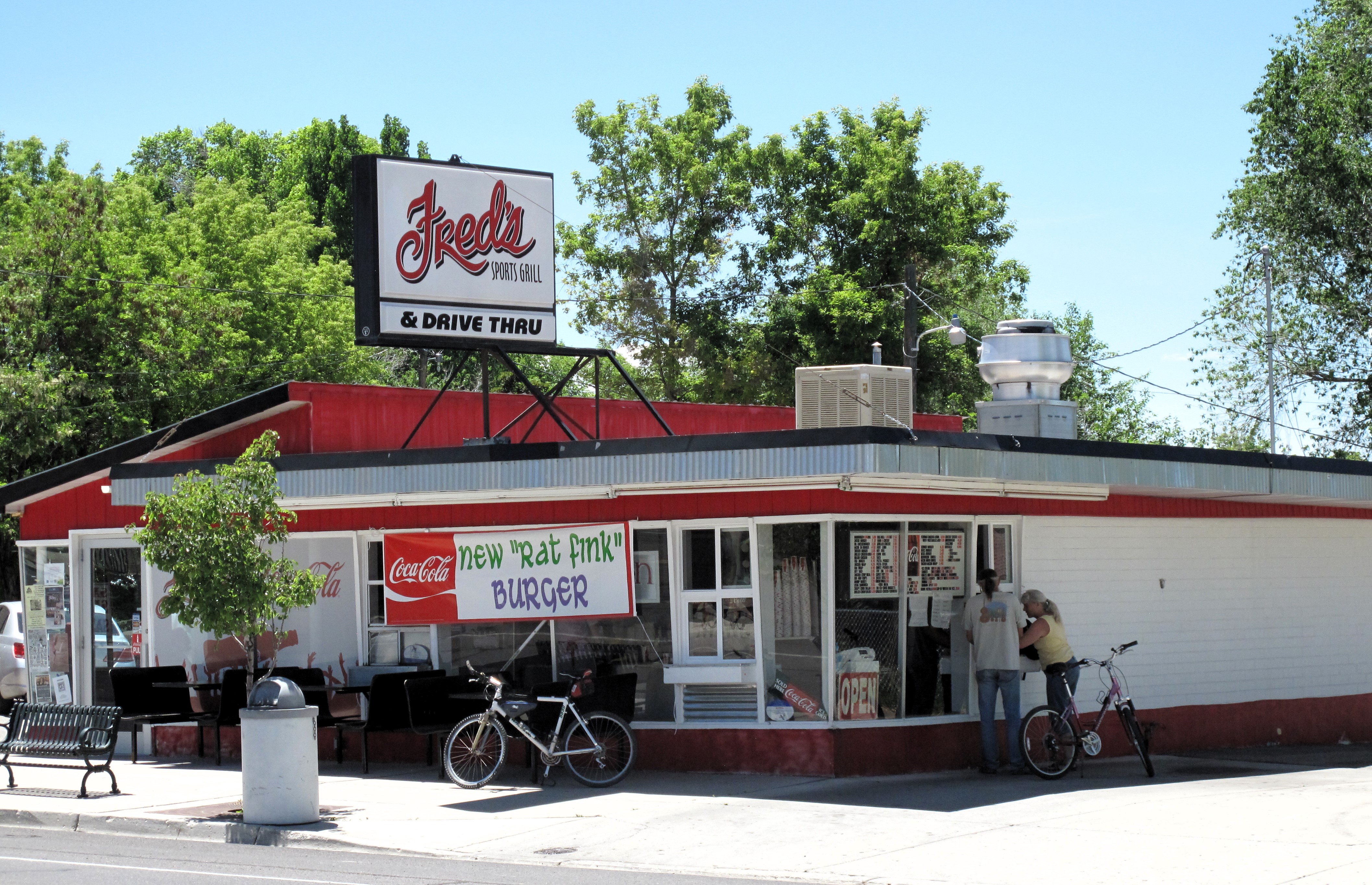
I was shocked to see this poster on a local shop window along Main Street. References to something called “Rat Fink” seemed greatly out of place in this quiet, staid Mormon town.
Advertisement for the 10th Annual Ed “Big Daddy” Roth Rat Fink Reunion.
What the heck is this? This seems like something straight out of California, not Utah.
I looked up “Rat Fink” in Wikipedia (all the links work, and will explain everything):
Rat Fink has its origins in California as I suspected. Ed “Big Daddy” Roth was born in Beverly Hills and grew up in the Los Angeles area, where he achieved fame for his artwork. Later in life, Roth married a girl from Manti and joined the Church of Jesus Christ of Latter Day Saints in 1974. He spent the rest of his life in Manti, where he died in 2001.
The Rat Fink Reunion is now an annual event in Manti. Here is a link to the 2024 Rat Fink Reunion website.
I was in Manti on June 1, 2012, and I wrote the following note to mark the visit:
“Welcome June, welcome summer! Welcome heat! Welcome blue skies! Welcome little girls standing on tiptoes to buy ice cream with dollar bills begged from their grandfathers! Welcome teenage boys crossing Main Street on their lawnmowers, heading toward their next grass-cutting job. Memories are being made, both for them and for me.”
Good times, good times.
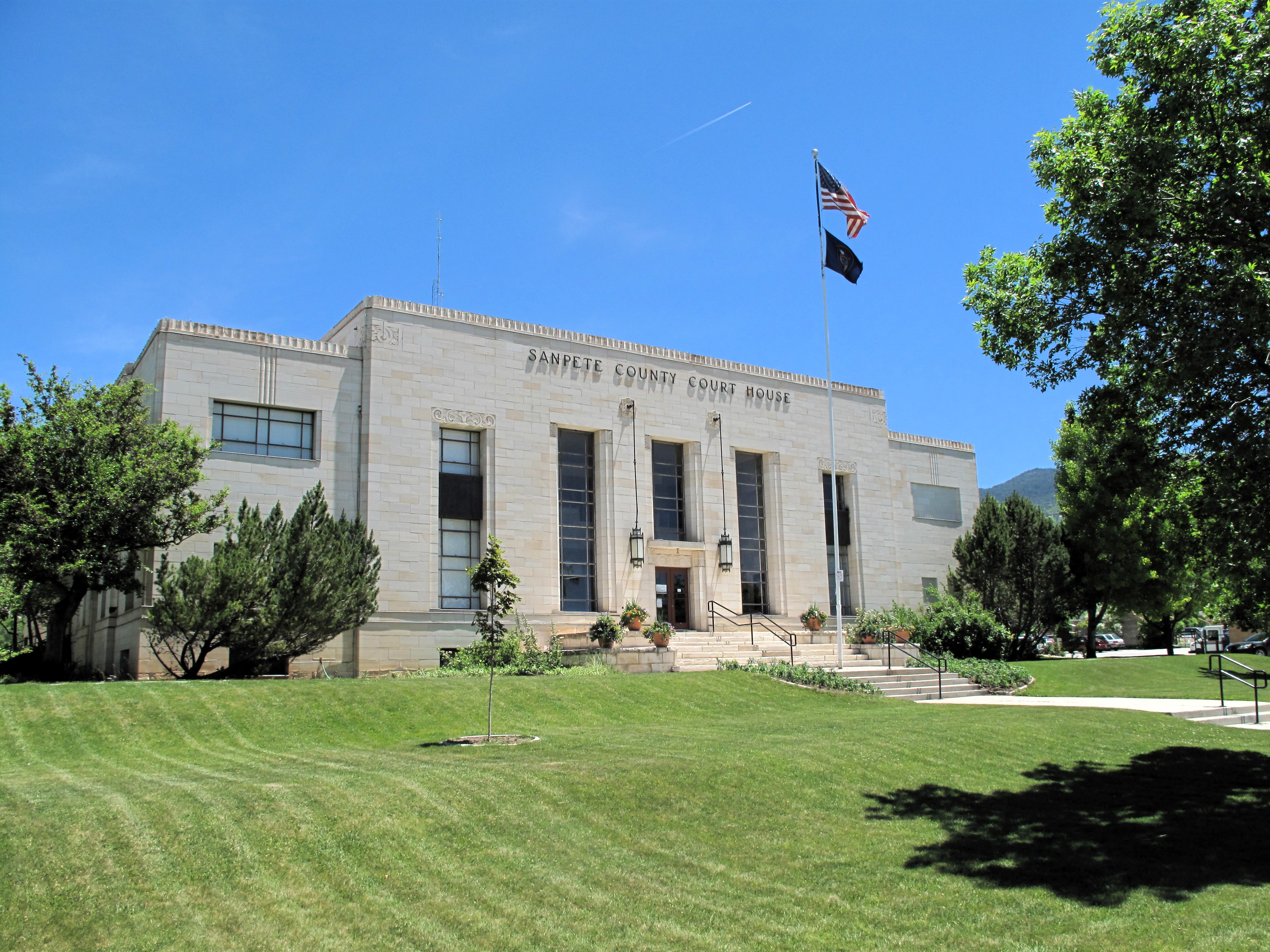
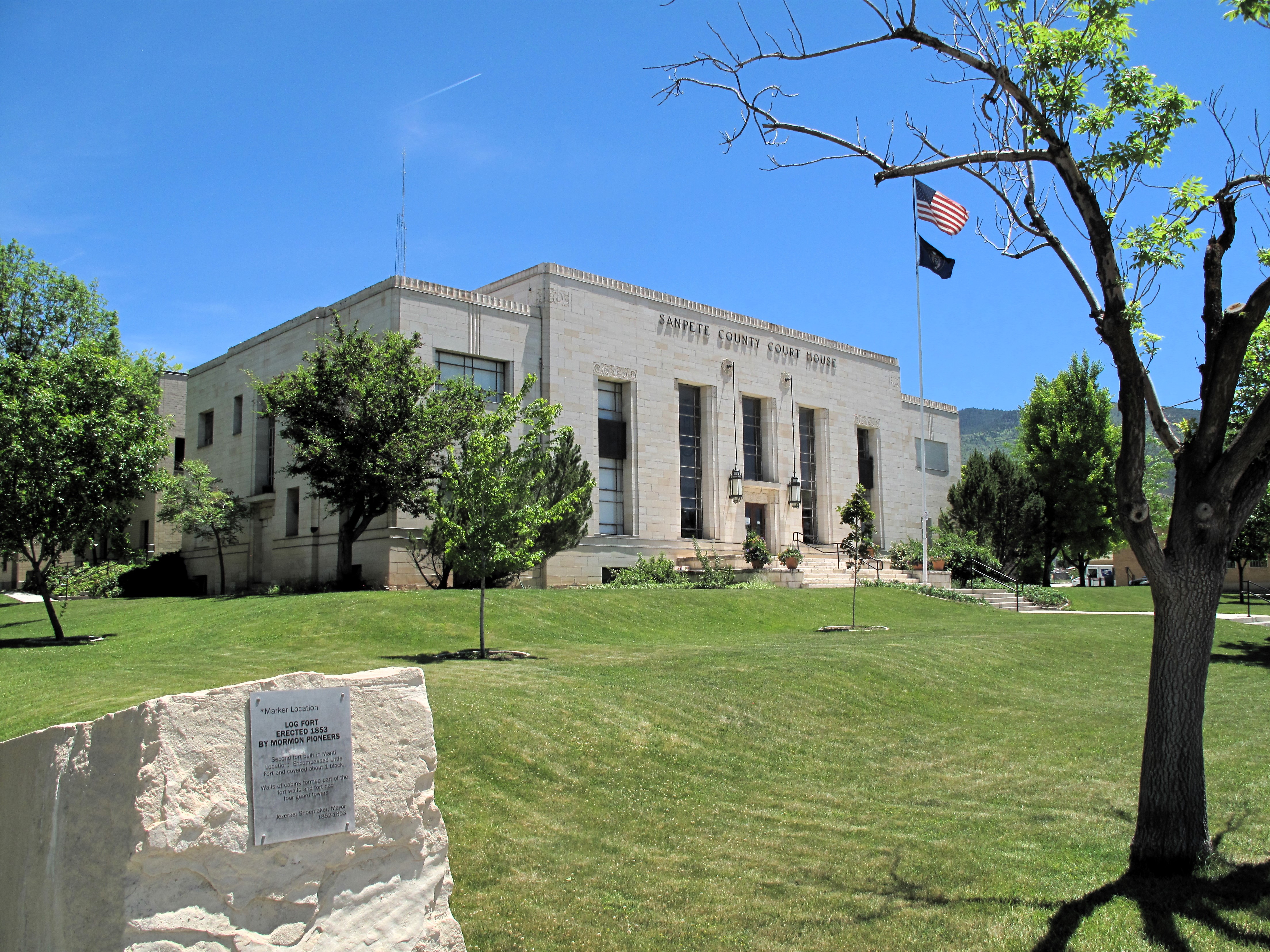
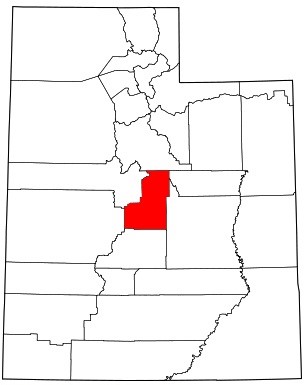
Sanpete County in the state of Utah
A list of all photo posts from the American County Seats series in TimManBlog can be found here.
All photos were taken by the author on June 1, 2012.
My lifetime hobby is traveling to all of America’s county courthouses, and each month, I post about a visit to a scenic or exciting county seat. It’s a hobby, and donations are greatly appreciated to help cover my costs.
Donations to TimManBlog
Use this form to make donations to support this site. Paypal, Visa, Mastercard, Amex, and Discover cards are accepted. Donations can be made in increments of $5.00; increase the number of units to increase the donation amount.
(Note: I wrote the draft of this post after visiting Heber City, Utah in May 2012 — but didn’t publish it. I’ve had a very busy schedule this month so I’m dusting off the draft and putting it out there today. Hope y’all enjoy it.)
An old wit once compared the nineteenth-century Mormon pioneers of Utah to the Jewish refugees who settled in Israel after the Holocaust — fleeing oppression, both groups settled in barren deserts only to turn them into beautiful gardens.
As I drove into Heber City, Utah, I could tell this was an old Mormon town just by reading the street signs. The Mormons are peculiar yet conformist — each Mormon town has the same street layout, a rigid system of grid numbers. There are never streets named for trees, ex-Presidents, nor even esteemed Mormon leaders. Instead, a street 9 blocks north of the town center is called simply “900 North” while a street 3 blocks east of the town center is “300 East,” and so forth everywhere. The only exceptions are for the central north-south street, called “Main”, and the central east-west street which is called “Center”.
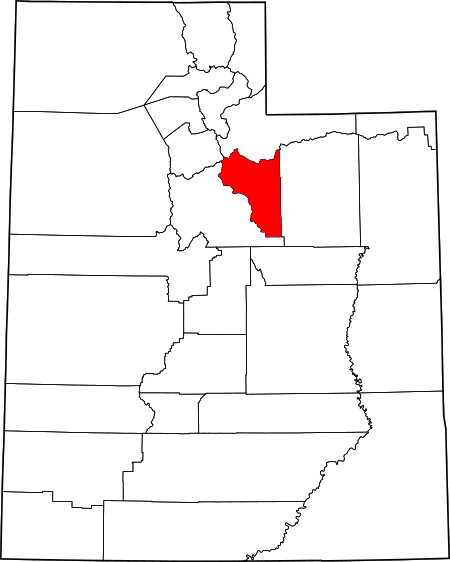
Wasatch County in the state of Utah
Each Mormon town has a tabernacle, and it usually rises at the intersection of Center and Main, the center of town and so symbolically the center of town life.
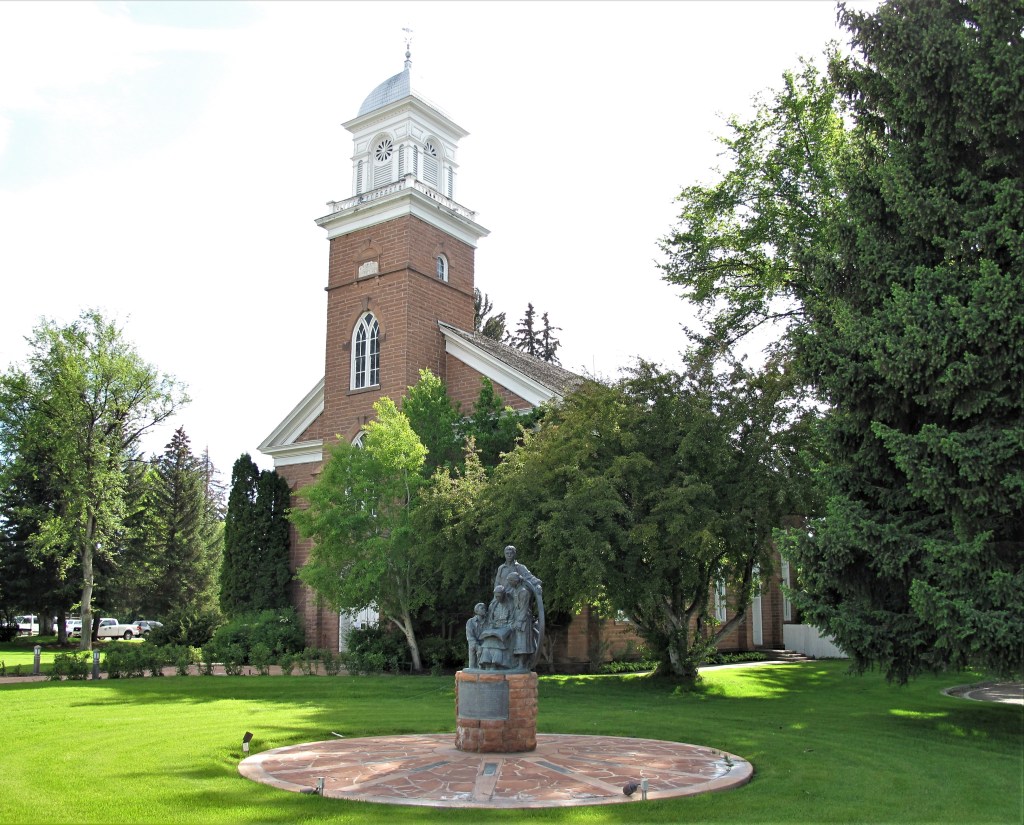
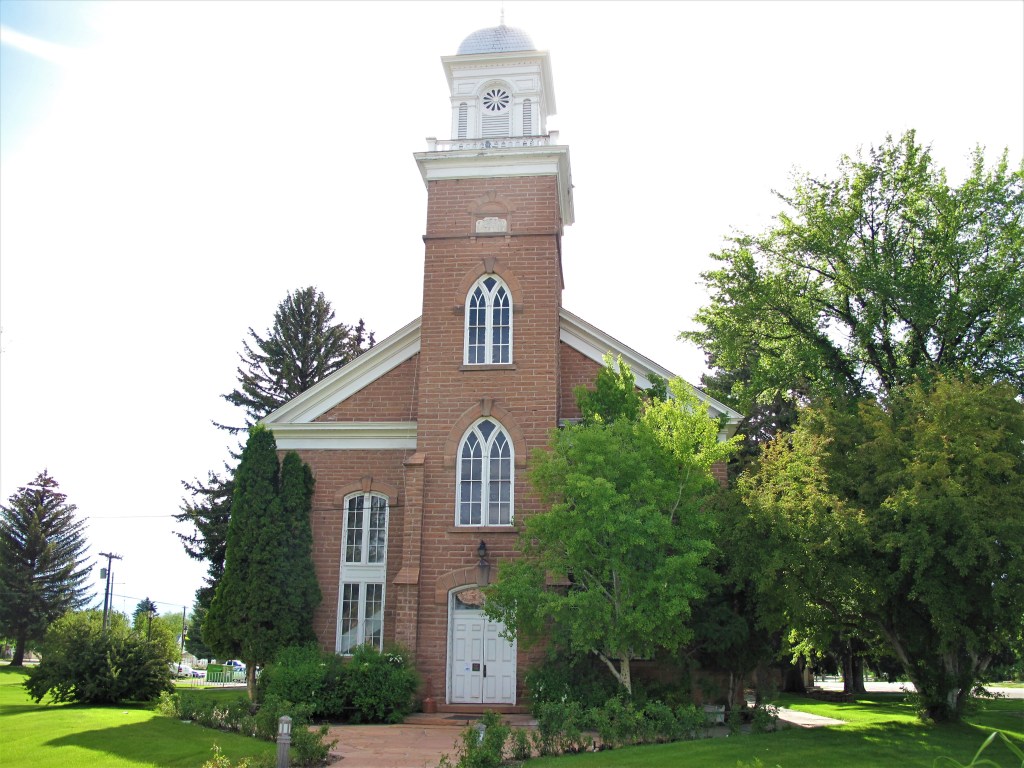
Pictured below is the old Wasatch Stake Tabernacle in Heber City, built in 1889. Today this is just a historical artifact — having outgrown the old building the local congregation has since built a larger facility nearby.
Wasatch Stake Tabernacle with the statue of “The Family,” Heber City, Utah
I glanced quickly at the bronze statue of “The Family” on the temple lawn. At first, it seems like a typical statue honoring a simple pioneer family, yet I thought it a peculiar subject for the formerly polygamous Mormons. Nevertheless, it is true that the LDS church outlawed polygamy in 1890 and that only a minority of Mormons practiced it even when it was sanctioned.
Wasatch Stake Tabernacle
Heber City was founded in the late 1850s by English immigrants of the Mormon faith (early Mormons heavily evangelized in England) and named for Mormon leader Heber C. Kimball. Like many other Utah towns, Heber City is often referred to as just “Heber” — as Salt Lake City is often referred to as just “Salt Lake” or Brigham City as “Brigham.”
Heber is down-slope from its famous ski neighbor Park City (or is it just “Park”?) on the eastern slopes of the Wahsatch Mountains. The area is a combination of old-time Mormon community and newer, ski-related growth. The two appear to intermingle well. The established folks provide services to the newer ski group who in turn spend their money on land and retail sales.
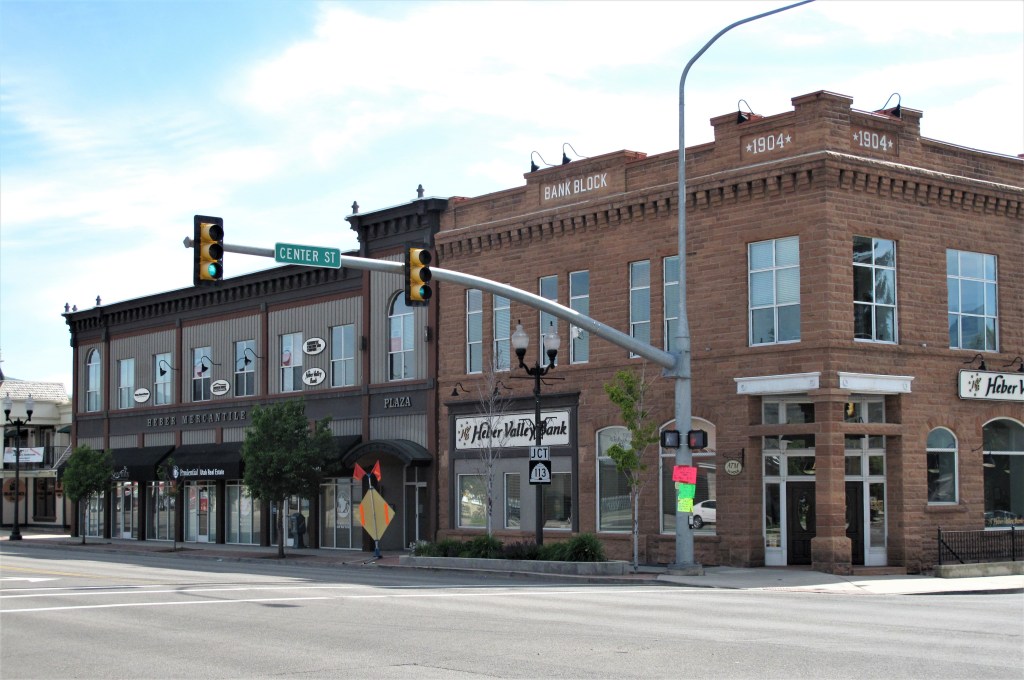
Business block at the Corner of Main and Center. Heber City, Utah
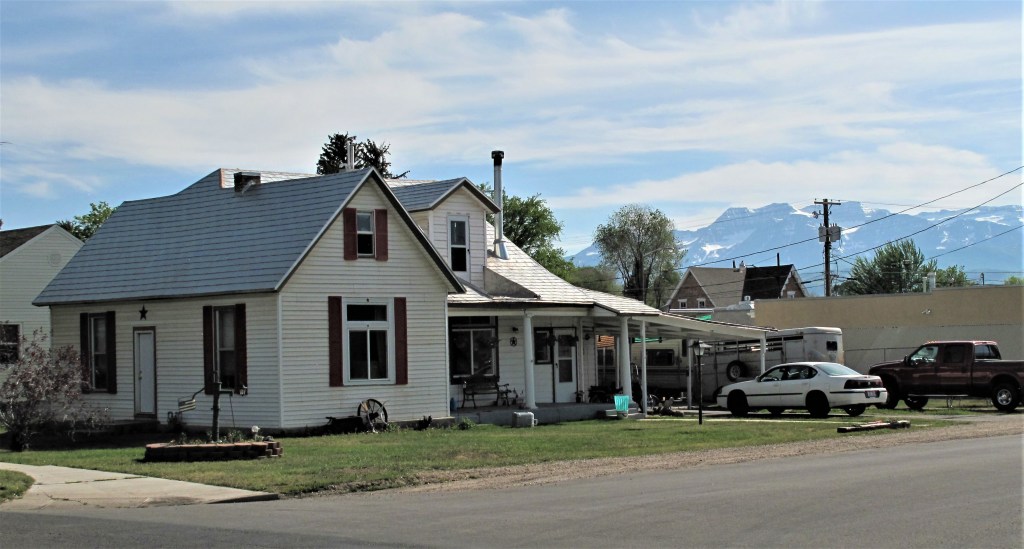
Heading away from the intersection of Main and Center, I photographed a typical home — smallish but well-kept and with a fantastic view behind it:
In the Shadow of the Wahsatch. Heber City, Utah
Snow-capped peaks in the background. It’s late May.
Heber City is prosperous. New, upscale restaurants compete with fast food places and national-brand big-box stores up and down Main Street. Competing with McDonald’s, Heber offers you Dairy Keen (“Home of the Train”) — a family-oriented hamburger and ice cream shop featuring a miniature train running in a loop along the edge of the dining room ceiling. Everybody loves trains!
Dairy Keen was nearly full when I went inside; half were eating while the other half were watching the trains chugging along over their heads. Here’s a link so that you can support them the next time you’re in Heber: www.dairykeen.com.
Dairy Keen, Main Street. Heber City, Utah
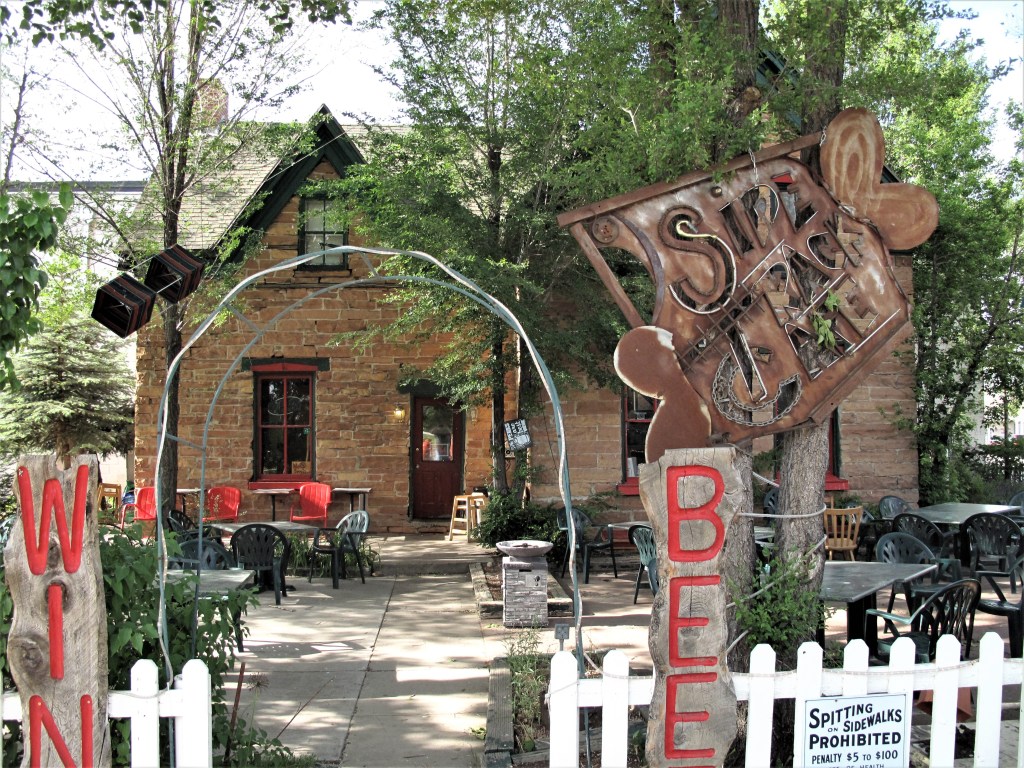
Another promising place is the Side Track Café and espresso bar. (Note: the photo was taken in 2012; the Side Track has since closed).
Side Track Cafe
Built into an old Mormon stone house the Side Track offered all the products Mormons notoriously eschew — beer, wine, espresso and live music. In fact, the Side Track seems to be flaunting them. Perhaps the owners are rebellious old hippies but I’ll never know since the Side Track Café was closed when I dropped by — even though their flashing neon sign said they were O-P-E-N, O-P-E-N, O-P-E-N.
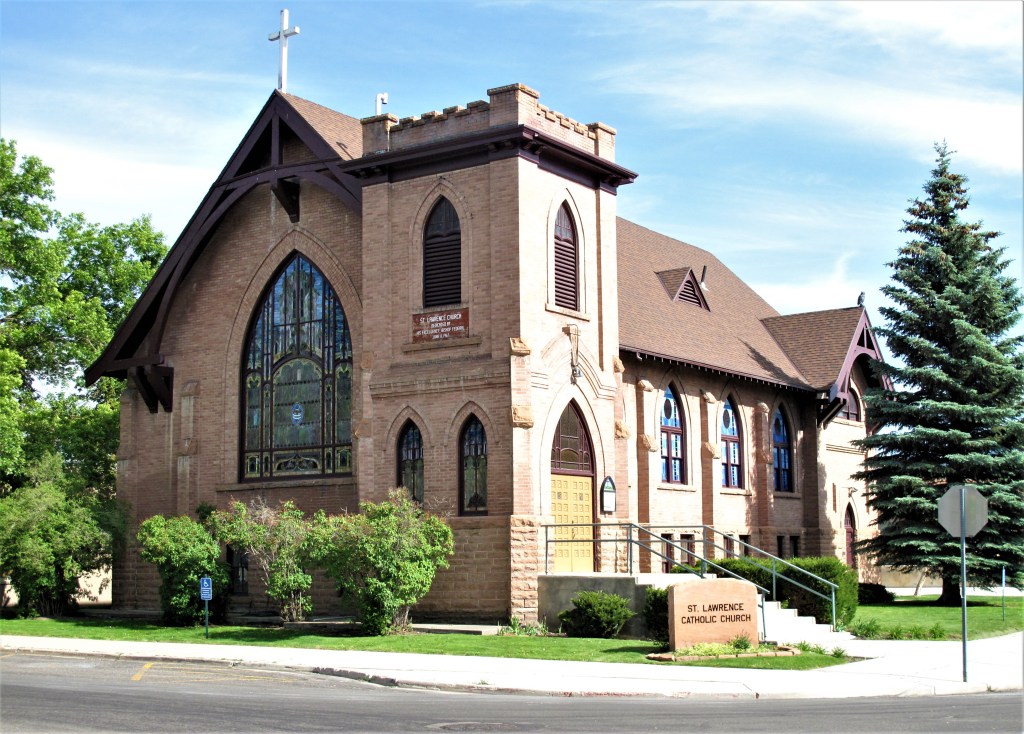
When saying that Heber City is a “Mormon” town that doesn’t mean that the town is only Mormon. Other faiths are well-represented:
St. Lawrence Catholic Church, corner of Center Street and 100 West. Heber City, Utah.
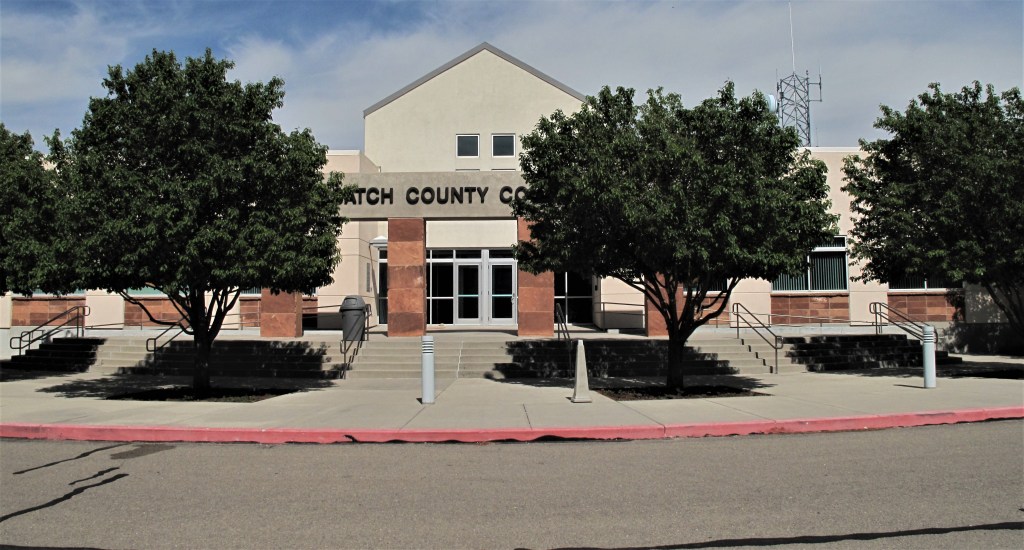
Because Utah is booming, nearly every county seat I visited in the state has a new courthouse and a new justice center. Wasatch County’s new justice building is just south of town. The structure is a semi-circular ranch-style building covered by a red stone veneer with yellow stone trim.
Wasatch County Courthouse. Heber City, Utah
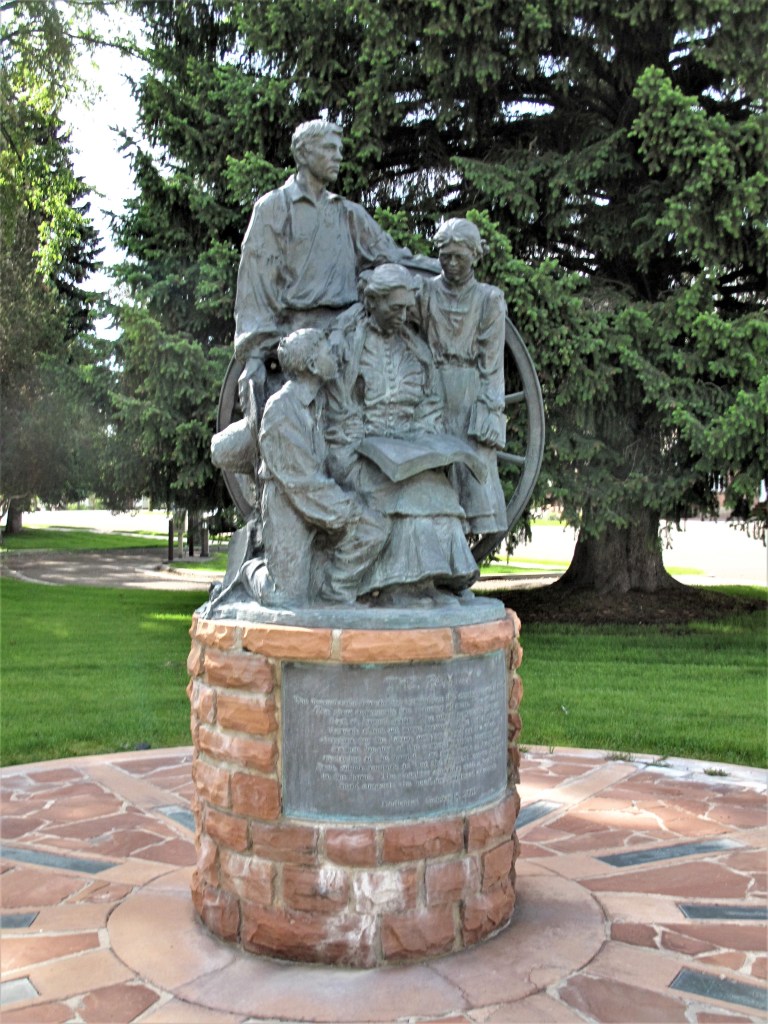
Let’s finish back at the beginning with the old Tabernacle. In front of the old tabernacle is a bronze statue of a pioneer family called “The Family.”
Statue of “The Family.” Heber City, Utah
Here’s the inscription:
The monument’s foundation symbolizes the eternal nature of the family. The plow represents the industry of man. The wheat is the fruit of honest labor. The wheel represents progress; through effort we move forward. The father provides direction for the future with his hand on the wheel. The mother, located at the center, provides teaching and nurturing of the family. The son kneels at his mother’s knee which reminds us that the greatest lessons are taught in the home. The daughter standing with a book in her hand suggests the need for continued education.
First, there is “industry” then “labor” and then “progress” through “effort”. “The Family” travels in a setting of Liberty: This is a statue of the American experience — a Statue of Liberty if you will. This monument could represent any of the many American pioneer emigrations and could be appropriate in any number of states: in Kentucky showing how Daniel Boone led settlers through Cumberland Gap, or in Oregon at the end of the Oregon Trail, or even in Massachusetts describing the Pilgrims landing at Plymouth Rock.
All long journeys are both physical and spiritual endeavors. Anyone who says otherwise hasn’t read “Huckleberry Finn.”
Although today’s modern journeys are less physically taxing than those of our ancestors, they can be just as spiritually transformative. Try it. You’ll see.
Finally:
Plaque honoring Heber C. Kendall. Heber City, Utah
The People of Heber City cherish the heritage bequeathed by our pioneer forebears and the challenge set forth by the city’s namesake, Heber C. Kendall: Now you people have named your little town after me. I want you to see to it that you are honest, upright citizens….that I may not have cause to be ashamed.
All photos were taken by the author on May 30, 2012.
A list of all photo posts from the American County Seats series in TimManBlog can be found here.
I travel as a hobby — donations are happily accepted if you’d like to help defer my costs. Thanks, Tim







 TimManBlog