I travel as a hobby and not for a living (yet) — but donations are happily accepted if you’d like to help defer my costs. Thanks, The TimMan
Donations to TimManBlog
Use this form to make donations to support this site. Paypal, Visa, Mastercard, Amex, and Discover cards are accepted. Donations can be made in increments of $5.00; increase the number of units to increase the donation amount.
April 25, 2021 (photos and memories of April 28, 2014)
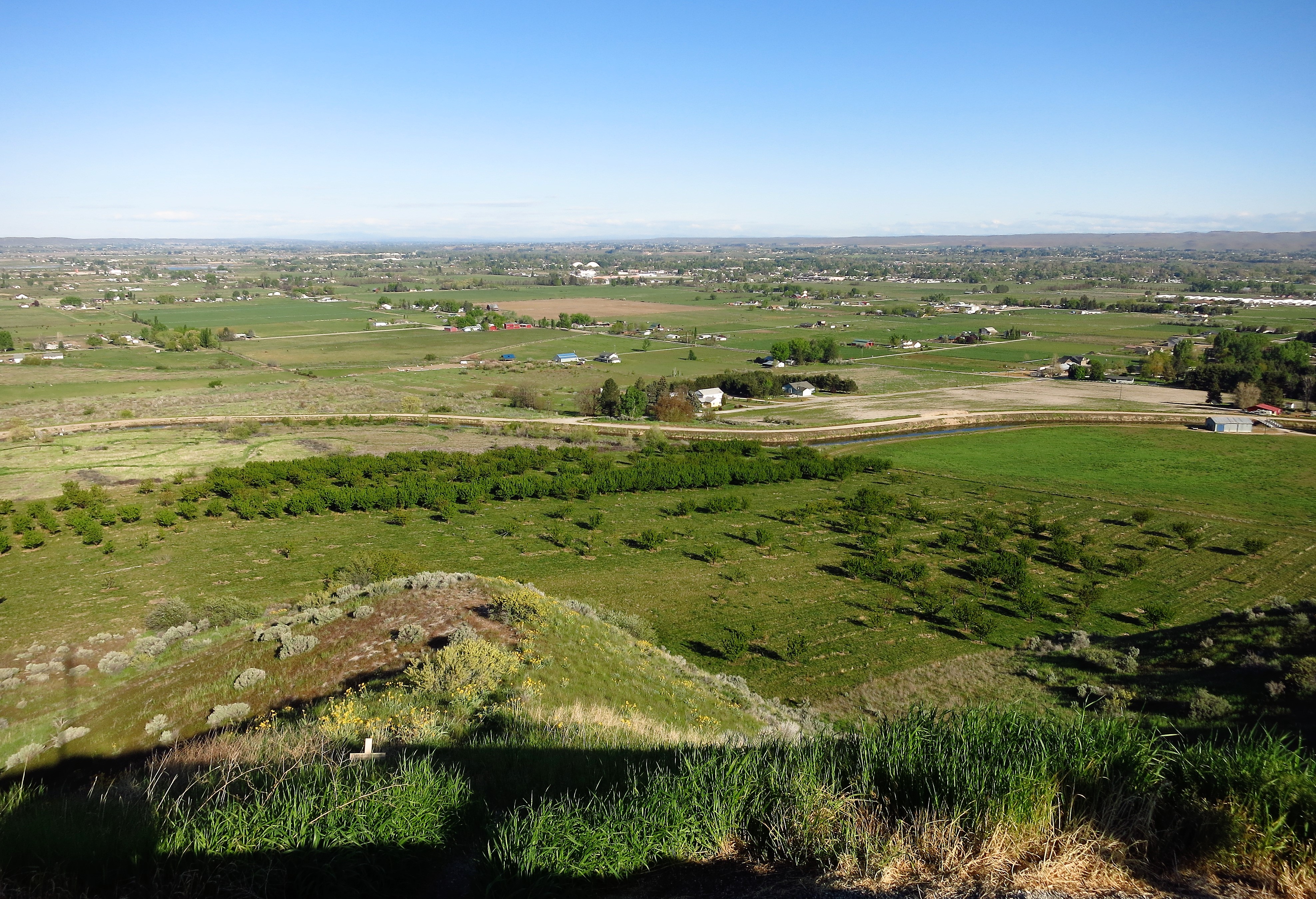
Some years ago, I journeyed from Boise into Gem County, Idaho, on a clear, cool Monday morning in April. Many more years before, some of the Oregon Trail pioneers came this way, crossing from the Boise River valley to the Payette River valley over Freezeout Hill.
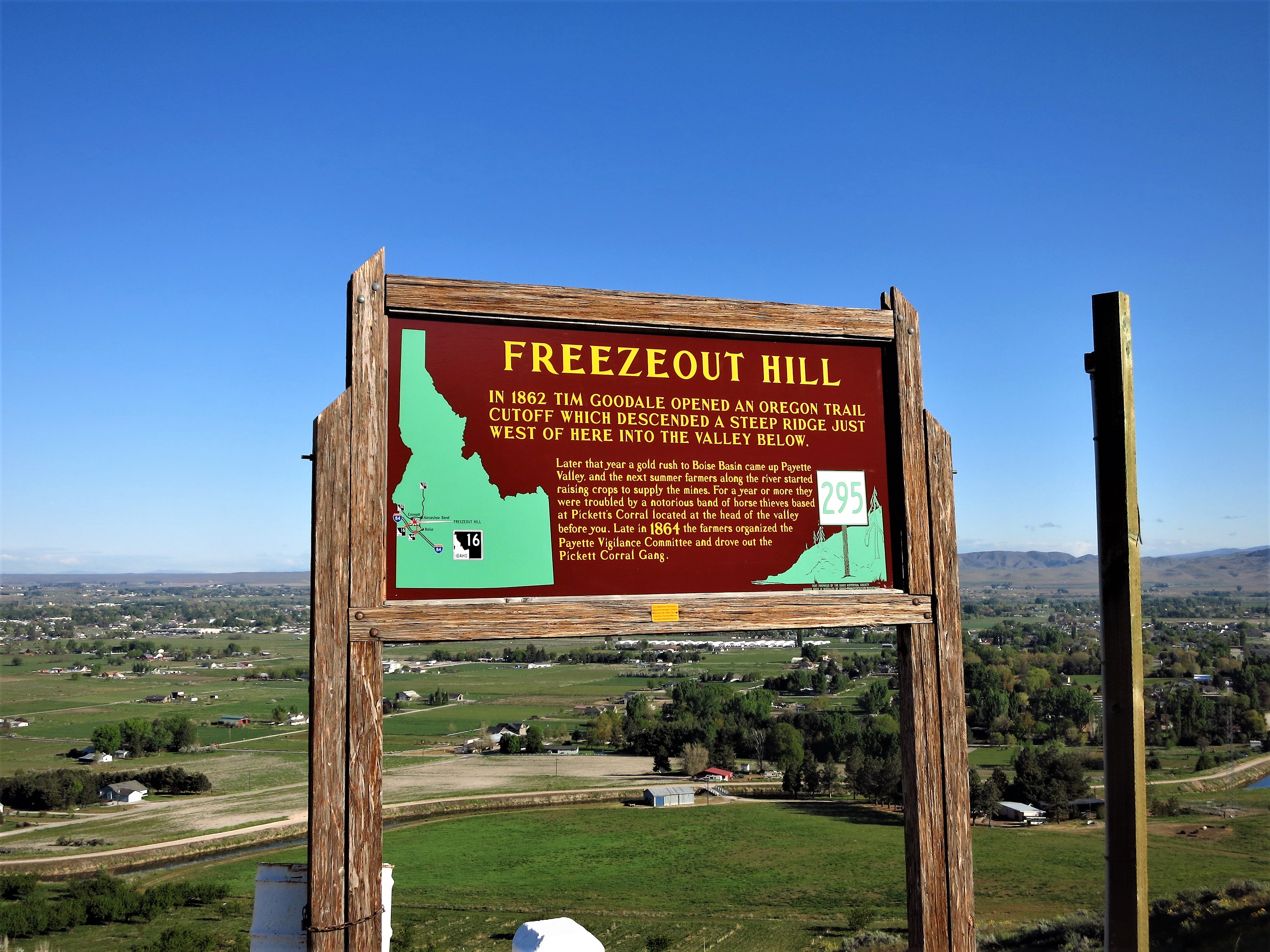
Idaho roadside sign atop Freezeout Hill with the town of Emmett down below.
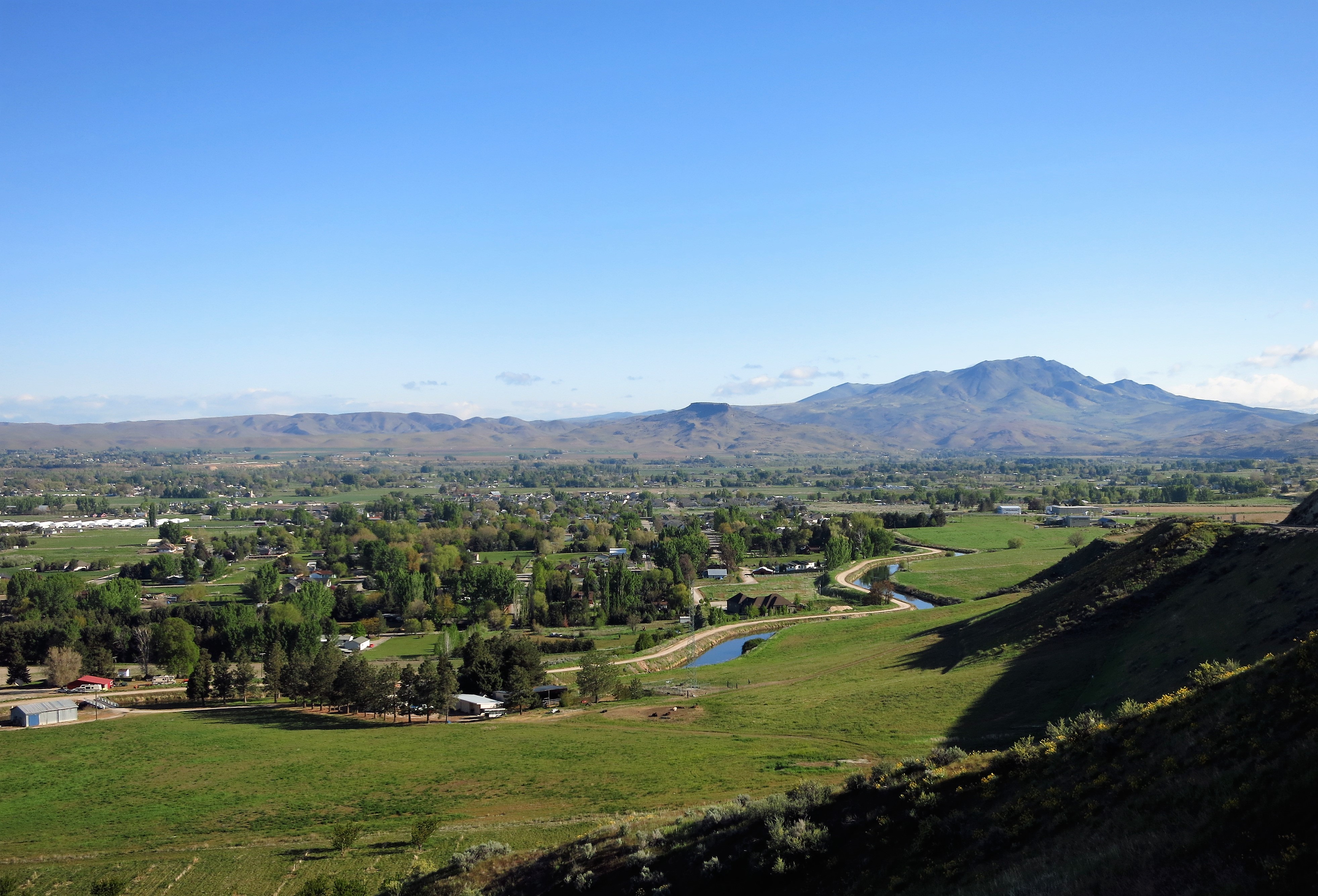
When the travelers saw the well-watered valley of the Payette River below, many decided to forego the long road to Oregon and stay here. Permanent settlement began in the 1860s.
Payette River valley and the town of Emmett, Idaho
The valley below the Freezeout summit glows green like an emerald gem on this sunny April morning. A little river winds through the valley between the distinct hillsides which enclose it. Hills are green with speckles of yellow wildflowers, but down below farmers’ orchards bloom with anticipation of a new growing season.
Payette River valley and from atop Freezeout Hill
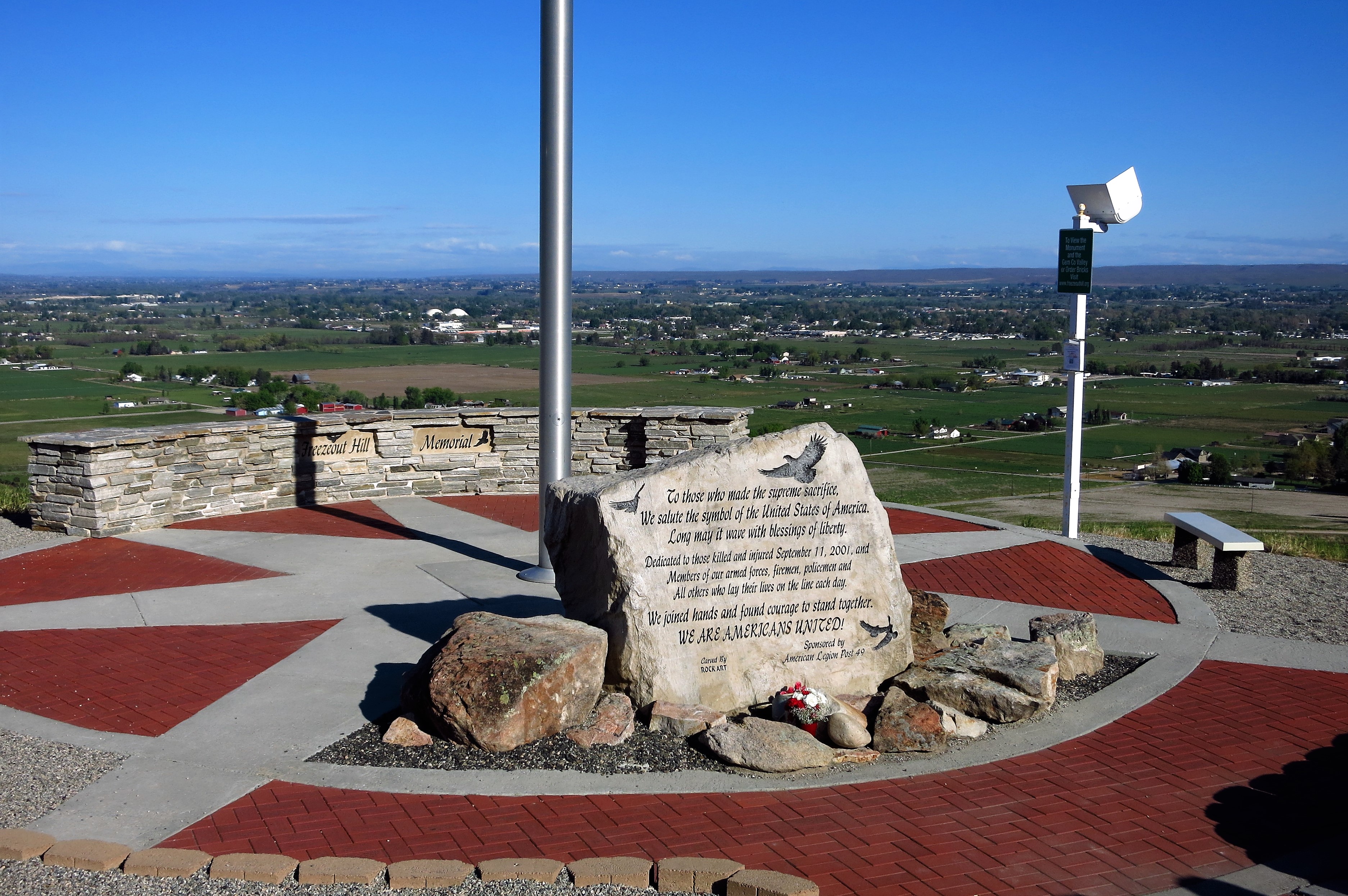
A minor gold rush followed from 1894 to 1910 until the ore ran out. In the 21st Century, local citizens used the panoramic perch provided by Freezeout Hill for a memorial to the lives lost on September 11, 2001.
September 11th Memorial on Freezeout Hill. Emmett, Idaho
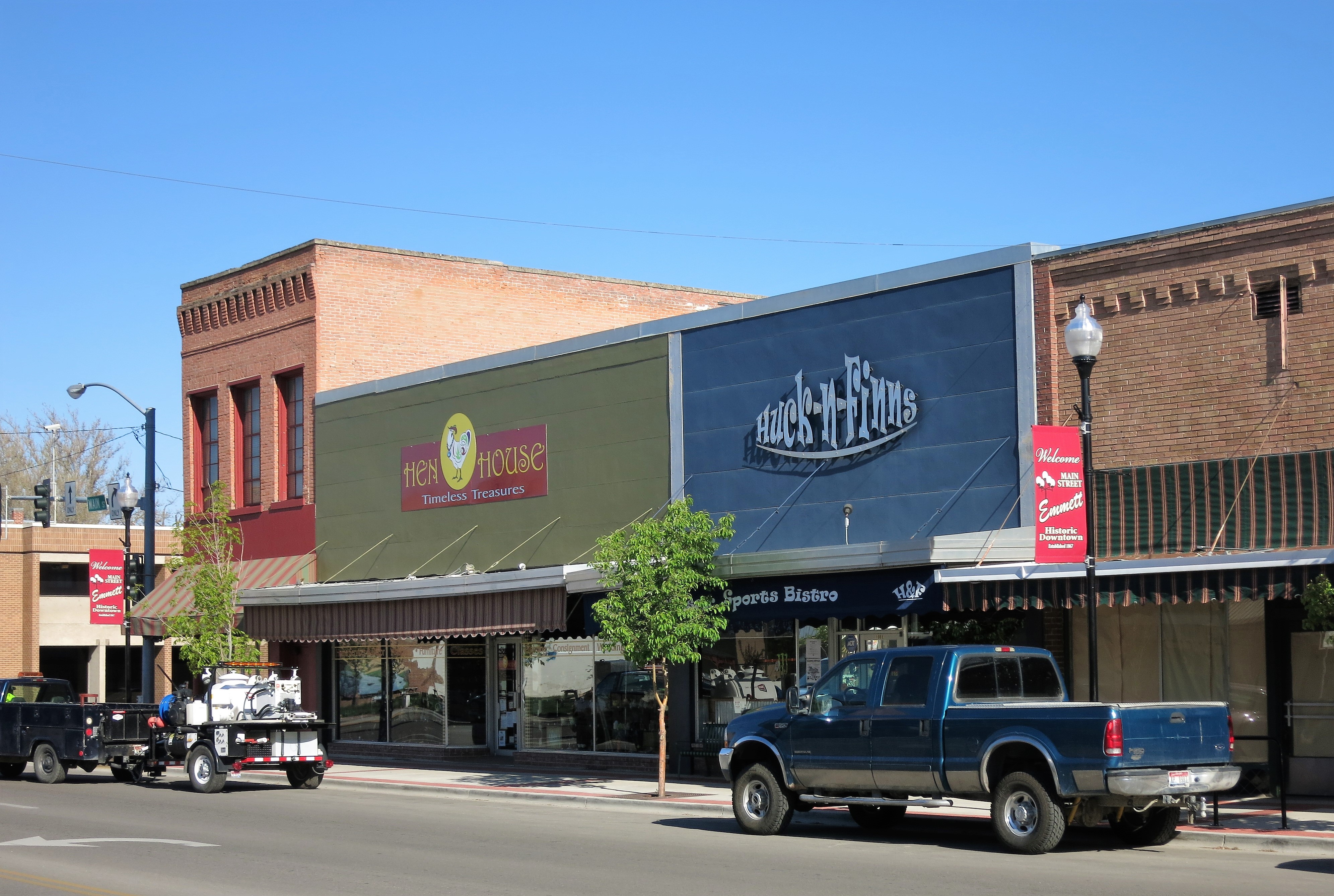
Down in the valley below, the little town of Emmett (population 6,500; Wikipedia entry here) provides both basic services and a small-town home. The Hen House Home & Gift can be found on Yelp here.
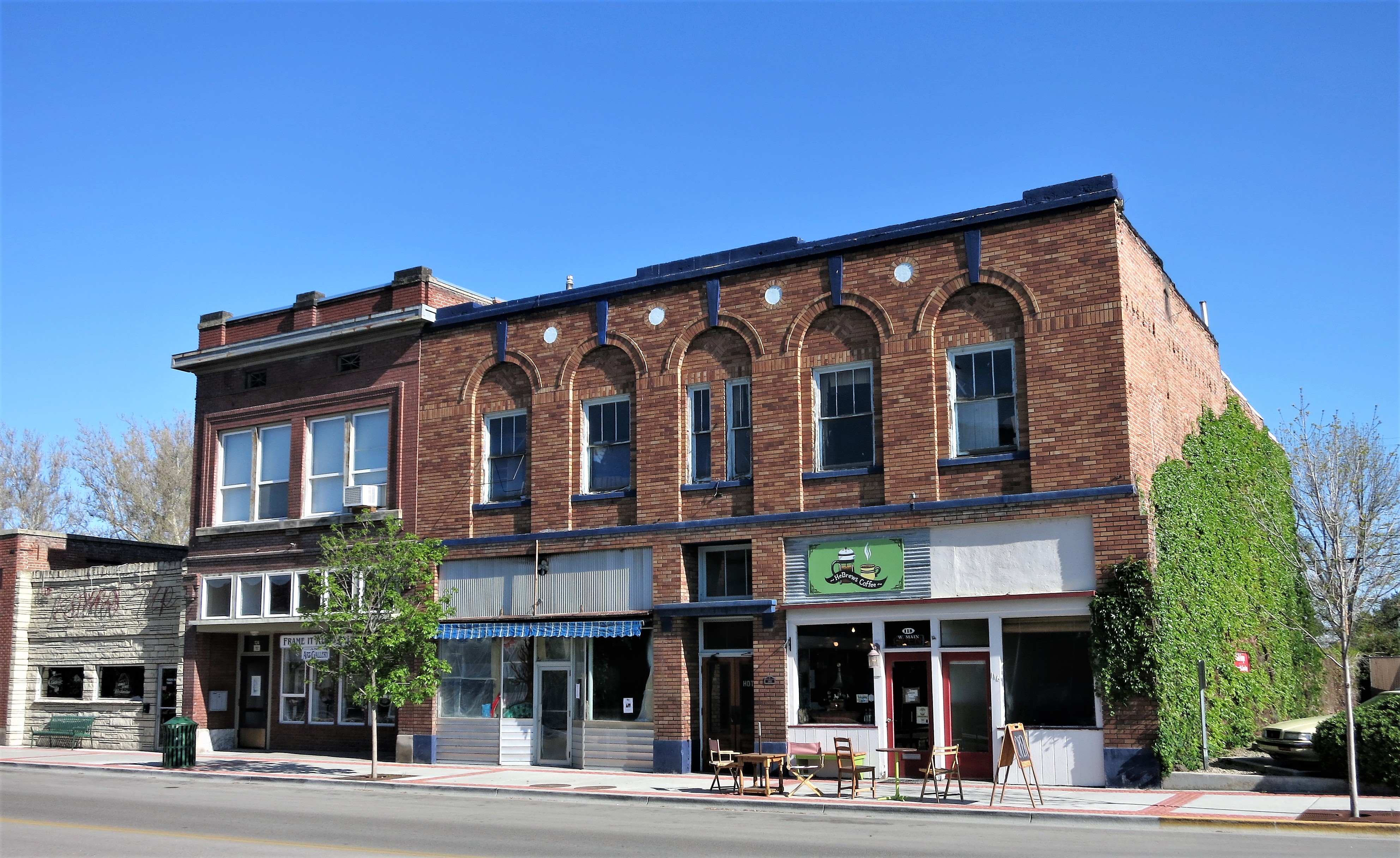
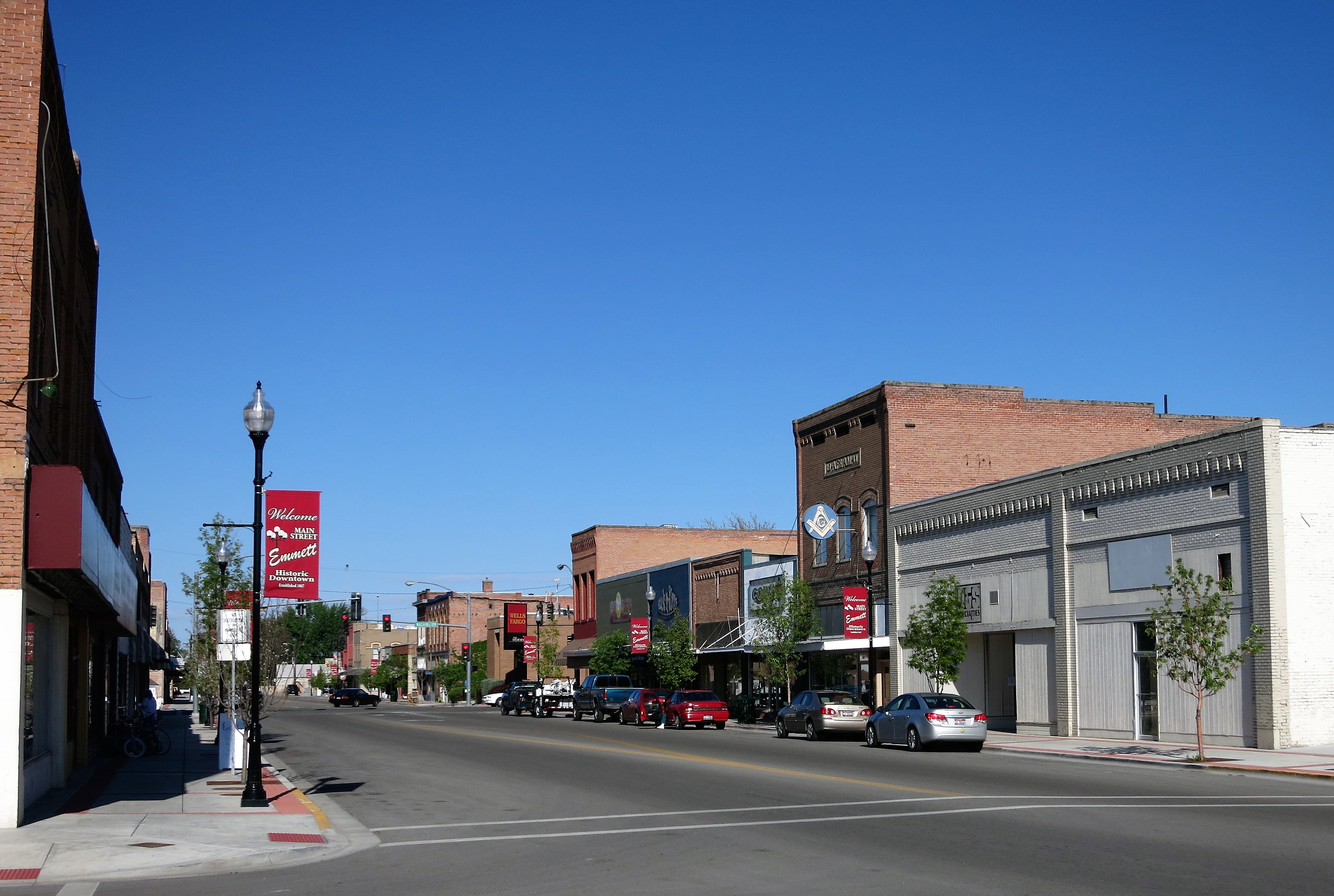
HeBrews Coffee in Emmett, IdahoMain Street Emmett, Idaho. April 2014
I found this painting outside the old town telephone building. I checked, and Lily Tomlin didn’t come from Emmett, but the image still seems appropriate.
Painting of Lily Tomlin as the town telephone operator. Emmett, Idaho
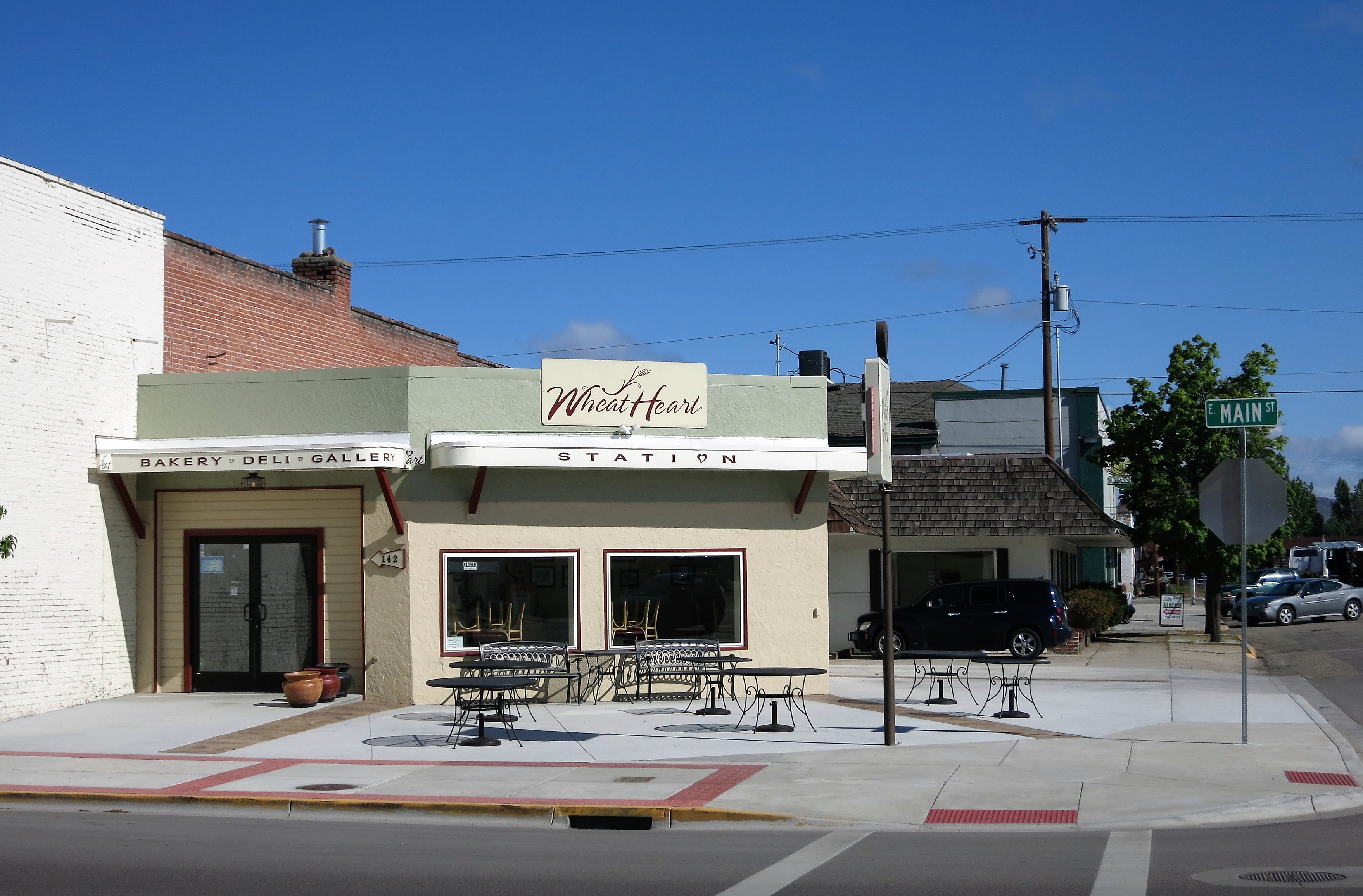
Here, an old corner service station has been converted to a combination Bakery-Deli-Gallery. The photo below was taken in 2014; the space is now the Newstead Farm & Market (link here).
The Gem County Courthouse is here in Emmett. This structure was a WPA project, built in 1939. The county was named for Idaho’s state nickname, “the Gem State,” and was formed in 1915. A new jail and sheriff’s office has recently been added behind the building.
Gem County Courthouse. Emmett, Idaho
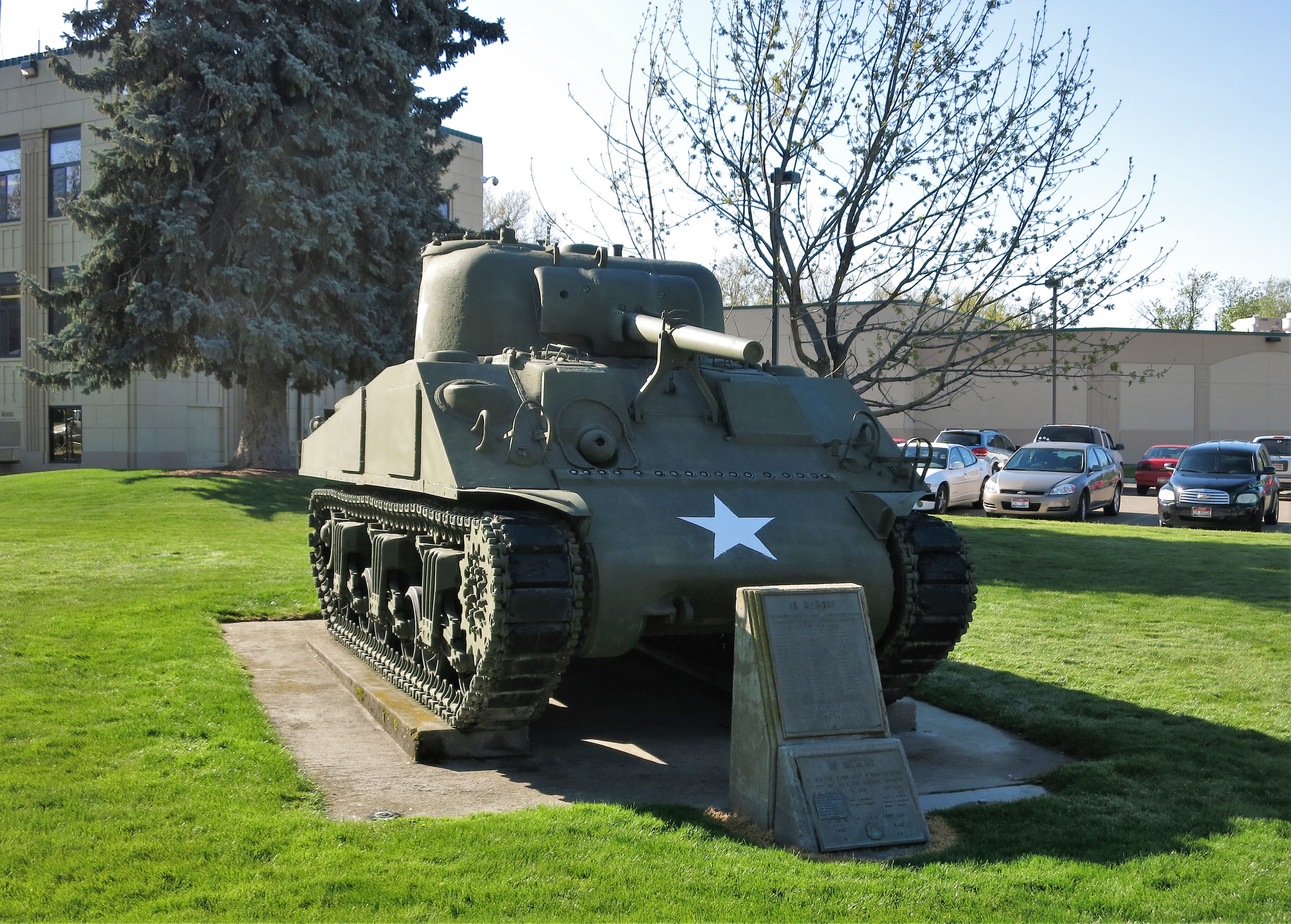
I think every green courthouse lawn needs a Sherman tank. Every. Single. One.
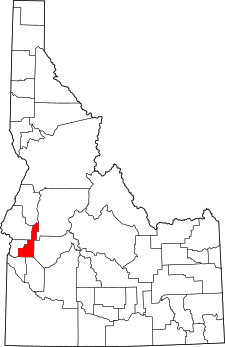
Gem County Courthouse. Emmett, IdahoGem County in the state of Idaho
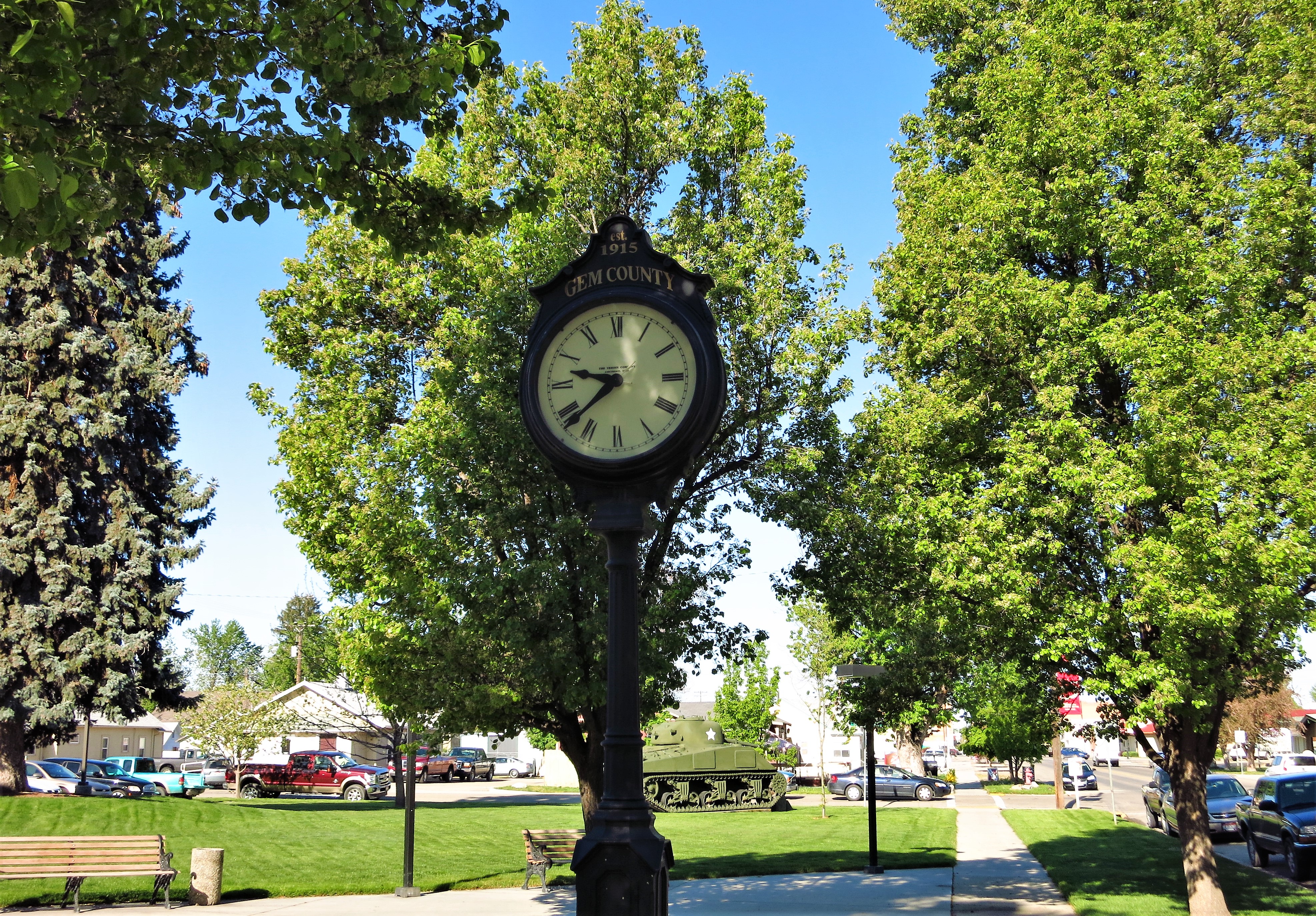
Similarly, a fine county clock always improves the town square.
Gem County clock. Emmett, Idaho
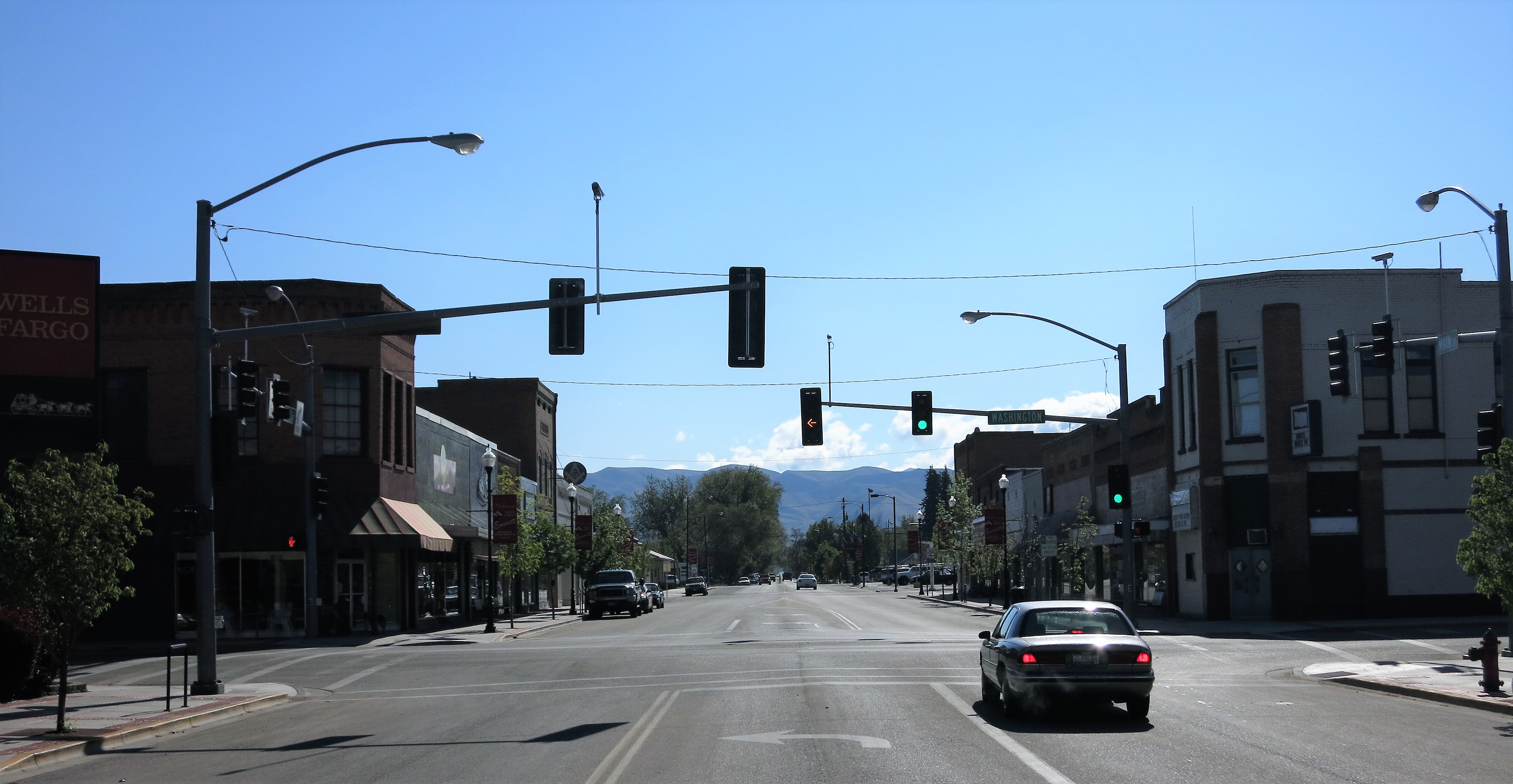
Mountains in the distance on a bright April morning:
The intersection of Main and Washington. Emmett, Idaho
Finally, some town blooms. It’s no wonder Californians are leaving their state in droves for places like this in Idaho.
Emmett, Idaho
All photos were taken by the authoron April 28, 2014
A list of all photo posts from the American County Seats series in TimManBlog can be found here.
I travel as a hobby and not for a living (yet) — but donations are happily accepted if you’d like to help defer my costs. Thanks, The TimMan
March 31, 2021 (Photos and memories from Friday, March 4, 2016)
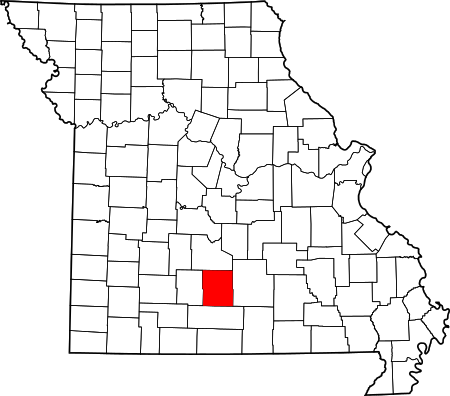
Wright County Courthouse. Hartville, MissouriWright County in the state of Missouri
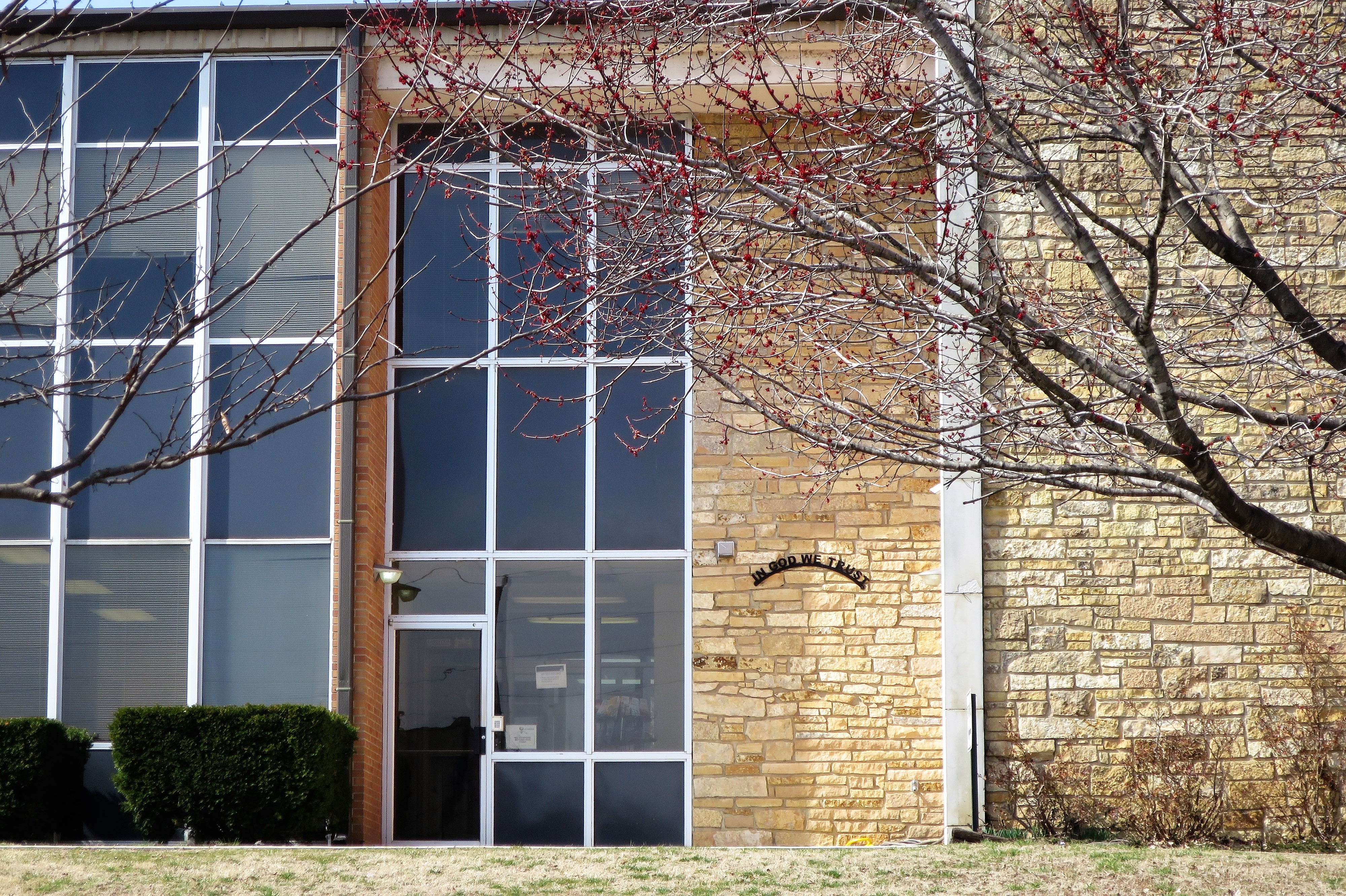
The town of Hartville, Missouri lies in the Ozark foothills of southwestern Missouri, about 50 miles from Springfield. Little Hartville has only 613 residents but it is the county seat of Wright County, Missouri. Its two-story yellow brick courthouse was constructed back in 1964, replacing an older, more ornate building. Two signs saying “In God We Trust” hang above the building’s two entrances.
In God We Trust. Wright County Courthouse. Hartville, Missouri
A man named Carl, one of the courthouse maintenance men, saw me taking photos and we talked a bit. He pointed to a hill east of town and said, “You know that the Civil War was fought here. They put cannon on that hill there and fired at cannon on this hill here,” pointing to the hill west of town where the water tower is today. “People digging in the hollows still find cannonballs buried in the mud today.”
Hills overlooking downtown Hartville, Missouri, site of the Civil War Battle of Hartville.Hills overlooking Hartville, Missouri, plus one of the town’s many churches.
Carl is an older fellow, in his 60s. The talk turned to more recent history. He said he was old enough to remember when they tore down the old courthouse. He said he’d heard stories that people had been hung on the courthouse grounds. That would have been many, many years ago he said. It was a more violent time back then.
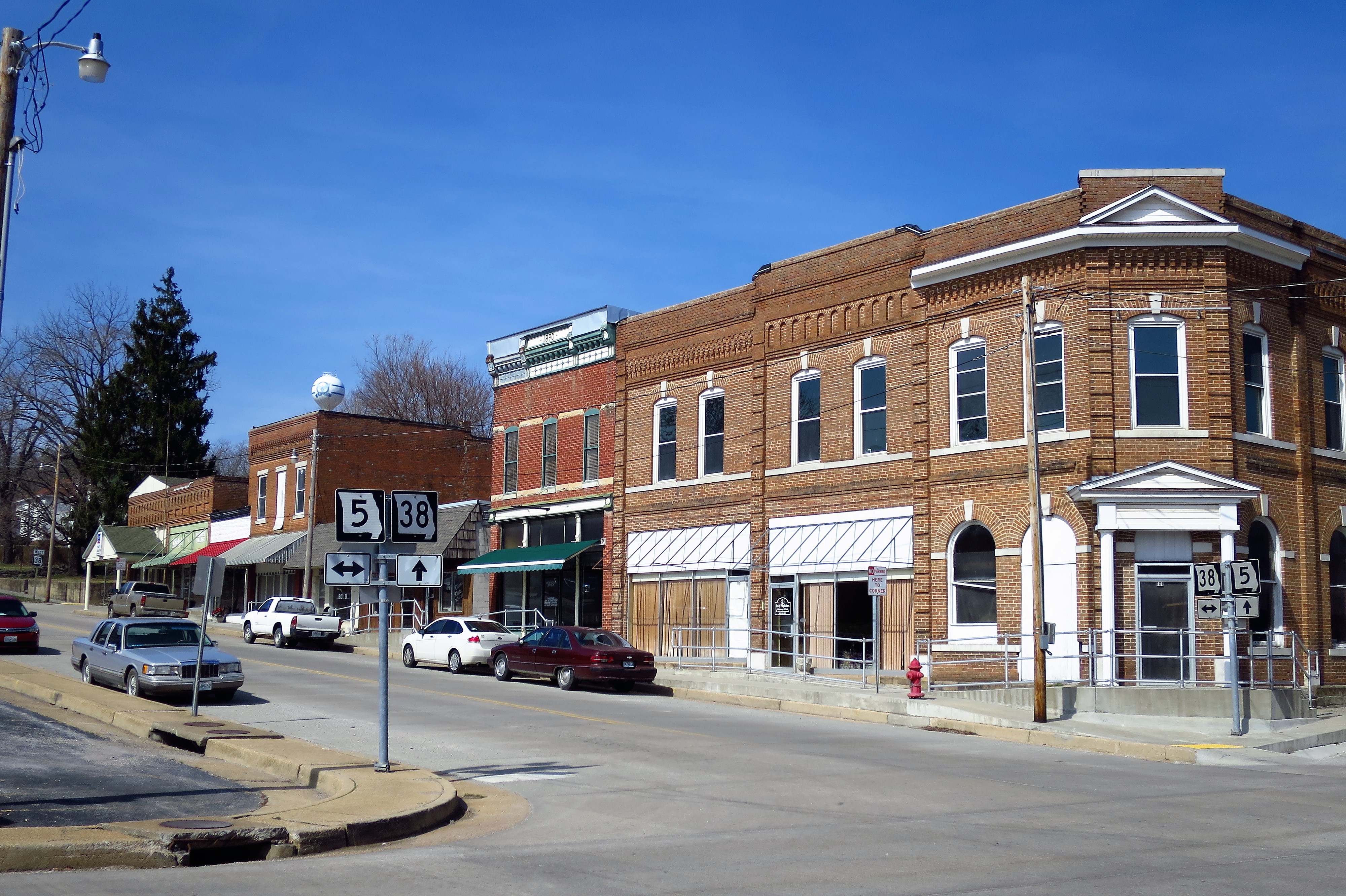
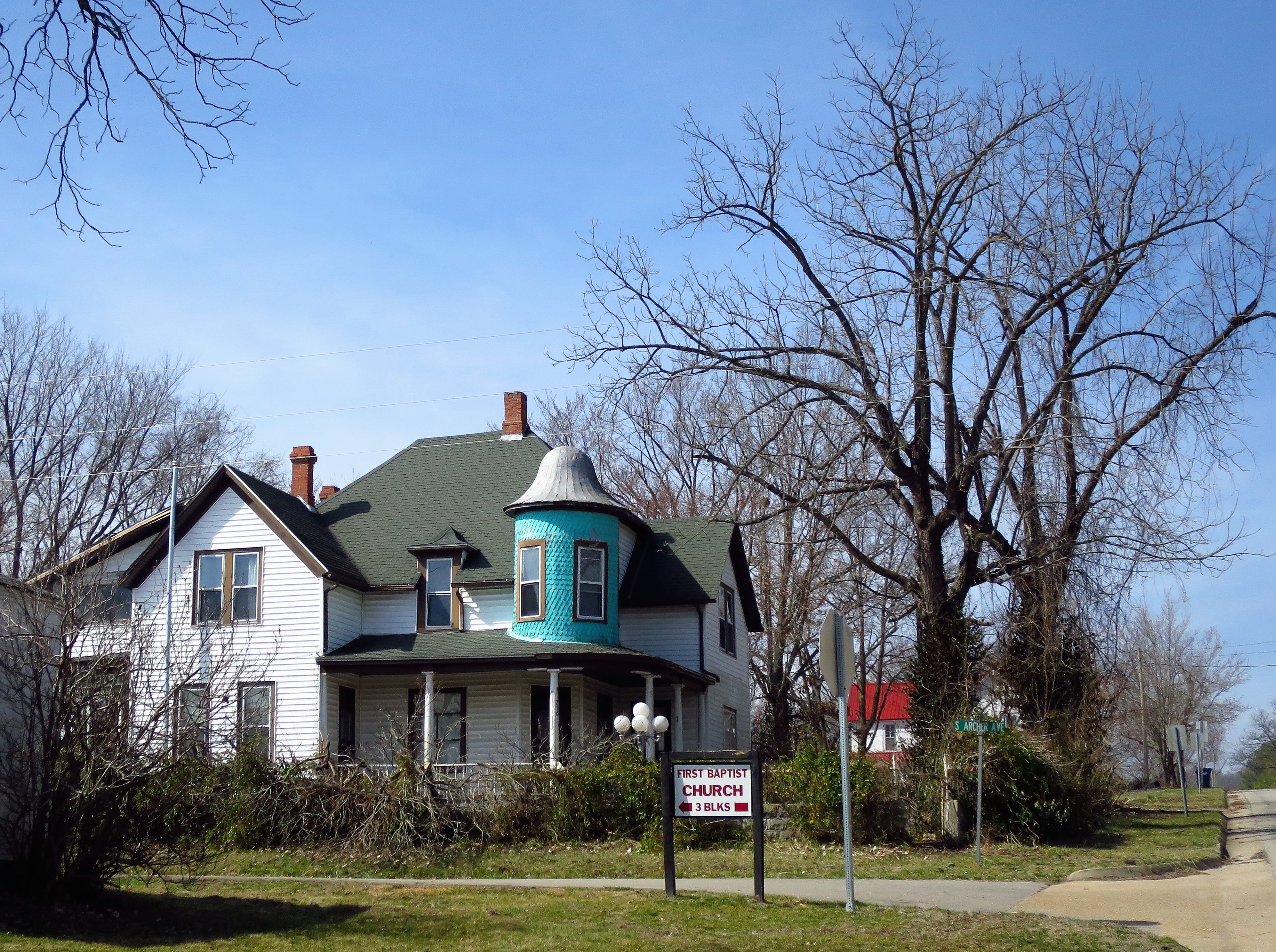
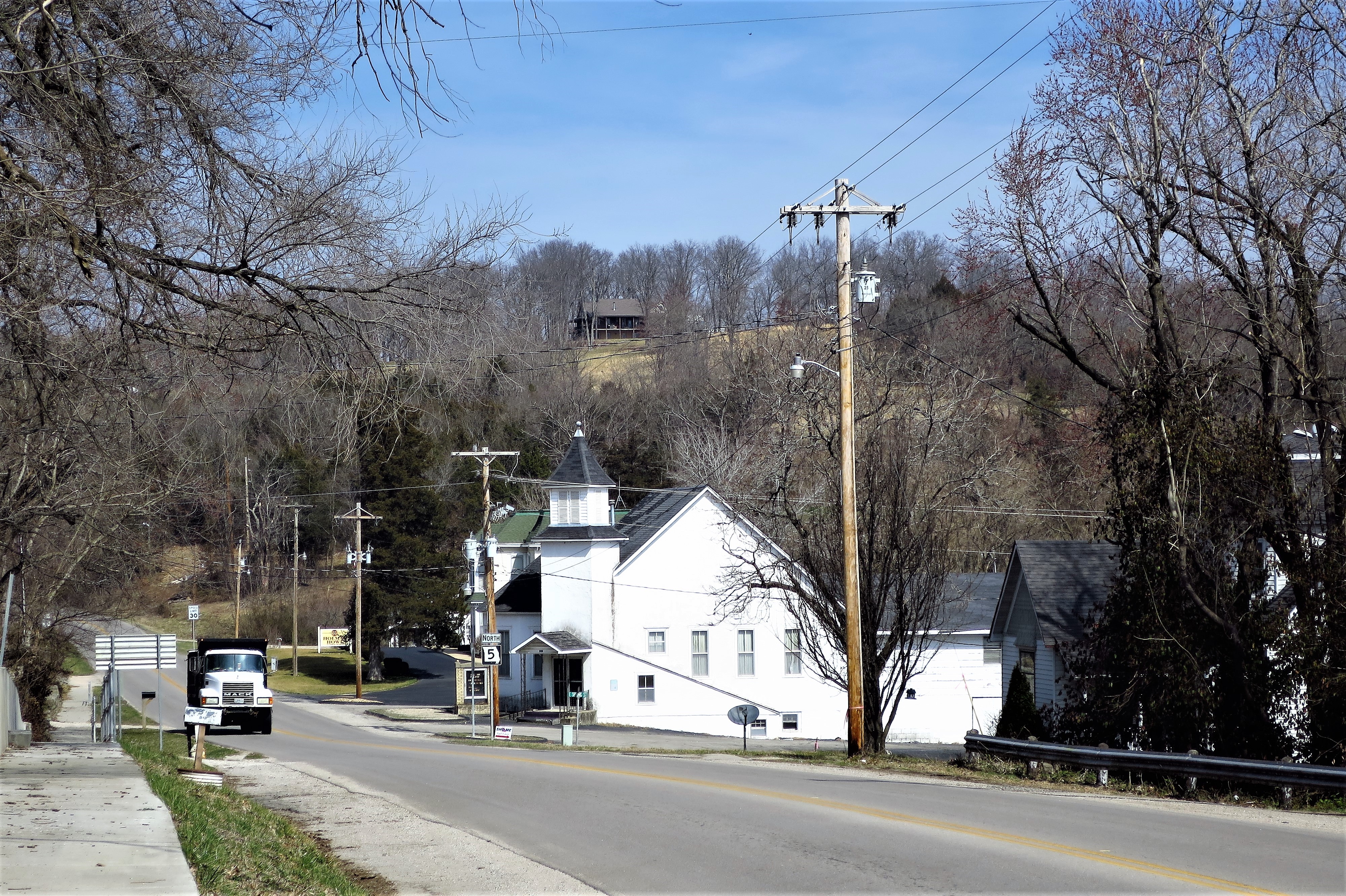
I walked around town — not much more than a crossroads where two state highways meet. A few houses along one street, some businesses along another.
The corner of Main Avenue and Rolla Street. Hartville, MissouriDowntown home in Hartville, Missouri
Grain silos are located down in the hollow next to the food supermarket.
Hartville Family Cafe (formerly LJD’s). Hartville, Missouri
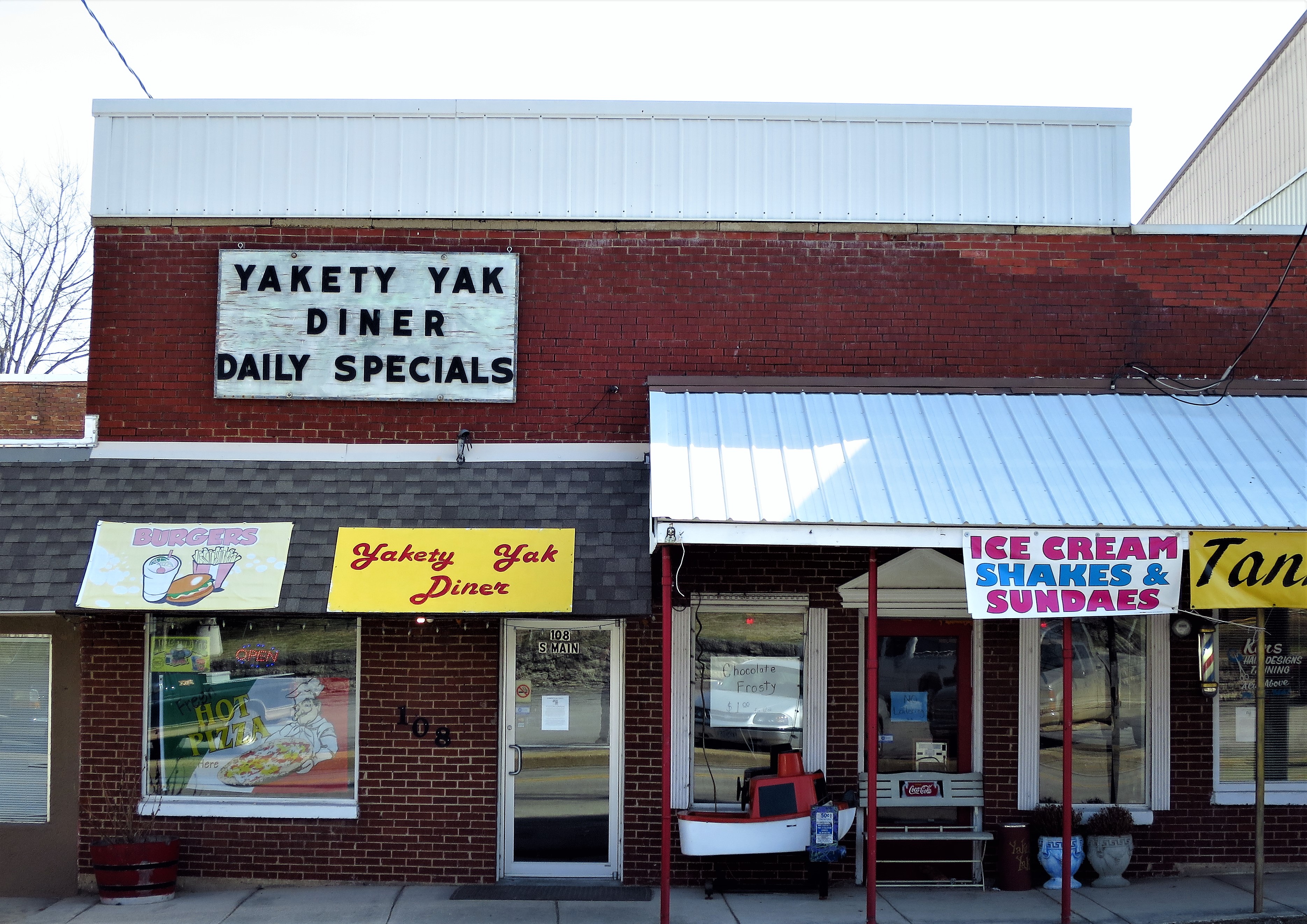
The town BBQ restaurant is down there as well, its smoker parked in front leaking wondrous aroma throughout town. But I chose to eat at a smaller place on Main Avenue. I saw the name — the Yakety Yak Diner — and I couldn’t resist.
The Yakety Yak Diner. Hartville, Missouri
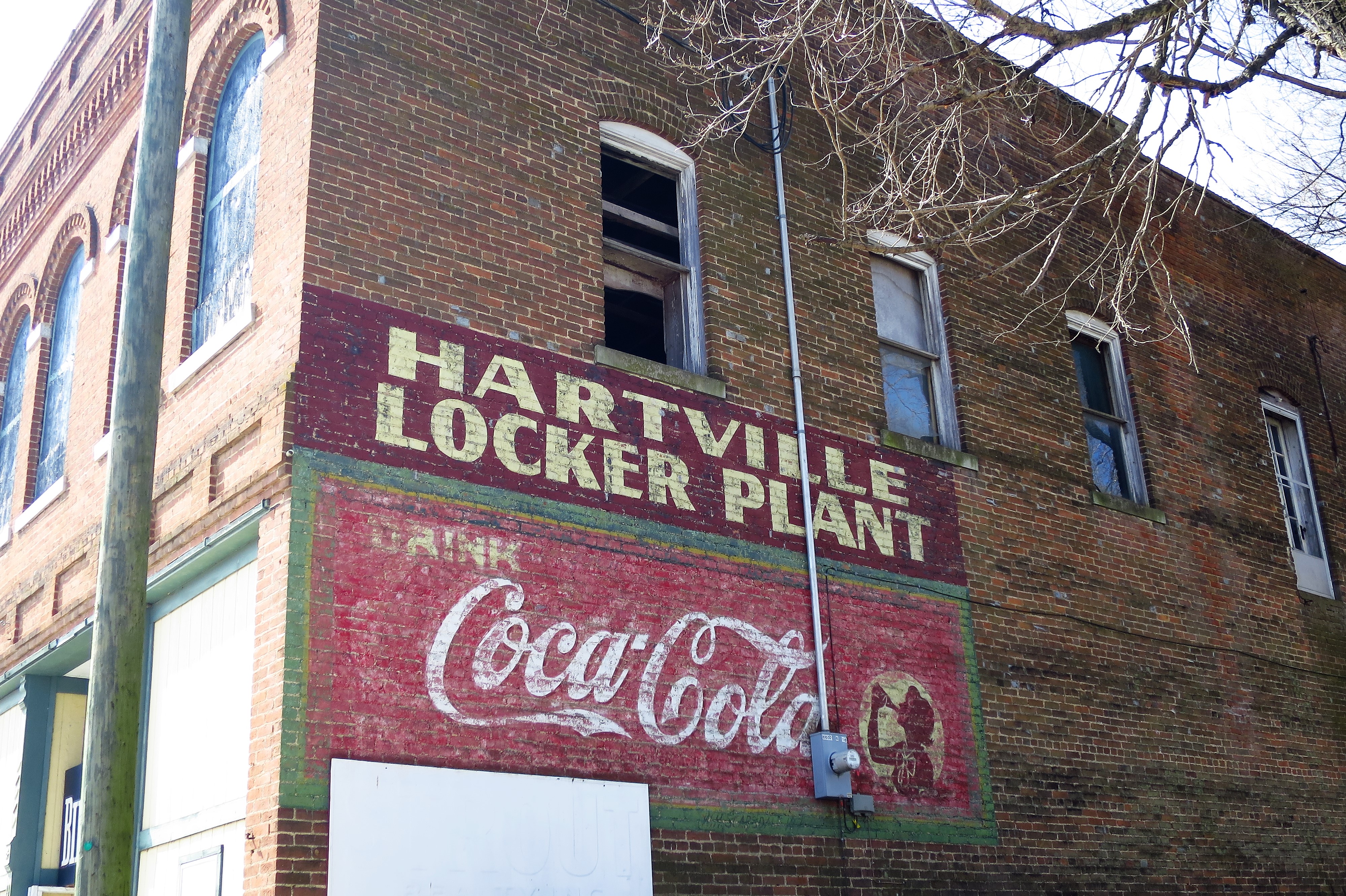
After lunch, I took photos of the buildings near the main intersection. Near that corner, I found two Civil War murals. One painting showed a Confederate officer seated on a tree stump assiduously reading the Bible before the battle.
Mural of Confederate officer in the Battle of Hartville. Hartville, Missouri
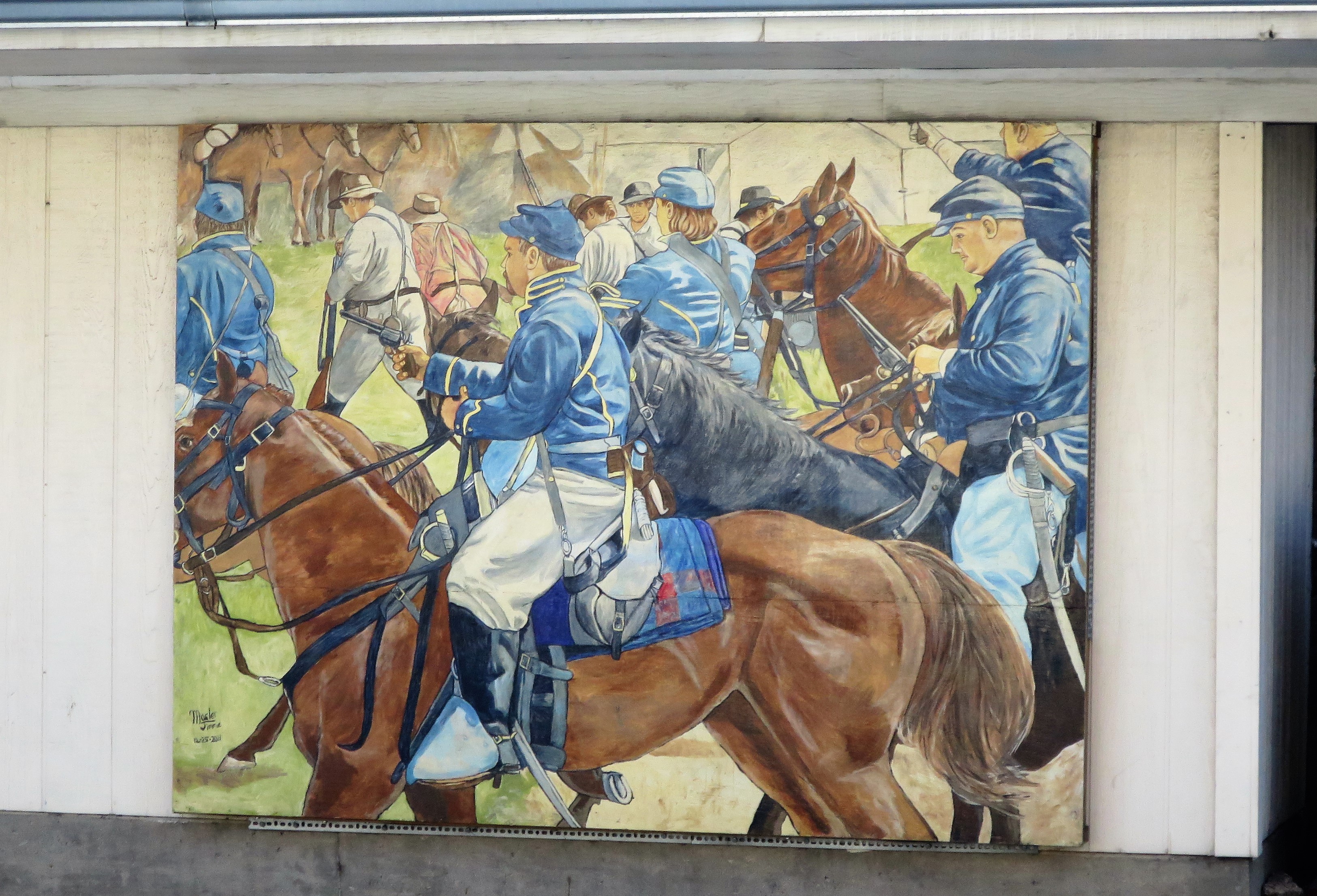
The other mural showed Union horsemen and foot soldiers rushing into the fray of battle.
Union horsemen and infantrymen at the Battle of Hartville. Hartville, Missouri
Though the Confederate is shown reading the Bible, one would be mistaken in believing that the Soldiers in Gray were more religious than the Soldiers in Blue. As Lincoln said in his Second Inaugural Address 151 years to the day before my visit to this battle site:
Both read the same Bible, and pray to the same God; and each invokes His aid against the other. It may seem strange that any men should dare to ask a just God’s assistance in wringing their bread from the sweat of other men’s faces; but let us judge not that we be not judged. The prayers of both could not be answered; that of neither has been answered fully.
President Abraham Lincoln, Second Inaugural Address, March 4, 1865
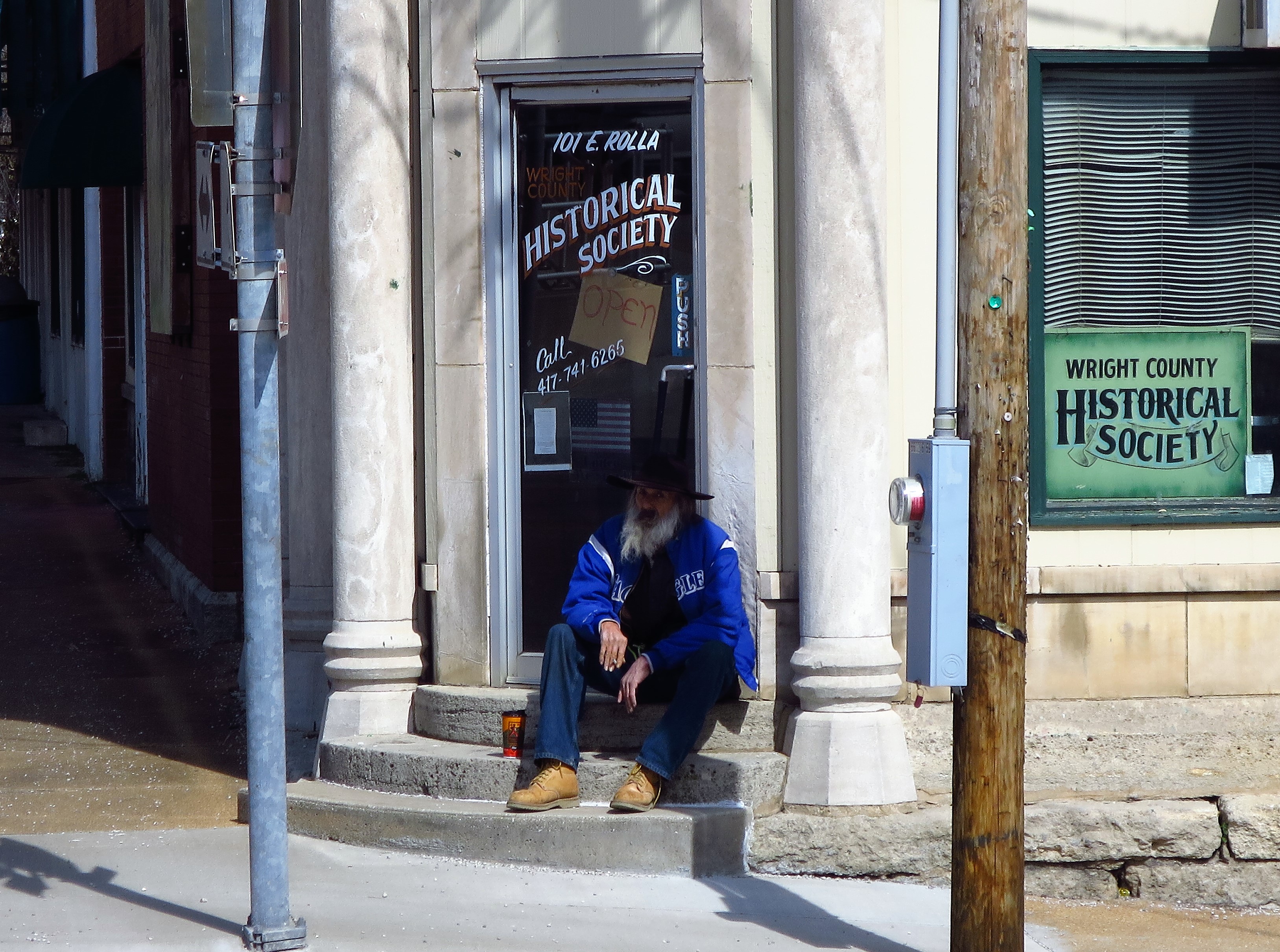
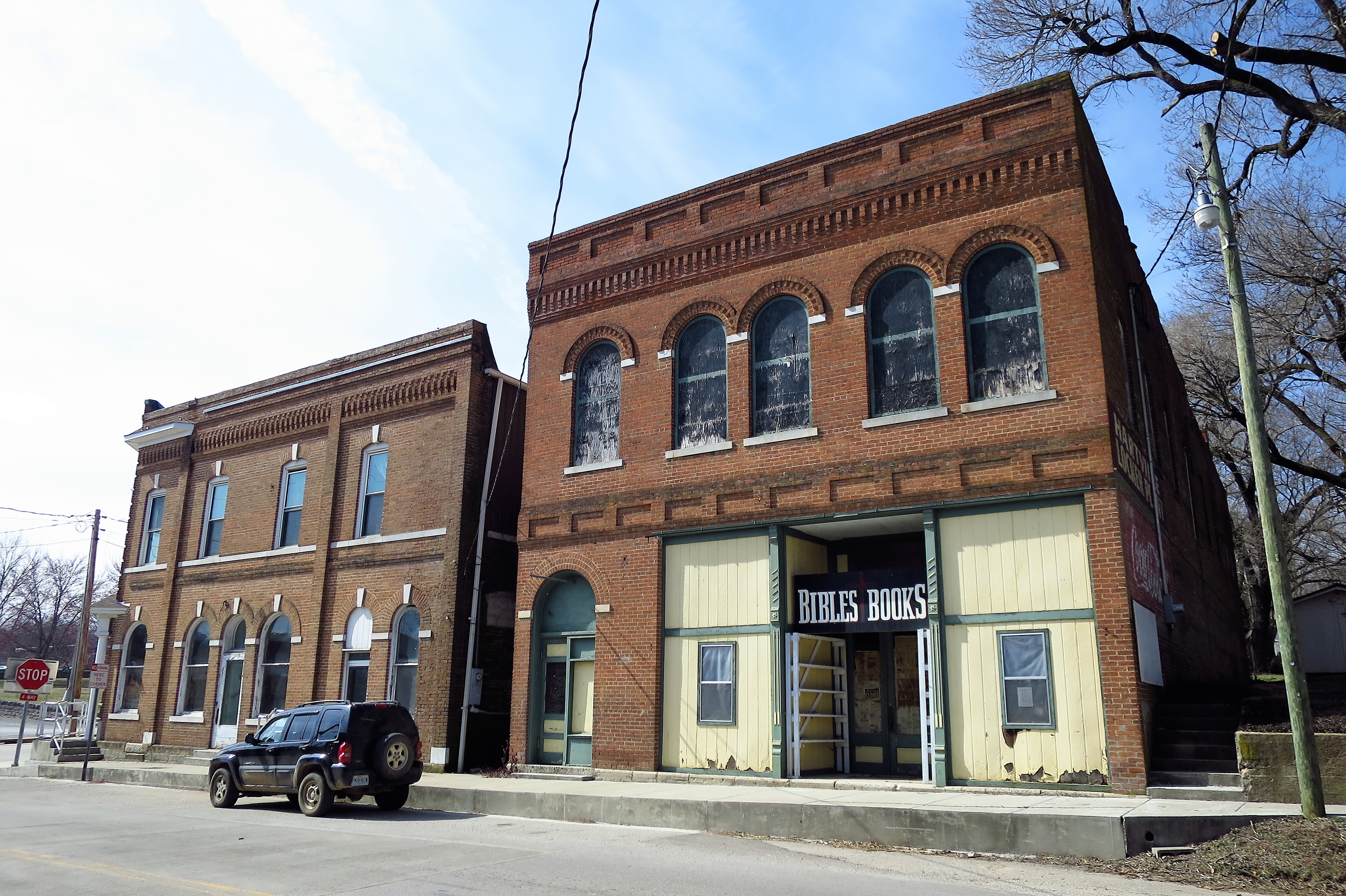
Later on, I saw an old bearded man in an old brown hat sitting on the steps of the old bank building (now the county Historical Society). He looked exactly like the Confederate officer in the mural. I surreptitiously took a photo of the good fellow and felt as if I had stolen a gem.
Overall it was a thoughtful day. Near the first of Spring. Good memories of a quiet road trip.
Here are some more photos of Hartville:
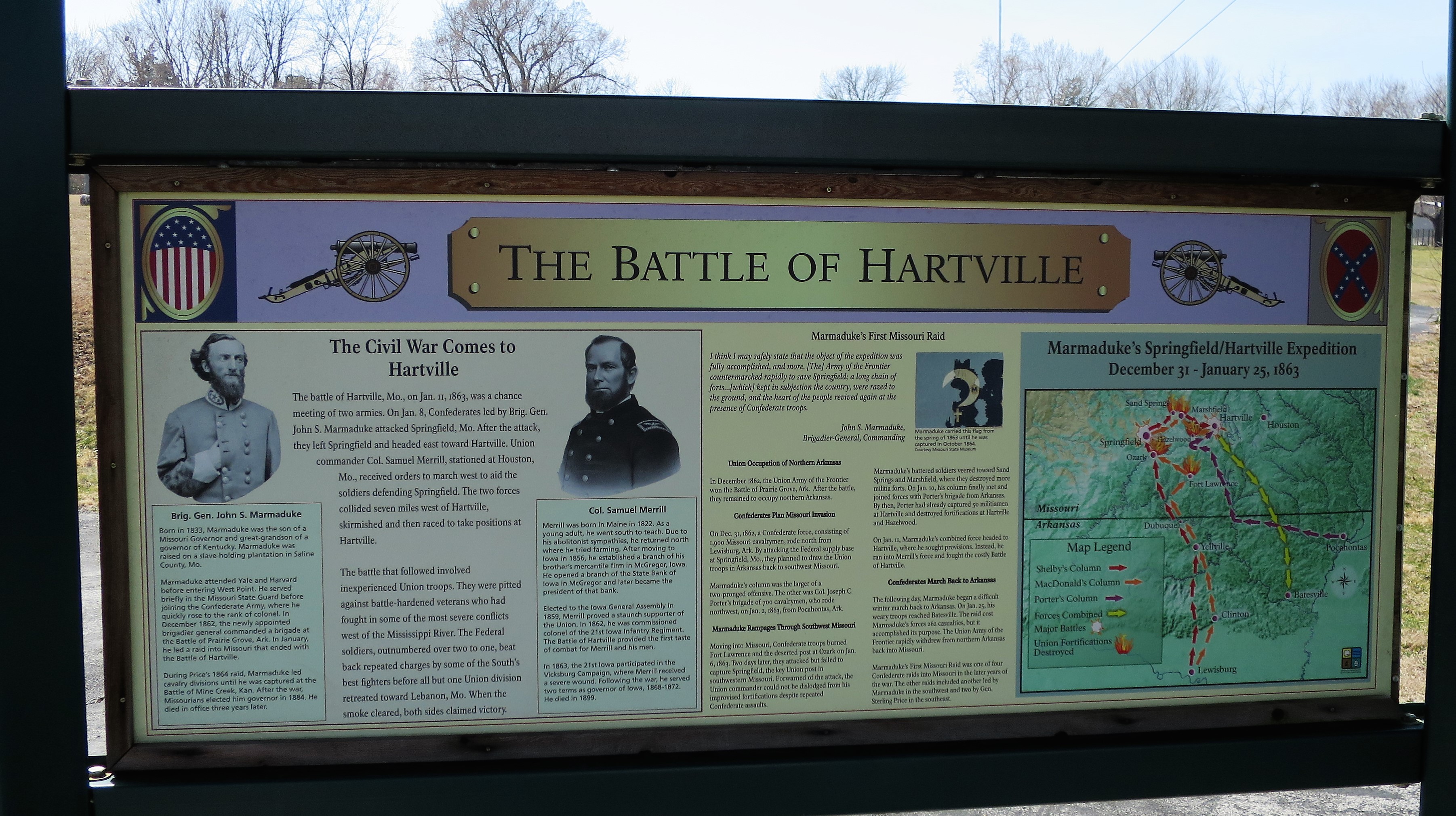
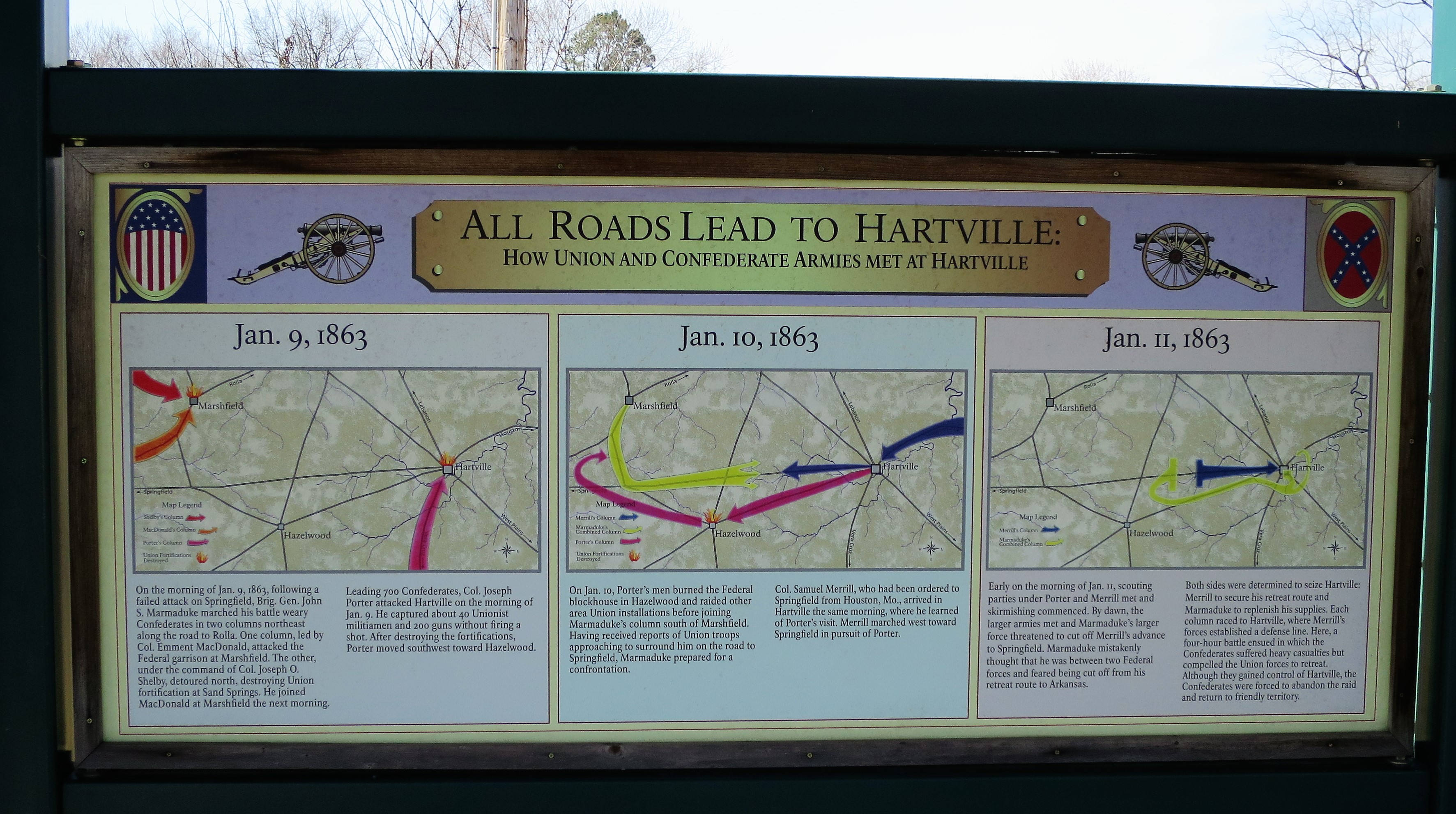
The town has an extensive historical marker explaining the Battle of Hartville in detail. If you’re curious, click on the photos are read the text. Both sides claimed victory here.
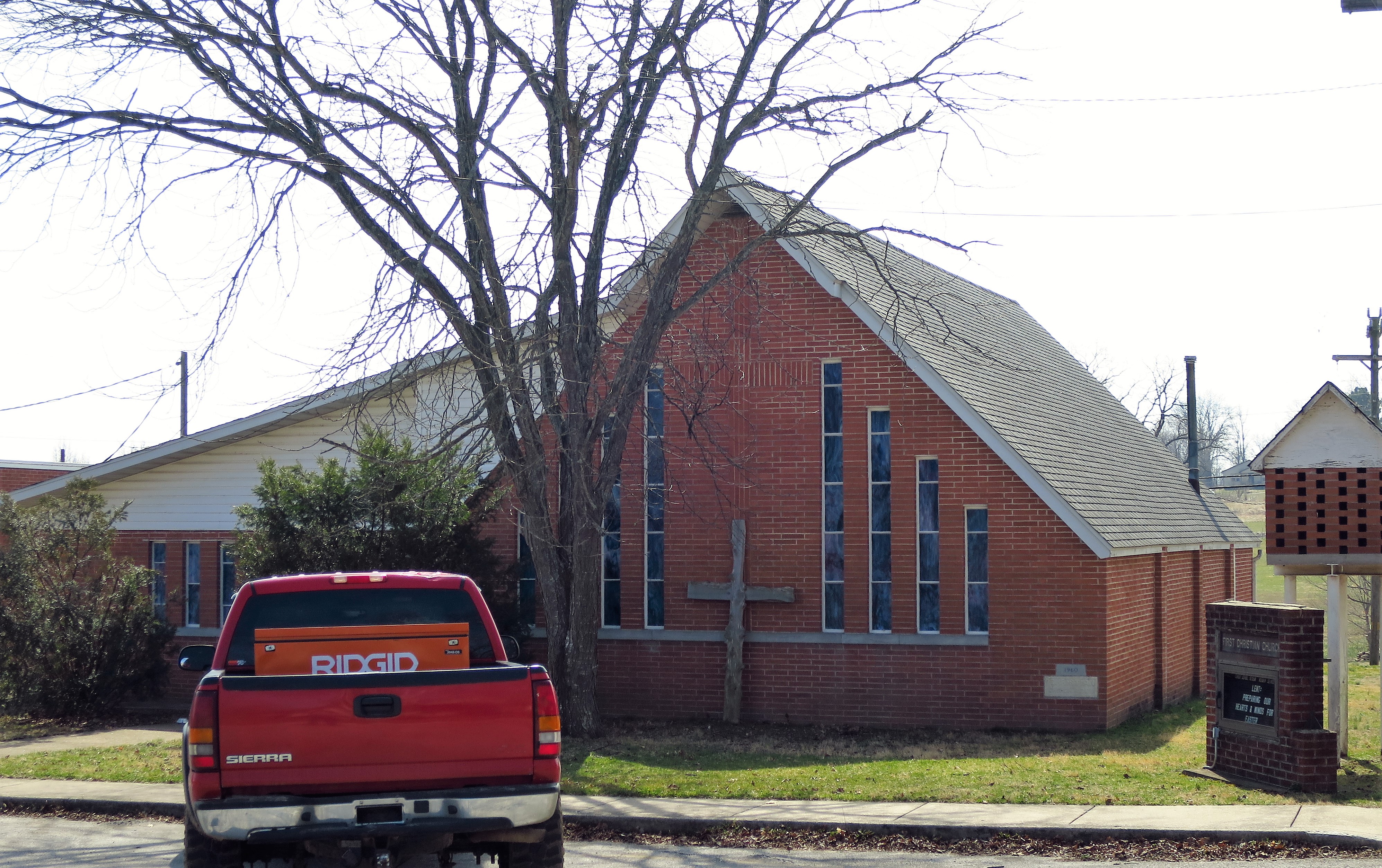
Hartville has many churches and old church buildings. Here are some of them:
Formerly a church, now the VFW hall.Hartville Church of GodFirst Christian Church
All photos were taken by the authoron March 4, 2016
A list of all photo posts from the American County Seats series in TimManBlog can be found here.
I travel as a hobby and not for a living (yet) — but donations are happily accepted if you’d like to help defer my costs. Thanks, The TimMan
Believe it or not, I remember exactly where I was and what I was doing the first time I heard Rush Limbaugh on the radio.
It was the late 1980s and I was working for the Claremont Institute in Southern California. I was taking a two-week vacation, traveling by car to Pittsburgh in my old Mazda GLC.
I left L.A. on a Sunday afternoon, drove to Las Vegas and spent the night there, then Monday morning I headed north on Interstate 15 through the Nevada desert. My old car only had an AM/FM radio for entertainment.
So, manually turning the AM dial searching for a strong radio signal I came upon this guy talking about politics from a conservative point of view. “What the hell is this?,” I wondered in amazement. Media is not allowed to be conservative! The host was spellbinding in his delivery. He was topical in his commentary. He was a great storyteller. And he was saying things that I had been thinking myself for years but never heard expressed on the radio or tv. When I lost the signal out of Las Vegas I picked him up again in St. George, Utah on a different station. When I lost that signal I picked him up again out of Salt Lake City. This guy was everywhere apparently. The next day I woke up in Denver, drove north to Cheyenne and then east into Nebraska. By mid-morning I could find him again on any of three or four stations along interstate 80 “all across the fruited plain.” This pattern continued nearly every weekday all the way to Pittsburgh and then back again on the return trip to Los Angeles.
I remember wondering which network Rush Limbaugh was part of. Was it CBS or NBC or ABC, or some new network? Apparently, he was part of the “EIB network“ which I had never heard of. I remember trying to look up the “EIB network” and not finding anything. I had never figured the possibility that one man could have created his own network.
Now he is history. Rush Limbaugh will occupy a space in American history no less monumental than Will Rogers or Johnny Carson.
In my mind, Rush was most poignant when talking about his own life, his own failures in his early life, and his struggle to ultimately succeed – just by being himself. I started listening to Rush when I was in my thirties, broke, and at times unemployed. It was looking like my life might not turn out as well as my promising school career had suggested. But I got through those times, partly by listening to Rush and taking his life as an inspiration. I often think of him as an inspiration even today, and I’m sure millions of others do as well. That I will never forget.
Rush Limbaugh R.I.P.
Donations to TimManBlog
Use this form to make donations to support this site. Paypal, Visa, Mastercard, Amex, and Discover cards are accepted. Donations can be made in increments of $5.00; increase the number of units to increase the donation amount.
February 15, 2021 (Photos and memories from Sunday, February 10, 2013)
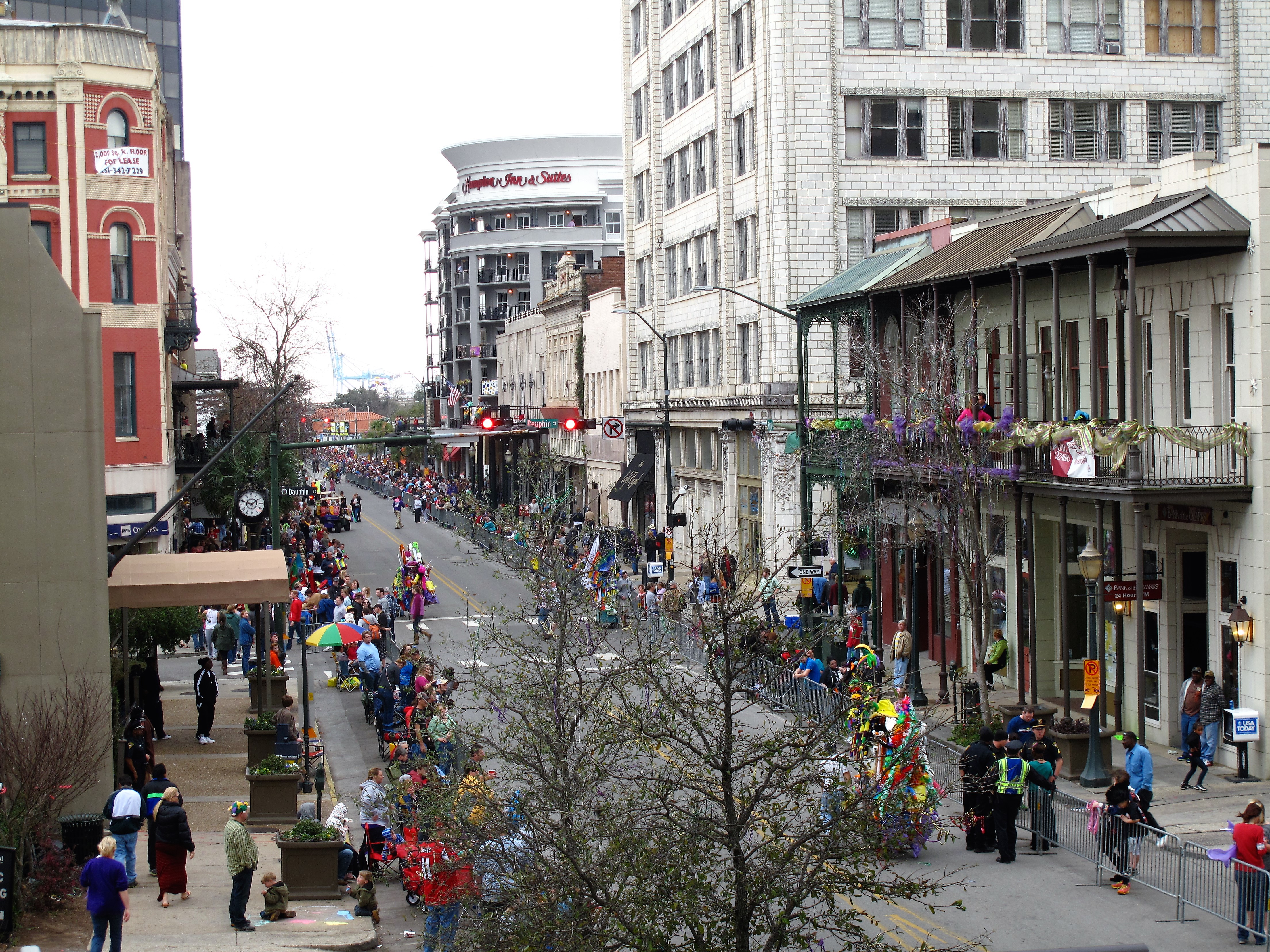
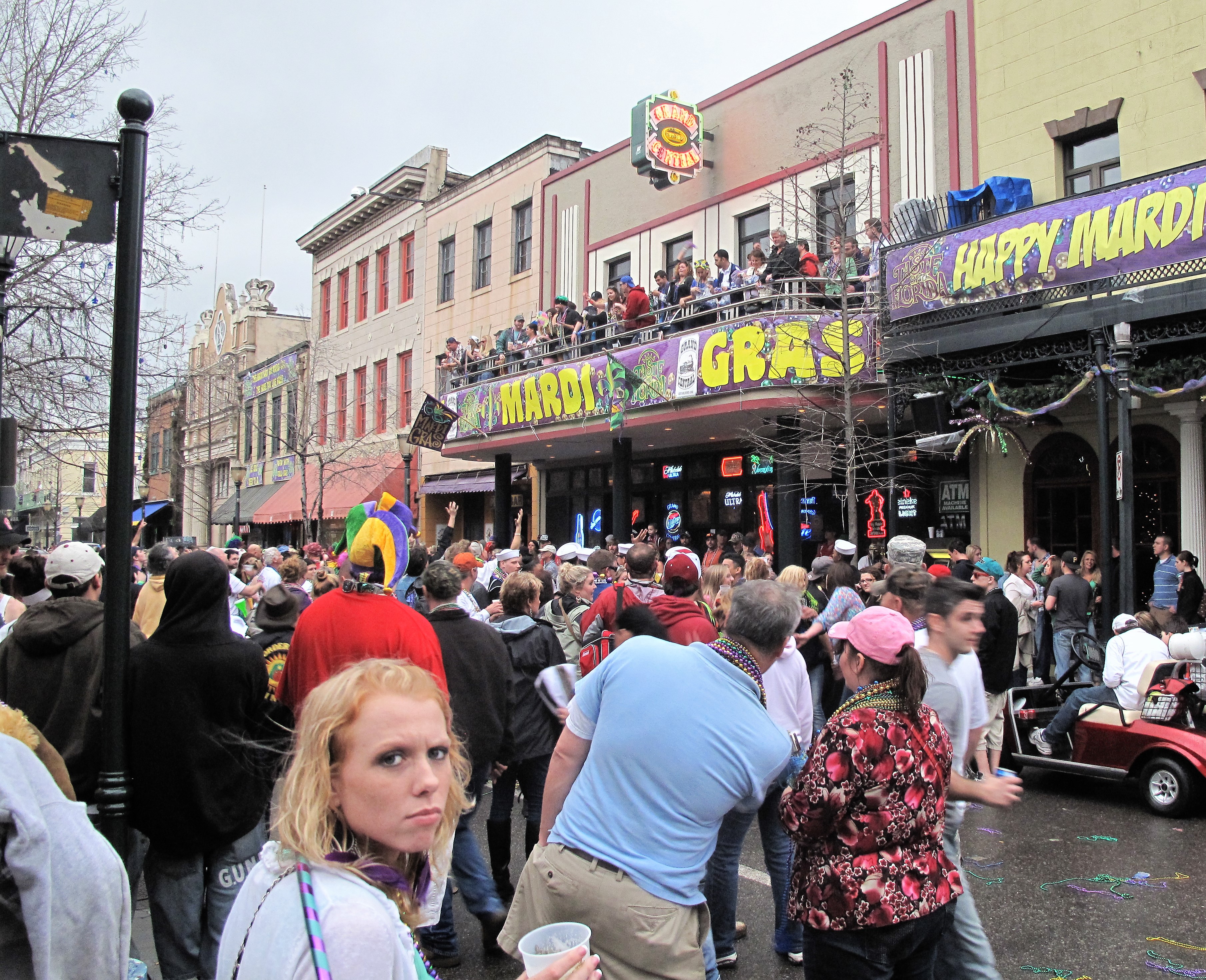
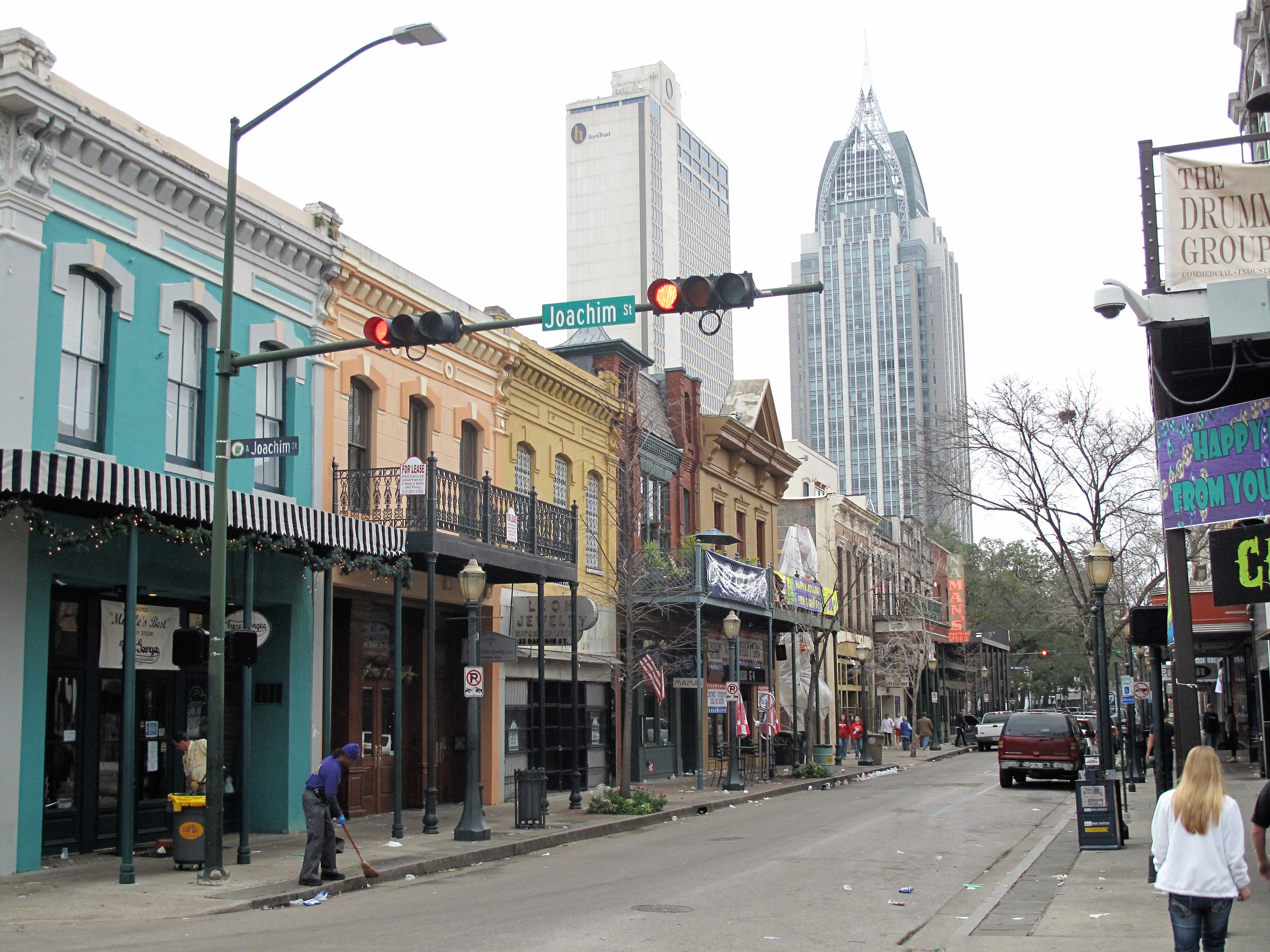
I’m in Mobile, Alabama and Mardi Gras is going on all around me.
Mardi Gras parades on Dauphine Street. Mobile, Alabama
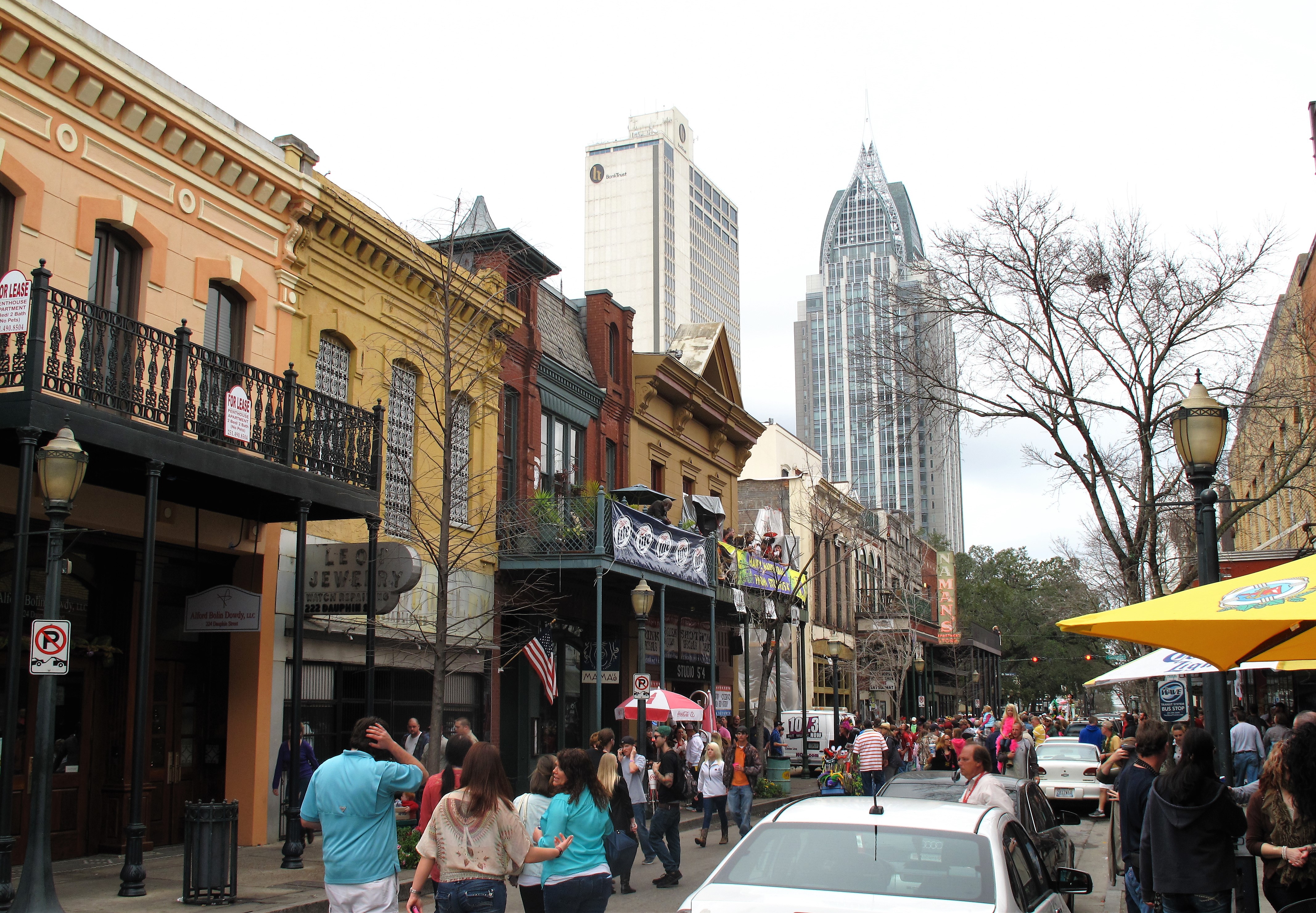
Dauphine Street is Mobile’s Bourbon Street, lined with bars and second-story patios for looking down on the party below. It’s still morning but the street is busy with drinkers. Rain is expected today; sorry for the gray-sky photos but it couldn’t be helped.
Mobile Mardi Gras 2013. The lady in the foreground must be sour-faced about the rainy weather. What else?
Technically speaking, it’s not Mardi Gras but Joe Cain Day in Mobile. The Sunday before Ash Wednesday is reserved for Mr. Cain’s memory – a man who basically started the Mardi Gras tradition in this town many decades ago. The holiday has come to mean parades and family entertainment.
Dauphine Street with the Mobile skyline in the backdrop. Waiting for the Joe Cain Day parade to start.
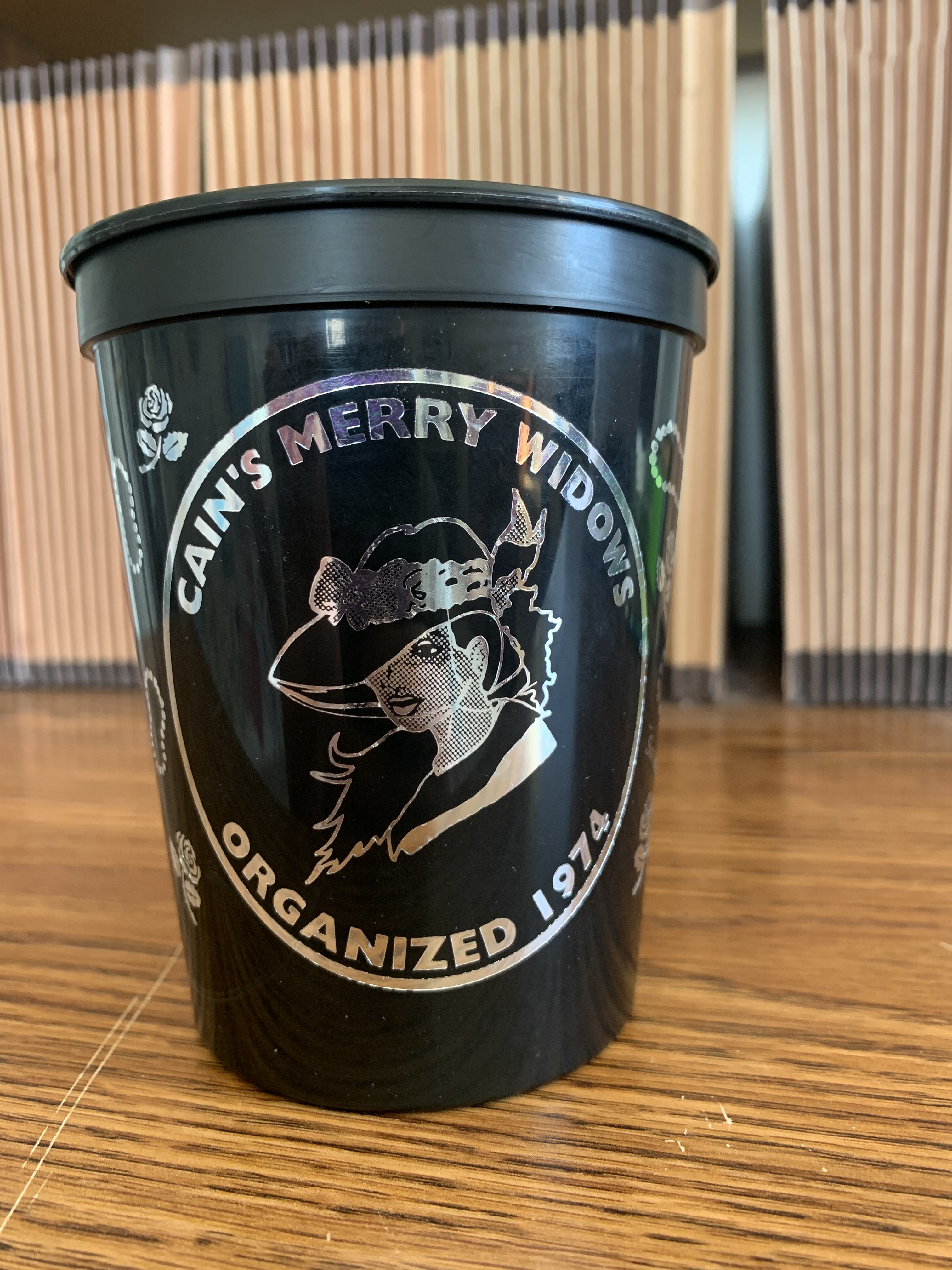
The highlight of these parades is the opening float, reserved for the Merry Widows of Joe Cain. These ladies, dressed all in black and wearing veils to keep their identities secret, wail for the memory of poor long-gone Joe Cain and compensate by throwing the crowds strings of black beads, the most coveted throw in Mobile’s Mardi Gras. I caught a few strands of the blacks, but I also caught a few smacks on the head with throws I didn’t see coming. Some of these were small Moon Pies, a favorite throw here in Mobile.
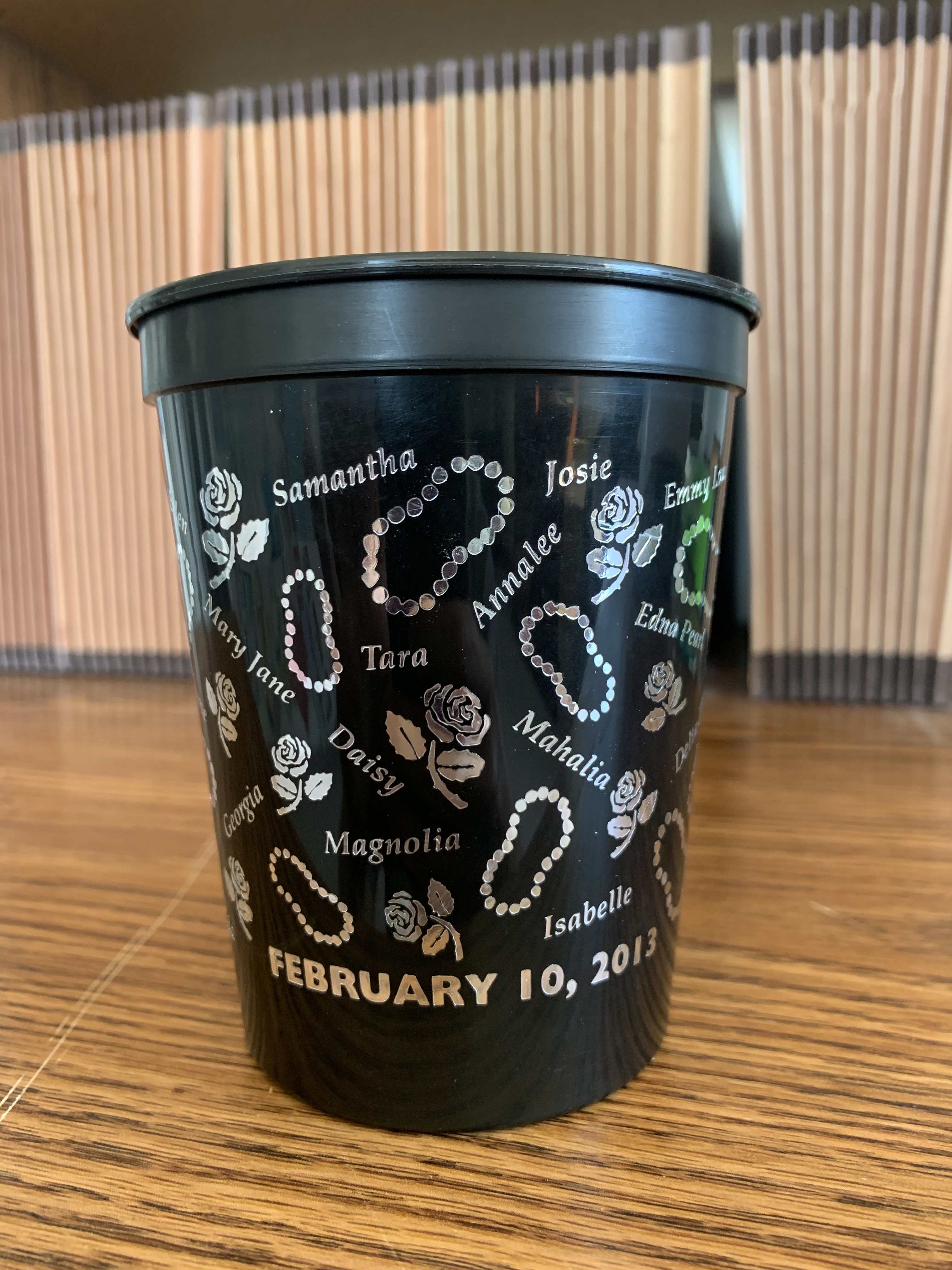
I also got a Merry Widow’s drinking cup:
Drink to poor Joe Cain’s memory!Brought to you by the (not so sweet) Merry Widows of Joe Cain!
Afterward, I’m at a bar called T.P. Crockmiers, on a barstool, bloody mary in front of me, eggs benedict ordered with a complementary glass of champagne expected to follow. I was trying to work off a headache caused by too many Moon Pies aimed at my head. My drink came in a plastic cup (suitable for take-out), adorned with lime and lemon slices, a celery top, and two pickled okra skewered by a toothpick. One is always well taken care of in the South.
Mobile County in the state of Alabama
For those who prefer quiet museums to raucous parades, Mobile has just the place for you.
The Carnival Museum. Mobile, Alabama
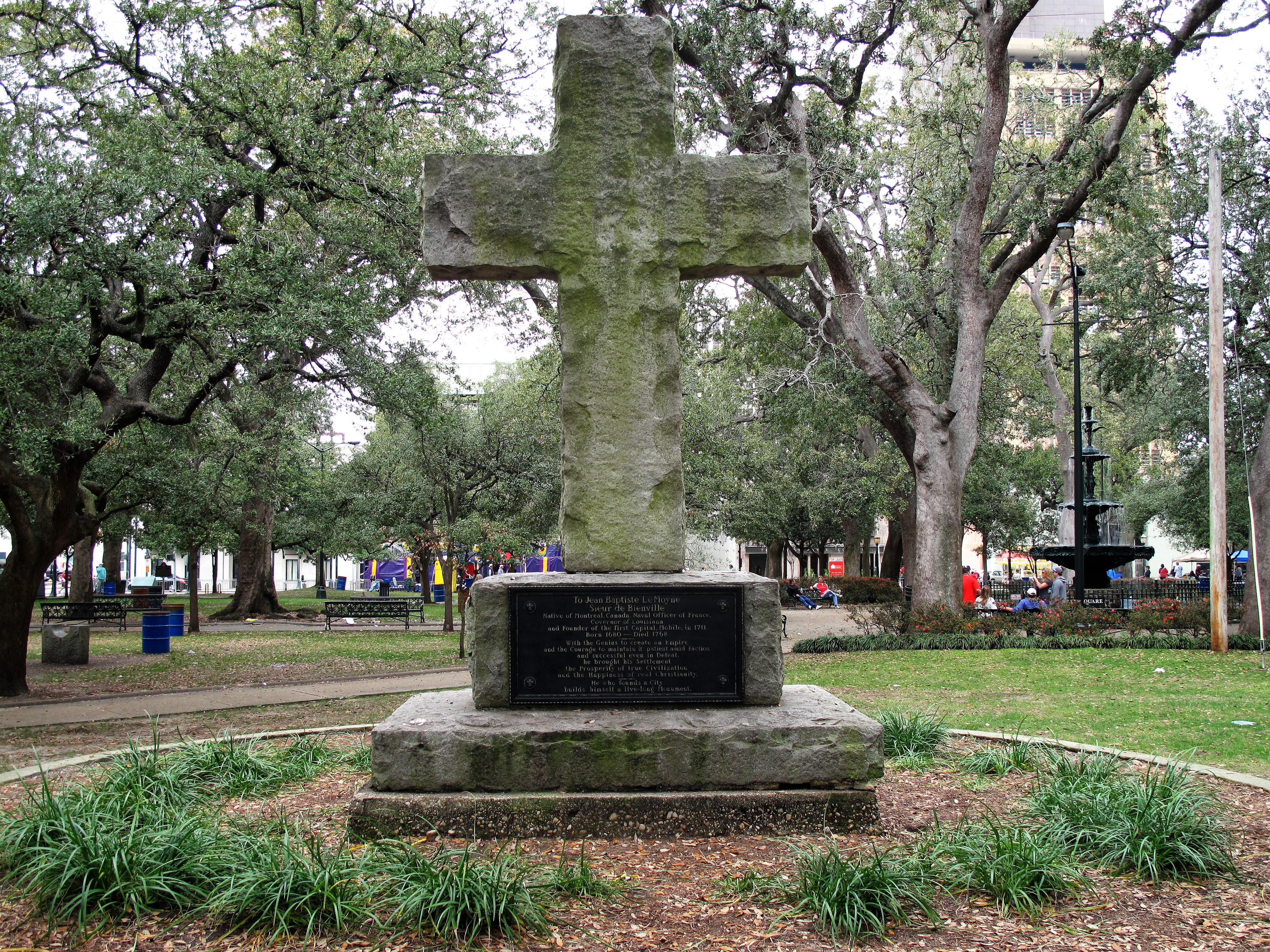
Mobile was founded in 1702 and was designated capital of French “Louisiane” in 1711 by Jean Baptiste LeMoyne, Sieur de Bienville. So Mobile does have a French heritage that goes with its Mardi Gras celebrations. Le Sieur de Bienville has a memorial in Bienville Square in the center of town.
Commemoration of Jean Baptiste LeMoyne, Sieur de Bienville. Mobile, AlabamaCentral fountain in Bienville Square. Mobile, Alabama
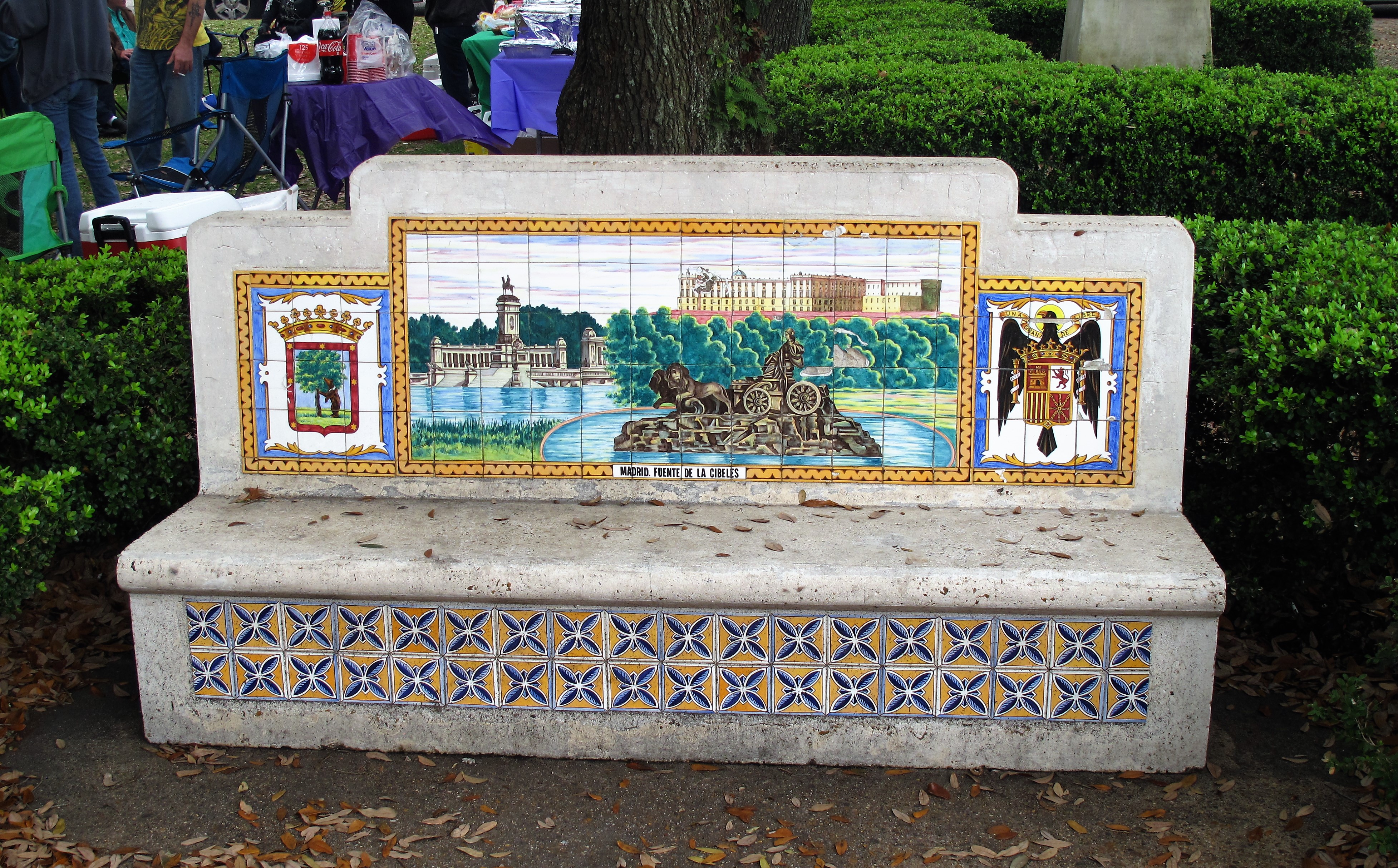
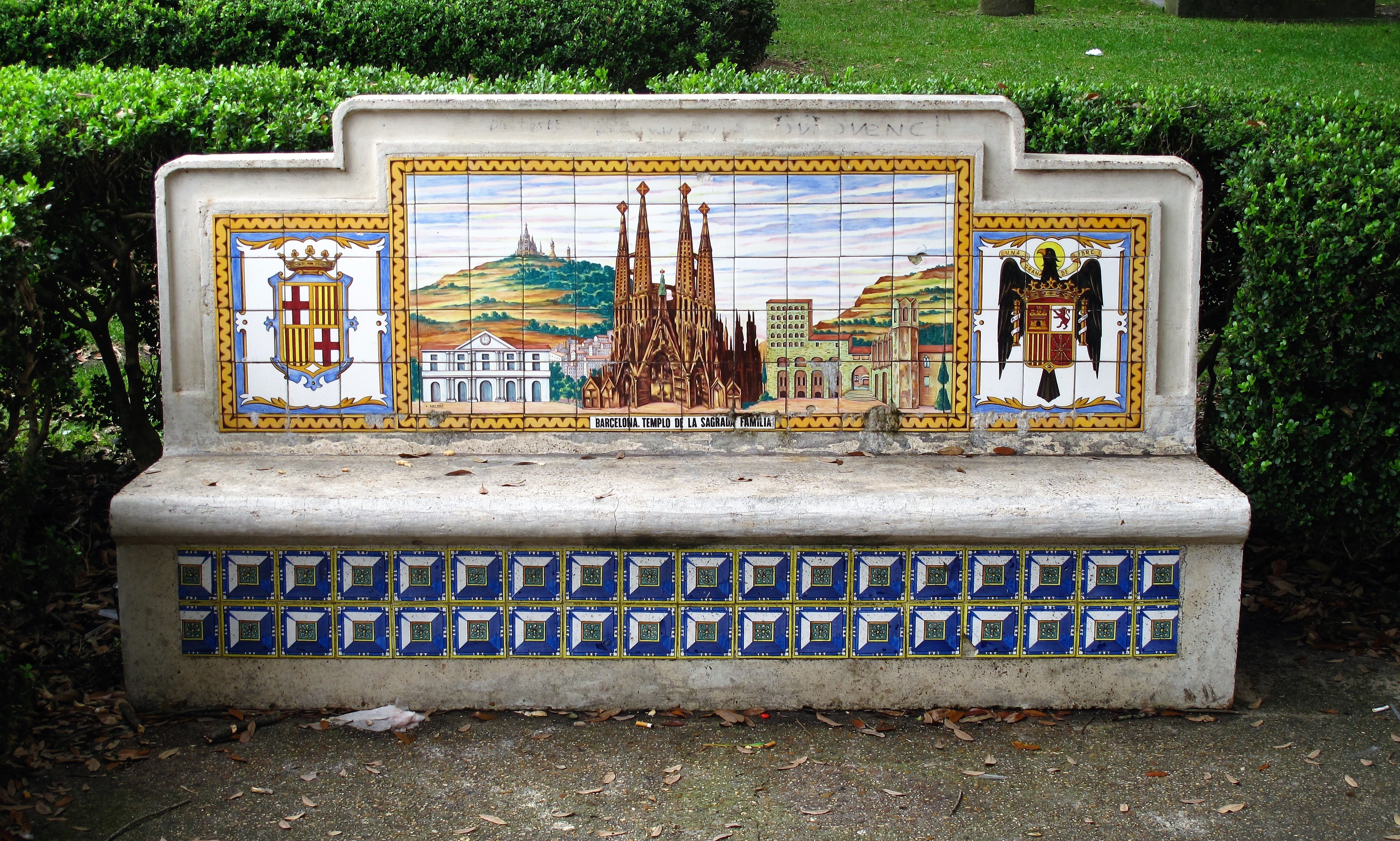
The Spanish controlled Mobile after the French. They’re remembered in Spanish Plaza, a few blocks from Bienville Square. These beautiful porcelain park benches must have been gifts from the Spanish cities named on the benches.
From the town of Marbella, Spain, to Mobile, AlabamaFrom Madrid, Spain to Mobile, AlabamaFrom Barcelona, Spain to Mobile, AlabamaStatue of Hernando de Soto in Spanish Plaza. Mobile, Alabama
With both French and Spanish heritage, Catholicism is well-represented in Mobile.
Cathedral-Basilica of the Immaculate Conception. Mobile, Alabama
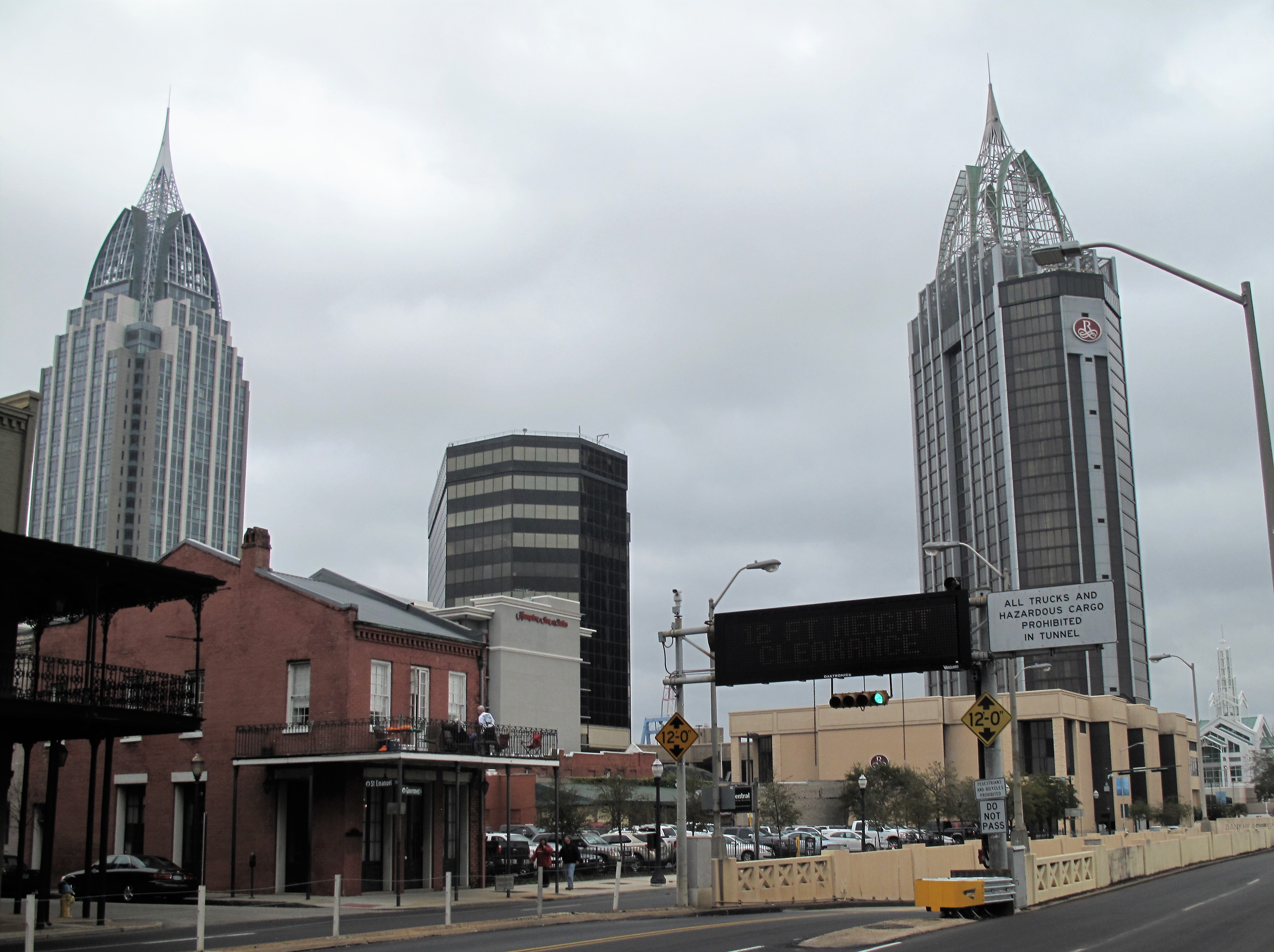
There are two twin skyscrapers in Mobile and both are hotels, at least partially. Nevertheless, this is a growing city, the kind of place businesses are looking to build in. The twin buildings are the RSA Tower and the Renaissance Mobile Riverview Plaza (according to Google Maps). They are here:
Mobile’s twin skyscrapers
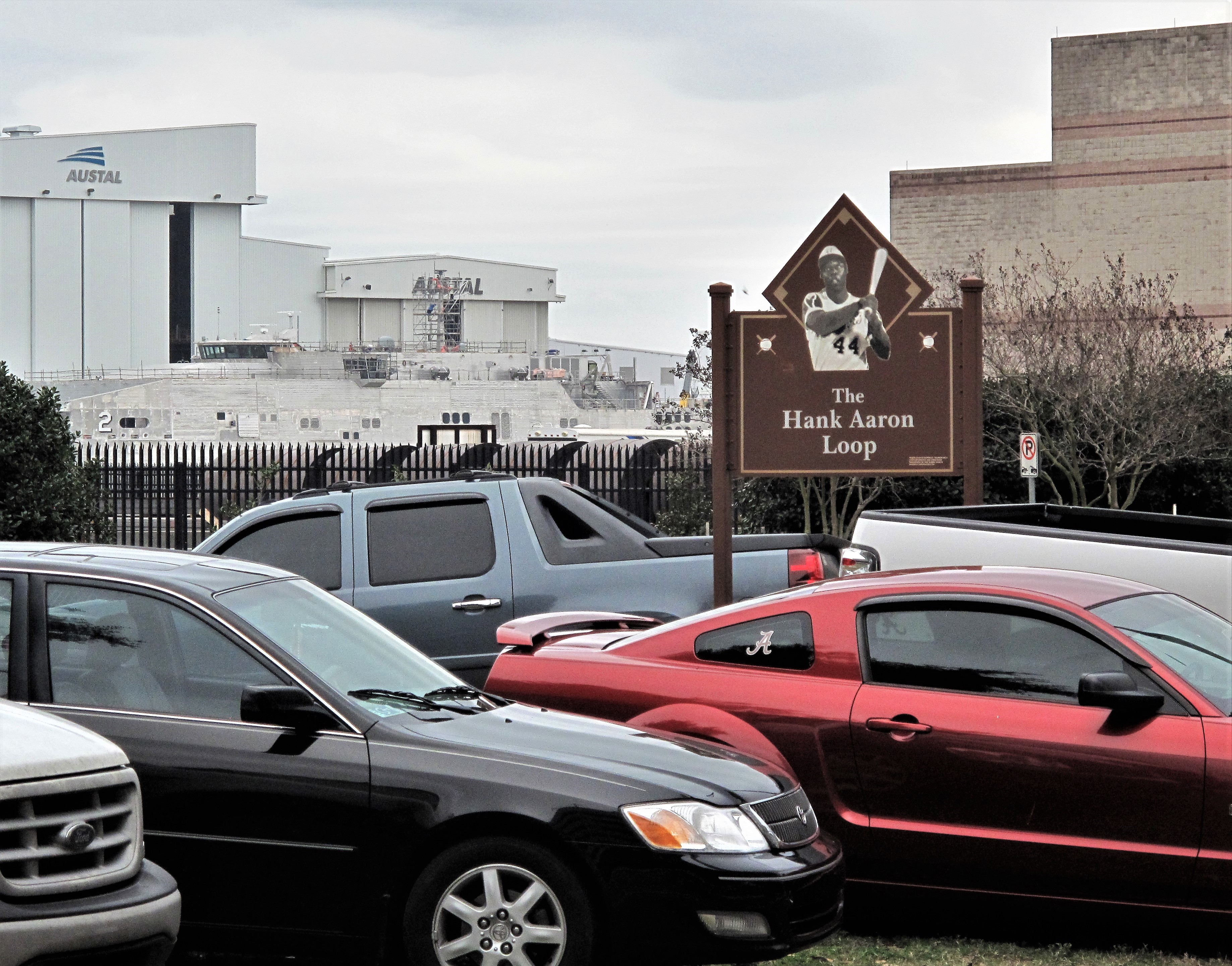
The late, great Hank Aaron was one of Mobile’s favorite sons. Hammerin’ Hank has a baseball park named for him in Mobile, called Hank Aaron Stadium. He is also remembered downtown with the Hank Aaron Loop.
Hank Aaron Loop. Downtown Mobile, Alabama
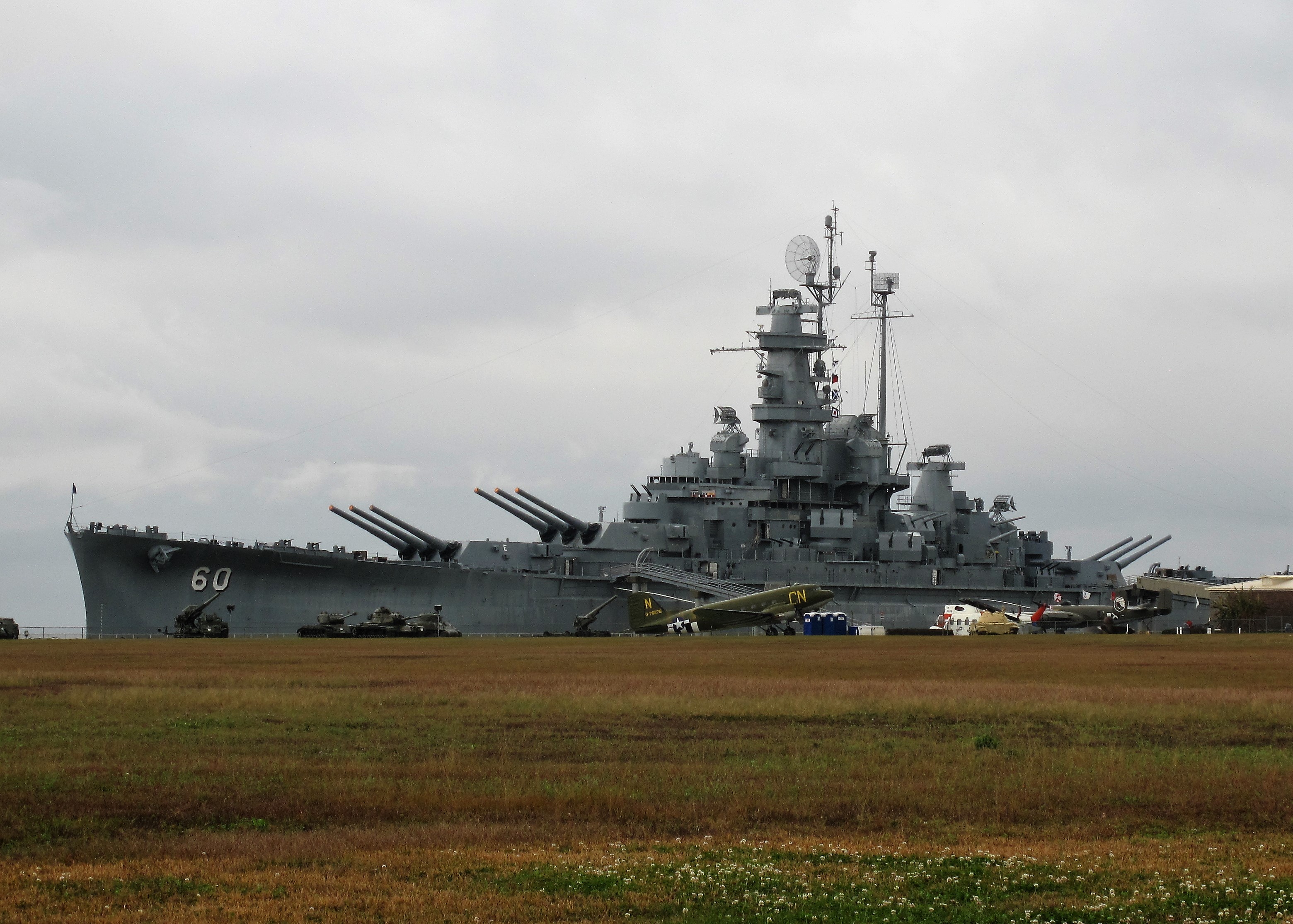
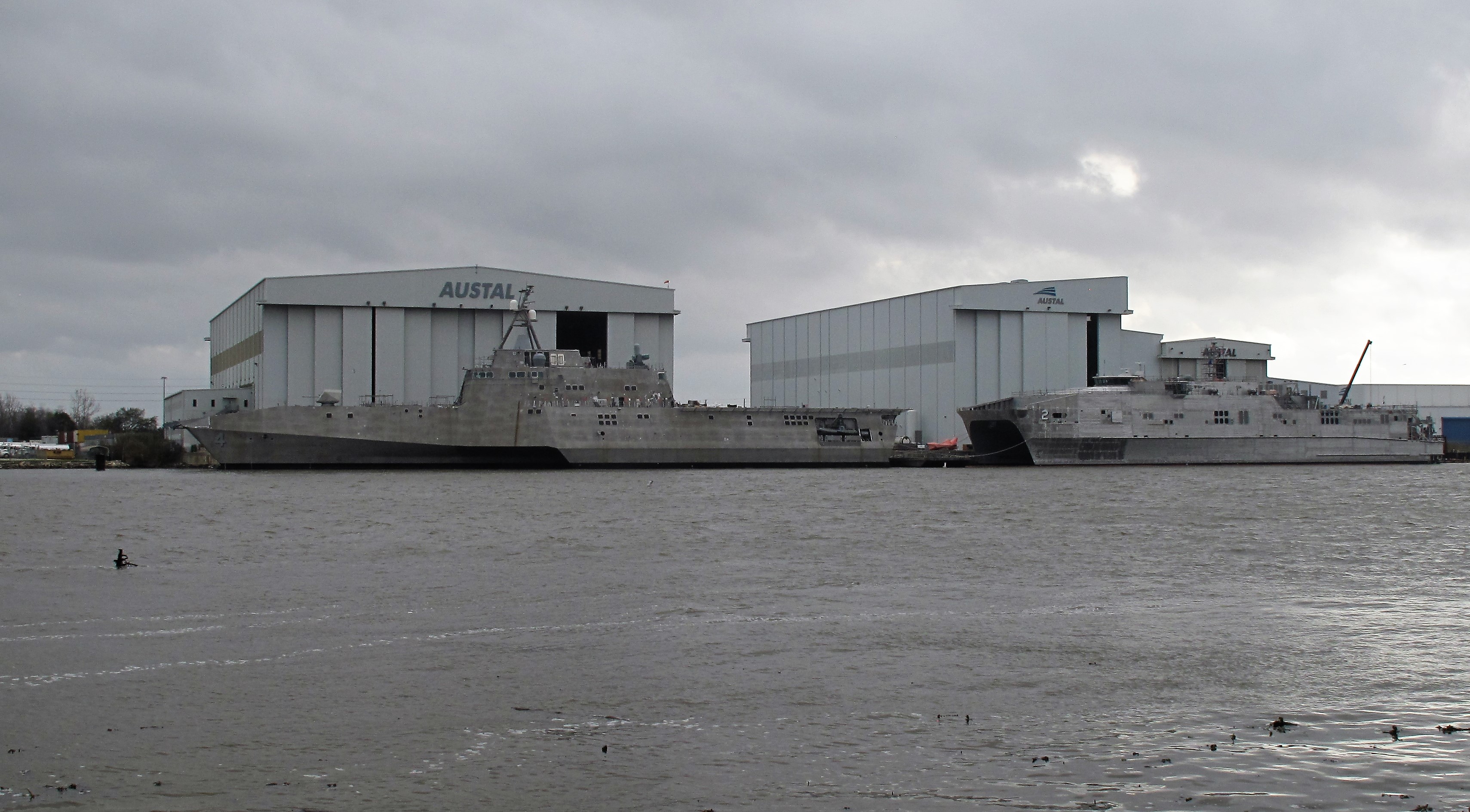
The city is situated on Mobile Bay, an important estuary of the Gulf of Mexico, so Mobile has always had a military presence — especially a naval one.
Battleship docked in Mobile Bay at Mobile, AlabamaNavy ships docked in Mobile Bay
The Mobile County Courthouse is a new and modern 7-story glass structure. Their website expresses extreme pride for the building, saying how its open atrium draws people in instead of intimidating them the way traditional structures might. I don’t like that attitude so much; I appreciate a little grandeur in courthouses.
Mobile County Courthouse. Mobile, Alabama
I’ll leave you with a photo of the clean-up after Mardi Gras. Who knows, perhaps they are still cleaning up today?
Mardi Gras clean-up. Mobile, Alabama
All photos were taken by the author.
A list of all photo posts from the American County Seats series in TimManBlog can be found here.
I travel as a hobby and not for a living (yet) — but donations are happily accepted if you’d like to help defer my costs. Thanks, The TimMan
For several years running, I would take a January trip down to West Texas to escape the bitter cold and snow of Colorado. The little town of Marfa is one of the places I would end up. In January, Marfa is warm and small and quiet, and the stunning ranchland views of the surrounding chocolate-colored mountains provide the respite needed after the hectic holidays of December.
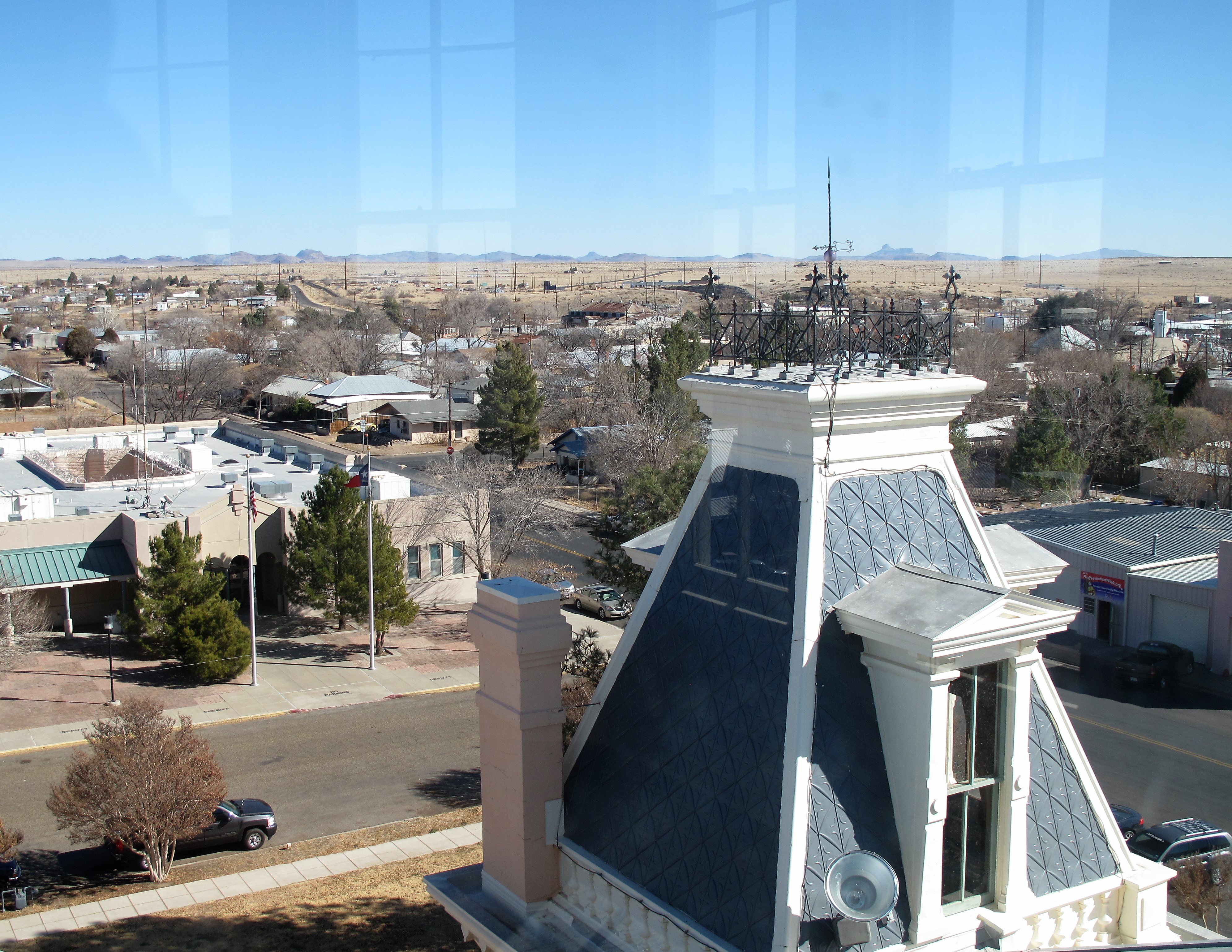
Looking northwest from atop the county courthouse in Marfa toward the Davis Mountains
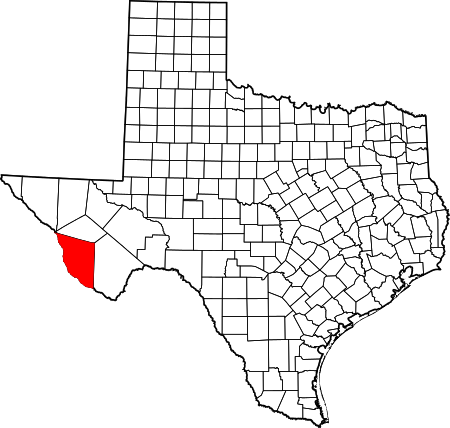
Marfa, Texas was founded in the 1880s as a railroad water stop in the deserts of Trans-Pecos Texas in between Midland and El Paso. Over the years it also served as a cattle stop, a trail stop, and a World War II army airfield training base, training thousands of pilots including television legend Rod Serling of Twilight Zone fame. Marfa is the county seat of Presidio County, Texas but never grew beyond 4,000 souls. Its population is half that today, but subsists on ranching and drawing tourists and artists to its quiet streets.
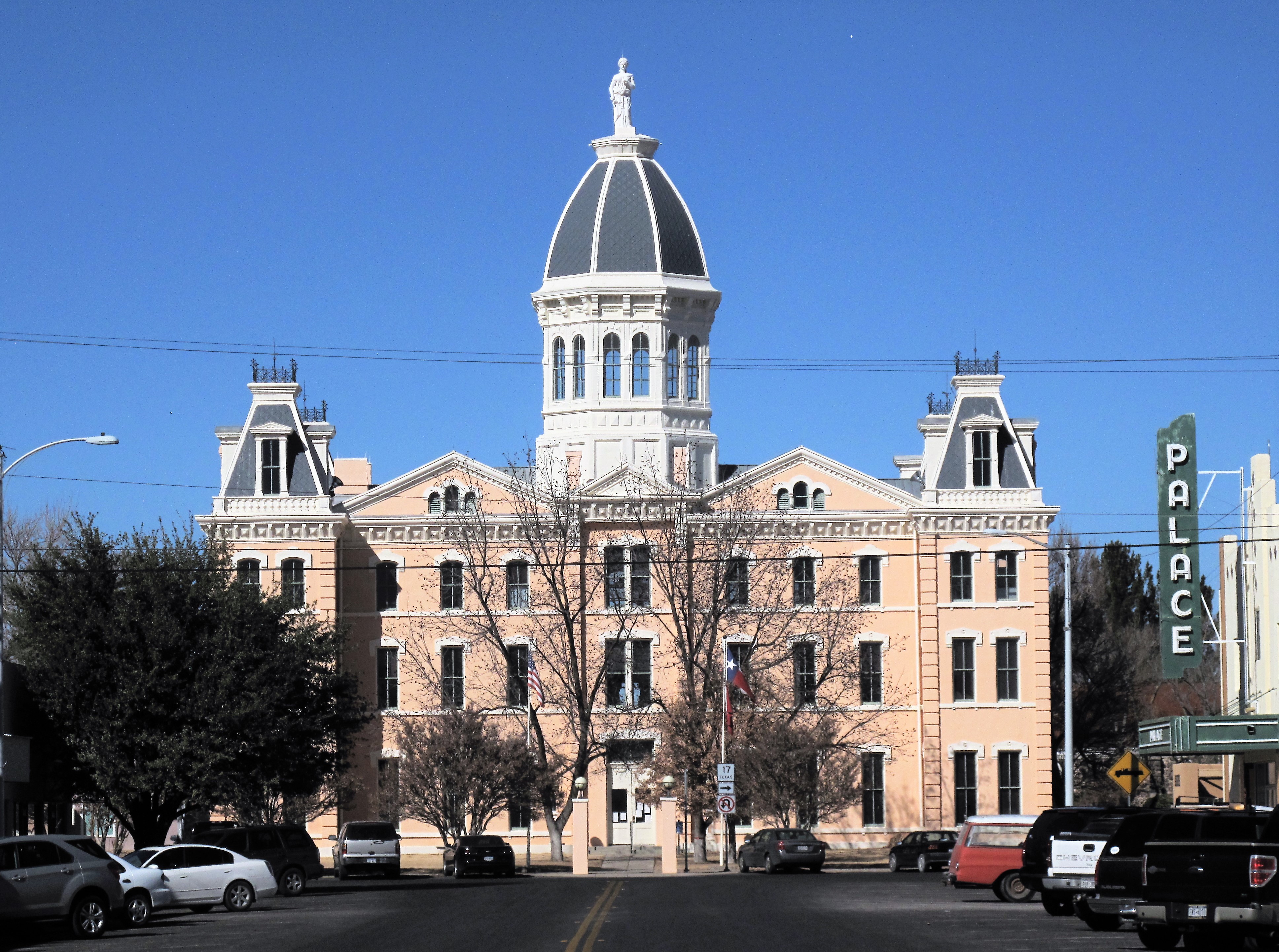
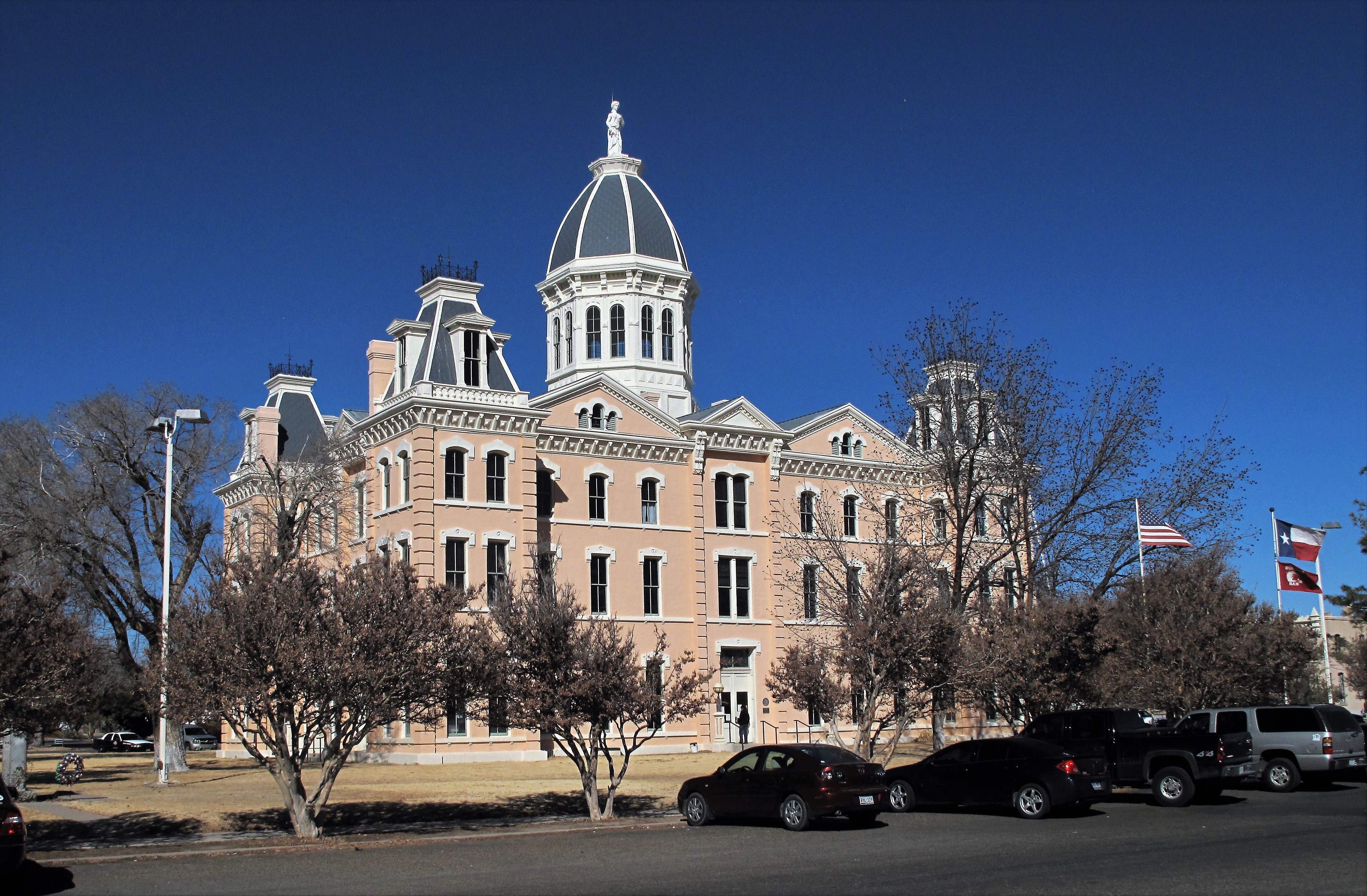
Presidio County Courthouse. Marfa, Texas
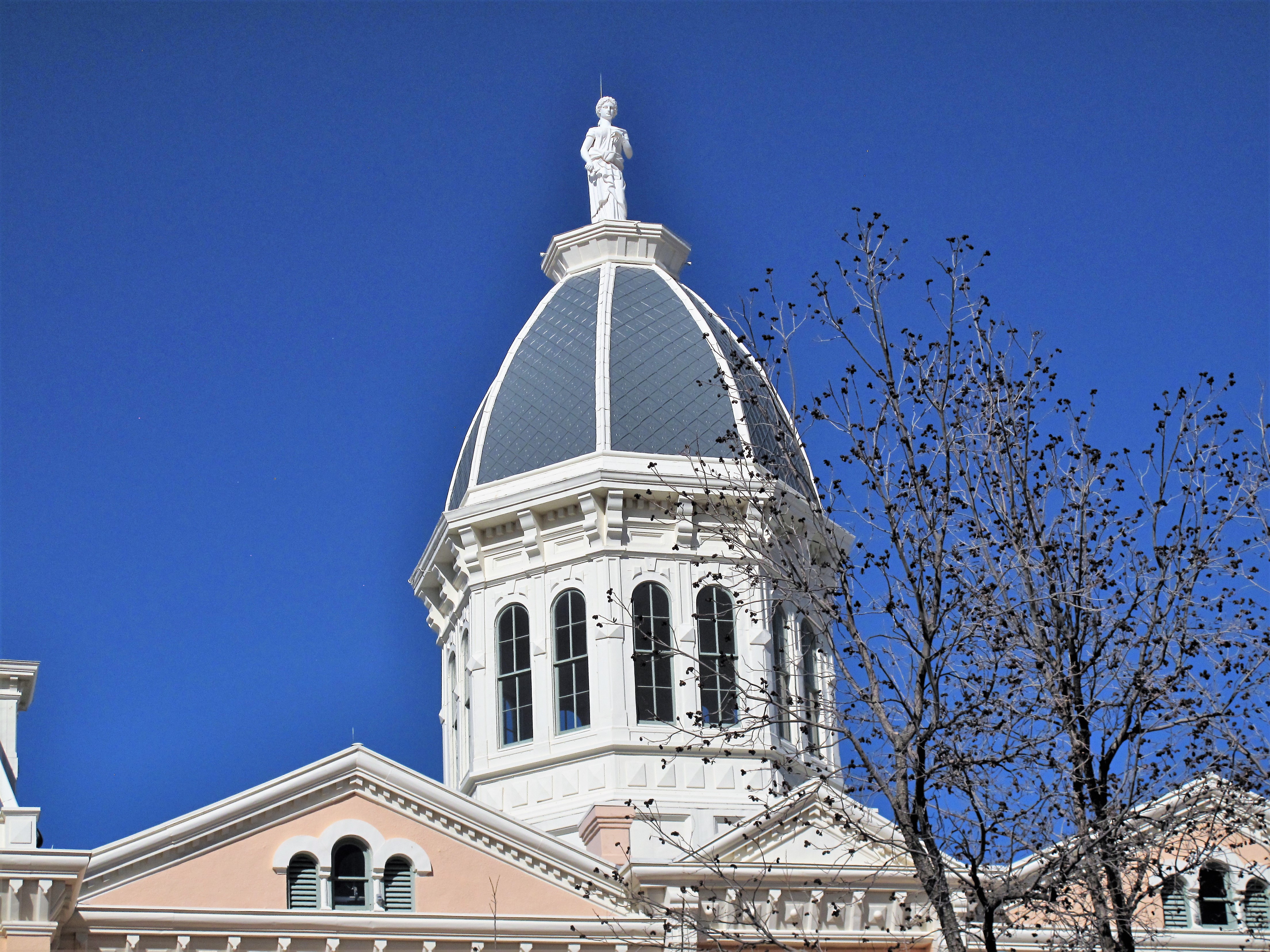
At the very center of town, the three-story Second-Empire style Presidio County Courthouse can be seen from almost anywhere in Marfa. Constructed in 1886 of local materials, the courthouse features French-style mansard roofs and a central dome topped by a statue of Lady Justice. The grand old building has been placed on the National Register of Historic Places.
Presidio County Courthouse. Marfa, TexasThe central dome of the Presidio County Courthouse and statue of Lady Justice.
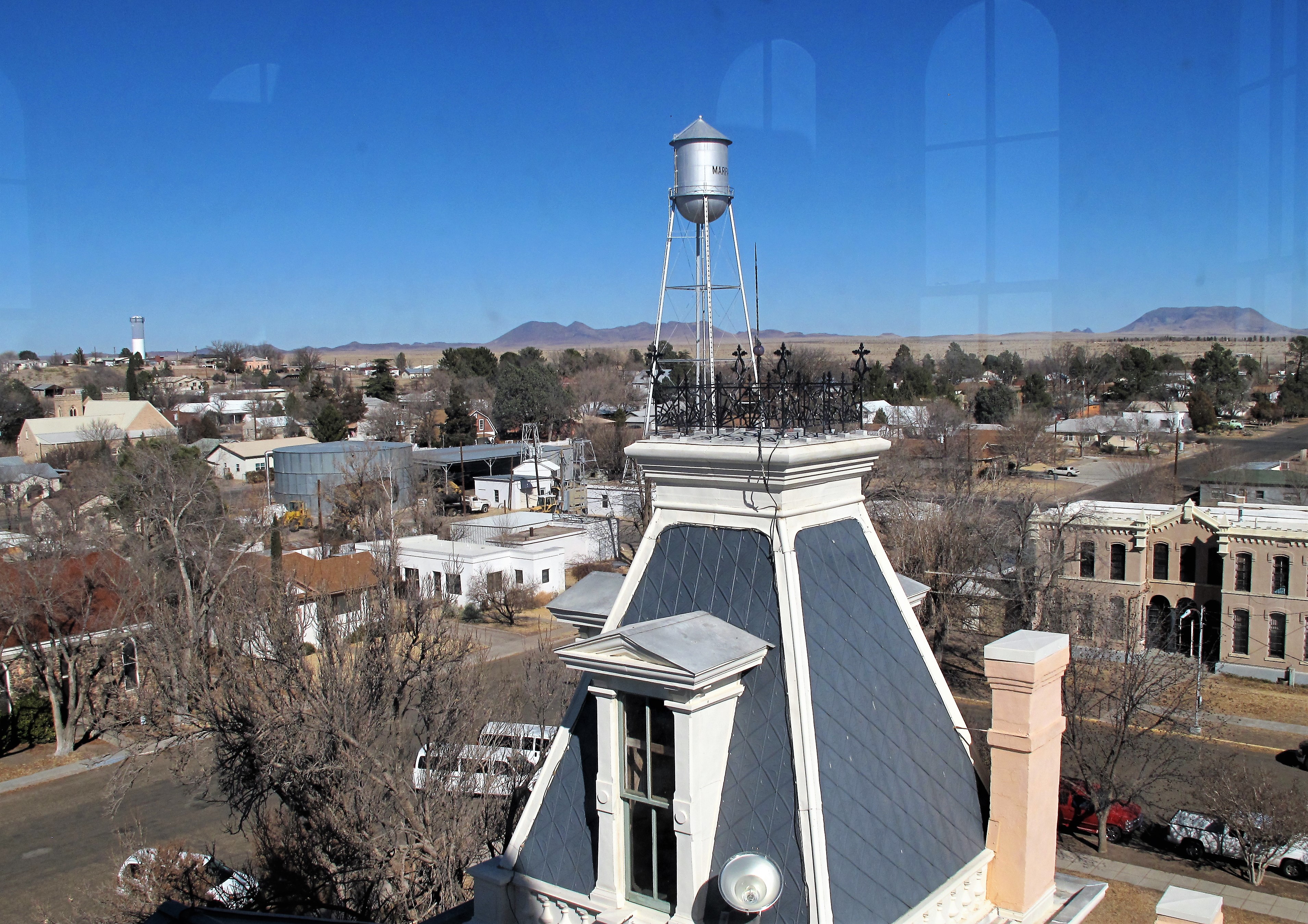
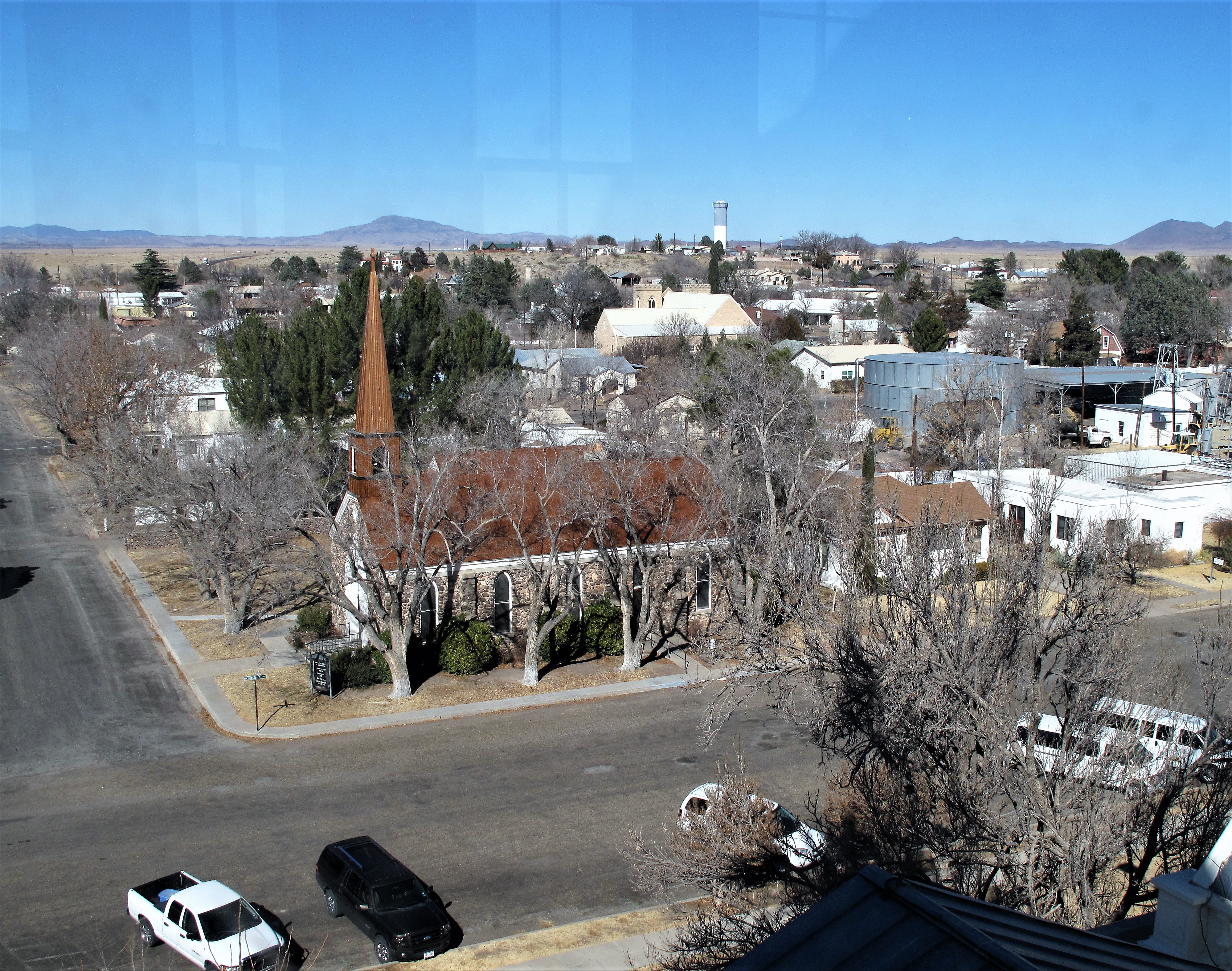
I was able to walk into the courthouse and climb the central tower for some photos of the surrounding town and landscape. Marfa sits amidst deserts surrounded by distant mountains:
Looking northeast from the courthouse to the Marfa water tower and the mountains beyondView from atop the courthouse looking westLooking north from atop the courthouse. St. Paul’s Episcopal Church is below.Presidio County in the state of Texas
Marfa is a popular stop for tourists in January. Tourists need good accommodation, and the second-most impressive structure in Marfa provides just what is needed.
The Hotel Paisano. Marfa, Texas
The Hotel Paisano is just a block from the courthouse. Bring your red sportscar and park it out front, then enjoy a beverage in the courtyard. This is January, and the sunshine is warm but not hot.
Courtyard and fountain in Hotel Paisano. Marfa, Texas
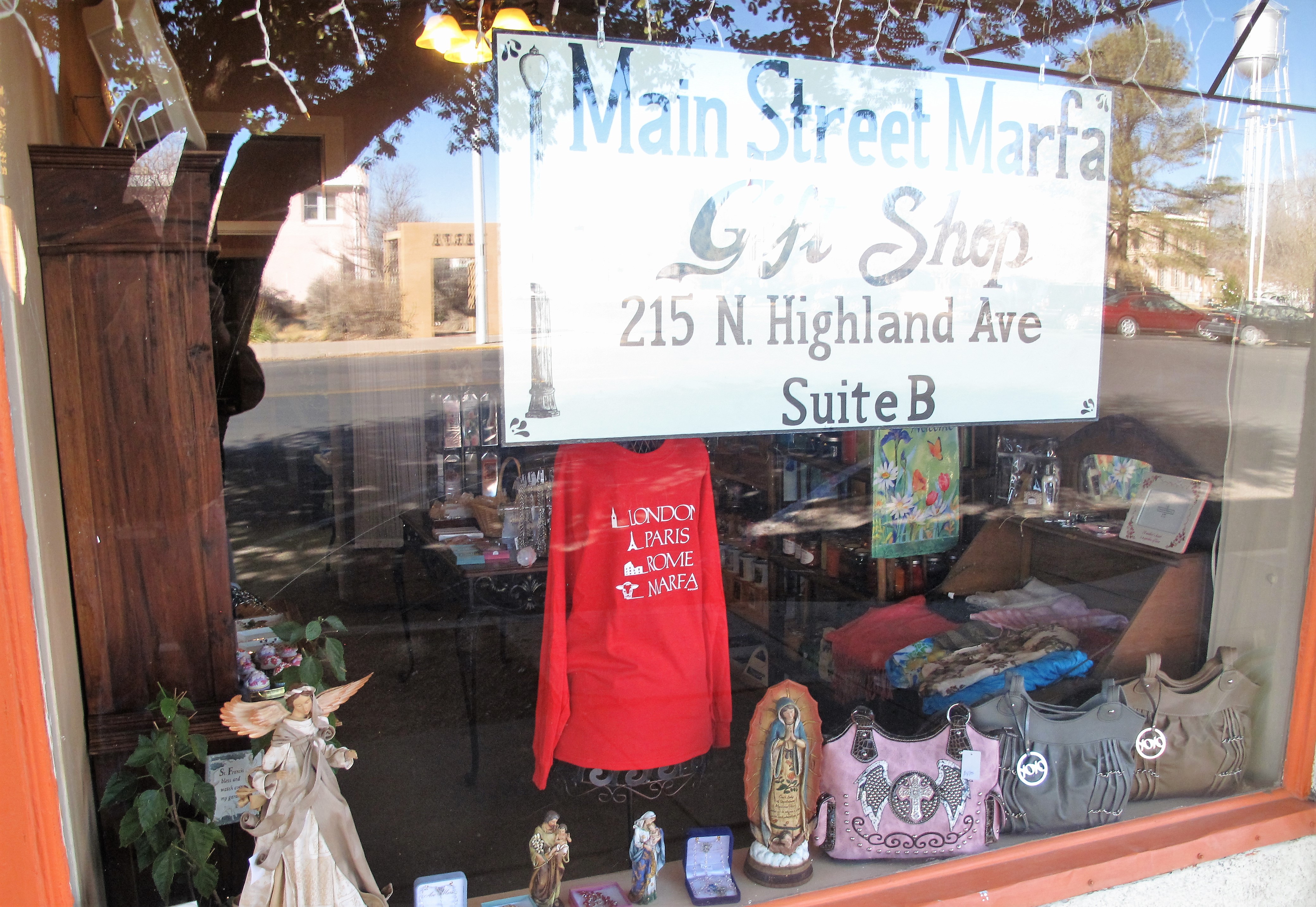
This is an old-style hotel, built in the 1930s, so the hotel lobby and streetscape include gift shops.
London, Paris, Rome, Marfa. Gift shop wares near the Hotel Paisano.
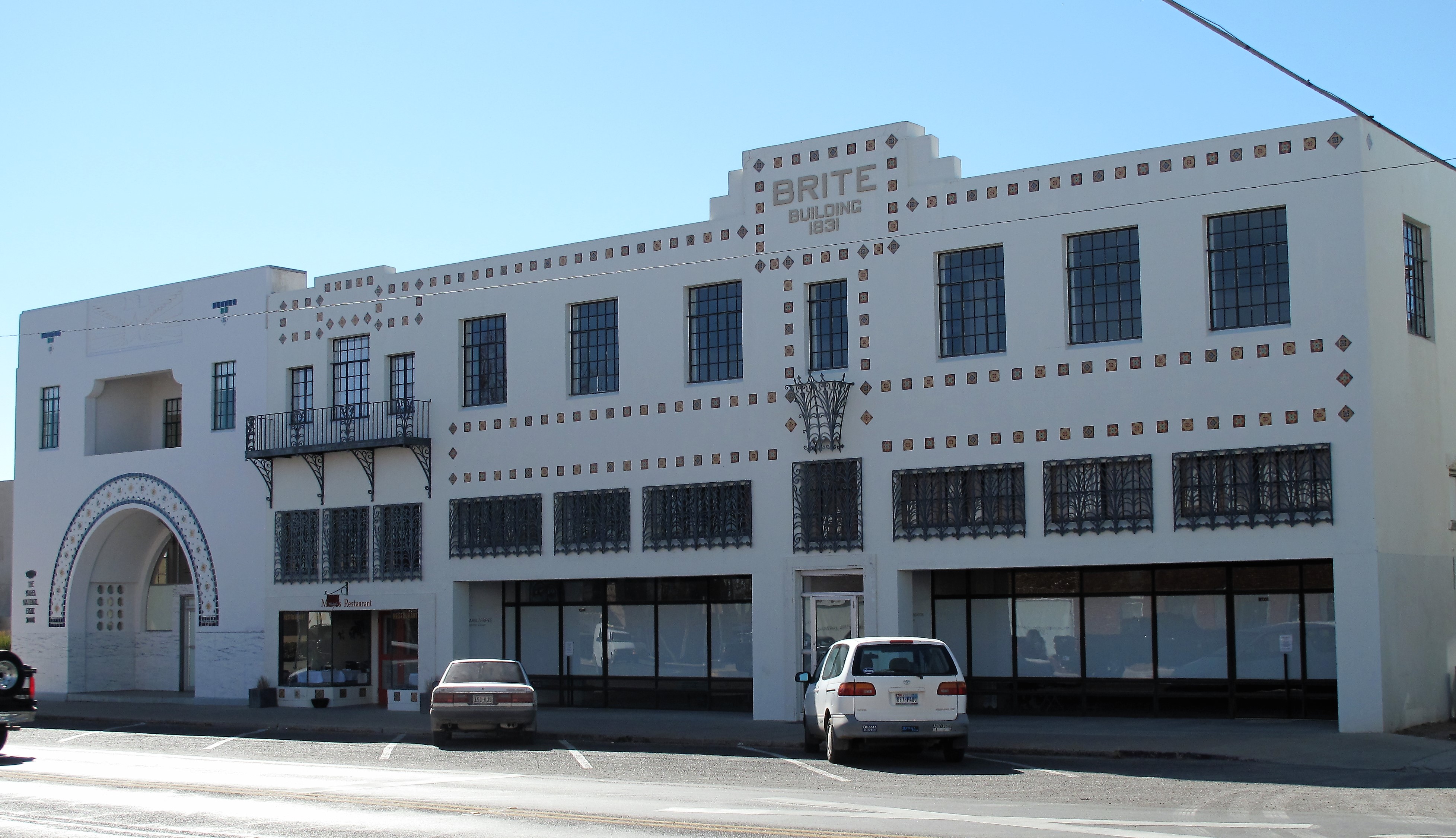
Here are a few sights around town. Imagine lazily strolling past them without a jacket and while holding an iced tea:
Palace Theatre. Marfa, TexasSt. Paul’s Episcopal Church. Marfa, TexasBrite Building. Marfa, TexasPaisano Hotel and shops. Marfa, Texas
Information about the Hotel Paisano can be found here. It’s not particularly cheap, but you get what you pay for I suppose.
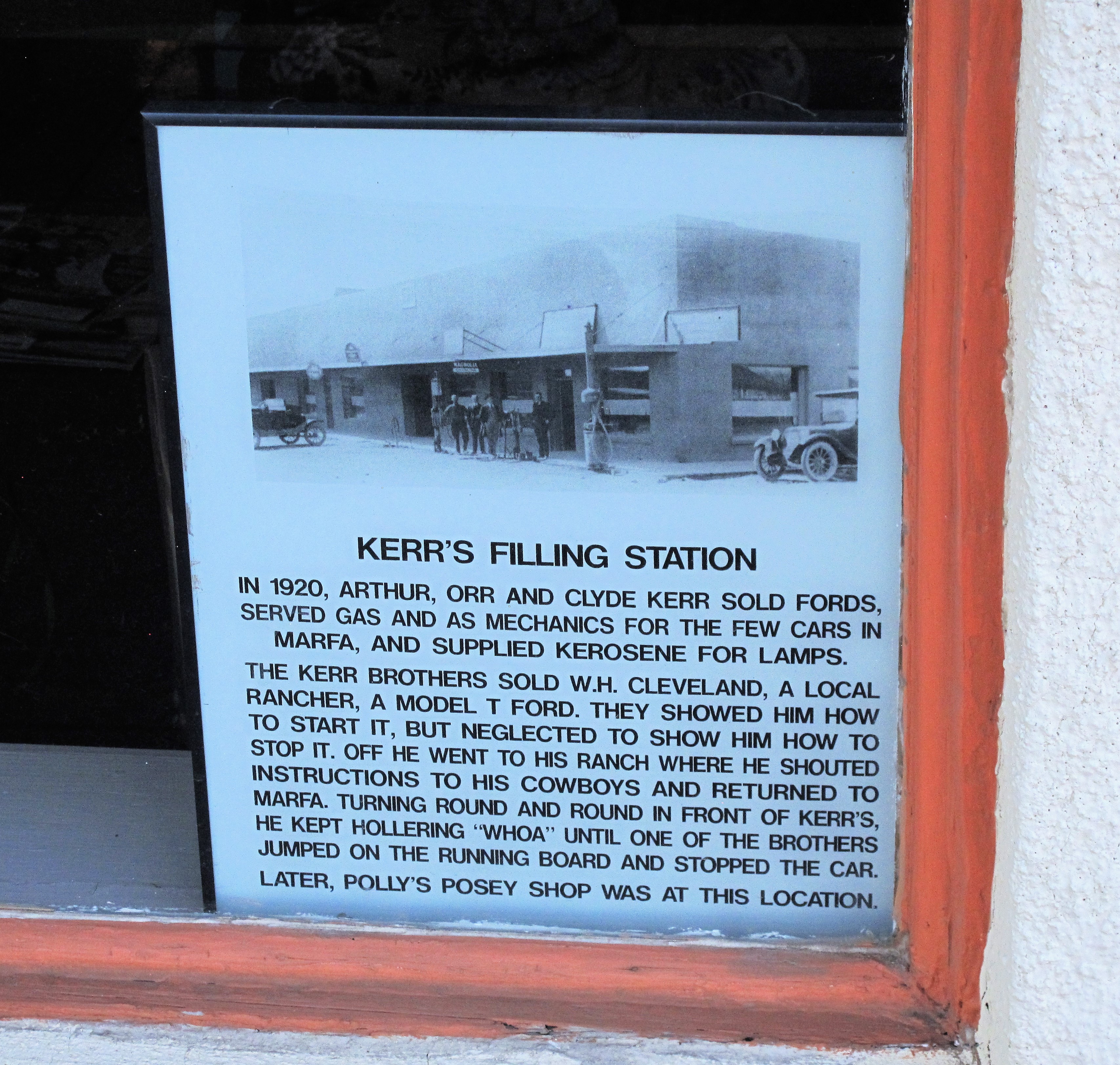
Finally, here’s a sign that tells a story, a story to bring you back squarely to where Marfa rightly belongs — in Texas:
A Texas story
Who knows if the story is actually true, but just talk to some folks around town and you’ll probably hear 10 more stories just like it.
All photos were taken by the author. Photos were taken Friday, January 13, 2012.
A list of all photo posts from the American County Seats series in TimManBlog can be found here.
I travel as a hobby and not for a living (yet) — but donations are happily accepted if you’d like to help defer my costs. Thanks, The TimMan
Today is New Year’s Eve and the haunting melody of Auld Lang Syne fills my head like a persistent earworm. The song is from an old Robert Burns poem, and its Scottish title translates to “Days Gone By.” The last day of the year is a day to think of times past.
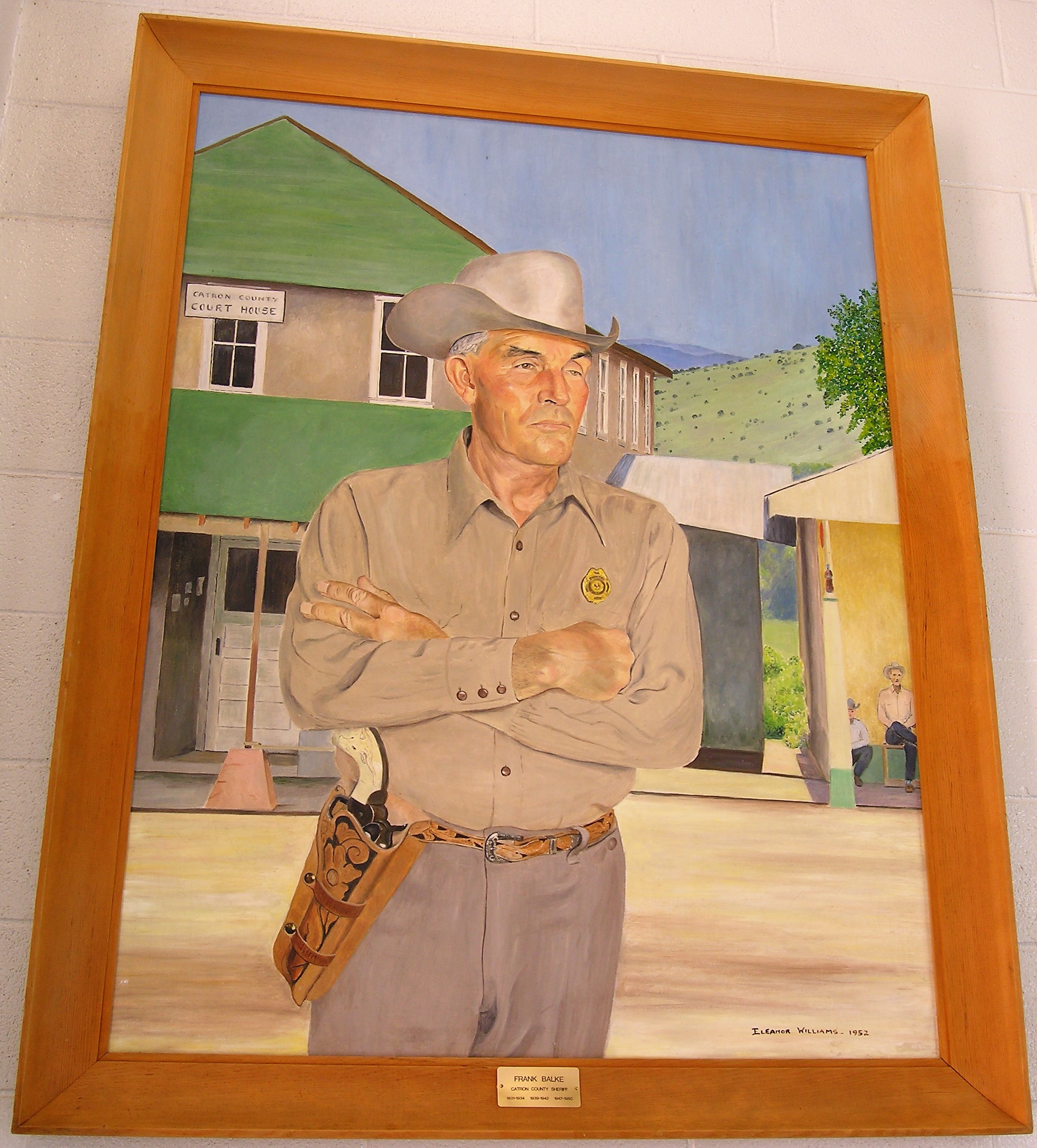
Few things remind me more of “days gone by” than the remote town of Reserve, New Mexico (population 289) in Catron County among the west-central mountains of that state. A 1952 portrait of the old Catron County sheriff paints a vivid description of law and order in “days gone by” in the rural West:
Sheriff Frank Balke of Catron County, New Mexico
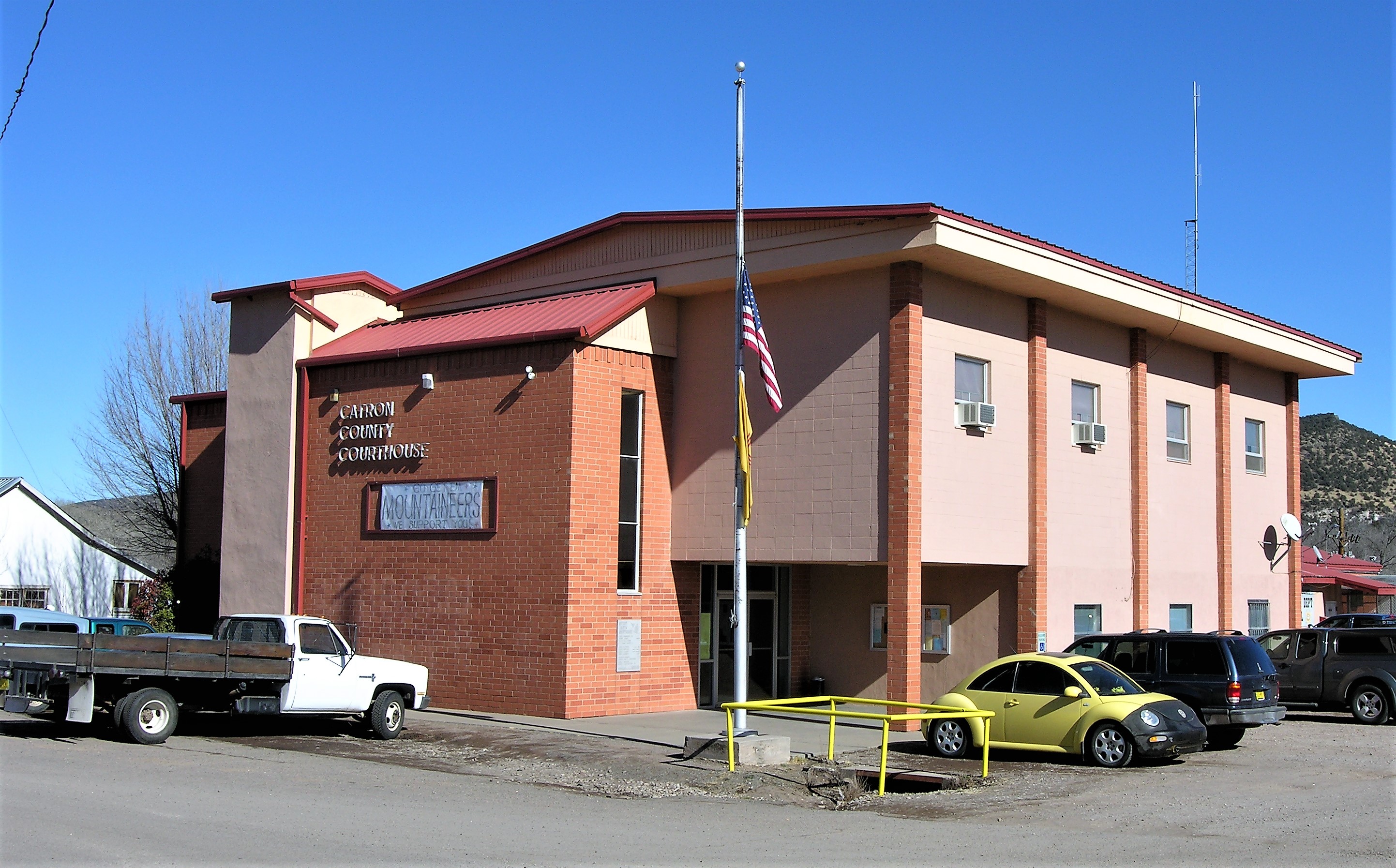
Note the pearl-handled revolver and the belt made of rattlesnake hide. Sheriff Balke served three different stints as county sheriff in the 1930s and 1940s. His portrait hangs in the courthouse below, built in 1968 after Sheriff Balke’s times were themselves “days gone by”:
Catron County Courthouse. Reserve, New Mexico. Note the ‘Go Get Em Mountaineers!’ banner on the wall.Catron County in the state of New Mexico
Catron County New Mexico has a population of less than 4,000, and that hasn’t changed much over the past few decades. The people here are a mixture of Hispanics and Anglos who settled the country along the San Francisco River in the late 1800s. The San Francisco River is an upper tributary of the Gila River, which flows westward through southern Arizona to meet the Colorado. The main town in the county is the village of San Francisco Plaza, but the county seat is the nearby town of Reserve, formerly known as Upper Frisco. Reserve was so named for the various Forest Reserves nearby (now called National Forests).
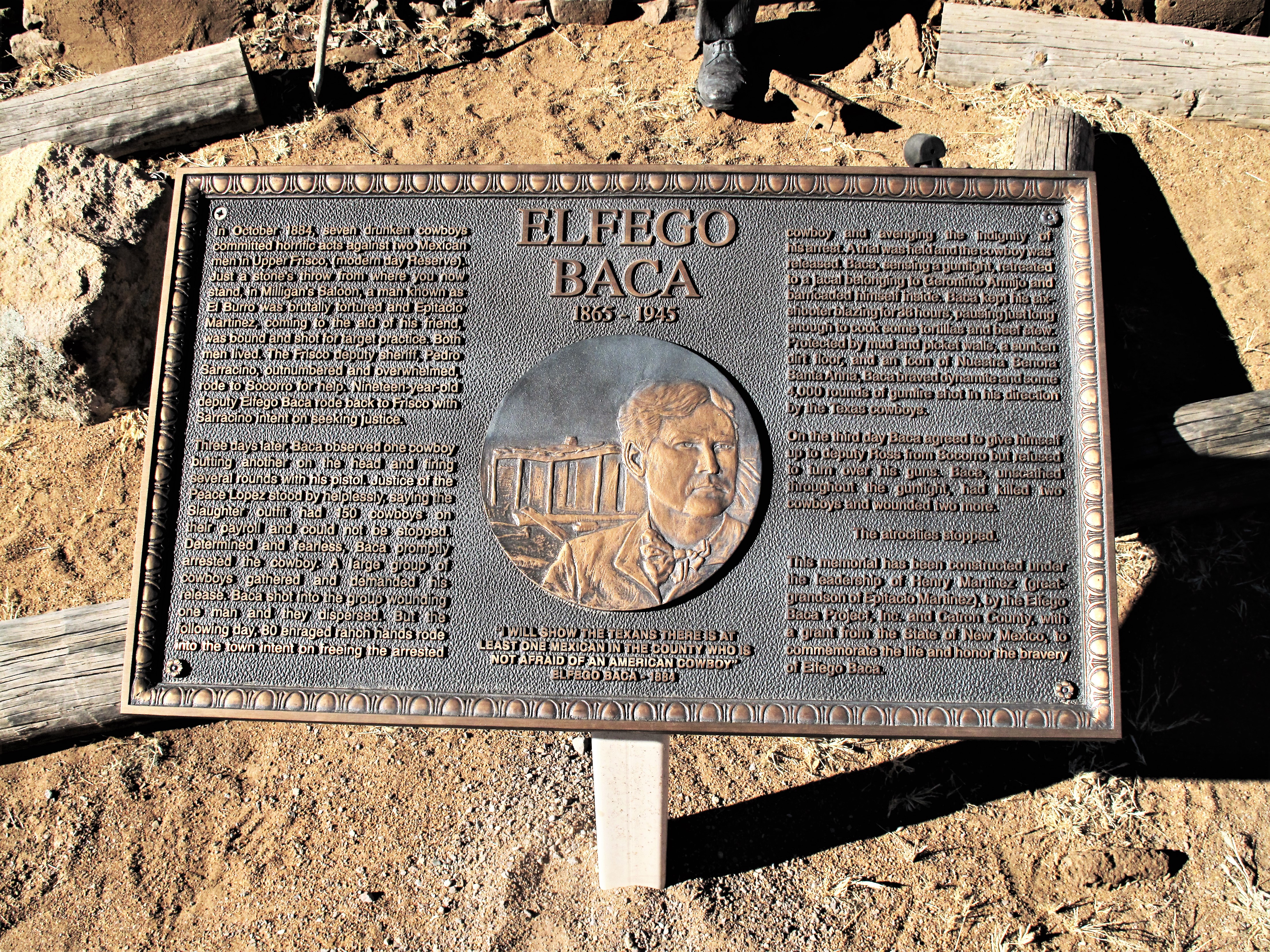
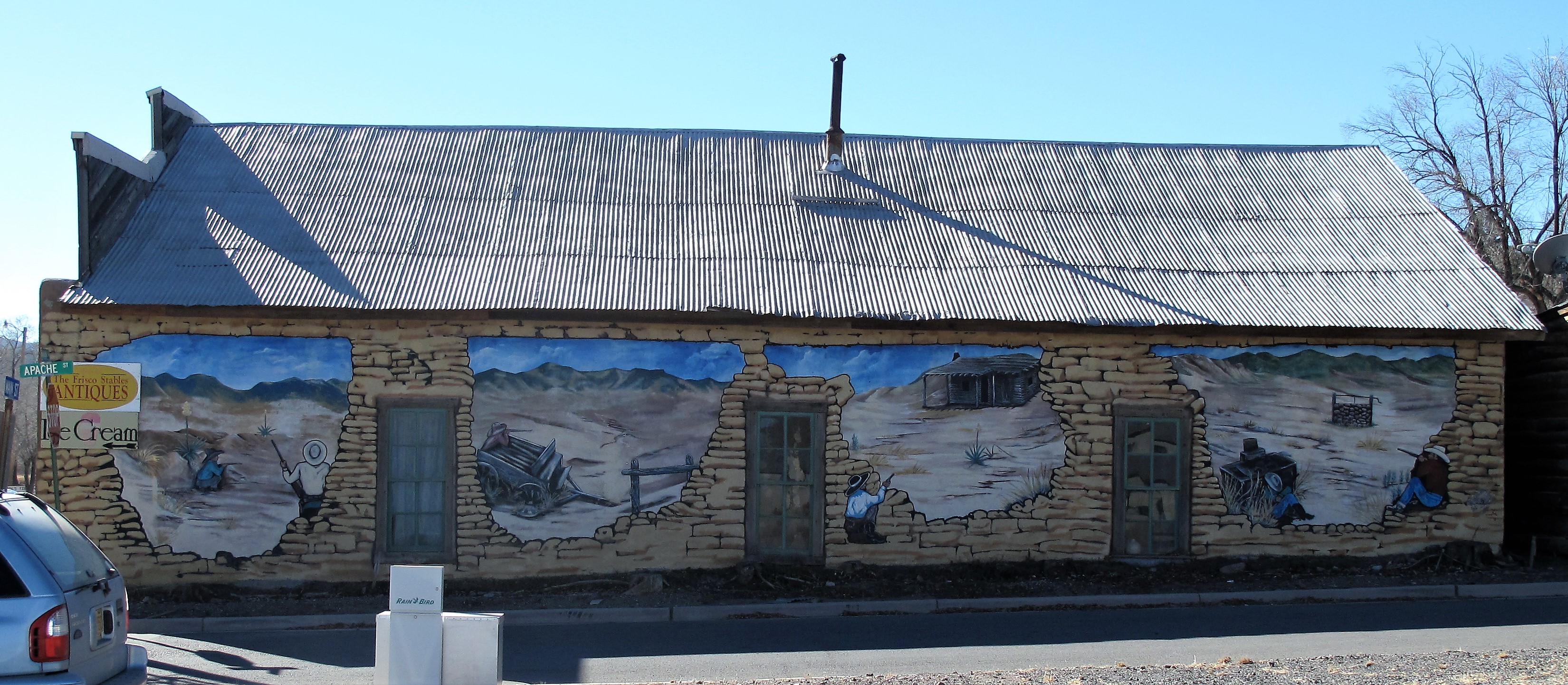
Reserve is the site of the siege of Elfego Baca, a local lawman who held off a gang of Texan cowboys seeking to kill him for arresting their fellow cowboy on a charge of drunkenness. The affair took place in December 1884 and became known as the Frisco Shoot-out. Badly outnumbered, Baca holed up in an adobe house as dozens of cowboys shot hundreds of holes into its walls. Baca was not wounded even once while managing to kill four of his attackers during a siege lasting 33 hours.
What’s interesting about “days gone by” in this instance is that fundamental facts are elusive — “Deputy” Baca may or may not have been an authorized lawman at all and the number of cowboys he held off varies from 40 up to 80. Many claim that the cowboys put over 4,000 holes into the adobe walls sheltering Elfego Baca. Regardless of how many bullet holes there were, the holes were real — they served as evidence in Baca’s murder trial acquittal.
A mural depicting the Frisco Shoot-out. Reserve, New Mexico
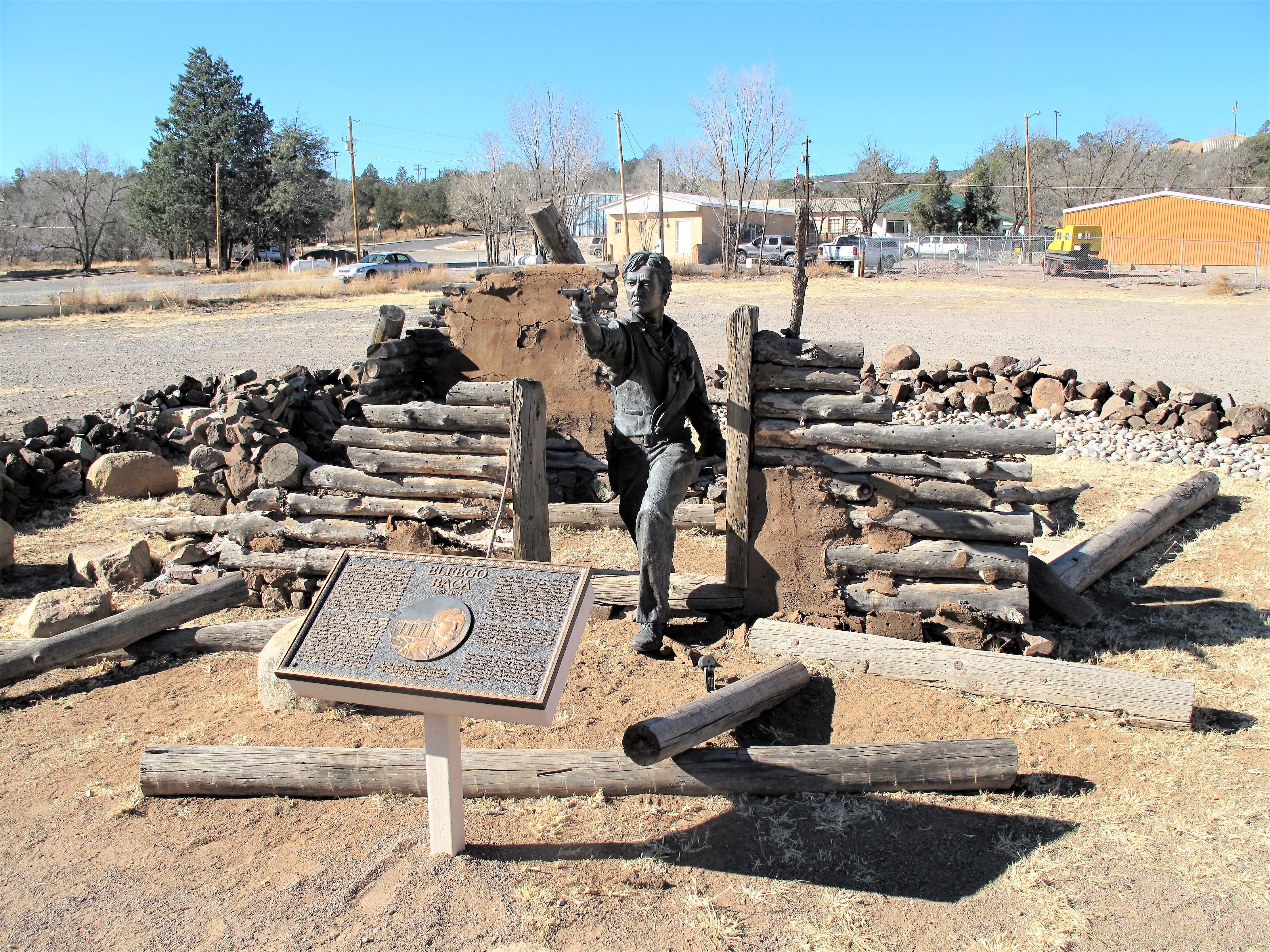
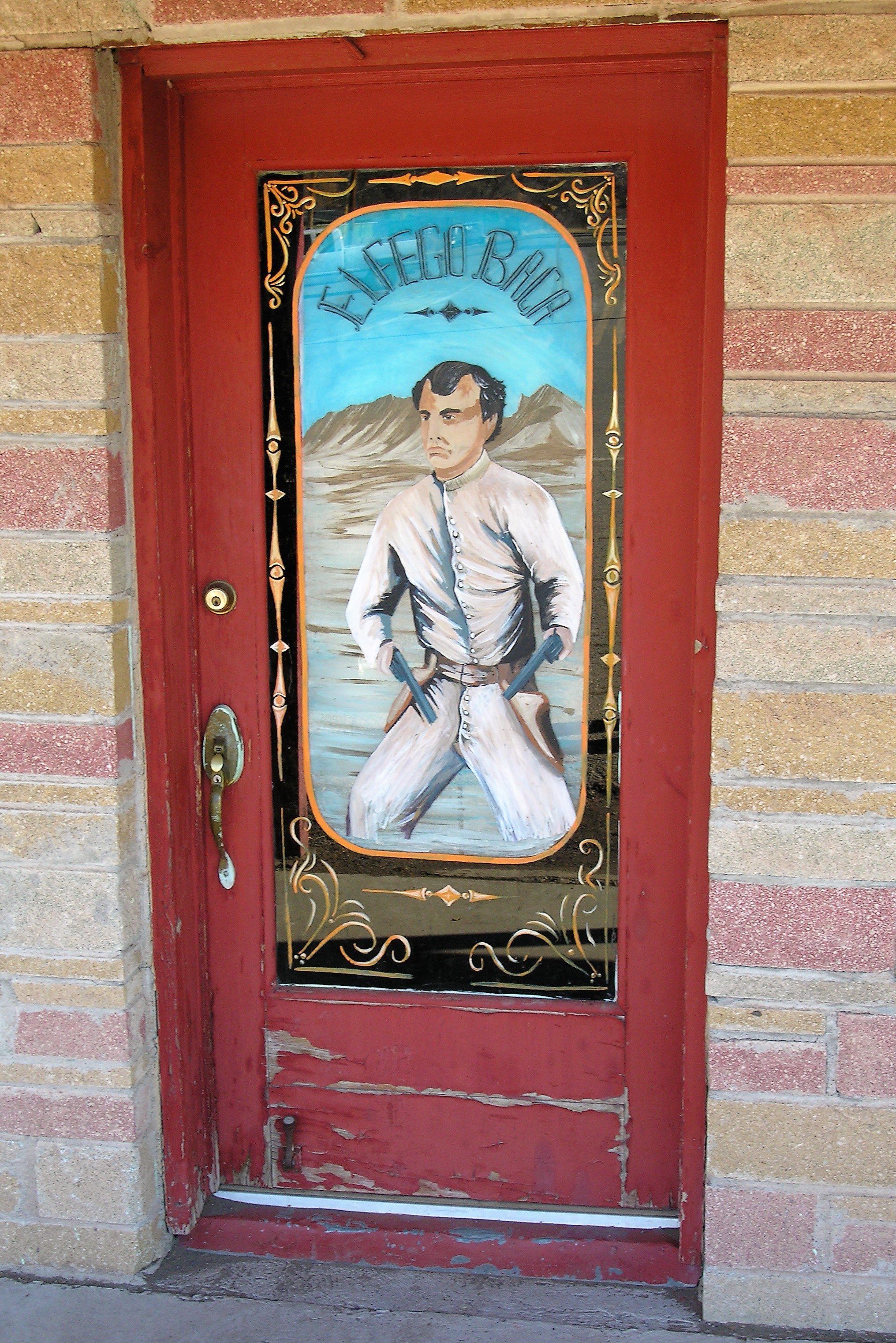
A statue of Elfego Baca stands at the center of town, and a historical plaque explains the circumstances of his fame:
Statue of Elfego Baca in Reserve, New MexicoHistorical plaque explaining the events of the Frisco Shoot-out. Reserve, New MexicoPainting of Elfego Baca on a front door. Reserve, New Mexico
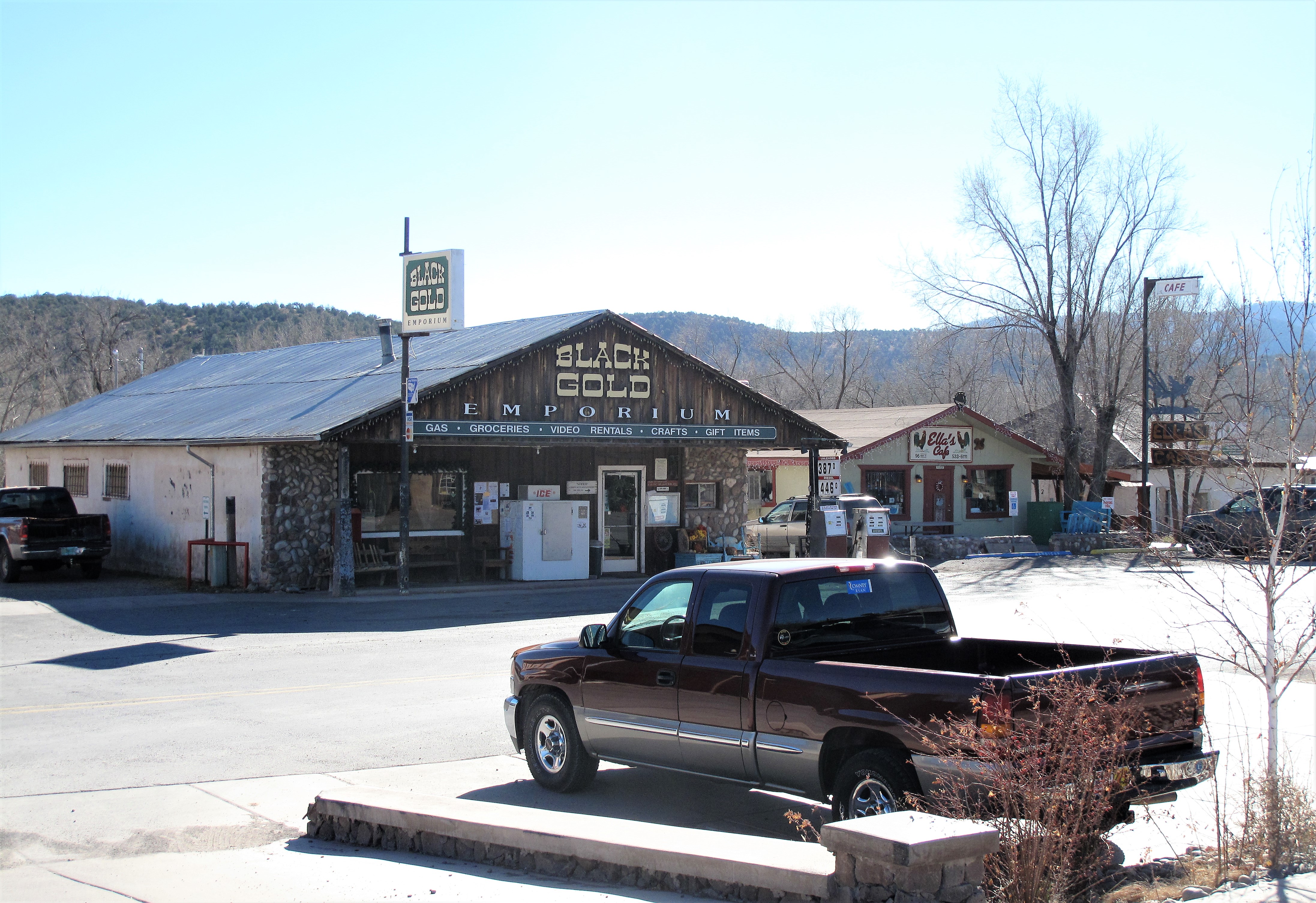
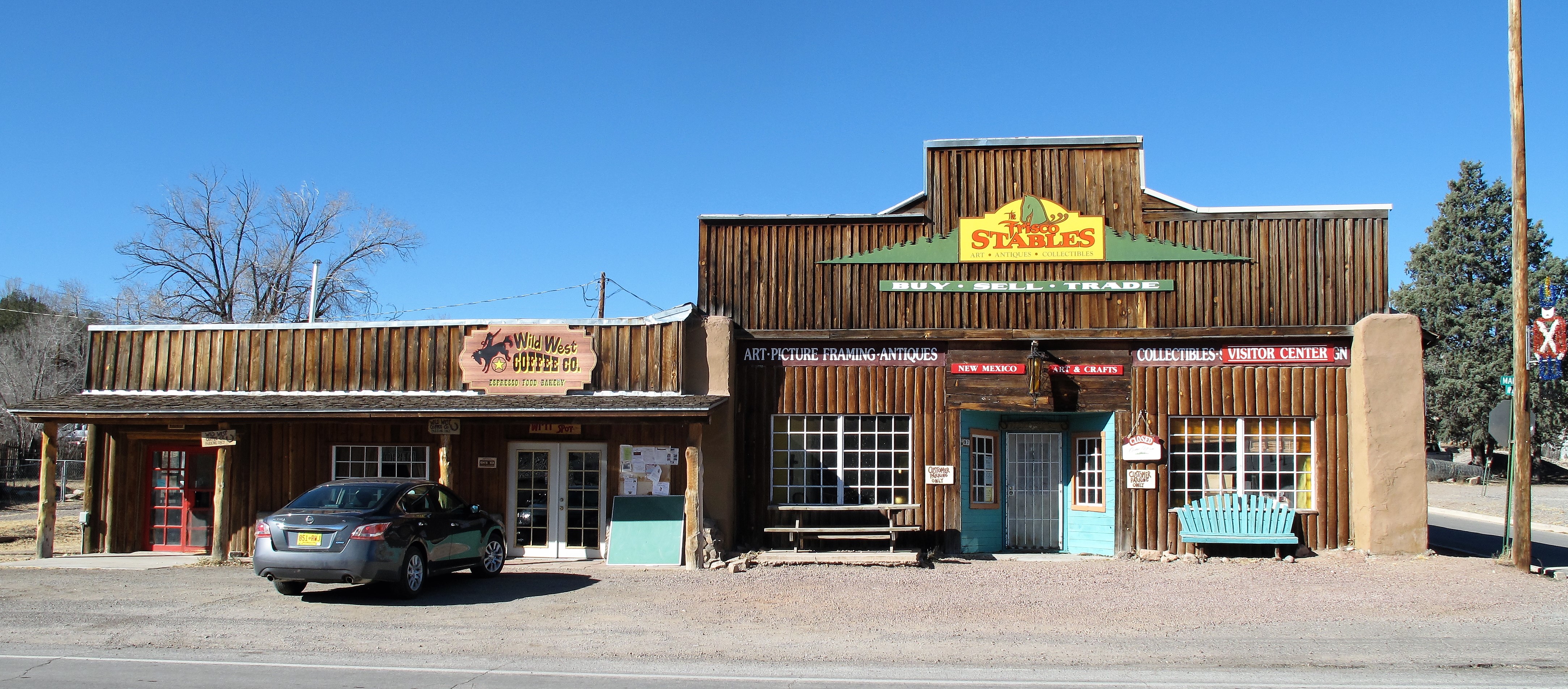
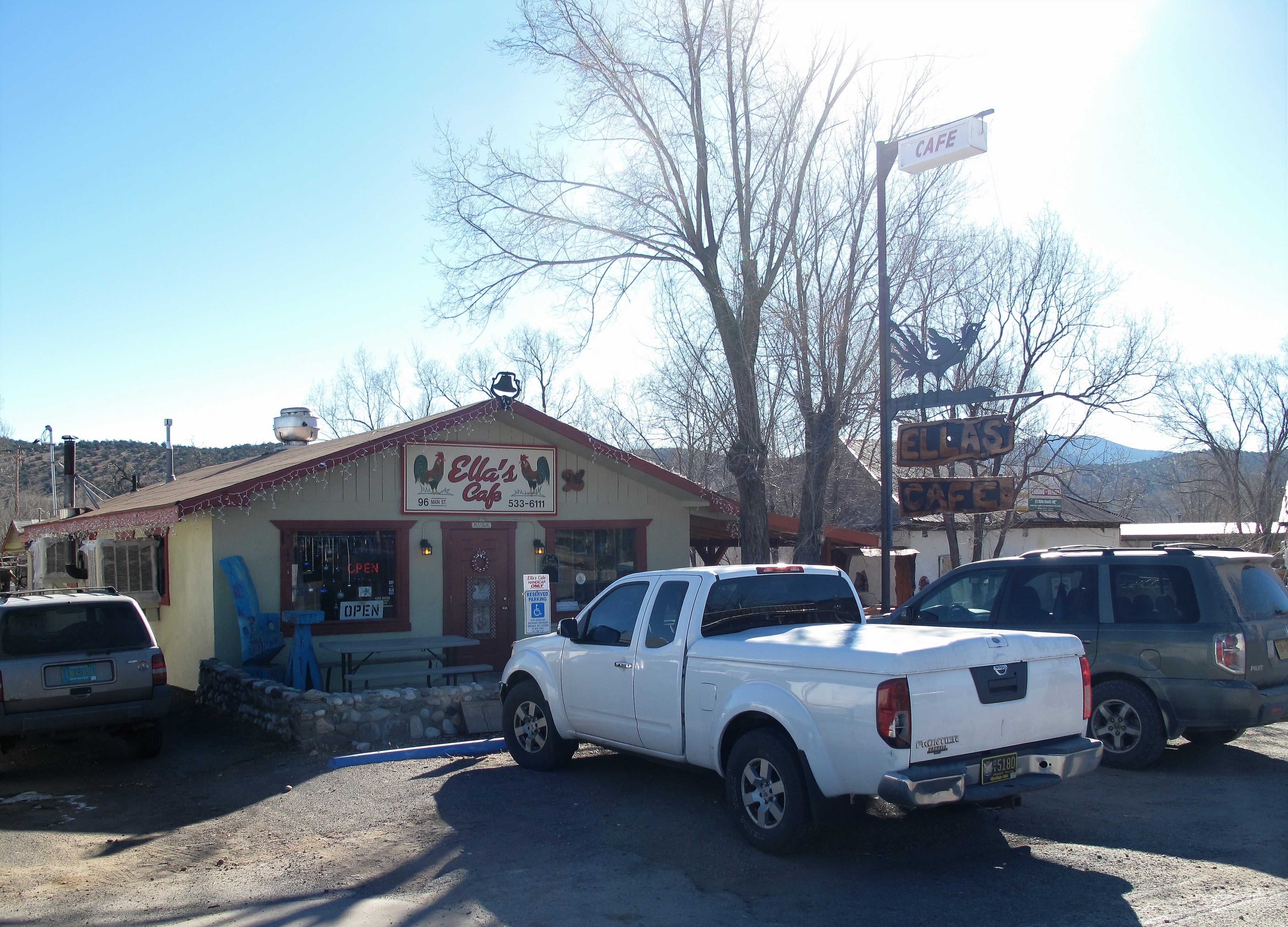
I was last here in December of 2012. Back then the “downtown” area of Reserve consisted of the county courthouse, a Mexican restaurant, a breakfast cafe, a small bank, two general merchandise stores, and a bar called Uncle Bill’s. It probably hasn’t changed much since then, nor had it probably changed much in “days gone by” before 2012.
Ella’s Cafe. Reserve, New MexicoThe Black Gold Emporium: Gas, groceries, video rentals, etc. Reserve, New MexicoFrisco Stables collectibles and visitor center, next to the Wild West Coffee Company. Reserve, New MexicoUncle Bill’s Bar. Reserve, New MexicoGas prices in 2012: $3.87 unleaded and $4.46 diesel. Reserve, New MexicoDowntown traffic and mountains beyond. Reserve, New Mexico
All photos were taken by the author either on January 25, 2007 or on December 12, 2012.
A list of all photo posts from the American County Seats series in TimManBlog can be found here.
All photos were taken by the author. Photos were taken Friday, January 13, 2012.
A list of all photo posts from the American County Seats series in TimManBlog can be found here.
I travel as a hobby and not for a living (yet) — but donations are happily accepted if you’d like to help defer my costs. Thanks, The TimMan
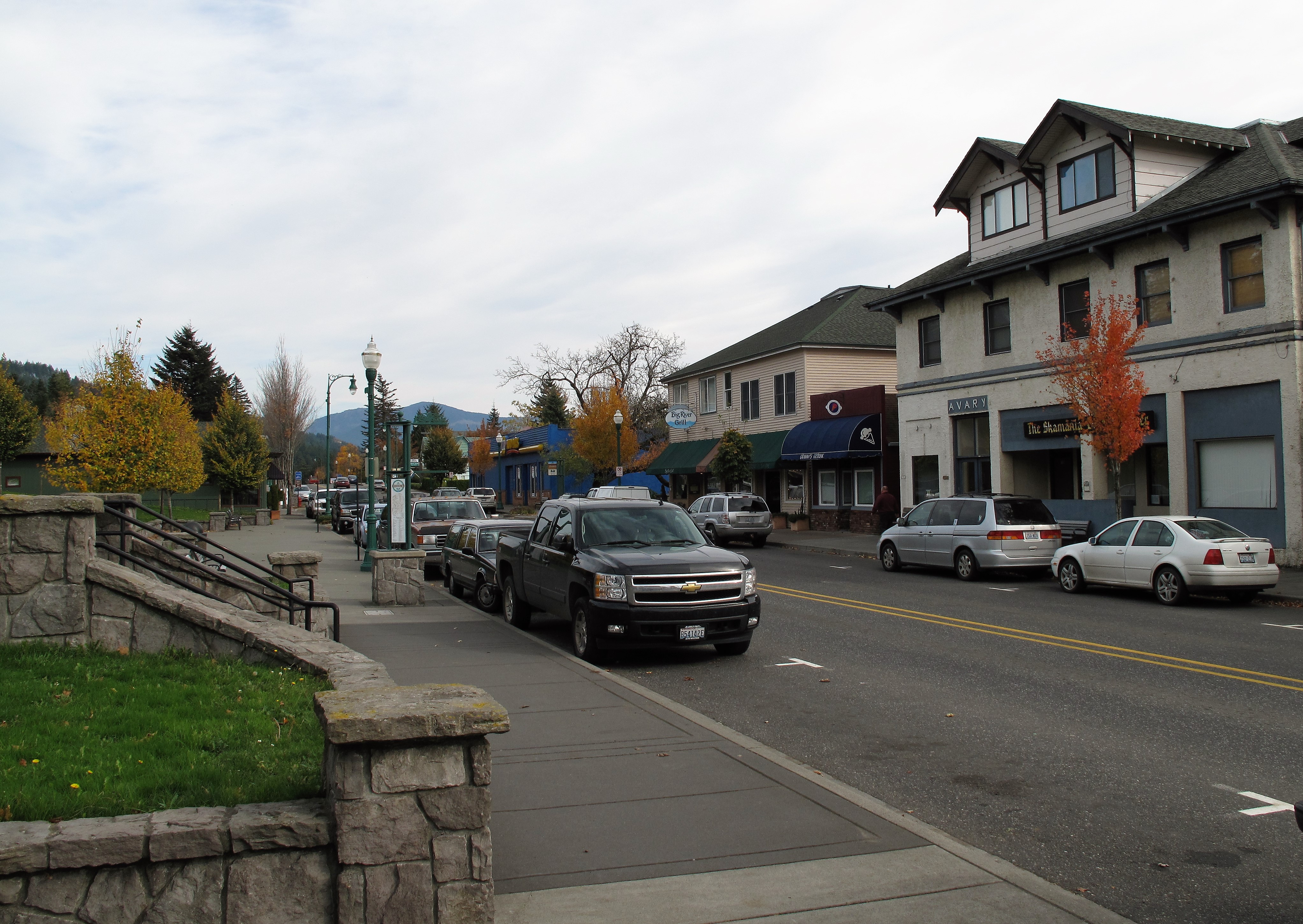
Stevenson is an old Columbia River port town lying about 50 miles upstream from the Portland (OR)/Vancouver (WA) metro area. The town of 1,500 lies on the steep northern banks of the Columbia River at the western edge of the Columbia River Gorge. The high Cascade Mountains can be seen across the river on the Oregon side.
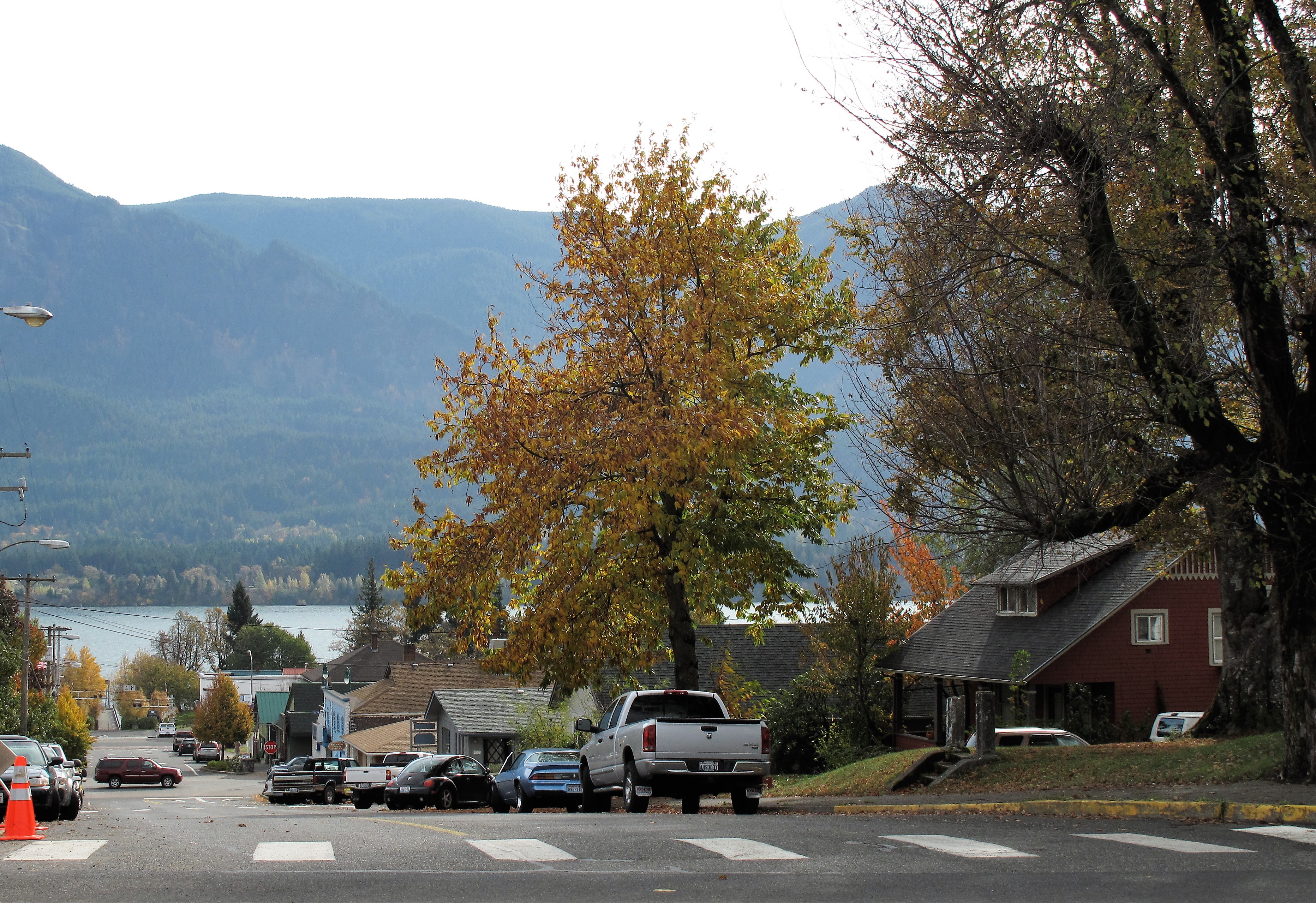
Downtown Stevenson, Washington, from the steps of the Skamania County Courthouse
Main Street Stevenson is called the Lewis and Clark Highway after the famous explorers. The Corps of Discovery, as Lewis and Clark referred to their expedition, came past this spot going downriver in November 1805, and again returning upriver in April 1806. They referred to the area as the “Great Shoote” for the difficult rapids at this spot.
Historical sign explaining the Lewis and Clark expedition’s travails at Stevenson
In the 20th Century, a series of dams were built on the Columbia to help tame the river and to provide hydroelectric power. The Bonneville Dam, 10 miles downstream of Stevenson, was completed in 1937 and provides some calm to the river at this point. This is how the Columbia River at Stevenson looks today:
Columbia River at Stevenson, Washington
Stevenson is an old river port town. Little of the port remains but the government recently built a jetty into the river, some shoreline sidewalks, and a park to commemorate the old port.
Columbia River jetty at Stevenson LandingA historical sign explains the steamboat era at Stevenson
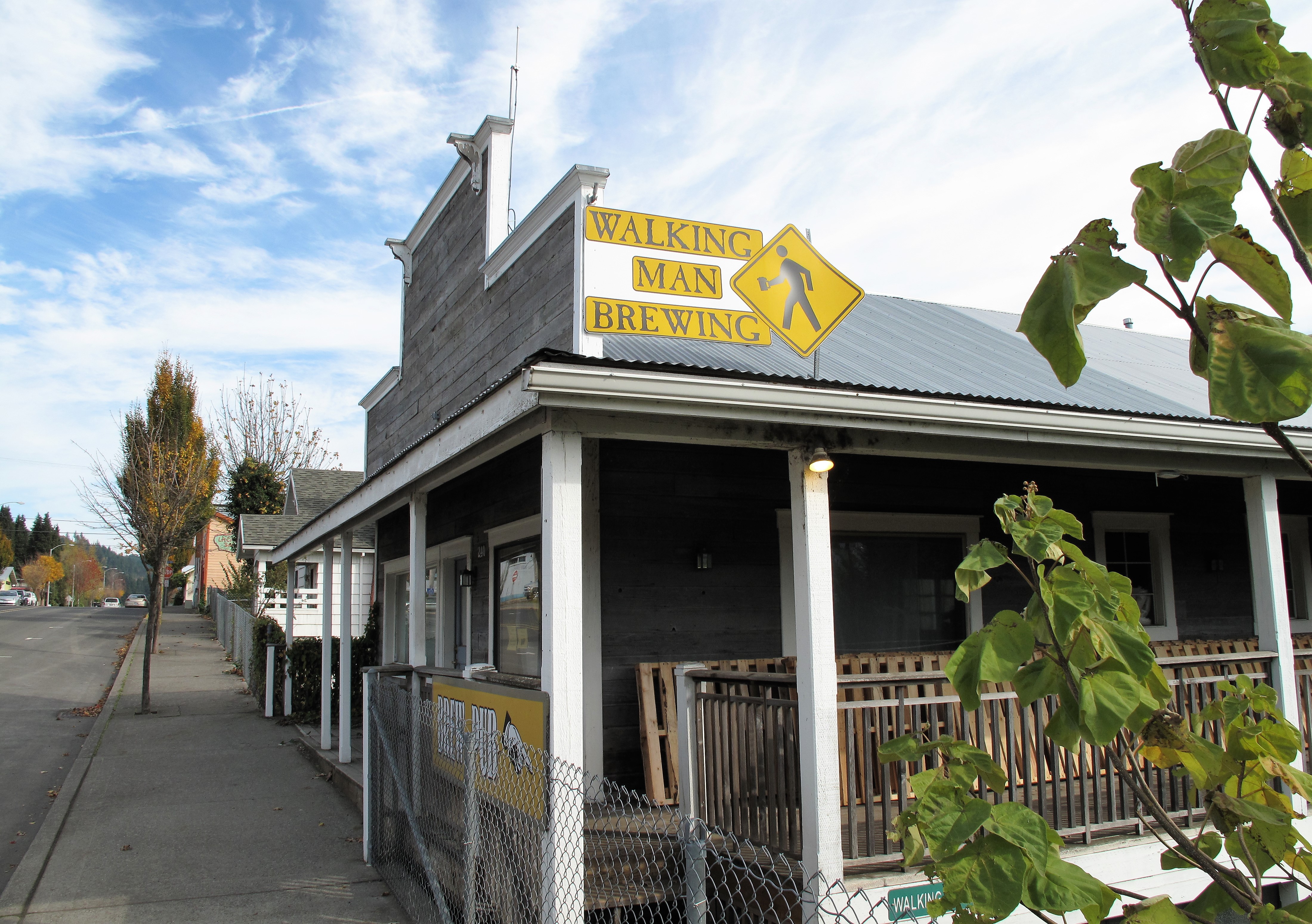
Stevenson is still small despite its location (within commuting distance to Portland). Today the town is half rural residential and half rural logging community. There are a few diners downtown and a few brewpubs have been popping up to service the hiking, biking, and wind-surfing crowd.
It’s often cold and windy around here but I lucked out today. Today is a clear, warm November day. About half the autumn leaves remain on the trees, leaving the hillsides speckled with gold against an evergreen background.
Along the Columbia in Stevenson, WashingtonLooking down toward 1st Street. Stevenson, Washington
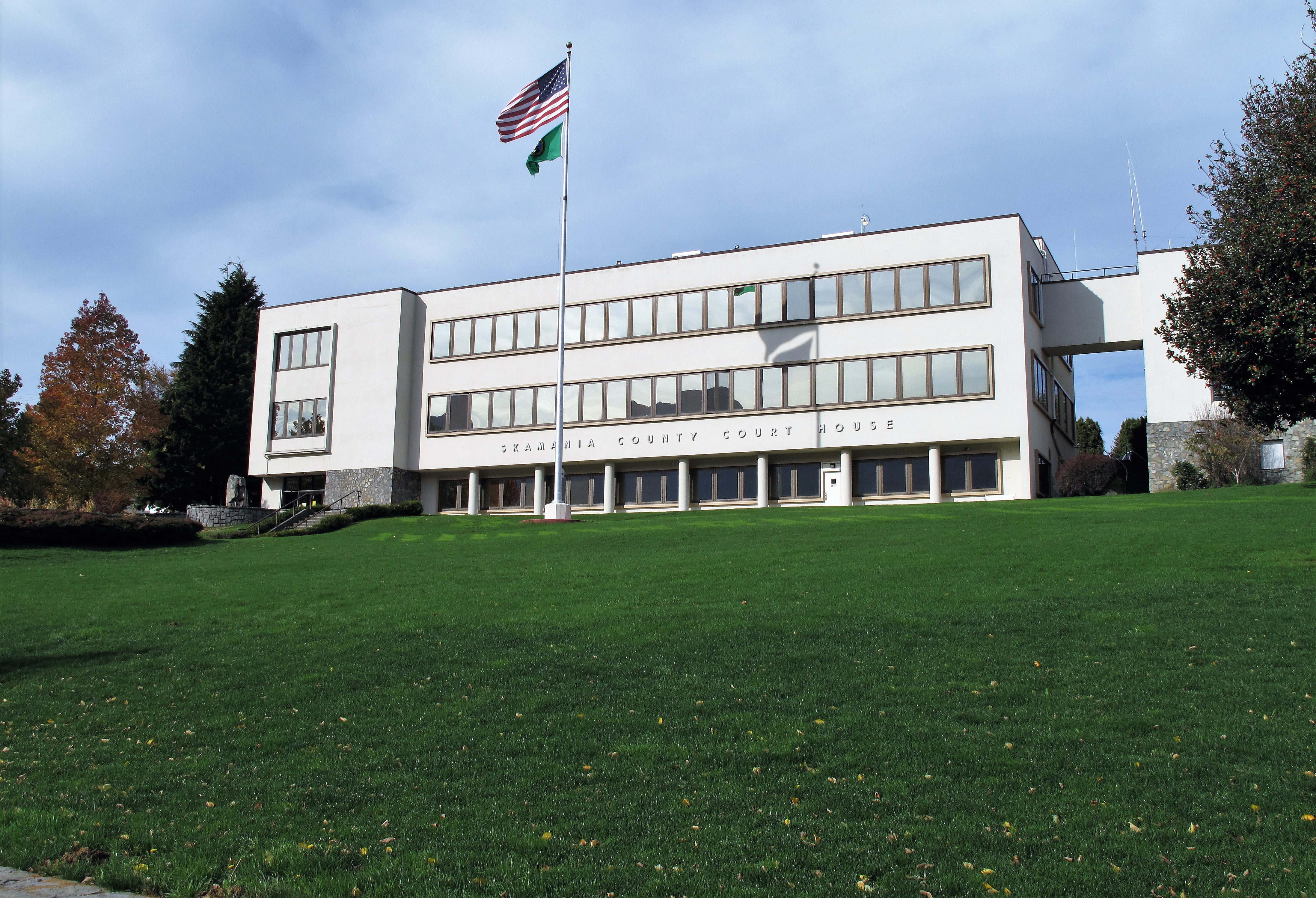
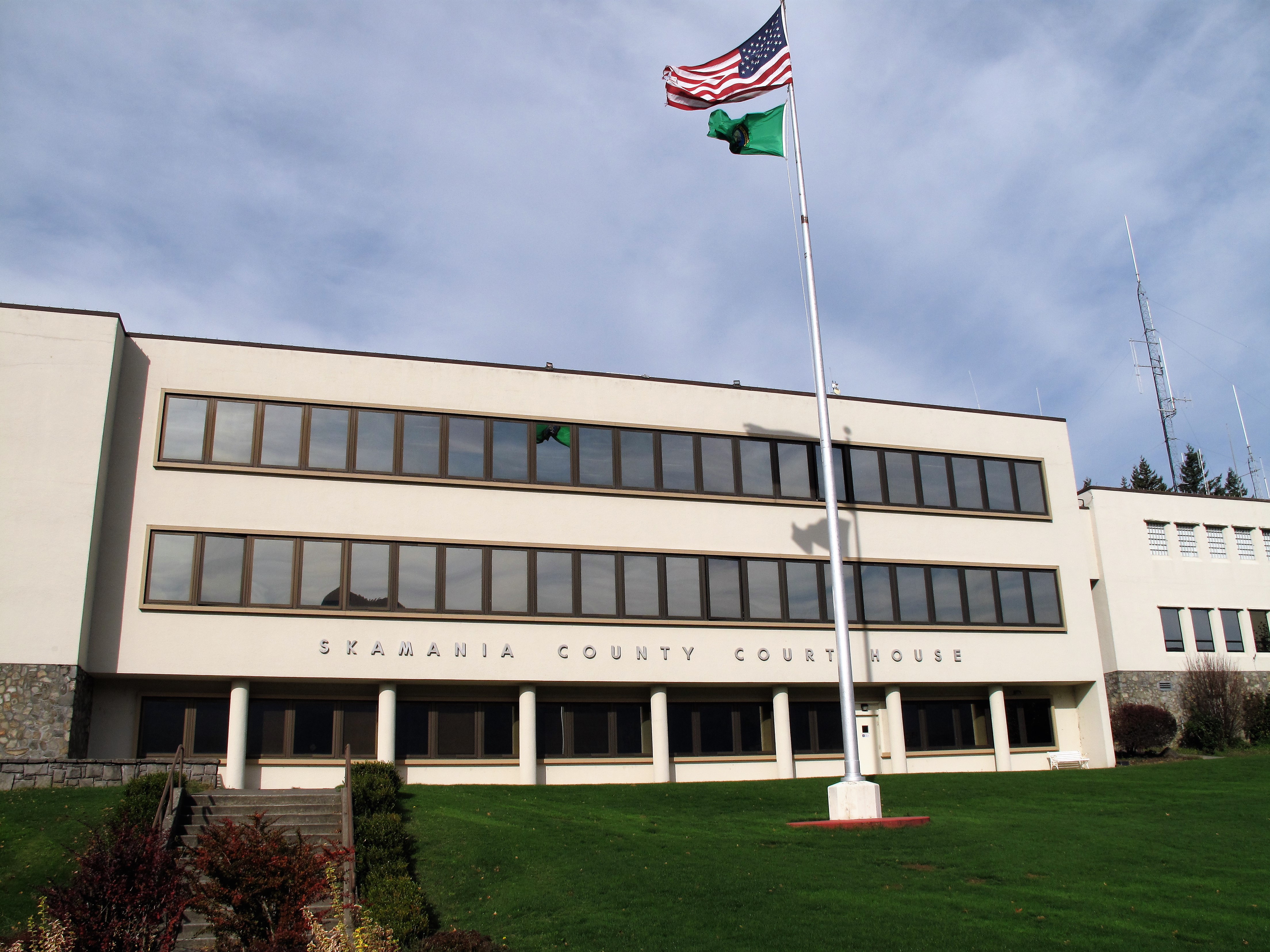
The Skamania County Courthouse is a 1970s-style building three stories tall with a wide front lawn sloping down toward the Lewis and Clark Highway below. The bright green of the Washington state flag reflects off the courthouse’s front glass windows. Views from the building could be sold as real estate; they look up and down the Columbia River and include the steep green cliffs of the Columbia River Gorge on the Oregon side.
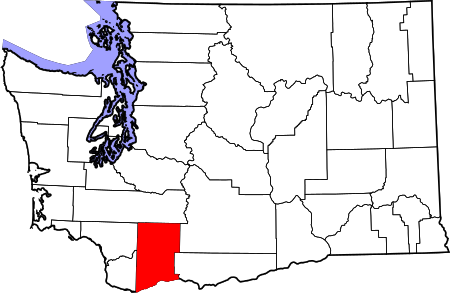
Skamania County Courthouse. Stevenson, WashingtonSkamania County Courthouse. Stevenson, WashingtonSkamania County in the state of Washington
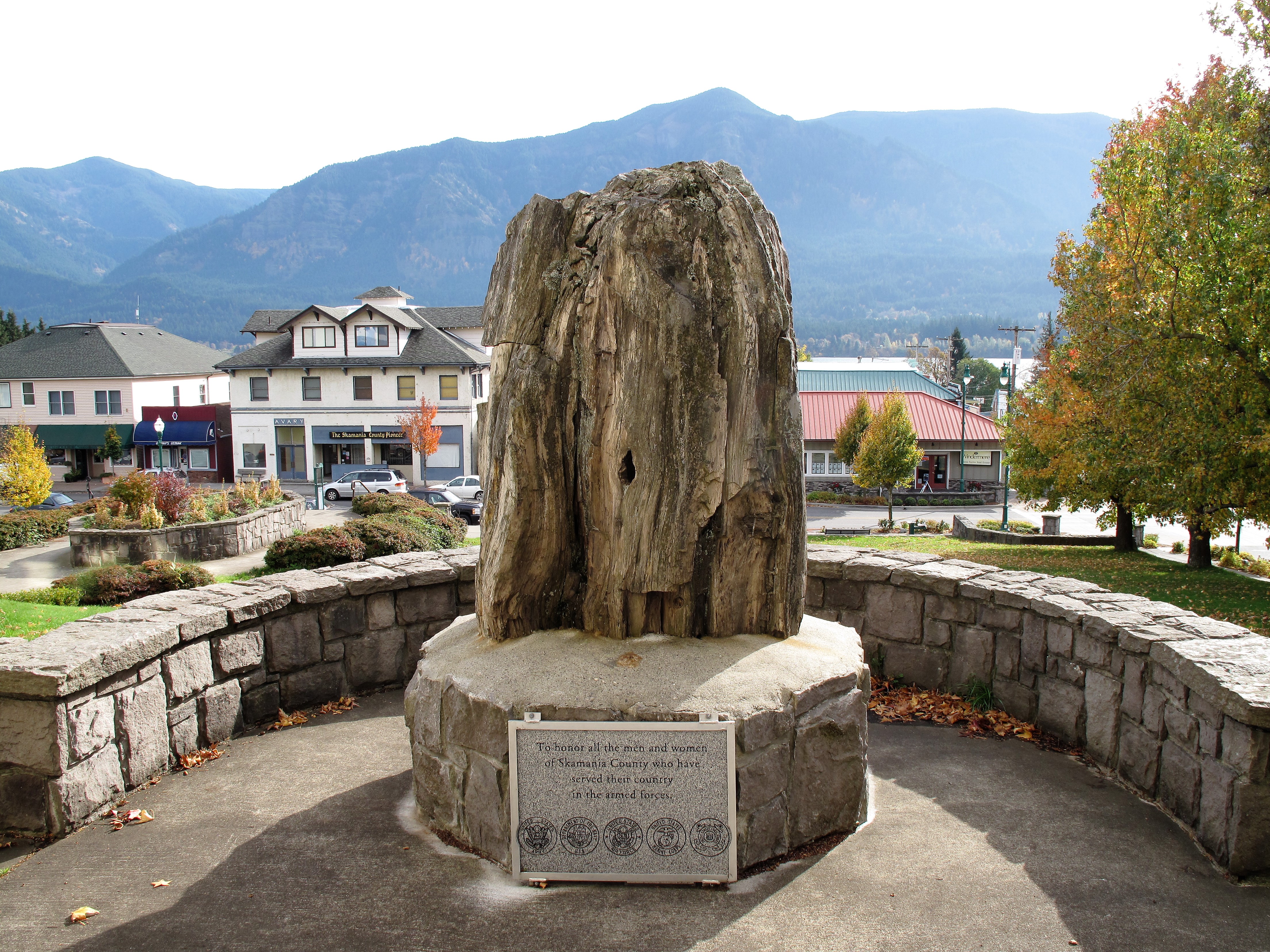
A large tree stump from Skamania County’s logging days serves as the county veterans’ memorial. The best view of the Columbia River Gorge has been reserved for the veterans’ memory.
Skamania County Veterans Memorial
All photos were taken by the author on November 2, 2009.
A list of all photo posts from the American County Seats series in TimManBlog can be found here.
I travel as a hobby and not for a living (yet) — but donations are happily accepted if you’d like to help defer my costs. Thanks, The TimMan
It’s 2020, and what do I have to be thankful for? Well for one, the opportunities I’ve had to take to America’s open roads every once and a while. These “Freedom Voyages” (h/t to Elizabeth Rosas Barber for the moniker) give me the chance to see the country — its landscapes, its small towns, its cities, and its courthouses. Along the way I take and share photos of what I see and what I eat.
Want to live out a Freedom voyage vicariously? Here’s a photo log of the nine days I spent on the road last September, starting in Colorado Springs, Colorado where I live, and traveling through Kansas, Nebraska, Iowa, Missouri, and Illinois to reach destinations in western Kentucky and southwestern Indiana.
I enjoyed Fall sunshine on eight of these nine days. Nothing better than sunshine on a trip! Enjoy!
Friday, September 18, 2020. Day 1: Colorado Springs to Seneca, Kansas
I left home on a Friday morning at 5:30, before dawn, and drove eastward to see the sunrise. I have plans and reservations for Friday and Saturday, but I’ll make decisions about the rest of the itinerary on Sunday morning. Across the Kansas state line, I officially enter the Midwest and get a chance to enjoy Casey’s General Stores, their breakfast pizza, and their new blueberry flips.
Casey’s General Store. Colby, Kansas. (lower gas prices than in Colorado)
A slice of Casey’s breakfast pizza was consumed too quickly to make the photograph.
Blueberry flip and coffee for the road.
From Colby, I head northeast to reach U.S. Route 36 for the rest of the drive across Kansas. It turns out that this happens to be Treasure Hunt weekend all along Route 36, so each town has yard sales along the roadside.
Treasure Hunt in Norton, Kansas.
I stopped at several sales that afternoon, mostly for the conversations rather than the merchandise.
Improvised yard sale along Route 36. Farmlands near Esbon, Kansas.
After eight hours I arrive in Seneca, Kansas, a pleasant town of 2,000. I arrived early enough to take some photos in the evening light.
Fall home decorations in SenecaSaints Peter & Paul Catholic Church in Seneca. Its steeple is the highest point in town and can be seen for miles around.Dinner (beef with tomatillo sauce) at El Canelo Mexican restaurant in Seneca, Kansas
Saturday, September 19, 2020. Day 2: Seneca to Clarinda, Iowa
I had a lazy Saturday in store for me today as I planned a short ride into Nebraska, across the Missouri River into Missouri, and then on to one of my favorite towns — Clarinda, Iowa. The first stop is Brownville, Nebraska, a historic old Missouri River trading town established in 1854 as a river port. The coming of the railroads drove most of the river traffic away, so today Brownville is mostly a tourist town with the air of a museum.
Didier Log Cabin. Brownville, NebraskaOld Lone Tree Saloon building. Brownville, NebraskaBrownville coffee shop and friendly door hostessWelcome to Iowa!
Clarinda, Iowa has a population of about 5,000 and features several sites including the birthplace of Glenn Miller and the historic Page County Courthouse. First stop — the Robin’s Nest Cafe for lunch.
Reuben sandwich plus the best vegetable beef soup I’ve ever tasted!Autumn colors starting to show on the tall shade trees in Clarinda.Glenn Miller’s birthplace and boyhood home. Clarinda, IowaGlenn Miller home hours of operation.A steak and potato dinner at J. Bruner’s in Clarinda, Iowa
The town of Clarinda was laid out in classic Midwestern fashion with a central square surrounded by the town’s small businesses. The county courthouse occupies the middle of the square:
Sunday, September 20, 2020. Day 3: Clarinda to Paducah, Kentucky
Sunday morning was decision time. From Clarinda, I could head north into Minnesota, or Northeast into eastern Iowa and Illinois, or southeast to western Indiana and Kentucky.
I usually let the weather forecast make these decisions for me. Today, Indiana/Kentucky had the best forecast outlook for the week so off I went to the southeast. Sunday’s drive would take eight hours through St. Joseph, Missouri, across the state of Missouri on U.S. Route 36 to the Mississippi River, then southeast to St. Louis, across the Mississippi at that point into Illinois, then south to the Ohio River and across it into Kentucky.
But first, breakfast at the Robin’s Nest:
Meat-lovers omelet and raisin toast at Robin’s Nest Cafe in Clarinda. Hashbrowns are off to the side.Lunch from a gas station in eastern Missouri.Taken from the driver’s seat on Interstate 64 while passing Busch Stadium in St. Louis. The Gateway Arch is in the background and the Mississippi River Bridge is just ahead.Dinner in Paducah, Kentucky. The house chili, a baked potato, veggies, and bread.
Monday, September 21, 2020. Day 4: Paducah to Owensboro, Kentucky
Breakfast at Burger King (my usual fully-loaded croissanwich), then a 2 1/2 hour drive to Boonville, Indiana, including a 1 1/2 hour stop at a Dairy Queen parking lot in Henderson, Kentucky to take part in a business call. It’s nice not having to be chained to an office, isn’t it?
In Boonville, I found a stately old courthouse…
Warrick County Courthouse. Boonville, Indiana
…a piece of Americana inside the courthouse…
Statue of an American bald eagle in American flag colors. Boonville, Indiana.
…a Lincoln-related historical marker…
…and some eclectic food choices from the bar in the town square:
Yesterdaze: Steaks, Fiddlers, Frog Legs, and Pork Chops.
Look at this business block. Couldn’t this be just about any Midwestern small town?
Locust Street businesses across from the courthouse. Boonville, Indiana
I had a footlong and a shake at a nearby Tastee Freeze.
T F Ice Cream at the corner of Walnut & Main Street. Boonville, Indiana
Upon seeing these photos April Gregory asked if I had seen Jack and Diane outside the Tastee Freez? Why yes I did April, just like in the song!
The Lincoln Boyhood Home National Memorial is 20 miles east of Boonville in Spencer County, Indiana. Lincoln spent his childhood years on his father’s farm here before going off to Illinois as a young man to be on his own.
Abraham Lincoln boyhood home (reconstructed)Lincoln boyhood home — actual site and hearthGravesite of Nancy Hanks, Abraham Lincoln’s mother
Off to Rockport, Indiana, the county seat of Spencer County, on the banks of the Ohio River. The town is situated on a bluff above the river, allowing for some million-dollar views on a sunny September day.
Ohio River at Rockport, IndianaOhio River at Rockport. Homes line the crest of the bluff overlooking the river.Classic home in Rockport, Indiana
I next drove downriver to Owensboro, Kentucky, for a night at the Holiday Inn Riverfront. But first, dinner at Colby’s Fine Food & Spirits.
Wedge salad for startersPecan pie topped with ice cream then whipped cream and then chocolate sauce for dessert.
I forget what the main course was.
Sunset over the Ohio River. Holiday Inn Riverfront, Owensboro, Kentucky
Tuesday, September 22, 2020. Day 5: Owensboro to Tell City, Indiana
Sunrise over the Ohio River. Owensboro, Kentucky
First things first — find the town’s signature diner. That’s Dee’s Diner on East 4th Street in Owensboro.
Ham slice with eggs at Dee’s Diner. Owensboro, Kentucky
No red gravy was available with their signature ham slice. Drats!
Owensboro is a sizeable river town with a population of over 55,000. It was settled in 1817 as “Yellow Banks”, and the downtown area boasts some fine 19th Century architecture.
Look closely at the inscription on this monument and who it honors. Such monuments have come under fire in 2020.
Daviess County Courthouse and Civil War Monument. Owensboro, Kentucky
Modern Owensboro is known for its bourbon distilleries and for bluegrass music.
Bluegrass Music Hall of Fame & Museum. Owensboro, Kentucky
Heading out of town into the Kentucky countryside, I saw several celebrations of the Fall season:
Hancock County, Kentucky
…and just as many of these signs of the season:
Yard sign in Hancock County, KentuckyOld Hancock County Courthouse. Hawesville, Kentucky
Lunchtime at The Brak Restaurant and Meeting House, Hardinsville, Kentucky. This is a small diner in a small, remote town. The Brak has no web presence, but the food is good and so is the company.
The lunch special of chicken fried steak, gravy, coleslaw, and sliced apples
Further on down the road:
Tobacco leaves dry in a shed. Near Stephensport, Kentucky
I next crossed the Ohio River into Indiana and drove downriver a ways to the town of Tell City. Tell City, Indiana was settled in 1857 by a group of German-speaking Swiss immigrants looking for a new life in the new world. As a side note, all the settlers of Tell City were German-Swiss; a settlement of French-speaking Swiss in Vevay, Indiana, 100 miles upriver from Tell City, was founded in 1813.
Tell City was of course named for legendary Swiss liberator William Tell. City Hall boasts a sculpture of an apple near its front entrance. The apple lights up red at night.
City Hall. Tell City, IndianaTell City, IndianaStatue of William Tell and his son. Tell City, IndianaSt. Paul’s Catholic Church. Tell City, IndianaMurals on Ohio River floodwall. Tell City, IndianaMurals on the Ohio River floodwall. Tell City, Indiana
I was looking for a biergarten for dinner at Tell City, but the best I could do was a brewpub/sports bar called the Tell City Pour Haus.
Wednesday, September 23, 2020. Day 6: Tell City to Vincennes, Indiana
For all the money people spend on “fine dining,” there’s actually nothing better than a great breakfast!
Swiss omelet with ‘scatter browns’ (hash browns covered with scattered cheese) at Julie’s Tell Street Cafe.
That’s a 3-egg omelet with bacon, sausage, ham, onion, peppers, tomatoes, and swiss cheese with a plate of cheesy hash browns on the side. No one needs to consult a Michelin guidebook to eat well.
The weatherman said that today would be dry but overcast, the only overcast day of my trip. My plan is to drive upstream along the Ohio River on the Indiana side for an hour or so, then turn north toward the towns of English and Paoli.
I stopped along the Ohio River in Rome, Indiana. It’s 9 o’clock in the morning. The waters are flat behind the Cannelton Dam just 10 or 20 miles downstream and the fish were biting like crazy! The overcast conditions come from some high clouds ahead of a tropical system coming ashore along the Gulf Coast.
Ohio River at Rome, IndianaOhio River at Rome, Indiana
My old high school friend Mark O’Donnell saw these photos on Facebook and gave me thumbs way up. I wonder if he was planning on a fishing trip excursion to come down here from his home in Pittsburgh. This is a great fishing spot — quiet, plenty of fish, dozens of river-side rental cabins.
Frogs on a mailbox. Near Rome, Indiana
After winding east along the Ohio River for an hour or so, I headed north through some hilly, wooded miles to the town of English, Indiana, perhaps the most remote county seat in the whole state.
A washed-out bridge over Camp Fork Creek in English, Indiana
On to the town of Paoli, the county seat of Orange County, Indiana. The courthouse here has been in use since 1850 and is still in use today. I went inside — all the basic offices were operating: county clerk, assessor, judge, etc.
Orange County Courthouse. Paoli, IndianaView from the Orange County Courthouse balcony looking south toward Gospel Street.
This part of Indiana is rural country, and in fact very hilly. Some Hoosiers actually refer to this part of their state as “Kentucky.” Appropriately, on my way driving out of the area, I was able to stop at the hometown of “the hick from French Lick.”
Larry Bird poster in the pool room inside Legendz Sports Bar & Grill in French Lick, Indiana
I arrived in the city of Vincennes, Indiana around 6:00 pm, in time for dinner at Procopio’s Pizza and Pasta. I chose Procopio’s because it was highly rated on TripAdvisor, but going to Byron Bobe’s Pizza House as Stacy de Rose suggested would have been even better. Alas, I saw her Facebook comment too late.
Spinach salad at Procopio’s. Vincennes, IndianaAlfredo at Procopio’s
Thursday, September 24, 2020. Day 7: Vincennes to Terre Haute, Indiana
It’s a bright sunny morning and I’m off early, driving north through the farms and fields of western Indiana. I was making good time until I saw a roadside establishment called “The Big Peach,” and couldn’t help but stop for some “supplies.”
The Big Peach. Along U.S. Highway 41 near Bruceville, Indiana.A large bottle of Peach Cider for the road
Next stop, the town of Sullivan, Indiana, a beautiful Midwestern town basking in the shade of its tall trees.
Sullivan County Courthouse. Sullivan, IndianaPumpkins for sale at the town square. Sullivan, IndianaSullivan business blocks across from the courthouse. Sullivan, Indiana
The next county to the north is Vigo County, home of the city of Terre Haute and Indiana State University. “Terre Haute” is French for “high ground,” and there is a lot of French influence around town, starting with the courthouse.
Vigo County Courthouse. Terre Haute, IndianaVigo County Courthouse. Terre Haute, Indiana
The courthouse is a magnificent example of Second Empire-style structure.
“Designed by Cincinnati architect Samuel Hannaford, the building was constructed by the Terre Haute Stone Company at a cost of $443,000. The courthouse is made from Indiana limestone gathered from Stinesville, Indiana quarries…Originally, the main floor consisted of offices, with two large, high-ceiling courtrooms on the second floor. Elegantly finished and furnished, the courthouse was heated with steam from a detached building to the south and featured a hydraulic elevator.”
Bustling downtown Terre Haute, IndianaFrench influence in the buildings in Terre Haute, Indiana
Lunchtime in Terre Haute. Question: What’s the best part of ‘Frenchness’? Answer: GUMBO!
Chicken and sausage gumbo at J. Gumbo’s in Terre HauteBarroom inside J. Gumbo’s in Terre Haute
Terre Haute is sometimes referred to as the “Crossroads of America” since the intersection of 7th Street and Wabash Avenue was also the intersection of U.S. Routes 40 and 41 — both are cross-country routes. The roadsign will explain the details:
Crossroads of America sign in Terre Haute, IndianaCrossroads of America in Terre Haute — also the birthplace of the Coke bottle design.Indiana Theatre and Event Center, 7th & Ohio in Terre Haute, Indiana
After toying with the idea of staying the afternoon at J. Gumbo’s, I decided instead to drive the old National Road east one county to the town of Brazil. Nice place. They have a Vietnam-era Air Force fighter jet parked on their courthouse lawn.
Clay County Courthouse. Brazil, IndianaBustling National Avenue (U.S. Route 40) in Brazil, Indiana
Now back to Terre Haute for some dinner and a night’s rest.
BBQ at Rick’s Smokehouse & Grill on Wabash Ave. Terre Haute, Indiana
It turns out that Rick’s Smokehouse is a favorite stopping place for country music bands touring through Terre Haute. Poster’s tacked on the wall are signed by the artists (some now famous):
Florida-George Line at Rick’s Smokehouse in Terre Haute, IndianaJana Kramer at Rick’s Smokehouse in Terre Haute, Indiana
That evening I checked my Facebook traffic. Jim Street asked me, “what’s the occasion for your road trip, Tim?” I answered: —free time —a few bucks in the bank —summer warmth won’t last forever —life is short —my old car is still reliable enough for long trips. That won’t last forever —weather forecast said this whole week would be sunny and pleasant in the Midwest AND FINALLY:—a big election is coming up. I feel confident but if it goes sideways THIS COUNTRY WILL NEVER BE THE SAME. I wanna see it now, at its best. Thanks for the question, Jim. It gives me a chance to put all things in perspective.
As if those reasons weren’t enough, I learned just 25 minutes later that my high school friend Mark O’Donnell had just passed away. He was 59. He had liked my Ohio River photos just two days before. Another old school friend, Drew Podnar, posted the news. Mark will be missed.
Friday, September 25, 2020. Day 8: Terre Haute to Seneca, Kansas
Time to go home. All good things must come to an end. I have two days driving to do from western Indiana through the farmlands of central Illinois, across the Mississippi River, through the farmlands of central Missouri, across the Missouri River, then on to Seneca, Kansas to spend the night.
First, breakfast at Denny’s in Terre Haute:
All-American Slam breakfast at Denny’s. Terre Haute, Indiana
But that only fills the stomach for now — what about food for the road? That’s why God created donuts. And in Terre Haute, that means a place called Square Donuts.
Square Donuts. Terre Haute, IndianaPlenty to choose from at Square Donuts, but Cash Only, please!The cream-filled donut is the King of the Donuts.
After a few hours of driving, I crossed the Mississippi River into Hannibal, Missouri. That means lunch, and it also means one of my favorite duos of literature — Tom Sawyer and Huck Finn.
Statue of Tom Sawyer and Huck Finn above Main Street in Hannibal, Missouri
I posted this at the time: “Meet two of my heroes: Huck Finn and Tom Sawyer. Huck is a Rousseauian type, a noble savage who disdains civilization, while Tom is more of an Enlightenment boy genius. I try to take after one or the other of these two, depending upon the situation.”
Phil Costopoulos responded: “Tom was a management genius. I talk about him all the time in staff meetings.”
Tom Sawyer’s fence in Hannibal, MissouriMississippi riverboats moored at Hannibal, Missouri
Lunch from Java Jive on Main Street in Hannibal. Now time to hit the road again.
Lunch from Java Jive in Hannibal, Missouri
After a few hours of driving, I crossed the Missouri River into Kansas. The town of Wathena, Kansas is a few miles beyond the river and a great place to stop for ice cream. Try the Dairy Barn for ice cream — or buy the place — the owner has put it up for sale.
The Dairy Barn. Wathena, KansasIce cream fudge sundae at the Dairy Barn. Wathena, Kansas
I got into Seneca an hour or so later. Dinner tonight is at the Willows Restaurant and Bar. I have their fettuccine alfredo — with andouille sausage instead of chicken — and a side of sweet potato fries and tea.
Willows Restaurant and Bar. Seneca, KansasHome away from home. Starlite Inn. Seneca, Kansas
Saturday, September 26, 2020. Day 9: Seneca to Colorado Springs
I have an 8-hour drive home ahead of me, mostly along U.S. Route 36 in Kansas. By now I’m glassy-eyed determined and I only make stops for gas, and for lunch.
Third Street Bakery in Phillipsburg, Kansas
One more lunch behind the wheel on my way home. Peach pie for dessert. Phillipsburg, Kansas.
Lunch from Third Street Bakery in Phillipsburg, Kansas
Nestled in a shallow mountain valley along the upper Allegheny River, Warren looks like many other central Pennsylvania small towns. Its population stands at 10,000 or so, and the streets here are lined with tall deciduous trees. Often shaded behind those trees are old Victorian homes dating back to Warren’s oil and timber boomtime in the late 1800s. But prosperity has come back to town, as you’ll see below.
In the fall it’s absolutely beautiful here. A stroll down 5th Avenue in Warren isn’t at all like a stroll down 5th Avenue in Manhattan or even in Pittsburgh, but it’s striking in its own way. I used this photo as my PC desktop background for a while.
5th Avenue in Warren, Pennsylvania
Imagine sitting on the front porch of this fine home, enjoying a coffee or a whiskey depending on the time of year.
Classic brick home with an American flag in Warren, Pennsylvania
Just one more home please. 5th Avenue in Warren runs along the base of a mountain, as seen off to the right in this photo.
Victorian home with classic front porch and the American flag. Warren, Pennsylvania
The Warren County Courthouse is just down the street.
Warren County Courthouse. Warren, Pennsylvania
Built in 1876, the cornerstone says July 4, 1876, or the day of America’s first Centennial celebration.
The Warren County Courthouse cornerstone
Renovated in 1999, the courthouse was originally topped by a steel statue of Lady Justice, which has since been replaced with a fiberglass version. The original statue currently sits in a first-floor display case. According to the historical notes, the replacement to a fiberglass version was undertaken since fiberglass is better able to withstand lightning strikes, other weather, and gunshots. Gunshots? Yes, the notes mentioned that when taken down in 1999 the old Lady was found bearing bullet marks. What happened? Were bored residents using her as target practice from their front porches on quiet evenings? It doesn’t say.
Warren County CourthouseWarren County Courthouse front lawn and Civil War cannonWarren County in the state of Pennsylvania
The history of this part of north-central Pennsylvania includes conflicts with Seneca and other Iroquois tribes. One war chief named Cornplanter, son of a Dutch trader and a Seneca woman, led negotiations with the new United States after the end of the Revolutionary War. Wikipedia has an entry on Cornplanter here. On his painting, found displayed prominently inside the courthouse, Cornplanter is shown with an American flag draped over his left arm with the shadow of George Washington over his right shoulder,
Dutch-Seneca Chief Cornplanter
Warren was named for Revolutionary War hero General Joseph Warren, who died at the Battle of Bunker Hill. The town honors him with a statue in the park, below the tree-lined ridge at the north end of town.
Statue of Joseph Warren in Warren, PA
Warren has always been an oil town, and its proximity to the Marcellus Shale and its fracking activity helps with its prosperity today. Storefronts downtown along Pennsylvania Avenue (main street) are mostly occupied. I hope the prosperity lasts — beautiful, stately small towns like this deserve a break.
Downtown Warren, PennsylvaniaDowntown Warren, PennsylvaniaElk fountain in downtown Warren, looking west
Every old Pennsylvania town has a statue honoring its Union veterans from the Civil War. Warren’s statue is at the base of the Hickory Bridge over the Allegheny River, at one corner of the main intersection in town.
Civil War memorial in Warren, PA. Hickory Bridge over the Allegheny is at the right.
Downtown Warren lies along the banks of the upper Allegheny River — far, far upstream from the river’s confluence with the Monongahela at Pittsburgh. Here, the Allegheny is just a big mountain stream.
Hickory Bridge over the Allegheny at Warren, PAAllegheny River near WarrenCanoeists and a kayaker on the Allegheny, waving at me
Although Warren has only 10,000 residents, it does have some culture. The Struthers Library Theatre uses the old town library building for events. A list of events can be found on their website here. It’s impressive. A photo of the classic venue is below.
Struthers Library Theatre. Warren, Pennsylvania
Of course, the new library building is pretty nice too. I like the classical references along the exterior walls.
Warren Public Library
Finally, and not at all least importantly, every cool town needs a cool cigar lounge. Allow me to present Nice Ash Cigars and Lounge (link here), a classy part of the Warren nightlife. Nice Ash has two additional locations in Depew and Fairport, New York — but why cross the border into New York (no-fracking country) when you can enjoy a cigar in Pennsylvania?
Nice Ash Cigars and Lounge. Warren, PA
As the sign on the window says, Nothing Beats a Nice Ash!
All photos were taken by the author either on October 4th or October 8th, 2019.
A list of all photo posts from the American County Seats series in TimManBlog can be found here.
I travel as a hobby and not for a living (yet) — but donations are happily accepted if you’d like to help defer my costs. Thanks, The TimMan