July 31, 2023 (Photographs and memories from June 2012 and July 2020) (If you like my posts, you can support this site with a donation via Paypal, Visa, Amex, Mastercard, or Discover by using the form at the bottom of this post. Thank you.)
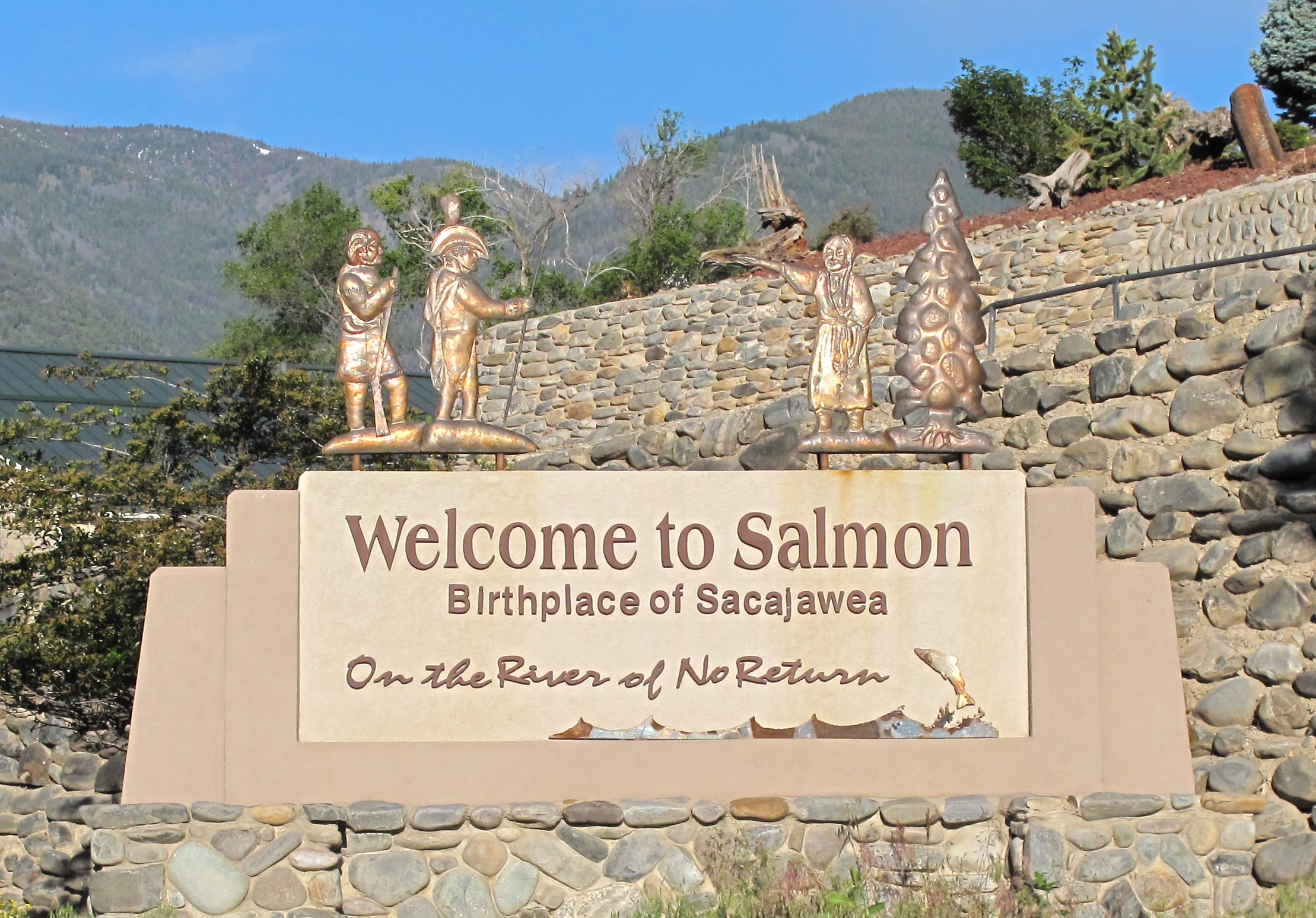
Roadside Welcome Sign at the entry to Salmon, Idaho.
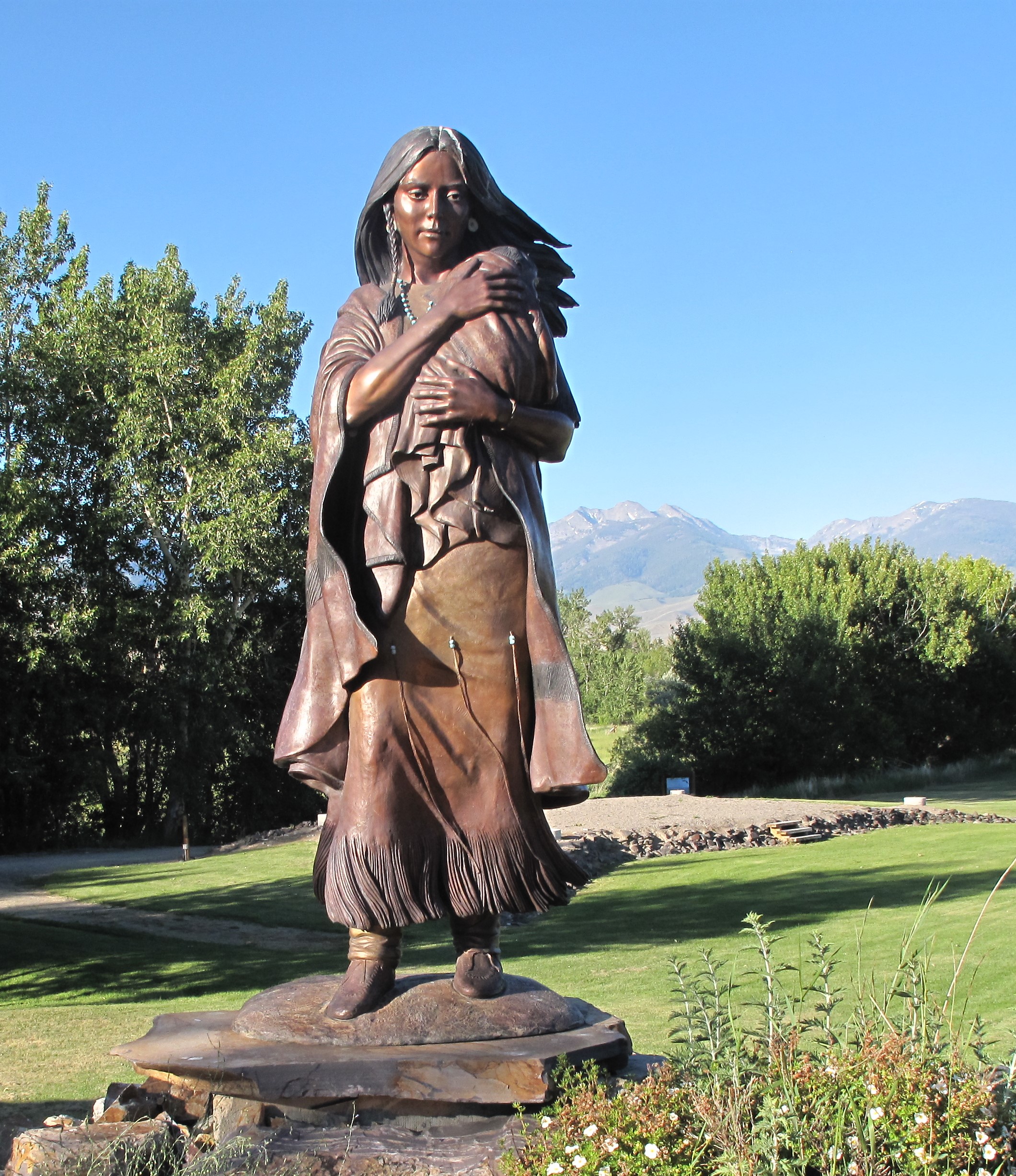
Statue of Sacajawea and her son Jean Baptiste Charbonneau in Salmon, Idaho.
Salmon, Idaho (or nearby) is the birthplace of Sacajawea, a famous Lemhi Shoshone member of the Lewis and Clark Expedition of 1804-1806. The story of Sacajawea is well-known, so I won’t go into detail about it. See her Wikipedia entry here for more information on her life. (Note that I’ll use the spelling “Sacajawea” instead of its rivals “Sacagawea” or “Sakakawea” since Sacajawea is the spelling preferred by the Shoshone.)
Salmon, Idaho, is a busy town. Although the town’s population is only 3,000, it seems more active because all human activity in this remote part of Idaho must be squeezed through a narrow corridor of land below the goliath Sawtooth Mountains above the town and the rushing Salmon River that runs through it. The smaller Lemhi River joins the Salmon River just north of downtown.
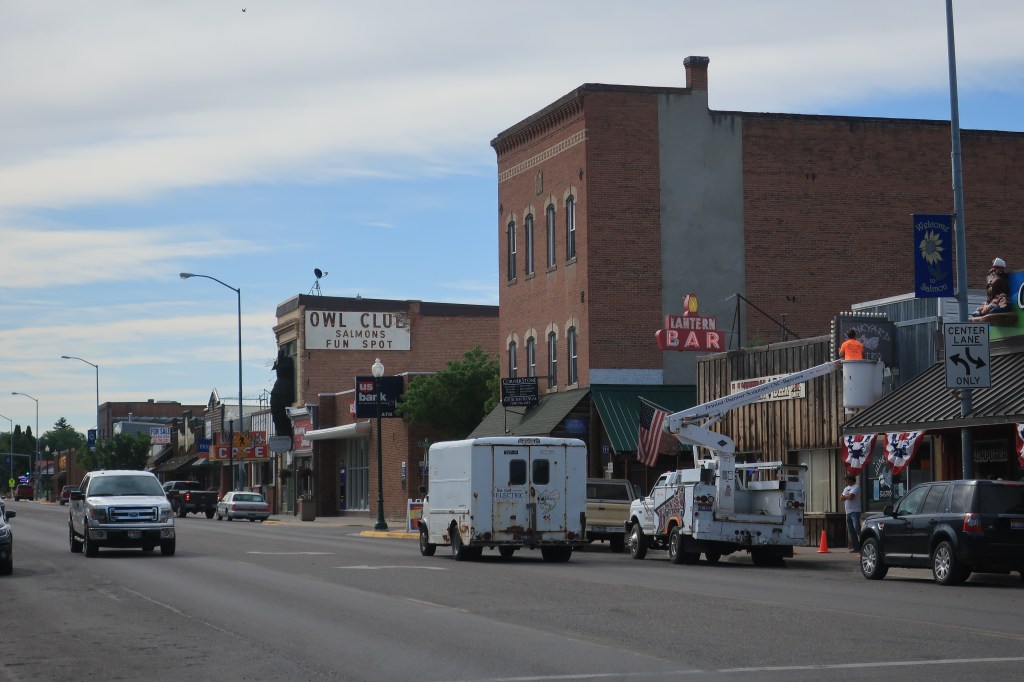
Main Street Salmon, Idaho, looking south (photo taken June 2012).
Main Street Salmon, Idaho, looking north toward the Salmon River bridge (photo taken June 2012).
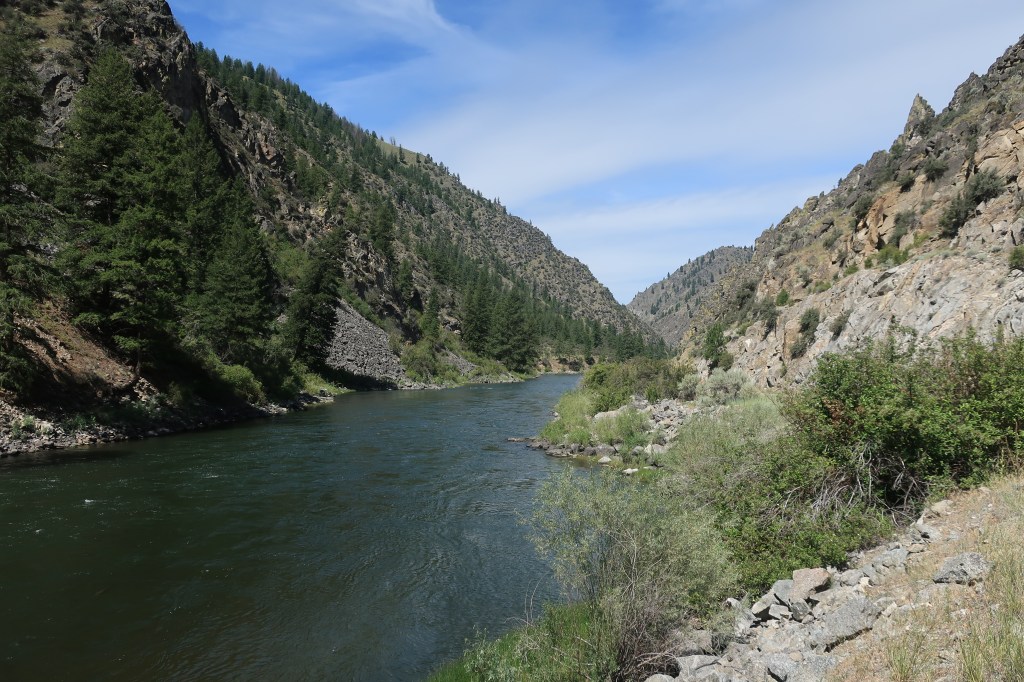
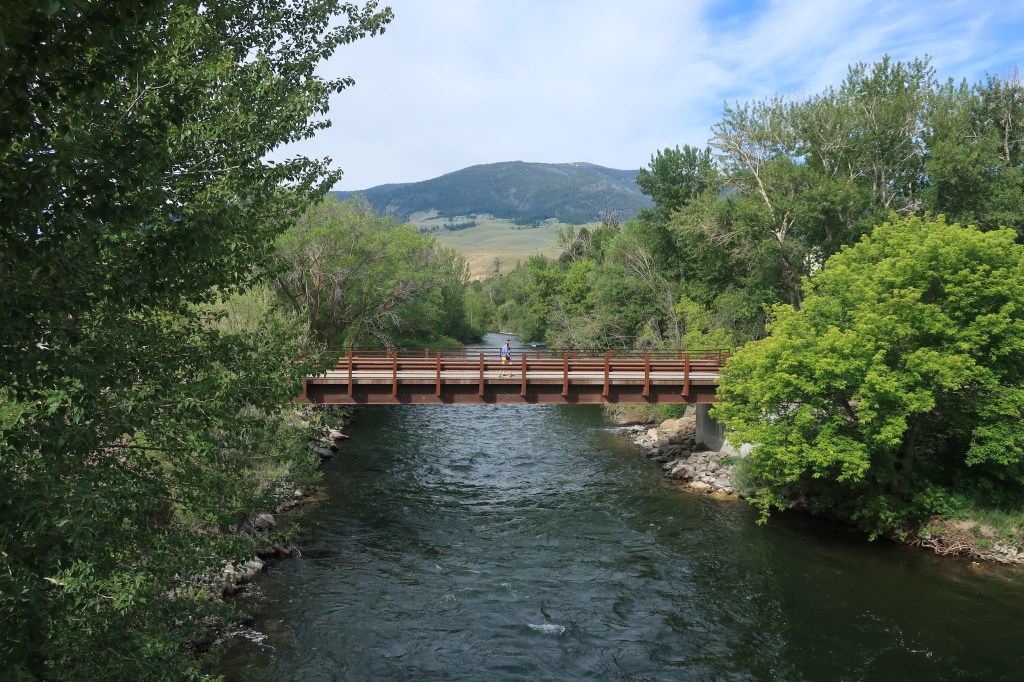
A relatively calm portion of the Salmon River flows under the Main Street Bridge in Salmon.
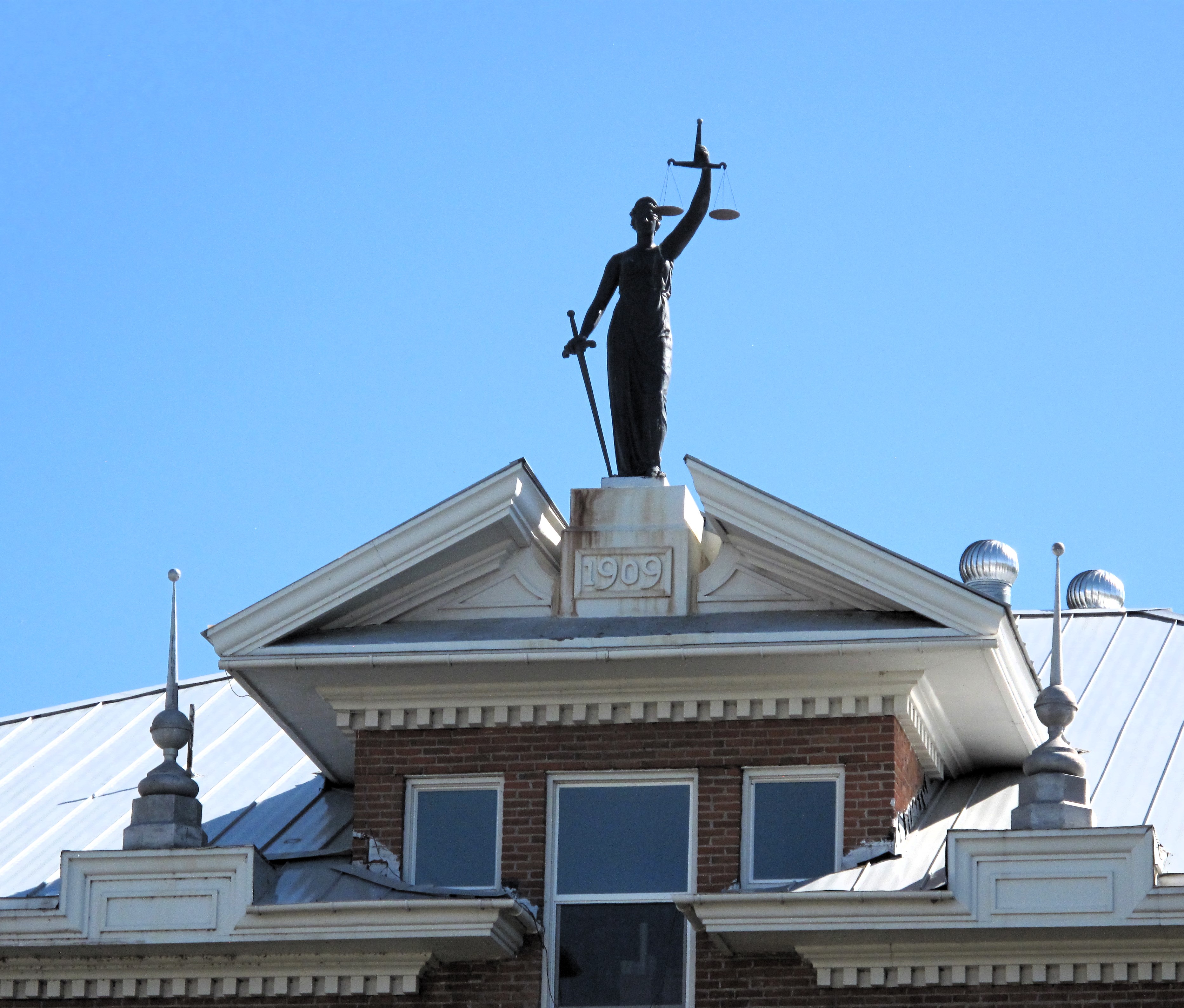
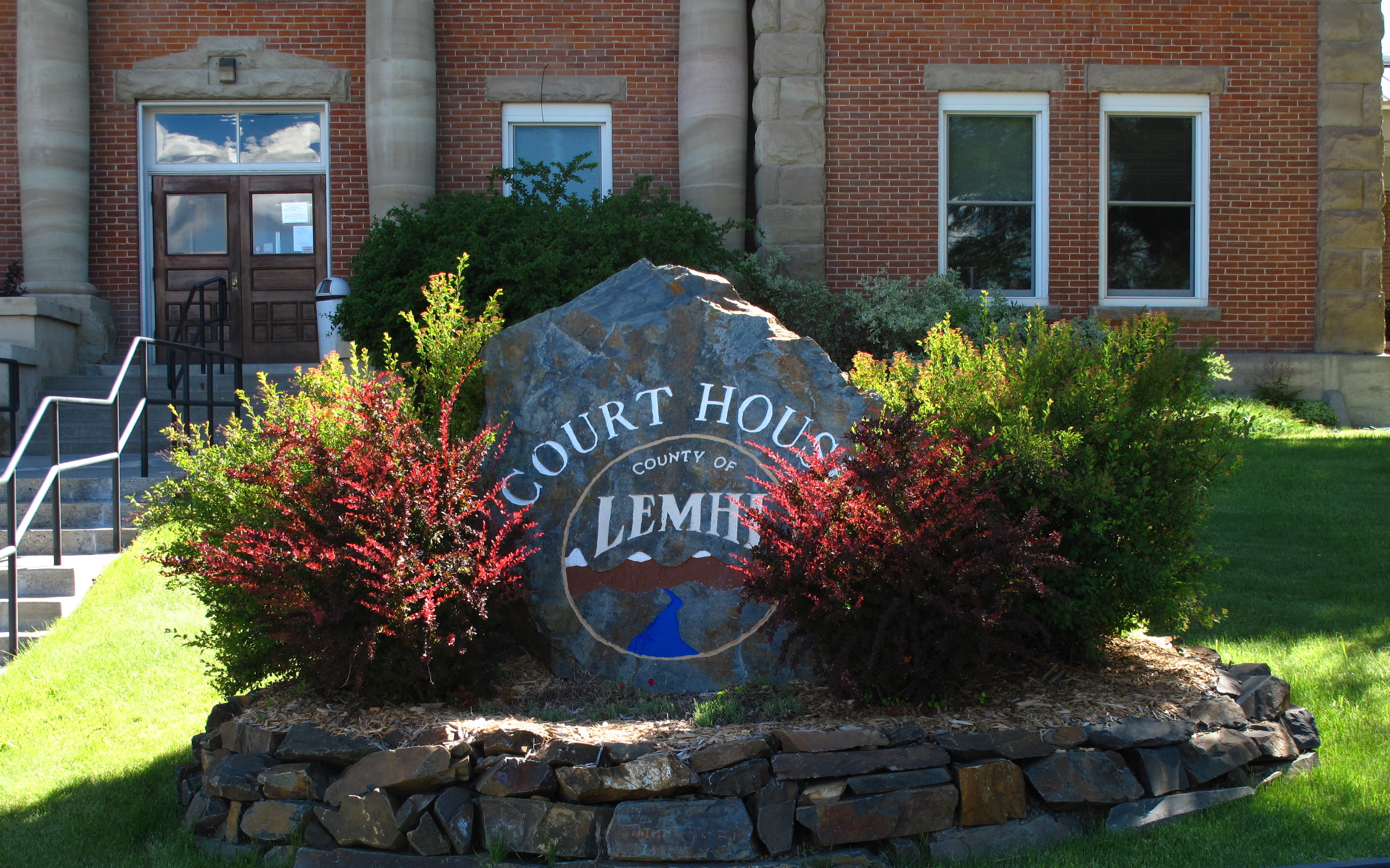
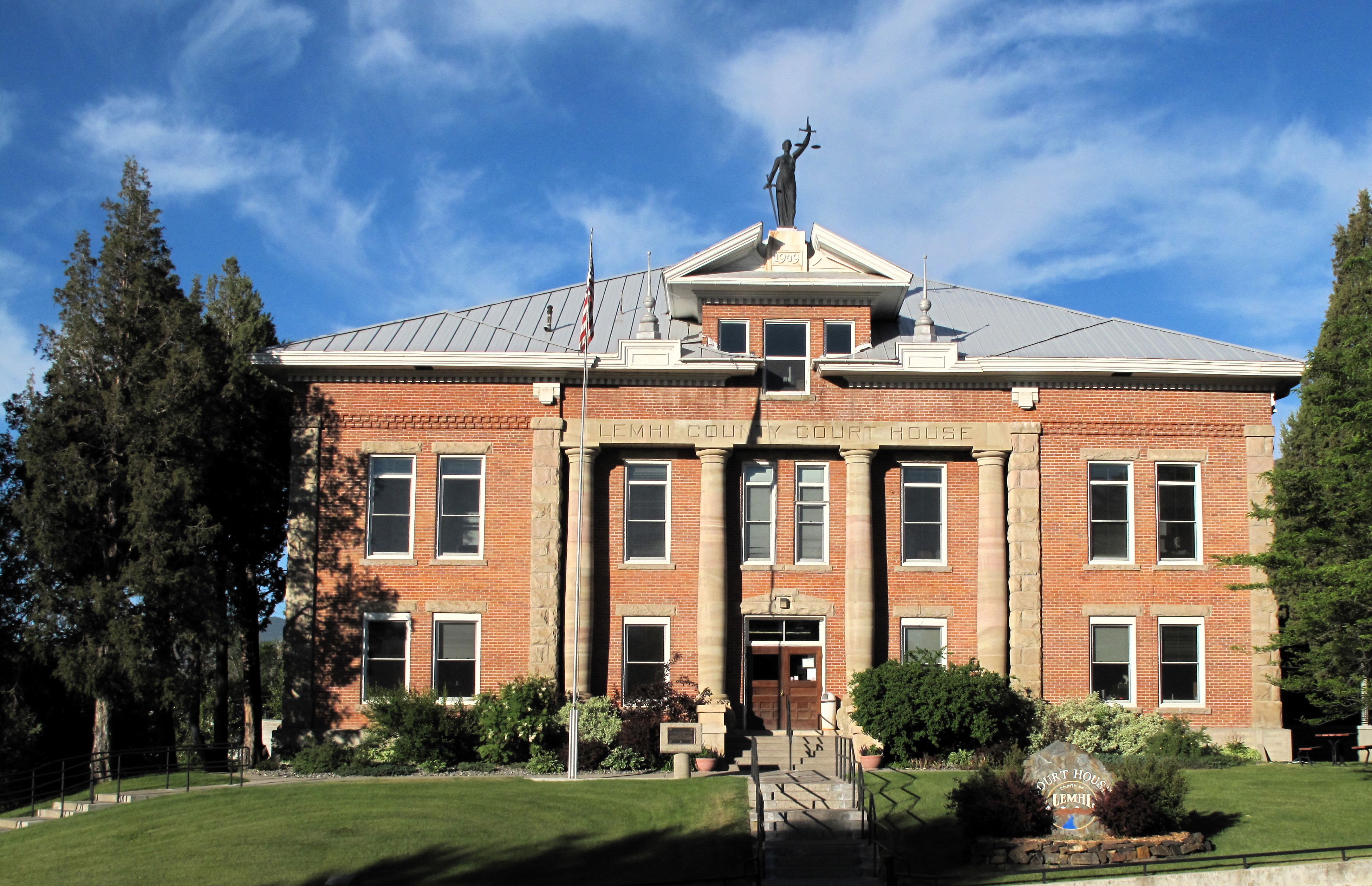
Across the river from downtown Salmon, the 1909 Lemhi County Courthouse provides some stately grandeur to the small town. The building is listed on the National Register of Historic Places.
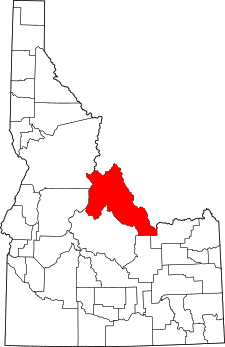
Salmon is the county seat of Lemhi County, Idaho, one of the state’s most remote counties. Except for U.S. Highway 93 bisecting the county from north to south, only one other paved road allows automobile traffic into Lemhi County.
Ironically, the name “Lemhi” is not from the Shoshone language but was taken from the Book of Mormon and applied by a Mormon missionary settlement in the 1850s.
Lemhi County within the state of Idaho.
In July 2020, I decided to revisit Salmon. That was the summer of the pernicious Covid lockdowns, and I decided to escape Democrat-controlled Colorado for a place of more sanity, which I found here in Idaho. There were no lockdowns here, nor any other silliness fueled by the hysterics of the Covid crisis. It was indeed a “Freedom Voyage” at its best.
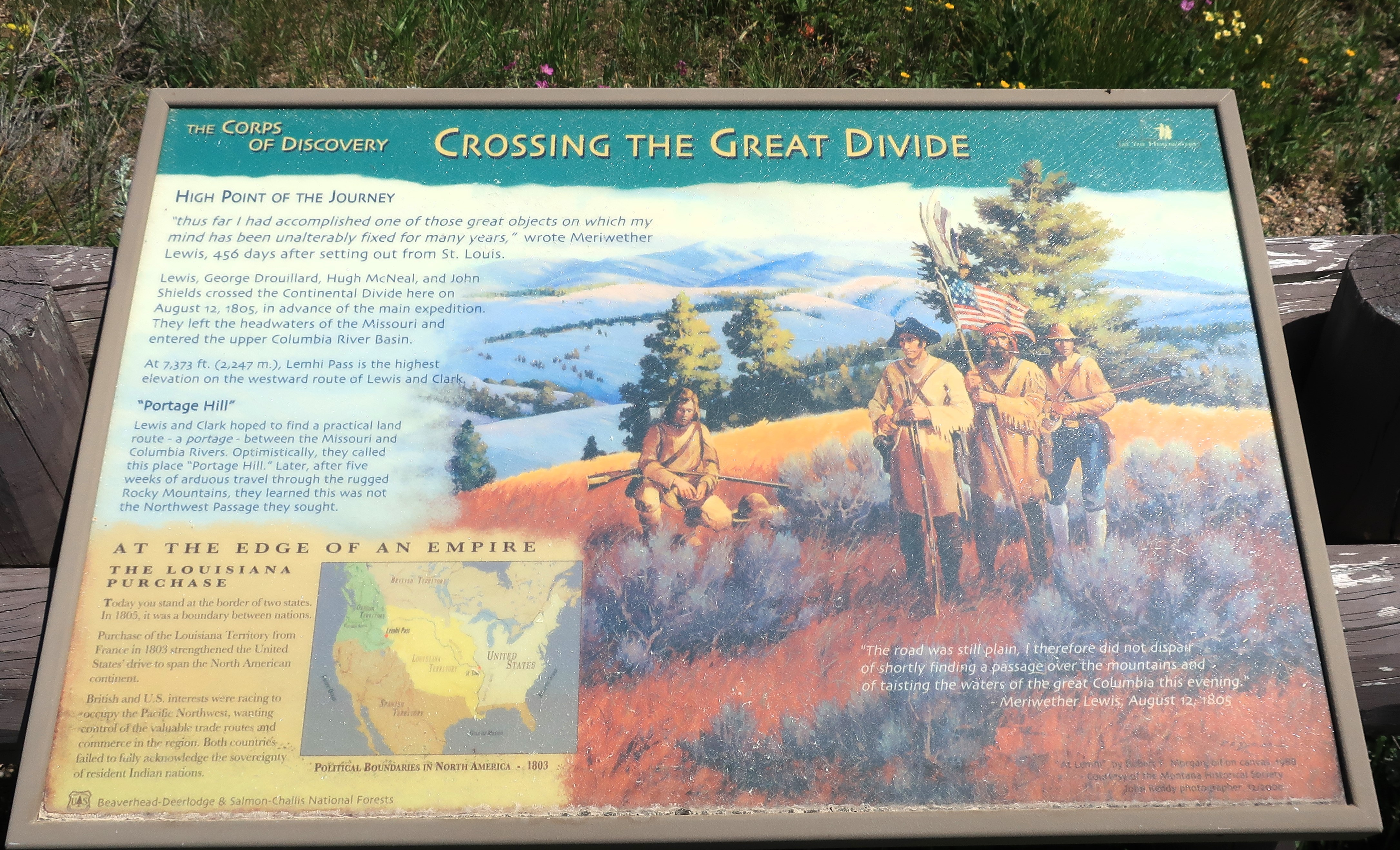
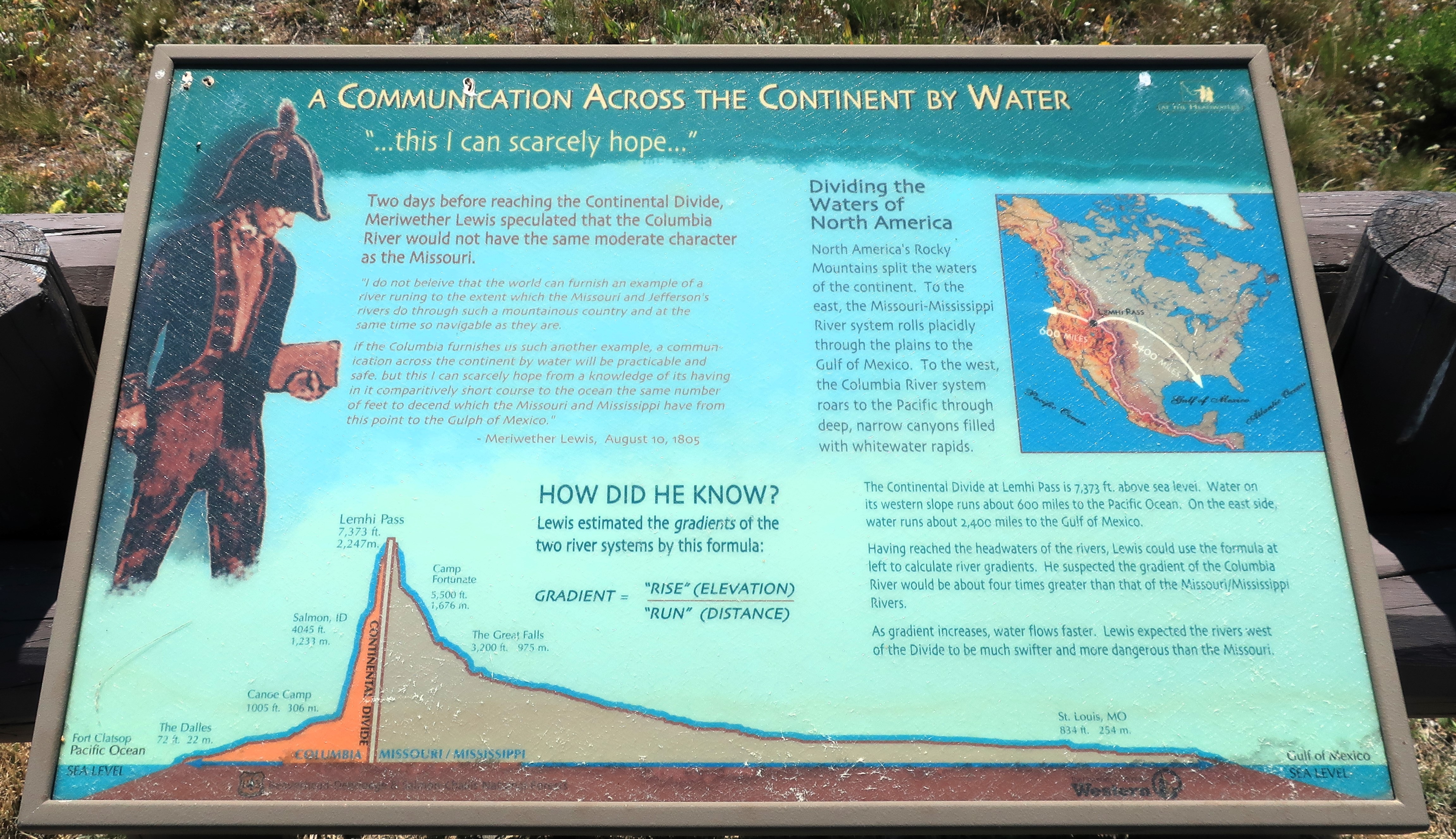
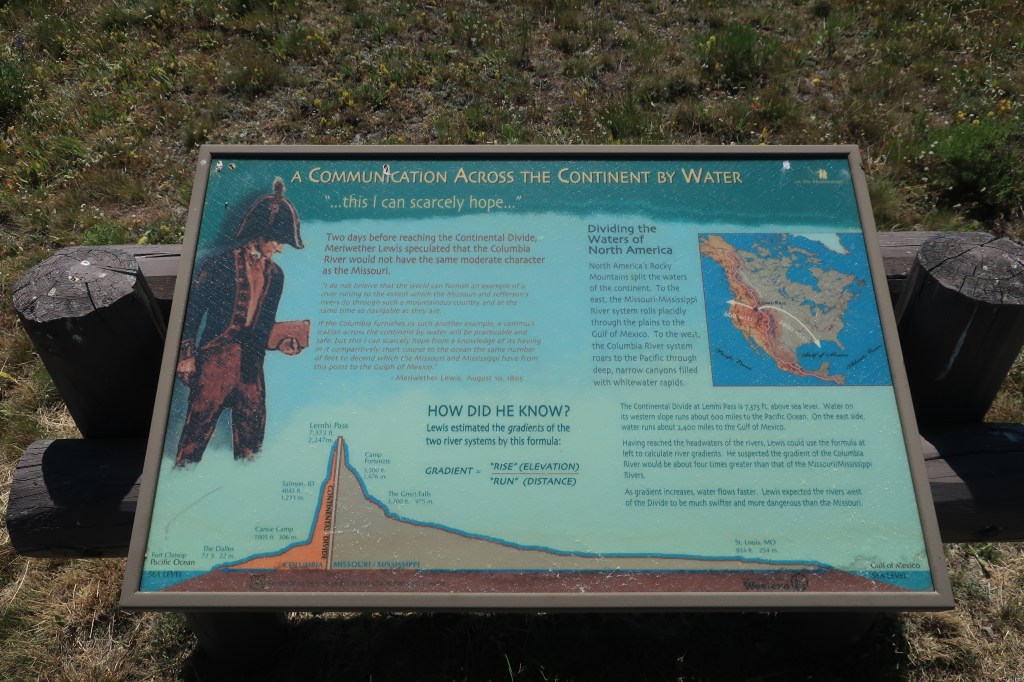
I arrived in Salmon from the southeast, following the footsteps of the Lewis and Clark Expedition. Seeking the Continental Divide and a waterway to the Pacific Ocean, Meriwether Lewis ascended the 7,373-foot Lemhi Pass and crossed the Divide on August 12, 1805. The rest of the “Corps of Discovery” followed soon after.
Checking off one of my life’s bucket list items, on July 11, 2020, I followed Lewis and Clark’s footsteps. I reached Lemhi Pass (after diverting onto a westward-leading gravel road from Interstate 15 in Montana in my old Honda Accord).
Historical signs at the summit of Lemhi Pass.
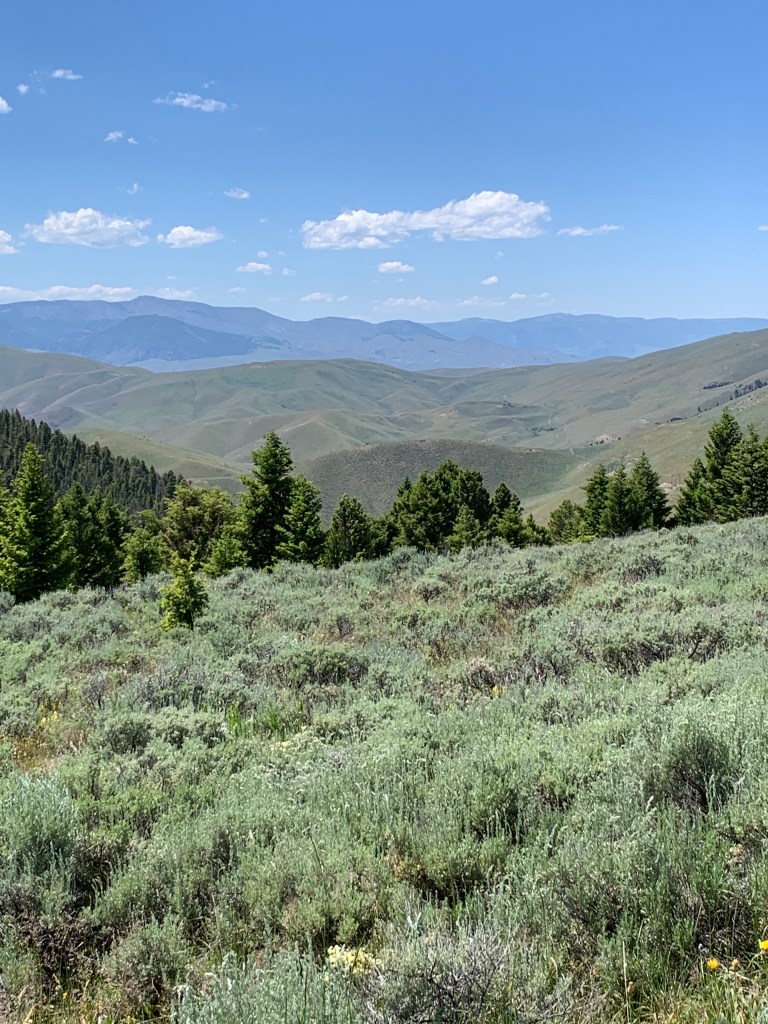
Upon reaching the Continental Divide at this spot, Captain Lewis peered over the horizon to his west, hoping to see a gently sloping valley leading to the waters of the Columbia River and then the Pacific. Instead, he saw range after range of mountains. The rest of the journey would be difficult.
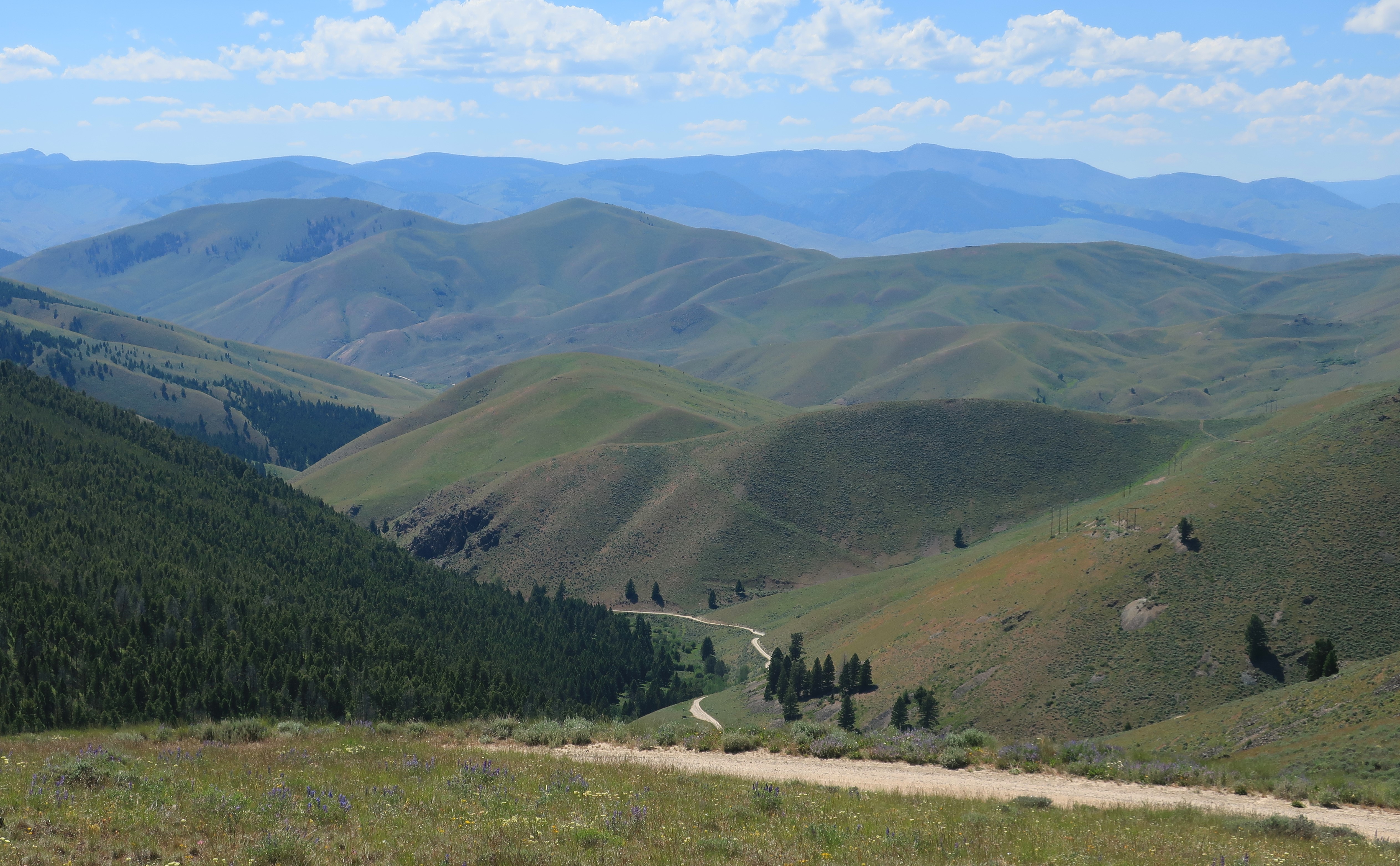
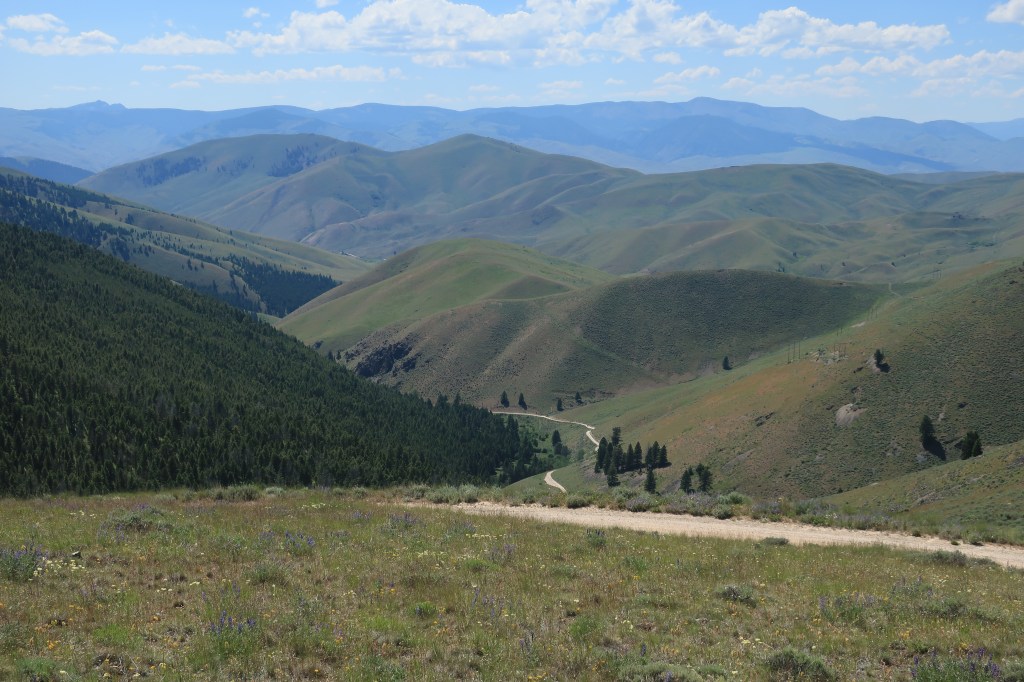
The view to the west from the summit of Lemhi Pass, looking into the Idaho wilderness.
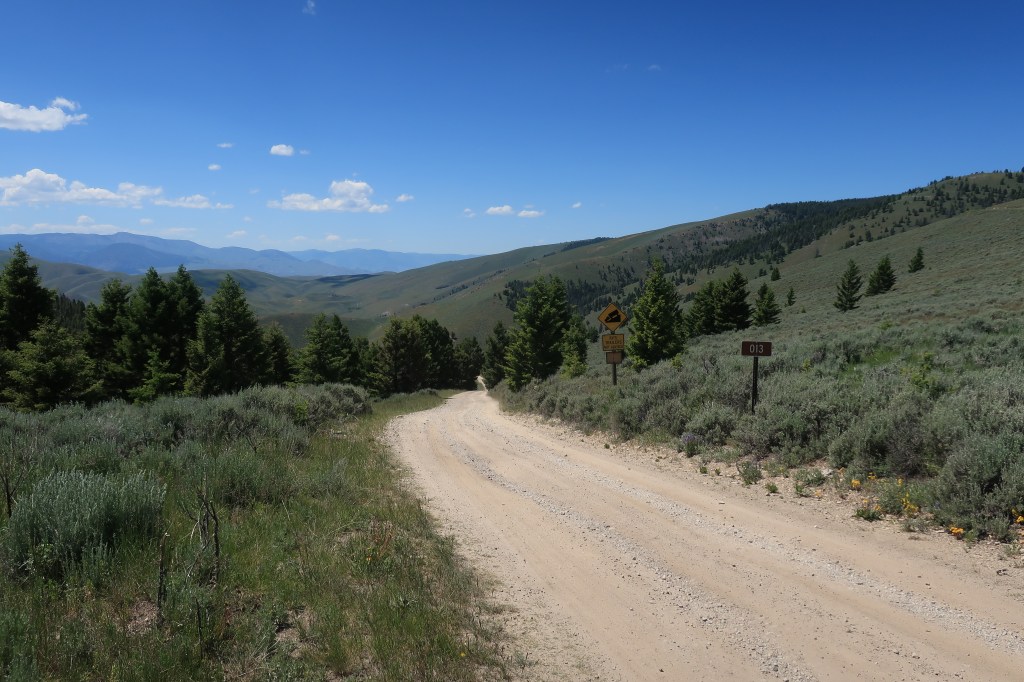
This dirt road leads steeply down the western side of Lemhi Pass into Lemhi County, Idaho.
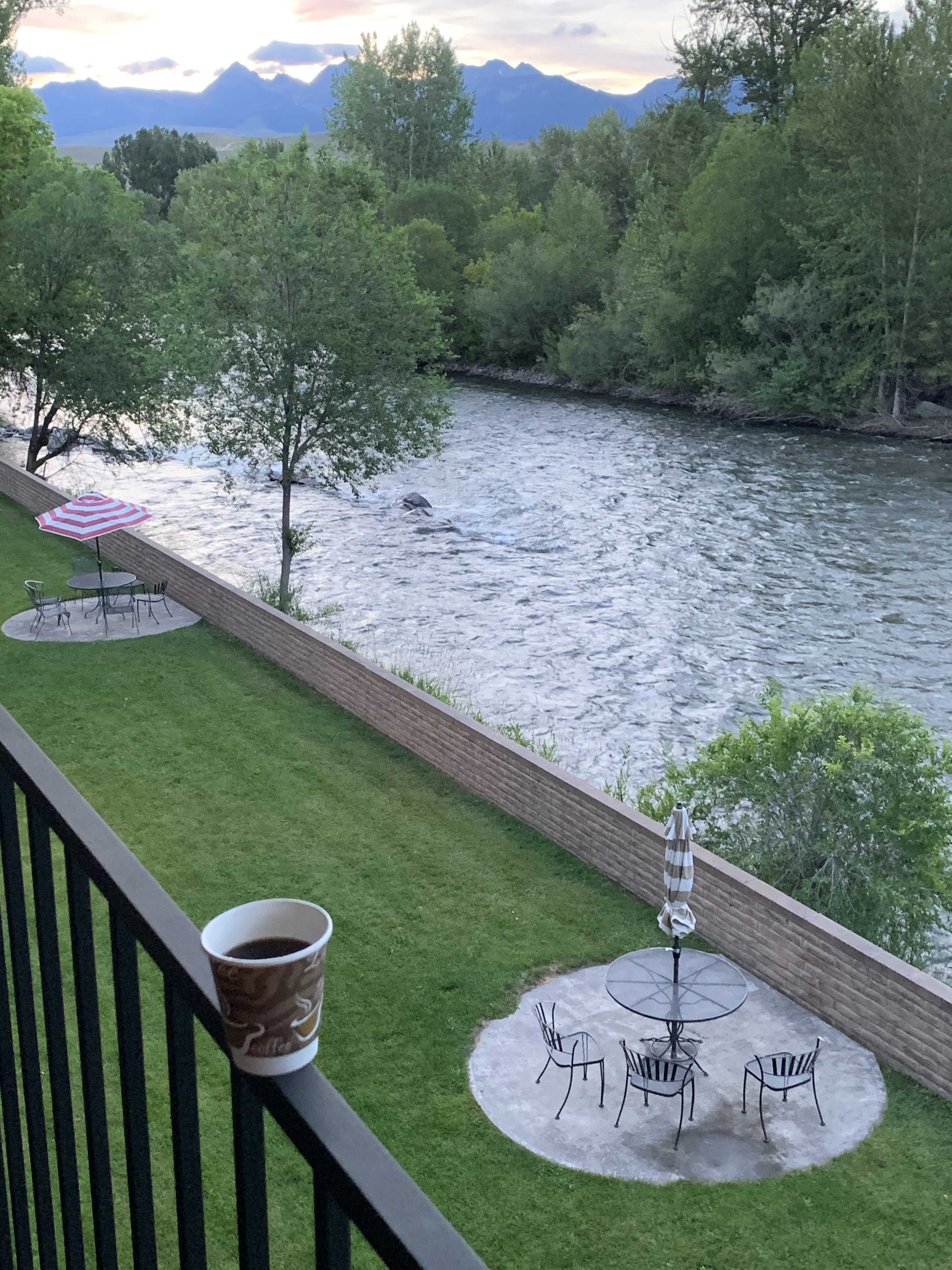
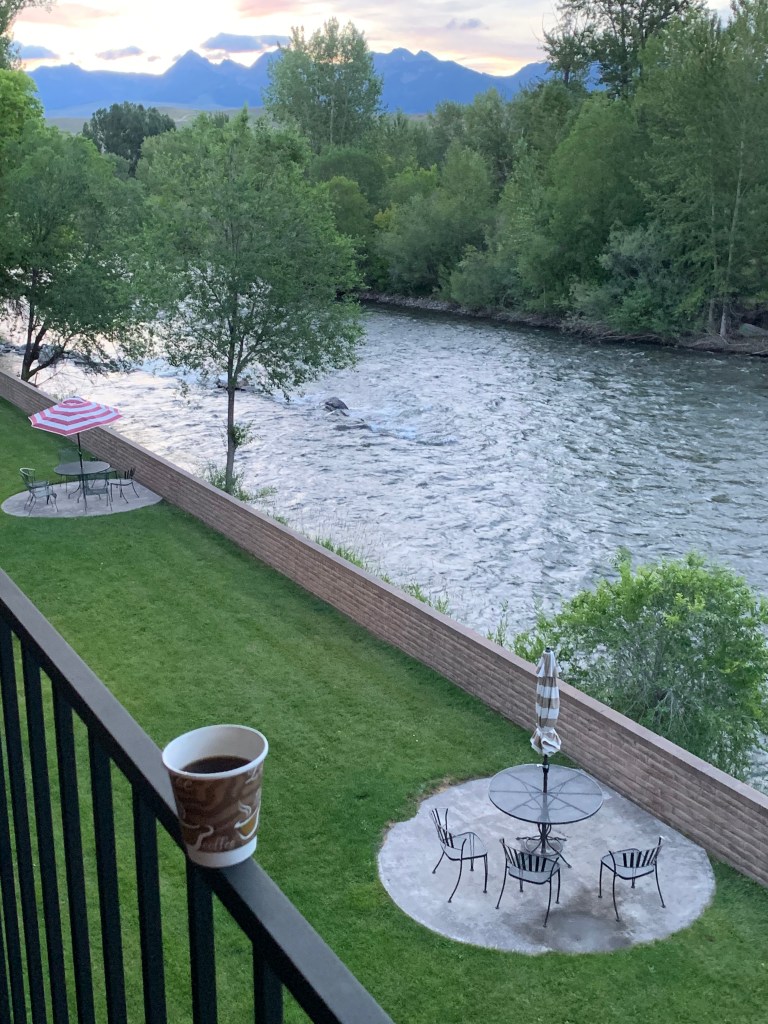
Unlike the hardships encountered by the famous explorers, I spent that night in comfort at a hotel along the Salmon River and enjoyed coffee from my hotel balcony the next morning.
Morning coffee along the Salmon River at the StageCoach Inn in Salmon, Idaho.
It was a much rougher experience for Lewis and Clark after crossing Lemhi Pass and reaching the Salmon River. The explorers cut down trees and built canoes here, hoping to float down the river to reach the Columbia River. However, they found the Salmon River downstream of this point entirely unsuitable for canoe travel, and the party was forced to cross the mountains at another point, following the lead of their Shoshone guides.
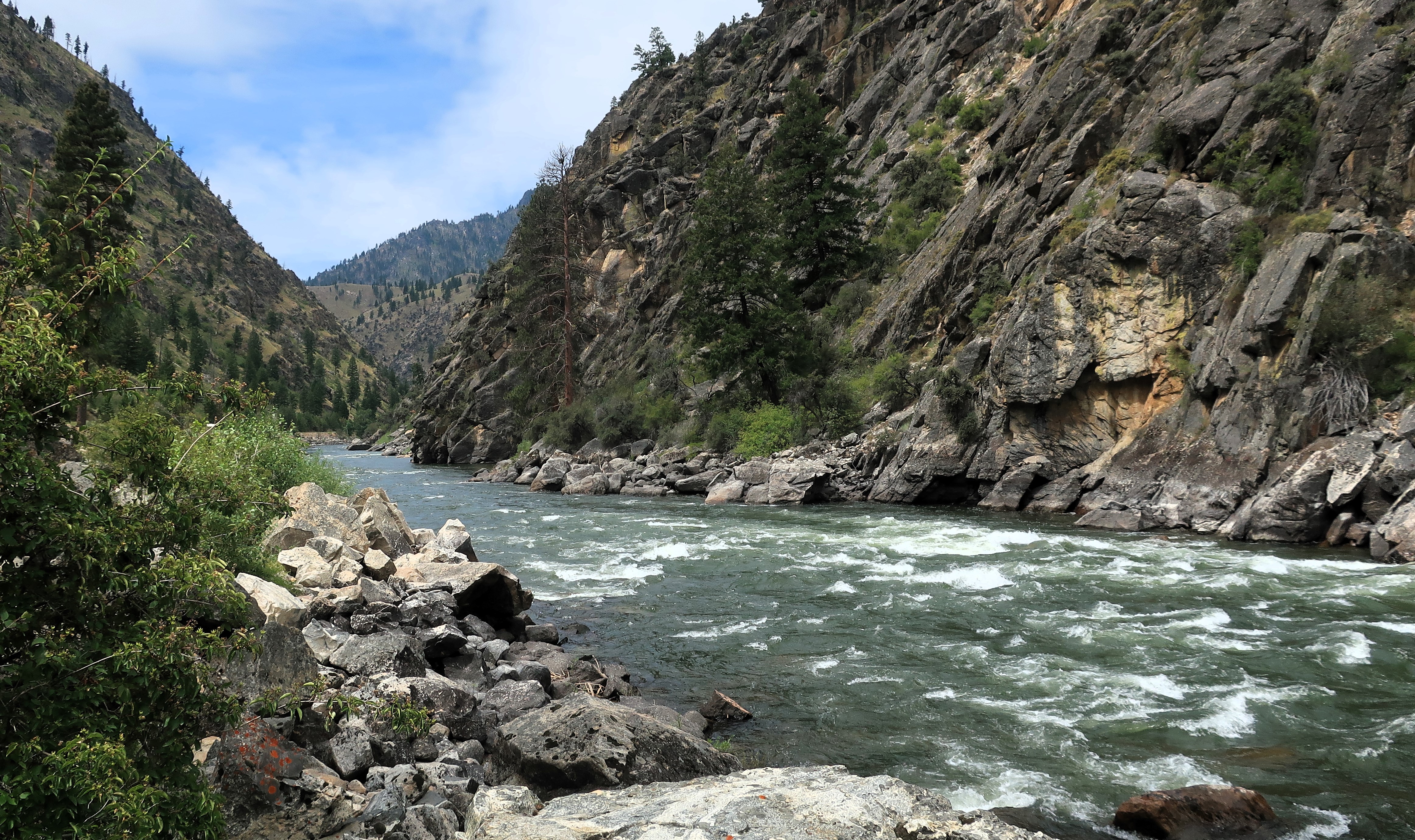
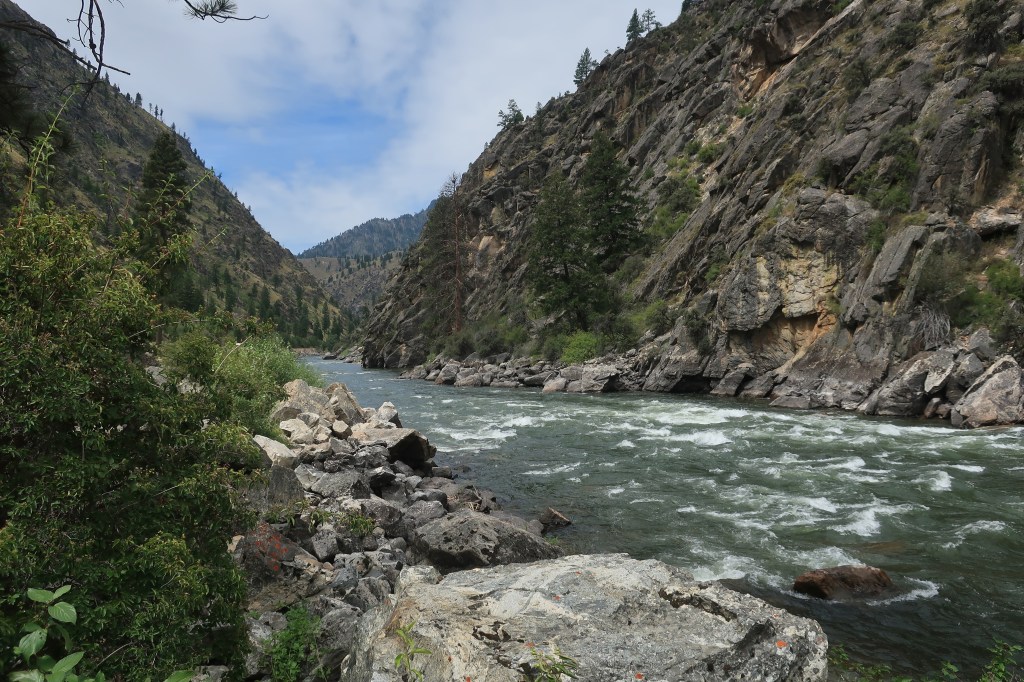
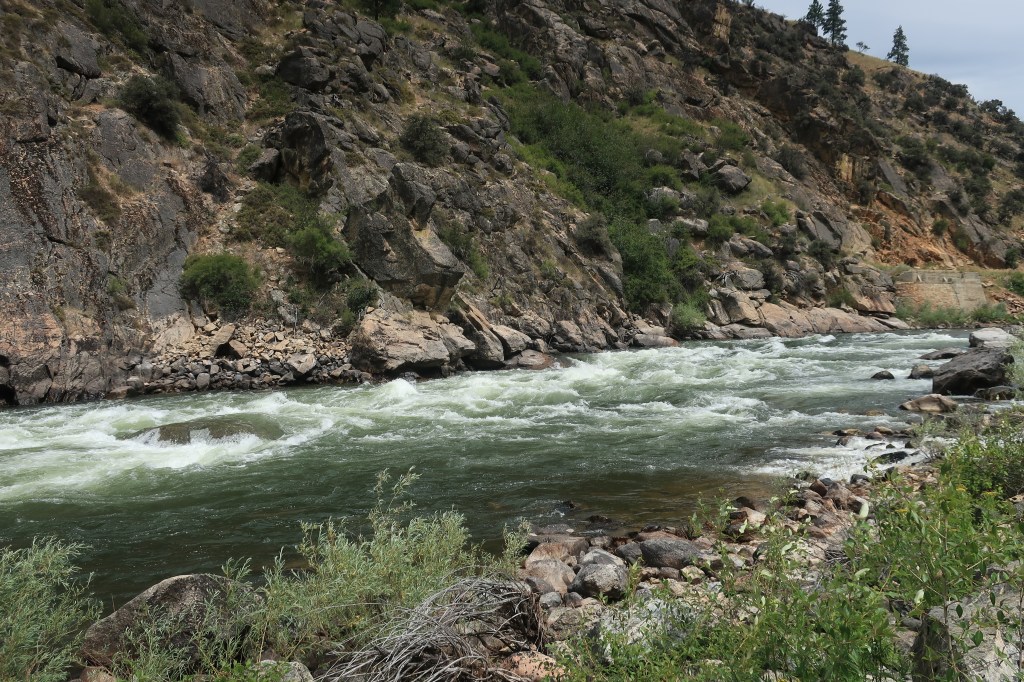
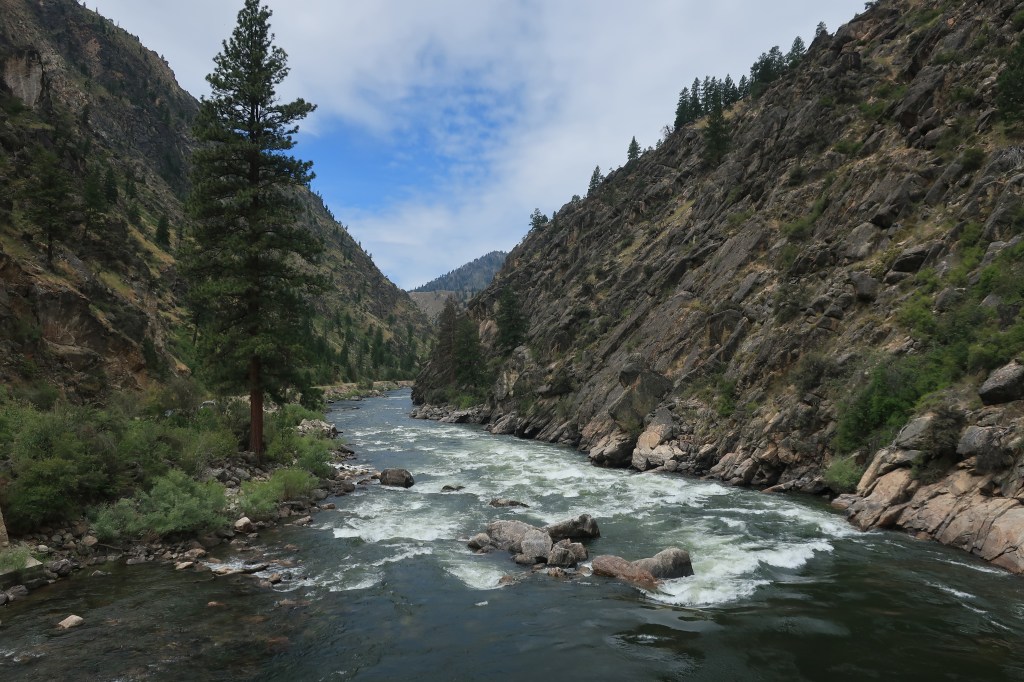
Rapids on the nearly impassable Salmon River below Salmon, Idaho.
In our century, the Salmon River is a magnet for kayakers and whitewater rafting enthusiasts. Although boats can navigate the rapids floating downstream, the waters are too rough for any motorized craft to return upstream. This is why the Salmon River is called the “River of No Return.” The lands drained by the Salmon River have been set aside by Congress as the “River of No Return Wilderness.”
A list of all photo posts from the American County Seats series in TimManBlog can be found here.
All photos were taken by the author on June 20, 2012, or July 11-13, 2020.
My lifetime hobby is traveling to all of America’s county courthouses, and each month I post about a visit to a scenic or interesting county seat. It’s a hobby, and donations are greatly appreciated to help cover my costs. Thanks, Tim
Donations to TimManBlog
Use this form to make donations to support this site. Paypal, Visa, Mastercard, Amex, and Discover cards are accepted. Donations can be made in increments of $5.00; increase the number of units to increase the donation amount.
Radio personality Todd Herman described the upcoming 2020 elections as a choice: “Chaos and Communism or Calm and Community.”
With a hat tip to Mr. Herman, I’ll borrow his phrase to describe what I saw on a little vacation road trip through Wyoming, Idaho, Montana, North Dakota, and South Dakota. Nothing but Calm and Community up there. Here’s my road trip chronicle — including breakfast photos! To drum up business for the deserving, I’ll throw in some links to some local businesses I patronized.
Nine Days Total. Enjoy!
Friday, July 10, 2020, Day 1 6-hour drive from Colorado up to Lander in central Wyoming, just northwest of historic South Pass. Lander is a smallish town (population 7,487) oriented towards tourists seeking outdoor recreation. Main Street boasts a brewery with live music on summer weekends and two ice cream stands.
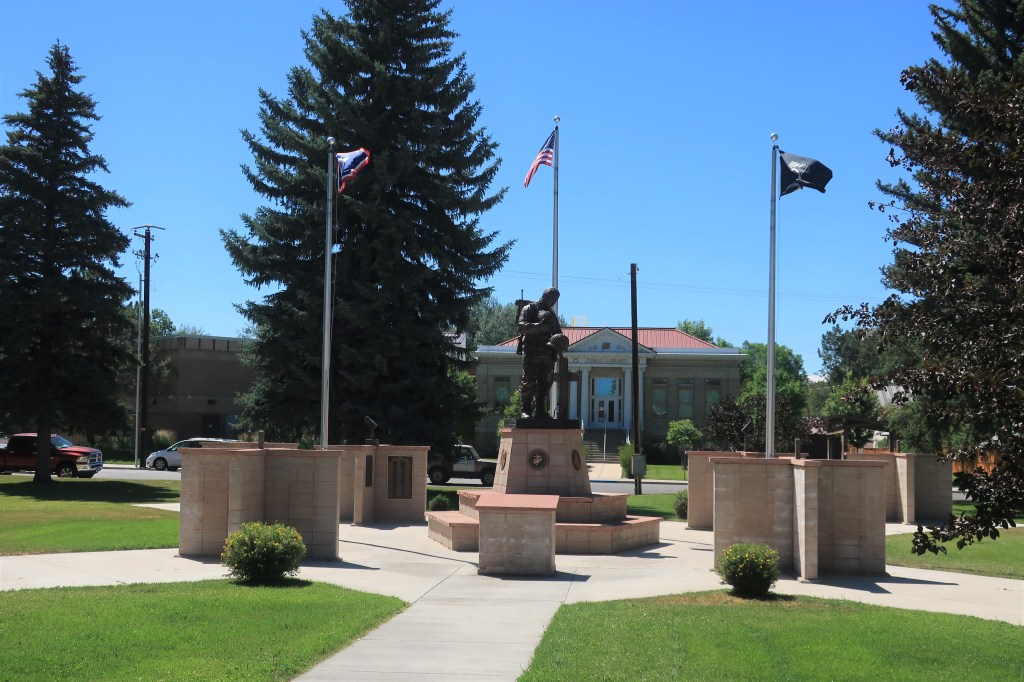
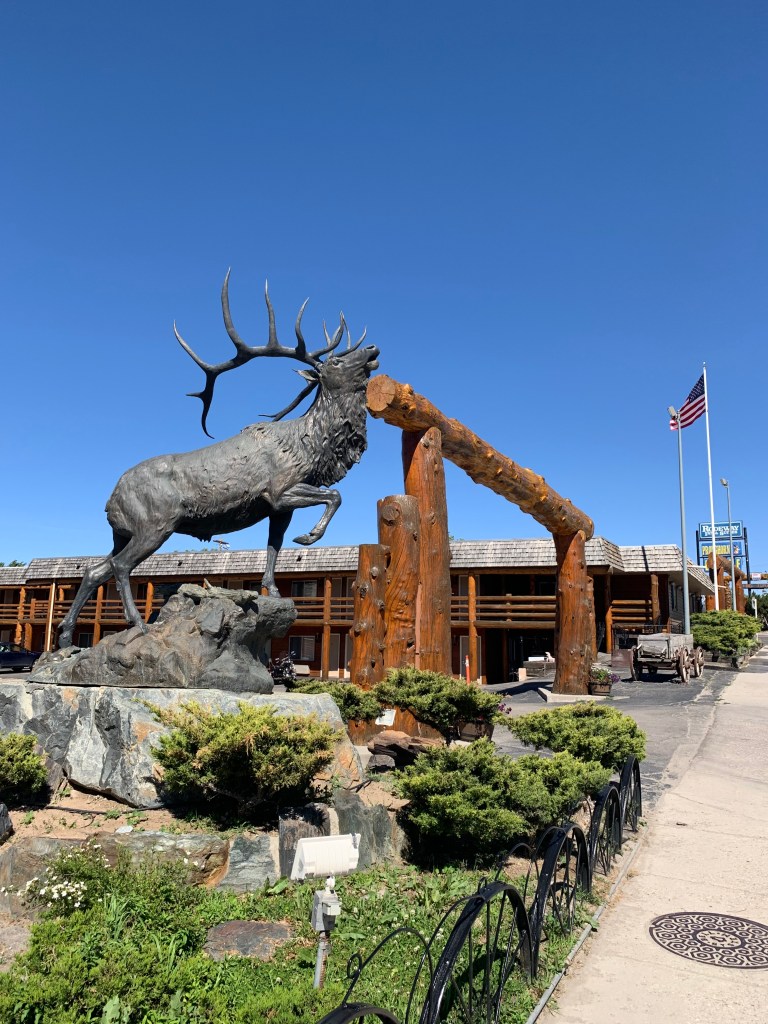
Veterans Memorial outside Fremont County Courthouse. Lander, WyomingElk statue in front of the Pronghorn Lodge in Lander, Wyoming
Saturday, July 11, 2020, Day 2 Up with the dawn (5 am) and out the door by 5:30 in time to catch McDonald’s opening hours for an Egg McMuffin breakfast to go.
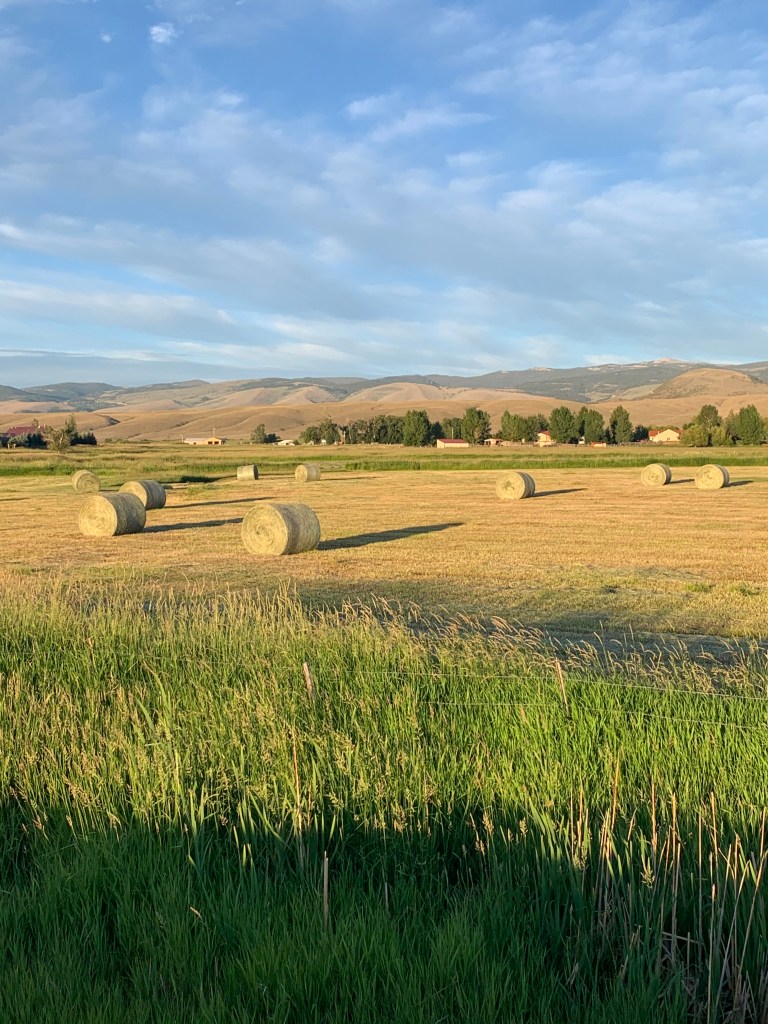
Just outside Lander along US 287, I caught some mid-summer hay fields in the early morning light. Those are the Wind River Mountains in the background.
Like something out of Van Gogh, hayfields in Wyoming’s Wind River Valley
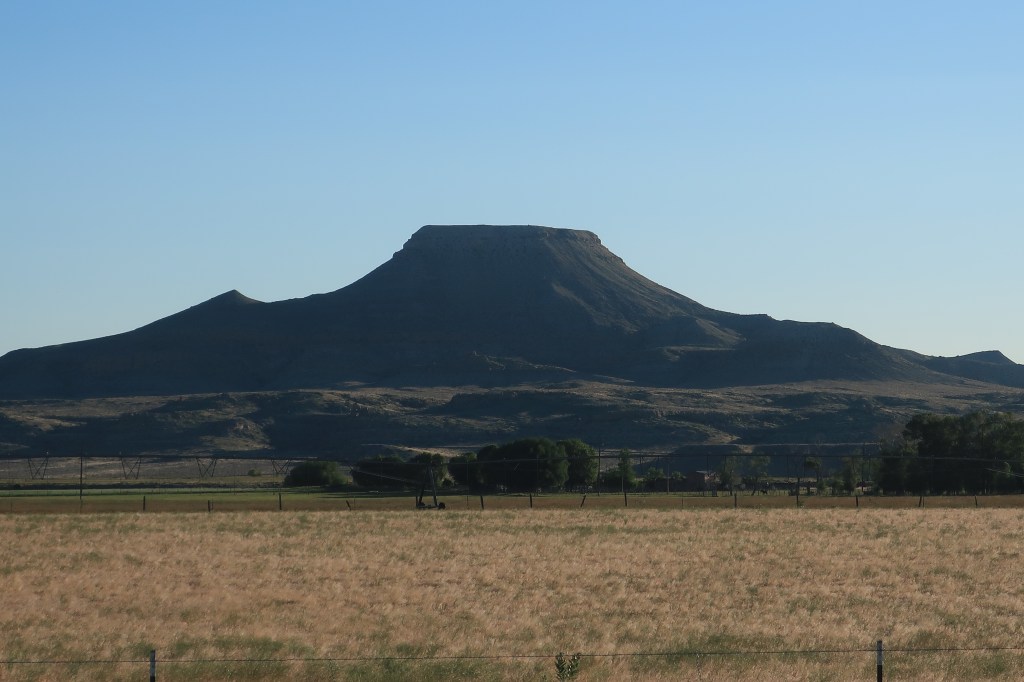
As the combined routes US 287 and US 26 head northwest towards the continental divide at Togwatee Pass, the human stories of this land become as dramatic and colorful as the scenery surrounding it. I pass Crowheart Butte — named for the grisly outcome of a long-ago battle over hunting grounds between the Shoshone and Crow tribes.
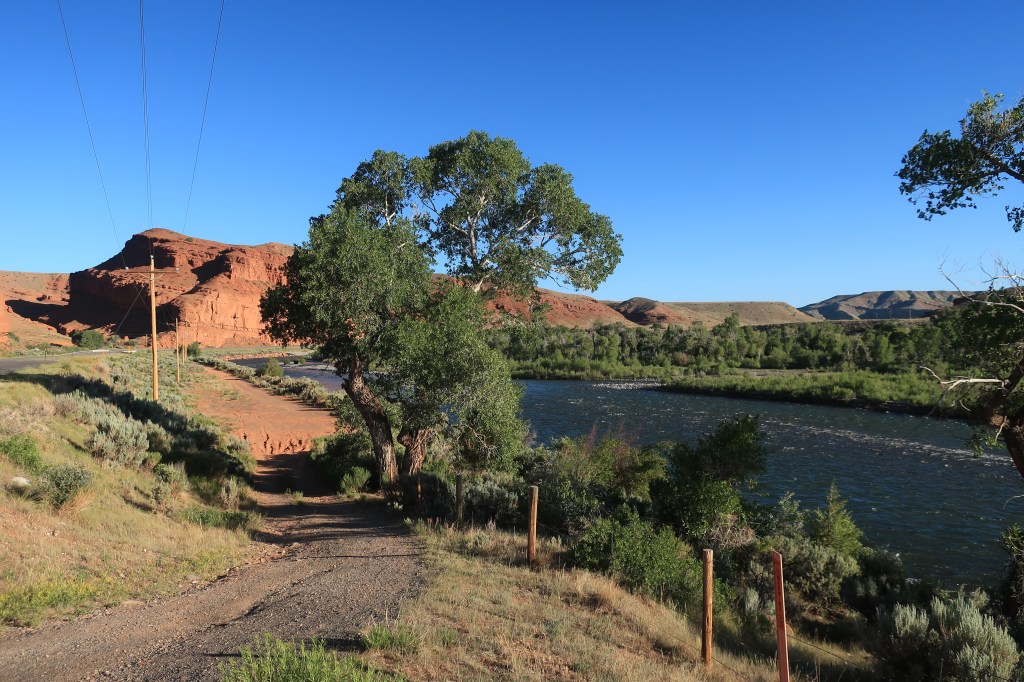
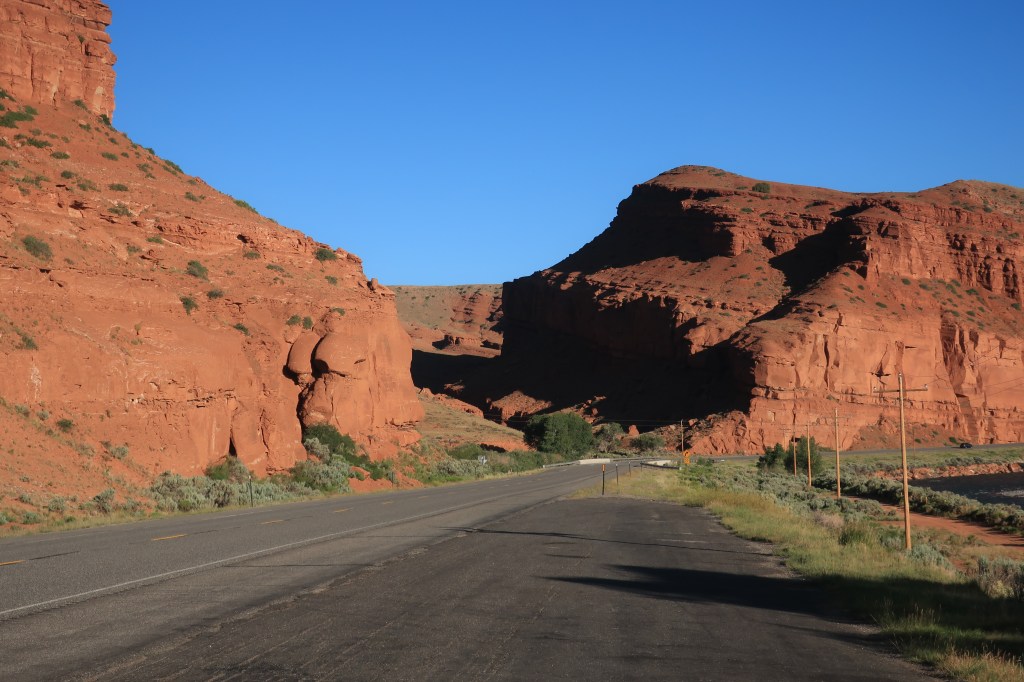
At a turnout a few miles up the road, the scenery gets even more colorful where Wind River breaks through a red rock canyon.
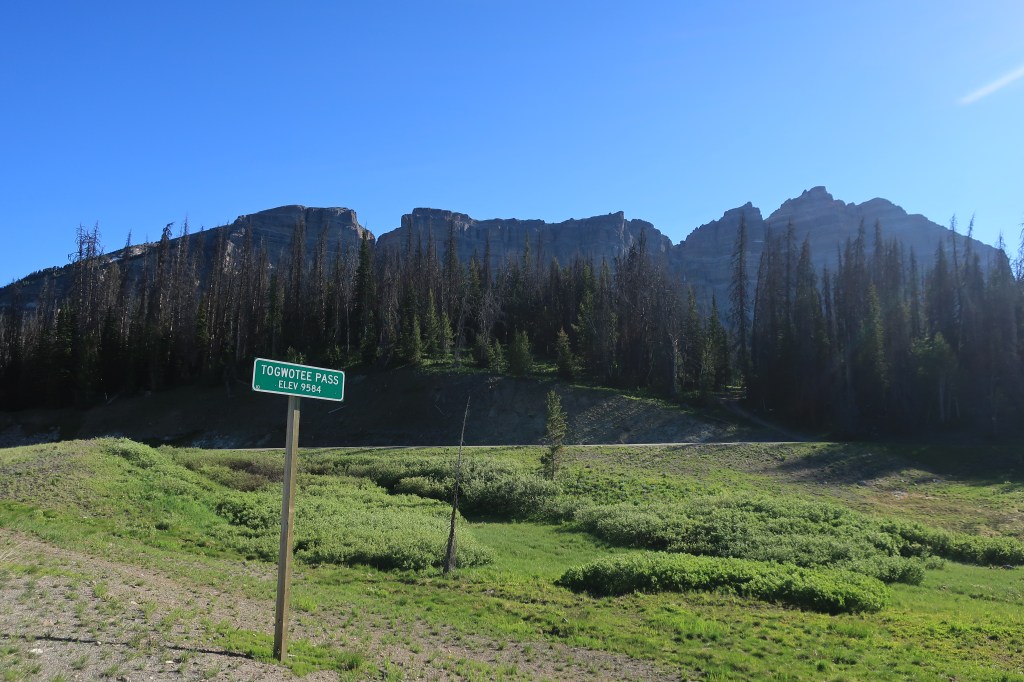
Highways 26/287 continue past the mountain town of Dubois, Wyoming, and on toward the Continental Divide. The road reaches the divide at Togwatee Pass.
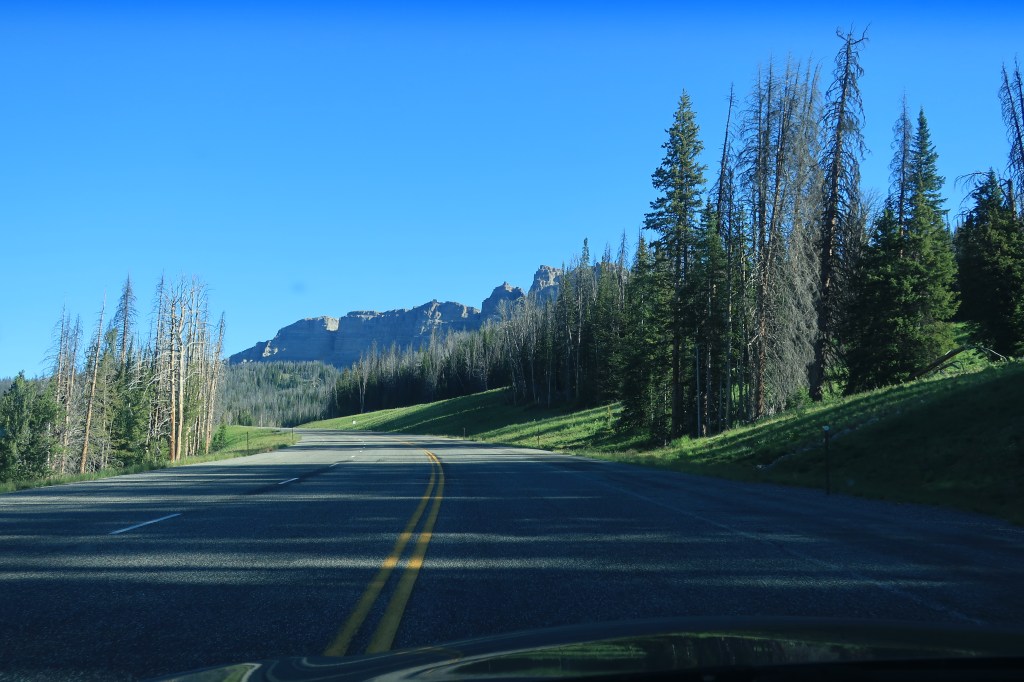
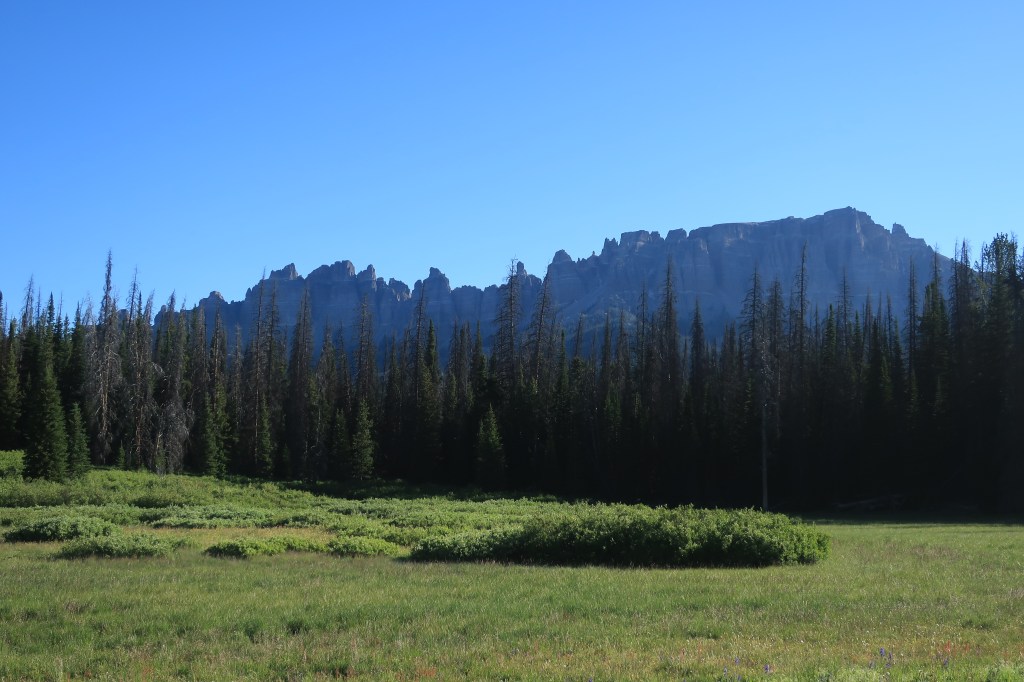
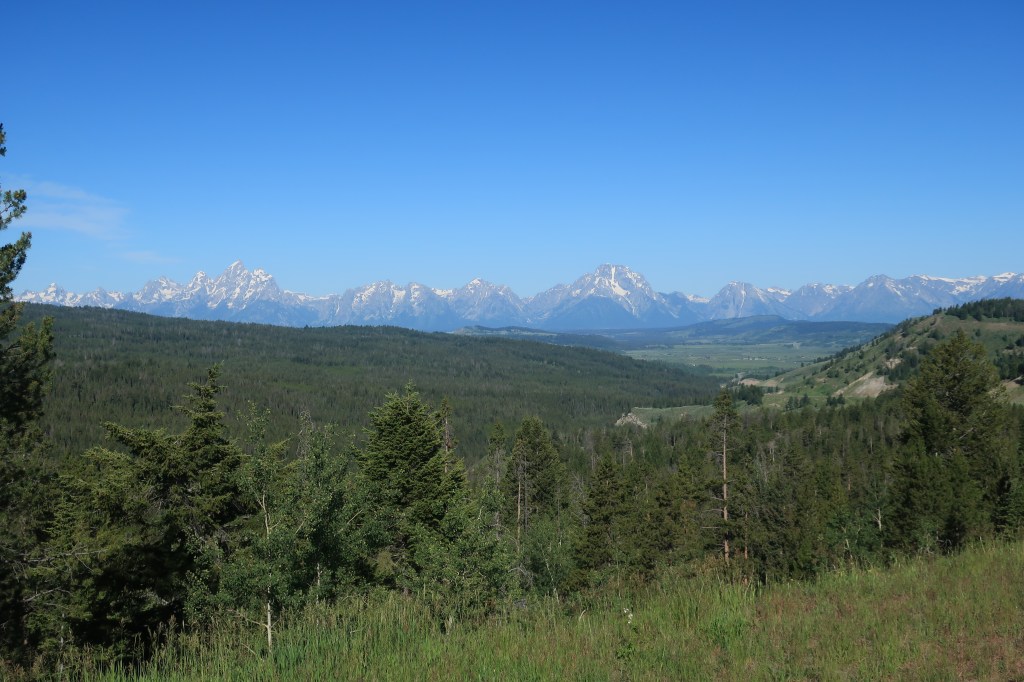
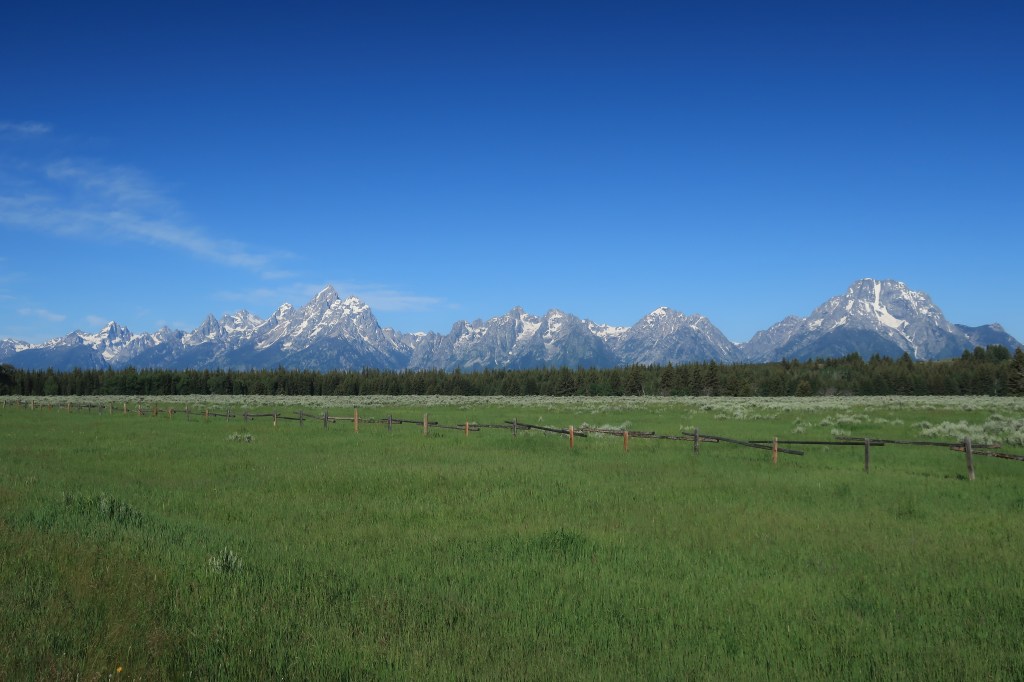
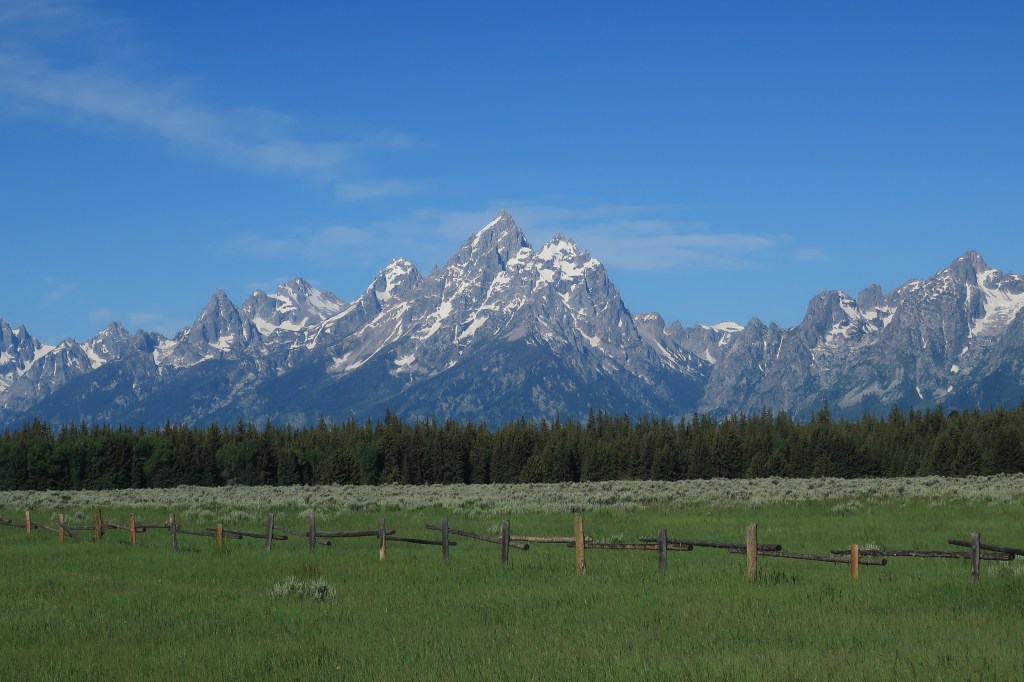
On the western side of the pass, the peaks of the Grand Tetons come into view, getting larger in the windshield as the miles went by.
For the next 4 hours I drive west through Idaho farming country, stopping only for a Jack-in-the-Box burger in the industrious town of Rexburg, Idaho and at a gas station in Dell, Montana along Interstate 15.
Lemhi Pass, where Lewis & Clark crossed the Continental Divide on their way across the continent to the Pacific.
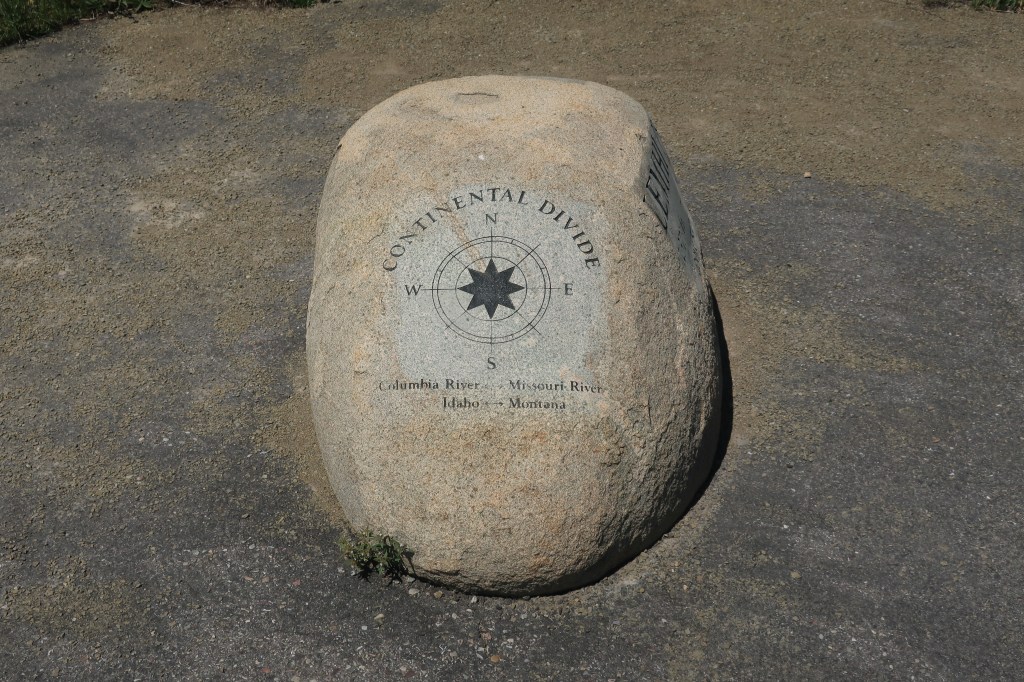
Lemhi Pass, looking westward into IdahoLemhi Pass looking eastward back into MontanaHistorical sign explaining the crossing of the Continental Divide by Lewis & Clark at Lemhi PassContinental DivideLemhi Pass looking west. I posted this on Facebook along with the caption below:
Looking west from the summit of Lemhi Pass. On August 12, 1805, Captain Meriwether Lewis finally reached the Continental Divide at this place. Lewis viewed the same aspect as in the attached photo — mountain ranges as far as the eye can see — and realized that there was no Northwest water passage along this route. Today, July 11, 2020, from the very spot where Meriwether Lewis stood in 1805, I dictate my words into an i-phone, take a photo with that same phone, and post both the words and the picture for the entire world to see — instantly.
The ‘High point’ of the journeyThe steep road down the western side of Lemhi Pass
Sunday, July 12, 2020, Day 3 Sunday was a day of rest, mostly, except for a drive along the rapids of the Salmon River.
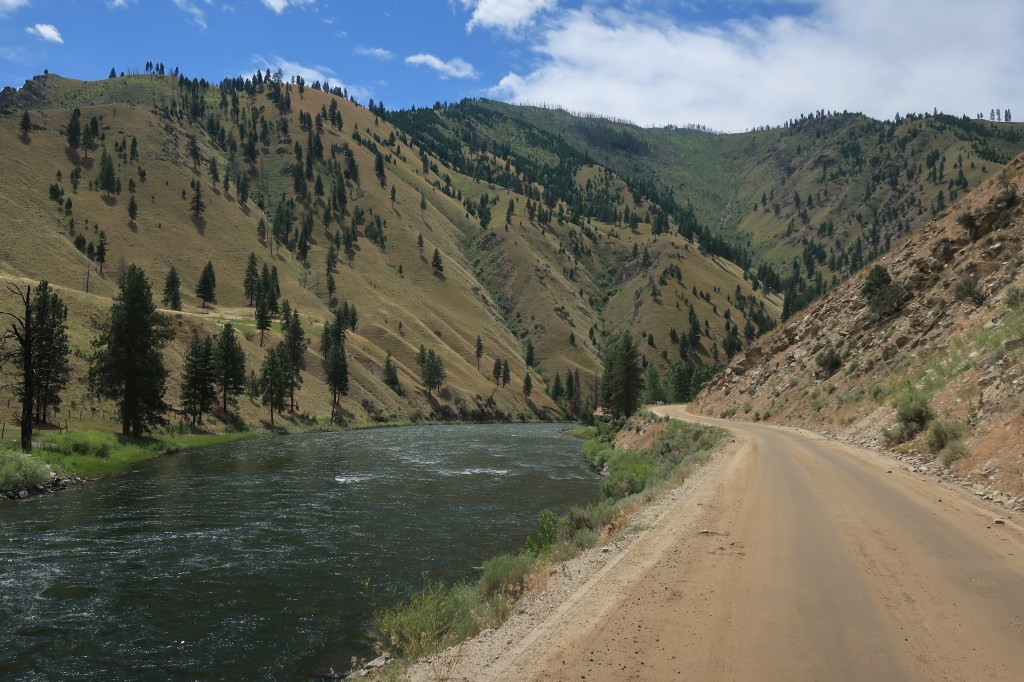
Salmon River, downstream of North Fork, Idaho
After crossing the Continental Divide at Lemhi Pass, Lewis and Clark figured they would make dugout canoes from the local timber and just float their way downstream until they reached the Columbia River and the Pacific Ocean. Captain William Clark, a master boatsman, reconnoitered the Salmon River on horseback for some 20 miles below current day North Fork, Idaho. Seeing the river’s extreme rapids and rocky banks, it was near this exact point that Lewis and Clark gave up on the water route down the Salmon.
Salmon River near where Captain Clark turned back.
The Salmon River rollicks through these mountains for hundreds of miles and is, in fact, far too dangerous for travel by dugout canoes. These days, however, scientifically designed inflatable rafts take whitewater rafters downriver all the time — young and old, human and sometimes canine, with oars and usually beers in hand.
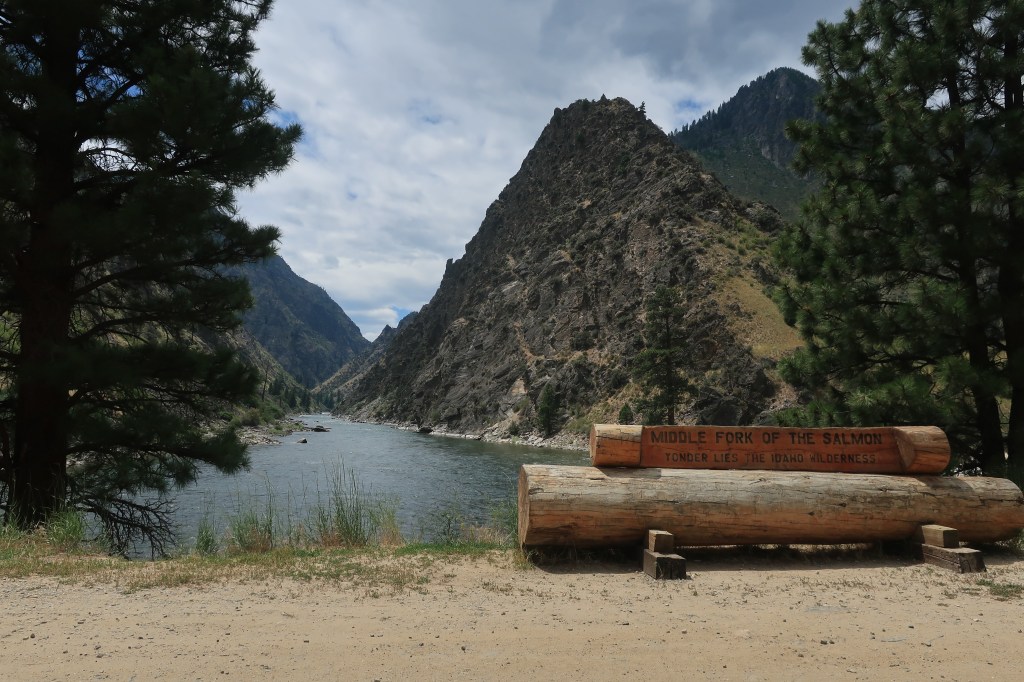
The dirt road along the banks of the Salmon ends just below the point where the Middle Fork of the Salmon joins the main branch. Beyond this lies the River of No Return Wilderness, perhaps the most remote area in the continental United States.
The carving on the log reads: Middle Fork of the Salmon — Yonder lies the Idaho Wilderness
Monday, July 13, 2020, Day 4 Salmon, Idaho has beautiful mornings:
From the hotel room balcony. Salmon River foreground, Beaverhead Mountains background.
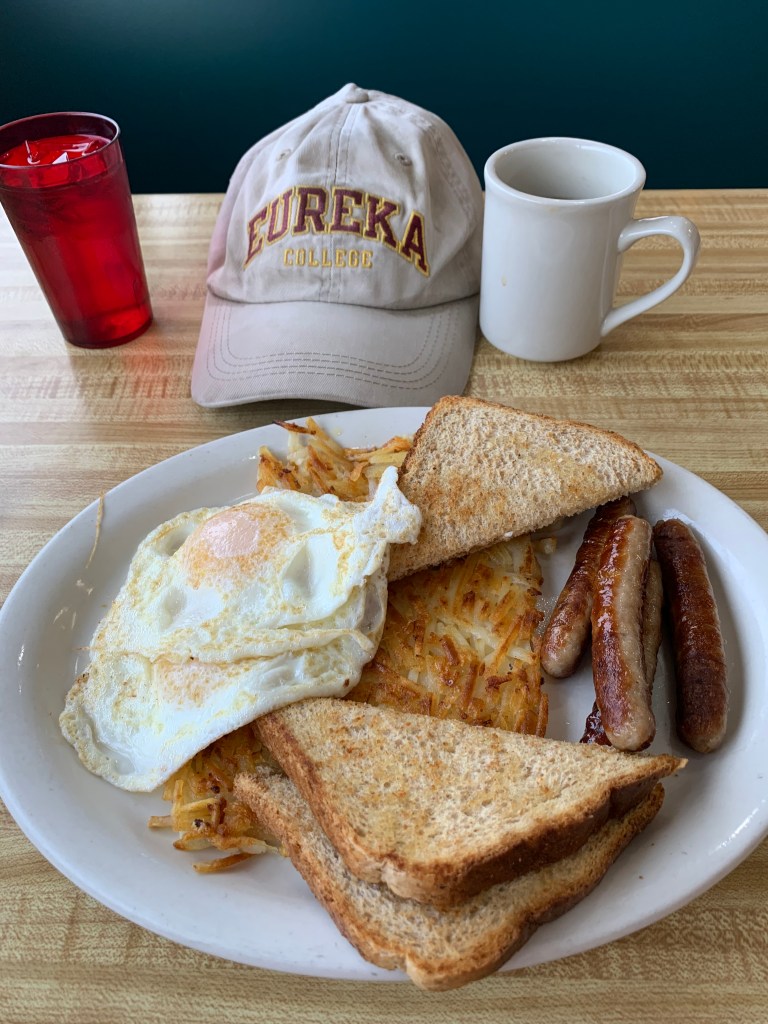
Breakfast at the Red Dog Diner on Main Street, which is actually part of a gas station. Aren’t all the best bbq places located in gas stations, like Joe’s in Kansas City? In this gas station, you get breakfast and can listen to the local old men talk politics.
Red Dog Diner. Salmon, Idaho
Here’s a look around the calm community of Salmon, Idaho, population 3,112 and county seat of Lemhi County:
Main Street. Salmon IdahoLemhi County CourthouseSalmon River
Back in the car by mid-morning. I’m heading north to Missoula, Montana the east to Helena.
Stickering the Montana sign has become a popular pastime for bicyclists and hikers.
Following Lewis & Clark’s route (for a while) north into Montana’s secret Bitterroot Valley. Huckleberries grow here and I had to include them in my lunch in Hamilton, Montana (population 4,348 and growing fast).
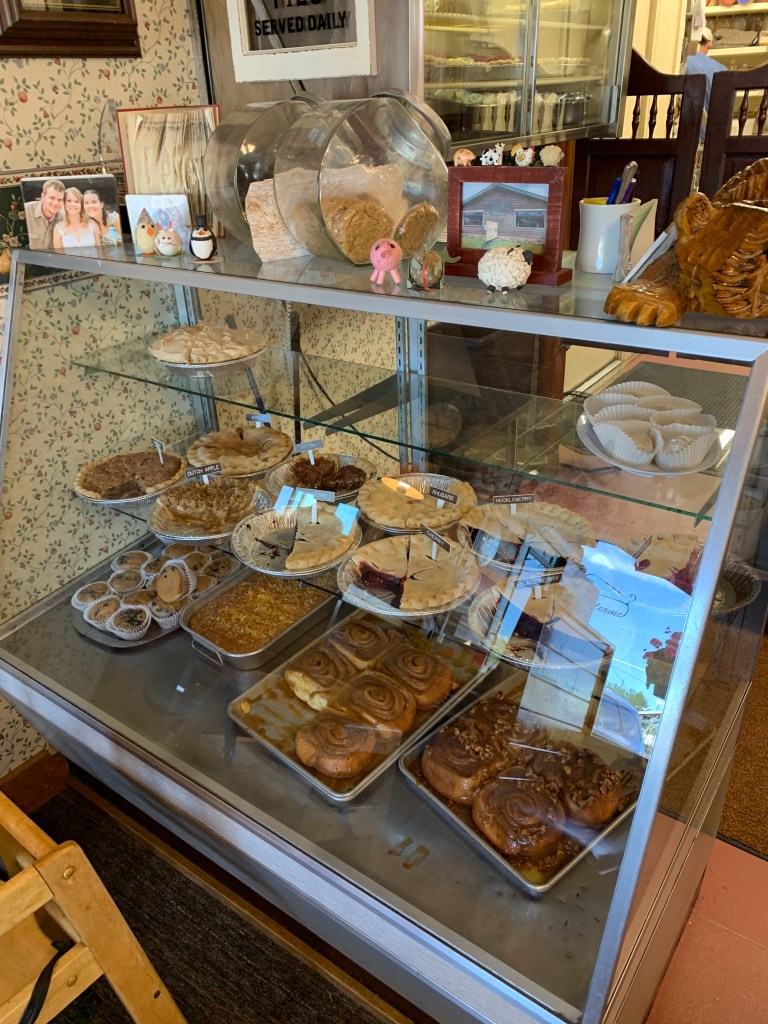
Lunch at the Coffee Cup Cafe in Hamilton, Montana. Huckleberry pie included.Pie and Pastry displayCalm and Community at the Coffee shop
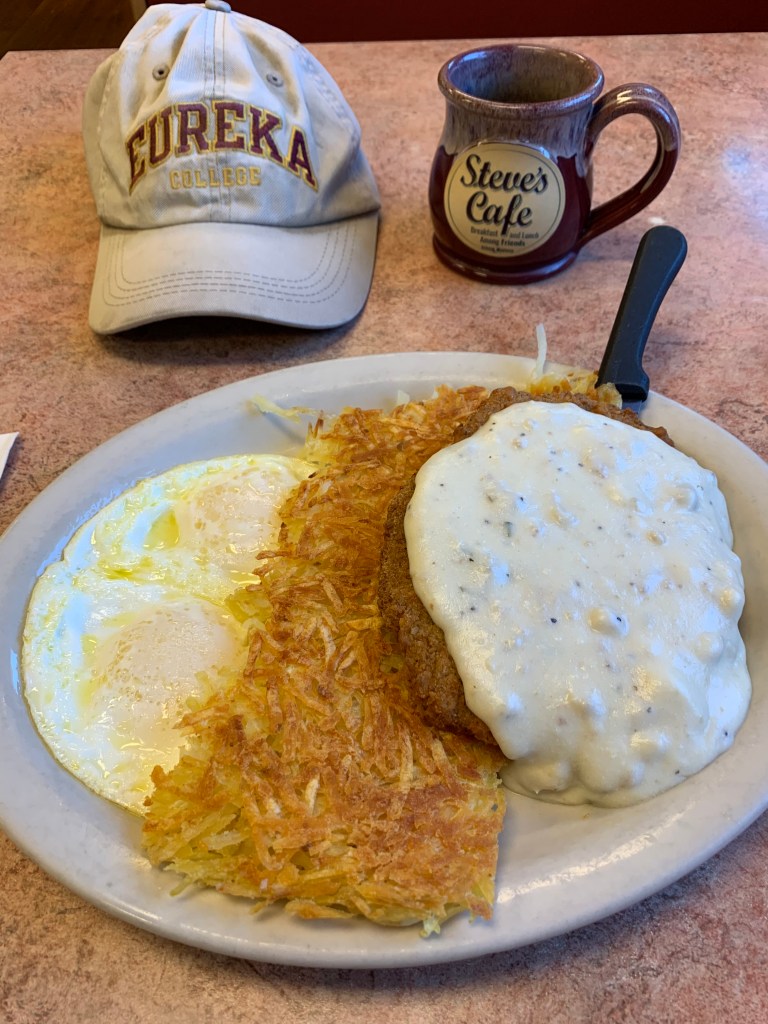
Tuesday, July 14, 2020, Day 5 Breakfast at Steve’s Cafe in Helena!
Chicken Fried Steak with hashbrowns. Eggs over easy.
Link: Steve’s Cafe, open for breakfast and lunch among friends. Click the link — just looking at the photo will make you hungry.
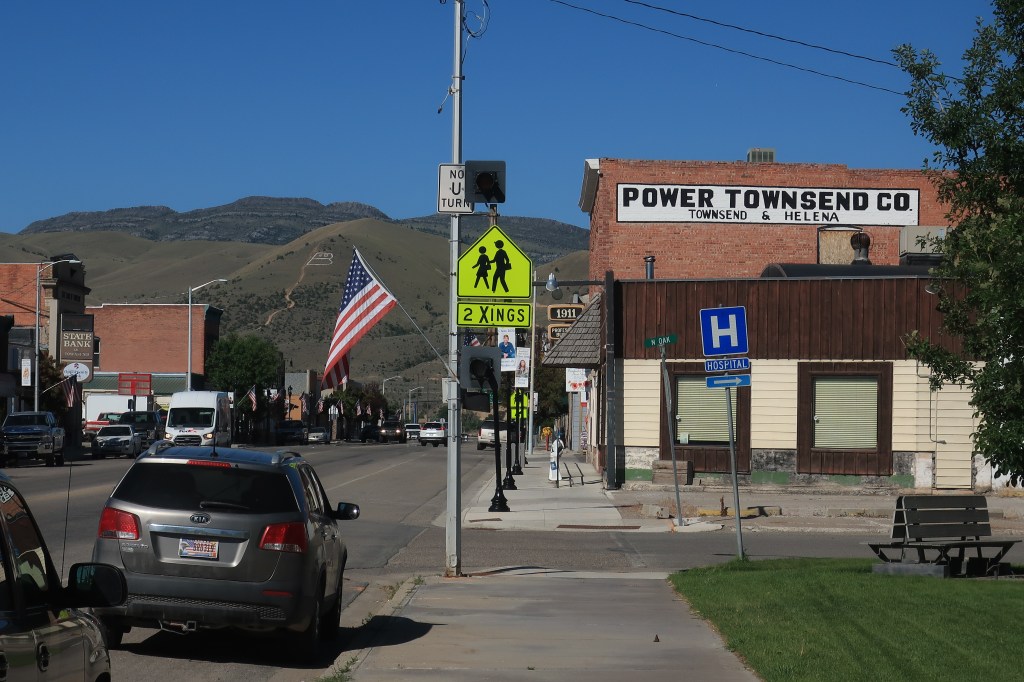
Today I’m off across the Montana plains to see some small towns and courthouses. First stop, Townsend (population 1,878).
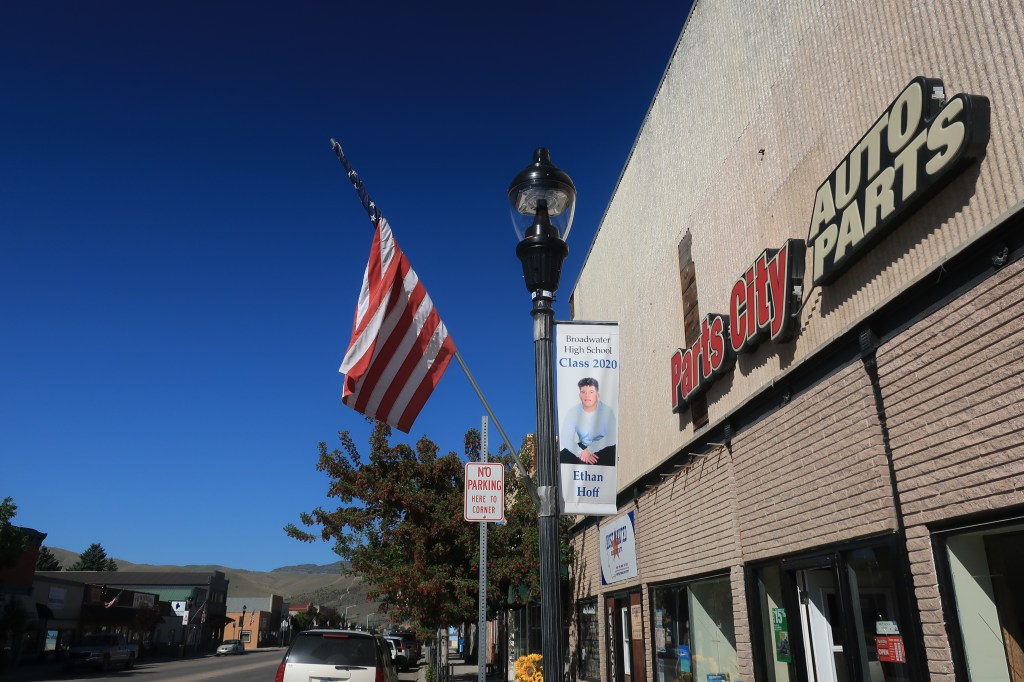
Broadway Street Townsend, MontanaPhotos of seniors from the Class of 2020 have been placed up and down Main Street.
The practice of putting photos of graduating seniors on town light poles will become a theme among Montana towns I visit today.
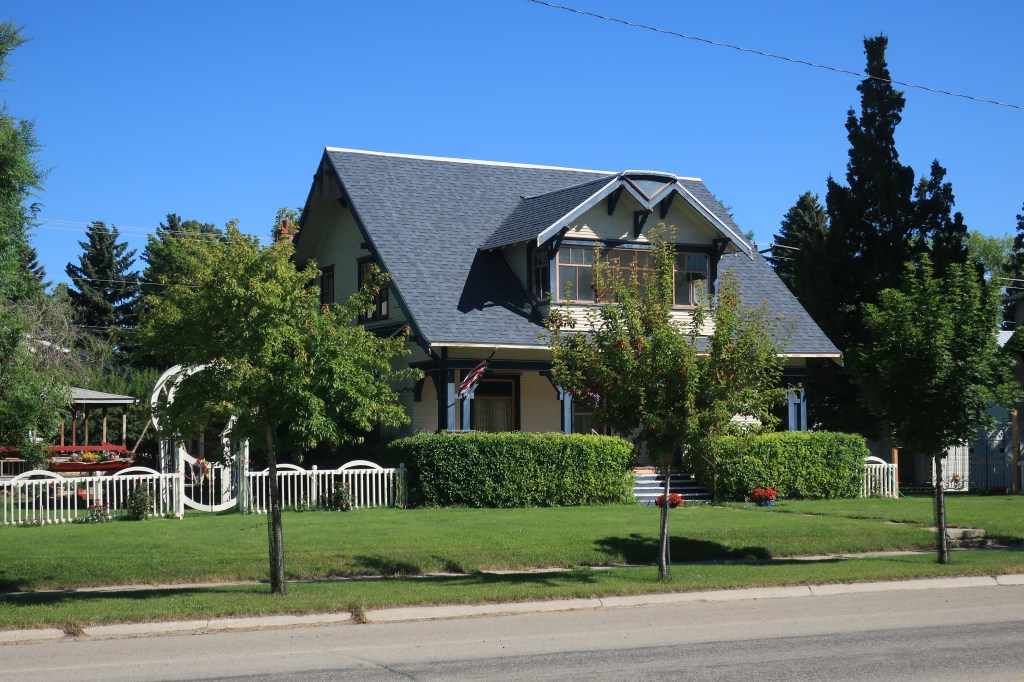
Missouri River Trading Post, Antique store.A bungalow on Broadway, Townsend, converted to professional offices.
On down the road, through some hills and ranches to White Sulphur Springs, Montana (population 939).
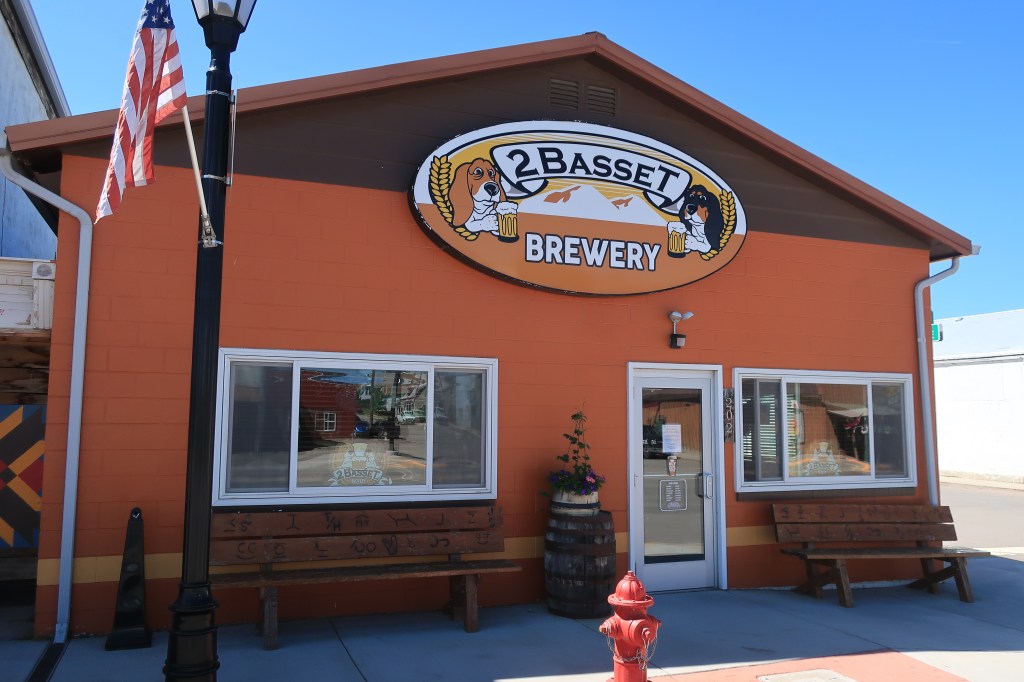
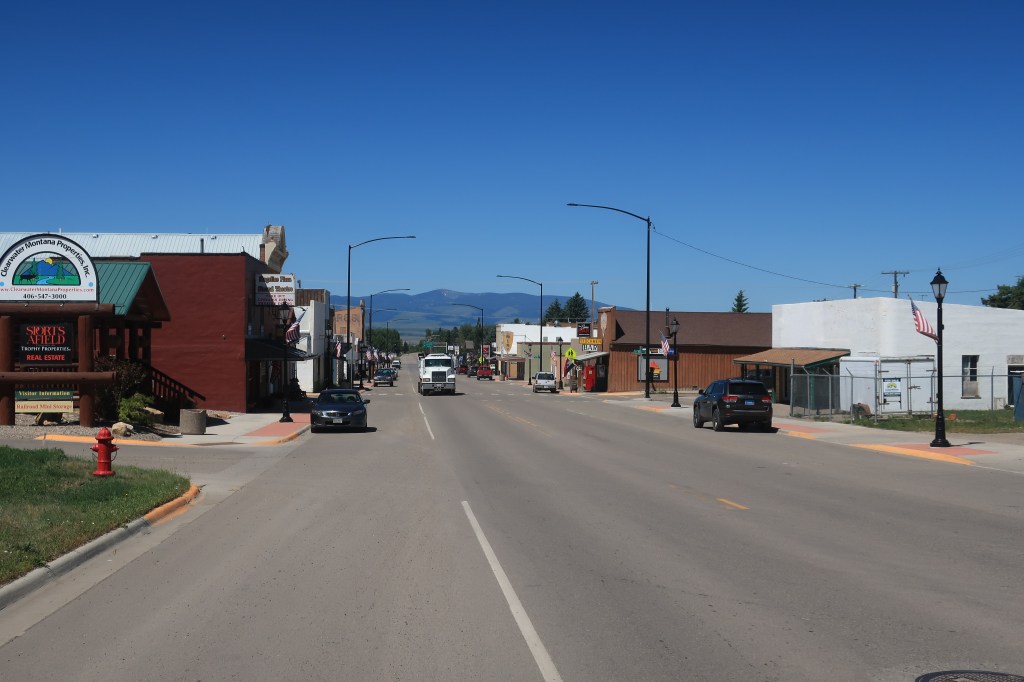
2 Basset Brewery White Sulphur SpringsMain Street White Sulphur SpringsInside the Meagher County Courthouse
Next stop: Harlowton, Montana (population 997)
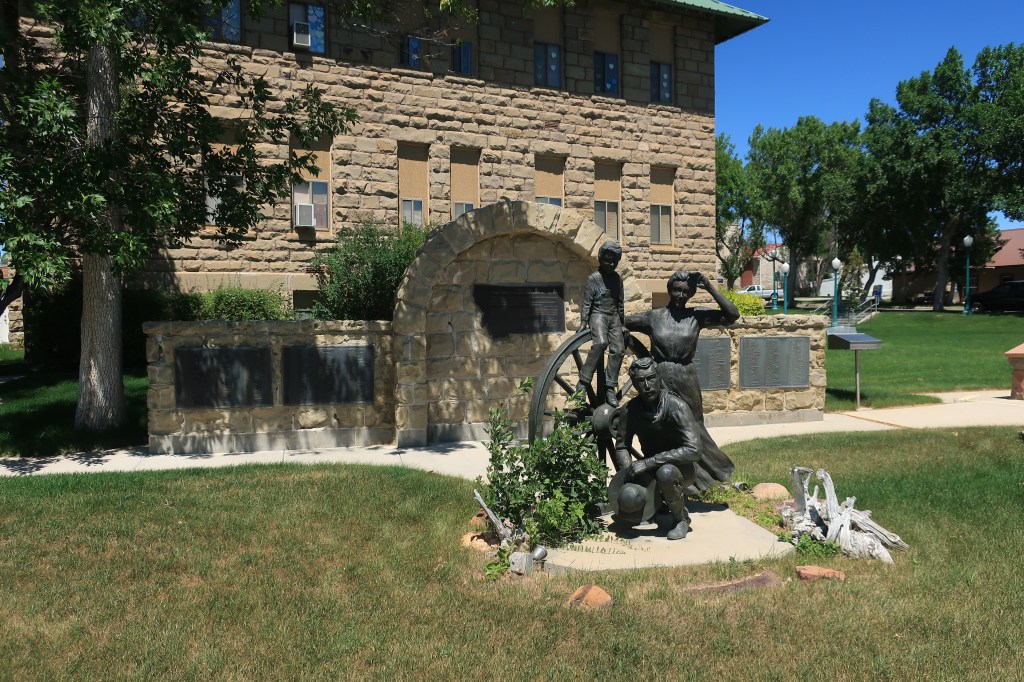
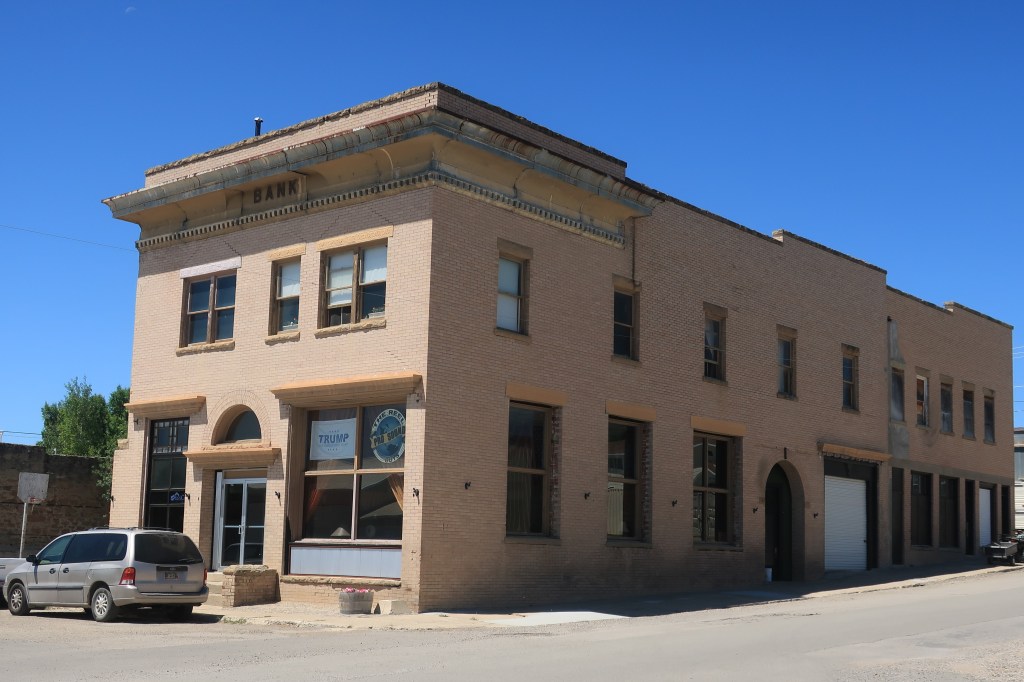
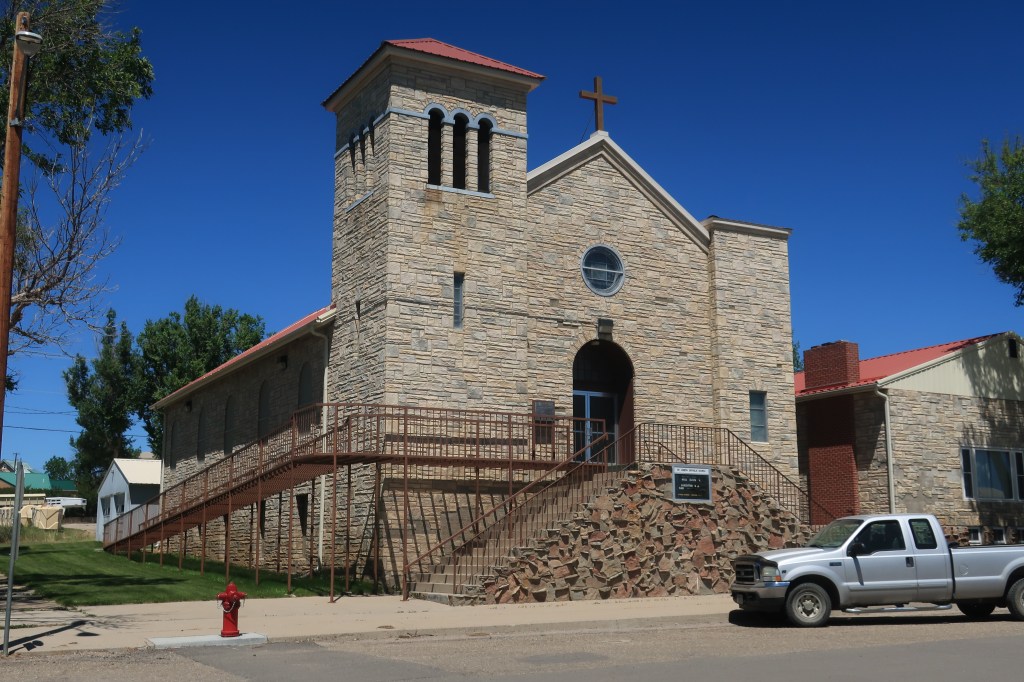
Statue at the Wheatland County Courthouse, Harlowton, MontanaOld bank building, Harlowton St. Joseph Church, HarlowtonThe old Graves Hotel, Harlowton, Montana
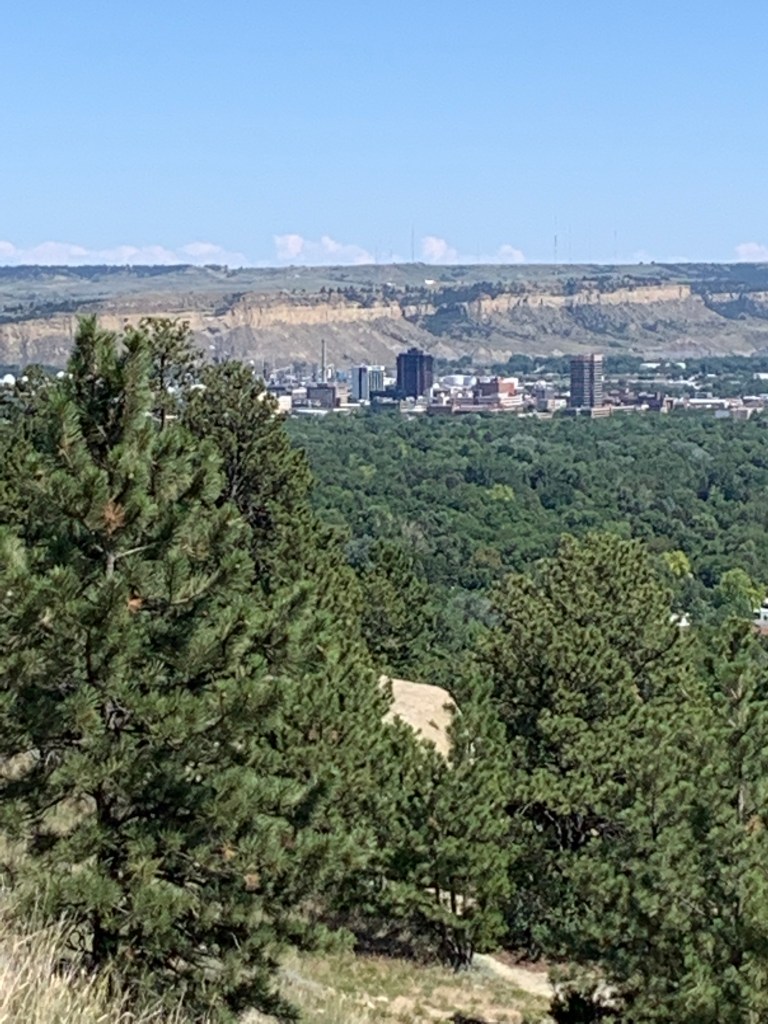
Late in the afternoon, I arrived in Billings, Montana (population 109,577). I took some photos from the ridge above the city.
Billings, Montana from the airport area
I’ve enjoyed each of my many visits to Billings. Billings has a surprisingly vibrant downtown with a good choice of hotels, restaurants, steakhouses, brewpubs, and Montana casinos. A few short blocks away, old-town Billings has its own group of bars and restaurants clustered around the old train station.
Links: most convenient yet affordable lodging in downtown Billings: The Clocktower Fanciest restaurant in Billings ($30-50 per person): Walkers Grill. See and be seen at the bar, if you’re into that.
Breakfast is free with a night’s stay at the Clocktower. Opens early at 5:30. Dare yourself to walk out of this place without one of their giant cinnamon rolls.
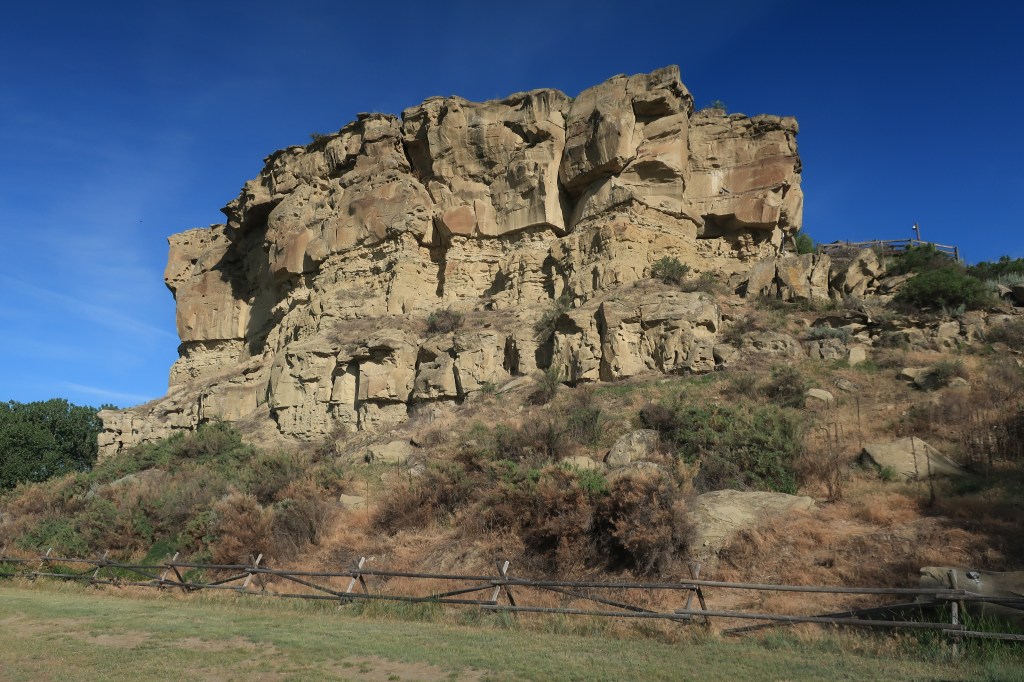
Pompey’s Pillar:
Pompey’s Pillar
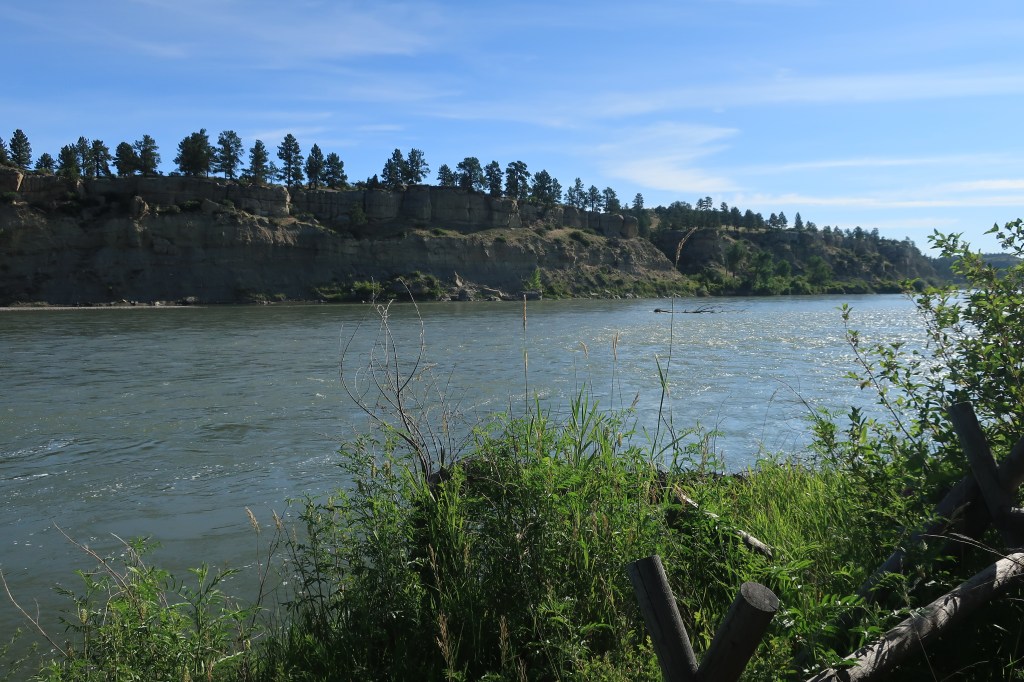
Pompey’s Pillar National Historic site lies about an hour east of Billings along I-94. The rock formation along the Yellowstone River has been used as a landmark and register for travelers for centuries. Its most famous signatory carved his name into the rock in 1806:
W. Clark. July 25, 1806
William Clark and half of the Lewis and Clark expedition came this way on their return trip from the Pacific in the summer of 1806. Clark inscribed his name and named the edifice “Pompey’s Pillar” after Sacajawea’s infant son, who was nicknamed “Pomp” by the crew. Captain Lewis and the other half of the company were exploring the Marias River in northern Montana at the time. The two groups would rendezvous at the junction of the Yellowstone and Missouri rivers shortly thereafter.
Visitors can climb up to see the preserved markings:
Pompey’s Pillar
The area has a calm, park-like setting.
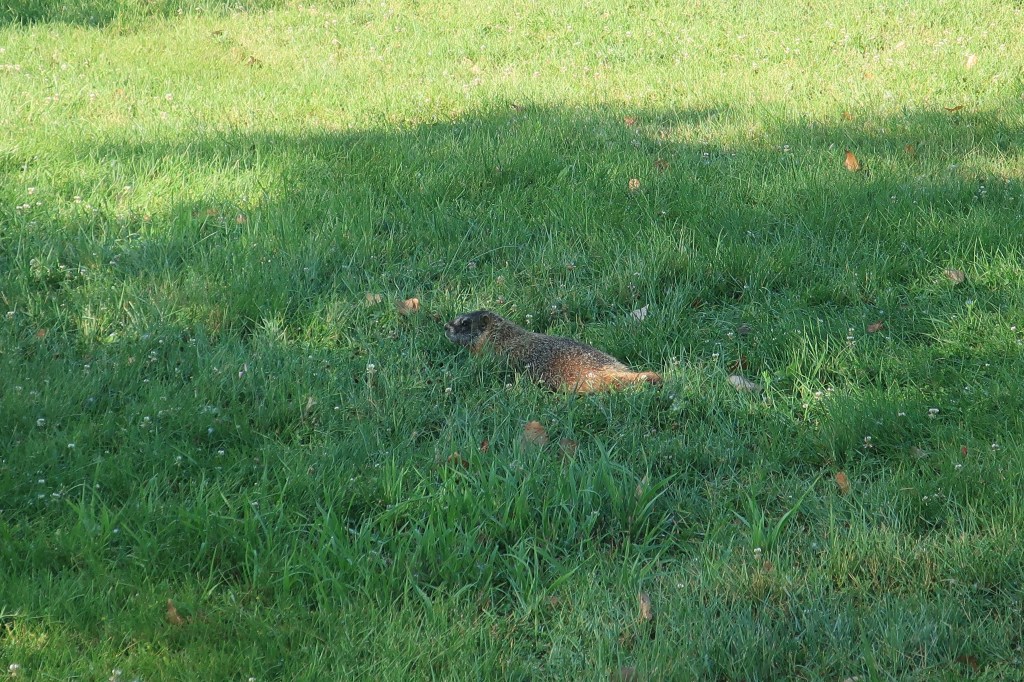
Yellowstone River at Pompey’s PillarYellowstone RiverA beaver or groundhog, or some other critter or varmint-like mammal enjoys an early feed before more people arrive.
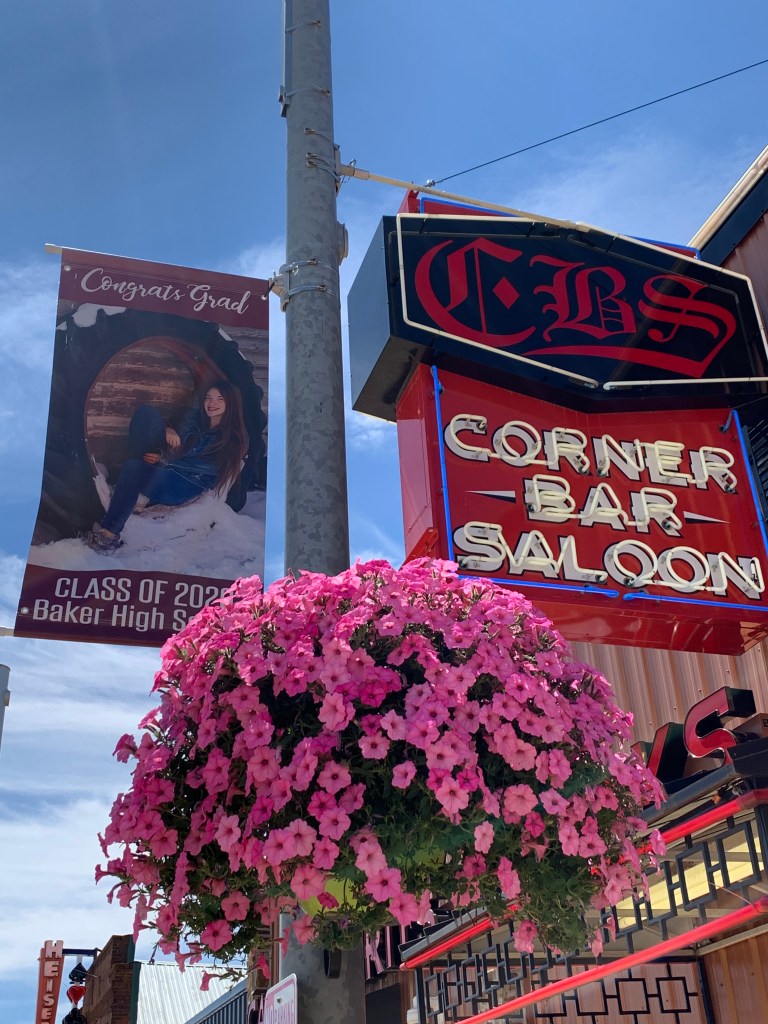
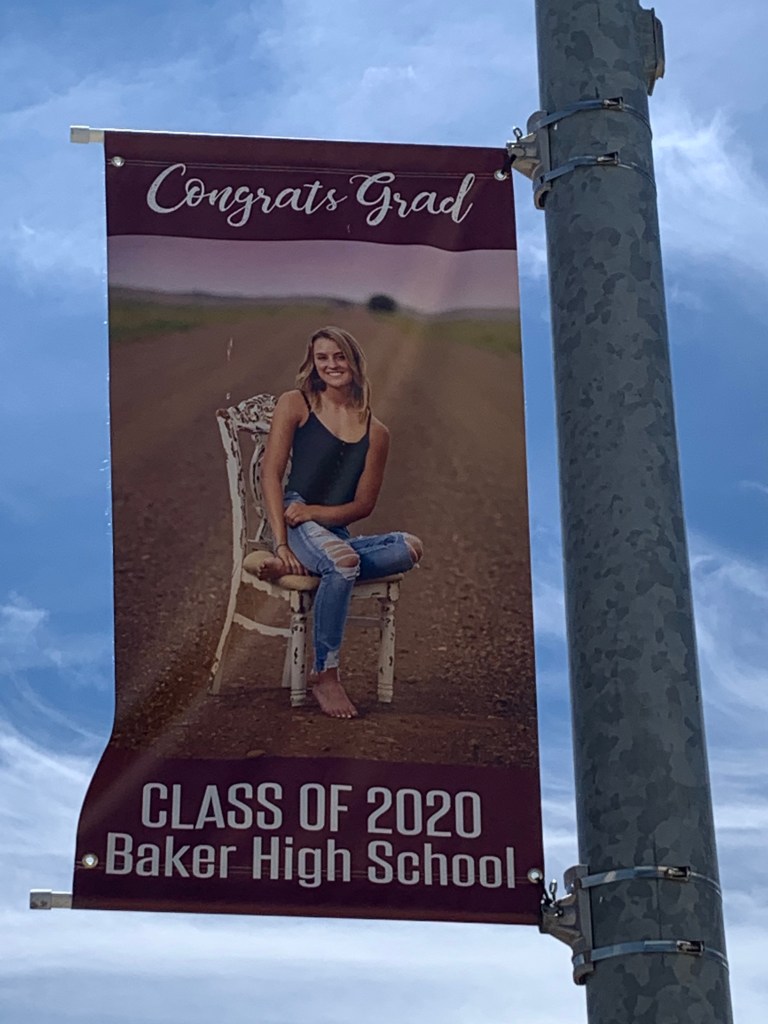
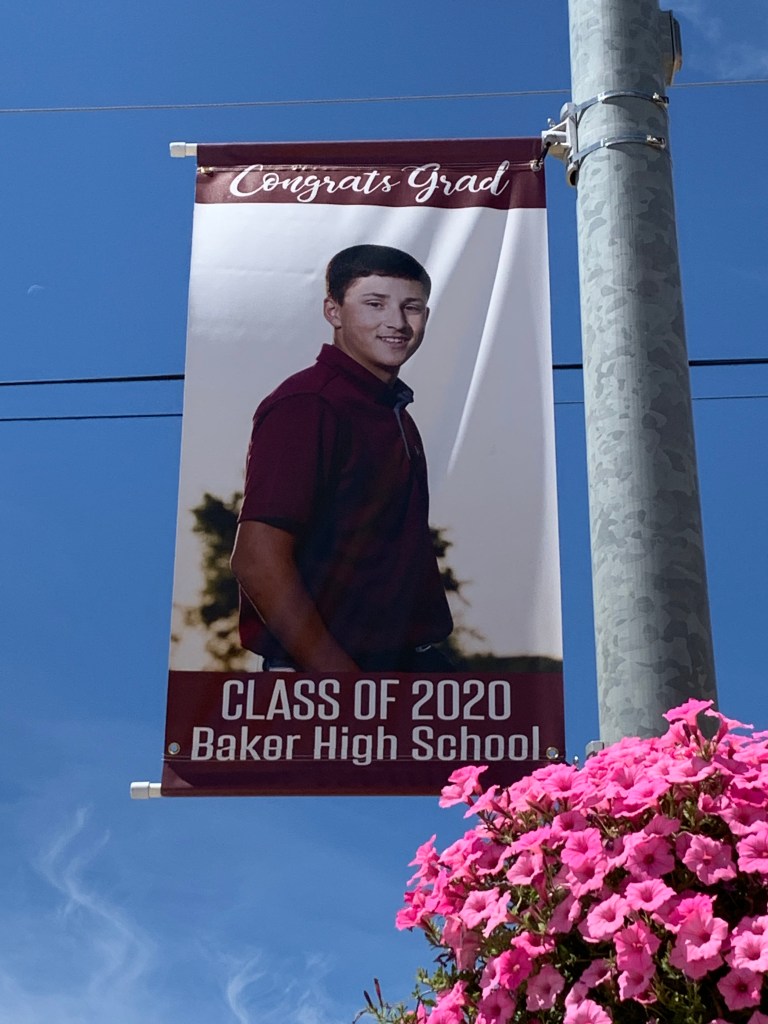
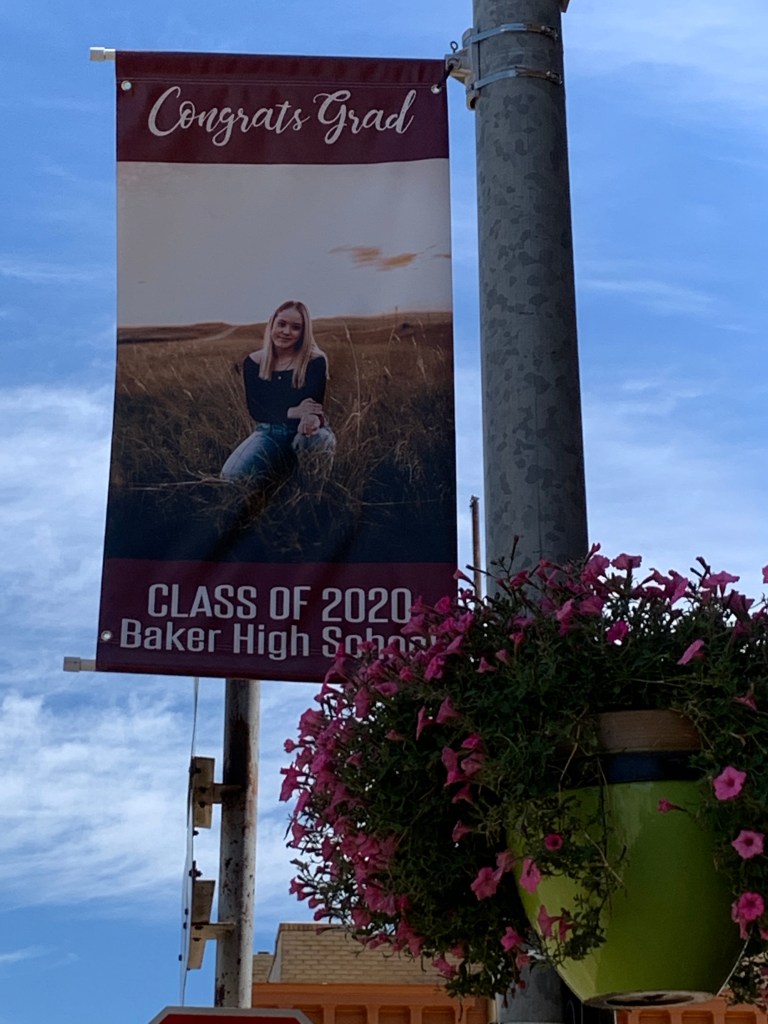
I stopped in Baker, Montana (population 1,741), near the North Dakota line, to find another town honoring its graduating seniors with lamppost fame. Perhaps the town does this every year, but it’s a very nice gesture for the class of 2020 who didn’t have a formal graduation ceremony. I’ll do my part to make them famous.
Link: Corner Bar Saloon, Baker. Sandwiches for lunch for me. Sat at the bar without drinking. Stuck a $20 in one of the Montana video poker games and quit with $22.50. Pool tables were not being used during the lunch hour.
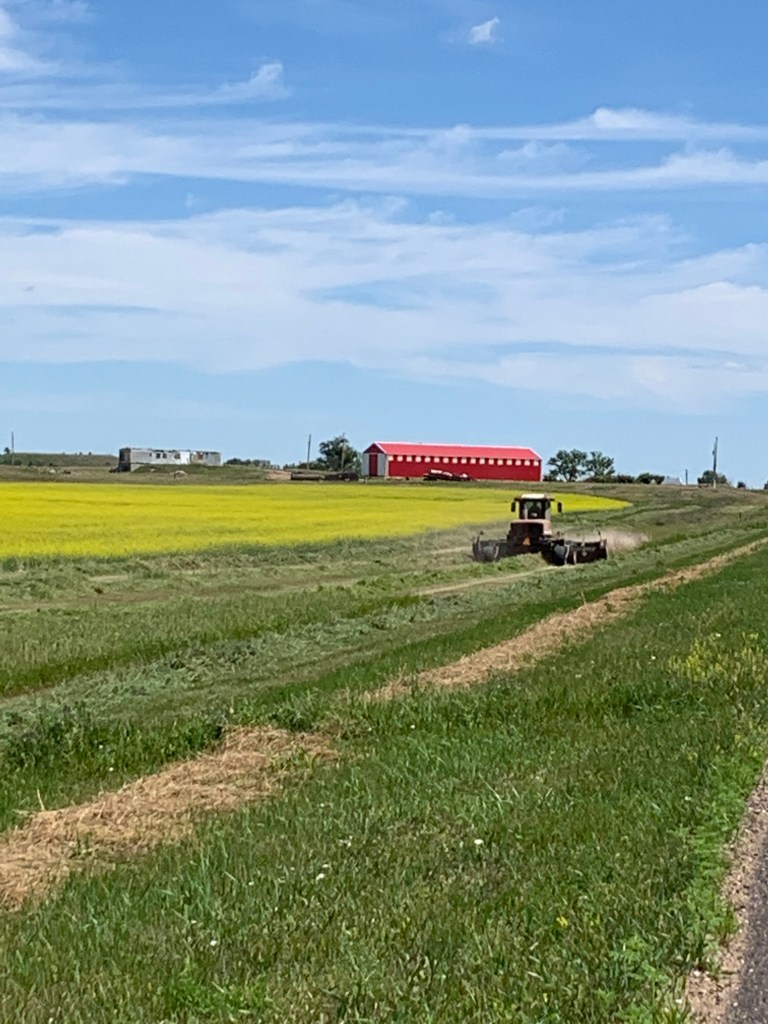
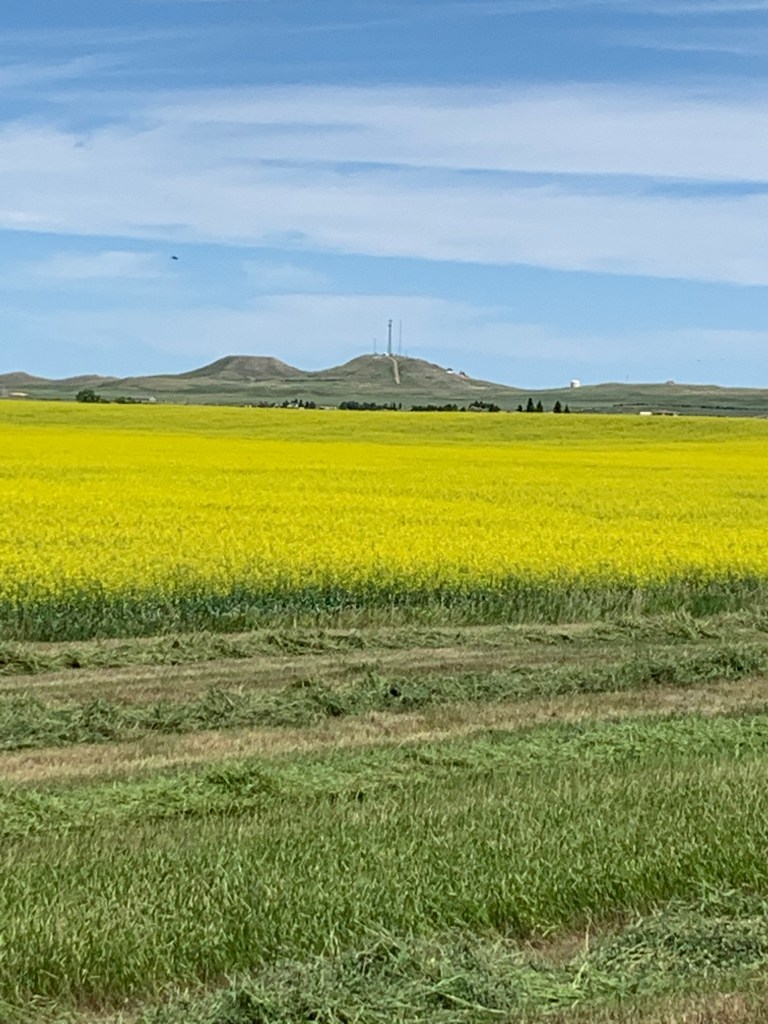
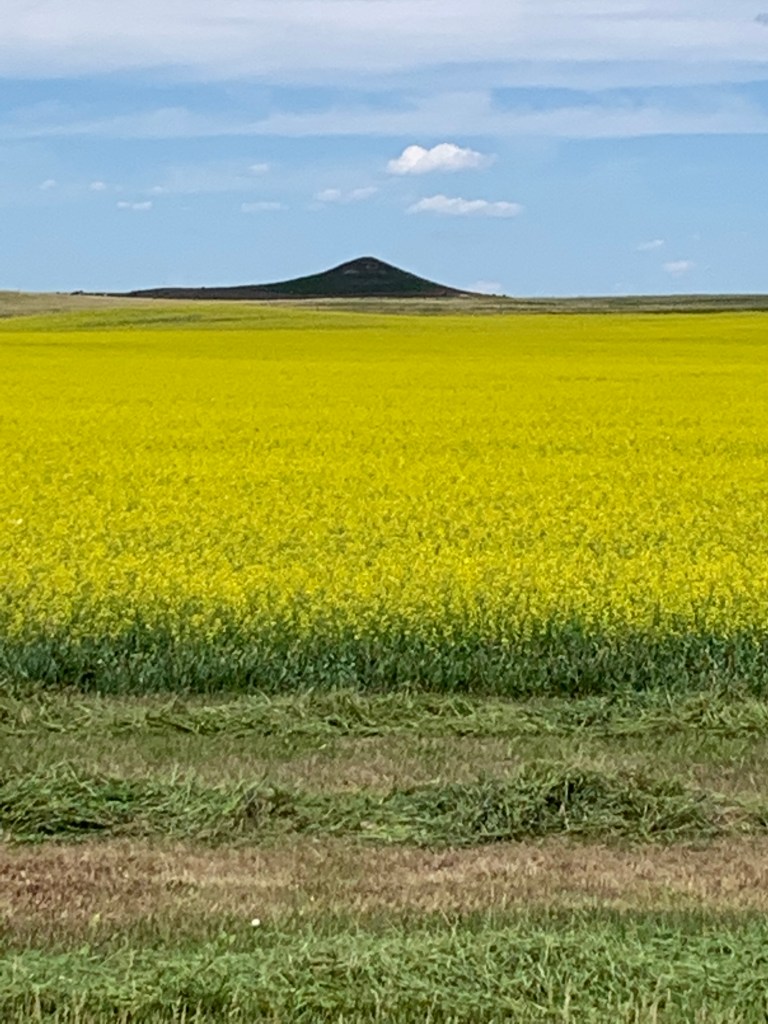
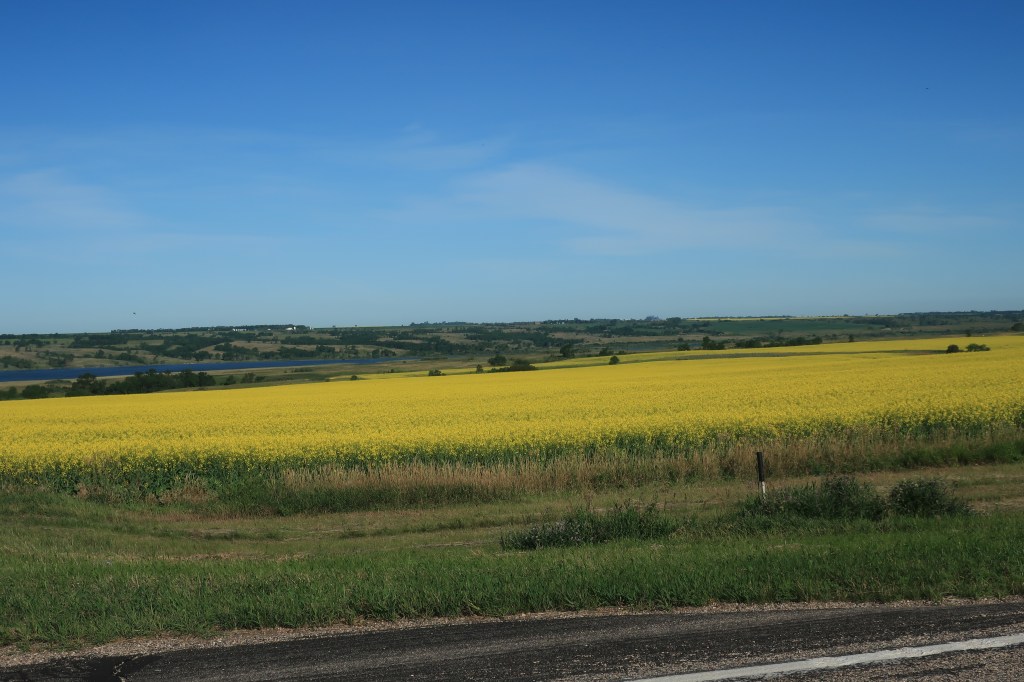
Into North Dakota. Wide fields of canola near the town of Bowman (population 1,650) in the extreme southwestern part of the state.
Farmers at work (aren’t they always?)
Amidon (population 20), Slope County, North Dakota once billed itself as America’s smallest county seat, but no longer. Wikipedia has the skinny (link):
Amidon was the smallest incorporated county seat in the 2000 census. When the 2010 census reported its population as 20, it became the second-smallest incorporated county seat after Brewster, Nebraska, with a population of 17. In 2000, Amidon had 26 people to Brewster’s 29.
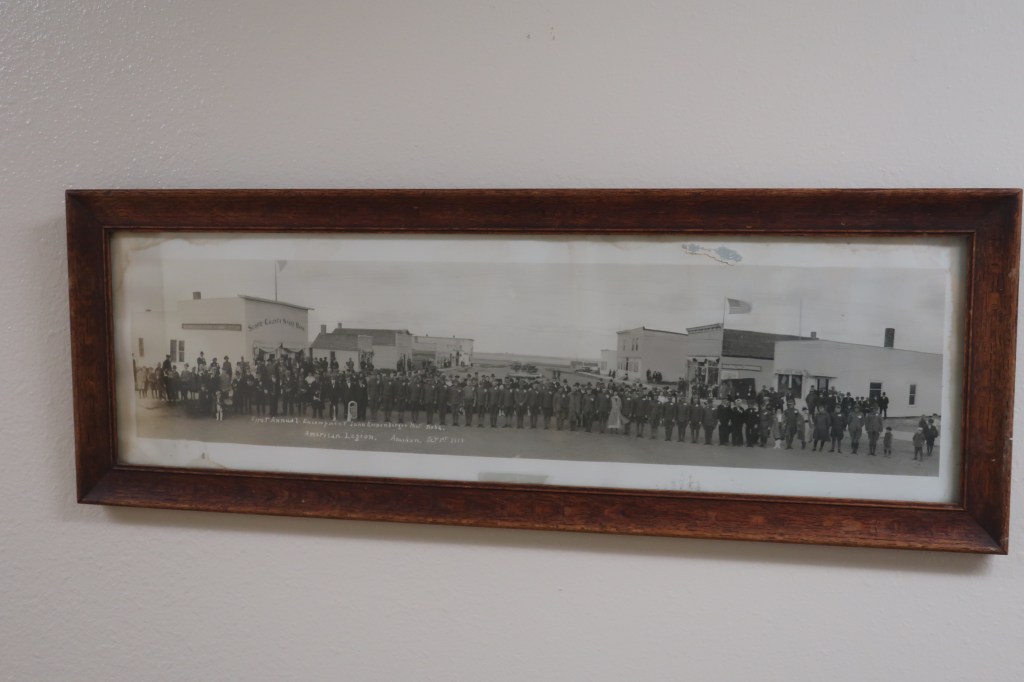
Slope County Courthouse. Amidon, North DakotaGone but not forgotten1919: American Legion First Annual Encampment after the end of the Great War. Amidon, North Dakota
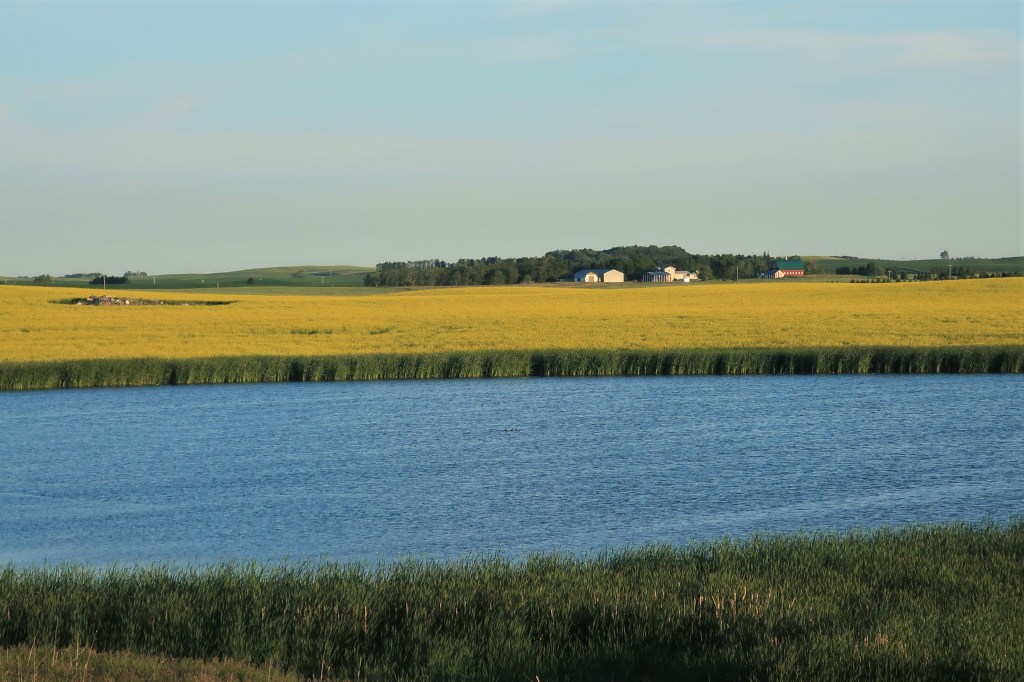
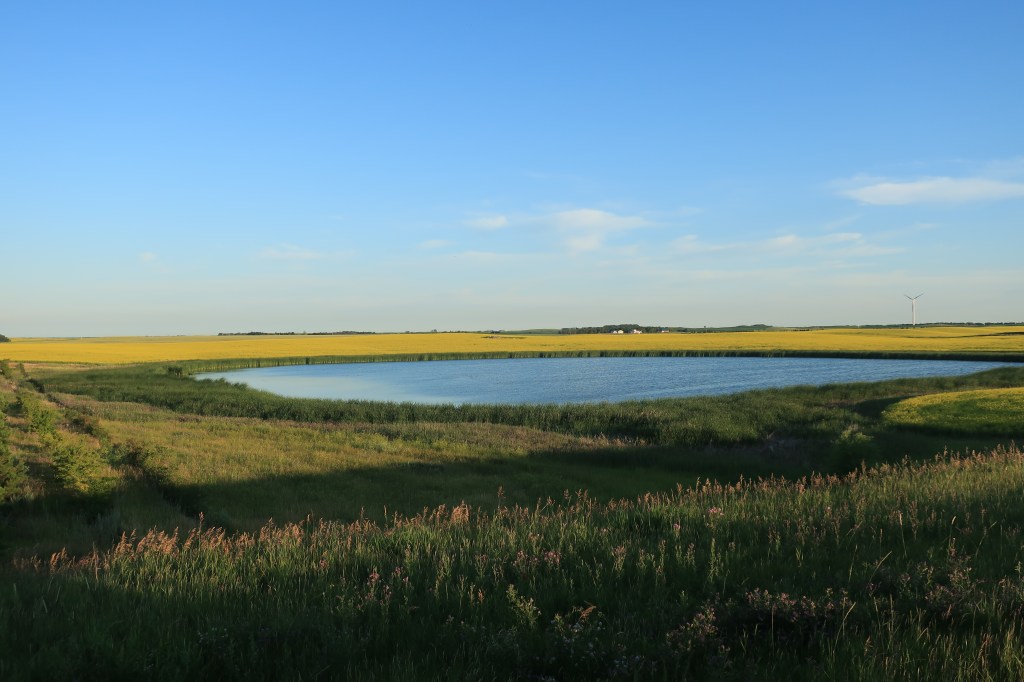
I end the day with a long drive to Minot (population 40,888), North Dakota, past oil wells, fracking towers, and wide bright canola fields sprinkled with glacial ponds called ‘sloughs’ (more on those later).
Thursday, July 16, 2020, Day 7 Hotel breakfast. Mistake. Should have eaten at Denny’s down the road.
I was rewarded with an early morning view of the Upper Souris National Wildlife Refuge, northeast of Minot.
A lone black bird photobombs my landscapeSouris RiverCanola Fields
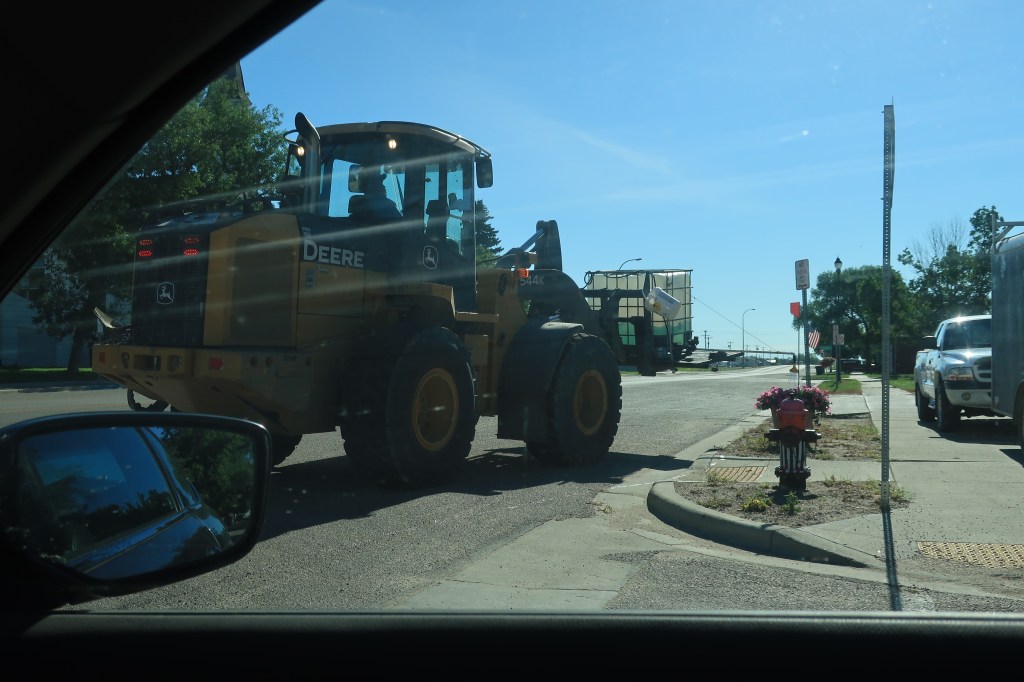
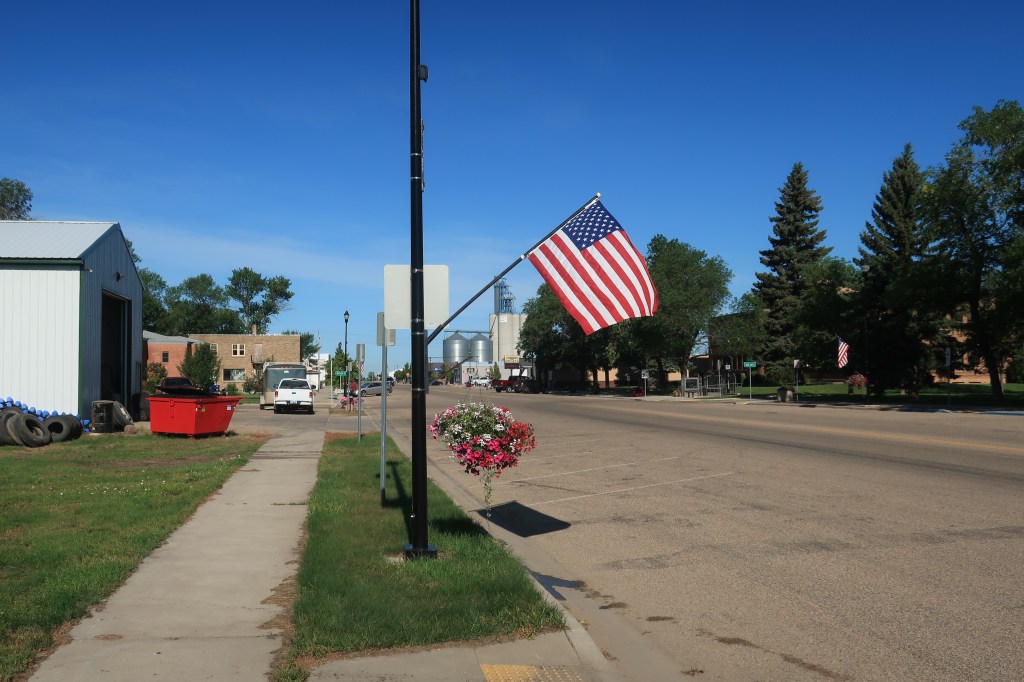
The town of Mohall (population 783), Renville County North Dakota. This is one of my favorite photos of the whole trip — a city worker using a heavy forklift to carry a crate of water and a sprinkler attachment to water all the town’s flower pots.
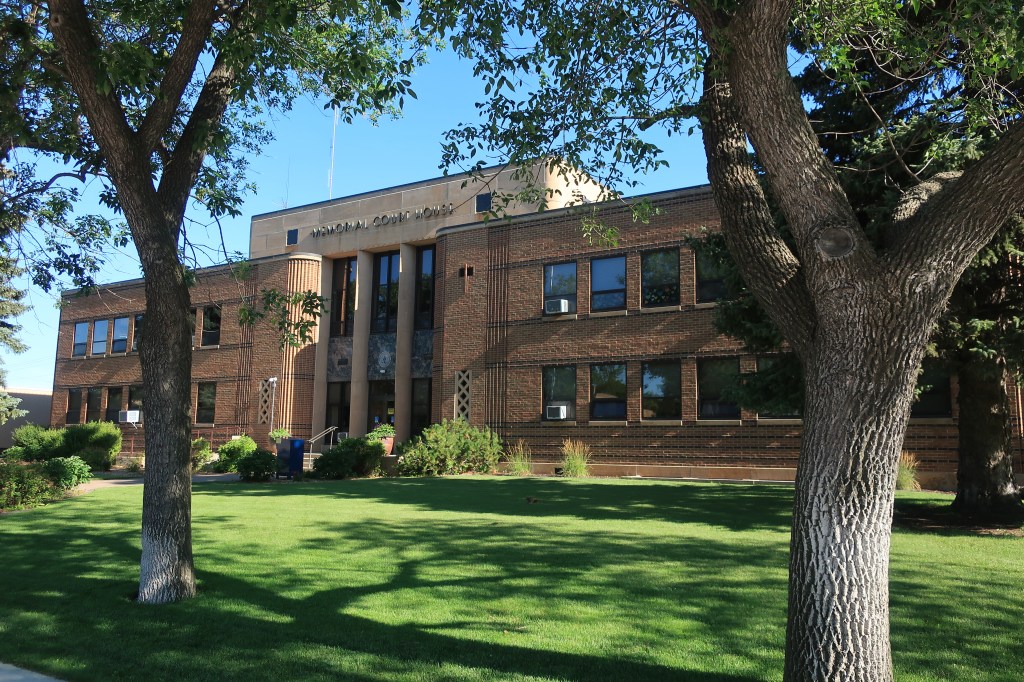
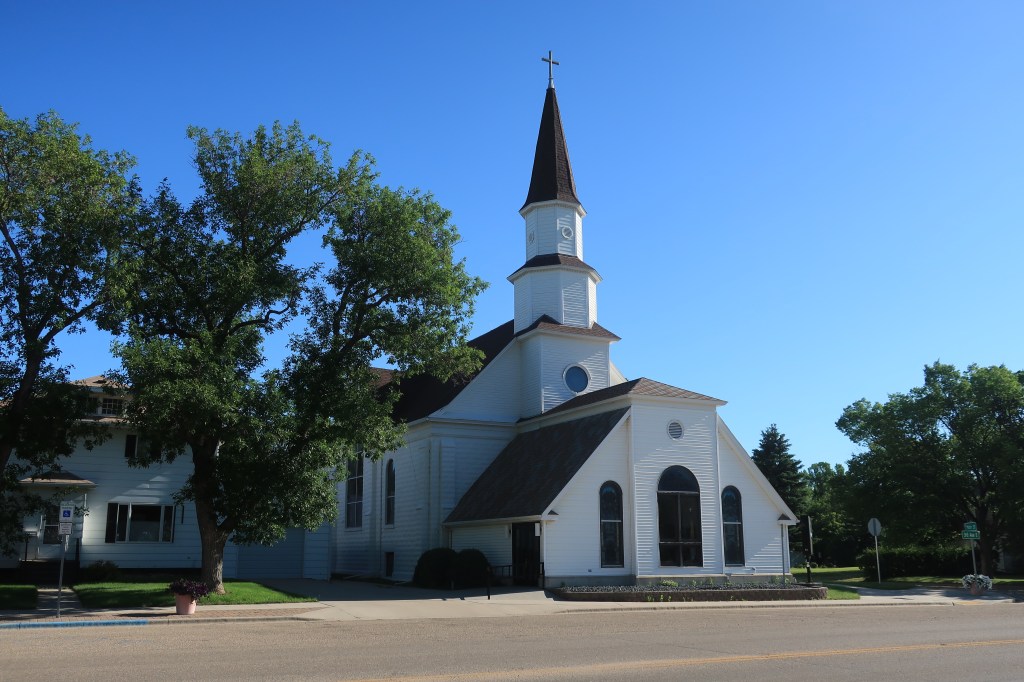
Using heavy machinery to water the town’s flower pots on Main StreetMemorial Courthouse, Renville County, Mohall, North DakotaSt. Jerome’s Church, Mohall, North DakotaMain Street, Mohall North Dakota
Finally, this. Found in a basement meeting room of the county courthouse.
Read this. It was probably written during one of the World Wars
The town of Bottineau, North Dakota, with a population of 2,211.
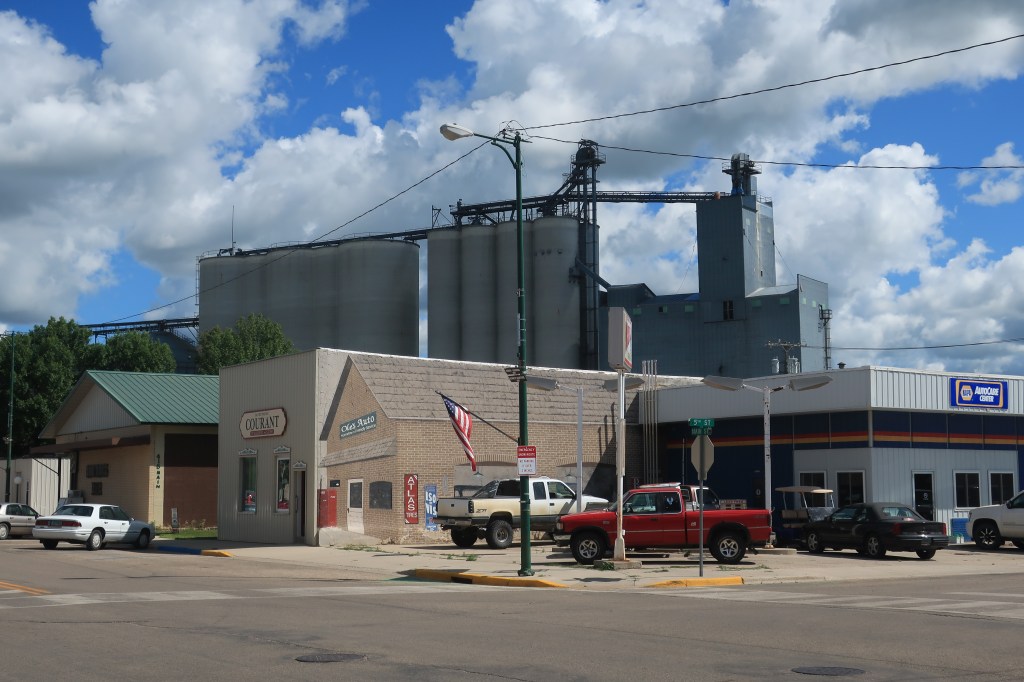
The town’s namesake, Pierre Bottineau. Trapper and guide.Grain elevators. A common sight on the Plains
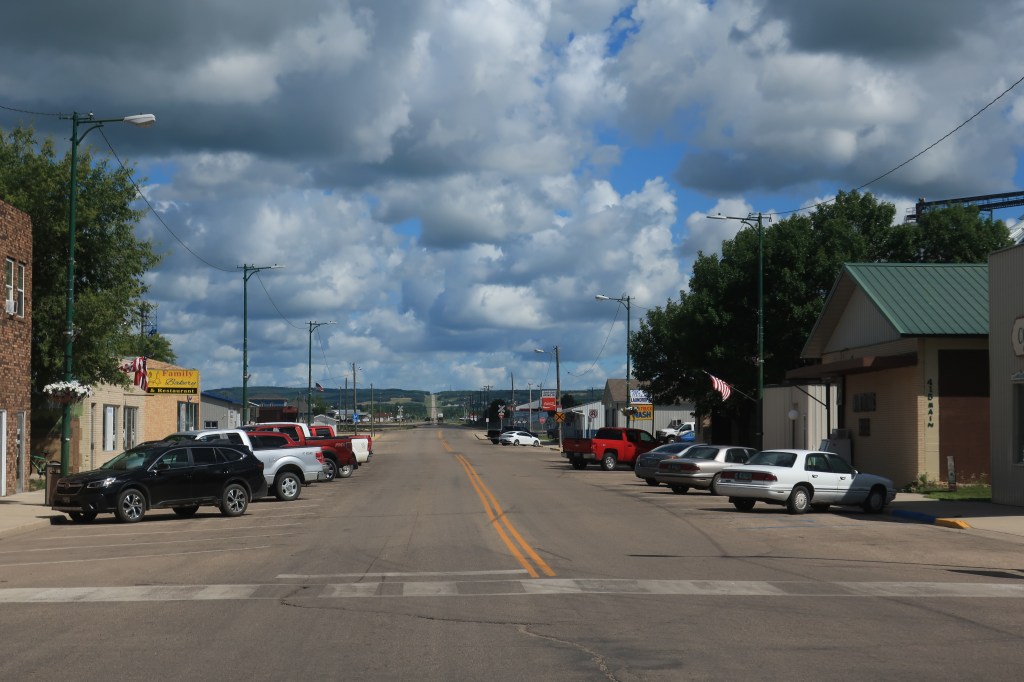
In the background of the next photo, Main Street can be seen ascending into the heights north of town. These heights are a plateau known as Turtle Mountain. More on Turtle Mountain later.
Main Street, Bottineau, North DakotaA bank becomes a bar
Somehow I missed the highlight of Bottineau, the Pride Dairy. They are the last small town creamery in North Dakota, yet they supply their ice cream, cheeses, and syrups to locations as far away as Mount Rushmore. Hint: try their ice cream bars, called ‘Cow Pies.’ Larger and more delicious than the average ice cream bar.
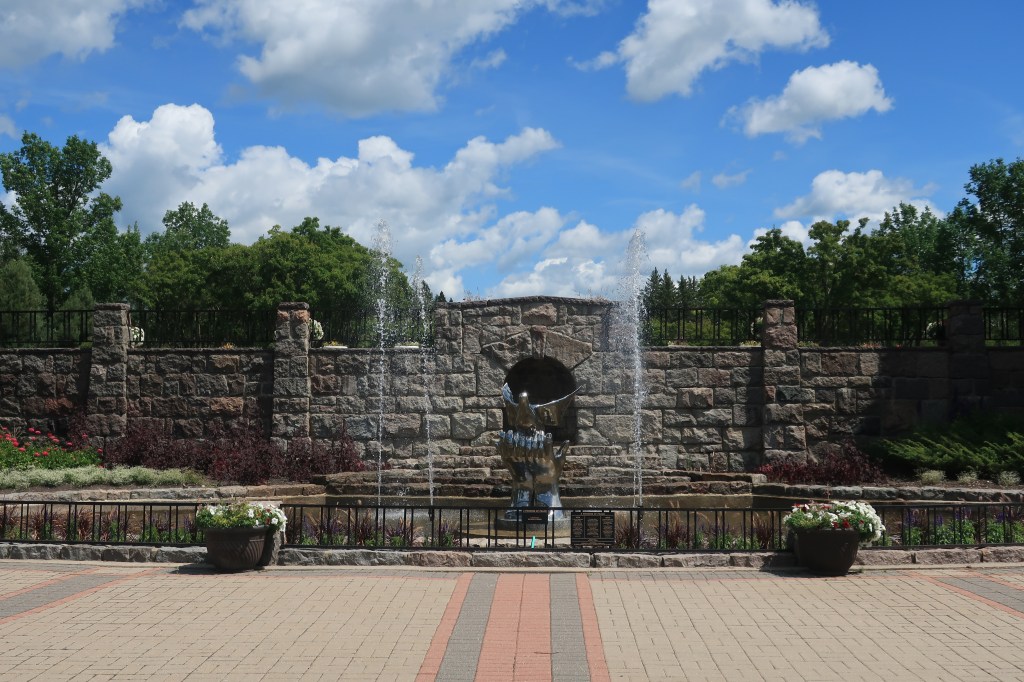
Entrance to the International Peace Garden, on the boundary line between the United States and Canada
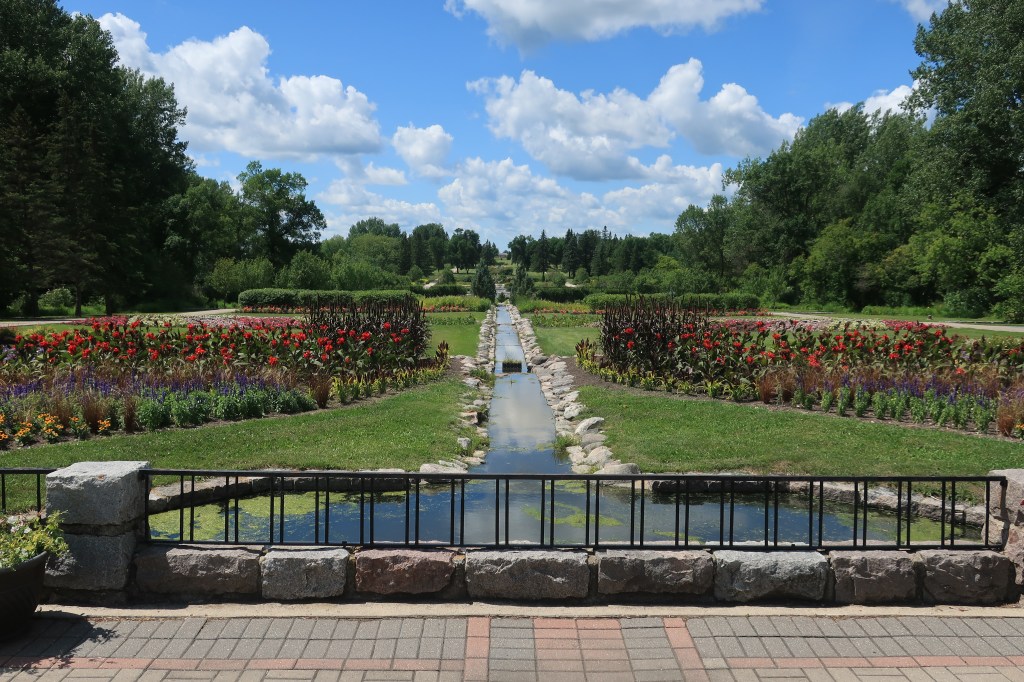
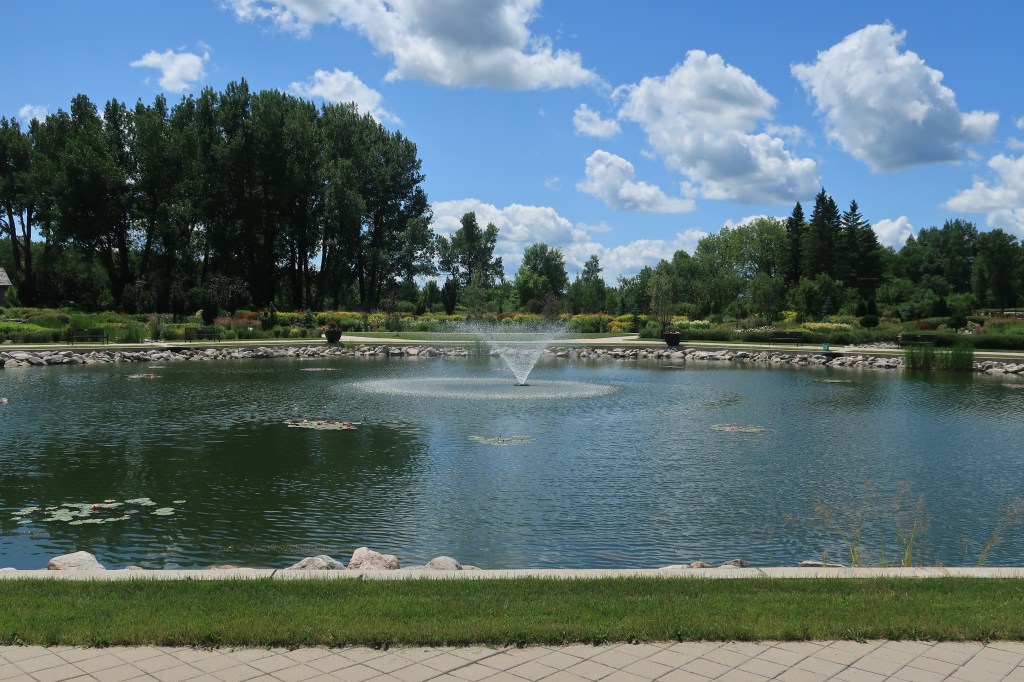
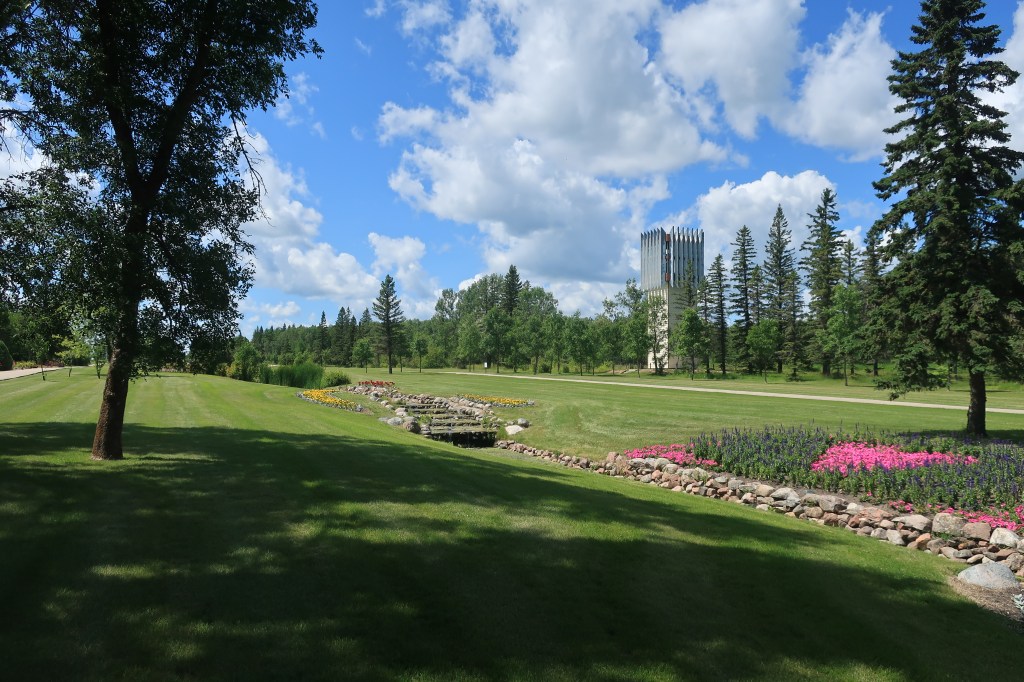
Link: The International Peace Garden. Situated literally on the boundary line between North Dakota and the Canadian province of Manitoba, this park was dedicated on July 14, 1932, to peace between the two large North American neighboring countries. This site in particular was chosen with a nod to its location near the geographical center of North America.
It was here in the Peace Garden gift shop that I first tried ice cream from the Pride Dairy in Bottineau — and was so sorry I hadn’t stopped at their ice cream parlor when I was in town. Their ice cream is fantastic!
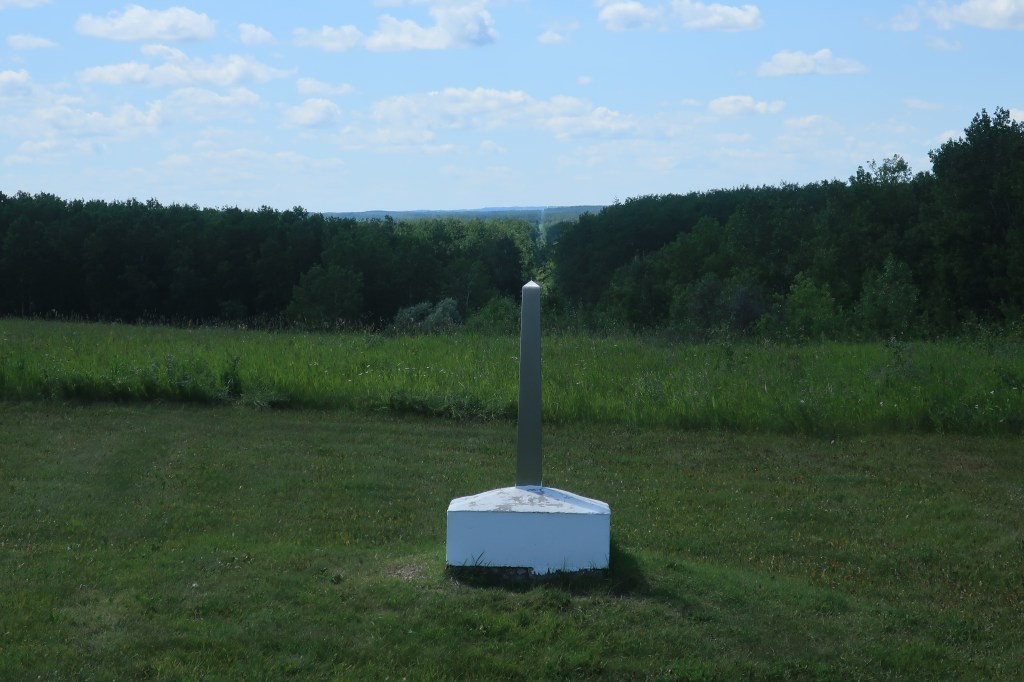
One last photo of the Peace Garden shows an international boundary marker and the clearing marking the boundary extending in the far distance.
The International boundary between the United States (left) and Canada (right)
I took some back roads I had found on the map on my way back to Minot for the night. These little roads led along the crest of Turtle Mountain within five miles of the Canadian border. At one point I saw a highway road sign that simply said “Point of Interest” with an arrow pointing to a driveway off to right. No other explanation. Ok, I like mysteries, so I pulled up the driveway, around a bend, and found this:
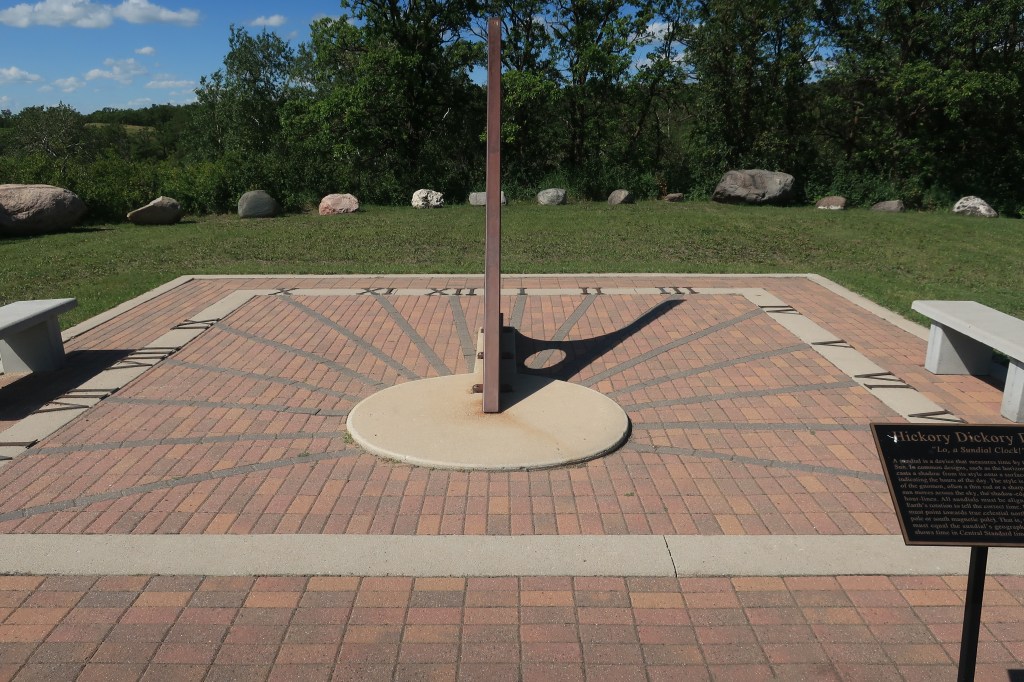
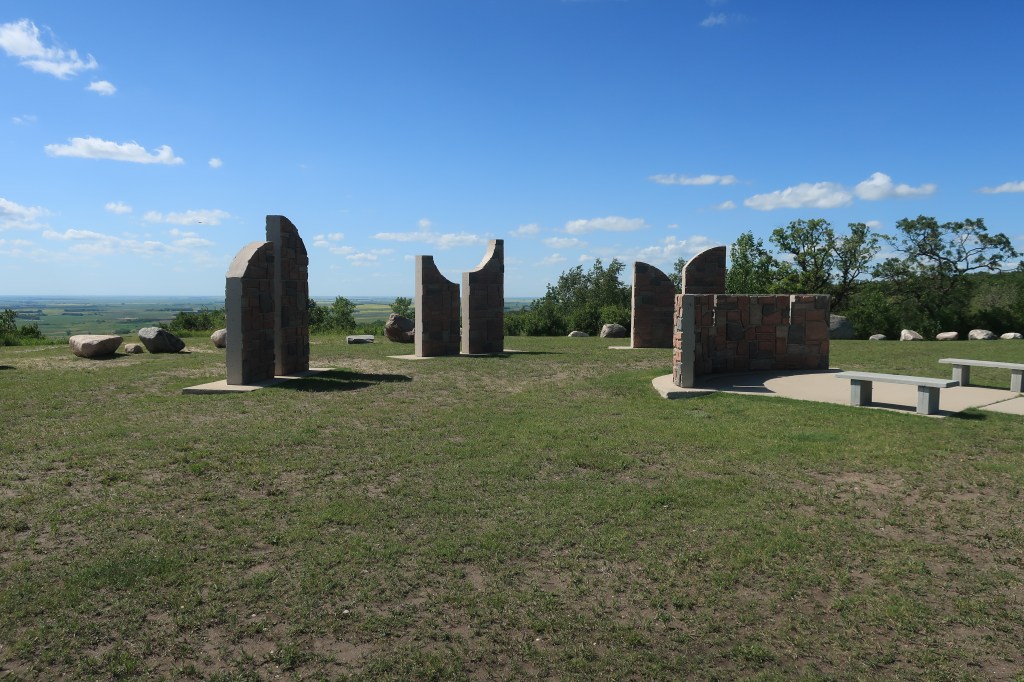
Mystical Horizons
It’s a small park called Mystical Horizons (link) and it’s not shown or advertised on any map — I don’t know why.
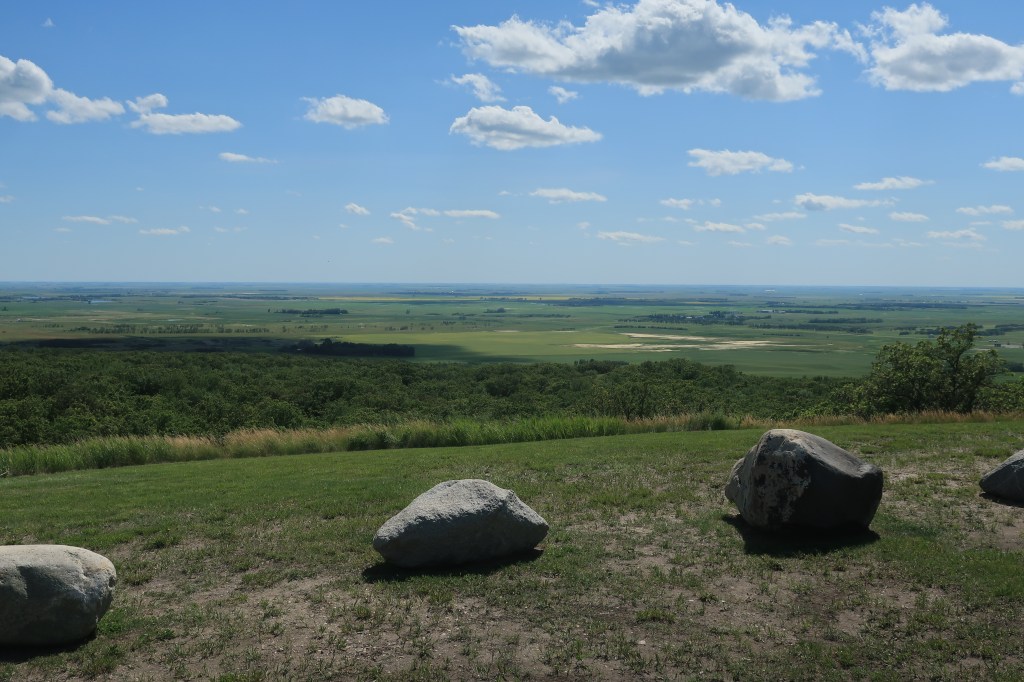
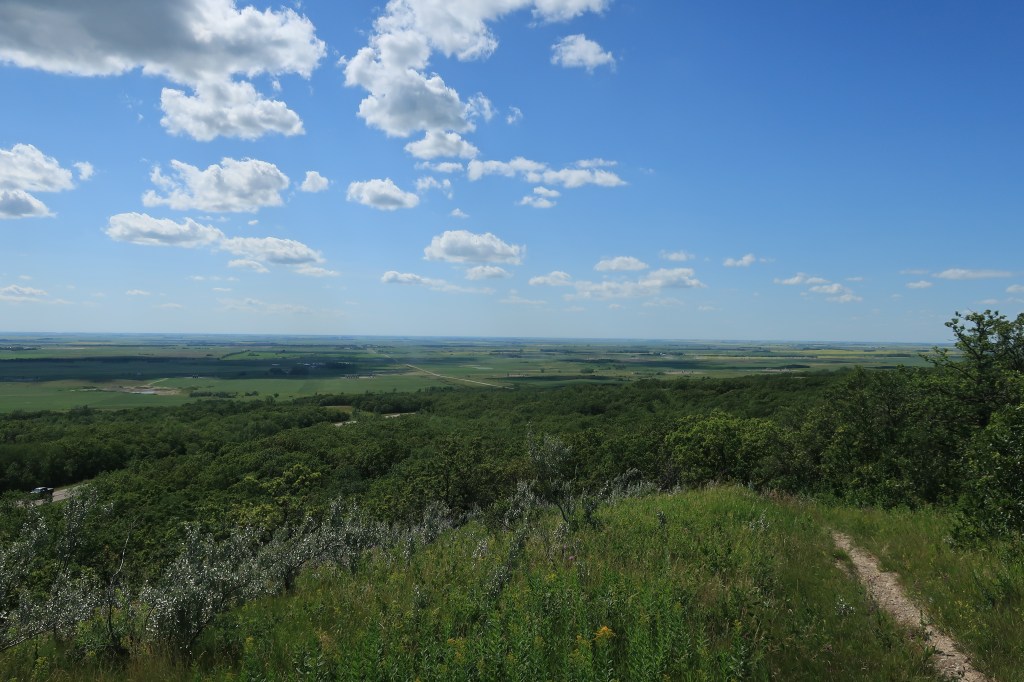
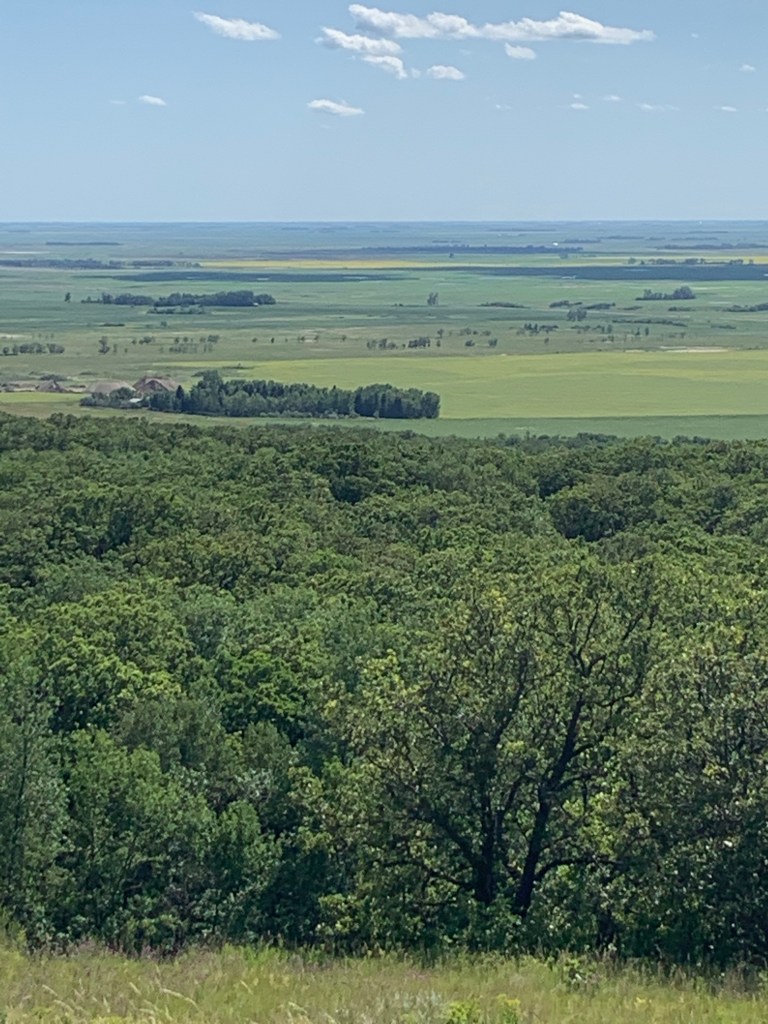
This one or two-acre park, unmanned, has a replica of Stonehenge-like astronomical clocks, a sundial, and a Polaris sighting tube (to be used in finding the North Star). The park sits atop Turtle Mountain with spectacular views of the North Dakota countryside below.
Sundial at Mystical Horizons showing 3:00 pm (4:00 pm Daylight Time)Astronomical observatory. Sunlight shines between the slots on the equinoxes and the solstices.Looking west from Mystical HorizonsYellow canola fields and blue ponds can be made out in the distance
Back to Minot for dinner.
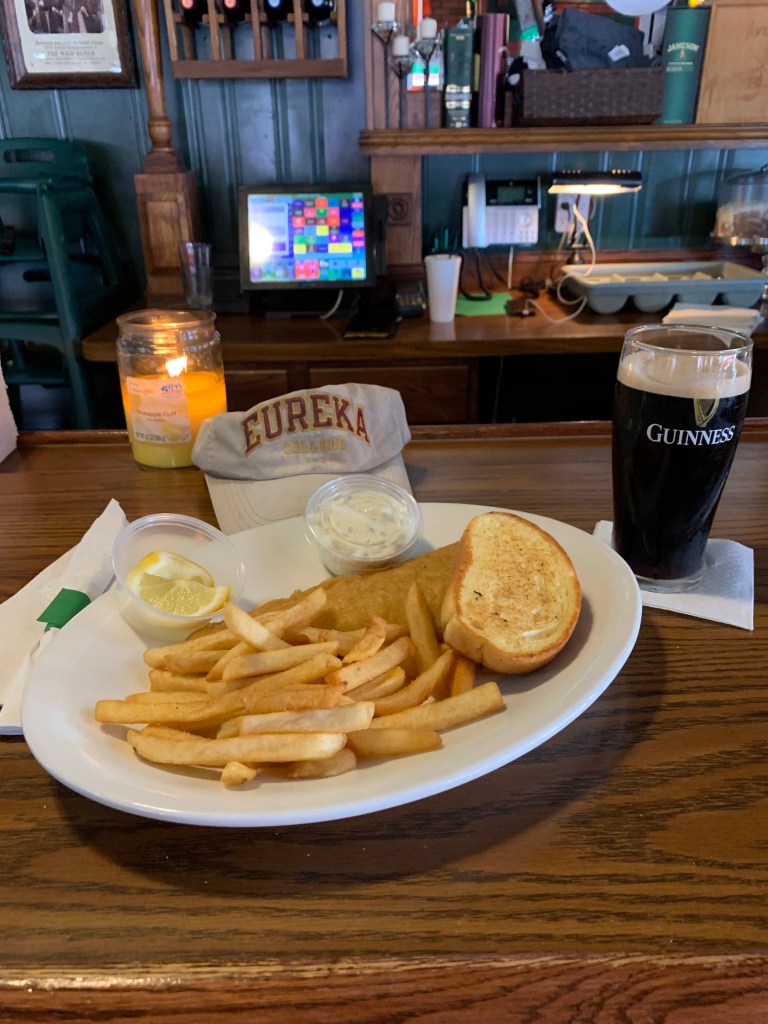
Fish and Chips at Ebeneezer’s Eatery & Irish Pub, with a well-earned Guinness
Friday, July 17, 2020, Day 8 Time to return to Colorado. It will be a 2-day drive. I left very early, before breakfast, heading south on US Highway 83.
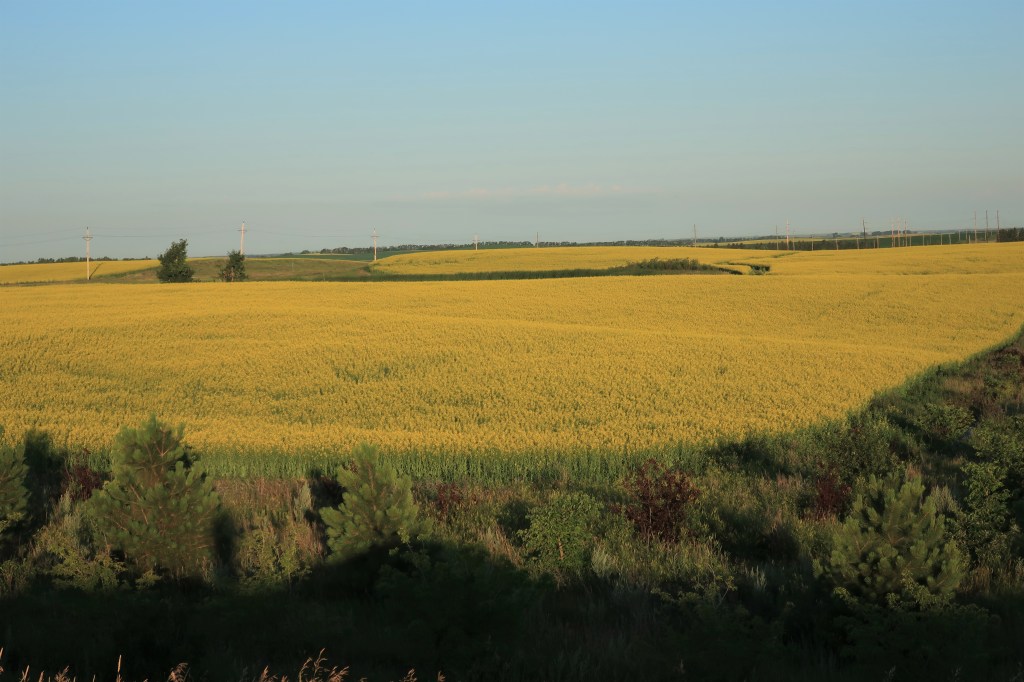
Canola fields and sloughs south of Minot, North Dakota
For miles and miles, the landscape was simply covered with canola fields interspersed with bright blue glacial ponds. I stopped on the side of the highway to take photos. After a bit state highway patrol car pulled up behind me to see if I was taking pictures or “just having a bad day.” This was near 7:00 in the morning. The trooper and I talked a bit, saw a deer running through one of the canola fields. I asked her if people around here referred to the water as ‘lakes’ or ‘ponds’ and she said they called them “sloughs” instead.
After another hour of driving, breakfast!
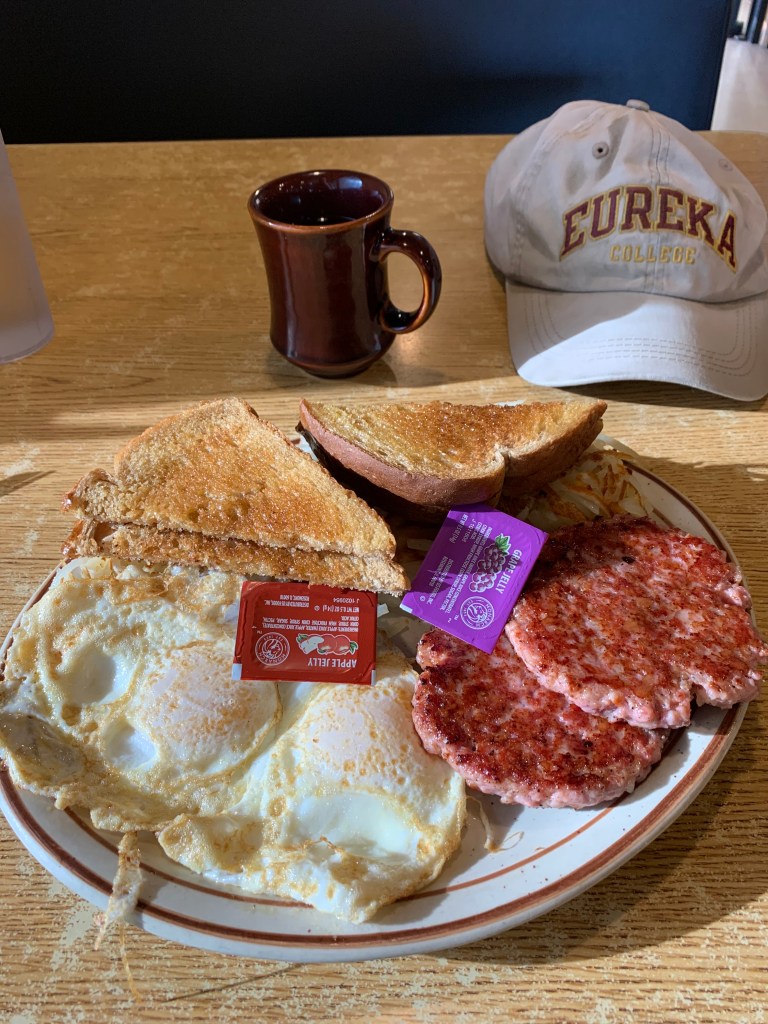
Hashbrowns are under the toast, and the patties are sausage patties, not corned beef
Link: Rolling Hills Restaurant at the Flying J Travel Center in Mandan, North Dakota. Mandan (population 22,752) is across the Missouri River from Bismarck. There’s nothing like a cooked breakfast at an Interstate truck stop!
It was a long, 100-degree hot drive down to Hot Springs (population 3,711), South Dakota. I was detoured around the Cheyenne River Sioux Reservation due to Covid-19 concerns. They’re having a hard time of it there and are restricting travel to locals and those with special permits.
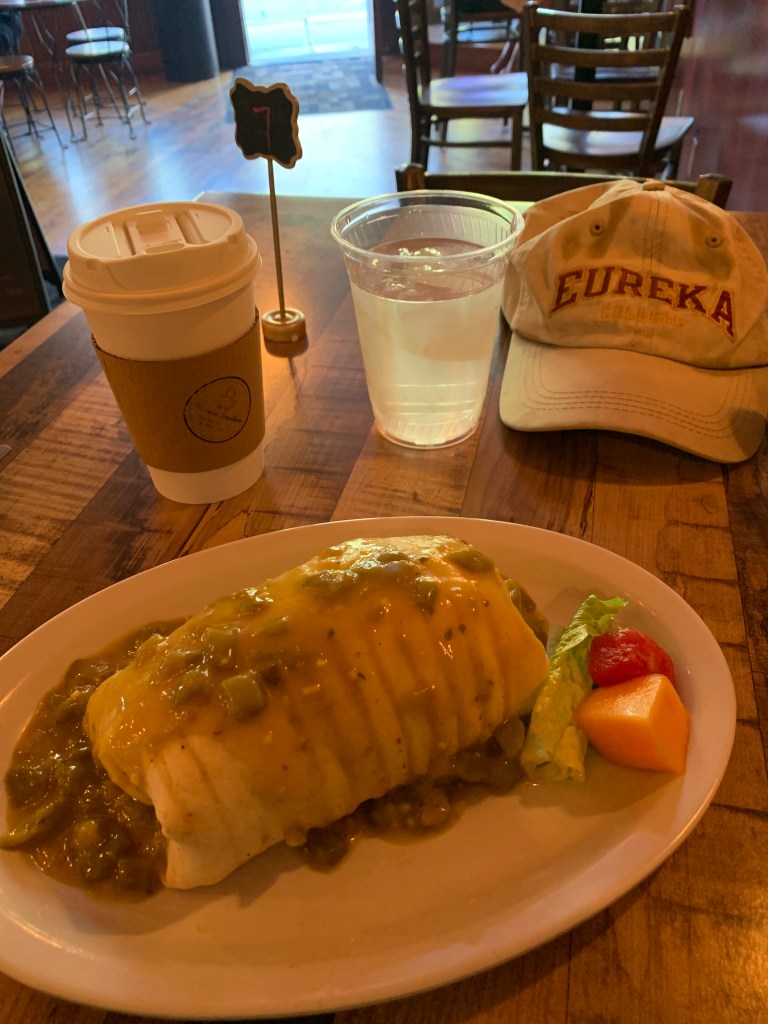
That was a bit of a curveball after all the eggs and hashbrowns I’d been having this trip. Thank you to the Mornin’ Sunshine Coffee House (linked) for the excellent breakfast.
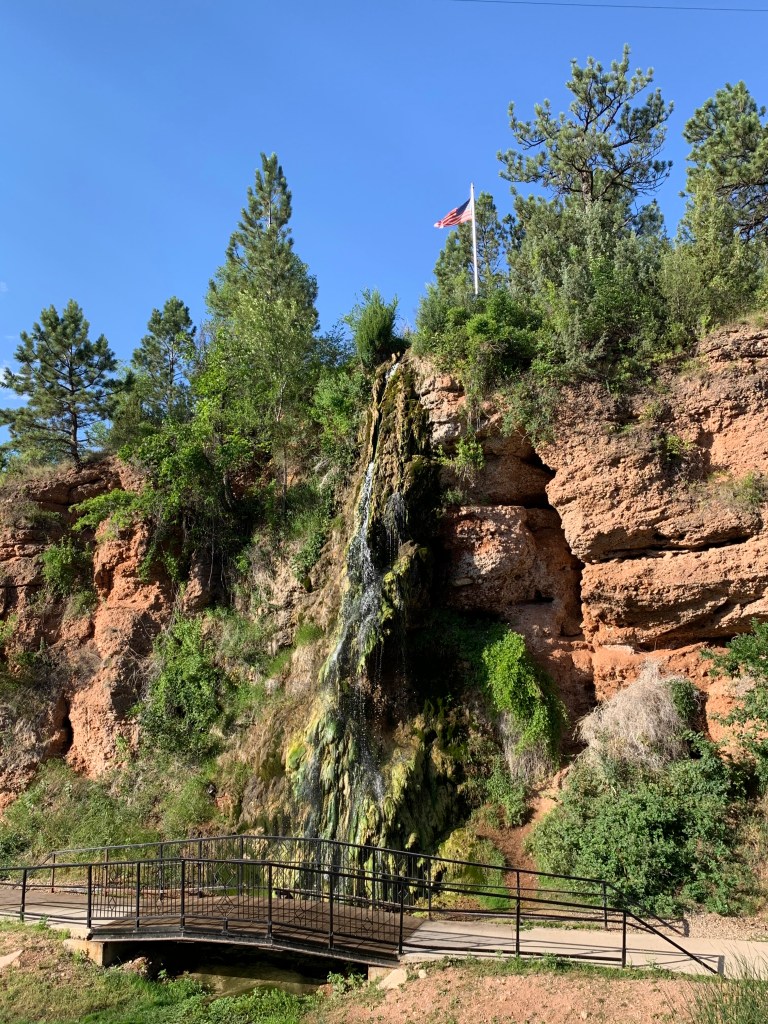
Hot Springs, South Dakota was once a very popular resort town back in the days when doctors prescribed “taking the waters” as a cure. Because it was built up at that early time the town’s buildings are mostly constructed of limestone blocks, giving the town an air of antiquity. It’s a great place and lies in a hilly country about 50 miles south of the Black Hills. I even saw a pair of newlyweds on their honeymoon.
The town’s claim to fame, of course, is its hot springs, shown here cascading down into the Fall River below.
One last photo on the way home. I passed by Pine Ridge near Crawford, Nebraska (population 997). I’ve stopped in this town before, usually for gas, and always for some Dairy Sweet as well.
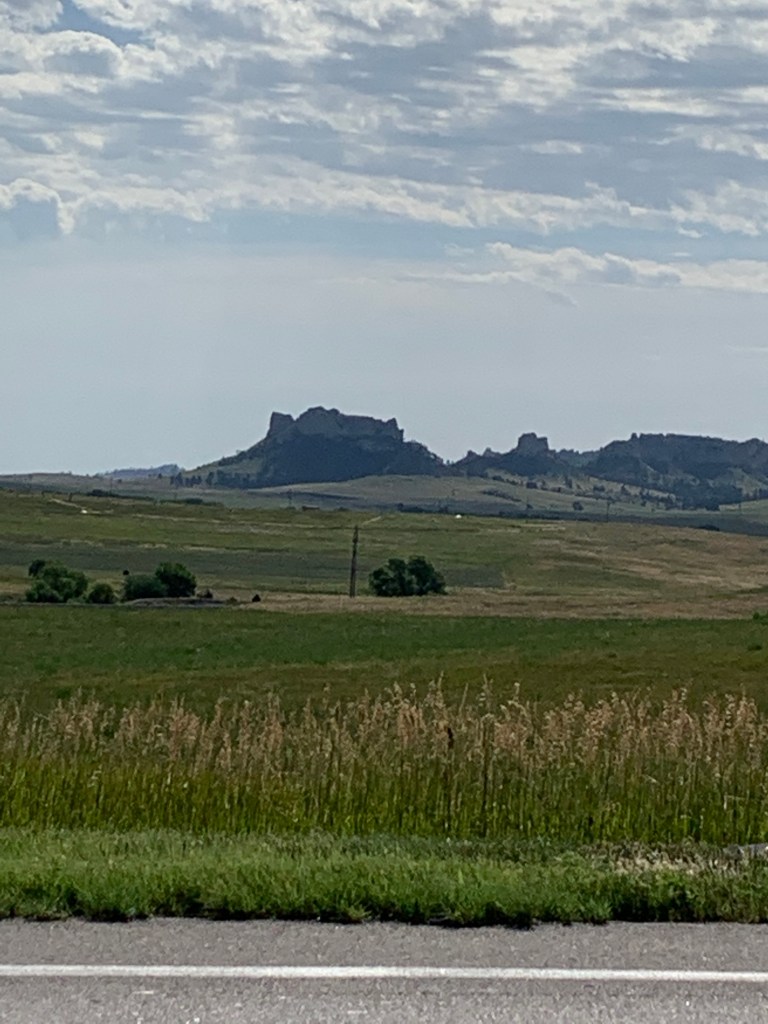
The Pine Ridge of Nebraska
Home to Colorado Springs by late afternoon.
A most epic trip! Hope you enjoyed it with me.
All photos were taken by the author in July 2020
A list of all Freedom Voyage posts in TimManBlog can be found here.
I travel as a hobby and not for a living (yet) — but donations are happily accepted if you’d like to help defer my costs. Thanks, The TimMan





































 TimManBlog